
Review · JAPAN
Nara: Bike Tour in Ancient Capital UNESCO World Heritage
Nara’s old capital is far larger than the deer park most visitors see, and this two-hour bike ride gives you a practical way to cover its wide-open palace grounds. You pedal between reconstructed gates, quiet ponds, excavation sites, gardens, and museums while guide Kay explains how Nara functioned as Japan’s imperial center.
I like the peaceful cycling route and the way it reaches places that are awkward to cover on foot. I also like the mix of grand reconstructions and real archaeological remains, plus the chance to wear Tenpyo-period clothing for photos. The catch is that much of the palace is rebuilt or marked by foundations, so visitors looking for a completely intact ancient site may find it modest.
Key points to know before you book
- Ride across a huge palace site: The bicycle makes it possible to see several distant stops without spending the whole visit walking.
- Meet guide Kay: She leads the English and Japanese tours and is especially good with families, questions, and a relaxed pace.
- See Nara beyond the deer park: This tour focuses on imperial history, archaeology, gardens, and palace buildings rather than deer.
- Visit both reconstructions and original remains: You will see ceremonial halls, old tiles, wooden tablets, excavation layers, and an ancient tomb.
- Small groups keep the tour personal: Numbers are limited to eight people, with time for questions and photos.
- Expect strong value at $22: A bike, helmet, guide, admission fees, and costume experience are included.
Why this bike tour shows a different Nara
Nara is often treated as a quick stop for friendly deer and one or two famous temples. That leaves out the city’s role as Japan’s first permanent capital, when the imperial court was based here during the Nara period.
The Heijo Palace grounds sit away from the busiest parts of Nara. The site is broad, open, and calm, with plenty of room between its main points. A bike is a sensible choice here. You can move from a ceremonial gate to a garden, a pond, a tomb, and several museums without repeatedly retracing your steps.
I especially like the contrast between scale and quiet. The reconstructed gates and halls remind you that this was once the center of government, while the open fields and bird sounds make the place feel surprisingly restful today.
This is not a tour built around shopping, food, or the deer. It suits you if you want to understand why Nara matters and see a less crowded side of the city. It also makes a good first activity because it gives you a broad sense of the old capital before you visit other sights.
More History Bike, Segway and Tuk-Tuk Tours in Japan
- Historical Kyoto E-Bike Tour
★ 5.0 · 181 reviews - Sakurajima Century Lava Climb Journey with E-bike
★ 5.0 · 54 reviews - Tokyo: 3-Hour Bike/E-Bike Tour of the City’s Hidden Gems
★ 5.0 · 47 reviews
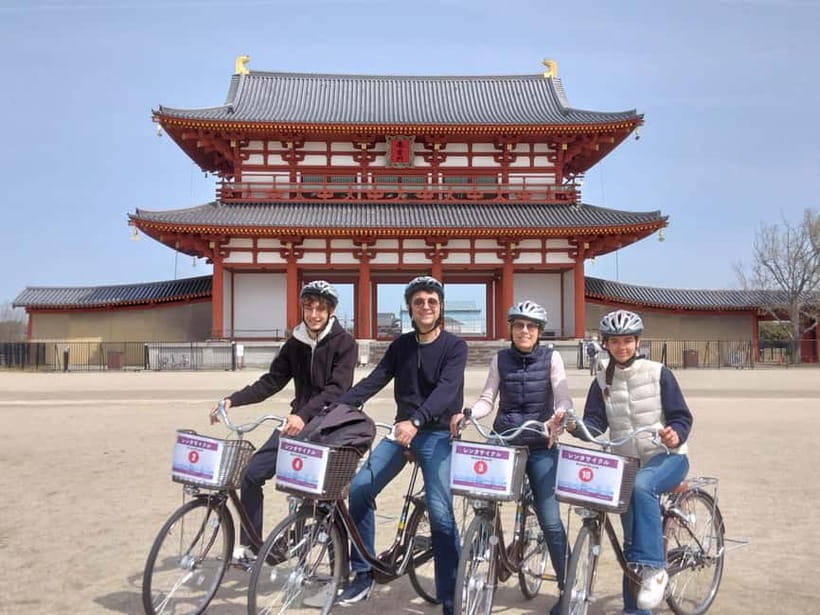
Starting at Suzaku Gate
You meet at the rental bike reception counter inside Miharashi-Kan in Suzaku Gate Square. Arrive 10 minutes before departure so there is time to get organized before the group sets off.
Suzaku Gate was the main entrance to Heijo Palace. It is an important opening stop because it gives the palace site a clear sense of scale. The gate is also one of the best places for photos, with the broad grounds and surrounding nature behind it.
Your guide uses the gate to explain the ancient capital and the role of the palace. The information is not limited to architectural labels. You get a sense of how the site worked as the center of court life and government during the Nara period.
The route is limited to eight people, which matters here. A small group can stop for photographs and listen without creating the feel of a large procession.
Toin Garden and the roots of Japanese garden design
The next stop is Toin Garden, also called East Palace Garden. This was connected with the eastern palace area and gives you a quieter look at the formal side of court life.
The garden includes bridges, buildings, rocks, and water arranged with care. Your guide explains the role of the state guest house and points out how these elements worked together rather than appearing as random decoration.
You have about 10 minutes here, so this is a focused visit rather than a long garden walk. That is enough to understand the layout and take photos, but you should not expect the leisurely pace of a full garden tour.
I like this stop because it adds texture to the palace story. The ceremonial gate tells you about power and access. Toin Garden shows how the court received and impressed important visitors.
Excavation remains and the palace site museum
The Excavation Site Exhibition Hall is one of the more unusual stops. Archaeological remains are preserved and displayed in the same condition in which they were found, letting you look at the work of uncovering the old capital rather than only polished reconstructions.
That distinction is important. Rebuilt gates and halls help you picture the palace, but excavation sites show what actually survived beneath the ground. You can see how archaeologists piece together a vanished place from traces, fragments, and buried structures.
The nearby Nara Palace Site Museum is the oldest museum on the Heijo Palace grounds. Inside, the displays include ancient roof tiles, wooden tablets, and models.
I find this pairing useful. The excavation hall shows the physical process of discovery, while the museum gives you objects and models that help explain what daily administration and construction may have involved. The scheduled visit is about 10 minutes, so listen closely and ask questions while you are there.
More UNESCO World Heritage Tours in Japan
- World Heritage Shirakawa-go and Experience Tours from Kanazawa
★ 5.0 · 4,049 reviews - World Heritage Kyoto & Nara Uji Authentic Matcha Experience
★ 5.0 · 1,573 reviews - Kanazawa: World Heritage Shirakawa-go Morning Guided Tour
★ 4.9 · 988 reviews - Hiroshima Peace (Heiwa) Walking Tour at World Heritage Sites
★ 5.0 · 872 reviews
A quiet loop around Mizukami Pond
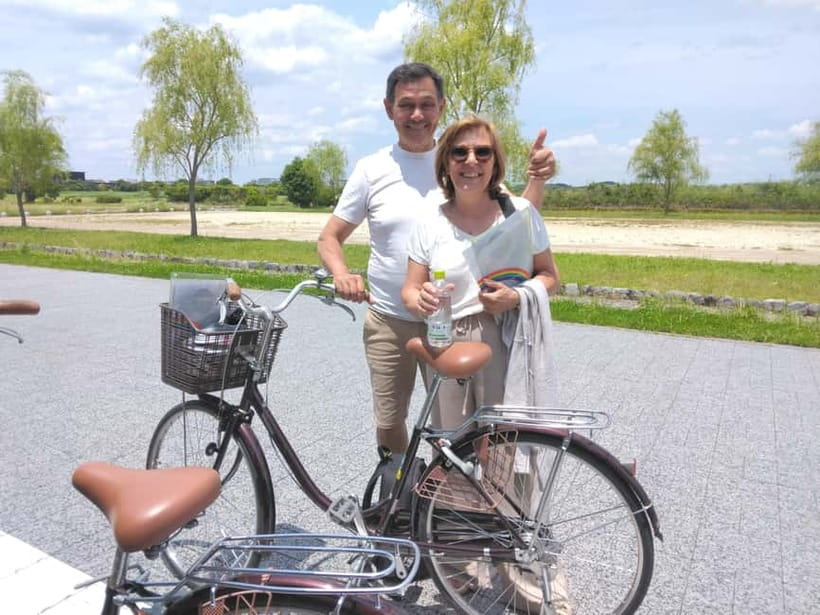
The ride around Mizukami Pond, also known as Minakami Pond, is the tour’s calmest stretch. You can feel the breeze, hear birds, and possibly see ducks and turtles near the water.
This part is less about monuments and more about the setting. The palace grounds are large enough to give you a sense of open space, and the pond provides a natural pause between the archaeological stops and the grand ceremonial buildings.
The pace is described as easy, and the route has worked well for families. A six-year-old enjoyed one recent tour, including collecting stamps and visiting the local sites. Guide Kay has also been praised for being patient with children and willing to adjust the pace.
Still, you need to be comfortable riding a bike. The activity is not suitable for people who cannot cycle, wheelchair users, visually impaired people, or pregnant women.
Hishiage Ancient Tomb and its grave goods
Hishiage Kofun gives the tour another time layer. Here you stop at an ancient burial mound and learn about the grave goods connected with it.
This is a short visit of about 10 minutes, but it broadens the story beyond palace buildings. Nara’s importance did not begin with the imperial court. The tomb points to earlier societies, burial customs, and the long human use of this area.
If you enjoy archaeology, this stop will likely be more rewarding than it sounds on paper. If you prefer large buildings and dramatic interiors, it may feel brief. The guide helps by connecting the tomb to the wider story of the site rather than presenting it as an isolated mound.
The First Imperial Audience Hall
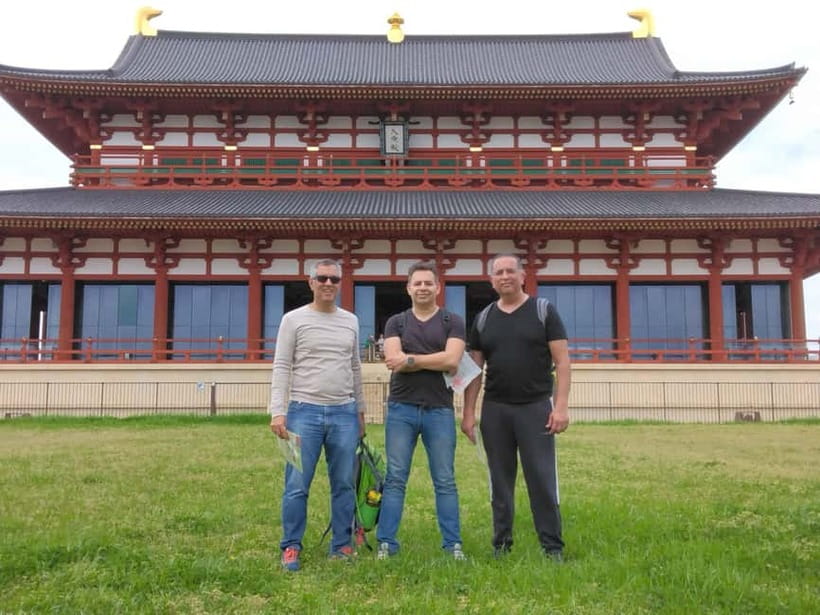
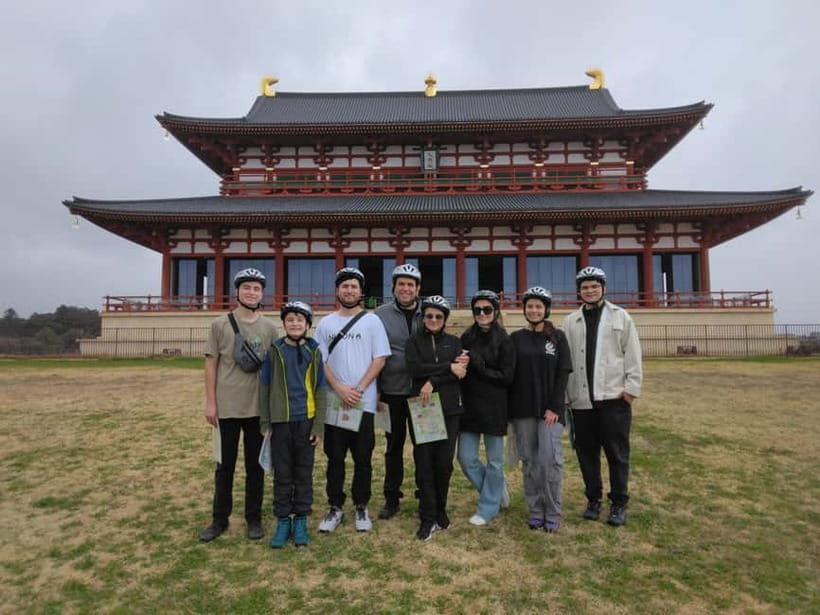
Daiichiji Daigokuden is the reconstructed Imperial Audience Hall, one of the main visual highlights of the tour. It was used for important ceremonies, not ordinary daily business.
Inside, you can see paintings, ornaments, and other displays that help explain the formal world of the Nara court. The building also offers a broad view across the palace grounds, making it a useful place to pause and understand the relationship between the major structures.
The reconstruction is impressive in scale, but you should know what kind of experience this is. It is not an untouched eighth-century hall. The value comes from seeing an informed recreation of a major palace building and learning how it was used.
Some visitors find reconstructed buildings less powerful than original ruins. That is the main limitation of Heijo Palace. Much of the site is represented through rebuilding, models, foundations, and archaeological evidence rather than complete ancient structures.
South Gate and a final museum visit
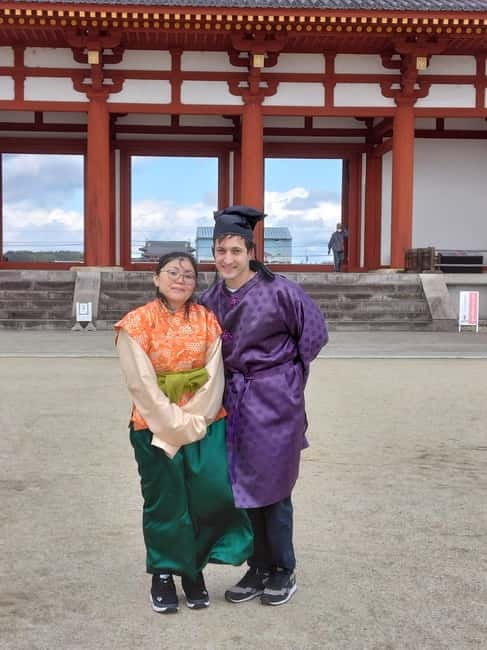
The route continues to the South Gate of the first audience hall, known as Daiichiji Daigokudenin Daigokumon or Nanmon. This is a shorter stop, around five minutes, mainly for a guided look and photographs.
The gate helps you understand how visitors would have approached the ceremonial center. Seen after the audience hall, it also makes the palace plan easier to picture.
The final museum stop is the Heijo Palace Site Museum. Along with the earlier museum visits, it rounds out the archaeological side of the tour with objects and models connected to the palace grounds.
By this point, the bike has done its job. Walking between all these locations would take longer and could make the site feel like a series of disconnected stops. Cycling keeps the sequence moving and lets you see how much space the old palace occupied.
The Tenpyo costume experience
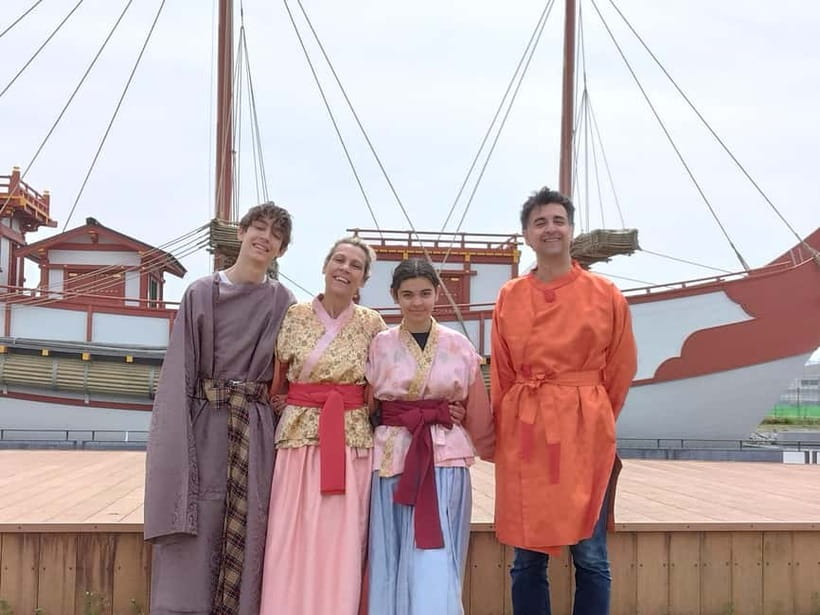
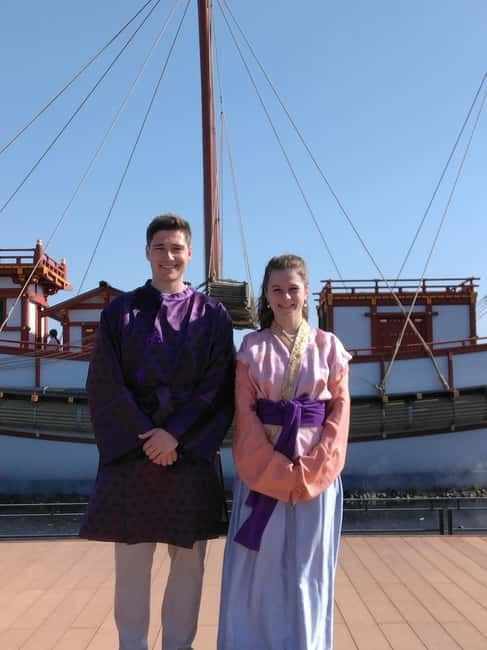
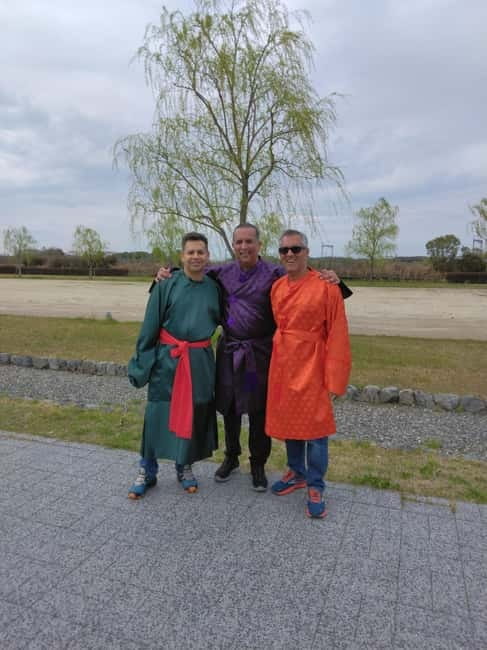
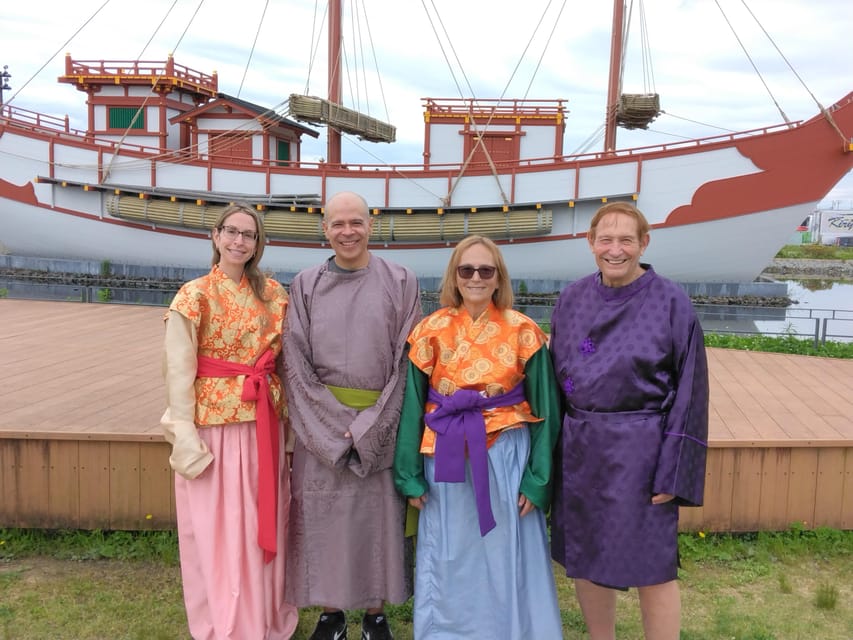
The activity includes an experience wearing traditional Tenpyo, or Nara-period, clothing. You can take memorable photographs in costume, adding a playful element to an otherwise history-focused morning or afternoon.
This is particularly useful for families and anyone who enjoys visual souvenirs. It also helps you imagine the clothing and formal atmosphere of the period in a more direct way.
The supplied information does not specify exactly when the costume portion takes place or how long it lasts, so ask the guide for the timing when you arrive. Do not plan a tight connection immediately afterward.
What the $22 price includes
At $22 per person, this is strong value if you want a guided introduction to the palace site. The price includes the rental bicycle, helmet, guide, admission fees, and the costume experience.
You are paying for more than bicycle use. Admission to several sites, local explanation, and the convenience of covering a wide area are all bundled in. A self-guided visit may cost less if you only want to ride around the grounds, but you would need to arrange the bike yourself and make sense of the palace remains without the same context.
The two-hour length is also well judged for many people. Several stops are short, with time for cycling between them. Families have found the duration manageable, and one guide extended the visit slightly to match the group’s pace.
The main value question is your interest in the subject. If you enjoy Japanese history, archaeology, or historic city planning, $22 is easy to justify. If you mainly want intact temples, elaborate interiors, or a full day of major sights, you may find the palace grounds less compelling.
Timing, transport, and practical concerns
The meeting point is the rental bike reception counter at Miharashi-Kan in Suzaku Gate Square. The coordinates are 34.68628944048124, 135.7926401146025.
Several transport options are provided:
- From Kintetsu Nara Station, take the Nara Kotsu bus for about 16 minutes to Suzakumon-hiroba-mae, then walk about five minutes north.
- From Kintetsu Yamato-Saidaiji Station South Exit, the bus takes about 10 minutes, followed by a five-minute walk north.
- From JR Nara Station West Exit, the bus takes about 10 minutes, followed by the same five-minute walk.
- Walking takes about 20 minutes from Kintetsu Yamato-Saidaiji Station South Exit or from Shin-Omiya Station.
Arrive 10 minutes early. Missing the tour or arriving too late is not refundable, so leave time to find the reception counter.
Weather matters. The supplier can cancel for heavy rain, storms, or other bad conditions, with a full refund. Summer heat can make cycling tiring, as one August participant found. I would choose a cooler part of the day when possible and carry water, since food and drinks are not included.
Bike insurance is also not included. Check what coverage you already have before booking.
Cancellation is free up to 24 hours before the start time, and you can reserve now and pay later. The tour runs in English or Japanese.
Who will enjoy this ride most
I would recommend it to:
- First-time Nara visitors who want context before visiting other sights
- Families with children who can ride comfortably
- People interested in archaeology, imperial history, and old capital cities
- Anyone who wants a quieter alternative to the deer park
- Photographers looking for gates, gardens, open views, and costume pictures
- Visitors who prefer a small group and time for questions
I would be more cautious if you dislike cycling, struggle in hot weather, or need fully accessible transport. I would also think twice if your ideal Nara visit centers on intact historic buildings. Heijo Palace asks you to appreciate reconstruction and archaeological evidence.
Should you book the Heijo-Kyo bike tour?
Book it if you want to see how Nara functioned as an imperial capital rather than only visit its most famous temple district. The bike route, small group, included admissions, and guide Kay’s patient style make the experience especially useful for families and first-time visitors.
Skip it if you are looking for a dramatic ruin or a long indoor museum visit. Much of the palace has been reconstructed, and the open grounds may feel underwhelming without an interest in the period.
For $22, though, the tour gives you a lot of ground, several distinct stops, a guide in English or Japanese, and a gentle introduction to one of Nara’s least crowded major sites. Choose a cool, dry time, arrive early, and let the palace grounds tell their story at bicycle speed.
FAQ
How long is the Nara bike tour?
The tour lasts two hours.
What language is the guide available in?
The live guide is available in English and Japanese.
How many people can join the tour?
The group is limited to eight participants.
Where does the tour meet?
Meet at the rental bike reception counter at Miharashi-Kan in Suzaku Gate Square.
How early should I arrive?
You should arrive at the rental bike reception 10 minutes before the scheduled starting time.
Is a bicycle included?
Yes. The rental bike and helmet are included in the price.
Are entrance fees included?
Yes. All admission fees are included.
Is the traditional costume experience included?
Yes. The tour includes an experience wearing traditional Tenpyo, or Nara-period, clothing.
Is hotel pickup provided?
No. Hotel pickup is not included.
What happens if the weather is dangerous?
The supplier may cancel for heavy rain, storms, or other bad weather. A weather cancellation receives a full refund.
Can I cancel for a full refund?
Yes. You can cancel up to 24 hours in advance for a full refund. Missing the tour or failing to attend is non-refundable.
More Ancient History Tours in Japan
- Colosseum: Underground and Ancient Rome Tour
★ 4.7 · 12,691 reviews - Colosseum & Ancient Rome with Arena Floor Option I Max 6 People
★ 5.0 · 3,306 reviews - Rome: Colosseum, Ancient Rome Tour or AudioGuided Tour
★ 4.4 · 2,879 reviews - Colosseum Underground & Ancient Rome Guided Tour
★ 4.5 · 2,590 reviews
Latest history tours reviewed in Japan
- Authentic Sapporo: Nijo Market Seafood Lunch & History Tour★ 4.8 · 20 reviews
- Asakusa: 3.5-hour Big-picture History Walk★ 4.7 · 39 reviews
- Asakusa: A Big-picture History Walk to Know Japan★ 4.6 · 77 reviews
- 2.5-Hour Nagoya Tour: Castle History, Local Food & City View★ 4.5 · 36 reviews
- 1-Day Tour from Nagoya: Hiking the Historic Nakasendo Trail★ 4.9 · 34 reviews
- Tokyo: Nikko World Heritage Private Day Trip Hotel Pick-up★ 4.8 · 145 reviews
- 2.5 Hour Private History and Culture Tour in Himeji Castle★ 5.0 · 185 reviews
- From Tokyo: Nikko World Heritage Sight Full Day Private Tour★ 4.9 · 127 reviews
Japan History Tours, compared.
Kyoto: Fushimi Inari, Kinkakuji, Bamboo Grove 1 Day Bus Tour
Read our review →
World Heritage Shirakawa-go and Experience Tours from Kanazawa
Read our review →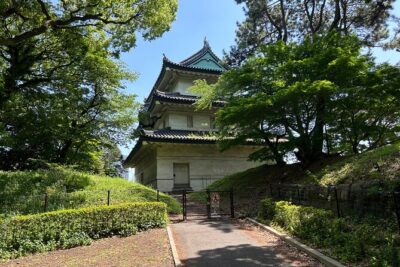
Tokyo: Imperial Palace and Shogun Historical Walking Tour
Read our review →
World Heritage Kyoto & Nara Uji Authentic Matcha Experience
Read our review →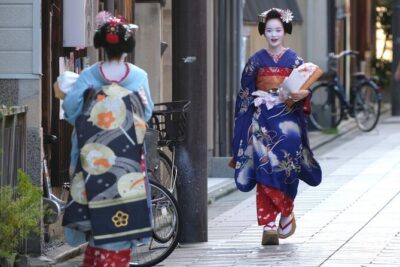
Kyoto Gion: 2-Hour Geisha Culture & History Walking Tour
Read our review →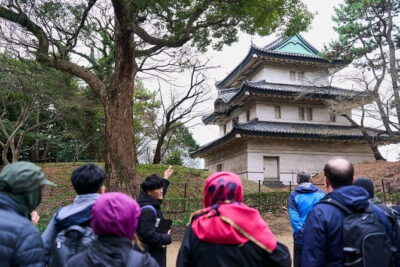
Tokyo Castle & Imperial PalaceーShogun Walking Tour
Read our review →
Kanazawa: World Heritage Shirakawa-go Morning Guided Tour
Read our review →
Tokyo: Imperial Palace Japanese History Walking Tour
Read our review →Browse the lists this tour appears in