
Review · HIROSHIMA
Hiroshima Peace (Heiwa) Walking Tour at World Heritage Sites
Hiroshima’s story is best understood on foot, moving from the stark exhibits of the Peace Memorial Museum to the open views from Orizuru Tower. This five-hour tour connects the city’s wartime suffering with its recovery, using a local guide to explain details that signs alone cannot convey.
I like the small maximum of eight people and the included lunch. I also like the human scale of the route, especially the Aogiri tree, Children’s Peace Monument, and Atomic Bomb Dome. The main drawback is that the museum can become so crowded that you may not reach every exhibit, particularly during busy periods.
The walking is gentle but steady, and the tour is not a good fit if you have mobility problems. Food restrictions also need care: gluten-free requests cannot be accepted, vegetarian choices are limited, and allergy-free meals are not guaranteed.
Key points to know before booking
- The Peace Memorial Museum is the emotional center: Allow yourself time to process difficult exhibits and graphic images.
- Local guides shape the experience: Guides including Yuji, Kaori, Hiro, Etsuko, Yasue, and Tommy have been praised for clear explanations and personal stories.
- The group is capped at eight: This gives you a better chance to ask questions and keep the pace comfortable.
- Orizuru Tower changes the view: The observatory lets you see modern Hiroshima after spending time with its painful past.
- Lunch and admissions are included: The $94.84 price covers the museum, Orizuru Tower, lunch, guide, and tour photos.
- The route needs good walking shoes: The tour lasts about five hours and is not recommended for people with mobility issues.
Why this Hiroshima tour works
Hiroshima Peace Memorial Park can be hard to approach on your own. The monuments are spread across a calm, spacious area, yet each carries a specific meaning. Without context, it is easy to look, take a photo, and move on too quickly.
A guide gives the route shape. You begin with the broad setting of the park, then move toward the museum and memorials. Later, the Atomic Bomb Dome and Orizuru Tower bring the story into the present. That order matters. You first learn what happened, then consider the people affected, and finally see the city that rebuilt itself.
The tour also avoids making Hiroshima only a place of wartime tragedy. Guides explain daily life, local customs, and the city’s recovery. That wider view is one of the strongest reasons to choose a guided walk instead of simply visiting the museum alone.
This is a serious experience, not a light sightseeing outing. Still, it is not presented as a grim march. The emphasis is on remembrance, resilience, and peace, with room for questions and personal reflection.
More History Walking Tours in Japan
- Tokyo: Imperial Palace and Shogun Historical Walking Tour
★ 5.0 · 2,251 reviews - Kyoto Gion: 2-Hour Geisha Culture & History Walking Tour
★ 5.0 · 1,186 reviews - Tokyo Castle & Imperial PalaceーShogun Walking Tour
★ 4.7 · 1,068 reviews
The Peace Memorial Park gives you the setting
The first stop is Hiroshima Peace Memorial Park. You have about ten minutes here before entering the museum, which is enough for your guide to establish the layout and explain why this particular area became the center of remembrance.
The park itself offers a quiet contrast to the subject. Open paths, monuments, and water create space for thought. Your guide helps you understand how the separate memorials relate to one another, rather than treating them as unrelated photo stops.
This opening can feel brief. If you want a long period of quiet reflection before the museum, you may find the first ten minutes limited. The value comes from the guide’s orientation, not from an extended independent visit.
The museum brings history down to human scale
You spend about an hour at the Hiroshima Peace Memorial Museum. This is the part of the tour most likely to affect you emotionally. Displays cover the atomic bombing, its immediate effects, and the struggle of Hiroshima’s people to rebuild their lives.
Expect difficult material. Some exhibits include graphic images that may disturb young children. You should tell your guide if anyone in your group has concerns, especially if you are visiting with children or feel unsure about viewing graphic content.
The guide’s role is particularly useful here. Rather than only repeating dates, a good guide can explain the human meaning behind objects and accounts. Etsuko, Hiro, Yasue, and others have been praised for patient explanations, personal context, and a respectful tone. The tour does not treat the museum as a checklist.
One practical warning matters: crowd levels can affect your visit. At busy times, you may not be able to see the main exhibit without waiting more than an hour. Since the museum is the main reason many people book this tour, this is the biggest possible weakness. A small group does not prevent general museum crowds.
You should also avoid planning another demanding activity immediately afterward. Even with a calm guide and a gentle pace, the museum asks a lot of your attention.
The Cenotaph and Children’s Peace Monument add meaning
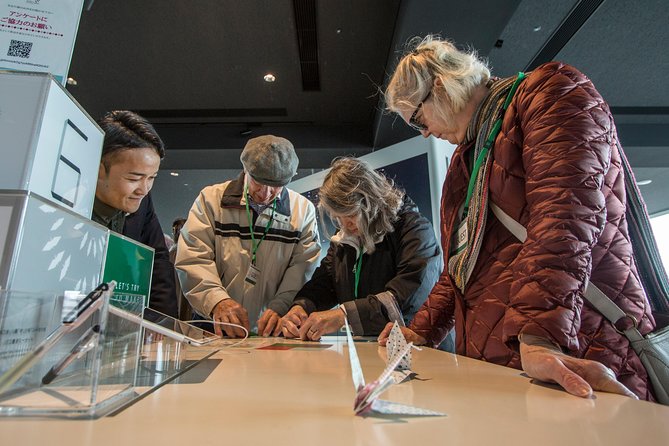
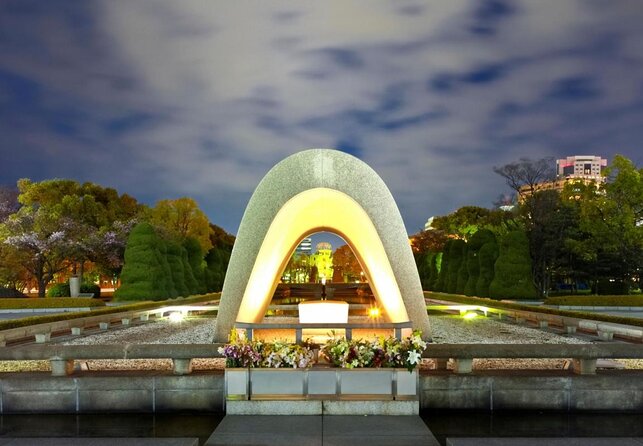
The Cenotaph for the Atomic Bomb Victims receives about five minutes. That sounds short, but the stop works as a focused moment rather than a long lecture. Your guide explains the purpose of the monument and its place within the park.
The Children’s Peace Monument takes about ten minutes. This stop adds an especially personal angle to the tour, connecting the bombing with the lives of children and the continuing wish for peace. The guide explains the monument’s meaning and helps you notice details you might otherwise pass without understanding.
These pauses are valuable because they slow the visit down. After the museum’s many displays, you leave the indoor setting and stand among memorials that are part of Hiroshima’s public life. The experience becomes less about information alone and more about how a city remembers.
More UNESCO World Heritage Tours in Japan
- World Heritage Shirakawa-go and Experience Tours from Kanazawa
★ 5.0 · 4,049 reviews - World Heritage Kyoto & Nara Uji Authentic Matcha Experience
★ 5.0 · 1,573 reviews - Kanazawa: World Heritage Shirakawa-go Morning Guided Tour
★ 4.9 · 988 reviews - Nara: Half-Day UNESCO Heritage & Local Culture Walking Tour
★ 4.8 · 250 reviews
The Atomic Bomb Dome makes the past visible

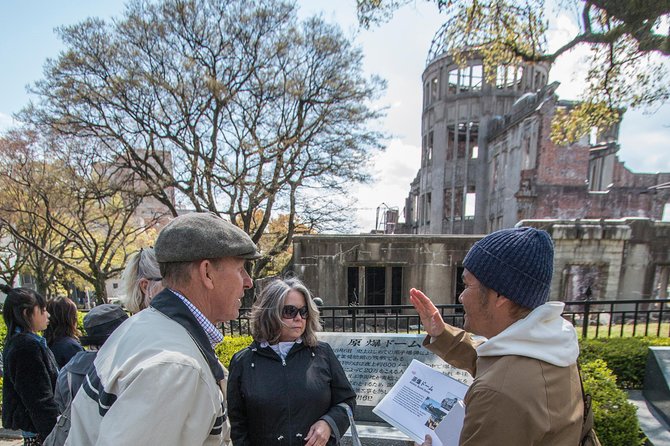
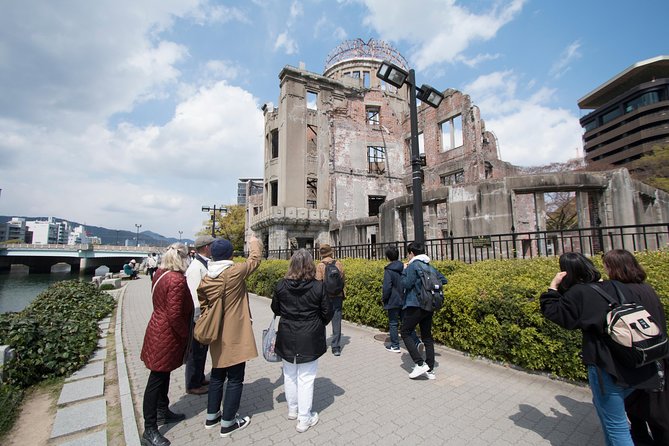
The Atomic Bomb Dome is one of Hiroshima’s most recognizable sites. You spend about fifteen minutes here, viewing the surviving structure from outside and learning about the bombing at 8:15 on August 6, 1945.
The building’s damaged form gives the history a physical presence. Museum exhibits can show photographs and personal objects, but the Dome shows the force of the event through architecture that remained standing.
This is also a stop where your guide’s explanation matters. The surrounding city is modern and active, which can make it difficult to picture the destruction of 1945. A local guide helps connect the building to the larger story without turning the visit into a simple photo opportunity.
You will want comfortable shoes, but this is not described as a strenuous hike. The walk is generally easy, with the main concern being the total time on your feet.
Orizuru Tower offers a needed change of view
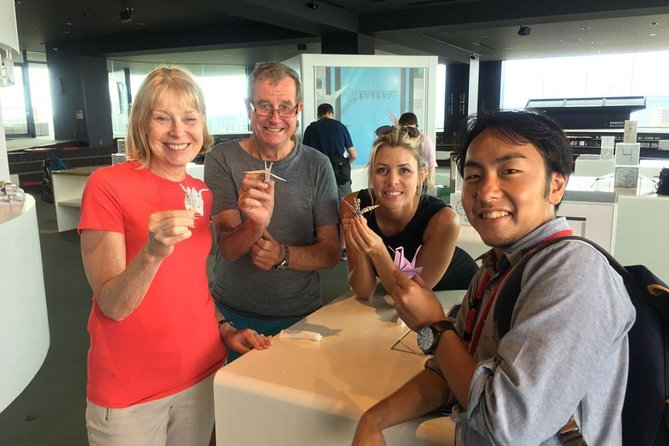
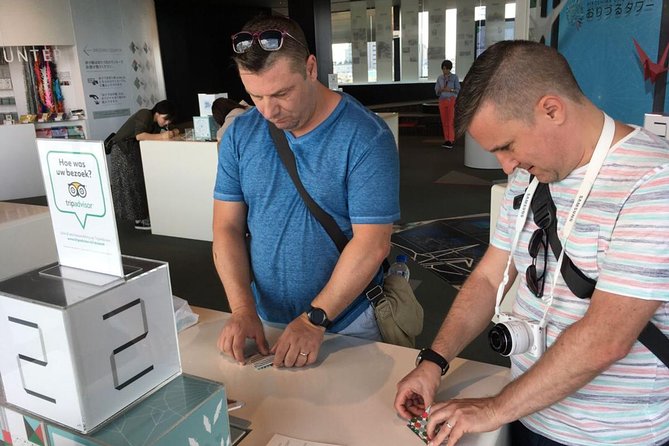
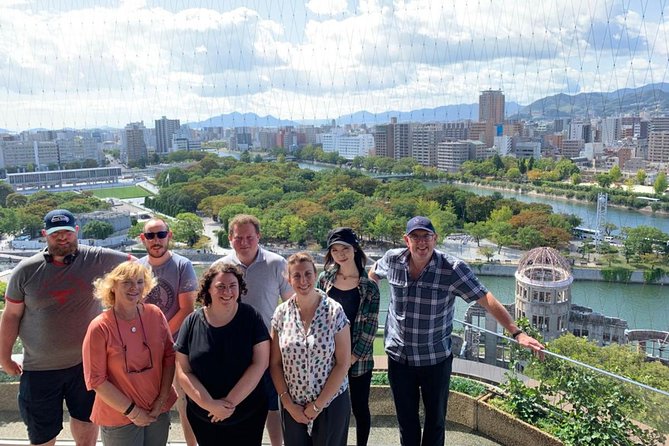
The final major stop is Hiroshima Orizuru Tower. Here you go up to the observatory and have lunch near the top. The view provides a striking change after the museum, monuments, and Dome.
From above, you see modern Hiroshima as a living city rather than only a memorial site. That visual contrast is one of the tour’s best design choices. The city’s present does not erase its past, but it shows what recovery looks like in daily life.
Lunch is included, and the tour also provides tour photos. The meal gives you a natural point to pause and talk with your guide. Several guides have been praised for making lunch feel relaxed and for helping groups continue their conversations about Hiroshima beyond the formal sights.
Food is the area where you should plan carefully. Gluten-free requests cannot be accommodated. Vegetarian choices are limited, and the operator cannot promise allergy-free food because meals are prepared in kitchens outside the company’s control. Tell the operator about dietary needs at least one day before the tour, but understand that substitutions may not be possible at every stop.
The tour ends near the lunch restaurant and Orizuru Tower area. That is useful if you want to continue exploring central Hiroshima afterward, though the supplied information also notes the activity ends near Chishaku-in Temple. Confirm the exact ending point with the operator if your onward plans depend on it.
What the guides add
The guide is the main reason to book this rather than visit the same sites independently. MagicalTrip uses certified local guides, and the strongest guide experiences come from the way they combine historical facts with personal and cultural context.
Yuji has been praised for making the day informative and special, with a warm approach to Hiroshima’s history. Kaori is known for keeping groups moving smoothly and anticipating questions. Hiro has shared local stories about the bombing, later generations, and the city’s continuing commitment to peace.
Etsuko has been praised for connecting individual lives to each stop and for showing genuine care toward the group. Yasue is described as patient and thoughtful when answering difficult questions. Tommy has helped visitors understand Hiroshima as a city, not only as the site of an atomic bombing.
You cannot choose a specific guide from the information provided, so treat these names as examples of the style you may receive, not a guarantee. The guide assignment can affect the tone of the day, but the certified guide format gives the tour a clear standard.
A useful tip is to ask questions. The small group size makes that easier, and guides can often explain points that are not obvious from museum labels. Some guides also take photos, which saves you from constantly managing your phone while listening.
Price and what the $94.84 covers
At $94.84 per person, this is not the cheapest way to see Peace Memorial Park. Its value depends on how much help you want with context, timing, and movement between the sites.
The price includes:
- Admission to the Hiroshima Peace Memorial Museum
- Admission to Orizuru Tower
- Lunch
- A certified MagicalTrip guide
- Tour photos
The admissions and meal take some of the uncertainty out of the day. You are not paying only for a walk around public monuments. You are paying for a five-hour route, a small group capped at eight, guide support, and access to the tower.
I consider the price reasonable for a first visit if you want the history explained in clear terms. It is less compelling if you prefer to spend several hours alone in the museum or move at your own speed. You may also need to buy extra drinks or food, since additional food and beverages are not included.
Group discounts are available, and the ticket is mobile. Free cancellation is allowed up to 24 hours before the start time. If bad weather causes cancellation, you are offered another date or a full refund.
Heat, walking, and the best type of visitor
Hiroshima summers can be very hot and humid, with temperatures reaching 40°C. Bring water, wear a hat, and dress for the forecast. Winter can also be cold, with temperatures listed as low as -5°C, so this is not a tour where you should ignore the weather.
The tour is near public transportation, but the route itself involves walking between sites. Most people can participate, yet the operator does not recommend it for those with mobility problems. If walking is difficult, a private tour is suggested instead.
I would choose this experience if you are visiting Hiroshima for the first time, want a clear introduction to the memorial sites, or prefer to ask questions as you go. It also suits families with older children who can handle serious museum material, couples, and solo visitors who want company without joining a large bus group.
I would hesitate if you need strict dietary control, want a fully private experience, or dislike fixed schedules. The museum crowd issue is real, and five hours may not allow enough independent time at every stop.
Should you book the Hiroshima Peace Walking Tour?
Book it if you want Hiroshima explained with care rather than simply photographed. The route covers the essential memorial sites, includes the museum and Orizuru Tower, and leaves you with both the tragedy and the city’s recovery in view.
The best reason to go is the local guide. Names such as Yuji, Kaori, Hiro, Etsuko, Yasue, and Tommy have been associated with warmth, patience, useful detail, and a strong sense of responsibility toward Hiroshima’s story.
Before booking, check the weather, prepare for several hours of walking, and contact the operator about food needs at least one day ahead. If your main goal is to see every museum display at your own pace, visit independently or allow another day. If you want a respectful, well-organized first look at Hiroshima, this tour is a strong choice.
FAQ
How long does the Hiroshima Peace Walking Tour last?
The tour lasts approximately five hours.
What sites are included?
The route includes Hiroshima Peace Memorial Park, the Hiroshima Peace Memorial Museum, the Cenotaph for the Atomic Bomb Victims, the Children’s Peace Monument, the Atomic Bomb Dome, and Hiroshima Orizuru Tower.
Is lunch included?
Yes. Lunch is included, and it takes place at or near Hiroshima Orizuru Tower.
Is the museum admission included?
Yes. The entrance fee for the Hiroshima Peace Memorial Museum is included.
How large is the tour group?
The tour has a maximum of eight travelers.
Can people with mobility issues join?
The tour is not recommended for individuals with mobility issues because it involves walking. A private tour is recommended for those who have difficulty walking.
Can the tour accommodate gluten-free or allergy-free meals?
No gluten-free requests can be accepted. Allergy-free meals are not guaranteed, and vegetarian choices are limited. Dietary requests or allergies should be shared at least one day before the tour.
What happens if the weather is poor?
The experience requires good weather. If it is canceled because of poor weather, you are offered a different date or a full refund.
More WWII and D-Day Tours in Japan
- Vienna: World War II Historical Walking Tour
★ 4.8 · 1,772 reviews - Zagreb: City & History Walking Tour & WW2 Tunnels
★ 4.9 · 1,202 reviews - Pearl Harbor History Remembered Tour from Ko Olina
★ 5.0 · 1,009 reviews - Berlin: History of the Third Reich Guided Walking Tour
★ 4.7 · 791 reviews
Latest history tours reviewed in Japan
- Authentic Sapporo: Nijo Market Seafood Lunch & History Tour★ 4.8 · 20 reviews
- Asakusa: 3.5-hour Big-picture History Walk★ 4.7 · 39 reviews
- Asakusa: A Big-picture History Walk to Know Japan★ 4.6 · 77 reviews
- 2.5-Hour Nagoya Tour: Castle History, Local Food & City View★ 4.5 · 36 reviews
- 1-Day Tour from Nagoya: Hiking the Historic Nakasendo Trail★ 4.9 · 34 reviews
- From Tokyo: Nikko World Heritage Sight Full Day Private Tour★ 4.9 · 127 reviews
- From Tokyo: Nikko World Heritage Site Private Full-Day Trip★ 4.9 · 243 reviews
- Tokyo: Nikko World Heritage Private Day Trip Hotel Pick-up★ 4.8 · 145 reviews
Hiroshima History Tours, compared.
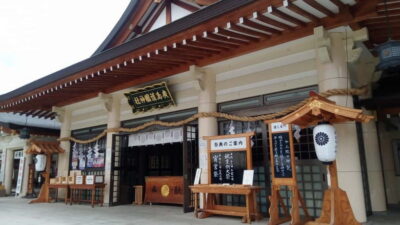
Hiroshima Historical Walking Tour – Why A-Bomb was Dropped
Read our review →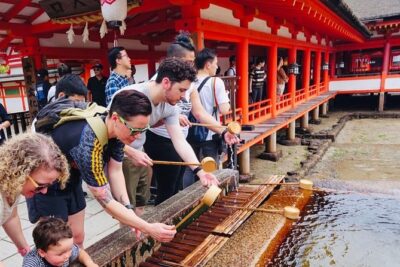
Miyajima Half-day Trip Historical Walking Tour
Read our review →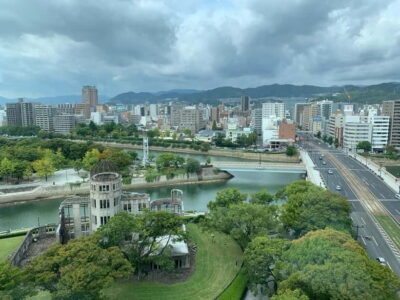
Hiroshima: History of Hiroshima Group Walking Tour
Read our review →Browse the lists this tour appears in