
Review · TOKYO
Tokyo: Imperial Palace and Shogun Historical Walking Tour
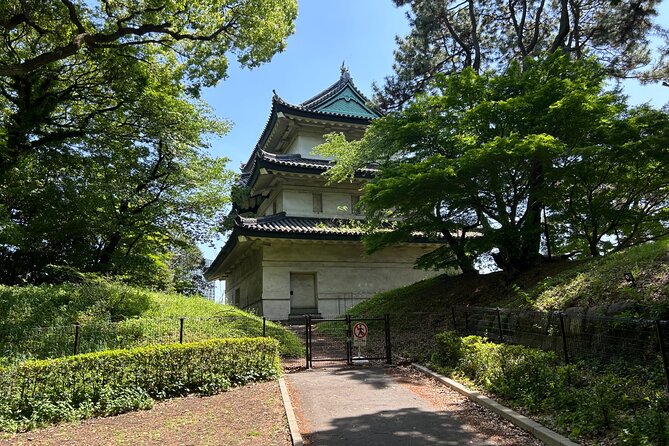
Tokyo’s Imperial Palace East Gardens give you a rare chance to walk through the former grounds of Edo Castle, where samurai power once shaped Japan. The best part is the contrast: massive stone walls and castle foundations meet quiet ponds, flowers, and carefully arranged garden paths. You are walking through history, not just looking at a palace from behind a fence.
I like the small-group format, capped at 15 people, and the way a good guide turns bare stones into a story about shoguns, emperors, and modern Tokyo. I also like the price: at $22, the tour adds useful context to gardens you can enter for free. The main drawback is that the experience depends heavily on your guide. Some guides, including Jim, Tony, Miguel, and Izzy, have earned strong praise, while one less experienced guide apparently gave a thinner history lesson.
Key points
- Edo Castle foundations: Stand on the former castle keep site and picture the power once concentrated here.
- Ninomaru Garden: See ponds, seasonal flowers, and Edo-period garden design within the East Gardens.
- Small group size: A maximum of 15 people makes questions and regrouping easier.
- Guide-led context: The tour explains the shogunate, the Emperor, the Imperial family, and changes in Japan.
- About two hours on foot: The main garden visit takes roughly 90 minutes, with slopes and plenty of walking.
- Good low-cost add-on: The gardens are free, but the $22 fee pays for interpretation rather than admission.
Why Edo Castle matters more than the palace walls
Many first-time visitors come to Tokyo expecting a grand palace tour. That is not what this experience offers. You do not enter the private Imperial Palace buildings. Instead, you explore the East Gardens, public grounds that occupy part of the old Edo Castle site.
That distinction matters. Edo Castle was the political center of Japan during the shogun era, while the Imperial family later used the same broad area after the capital moved to Tokyo. A guide helps connect those two chapters. Without one, you may see a gate, a stone wall, or a grassy rise and move on. With one, those remains become clues to how Japan was governed.
The tour also gives you a useful starting point for understanding Tokyo. The city can feel like a collection of separate districts, but this area links feudal government, imperial rule, war damage, rebuilding, and present-day Japan in one walk.
More Castle and Palace History Tours in Japan
- Tokyo Castle & Imperial PalaceーShogun Walking Tour
★ 4.7 · 1,068 reviews - Tokyo: Imperial Palace Japanese History Walking Tour
★ 4.9 · 987 reviews - Tokyo Castle & Imperial PalaceーShogun Walking Tour
★ 5.0 · 724 reviews
Meeting at Wadakura Fountain Park

The tour begins at Starbucks Coffee in Kokyo Gaien Wadakura Fountain Park, at 3-1 Kōkyogaien in Chiyoda City. This is a practical meeting area near public transportation, but you should still allow time to find the exact spot and arrive early.
One unpleasant experience reported for this tour involved confusion over the meeting point and a departure before the participant could connect with the group. That appears to be a communication problem rather than a normal feature of the activity, but it gives you a useful rule: confirm the meeting instructions carefully, keep your phone available, and arrive before the stated start time.
The activity ends back at the same meeting point. That makes it easier to plan around, especially if you want to continue toward another central Tokyo sight afterward.
Through the gates and former castle grounds
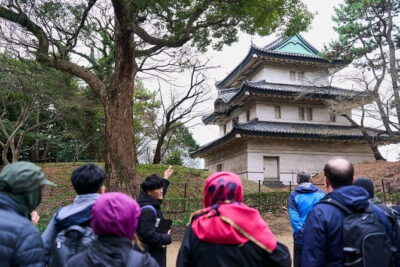
The walk takes you through imposing stone gates and along remnants of Edo Castle’s walls. These are not polished museum displays. Much of the appeal comes from reading the site itself: the size of the masonry, the shape of the entrances, and the way the grounds rise and fall.
The guide’s job here is to supply the missing human scale. You hear about samurai authority, feudal lords, the shogunate, and the Imperial family. The strongest guides also connect the old power structure to modern Japanese culture and Tokyo life.
Jim has been praised for answering questions patiently and for explaining the finer details of the site. Tony is particularly good at linking Edo Castle’s importance with the later Imperial period. Miguel has been described as bringing in historical facts, modern Tokyo, and cultural observations rather than giving a narrow list of dates.
That range is important because this is not simply a walk past ruins. The experience works best when the guide explains why the grounds mattered, who controlled them, and how the meaning of the site changed over time.
The castle keep foundation and the view from above
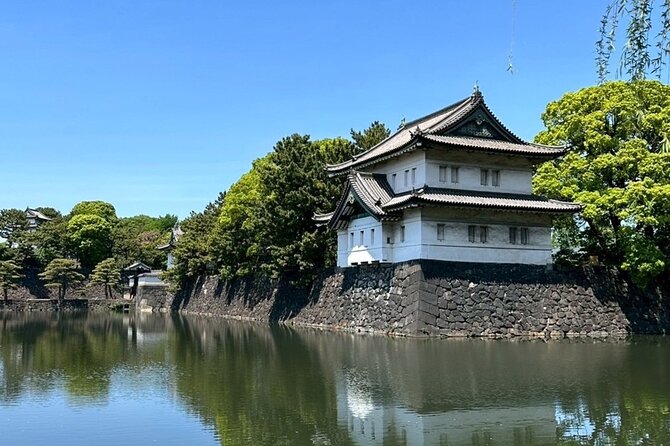
One of the most memorable stops is the foundation of the former castle keep. The keep itself is gone, but the base remains, giving you a clear sense of the scale of the lost structure.
This is the moment when the tour’s title makes sense. You are not just seeing an imperial garden. You are standing on the remains of a place tied to the shoguns and their military government.
The stop can also be one of the slower parts of the walk. Some visitors appreciate a long explanation here, especially if Japanese history is new to them. Others may find a guide’s talk repetitive or too drawn out. A four-star assessment specifically noted that the tour could have set the historical scene earlier, while another participant felt that some stops went on too long.
My advice is to do a little preparation before you arrive. You do not need a textbook, but knowing the basic difference between the shogun and the Emperor will make the guide’s explanations easier to follow. If you already have a strong background in Japanese history, you may prefer a guide who keeps the talk moving and focuses on the site.
More History Walking Tours in Japan
- Kyoto Gion: 2-Hour Geisha Culture & History Walking Tour
★ 5.0 · 1,186 reviews - Hiroshima Historical Walking Tour – Why A-Bomb was Dropped
★ 4.8 · 893 reviews - Hiroshima Peace (Heiwa) Walking Tour at World Heritage Sites
★ 5.0 · 872 reviews - Miyajima Half-day Trip Historical Walking Tour
★ 5.0 · 284 reviews
Ninomaru Garden and the quieter side of Tokyo
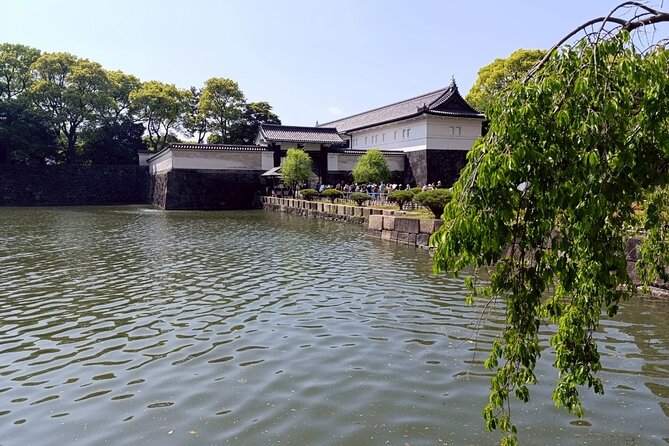
The East Gardens are not only about military stonework. Ninomaru Garden provides a change of mood, with ponds, seasonal flowers, and a calmer style of design associated with the Edo period.
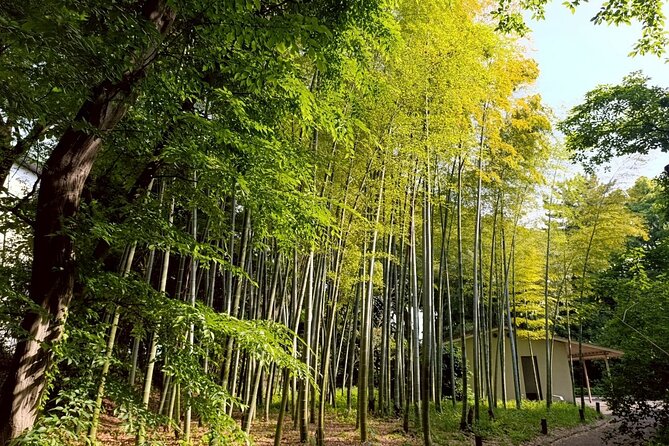
This is where the walk becomes especially pleasant. After the heavy gates and defensive walls, you move into a setting built around balance, water, plants, and carefully framed views. The garden offers a softer look at the same society that produced powerful castles and strict political order.
The garden is free to visit on your own, so the tour fee is not buying entry. It is buying interpretation, company, and a route through a large historic site. If you simply want a quiet stroll and can read basic signs, independent entry may be enough. If you want to understand why the garden, walls, and castle base belong together, $22 is a reasonable price.
The relaxed pace suits people who want time to look around rather than rush from one photo stop to the next. It also gives you a chance to ask questions. Guides such as Aya have been praised for explaining cultural meaning in a personal, accessible way, though the available comments about her mention Senso-ji as well as the palace area, so do not assume every guide covers the same material in exactly the same way.
What the guide can add to a free garden
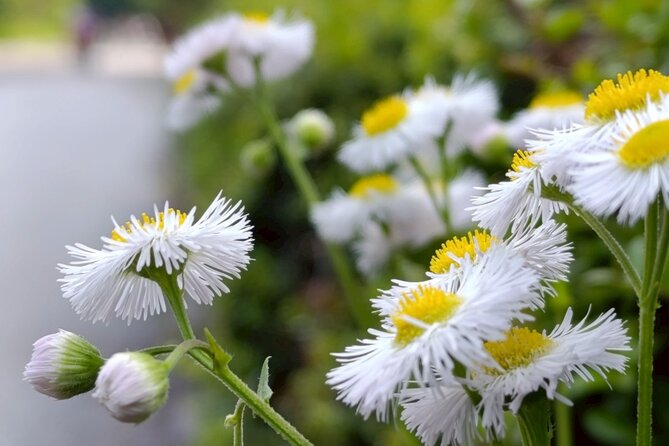
A free site is not automatically a complete experience. The East Gardens can be beautiful and easy to enter, but the remains do not explain themselves. A stone wall does not tell you who built it, why it was placed there, or what it replaced.
That is where the tour earns its fee. A strong guide can explain:
- How Edo Castle relates to the shogunate
- How the Imperial family fits into Japan’s political story
- Why the castle foundation matters
- What the gates and walls reveal about defense and status
- How the garden reflects Edo-period taste
- How historical Tokyo connects with the city you see today
The best accounts of this activity praise the guides for storytelling, cultural explanation, patience, and answers to questions. Jim, Tony, Miguel, Izzy, Lasse, Michi, Dylan, and John are among the names associated with especially positive experiences. Lasse is noted for his passion for Japanese history, while Michi is praised for making the palace grounds feel thoughtful and engaging.
That said, guide quality is not perfectly uniform. One participant felt the guide lacked historical preparation and relied on a supervising guide for answers. You should book this as a guided introduction, not as a guaranteed specialist lecture.
A two-hour walk with real slopes
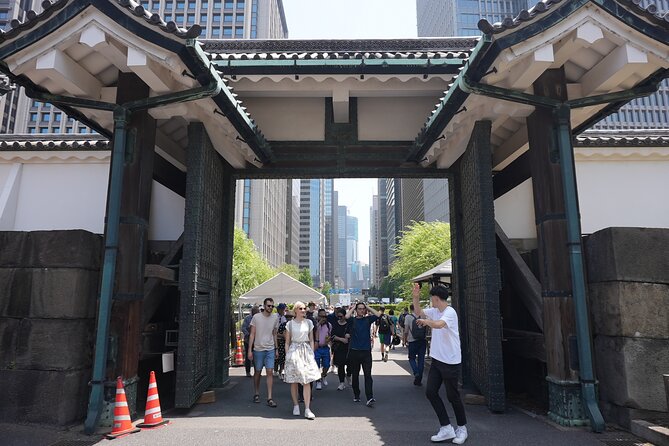
The total experience lasts about two hours, with the main East Gardens portion listed at roughly 90 minutes. The rest of the time likely covers meeting, entering the grounds, moving between stops, and returning to the meeting point.
You should expect a real walking tour, not a short stroll. The route includes slopes, gates, walls, garden paths, and pauses for explanation. Comfortable shoes will help, and you should be ready to stay with the group while the guide moves between stops.
Most people can participate, and the group maximum is 15. That is small enough for the guide to keep an eye on the group and answer some questions, but it is not a private tour. If all 15 places are filled, you may still be standing behind other people during explanations.
The pace is described as easy, but easy does not mean motionless. If you have limited walking stamina, the combination of slopes and extended standing is worth considering. The tour does not advertise a dedicated accessibility arrangement, so you should ask the provider if you need specific assistance.
Why guide quality matters here
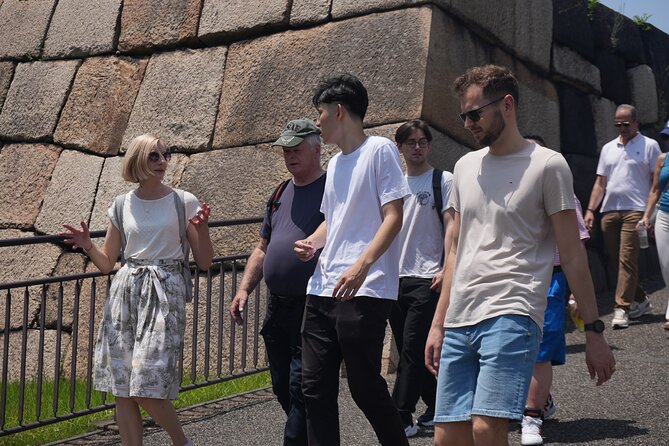
This is a site where the guide can make the difference between a pleasant garden walk and a memorable history lesson. The strongest guides seem to do three things well: they explain the setting before the group enters the historic area, they connect dates to people and power, and they leave room for questions.
Jim is repeatedly associated with patient explanations and a strong grasp of Japanese history. Tony is praised for giving context about the Edo period, the shogunate, the Emperor, and the Imperial family. Miguel is described as friendly, patient, and willing to discuss both historical and modern Japan.
You may also get a guide with a different style. One person found the information too repetitive, while another felt that a newer guide had not yet developed enough command of the subject. That is a fair warning for anyone booking primarily for serious historical study.
Still, the overall satisfaction is unusually high, with a 5 out of 5 rating from 2,251 reviews and a 99 percent recommendation rate. Those numbers do not remove the variability of individual guides, but they do suggest that most people find the mix of walking, gardens, and explanation worthwhile.
Is $22 good value?
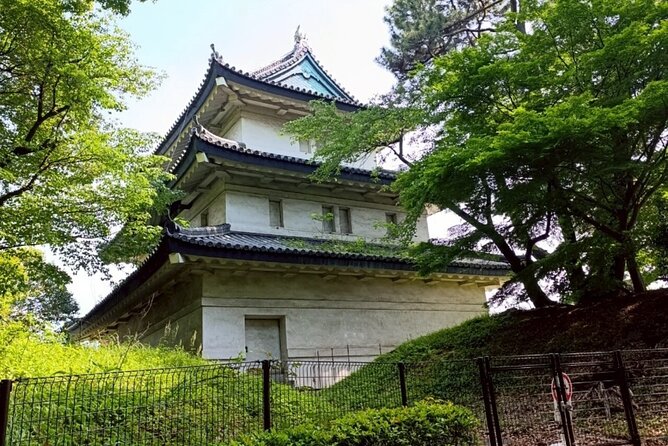
At $22 per person, this is one of the less expensive guided history activities you can book in central Tokyo. The East Gardens themselves are free, so the value depends on how much you want from the visit.
I would pay the fee if you are new to Japan, unsure how the shogunate fits into the country’s story, or likely to walk past castle remains without knowing what you are seeing. The guide gives you a framework that can improve later visits to other Tokyo sights.
I would skip it if you prefer to explore quietly, dislike scheduled walks, or already know Japanese political history well. You can enter the gardens without paying for a guide, and the site remains pleasant even without commentary.
The small group and modest price make this a sensible first-day or early-stay activity. It can help you get your bearings in central Tokyo. It also works near the end of a trip, when you have enough context to ask sharper questions about what you have seen elsewhere.
Practical details before you book
The mobile ticket is convenient, and booking confirmation is provided at the time of booking. Free cancellation is available if you cancel at least 24 hours before the local start time. Changes or cancellations inside that window are not accepted for a refund.
Plan around the weather because much of the activity takes place outdoors. The information provided does not specify weather-related arrangements, so check the forecast and ask the provider if conditions look poor.
Arrive early at the Starbucks meeting point. Do not rely on finding the group by chance after the start time, especially since one poorly handled meeting experience ended with the group moving on before the participant connected.
The tour returns to the starting point, which simplifies your next plan. You can also use the walk as a gentle introduction to Tokyo’s central geography before heading elsewhere.
Who should book this Imperial Palace walk?
I would recommend it to first-time visitors who want history explained in plain language, couples and small groups who enjoy walking, and anyone curious about the link between Edo Castle and the Imperial Palace.
It is also a good fit for people who want a quieter side of Tokyo. You get stone gates, castle foundations, ponds, flowers, and open garden space rather than a packed schedule of indoor attractions.
I would be more cautious if you want access to the active Imperial Palace buildings, because this experience focuses on the East Gardens and former castle grounds. I would also hesitate if you need a fully accessible route or want a specialist-level history seminar.
Should you book it?
Book this tour if you want the East Gardens to mean more than a pleasant green space. For $22, you receive a guided walk through castle remains, Ninomaru Garden, and the former seat of shogun power, with a chance to ask questions along the way.
The best outcome comes with a strong guide, and names such as Jim, Tony, Miguel, Izzy, Lasse, and Michi have been linked with particularly engaging explanations. Go in expecting a friendly introduction rather than a perfectly uniform academic tour, arrive early, wear comfortable shoes, and give yourself roughly two hours.
FAQ
How long does the Imperial Palace and Shogun Historical Walking Tour last?
The experience lasts approximately two hours. The guided visit through the East Gardens and Edo Castle ruins takes about 90 minutes.
How much does the tour cost?
The listed price is $22 per person.
Where does the tour begin?
It begins at Starbucks Coffee in Kokyo Gaien Wadakura Fountain Park, 3-1 Kōkyogaien, Chiyoda City, Tokyo 100-0002, Japan.
Where does the tour end?
The activity ends back at the meeting point.
How large is the group?
The tour has a maximum of 15 participants.
Are the Imperial Palace East Gardens included?
Yes. The guided East Gardens visit and admission ticket are included. The gardens can also be visited for free without this tour.
Can I cancel for a full refund?
Yes. You can cancel at least 24 hours before the experience’s local start time for a full refund. Cancellations or changes made less than 24 hours before the start time are not refunded.
Latest history tours reviewed in Japan
- Authentic Sapporo: Nijo Market Seafood Lunch & History Tour★ 4.8 · 20 reviews
- Asakusa: 3.5-hour Big-picture History Walk★ 4.7 · 39 reviews
- Asakusa: A Big-picture History Walk to Know Japan★ 4.6 · 77 reviews
- 2.5-Hour Nagoya Tour: Castle History, Local Food & City View★ 4.5 · 36 reviews
- 1-Day Tour from Nagoya: Hiking the Historic Nakasendo Trail★ 4.9 · 34 reviews
- Tokyo: Nikko World Heritage Private Day Trip Hotel Pick-up★ 4.8 · 145 reviews
- 2.5 Hour Private History and Culture Tour in Himeji Castle★ 5.0 · 185 reviews
- From Tokyo: Nikko World Heritage Sight Full Day Private Tour★ 4.9 · 127 reviews
Tokyo History Tours, compared.
Tokyo Castle & Imperial PalaceーShogun Walking Tour
Read our review →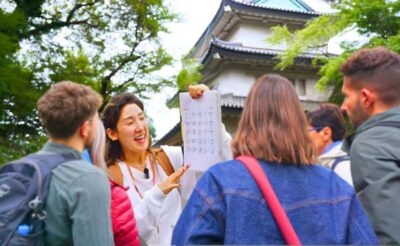
Tokyo: Imperial Palace Japanese History Walking Tour
Read our review →
From Tokyo: Nikko World Heritage Site Private Full-Day Trip
Read our review →
Tokyo: The Best of Izakaya in Shinjuku Food & Cultural Tour
Read our review →
Tokyo: Nikko World Heritage Private Day Trip Hotel Pick-up
Read our review →From Tokyo: Nikko World Heritage Sight Full Day Private Tour
Read our review →
Asakusa: A Big-picture History Walk to Know Japan
Read our review →
Tokyo: 3-Hour Bike/E-Bike Tour of the City’s Hidden Gems
Read our review →Browse the lists this tour appears in