
Review · TOKYO
Tokyo: Imperial Palace Japanese History Walking Tour
Tokyo’s Imperial Palace grounds tell the story of a nation changing rulers without losing its sense of place. On this walking tour, you follow the route into the former Edo Castle, where shoguns once held power and where the Emperor’s palace later took shape.
I like the tour’s small price of $32, especially because a live guide turns stone walls, gates, and garden paths into a readable history lesson. I also like the human touches: guides such as Mika, Natsumi, Lakki, and Alexandre explain the past clearly, answer questions, take photos, and offer practical food and sightseeing tips.
The main drawback is simple: you do not enter the Inner Palace, which is closed to the public. The walk also takes place outdoors in all weather, and Tokyo’s summer heat, rain, mosquitoes, and uneven ground can make it tiring for some people.
Key points at a glance
- Follow the old castle route: Enter through Otemon Gate and walk across the site of Edo Castle, once the seat of shogun power.
- Learn the social order: The guide explains the old ranking system of farmer, samurai, daimyo, and shogun.
- See more than palace walls: Expect gardens, bamboo, royal koi fish, old samurai residences, castle remains, and trees gifted from around Japan.
- Get a useful history lesson: The tour connects the Edo period, the Meiji transition, and the growth of modern Tokyo.
- Meet at an easy city-center location: Find your guide near the Starbucks by Wadakuramon fountain park, a five to ten minute walk from Tokyo or Otemachi Station.
- Expect a friendly guide: English is offered, French is also available, and guides often help with photos, restaurant ideas, and other Tokyo plans.
Why the Imperial Palace grounds make a good first Tokyo tour
The Imperial Palace is more than a formal royal residence. It is a place where Japan’s political story can be read in the ground beneath your feet. The present palace occupies the center of Tokyo, but the Eastern Gardens preserve parts of the old Edo Castle complex.
That shift matters. Edo Castle was once the base of the Tokugawa shoguns, military rulers who controlled Japan for more than two centuries. After the Meiji Restoration, imperial power returned to the center of government, and the castle site took on a new role.
You can walk through the grounds on your own, but the meaning of a foundation or gate is not always clear when you see it without context. I like having a guide explain why the castle disappeared, how power was organized, and what changed when Japan moved from shogun rule toward the modern state.
This is not a palace-interior tour. It is an outdoor history walk with scenery along the way. If you want elaborate rooms, royal art, or access to the Emperor’s private compound, this is not the right activity. If you want a clear introduction to Japanese history while walking through an important site, it works well.
More Castle and Palace History Tours in Japan
- Tokyo: Imperial Palace and Shogun Historical Walking Tour
★ 5.0 · 2,251 reviews - Tokyo Castle & Imperial PalaceーShogun Walking Tour
★ 4.7 · 1,068 reviews - Tokyo Castle & Imperial PalaceーShogun Walking Tour
★ 5.0 · 724 reviews
Meeting at Wadakuramon fountain
The tour starts near the Starbucks in Wadakuramon fountain park. From Tokyo Station or Otemachi Station, allow about five to ten minutes on foot to reach the park. The guide waits near the fountain with a Sunrise Adventure sign.
That meeting point is practical, but Tokyo Station can be confusing if you are unfamiliar with its underground passages and many exits. Give yourself extra time, especially if you are meeting the group early in your visit. Look for the fountain and the sign rather than relying only on the café.
The guide-led start is helpful because the palace grounds are large and the approach to Otemon Gate is part of the experience. You are not simply dropped at a landmark and left to work out the rest. The group walks together toward the gate, with the historical setting beginning before you enter.
Through Otemon Gate and into Edo Castle’s past
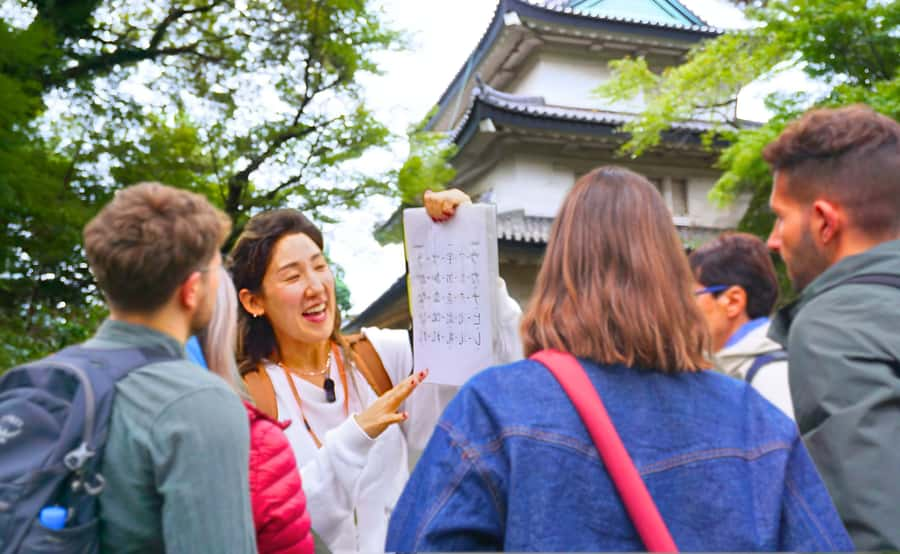
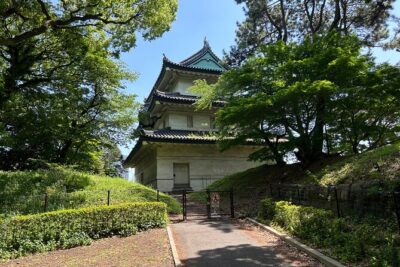
Otemon Gate is the natural opening to the tour. It once controlled access to Edo Castle, a place where entry was carefully managed and rank mattered. The guide uses the gate and surrounding defenses to introduce the world of the shoguns.
One especially useful part of the explanation is the old social order: farmer, samurai, daimyo, and shogun. This simple ladder helps you understand how authority worked in the Edo period. The shogun sat at the top of the military government, daimyo governed regional domains, samurai served as warriors and officials, and farmers supported the economic system through agriculture.
The tour does not treat these categories as dry vocabulary. A good guide connects them to the castle itself, showing how architecture and movement reflected political control. Guides such as Natsumi are especially praised for explaining the Edo period in a way that makes the sequence easy to follow.
You will also see a model of the original castle. Since the castle buildings are no longer standing, the miniature model is an important visual aid. It helps you picture the scale and layout of the complex rather than trying to reconstruct it from scattered walls and foundations.
Castle ruins that need a guide’s explanation
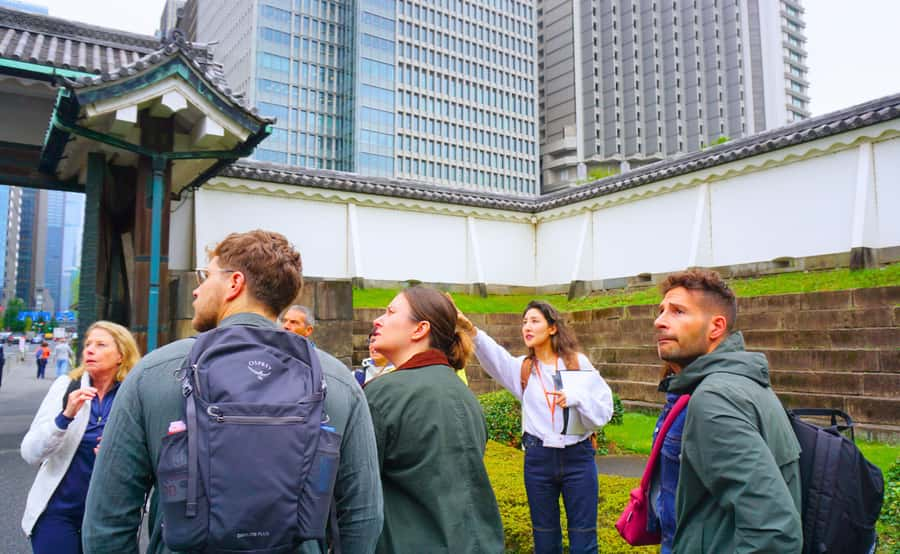
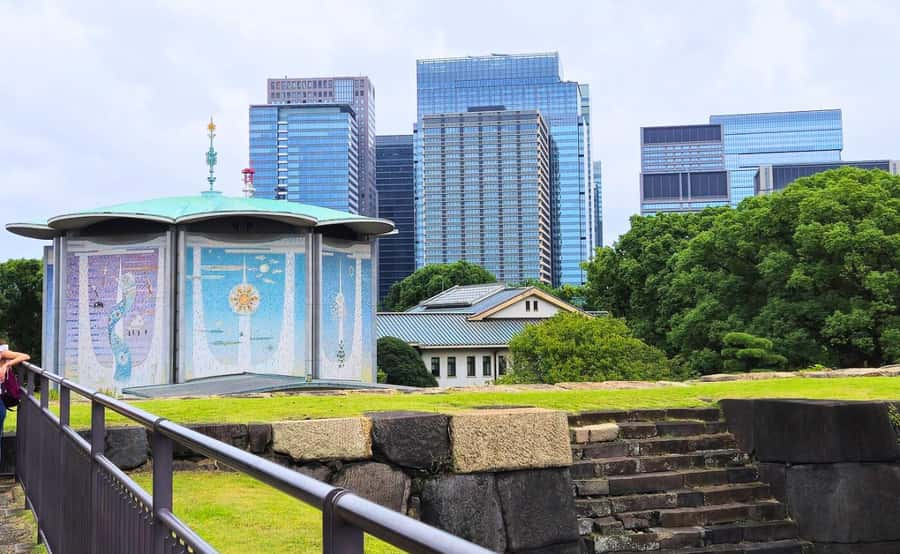
The remaining stonework is impressive, but it does not explain itself. Large stones, raised platforms, and old foundations can look like attractive garden features unless someone tells you what they once supported.
Here the guide fills in the missing pieces. You learn how a castle that shaped Japan’s politics was transformed over time, and why the original structure is no longer present. The story links the physical remains to the political shift from Tokugawa rule to imperial government.
I value this part of the tour because it keeps the visit grounded. You are not only looking at beautiful scenery. You are standing on a site connected to decisions that shaped the country’s government, class system, and capital.
The pace appears designed for stopping and listening rather than rushing from one photo point to the next. One account describes a walk of roughly two hours, although the exact timing can depend on the guide, weather, and group. The route is long enough to feel substantial without taking over your entire day.
More History Walking Tours in Japan
- Kyoto Gion: 2-Hour Geisha Culture & History Walking Tour
★ 5.0 · 1,186 reviews - Hiroshima Historical Walking Tour – Why A-Bomb was Dropped
★ 4.8 · 893 reviews - Hiroshima Peace (Heiwa) Walking Tour at World Heritage Sites
★ 5.0 · 872 reviews - Miyajima Half-day Trip Historical Walking Tour
★ 5.0 · 284 reviews
Gardens, bamboo, and royal koi

The Eastern Gardens provide a welcome change from Tokyo’s traffic and tall buildings. You walk through planted areas, see bamboo, and pass trees from different parts of Japan that were given to the Emperor.
The gardens are not just decoration. They show how the palace grounds combine political symbolism with carefully maintained nature. The contrast is part of the appeal: only a short distance away, Tokyo moves at full speed, while inside the grounds you get quiet paths, greenery, and water.
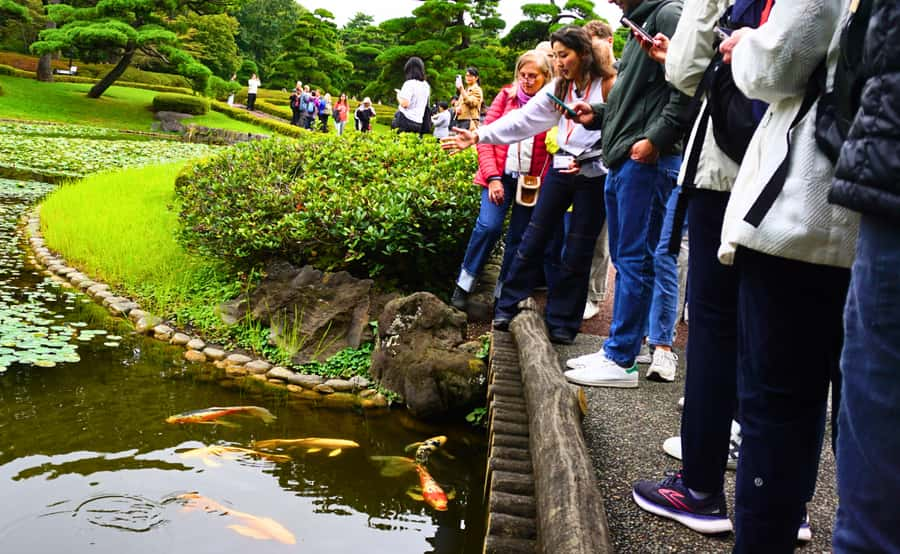
The koi pond is one of the more memorable stops. The fish are described as royal koi, and they give the tour a lighter, more visual moment after the heavier discussion of rulers and military government. Bring a camera, but also listen to the explanation. The value is not only in seeing colorful fish. It is in understanding how the palace grounds function as a living ceremonial and garden space.
The bamboo area and shaded trees are also useful in hot weather. Tokyo summers can be punishing, and the walk is fully outdoors. Guides have adjusted the pace, looked for shade, and helped with practical comfort. One guide even supplied mosquito spray, which can be useful because the gardens contain plenty of vegetation and standing water.
What the guides add to the experience
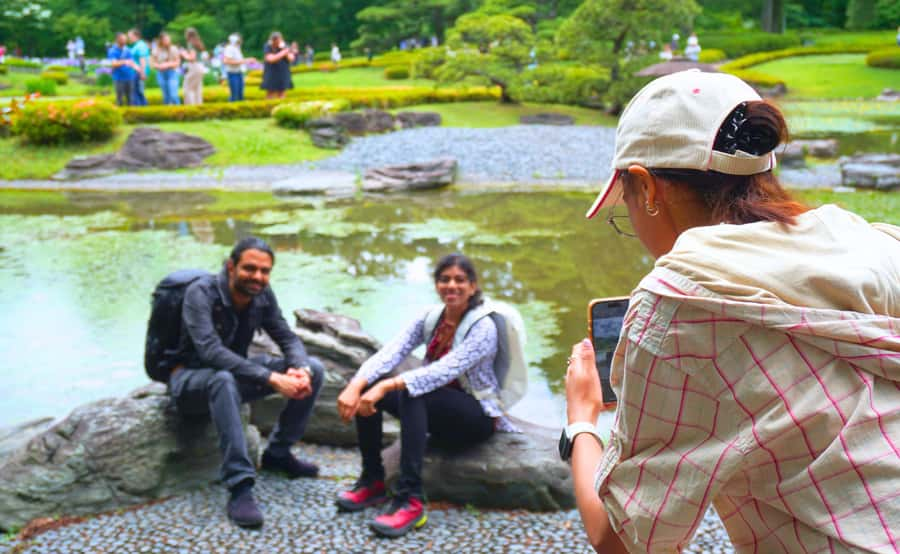
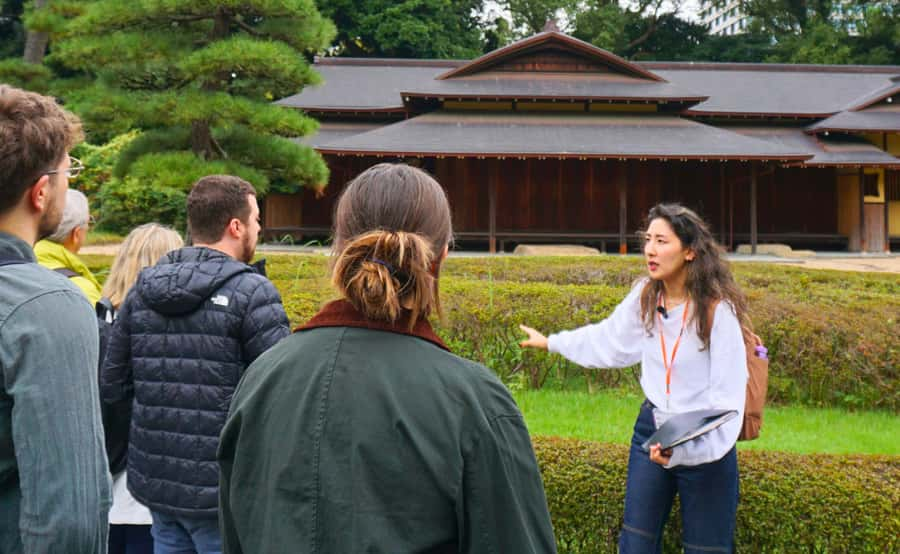
The guide is the main reason to book this tour rather than simply visiting the gardens independently. The strongest guide experiences combine clear historical explanation with an easy manner.
Mika is praised for strong English, careful answers, and attention to the group’s comfort. Natsumi is repeatedly singled out for storytelling, Edo-period explanations, and restaurant suggestions. Lakki brings warmth and humor, while Alexandre offers the tour in French as well as handling detailed questions in English.
Other guides, including Nico, Hugo, Arief, Fei, and Lucky, are also described as friendly and engaged. Lucky is noted for making the walk interactive and keeping children interested. That is worth considering if you are visiting as a family, since a straight lecture about feudal ranks can lose younger listeners quickly.
The interactive approach is useful for adults, too. Questions are welcomed, and the guide can help connect palace history to Japanese culture and modern Tokyo. You may finish the walk with ideas for lunch, etiquette, neighborhoods, or other places to visit.
The quality of a walking tour can depend on the person leading it. Here, the repeated praise for multiple guides suggests that the company has several strong presenters, but your exact experience will still reflect your assigned guide’s style.
Heat, rain, footwear, and walking comfort
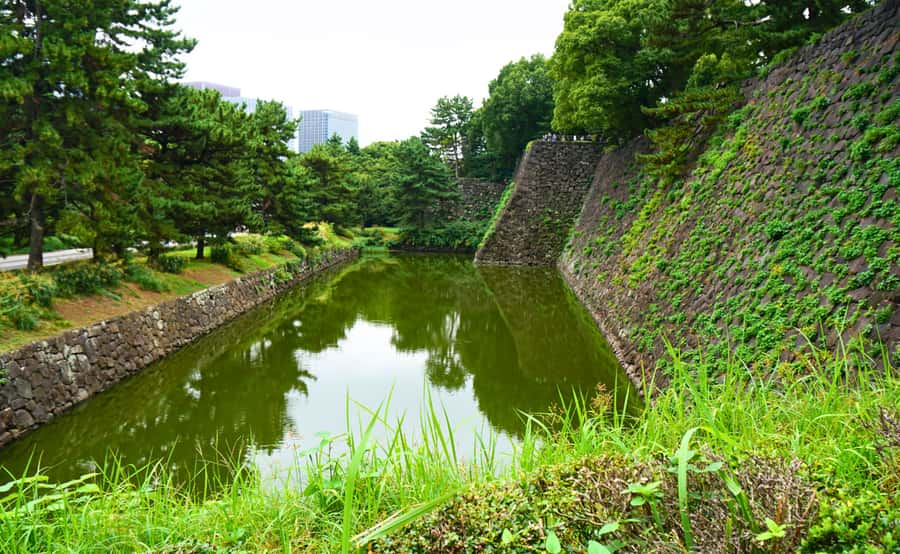
You need clothing suited to the forecast because the tour runs rain or shine. Wear comfortable shoes and bring water, particularly during the humid summer months. Shade exists, but you should not assume that every stop will be shaded.
Rain can make stone paths slippery, and wet weather may reduce the comfort of standing still while the guide speaks. A light rain jacket is more useful than an umbrella if you want to keep both hands free for photographs.
The tour is not suitable for wheelchair users or people with mobility impairments, back problems, heart problems, recent surgery, low fitness, or pregnancy. The grounds involve outdoor walking, and the route may be uncomfortable for anyone who has trouble standing or covering ground.
Mosquito spray is worth carrying in warm weather. It is not listed as an included item, although a guide may have some available. Do not count on that, and remember that helpful extras can vary by guide.
Weapons, sharp objects, smoking, drones, alcohol, drugs, skateboards, and fire are not allowed. These rules are sensible for a protected palace site and should be followed closely.
Is $32 good value?

At $32 per person, this is a modestly priced guided walk in central Tokyo. You are paying mainly for interpretation rather than admission to a grand interior. Since the Inner Palace is not open to the public, the tour does not promise access that cannot be provided.
I think the price works best for first-time visitors who want a historical framework. A guide can save you from seeing the remains as disconnected stones and help you understand why the site matters. The garden setting, photo stops, bamboo, and koi add variety, so the experience is not a two-hour classroom outdoors.
The value is less obvious if you already have a strong grasp of Japanese history or prefer exploring quietly at your own pace. You can see the public garden areas independently. The extra cost buys structure, explanations, conversation, and local suggestions.
With a listed rating of 4.9 from 987 ratings, the experience has a strong record. More important for your decision is the pattern of praise: guides are often credited with clear English, patience, humor, thoughtful answers, and help with photographs. Those are exactly the details that can turn a basic garden visit into a useful introduction to Tokyo.
Cancellation is flexible up to 24 hours before the start for a full refund, and you can reserve now and pay later. That helps if your plans are still shifting.
Who should book this walk?
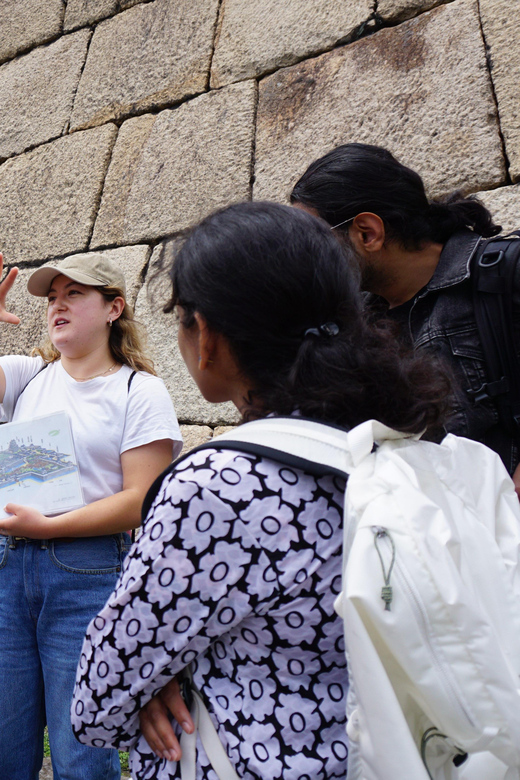
I would recommend it to first-time Tokyo visitors, history fans, families with older children, and anyone who wants help connecting the Edo period to modern Japan. It is also a good early-trip activity because the guide may offer ideas for food and sightseeing after the walk.
The tour suits you if you enjoy asking questions and learning while walking. It is less suitable if you want palace interiors, a private royal encounter, a short sightseeing stop, or a route designed for limited mobility.
French-speaking visitors have an additional option, since French is offered alongside English. If you care strongly about language, confirm the language arrangement when booking.
Should you book the Imperial Palace History Walking Tour?
Book it if you want the Imperial Palace grounds to make sense rather than simply look attractive. The combination of Otemon Gate, Edo Castle remains, the old class system, gardens, bamboo, and royal koi gives you a broad introduction to Japan’s political past in one manageable walk.
Skip it if your priority is entering the Inner Palace, avoiding outdoor walking, or exploring without a guide. For most first-time visitors who can handle the distance and weather, $32 is a fair price for a well-presented history lesson in an important part of Tokyo.
FAQ
Where does the tour start?
Meet your guide near the Starbucks by the fountain in Wadakuramon fountain park. The park is about a five to ten minute walk from Tokyo Station or Otemachi Station.
How will I recognize the guide?
The guide will be near the fountain and holding a sign with the Sunrise Adventure logo.
Where does the tour end?
The activity ends back at the original meeting point.
Is the Inner Palace included?
No. The Inner Palace is not open to the public and is not included in this tour.
What languages are available?
The tour is available in English and French.
What will I see during the walk?
You can expect Otemon Gate, parts of the former Edo Castle site, a model of the old castle, samurai-related sites, gardens, bamboo, trees gifted to the Emperor, and royal koi fish.
Does the tour run in bad weather?
Yes. The tour takes place rain or shine, so wear clothing suited to the forecast.
Is the tour suitable for wheelchair users?
No. The activity is not suitable for wheelchair users or people with mobility impairments.
Can I cancel for a refund?
You can cancel up to 24 hours before the tour for a full refund.
Latest history tours reviewed in Japan
- Authentic Sapporo: Nijo Market Seafood Lunch & History Tour★ 4.8 · 20 reviews
- Asakusa: A Big-picture History Walk to Know Japan★ 4.6 · 77 reviews
- Asakusa: 3.5-hour Big-picture History Walk★ 4.7 · 39 reviews
- 2.5-Hour Nagoya Tour: Castle History, Local Food & City View★ 4.5 · 36 reviews
- 1-Day Tour from Nagoya: Hiking the Historic Nakasendo Trail★ 4.9 · 34 reviews
- From Tokyo: Nikko World Heritage Sight Full Day Private Tour★ 4.9 · 127 reviews
- From Tokyo: Nikko World Heritage Site Private Full-Day Trip★ 4.9 · 243 reviews
- Tokyo: Nikko World Heritage Private Day Trip Hotel Pick-up★ 4.8 · 145 reviews
Tokyo History Tours, compared.
Tokyo: Imperial Palace and Shogun Historical Walking Tour
Read our review →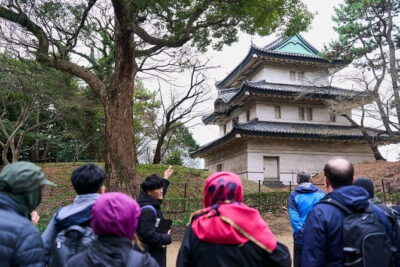
Tokyo Castle & Imperial PalaceーShogun Walking Tour
Read our review →
From Tokyo: Nikko World Heritage Site Private Full-Day Trip
Read our review →
Tokyo: The Best of Izakaya in Shinjuku Food & Cultural Tour
Read our review →
Tokyo: Nikko World Heritage Private Day Trip Hotel Pick-up
Read our review →From Tokyo: Nikko World Heritage Sight Full Day Private Tour
Read our review →
Asakusa: A Big-picture History Walk to Know Japan
Read our review →
Tokyo: 3-Hour Bike/E-Bike Tour of the City’s Hidden Gems
Read our review →Browse the lists this tour appears in