
Review · TOKYO
Asakusa: A Big-picture History Walk to Know Japan
Asakusa is easy to visit as a string of famous sights. This walk gives those sights a bigger job: the Sumida River explains Japan’s opening, Sensō-ji introduces Buddhism, and Asakusa Shrine shows how Buddhism and Shinto shared one religious world for centuries. It is a history lesson with temples, lanterns, woodblock prints, and a few useful surprises along the way.
I like the clear route and the way the guide connects small details to large events. I also like the practical religious guidance, especially the explanation of how prayer differs at a Buddhist temple and a Shinto shrine. Guides including Choco, Sachi, Amy, Yoko, and Kay have been praised for keeping adults and children involved.
The main consideration is pace. Two hours is enough for a strong introduction, not a leisurely study of every building. The walk involves a moderate amount of walking, and the headsets can sound slightly echoey for some people.
Key points to know before you book
- The Sumida River opens the story: Learn how Japan’s long period of isolation ended and why the Netherlands was allowed to trade.
- Religion is explained on the ground: See the difference between Buddhist and Shinto worship before entering the temple and shrine area.
- Ukiyo-e gets a global chapter: Find out how Japanese woodblock prints reached Europe and affected Western Impressionist painters.
- The route stays compact: Seven stops fit into two hours, making this a useful first orientation to Asakusa.
- Families can join: Children under six may attend free, and guides such as Choco and Sachi have kept younger visitors engaged.
- You get more than a walk-by: Traditional snack tastings, an English-speaking guide, and headsets for groups of three or more are included.
Why this Asakusa walk feels different
Many Asakusa walks concentrate on food, shopping, or photo stops. This one uses Asakusa as a lesson in how Japan changed. You begin with trade and military pressure, move into religion and art, and finish with a living example of religious coexistence.
That structure matters. If you visit Kaminarimon, Nakamise, Sensō-ji, and Asakusa Shrine on your own, you can appreciate the colors and architecture but miss the connections. Here, a dragon, a Buddhist symbol, or a shrine gate becomes part of a much larger story.
The tour costs $58 per person and lasts two hours. I see that as fair value if you want context rather than simply directions. You are paying for a certified English-speaking guide, a planned sequence, traditional snack tastings, and explanations that would be difficult to assemble from signs alone.
The value is less convincing if you already have a firm grasp of Japanese history or prefer to explore at your own speed. The route is compact and the commentary carries the experience. You will not have long, unstructured time at each stop.
More History Walking Tours in Japan
- Tokyo: Imperial Palace and Shogun Historical Walking Tour
★ 5.0 · 2,251 reviews - Kyoto Gion: 2-Hour Geisha Culture & History Walking Tour
★ 5.0 · 1,186 reviews - Tokyo Castle & Imperial PalaceーShogun Walking Tour
★ 4.7 · 1,068 reviews
Starting beside the Sumida River
The meeting point is in front of the Burger King next to Exit 4 of Asakusa subway station on the Ginza Line, station G19. Step outside the exit rather than waiting underground. The listed starting address is 2-chōme-20-6 Kaminarimon.
The first formal stop is the Tokyo Cruise Asakusa Pier, where you spend about 15 minutes. This is a smart place to begin because the Sumida River gives the history a physical setting. Japan’s relationship with the outside world was not just a classroom topic. It shaped ports, trade, defense, and the future city.
You learn why the Edo shogunate restricted foreign contact for more than 200 years, why the Netherlands was the one European country permitted to trade, and how Admiral Perry’s arrival forced Japan to reopen. The guide also links that past to modern Tokyo, including Odaiba’s former gun batteries and the Statue of Liberty replica facing the Pacific.
That connection between old defense works and present-day Tokyo is one of the walk’s useful habits. Instead of treating history as a closed chapter, the guide shows how the city still carries reminders of Japan’s opening to the world.
The river stop is outdoors, so dress for the weather. The tour operates in rain or shine, and comfortable shoes plus water are sensible choices.
Getting the religious basics at the Tourist Information Center
The walk continues to the Asakusa Culture Tourist Information Center for roughly 15 minutes. This stop prepares you for the religious sites ahead.
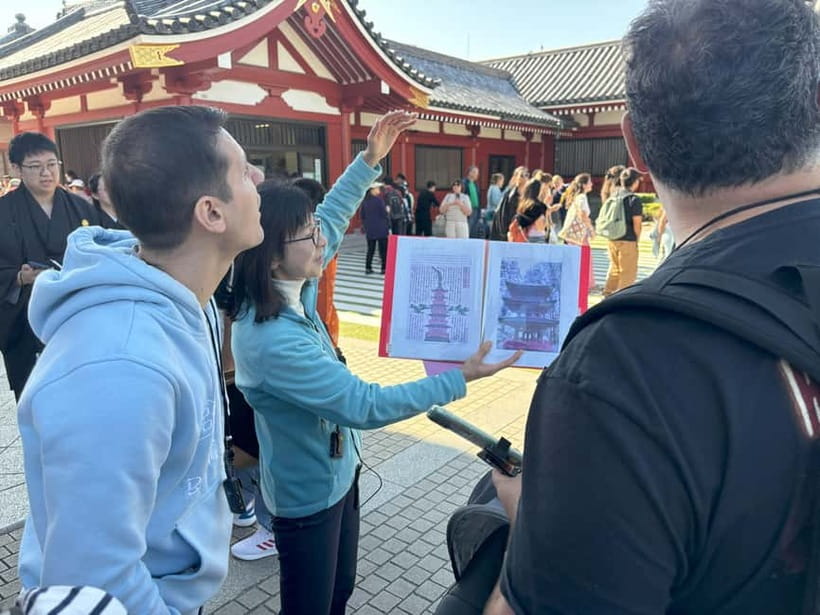
Japan’s Buddhism and Shinto can look confusing at first. Both appear in the same neighborhood, and Japanese people may visit both a temple and a shrine without treating that as a contradiction. The guide explains the difference in a clear, visual way before you reach the main gates.
That foundation is especially helpful if this is your first visit to Japan. You learn what kind of place you are entering, what the symbols mean, and how prayer differs between Buddhist and Shinto settings. The goal is not to turn you into a religious scholar. It is to help you look at Sensō-ji and Asakusa Shrine with the right questions.
This is also where the tour’s broad approach becomes clear. You are not only learning the name of a building. You are learning why the building exists and how it fits into Japanese life.
Reading dragons at Kaminarimon
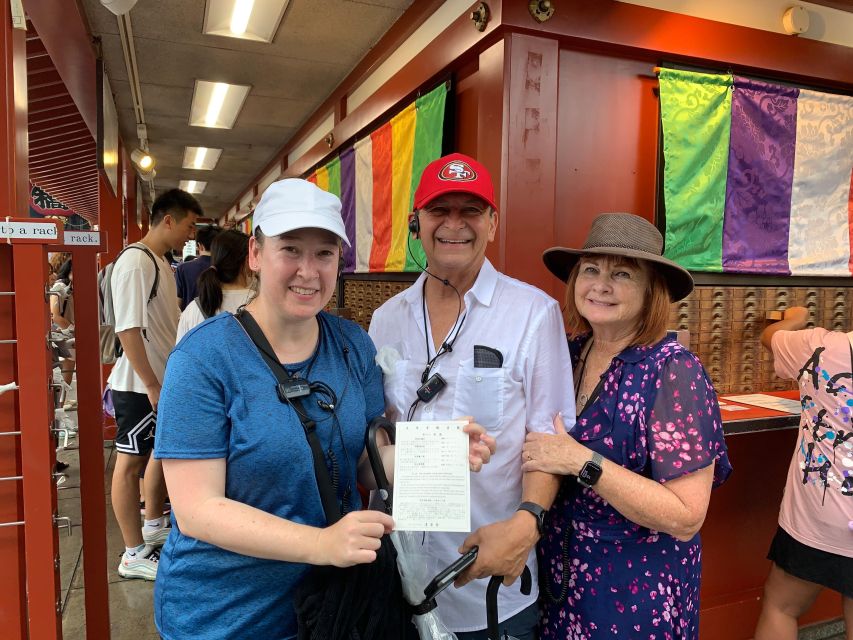
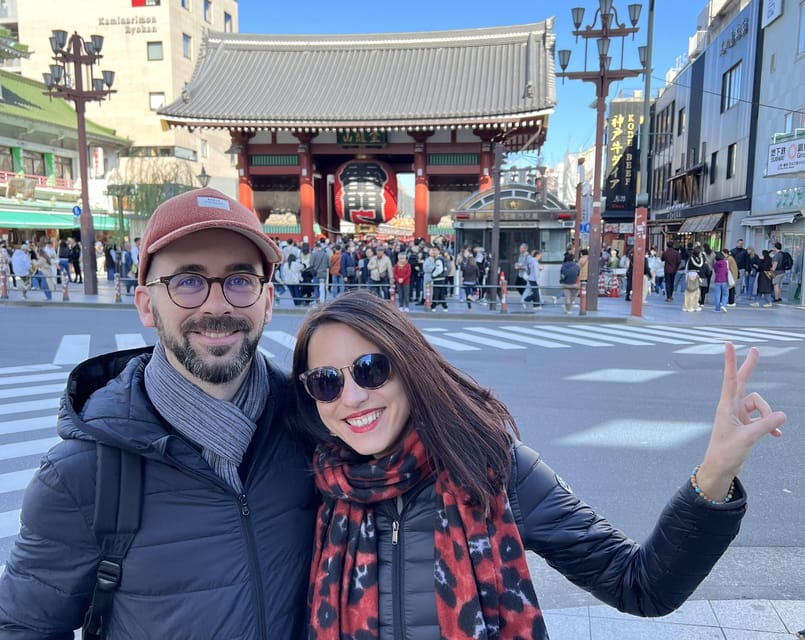
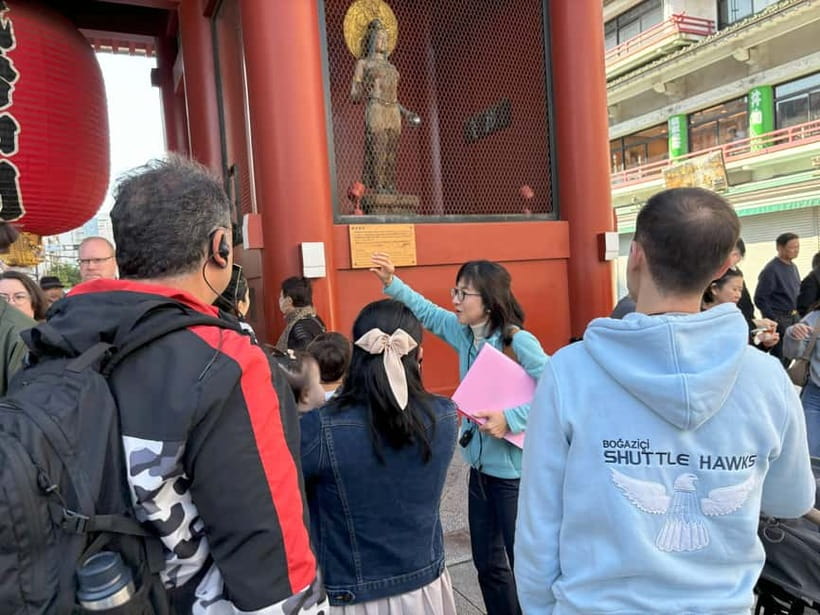
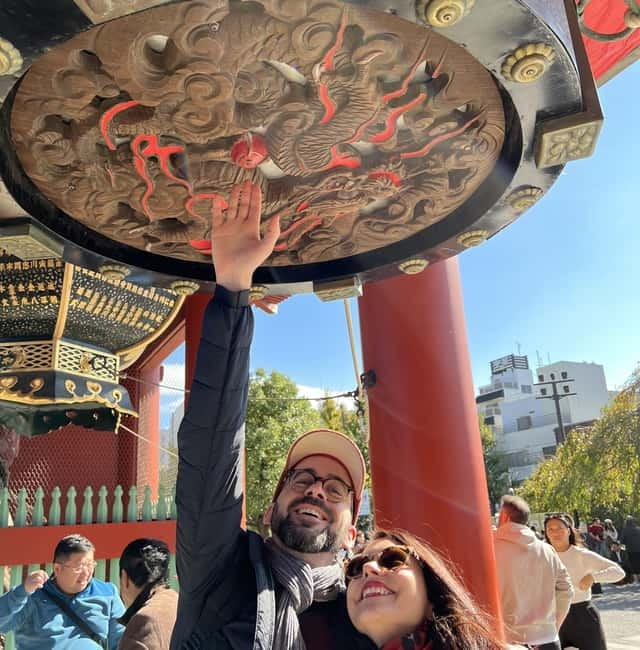
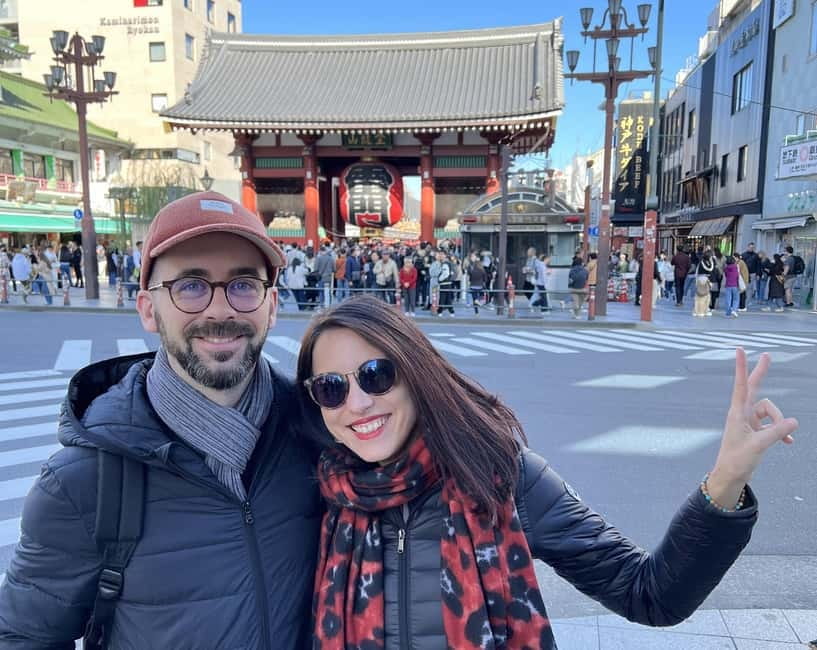
Kaminarimon, or Thunder Gate, receives about 15 minutes of guided attention. The huge lantern and powerful guardian figures make it one of Asakusa’s easiest landmarks to recognize, but the dragon discussion gives the stop real substance.
The guide compares Japanese and Western dragons. In many Western stories, dragons are enemies to defeat. The Japanese dragon carries a different role, and understanding that contrast helps explain how the same creature can appear fearsome yet protective in different cultures.
This is the sort of detail you might skip in a quick photograph. You see the gate, take your picture, and move on. A guide gives you a reason to pause and inspect what is above and around you.
Kaminarimon can be crowded, and the gate is a major meeting point in Asakusa. The tour’s headsets help groups of three or more hear the guide without needing to gather tightly around one person. One participant found the earpieces slightly echoey at times, so the audio equipment is useful but not perfect.
Same old streets, another chapter:
- Kyoto: Fushimi Inari, Kinkakuji, Bamboo Grove 1 Day Bus Tour
★ 4.8 · 4,316 reviews - World Heritage Shirakawa-go and Experience Tours from Kanazawa
★ 5.0 · 4,049 reviews - World Heritage Kyoto & Nara Uji Authentic Matcha Experience
★ 5.0 · 1,573 reviews - Kanazawa: World Heritage Shirakawa-go Morning Guided Tour
★ 4.9 · 988 reviews
Following history through Nakamise Shopping Street
The walk along Nakamise Shopping Street lasts about 30 minutes, the longest section of the tour. That makes sense. This is not merely a passage to the temple. It is one of Japan’s oldest shopping streets and a place where religious travel, commerce, souvenirs, and daily city life meet.
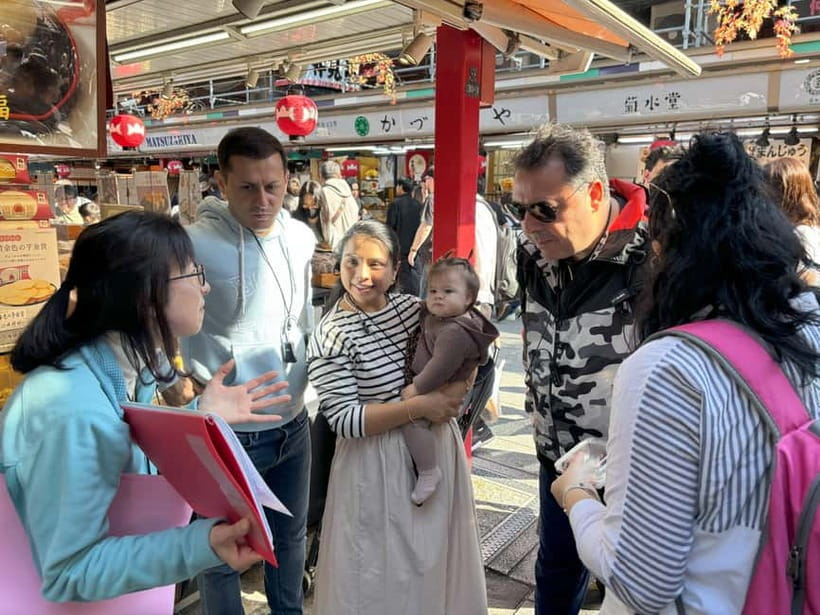
You learn about Buddhist symbols such as the vajra, also called tokko. The guide also introduces ukiyo-e woodblock prints and their surprising effect on Europe. These prints eventually reached Western artists and influenced Impressionist painters.
That art connection gives the street a wider reach. You are not just hearing that Japan had a distinctive visual culture. You are learning that Japanese composition, subjects, and use of space helped change the way artists in the West looked at ordinary life.
Nakamise is also the busiest section for browsing and taking pictures. The 30-minute allocation is enough to explain the main ideas and keep the group moving, but it is not a dedicated shopping session. If you want to stop at every stall, sample everything, or buy gifts, plan to return later.
Traditional snack tastings are included, adding a small food element without turning the tour into a food walk. The focus remains history and culture.
Hōzōmon and a thousand-year comparison
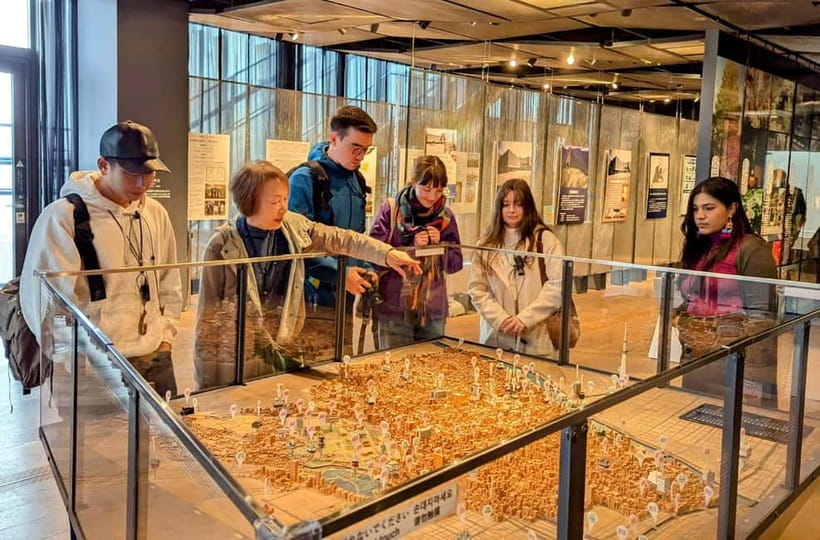
Hōzōmon Gate gets about 15 minutes. Here the guide makes one of the tour’s most unexpected comparisons: people in Japan and Europe shared surprisingly similar ways of thinking about religion and society 1,000 years ago.
This is a useful corrective to the idea that Japan and Europe developed in completely separate mental worlds. The comparison does not erase the differences between medieval cultures, but it gives you a more balanced way to think about them.
Hōzōmon also works well as a pause before Sensō-ji. You have moved from the commercial street toward the temple’s main religious space. The guide can now bring together the symbols, history, and cultural comparisons introduced earlier.
The tour is best for people who enjoy connections. If you want only dates, names, and architectural labels, some of the interpretation may feel broad. If you like asking why societies develop similar ideas in different places, this section should be rewarding.
Sensō-ji, Buddhism, and the art of seeing a temple
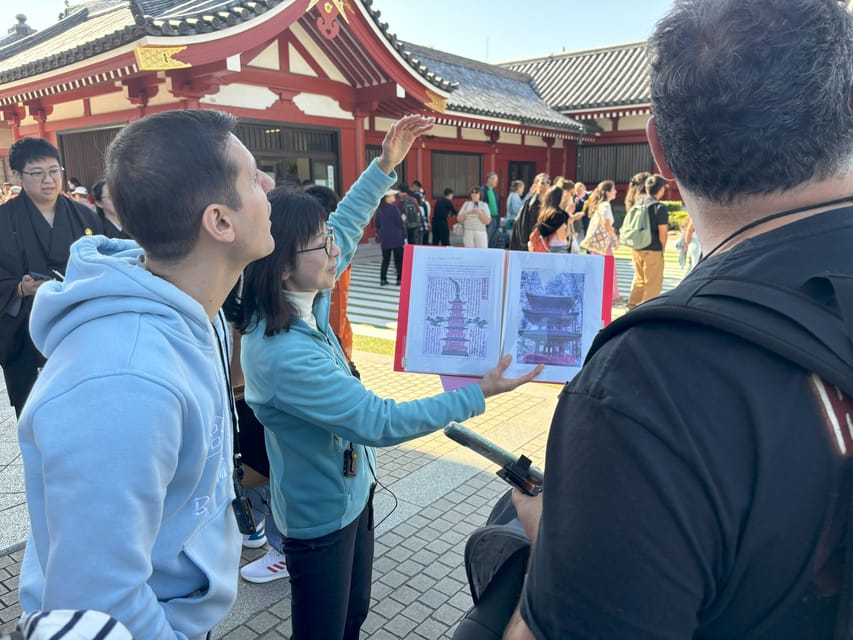
Sensō-ji receives approximately 15 minutes. It is Japan’s oldest Buddhist temple and the central landmark of Asakusa.
A short stop here cannot cover every building, ritual, reconstruction, and historical layer. What it can do is give you a workable understanding of the temple’s role and show you how to behave respectfully. The guide explains Buddhist prayer and places the temple within the wider comparison between medieval Japan and Europe.
I especially value this part for first-time visitors. Religious customs can feel mysterious when you are unsure what is expected. With an explanation in front of the temple, you can pay attention to the act of worship rather than simply copy the person next to you.
One family found the fortune-telling activity at the temple entrance especially engaging for an eight-year-old. That detail points to the tour’s family potential, though the historical focus is aimed more at adults. Children younger than six may join free, and families are welcome.
Sensō-ji is an active site, not a quiet museum. Crowds, worshippers, and tour groups are part of the setting. The guide helps you make sense of the movement, but you should not expect a private or silent temple visit.
Asakusa Shrine and the Japanese religious puzzle
The final stop is Asakusa Shrine, with about 15 minutes of explanation. This is where the tour’s central idea becomes visible: a Shinto shrine and a Buddhist temple share the same grounds, worshippers, and long history.
The two traditions coexisted in Asakusa for more than 1,000 years. That fact can challenge the simple assumption that religions must occupy separate spaces or compete for followers. The guide explains why this arrangement developed and how to understand the shrine beside Sensō-ji.
This ending works because it brings together the earlier lessons. You have heard about Buddhism and Shinto, seen Buddhist symbols, and learned how to approach religious sites. Now you can look at two traditions in one place and understand that the relationship is part of Japan’s history, not an odd exception.
Asakusa Shrine is also a good place to ask final questions. Guides including Sachi, Kay, Amy, Yoko, Choco, and Yasu have been praised for answering questions and adding local detail. The exact guide depends on the date, but the experience is built around live English explanations rather than a fixed recording.
If your visit lines up with the Sanja Matsuri, the area can take on a very different energy. One participant joined during the festival and watched the mikoshi parade with the guide’s help. Festival timing is not guaranteed, but this example shows how useful the tour can be when something special is happening around you.
What the two-hour format means for you
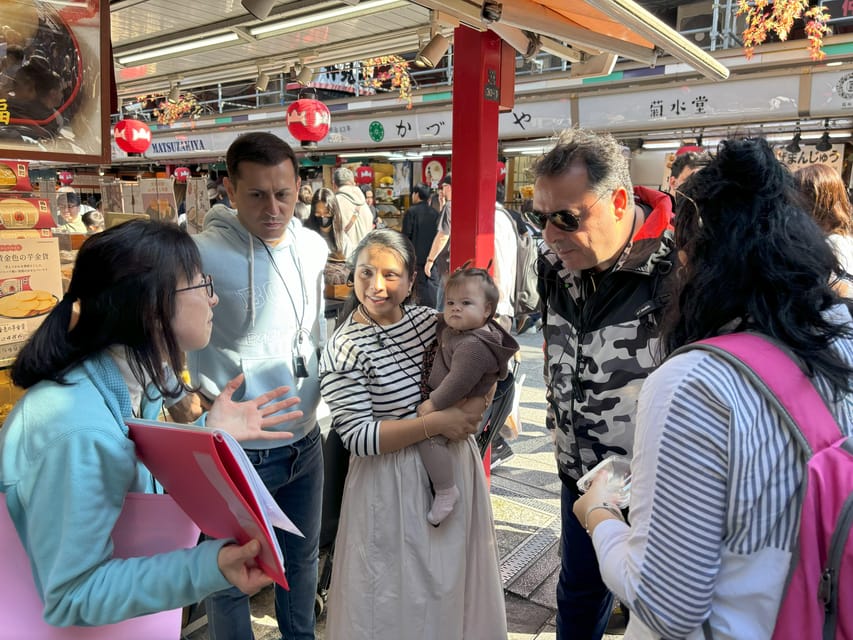
Two hours is a strength and a limit. It is short enough to fit into a busy Tokyo day, perhaps before a longer visit to the temple area or after exploring nearby neighborhoods. It is long enough to connect seven stops without turning the walk into a marathon.
You should expect moderate walking. The route moves from the subway meeting point to the river, information center, gates, shopping street, temple, and shrine. People with mobility issues should contact the supplier before booking, although the activity is not recommended for people with mobility impairments.
The compact timing also means you need to listen while walking. This is not a slow photography tour. If you want to linger at a gate, shop, or temple detail, note the location and return after the tour.
For groups of three or more, headsets are provided so you can hear the guide clearly. An English audio guide is also included, while the main experience is led live in English. Traditional snack tastings are included, but hotel pickup and drop-off are not.
The tour requires a minimum number of participants. If that number is not reached, the operator will notify you at least 24 hours before departure and provide a full refund. You can also cancel up to 24 hours in advance for a full refund or reserve now and pay later, which is useful when your Tokyo plans are still shifting.
Who will get the most from this walk
I would choose this tour early in a Tokyo visit if I wanted Asakusa to make sense quickly. It suits you if you want history, religion, art, and local customs in one compact route.
It is particularly useful for:
- First-time visitors who want more than landmark photos
- Adults interested in Japan’s political and religious development
- Families with older children and teenagers
- Visitors curious about the connection between ukiyo-e and Western art
- People who want practical guidance at temples and shrines
- Anyone with only two hours for Asakusa
The tour is less suited to you if you want extensive shopping time, a food-focused walk, or a deep architectural study. It also may not be comfortable if moderate walking is difficult.
The guide style matters here. The strongest comments focus on clear explanations, warmth, and the ability to keep children involved. Choco was praised for engaging both adults and children. Sachi was repeatedly appreciated for making Asakusa’s history understandable. Amy used printed material to support her explanations, while Kay added local advice and guidance on respectful shrine behavior.
Should you book the Asakusa history walk?
Book it if you want the famous Asakusa sights to connect into one story. For $58, you receive two hours with a certified English-speaking guide, snack tastings, and a useful introduction to Japan’s isolation, religions, art, and reopening.
Skip it if you already know this material or prefer to wander without a schedule. The route covers a small area, and the stops are brief. You will gain understanding rather than extended time inside each site.
For most first-time visitors, I think the walk earns its place near the start of an Asakusa visit. It gives you the background to explore Sensō-ji, Nakamise, and Asakusa Shrine with sharper eyes. Just wear good shoes, arrive outside Exit 4, and leave extra time if you want to shop after the guide says goodbye.
FAQ
How long does the Asakusa history walk last?
The tour lasts two hours.
How much does the tour cost?
The price is $58 per person.
Where does the tour meet?
The meeting point is in front of the Burger King next to Exit 4 of Asakusa subway station, G19, on the Ginza Line.
What language is the tour conducted in?
The live tour guide speaks English. An English audio guide is also included.
What places does the tour visit?
The route includes Tokyo Cruise Asakusa Pier, Asakusa Culture Tourist Information Center, Kaminarimon, Nakamise Shopping Street, Hōzōmon Gate, Sensō-ji Temple, and Asakusa Shrine.
Are snacks included?
Yes. Traditional snack tastings are included.
Are headsets provided?
Yes. Headsets are provided for groups of three or more so you can hear the guide clearly.
Can children join the tour?
Yes. Children younger than six may join without charge. The tour is recommended for adults because of its historical focus, but families are welcome.
Does the tour operate in bad weather?
Yes. The tour operates rain or shine, so you should bring weather-appropriate clothing.
What happens if the tour is cancelled?
The tour may be cancelled if the minimum number of participants is not reached. The operator will notify you at least 24 hours beforehand, and participants will receive a full refund.
Latest history tours reviewed in Japan
- Authentic Sapporo: Nijo Market Seafood Lunch & History Tour★ 4.8 · 20 reviews
- Asakusa: 3.5-hour Big-picture History Walk★ 4.7 · 39 reviews
- 2.5-Hour Nagoya Tour: Castle History, Local Food & City View★ 4.5 · 36 reviews
- 1-Day Tour from Nagoya: Hiking the Historic Nakasendo Trail★ 4.9 · 34 reviews
- Tokyo: Nikko World Heritage Private Day Trip Hotel Pick-up★ 4.8 · 145 reviews
- 2.5 Hour Private History and Culture Tour in Himeji Castle★ 5.0 · 185 reviews
- From Tokyo: Nikko World Heritage Sight Full Day Private Tour★ 4.9 · 127 reviews
- From Tokyo: Nikko World Heritage Site Private Full-Day Trip★ 4.9 · 243 reviews
Tokyo History Tours, compared.
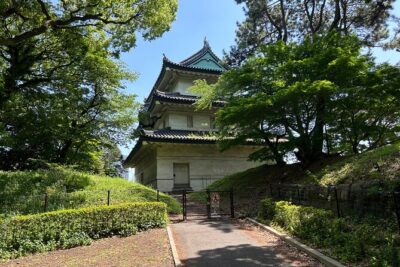
Tokyo: Imperial Palace and Shogun Historical Walking Tour
Read our review →
Tokyo Castle & Imperial PalaceーShogun Walking Tour
Read our review →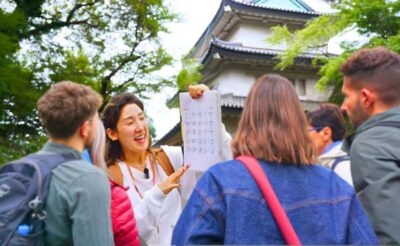
Tokyo: Imperial Palace Japanese History Walking Tour
Read our review →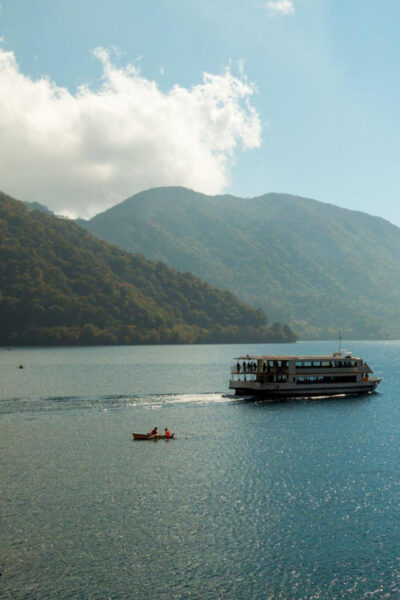
From Tokyo: Nikko World Heritage Site Private Full-Day Trip
Read our review →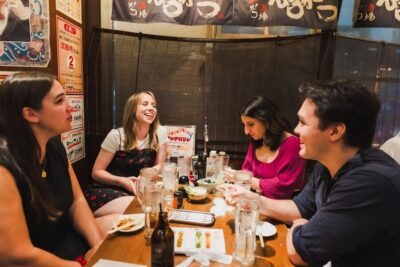
Tokyo: The Best of Izakaya in Shinjuku Food & Cultural Tour
Read our review →
Tokyo: Nikko World Heritage Private Day Trip Hotel Pick-up
Read our review →From Tokyo: Nikko World Heritage Sight Full Day Private Tour
Read our review →
Tokyo: 3-Hour Bike/E-Bike Tour of the City’s Hidden Gems
Read our review →Browse the lists this tour appears in