Review · BERLIN
Berlin: History of the Third Reich Guided Walking Tour
Berlin’s Nazi past is not hidden behind a single museum door. It is built into ordinary streets, office blocks, memorials, and empty patches of ground. This two-hour walking tour connects those scattered places into a clear story, from the Nazi rise to power through the final battle for Berlin.
I like the way the route pairs major sites with less obvious details, especially the surviving Luftwaffe headquarters and the former SS and Gestapo complex. I also like the guides’ reported mix of careful history and strong storytelling. Dani, India, Theo, Elizabeth, and others have been praised for making difficult material understandable without turning it into a dry lecture. The main drawback is simple: you walk a lot, use public transport, and spend time outdoors while discussing painful events. You also need to buy an AB transport ticket separately.
Key points at a glance
- See surviving Nazi architecture: Hermann Göring’s former Luftwaffe headquarters escaped Allied bombing and remains one of the clearest examples of Third Reich design in Berlin.
- Follow the machinery of control: Learn how the Propaganda Ministry, SS, and Gestapo helped the Nazi government seize and hold power.
- Visit the bunker site: You stand above the location where Hitler spent his final days, although the bunker itself is not open to visitors.
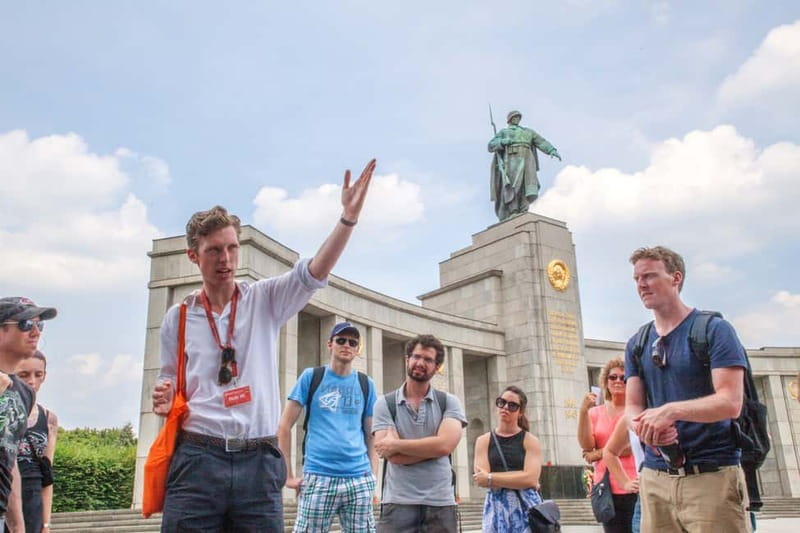
- Understand Berlin’s final battle: A Soviet Memorial and its artillery pieces and tanks help explain the enormous cost of the city’s liberation.
- Expect strong guiding: Guides such as Dani, India, Theo, and Elizabeth have been especially praised for storytelling, patience, humor, and command of the subject.
- Plan for practical walking needs: Wear comfortable shoes, carry weather protection, and budget for an AB public transport ticket.
Why this tour gives Berlin’s Nazi past a clear shape
Berlin can be confusing if you approach its Nazi history site by site. One memorial marks victims of the Holocaust. Another recalls political prisoners. A plain-looking building may have housed a key ministry. Without context, the pieces do not always fit together.
This route helps you follow the sequence. You begin with the machinery of the Nazi state, then move through propaganda and terror, before reaching the war’s destruction and the bunker where the regime ended. That order matters. It shows that the catastrophe did not begin with the Battle of Berlin. It began with political change, state control, public messaging, and the removal of opposition.
The tour is conducted in English and includes a live guide and walking tour. The published duration is two hours, though the route description uses half-day language and past tour experiences have sometimes taken longer. Check the starting time and expected schedule when booking, particularly if you have another timed activity afterward.
More History Walking Tours in Berlin
- Berlin Historical Highlights Walking Tour
★ 4.9 · 657 reviews - Berlin Private Complete History All Day Walking Tour
★ 5.0 · 474 reviews - Berlin: Charité Hospital Walking Tour of Medical History
★ 4.9 · 276 reviews
The Luftwaffe headquarters and the look of Nazi power
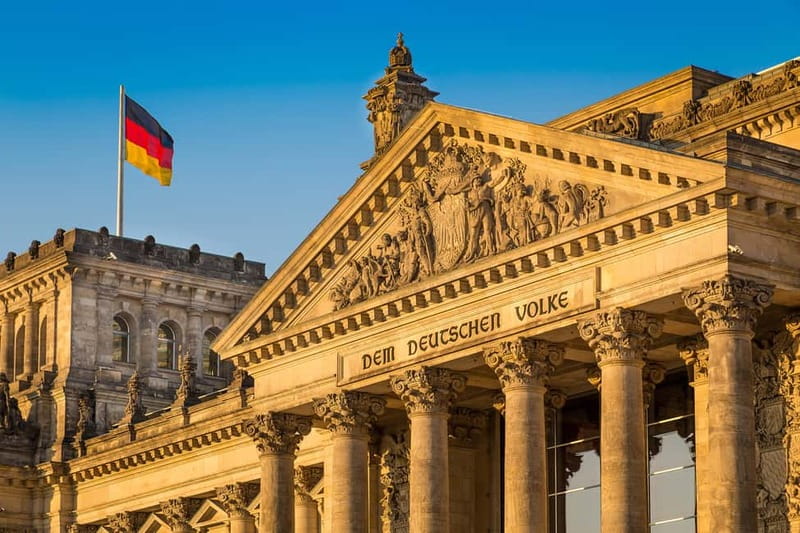
The first major stop is the former Luftwaffe headquarters, associated with Hermann Göring, head of Nazi Germany’s air force. The building survived the Allied bombing that destroyed much of central Berlin, so you can still see an unusually intact example of the period’s official architecture.
This is a useful place to begin because the building itself helps explain the regime’s public image. Nazi architecture favored scale, order, and authority. The size of the headquarters was not an accident. Government buildings were designed to make the individual feel small and the state feel permanent.
You will not simply be looking at an old façade. Your guide uses the site to explain the Luftwaffe’s place in the Nazi system and how the war reshaped Berlin. The building also provides a sharp contrast with the empty lots and rebuilt streets nearby. Berlin often asks you to read its past through fragments, and here the fragment is unusually substantial.
The drawback is that this is an exterior history stop rather than a grand interior tour. The value comes from the explanation, the surviving structure, and its place in the wider story.
Goebbels’ Propaganda Ministry and the control of information
The route continues to the former Propaganda Ministry of Joseph Goebbels. Before the war, the building served as the Berlin Press Office. Under the Nazis, it became a central office for managing public information and spreading the regime’s message.
This stop is especially important for understanding how dictatorship worked in daily life. The Nazi government did not rely only on police power. It also controlled newspapers, public speech, images, ceremonies, and the way events were presented to the German public.
Your guide explains how the Nazis kept control after taking over the government. That focus gives the tour more depth than a simple parade of wartime landmarks. You learn about the process by which a political movement turned state institutions into tools of obedience.
The building itself may not look dramatic compared with Berlin’s grand monuments. That is part of the lesson. Systems of power often operate from ordinary offices, where paperwork, messaging, and official decisions can shape millions of lives.
The SS and Gestapo site, where terror became administration
One of the heaviest stops is the former address of the SS and Gestapo on old Prinz-Albrecht-Straße. These organizations were central to Nazi repression, surveillance, imprisonment, and terror.
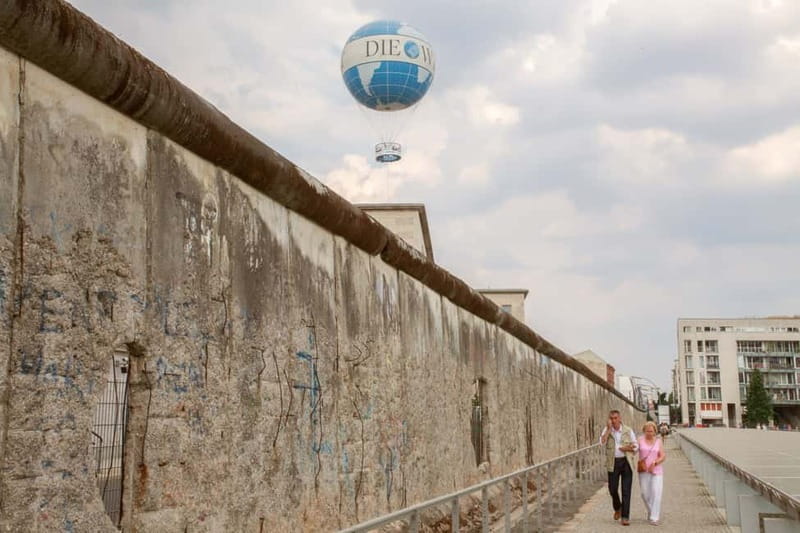
The site also includes one of the few remaining sections of the Berlin Wall. That combination makes the location unusually revealing. Two of Germany’s most painful political eras meet in the same small area: Nazi dictatorship and the later division of Berlin during the Cold War.
Basement remains from the former buildings have been incorporated into an exhibition documenting the Nazi rise to power. The tour uses these remains to explain how the regime developed its control and how institutions of violence became part of the government structure.
You should expect this section to be emotionally difficult. The subject is not abstract military history. It deals with persecution, imprisonment, and the deliberate use of fear. A strong guide is essential here, and this is where the qualities praised most often in the feedback matter: clear explanations, sensitivity, and the ability to answer questions without losing the thread.
The exhibition provides more direct documentation than the outdoor stops, but the walking tour does not replace a full museum visit. If you want extensive written displays and time to study documents, plan a separate visit. The tour gives you a framework and a sense of place.
More History Walking Tours in Germany
- Berlin Private Half-Day Walking Tour: Discover the German Capital’s History
★ 5.0 · 244 reviews - The History of Berlin: WWII PRIVATE Walking Tour With Locals
★ 5.0 · 209 reviews - Berlin: Historic Center Walking Tour with a Real Berliner
★ 5.0 · 134 reviews - Berlin: Nazi History Walking Tour
★ 4.8 · 33 reviews
The Soviet Memorial and Berlin’s final battle
The route then turns to the Battle of Berlin and one of the city’s Soviet Memorials. The battle claimed more than 80,000 Soviet soldiers, a figure that puts the final days of the European war into stark human terms.
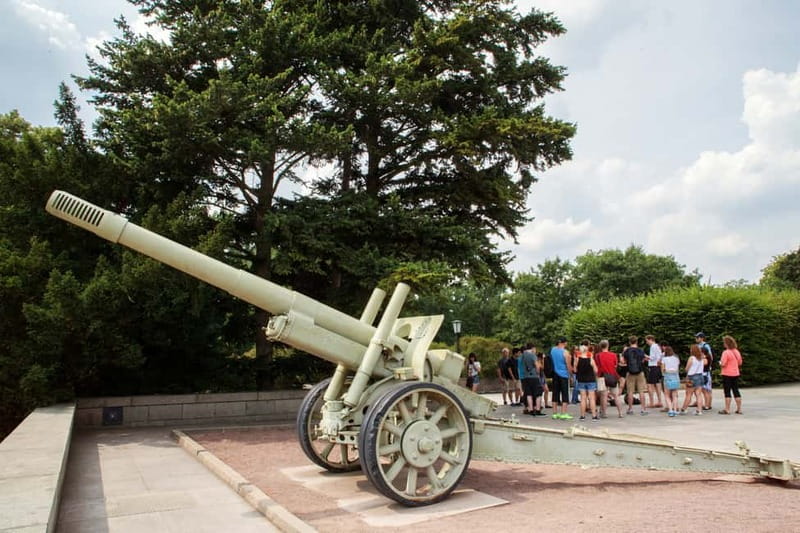
Two artillery pieces and two tanks now mark the memorial site. These objects help you picture the military assault on Berlin, but the guide also explains what the memorial represents: the soldiers who died fighting to liberate the city from Nazism.
This is an important change in perspective. Much of the tour follows German institutions and Nazi leaders. At the memorial, attention shifts to the forces that defeated the regime and to the enormous cost of that victory.
The memorial can also prompt questions about memory and public space. Berlin’s monuments do not all tell the same story, and a good guide helps you understand why different groups are remembered in different ways. The stop is not simply about military equipment. It is about the end of Nazi rule and the people who paid for it with their lives.
Hitler’s bunker site and the end of the regime
The final major stop is the location of Hitler’s former bunker. You stand above the place where Hitler ended his life as Soviet forces closed in on Berlin. The bunker itself is not presented as an attraction, and there is no dramatic underground room to enter.
That restraint is fitting. The site is now an ordinary-looking area, and its lack of spectacle prevents the visit from becoming a shrine to Hitler. The guide explains what happened there and how the bunker fits into the final collapse of Nazi Germany.
For many people, this is the moment when the earlier stops come together. You have followed the state’s architecture, its propaganda system, its terror apparatus, and the military defeat that brought everything down. The bunker marks the end of the regime, but not the beginning of the story. That distinction is one of the tour’s strongest points.
You may find the site less visually impressive than expected. Its importance lies in the historical explanation, not in what remains above ground.
Guides and storytelling make the difference
The route covers difficult material, so the guide matters as much as the places. The strongest feedback centers on guides who can explain a complex timeline in plain English, answer repeated questions, and keep the group moving without rushing.
Dani is repeatedly praised for his storytelling, approachability, and ability to explain how the Third Reich gained power. India is described as passionate, organized, and clear, with a gentle sense of humor that helped make heavy subjects easier to follow. Theo is praised for strong historical knowledge, energy, and an engaging manner. Elizabeth is noted for explaining details carefully and making the tour accessible.
Other named guides, including Marcel, Hannah, Maria, Mark, Lucy, Chris, Martin, Max, Amy, and Jasper, have also led well-received tours. Guide assignments can change, so you should not book on the assumption that a particular person will lead your departure.
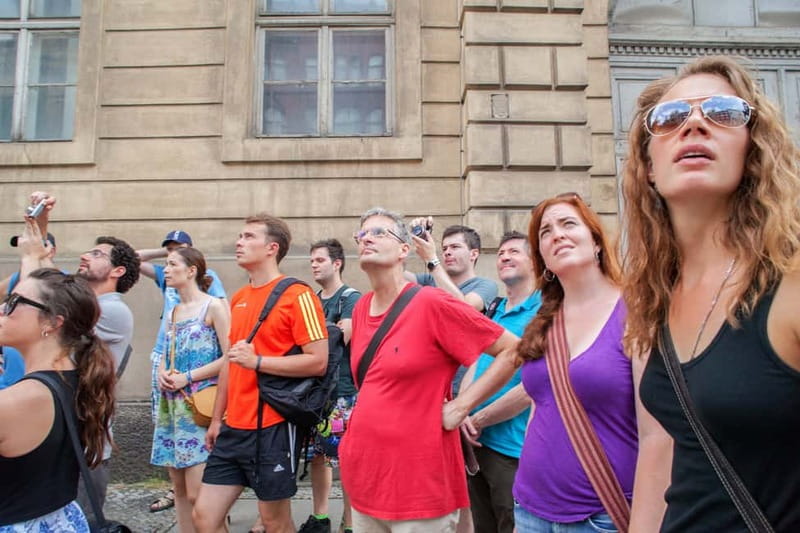
Group size has varied. Some departures have been small, including one with only three people, while other groups became large enough to split between two guides. A small group makes it easier to hear, ask questions, and stay close to the guide. In a large group, the guide’s voice and organization matter more, particularly at busy street crossings and public transport stops.
The overall rating is 4.7 from 791 reviews, with the strongest praise aimed at the guides’ storytelling and command of the subject. That pattern is useful. The buildings and memorials matter, but the tour’s real value comes from how well the guide connects them.
Walking, public transport, and the break
This is sold as a walking tour, but it is not only a walk. You need to purchase an AB transport ticket, so keep that cost separate from the $30 tour price. The route may include public transport connections, and one guide has been praised for helping the group through the U-Bahn sections.
You should wear comfortable shoes. The route covers several central sites, and you may spend a long time standing while the guide explains each location. The published information also mentions a break partway through, which gives you time to rest and buy food or a drink.
Food and drinks are not included. Bring water, especially in warm weather, and dress for the season. In winter, wear more layers than you think you need. One past participant specifically advised wrapping up well, and the route can feel cold when you are standing still in exposed areas.
The tour is wheelchair accessible, though the practical ease of each section may depend on the day’s route and public transport conditions. If accessibility is important for your group, confirm the current arrangements before booking.
The $30 price and what you receive
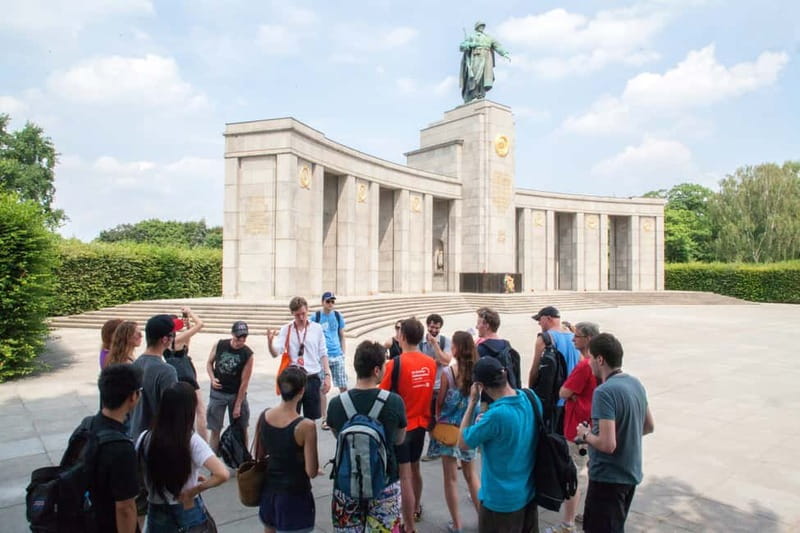
At $30 per person, the tour offers a solid introduction to central Berlin’s Nazi history. You receive a live English-speaking guide and a structured route through several important places. You do not receive food, drinks, or public transport, and any separate exhibition entrance costs are not included.
The value is strongest if you are new to Berlin or want a chronological foundation before visiting museums on your own. A guide can point out buildings you might otherwise pass without noticing and explain why a plain office block matters.
The tour is less useful if you already know the sites well and prefer to read at your own pace. You will have limited time at each location, and the most important remains are often outside. Think of the experience as an informed orientation, not a substitute for every Berlin museum connected to the Nazi period.
The booking terms are flexible: you can cancel up to 24 hours before the tour for a full refund, and you can reserve now and pay later. Children up to age 13 may join free, though the local operator can ask for proof of age.
Who should book this Berlin history walk?
I would recommend it to anyone with a serious interest in World War II, the Holocaust, modern German history, or the political conditions that allowed the Nazi regime to take power. It also suits first-time visitors who want a strong historical base before exploring Berlin independently.
Families with older children may find the route worthwhile, particularly if the children can handle difficult material. The tour is not light entertainment, and the subject includes persecution, war, mass death, and political terror.
You should think twice if you dislike outdoor walking, need long stops at museum displays, or want a tour focused mainly on architecture. You should also leave space in your day afterward. The final bunker site and the discussion of Nazi crimes can leave you needing a quiet break.
Should you book it?
Book this tour if you want Berlin’s Nazi history explained as one connected story rather than as a list of separate memorials. The surviving Luftwaffe headquarters, Propaganda Ministry, SS and Gestapo site, Soviet Memorial, and bunker location each reveal a different part of the period.
The strongest reason to go is the guiding. Guides such as Dani, India, Theo, and Elizabeth have been praised for turning dense history into a clear, human story. Bring comfortable shoes, an AB transport ticket, weather protection, and the right frame of mind. For $30, it is a worthwhile introduction, provided you understand that the tour is serious, outdoors, and dependent on the quality of the guide assigned that day.
FAQ
How long does the Berlin Third Reich walking tour last?
The stated duration is two hours. The route description also uses half-day wording, and past departures have sometimes lasted longer, so check the current schedule when booking.
What language is the tour conducted in?
The live tour guide speaks English.
Where does the tour meet?
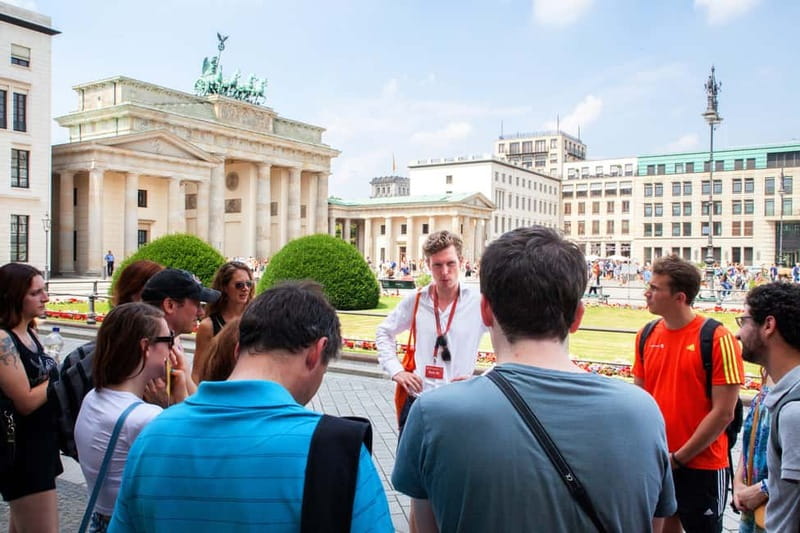
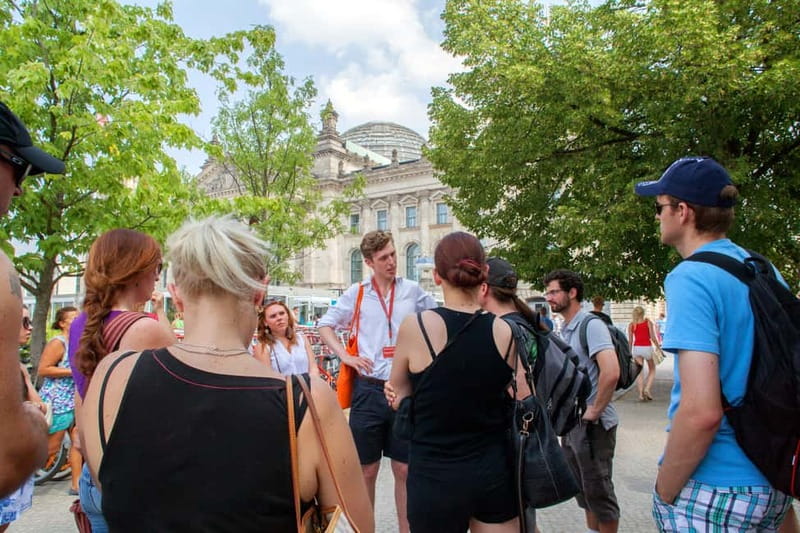
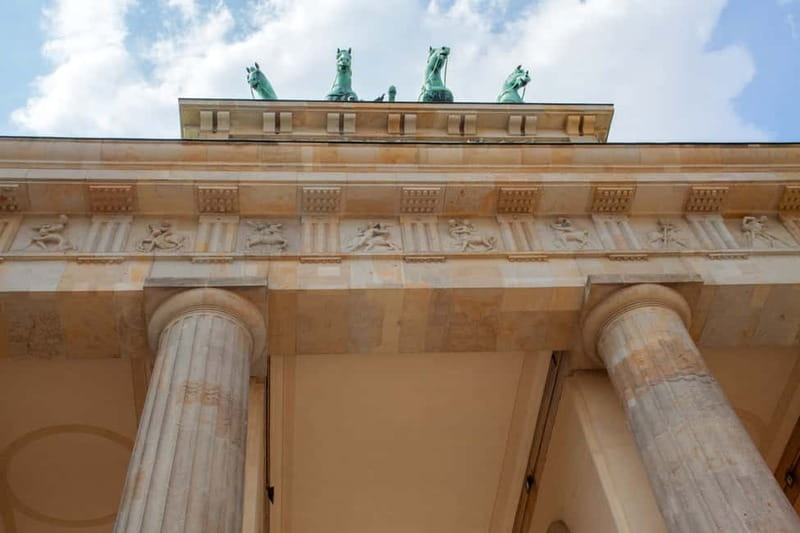
Meet in front of the Starbucks Café near Berlin’s historic Brandenburg Gate. Look for the local operator’s team wearing red shirts and carrying red umbrellas.
Do I need to buy a public transport ticket?
Yes. You need to purchase an AB transport ticket separately for the tour.
Is the tour wheelchair accessible?
The activity is listed as wheelchair accessible.
Are food and drinks included?
No. Food and drinks are not included. The tour has a break partway through, giving you an opportunity to purchase refreshments.
Can children join the tour?
Children up to 13 years old may join free. The local partner may ask for valid identification to confirm a child’s age.
More WWII and D-Day Tours in Berlin
- Vienna: World War II Historical Walking Tour
★ 4.8 · 1,772 reviews - Zagreb: City & History Walking Tour & WW2 Tunnels
★ 4.9 · 1,202 reviews - Pearl Harbor History Remembered Tour from Ko Olina
★ 5.0 · 1,009 reviews - Hiroshima Peace (Heiwa) Walking Tour at World Heritage Sites
★ 5.0 · 872 reviews
More WWII and D-Day Tours in Germany
- Berlin: Guided Bike tour of the Berlin Wall and Third Reich
★ 5.0 · 160 reviews - Eagle’s Nest-Berchtesgaden-Obersalzberg Private Half Day WWII Historical Tour
★ 5.0 · 64 reviews
Latest history tours reviewed in Berlin
- Berlin: Nazi History Walking Tour★ 4.8 · 33 reviews
- Berlin: Urbex Abandoned Places & History Tour★ 4.8 · 18 reviews
- Berlin: History and Sightseeing with Kids (Free for Kids)★ 4.9 · 19 reviews
- Berlin: Historic Boat Sightseeing City Center Tour★ 4.5 · 415 reviews
- Berlin: Historical Sights & Berlin Wall Tour with a Berliner★ 5.0 · 62 reviews
- Berlin: Guided Craft Beer & Cultural Tour With Snacks★ 5.0 · 68 reviews
- Berlin (E)Bike Tour Historical Highlights in Small groups★ 4.5 · 24 reviews
- Berlin: Historic Center Walking Tour with a Real Berliner★ 5.0 · 134 reviews
Berlin History Tours, compared.
Berlin: 3-Hour World Heritage Cruise to Potsdam
Read our review →
Berlin Private Complete History All Day Walking Tour
Read our review →
Berlin: Cold War & Berlin Wall History Guided Bike Tour
Read our review →
Berlin: Historic Boat Sightseeing City Center Tour
Read our review →
Small group Potsdam: A Journey Through History and Palaces
Read our review →