
Review · VIENNA
Vienna: World War II Historical Walking Tour
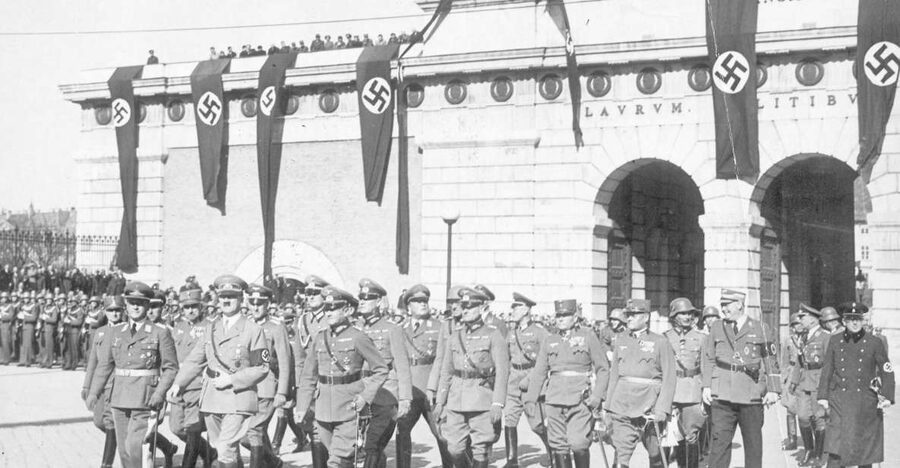
Vienna’s grand center carries some very dark memories. This 2.5-hour walking tour links Hitler’s early years in the city with the persecution of Vienna’s Jewish community, the destruction caused by more than 100,000 bombs, and the uneasy postwar division of the capital. It is history told on the streets where it happened, not from behind a museum window.
I like the tour’s Austrian point of view, which helps explain local responsibility instead of treating Austria as a passive victim of Nazi Germany. I also like the practical pacing: roughly 4 kilometers, regular places to pause, and headsets that let you hear guides such as Dieter, Stefan, Michael, or Siggi without crowding around them.
The main drawback is the subject itself. This is a serious tour about antisemitism, dictatorship, deportation, war, and mass murder, so it is not a light sightseeing stroll. You should also plan for changing weather and comfortable shoes, since the walk does not return to its starting point.
Key points to know before you book
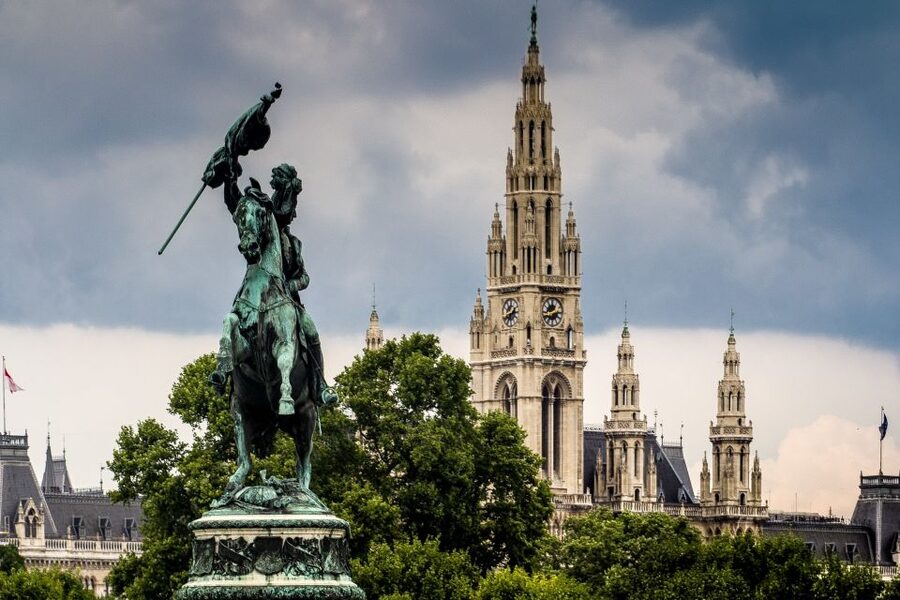
- The tour begins beside Vienna’s Opera House: Meet under the green umbrella at Albrechtsbrunnen, downstairs from the Albertina Museum, near Karlsplatz/Oper station.
- You see Vienna’s only synagogue to survive the Nazi regime: This is one of the walk’s most important stops and gives the wider story a human scale.
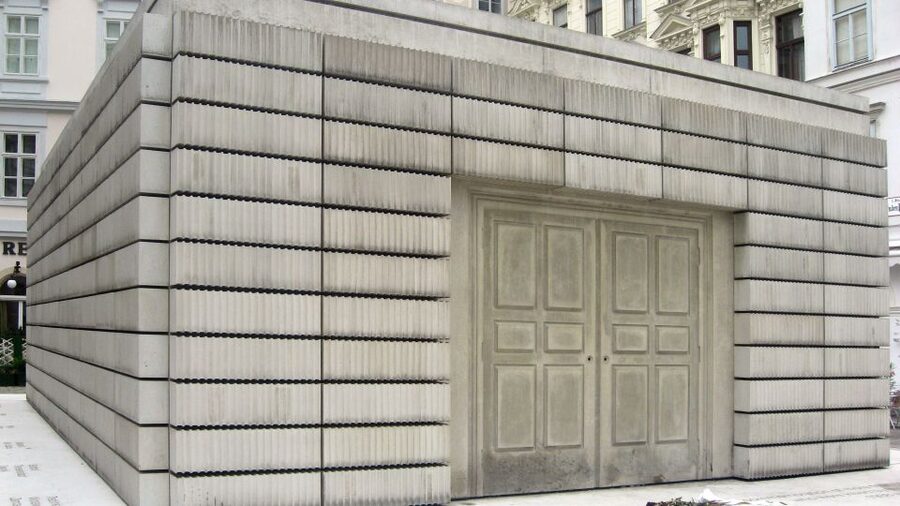
- The Holocaust memorial provides a quiet counterpoint: Vienna’s somber memorial is a place to stop, listen, and think rather than simply take photographs.
- The route connects Hitler’s youth with Vienna’s politics: The guide explains how the city’s social tensions and political climate shaped his ideas.
- Headsets make a real difference: Larger groups can keep moving through busy streets while still hearing the guide clearly.
- The walk lasts 150 minutes: Expect about 4 kilometers, with sitting, shelter, bathroom, and snack pauses reported along the route.
Starting at the Albertina and the Opera House
The meeting point is easy to locate if you know what to look for. Find the green umbrella in front of Albrechtsbrunnen, the fountain below the Albertina Museum, beside the Vienna State Opera. Karlsplatz/Oper is the closest subway stop.
This is a fitting place to begin. The Albertina and Opera House represent Vienna’s polished imperial and cultural image, while the tour quickly asks you to look beyond that image. The contrast is useful. Vienna can feel graceful and secure at street level, yet the guide shows how quickly public life changed under political fear and extremist rule.
The first part sets up Hitler’s early years in Vienna and explains how an aspiring art student became a dictator. Do not expect a simple psychological answer. The value here is in seeing his development against the city’s political and social climate, rather than pretending one place or one event explains everything.
Guides are central to the experience. Dieter is frequently singled out for linking separate events into a clear story, while Stefan is praised for combining broad historical context with personal family accounts. Michael, Wolfgang, Charles, Florian, and Siggi have also led the walk, so the exact style can vary, but the tour is conducted in English.
More WWII and D-Day Tours in the world:
- Zagreb: City & History Walking Tour & WW2 Tunnels
★ 4.9 · 1,202 reviews - Pearl Harbor History Remembered Tour from Ko Olina
★ 5.0 · 1,009 reviews - Hiroshima Peace (Heiwa) Walking Tour at World Heritage Sites
★ 5.0 · 872 reviews
Hitler’s Vienna and the political climate
The tour uses Vienna to examine the forces that helped shape Hitler’s worldview. You hear about his years in the city, the ideology he later developed, and the ethnic rivalry and fear that affected public life.
That context matters because the tour does not present Hitler as an isolated figure who appeared from nowhere. It asks you to consider the ideas, prejudices, and political habits around him. A good guide can make this complicated material understandable without turning it into an excuse for his later crimes.
The strongest guides add interpretation rather than simply reciting dates. Wolfgang, for example, is described as connecting events and weighing their importance. Charles is praised for handling difficult history with sensitivity and analysis. That approach suits this subject. You need facts, but you also need help understanding how ordinary institutions and social tensions can be pulled toward dictatorship.
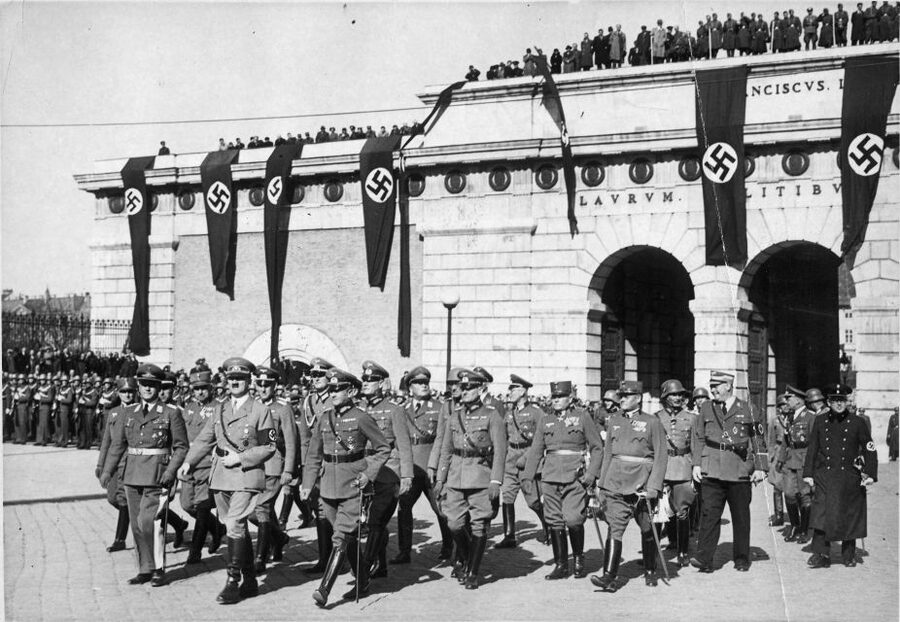
The tour’s tone is generally balanced, but balanced does not mean morally vague. It explains Austria’s role in the annexation and wartime period while keeping the human cost in view. You will hear about the annexation of Austria, the city’s liberation, and the way local attitudes affected Vienna’s Jewish population.
Vienna’s Jewish community and the surviving synagogue
One of the most meaningful stops is the only synagogue in Vienna that survived the Nazi regime. The building gives the story a physical anchor. Instead of hearing only about a vanished community, you stand before a place that endured while much of Jewish Vienna was attacked, destroyed, or forced into silence.
The stop is not presented as a quick architectural visit. The guide explains what happened when antisemitism, ethnic rivalry, and fear seized the city, and what that meant for more than a hundred thousand Jewish residents. The exact details you absorb will depend on the guide, but the purpose is clear: to connect political language with real people and real places.
This is also where the tour’s Austrian perspective matters most. Vienna’s wartime past cannot be explained only through decisions made in Berlin. The city had its own population, institutions, prejudices, and responses. Listening to that local angle helps you understand why the history remains such a serious subject in Austria.
Keep in mind that entrance fees to attractions are not included. The activity is primarily an outdoor walking tour, and the advertised highlights involve viewing historic places rather than a full series of interior visits.
The Holocaust memorial and the weight of the subject
The Holocaust memorial is one of the tour’s quietest and most serious stops. It gives the guide a chance to move from political history to remembrance.
You should expect a sober explanation rather than a lively sightseeing presentation here. The memorial is not simply another landmark on a route. It asks you to pause and consider the scale of the destruction and the absence left behind.
That shift in tone is one of the tour’s strengths. The walk can move from grand buildings and city streets to a place where the subject demands silence and care. Guides such as Dieter, Siggi, and Charles have been praised for treating the material with sympathy while still encouraging questions and discussion.
If you want only military history, this tour may not be the best fit. Its focus is wider. It includes the political climate, Hitler’s early life, Vienna’s Jewish community, local responsibility, civilian destruction, and the postwar city. The Holocaust memorial is essential to that wider story.
More History Walking Tours in the world:
- History and Hauntings of Salem Guided Walking Tour
★ 5.0 · 14,564 reviews - Lisbon: History, Stories and Lifestyle Walking Tour
★ 4.8 · 10,902 reviews - Boston: Freedom Trail History Small Group Walking Tour
★ 5.0 · 6,450 reviews - Historic Charleston Guided Sightseeing Walking Tour
★ 5.0 · 6,216 reviews
Bomb damage and the physical scars of World War II
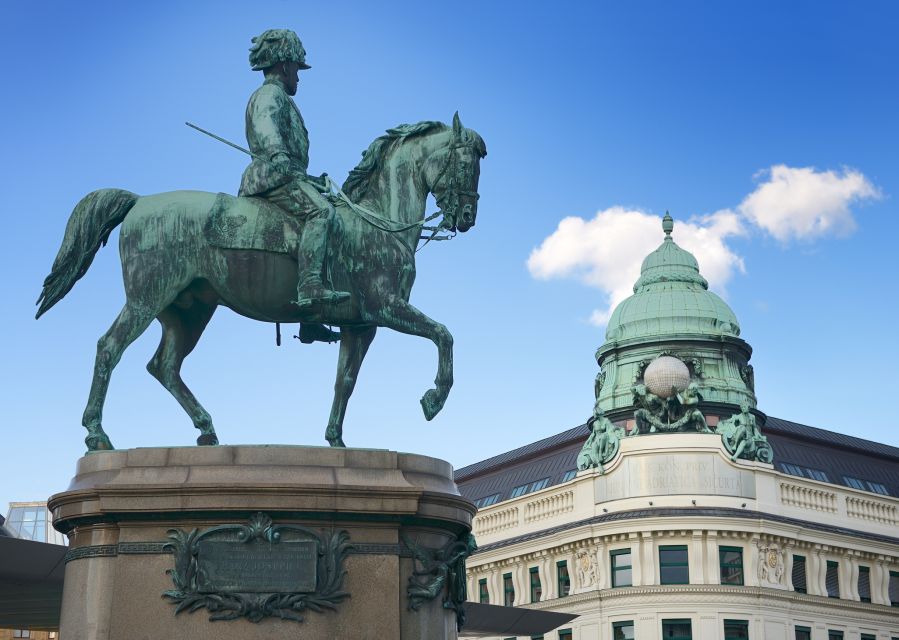
Vienna suffered from more than 100,000 bombs during World War II, and the tour points out scars and remains connected with that destruction. This helps you see the war as something that altered the city’s streets and buildings, not just a sequence of battles far from the center.
The guide’s storytelling makes these places more useful than a simple list of damaged sites. You learn what the city faced, how the war affected Vienna, and how the physical remains fit into the larger story of annexation, dictatorship, bombing, liberation, and reconstruction.
Do not expect a museum-style display at every stop. Much of the value comes from standing in an ordinary urban setting while the guide explains what happened there. Printed photographs have been used by guides such as Siggi, which can help you compare the present city with wartime images.
The route is not described as difficult, but it is still a city walk lasting 150 minutes. One participant calculated the distance at about 4 kilometers, a manageable total for many people. You will spend time walking, standing, and listening, so supportive shoes are sensible.
The divided city after 1945
The final part looks at Vienna after the war, when the city was divided among the Allied powers. Vienna was the only city in the world where the Allied powers managed a zone together, a detail that gives the postwar story a special local angle.
This section keeps the tour from ending with 1945 as a clean finish. Liberation did not erase the damage or settle every political question. Vienna had to deal with occupation, division, rebuilding, and the memory of what had happened under Nazi rule.
The tour helps you read the city in layers. The elegant center is not just an imperial backdrop. It is also a place shaped by dictatorship, bombing, occupation, and attempts to remember. That is why the walk works well near the beginning of a Vienna visit. You get a different frame for buildings and districts you may later see on your own.
The route does not return to the Albertina starting point. A subway stop is close to the end, which is helpful, but you should avoid booking a tight appointment immediately afterward.
The walking pace, headsets, and weather plan
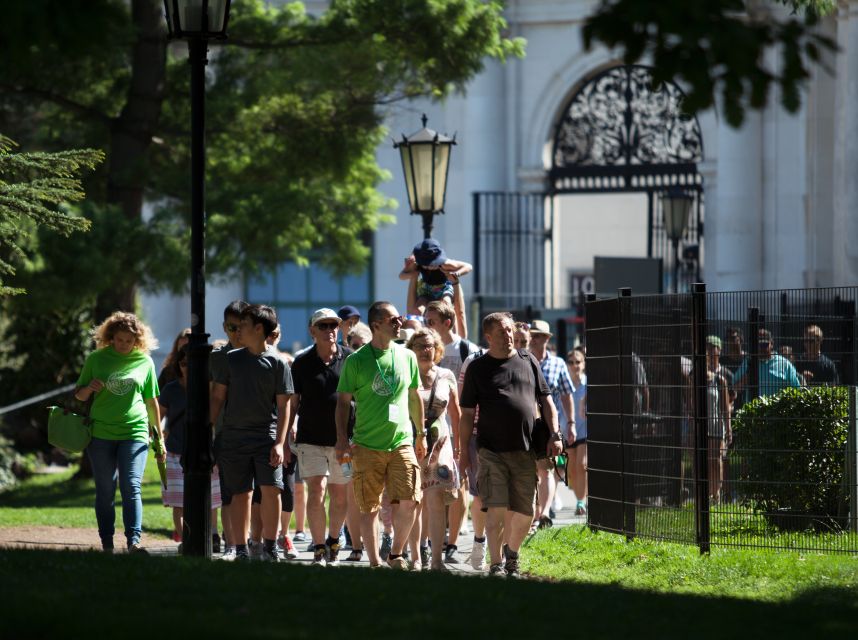
The practical setup is better than the basic phrase walking tour might suggest. Headsets are used, especially helpful in larger groups. You can hear the guide while walking through city streets rather than stopping shoulder to shoulder around one person.
That matters in Vienna, where traffic, trams, pedestrians, and street noise can easily swallow a soft speaking voice. The headsets also let the guide keep the route moving. Several participants found this one of the best features of the experience.
The pacing includes stops to sit, take a bathroom break, or get a snack. Guides have also adjusted pauses for rain and cold. Dieter reportedly looked for warm places to explain the history, while Florian paused during heavy rain. These details make the difference between an interesting tour and an exhausting one.
Still, come prepared. Wear comfortable shoes, check the weather, and dress for an outdoor walk. The tour operates in English, and you should be ready to listen for long stretches as well as walk.
Is $31 a fair price?
At $31 per person, the tour is fairly priced if you want interpretation rather than a self-guided route. You are paying for 150 minutes with a live English-speaking guide, a carefully connected subject, and the chance to ask questions as the story develops.
The value is strongest for people who already know the basic outline of World War II but want to understand Vienna’s role. A guide can explain why a particular street, synagogue, memorial, or damaged building matters. That saves you from collecting disconnected facts and gives the city a more coherent meaning.
The price does not include attraction entrances or transportation. Since the walk is primarily conducted outdoors, the main cost is the guide’s time and expertise. If you plan to visit paid museums separately, budget for those as well.
The tour has a 4.8 rating from 1,772 ratings, and the strongest pattern is clear: guides are praised for storytelling, context, patience, and sensitivity. Dieter is repeatedly described as especially strong at answering questions and connecting events. Stefan, Michael, Siggi, Wolfgang, Charles, and Florian are also noted for clear delivery and a thoughtful approach.
Who will get the most from this walk?
I would choose this tour if you have a serious interest in World War II, the Holocaust, modern Austrian history, or the rise of Hitler. It also suits you if you want a guided introduction before exploring Vienna’s museums and memorials independently.
It is a good choice for people who appreciate discussion. Guides invite questions, offer interpretation, and in some cases adjust the emphasis to match the group’s interests. You do not need to arrive as a history expert, but you should be willing to engage with difficult material.
The tour may be less suitable if you want an easy orientation walk focused on palaces, cafés, and famous architecture. Although you will walk through beautiful central Vienna, the subject remains the main event. The mood is often serious, and some stops are emotionally heavy.
People with limited mobility should consider the full 4-kilometer route and the amount of standing. The pacing includes sitting and breaks, and one account describes the distance as manageable for someone with mobility issues, but individual comfort will vary.
Should you book the Vienna World War II Historical Walking Tour?
Book it if you want Vienna’s wartime past explained with local context and moral clarity. The synagogue, Holocaust memorial, bomb damage, and postwar Allied division give the route a strong structure, while the better guides add stories and thoughtful questions instead of rattling off dates.
I especially recommend taking it early in your stay. It can change how you see central Vienna afterward, and it gives you useful background before visiting other historic sites. Choose another activity if your priority is a light city stroll or extensive interior access.
For $31, an English-speaking guide, headsets, regular pauses, and 150 minutes of focused history make this a worthwhile choice for the right audience. Just wear good shoes, allow for weather, and leave some time after the tour to process what you have heard.
FAQ
How long does the Vienna World War II Historical Walking Tour last?
The tour lasts 150 minutes, or 2.5 hours.
What language is the tour conducted in?
The live tour guide speaks English.
Where does the tour begin?
Meet under the green umbrella in front of Albrechtsbrunnen, the fountain downstairs at the Albertina Museum beside the Opera House. Karlsplatz/Oper is the closest subway stop.
Does the tour return to the starting point?
No. The walk does not return to the Albertina starting point. A subway stop is close to the endpoint.
How far do you walk?
The route covers about 4 kilometers, according to the tour information provided during the experience.
Are attraction entrance fees included?
No. Entrances to attractions are not included. The activity includes the live guide and walking tour.
Does the tour include a Holocaust memorial and a synagogue?
Yes. The route visits Vienna’s somber Holocaust memorial and shows the only synagogue that survived the Nazi regime.
Can I cancel the booking for a full refund?
Yes. You can cancel up to 24 hours in advance for a full refund. You can also reserve now and pay later.
Latest history tours reviewed in the world
- From Athens: Ancient Olympia Full-Day Private Tour★ 4.8 · 22 reviews
- From Athens: Explore Ancient Corinth & Charming Nafplion★ 4.6 · 102 reviews
- From Athens: Explore Ancient Greece 4-Day Tour★ 4.7 · 73 reviews
- From Albufeira: Wine Tasting & Historic Silves Tour★ 4.9 · 421 reviews
- From Albufeira: Historical Algarve Region Tour★ 4.7 · 585 reviews
- From Alexandria: Full-Day Guided Tour of Historical Sights★ 4.5 · 54 reviews
- From Abu Dhabi: Grand Mosque, Royal Palace& Heritage Village★ 4.6 · 197 reviews
- Franklin: Ghost Tour in Historic Franklin★ 4.8 · 65 reviews
Vienna History Tours, compared.
Vienna Historic Center Small Group Walking Tour
Read our review →
Skip-the-Line Schonbrunn Palace Guided Tour and Vienna Historical City Tour
Read our review →
Vienna Mozart Concert in Historical Costumes at the Musikverein
Read our review →
Browse the lists this tour appears in