
Review · HIROSHIMA
Hiroshima: History of Hiroshima Group Walking Tour
Hiroshima’s Peace Memorial Park is easy to walk through, but hard to understand without context. This two-hour English tour links its memorials, fountains, bells, and cenotaphs to the human stories behind them, ending at the Atomic Bomb Dome and the bomb’s hypocenter.
I like two things in particular: guides such as Cva, Moe, Tomas, and Sada bring strong historical training and, in some cases, family connections to survivors; and the route covers lesser-known memorials rather than stopping only at the famous dome. The main consideration is that this is an emotional subject, and a large group can make it harder to hear or ask questions.
Key points to know before you book
- The route covers more than the Atomic Bomb Dome: You’ll visit memorials, fountains, bells, cenotaphs, the Peace Memorial Hall, and the hypocenter.
- Personal stories add human weight: Several guides share family connections to people who survived the bombing.
- Two hours is a useful introduction: The pace gives you a clear framework before you explore Hiroshima on your own.
- The tour costs $35: That is good value if you want the memorials explained rather than simply photographed.
- The meeting point is precise: Look for the Gates of Peace beside the Italian restaurant Mario.
- Expect a serious, respectful walk: Comfortable shoes and clothing suited to the weather will help.
Why a guide helps at Hiroshima Peace Memorial Park
You can walk through the park on your own, but many of its memorials are easy to pass without knowing what they represent. A statue, bell, or stone marker may look simple until you hear the story attached to it. This tour gives the park a clear sequence and connects its landmarks to the events of August 6, 1945.
The guides come from varied backgrounds, including tourism, anthropology, history, and peace studies. Several hold master’s or doctoral degrees, and the tour team has spent years living in Hiroshima. That mix matters because the experience is not limited to a date and a set of military facts. You’ll also hear about daily life before the bombing, the reasons Hiroshima was selected as a target, the immediate destruction, the suffering that followed, and the city’s recovery.
The best guides handle the subject with care. Cva is praised for encouraging questions and drawing the group into the discussion. Moe has shared stories connected to her family. Sada has been noted for bringing together Hiroshima’s culture, food, history, and postwar rebuilding. Guide names and assignments can change, but the tone is consistent: serious without being cold, and personal without becoming theatrical.
This is not a tour for rushing from one photo stop to the next. You’ll have moments to listen, ask questions, and absorb what you are seeing. That makes it a useful first visit to the park, especially if you want an explanation of how the memorials fit together.
More History Walking Tours in Japan
- Tokyo: Imperial Palace and Shogun Historical Walking Tour
★ 5.0 · 2,251 reviews - Kyoto Gion: 2-Hour Geisha Culture & History Walking Tour
★ 5.0 · 1,186 reviews - Tokyo Castle & Imperial PalaceーShogun Walking Tour
★ 4.7 · 1,068 reviews
Starting at the Gates of Peace
Meet your guide in front of the Gates of Peace, next to Mario, the Italian restaurant. Arriving a little early is sensible because the meeting place is specific, and one family suggested that a message confirming the exact location the night before would be useful.
The gates provide an appropriate beginning. From here, the walk moves through the park rather than treating the bombing as an isolated event. Your guide begins to explain Hiroshima before the attack, then builds toward the city’s wartime role and the events that changed it forever.
The park is generally manageable for a walking tour, and the activity is listed as wheelchair accessible. Still, the walk includes many outdoor stops, so weather matters. Wear comfortable shoes, and bring clothing suited to the forecast. Snow and heavy weather have not stopped the tour, but poor conditions can make listening outdoors less comfortable.
Mother and Baby in the Storm
One of the first stops is Mother and Baby in the Storm, where the guide introduces the human cost of the bombing through sculpture and testimony. The short stop works as an emotional opening because it moves the subject away from military strategy and toward families caught in the attack.
You’ll want to listen closely here. The explanation is brief, and the memorial may not be self-explanatory if you are walking through the park alone. This is one reason a guided route is useful: the memorials are not just objects along a path, but pieces of a larger story.
The Prayer Fountain and the meaning of water
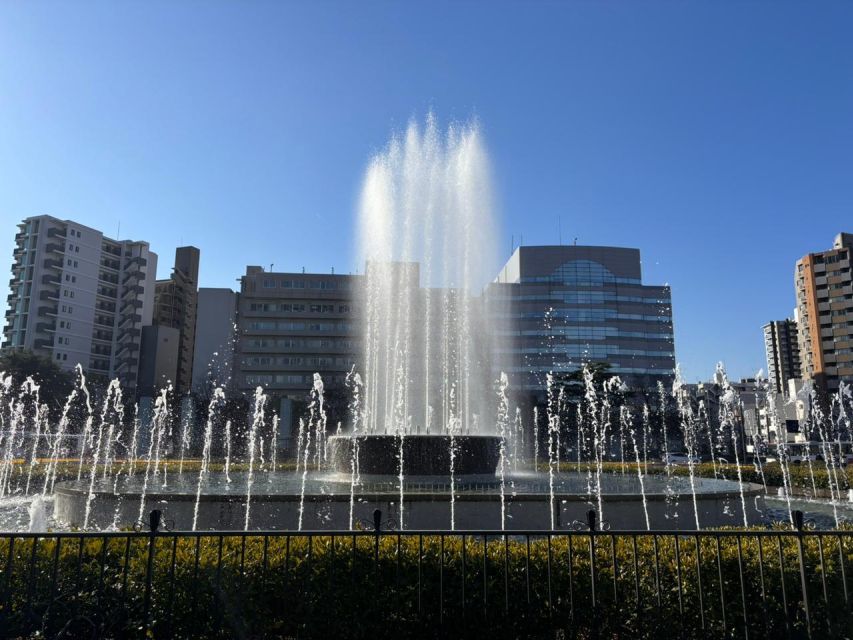
The Prayer Fountain receives a longer explanation, with time to look around and take in the park. Water carries particular force in a place where many victims desperately needed it after the bombing, and the guide explains the symbolism connected to this memorial.
This is also a good point to notice the park’s design. Hiroshima’s memorial spaces are quiet and open, but they are not empty of meaning. The walk gives you time to see how remembrance is expressed through fountains, flame, bells, stone, and sculpture rather than through one single monument.
Same old streets, another chapter:
- Kyoto: Fushimi Inari, Kinkakuji, Bamboo Grove 1 Day Bus Tour
★ 4.8 · 4,316 reviews - World Heritage Shirakawa-go and Experience Tours from Kanazawa
★ 5.0 · 4,049 reviews - World Heritage Kyoto & Nara Uji Authentic Matcha Experience
★ 5.0 · 1,573 reviews - Kanazawa: World Heritage Shirakawa-go Morning Guided Tour
★ 4.9 · 988 reviews
The Cenotaph and Flame of Peace
At the Hiroshima Victims Memorial Cenotaph, the tour turns toward collective remembrance. Your guide explains the memorial’s role in honoring the people who died, including the significance of the names recorded there and the broader message of peace attached to the site.
The Flame of Peace follows naturally. It is one of the park’s best-known symbols, but a guide can explain why it matters beyond its appearance. The tour connects these formal memorials to the lives of victims and survivors, helping you understand that the park remembers both the scale of the attack and individual suffering.
These stops are not long, which is helpful in a two-hour tour. You get the essential explanation without spending the entire walk at one monument. The tradeoff is that anyone wanting extended time for private reflection may wish to return later on their own.
Hiroshima National Peace Memorial Hall
The Hiroshima National Peace Memorial Hall for Atomic Bomb Victims is the indoor portion of the walk, and entrance is included in the $35 price. You’ll spend about 15 minutes here with the guide, followed by a period that includes free time.
This stop adds a quieter setting to the outdoor route. The hall is dedicated to the victims of the atomic bombing, and it gives you space to process the stories you have heard. Since the visit is not simply a pass-by photo stop, it helps balance the faster outdoor movement through the park.
The free time is useful. You can look around at your own pace, ask a private question, or take a short mental pause before continuing. Two hours is a compact format, so this breathing room makes the tour feel less like a lecture.
Children’s Peace Monument and the power of a small story
The Children’s Peace Monument is one of the most recognizable stops in the park. It is tied to the experiences of children affected by the bombing and to the wider wish for peace expressed by young people.
The visit includes time for photographs, but this is not treated as a simple sightseeing stop. Your guide explains the story behind the monument and links it to survivor testimony. That connection is important because the memorial’s bright, child-centered appearance can otherwise hide the painful history behind it.
For families, this may be one of the most affecting parts of the walk. Parents should be ready for a serious discussion rather than a light attraction. The guides’ tone helps, and several have been praised for explaining difficult material in a way that keeps children engaged.
Burial mound and Korean victims’ cenotaph
The Atomic Bomb Memorial Burial Mound is a less obvious stop, and that is one of its strengths. It points to the many victims whose remains could not be identified or returned to families. The guide explains how the bombing created suffering on a scale that made ordinary burial and identification difficult.
The Korean Atomic Bomb Victims Cenotaph broadens the story further. Hiroshima’s victims came from different backgrounds, and this memorial helps you see the bombing beyond a single national narrative. It is an important reminder that wartime history does not fit neatly inside modern borders.
These two stops are exactly the kind of places you might miss without a guide. They do not have the visual presence of the dome or cenotaph, but they add detail and complexity to the visit.
The Peace Bell and a moment to pause
At the Peace Bell, you’ll have another photo stop and guided explanation. The bell is a direct, understandable symbol, yet the meaning becomes more substantial when placed alongside the park’s other memorials.
Your guide may invite questions throughout the walk, and this is a good time to ask about Hiroshima today, the city’s rebuilding, or the peace message that runs through the park. The best sessions are interactive rather than scripted. Cva, in particular, has been praised for asking questions, listening carefully, and making room for different perspectives.
One practical issue is group size. Most of the feedback describes a smooth, well-paced experience, but one person found a larger group uncomfortable and harder to hear. If you join a busy departure, stay close to the guide and move promptly between stops.
The Atomic Bomb Dome and the story of survival
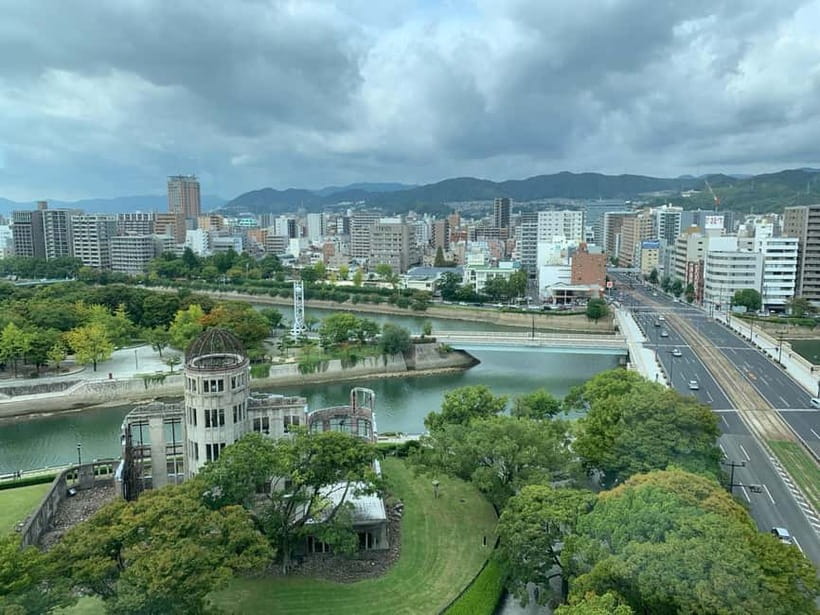
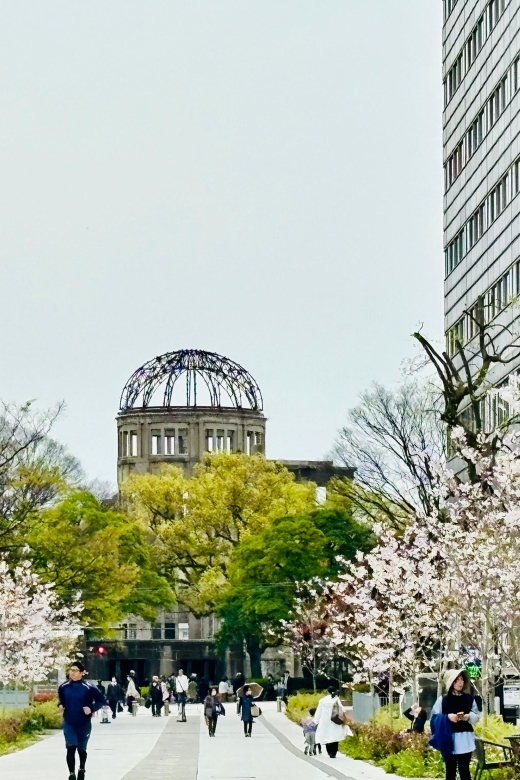
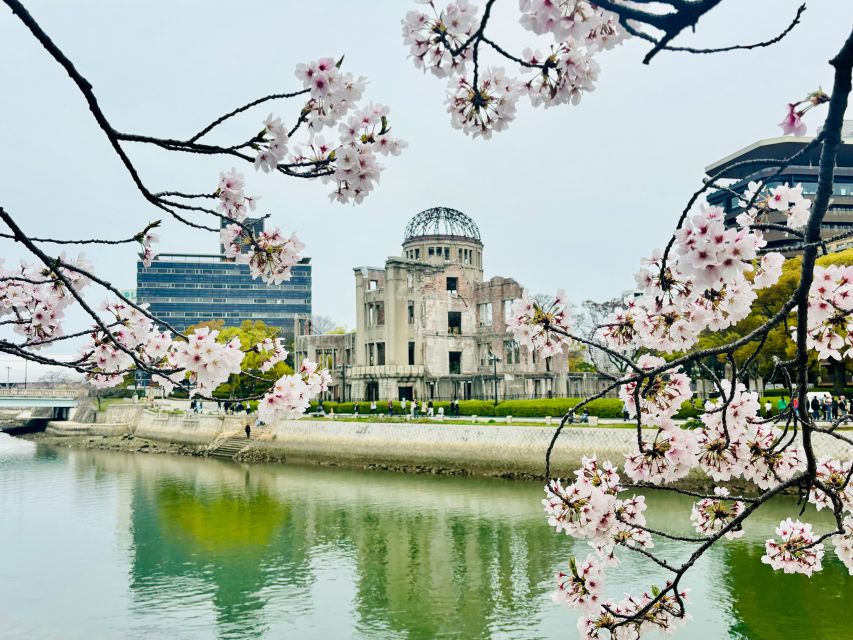
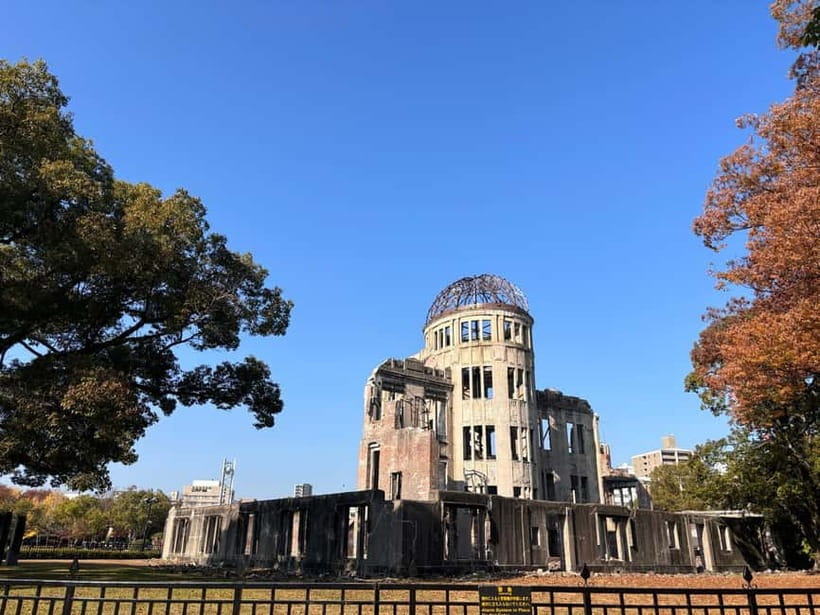
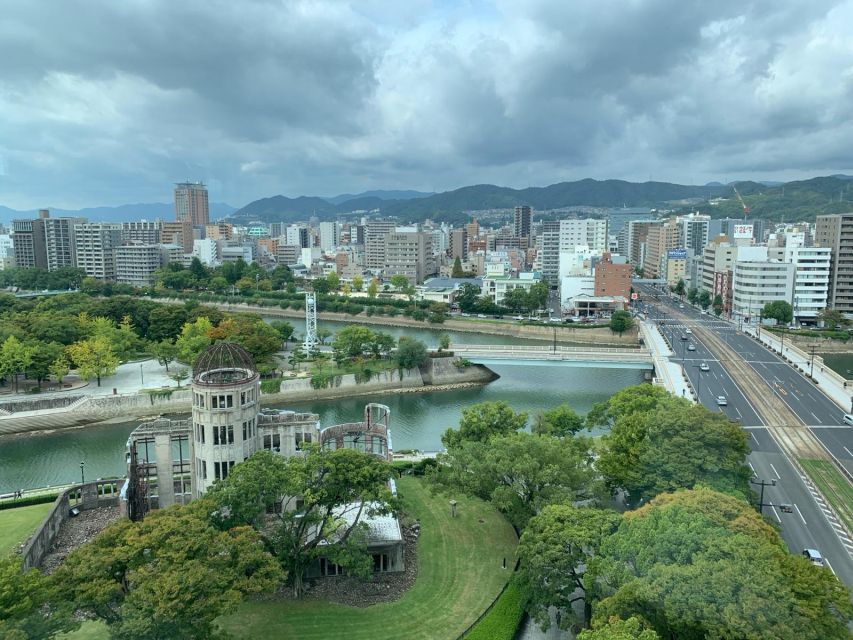
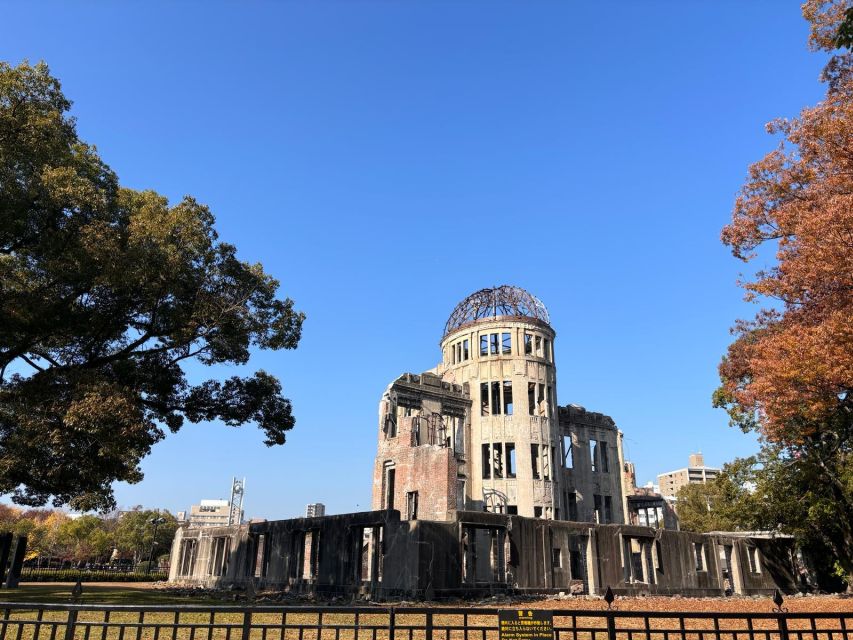
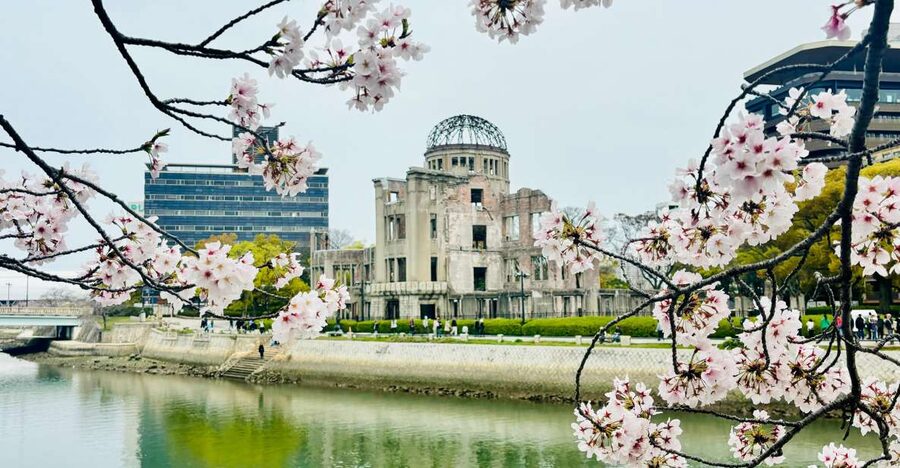
The Atomic Bomb Dome is the visual centerpiece of the walk. It is the only structure left standing at the blast site, though heavily damaged, and its exposed frame makes the force of the explosion easier to grasp than words alone.
The guide explains what the building was before the bombing and why it was preserved. You’ll have time for photographs, but the stop is not presented as a picturesque ruin. Its value comes from the contrast between the building’s fragile remains and the city around it, which was rebuilt after the destruction.
This is often the moment when the tour’s earlier explanations come together. You have already heard about Hiroshima before the bombing, the attack itself, victims, survivors, and the city’s recovery. At the dome, the physical evidence is still in front of you.
Ending at the hypocenter
The tour finishes at the Hiroshima Atomic Bomb Hypocenter Monument. The hypocenter is the point directly below the aerial burst, so ending here gives the walk a stark final focus.
The location is quieter and less visually dramatic than the dome, but that is part of its force. There is no need for a grand structure to explain what happened. Your guide uses this final stop to discuss the bombing’s immediate effects, its long-term impact on survivors, and Hiroshima’s continuing message of peace.
Because the tour ends here, you may want to plan your next step before setting out. The experience does not return you to the Gates of Peace. The ending also leaves you with a natural choice: continue to the Hiroshima Peace Memorial Museum independently, spend more time in the park, or take a break before moving on.
What the $35 price gets you
At $35 per person, this is a fair price for a two-hour guided walk that includes entry to the Hiroshima National Peace Memorial Hall. You are paying mainly for structure and explanation. The park itself is open to explore, but the value lies in understanding why each memorial exists and how its story fits into the wider history.
The price is especially reasonable if Hiroshima is your first visit or if you have read about the bombing but want a clearer connection between dates, places, and people. A guide also helps you find the smaller memorials that are easy to miss.
The tour is less useful for someone who wants a long, scholarly examination of every political and military question surrounding the bombing. Two hours can give you a strong foundation, not an exhaustive study. If you already have extensive background, you may still learn from personal stories and local perspectives, but you should treat this as an introduction rather than the final word.
Who will get the most from this walk
I would choose this tour if you want a respectful overview before spending more time at Hiroshima’s museums and memorials. It suits first-time visitors, families, history-minded visitors, and anyone who prefers learning through conversation rather than reading every sign alone.
It is also a good choice if you care about the city after 1945, not just the bombing itself. The guides discuss how Hiroshima rose from the ruins and became associated with peace. That wider view keeps the city from being reduced to a single tragic morning.
You should think twice if you dislike group walking tours, need extensive time at each monument, or prefer to explore in silence. The subject is heavy, and even the most engaging guide cannot make it light. Still, the careful pacing and opportunities for questions make the two-hour format manageable.
The tour runs in English, is wheelchair accessible, and offers free cancellation up to 24 hours in advance. You can also reserve now and pay later, which is useful when your Japan itinerary is still shifting.
Should you book it?
Book this Hiroshima walking tour if you want the Peace Memorial Park to feel connected rather than confusing. The route covers the famous places, but its real value is the smaller memorials, personal survivor connections, and clear explanation of Hiroshima before, during, and after the bombing.
Choose it early in your Hiroshima stay if possible. You’ll then have a better sense of what to revisit on your own. At $35, it is a practical way to build an informed first impression, provided you are ready for a serious and emotional morning or afternoon.
FAQ
How long does the Hiroshima walking tour last?
The tour lasts two hours.
What language is the tour conducted in?
The tour is conducted in English with a live English-speaking guide.
Where does the tour meet?
Meet in front of the Gates of Peace, next to the Italian restaurant Mario.
Where does the tour finish?
The tour finishes at the Hiroshima Atomic Bomb Hypocenter Monument.
Is entry to the Hiroshima National Peace Memorial Hall included?
Yes. Entrance to the Hiroshima National Peace Memorial Hall for Atomic Bomb Victims is included.
Is the tour wheelchair accessible?
Yes, the activity is listed as wheelchair accessible.
What should I bring?
Bring comfortable shoes and clothing suited to the weather. The tour includes an outdoor walk through Hiroshima Peace Memorial Park.
Latest history tours reviewed in Japan
- Authentic Sapporo: Nijo Market Seafood Lunch & History Tour★ 4.8 · 20 reviews
- Asakusa: 3.5-hour Big-picture History Walk★ 4.7 · 39 reviews
- Asakusa: A Big-picture History Walk to Know Japan★ 4.6 · 77 reviews
- 2.5-Hour Nagoya Tour: Castle History, Local Food & City View★ 4.5 · 36 reviews
- 1-Day Tour from Nagoya: Hiking the Historic Nakasendo Trail★ 4.9 · 34 reviews
- From Tokyo: Nikko World Heritage Sight Full Day Private Tour★ 4.9 · 127 reviews
- From Tokyo: Nikko World Heritage Site Private Full-Day Trip★ 4.9 · 243 reviews
- Tokyo: Nikko World Heritage Private Day Trip Hotel Pick-up★ 4.8 · 145 reviews
Hiroshima History Tours, compared.
Hiroshima Historical Walking Tour – Why A-Bomb was Dropped
Read our review →
Hiroshima Peace (Heiwa) Walking Tour at World Heritage Sites
Read our review →
Miyajima Half-day Trip Historical Walking Tour
Read our review →Browse the lists this tour appears in