Review · BERLIN
Berlin: Guided Bike tour of the Berlin Wall and Third Reich
Berlin’s past is easier to grasp when you see how close its landmarks are to one another. On this three-hour bike ride, you pedal from the old Nikolaiviertel to Wall memorials, Nazi-era sites, government buildings, and Checkpoint Charlie, with a local guide explaining the connections. The city becomes the classroom.
I especially like two things here. First, you reach places many visitors skip, including Günter Litfin’s preserved watchtower and the former flak tower at Humboldthain. Second, the bike makes it possible to cover a lot of ground without sitting in traffic. The main drawback is that the route is flexible, so the guide may not visit every advertised stop.
Key points to know before booking
- The route changes by guide: The Free Berlin concept lets each guide shape the ride, so the stops and order are not fixed.
- You cover two difficult chapters: The tour links the Nazi period, the Holocaust, the Berlin Wall, and the Cold War.
- It is an easy-paced ride, but not a passive tour: One reported route covered about 13 kilometers with regular breaks.
- The bikes are practical: A city bike, helmet, and a basket or basket carriage for small items are included.
- Guides add a personal angle: Paul, a native of West Berlin, has spoken about life on both sides of the Wall, while guides such as Simon, Theo, Juliette, and Simone are praised for clear storytelling.
- Check your priorities before you book: If the Holocaust Memorial, Reichstag, or Checkpoint Charlie is essential, ask what your guide plans to include.
Why Berlin works so well on two wheels
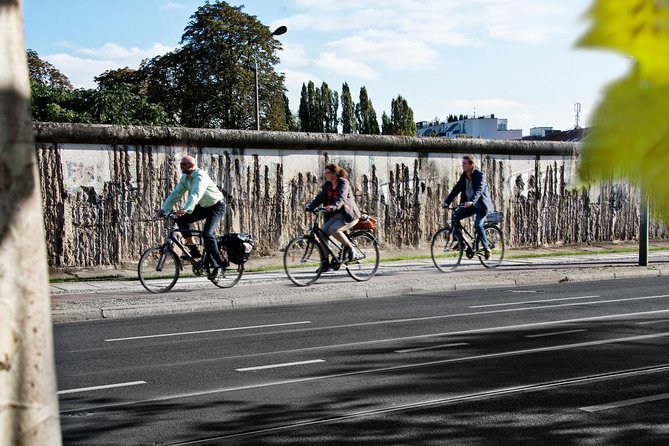
Berlin is broad, flat, and spread out. A walking tour can handle one district well, but it takes longer to connect the Wall, government quarter, former Nazi sites, and Cold War borders. A bus moves farther, but you lose the small changes in streets and neighborhoods that make Berlin’s history easier to read.
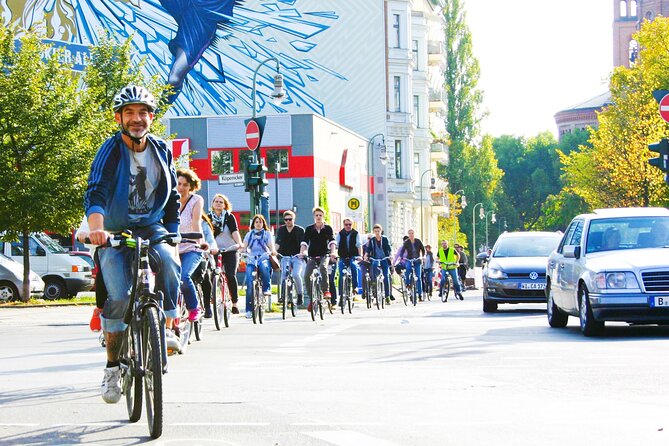
A bicycle gives you a useful middle ground. You move quickly enough to see a wide slice of the city, but slowly enough to stop beside a memorial or a remaining section of Wall. Guides keep the group together, wait at red lights, and give instructions on busier roads. Some routes use parks and quieter paths, though main streets and cycle lanes can still feel daunting if you are not used to city riding.
The pace is not meant to be athletic. A family route with children aged 10, 14, and 17 covered around 13 kilometers and included plenty of stops. Children are welcome, and infant seats can be provided if requested. You still need to be comfortable riding a bicycle for about three hours in changing weather.
More WWII and D-Day Tours in Germany
- Berlin: History of the Third Reich Guided Walking Tour
★ 4.7 · 791 reviews - The History of Berlin: WWII PRIVATE Walking Tour With Locals
★ 5.0 · 209 reviews - Berlin: Nazi History Walking Tour
★ 4.8 · 33 reviews
From Nikolaiviertel to Berlin’s Jewish history
The meeting point is Free Berlin Bike Tours and Rental at Poststraße 11, beside the Nikolaiviertel. This is a smart place to begin because it introduces a basic Berlin question: what counts as old in a city that suffered immense wartime destruction and later spent decades divided?
Nikolaiviertel is presented as Berlin’s only real old town, though much of what you see today reflects reconstruction. That makes it a useful opening lesson. Berlin’s historic center is not simply a preserved medieval quarter. It is a place where war, rebuilding, state planning, and modern tourism overlap.
The ride then reaches the New Synagogue and Centrum Judaicum. The stop is short, but the story is powerful: during the November 1938 pogroms, a police officer used his authority and courage to prevent the synagogue from being destroyed. The point is not to turn one act of bravery into a comfortable story. It shows that individual choices still mattered during a period of organized persecution.
The tour also includes memorials for victims of deportation and the Holocaust. These lesser-known sites can be valuable because they do not all use the same design language. One memorial created during the East German period contrasts sharply with the better-known Memorial to the Murdered Jews of Europe near Brandenburg Gate. You get a sense of how memory itself changed across different political periods.
Seeing what the Berlin Wall did at Bernauer Strasse
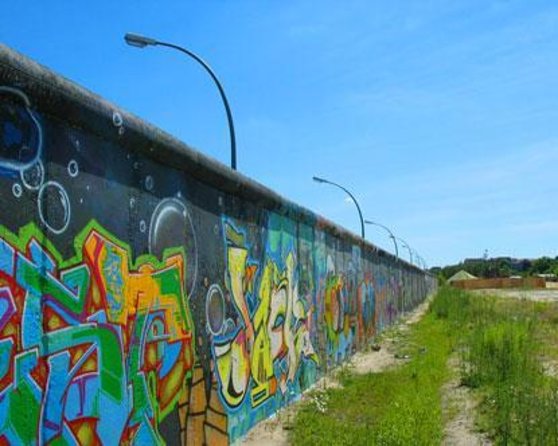
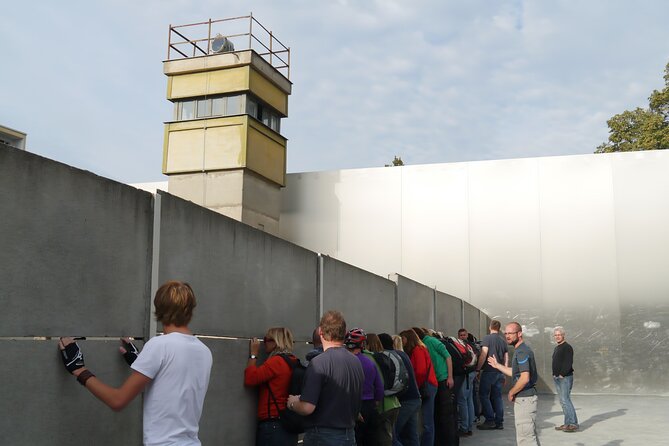
The Berlin Wall Memorial is one of the strongest parts of the route. Berlin has three main places where the Wall can still be understood as more than a strip of painted concrete, and this is the site that best shows its physical and human effect.
Here, you can picture the former border system: walls, open ground, watch positions, and the narrow zone that separated East Berlin from West Berlin. The important lesson is that the Wall was not just a barrier. It cut streets, buildings, cemeteries, families, and daily routines.
The stop is listed at about ten minutes, so you should not expect a museum visit or a full walk through every memorial feature. Think of it as a clear outdoor explanation that helps you return later if you want more time. One useful tip is to reserve a separate visit to the Wall Memorial if this is your main reason for booking.
Mauerpark follows naturally. The park is now known for its Sunday flea market and public performances, but its name points to the Wall that once ran through the area. The contrast is the point. A place shaped by division has become a space for free expression and ordinary city life.
That change can be hard to understand from a standard sightseeing bus. On a bicycle, you move through the park and see how the former border zone has been absorbed into modern Berlin. You also get a break from the heavier memorial sites.
Humboldthain and the remains of Nazi military planning
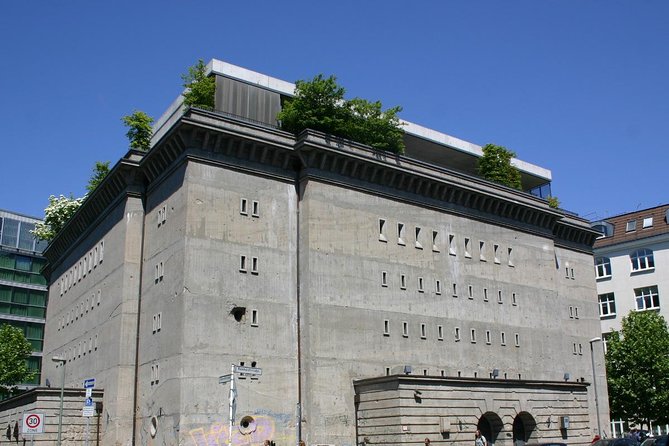
At Humboldthain, the subject shifts back to the Nazi period. The flak tower was built as a giant anti-aircraft position and air-raid shelter. Its size gives you a direct sense of the scale of wartime construction and the way defensive structures could dominate a city.
The stop is also useful for views across Berlin. You are not only looking at a surviving wartime structure. You are looking out over a city that has repeatedly changed its political shape and physical appearance.
This part may be the most interesting for people who want more than the usual Hitler biography. The emphasis is on architecture, military planning, and what Nazi ambitions meant for the built city. The stop is brief, so the guide’s explanation matters more than a long visit inside.
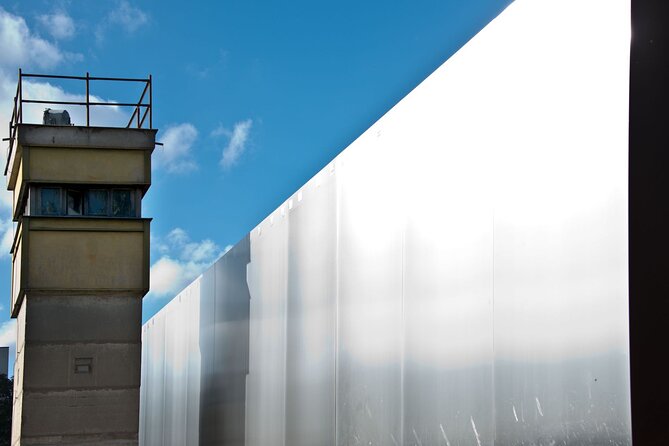
At the Günter Litfin Memorial, the focus turns to the first person shot and killed at the Berlin Wall. The original watchtower has been preserved as a memorial. It is a small, direct site, and that is part of its force. Instead of hearing only about large political events, you connect the Wall to one person and one fatal attempt to cross it.
The nearby Invalidenfriedhof adds another layer. This former military cemetery was cut through by the Wall and contains graves connected with Prussian military history. The guide uses the area to explain escape attempts, nearby checkpoints, and the canal that formed part of the border between East and West Berlin.
These are the kinds of stops that justify choosing this tour over a standard central-city ride. You are not simply ticking off famous landmarks. You are seeing how the border passed through ordinary spaces.
More WWII and D-Day Tours in Berlin:
- Vienna: World War II Historical Walking Tour
★ 4.8 · 1,772 reviews - Zagreb: City & History Walking Tour & WW2 Tunnels
★ 4.9 · 1,202 reviews - Pearl Harbor History Remembered Tour from Ko Olina
★ 5.0 · 1,009 reviews - Hiroshima Peace (Heiwa) Walking Tour at World Heritage Sites
★ 5.0 · 872 reviews
The Reichstag and Hitler’s planned capital
At Spreebogenpark, you get a broad view of the German government district. The Reichstag is close by, but the discussion reaches further back to Albert Speer’s plans for Hitler’s monumental capital.
Speer imagined a Great Hall large enough for 180,000 people. The plan was never completed, but it reveals the scale of the regime’s architectural ambition. This is a good reminder that Nazi history is not limited to battle dates and biographies. It also concerns propaganda, public space, power, and the attempt to redesign a nation’s capital.
The group stops outside the Reichstag rather than going inside. You discuss Hitler’s rise to power and Germany’s democratic development, but there is not enough time for the dome or interior visit. If you want to tour the Reichstag, arrange that separately.
The exterior stop works well because the building links several periods. It served the German Empire, became associated with the Weimar Republic, was tied to the Nazi seizure of power, and now houses the federal parliament. You see a modern democratic institution while discussing how democracy was destroyed in the same country.
Holocaust memorials and the bunker parking lot
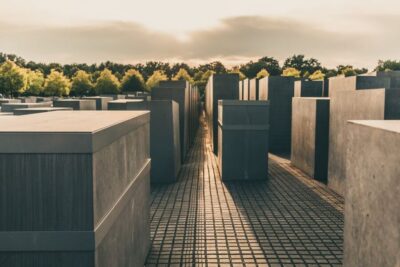
The Holocaust Memorial, officially the Memorial to the Murdered Jews of Europe, is one of the tour’s most important stops. Its field of concrete blocks is large, stark, and open to personal interpretation. The guide may invite the group to discuss what the design suggests rather than handing you one neat answer.
That approach can work well, but the stop is short. You have time to understand the design and its purpose, not to visit every part of the memorial’s information center. I recommend returning on your own if you want a quieter visit.
The route may also pass memorials connected to other major victim groups of the Holocaust. These stops broaden the discussion beyond one site and show that Nazi persecution affected several communities. The exact memorials included can depend on the guide’s route and available time.
At the Führerbunker site, there is no dramatic ruin to see. Today, the location is a parking area. The guide explains why the bunker site was covered and how the place where Hitler spent the final weeks of the war became deliberately unmarked.
That plain setting is useful. It prevents the bunker from becoming a shrine or a theatrical attraction. You are asked to think about how a city handles a place tied to dictatorship, mass murder, and the end of the war.
Checkpoint Charlie and the risk of a fixed itinerary
Checkpoint Charlie is included in the English version of the tour. It was the best-known Cold War crossing point and the place where American and Soviet forces came close to a direct confrontation. The stop connects Berlin’s divided years with the possibility of a much wider conflict.
The site itself is now surrounded by commercial displays and tourist activity. The guide can help separate the historical checkpoint from the modern presentation, but you should not expect a preserved border scene. The value is in understanding what happened there, not in the current scenery.
Here is the most important booking caution. Free Berlin uses a flexible route system, meaning each guide designs a ride around the main theme. This can produce a more personal and less predictable experience, but it also means the guide may substitute other sites or skip some listed locations.
One tour participant expected the full Third Reich route and did not reach Invalidenfriedhof, Spreebogenpark, the Reichstag, the Holocaust Memorial, the Führerbunker, or Checkpoint Charlie. The provider acknowledged the issue and said guides would be encouraged to ask about must-see stops. Take that advice seriously: tell your guide at the start which two or three places matter most to you.
Guides, group size, and the feel of the ride
The guide can shape the experience more than any single landmark. Paul has brought a native West Berlin perspective to the years before the Wall fell and the differences between East and West. Simon has been praised for warmth, clear explanations, and keeping a group together in the rain. Theo has helped riders manage busy streets and red lights, while Juliette has adjusted routes to include Brandenburg Gate when possible.
Simone has added personal stories and thoughtful questions about memory. Yonis has been praised for enthusiasm and detailed storytelling. These examples show why the Free Berlin approach can work well: you get a human guide rather than a recorded script.
The tradeoff is unevenness. A flexible route depends on the guide’s planning and on the group’s wishes. One group of 12 found riding less easy than expected, while another appreciated being split from a larger group of 22 into two smaller units. The official maximum is 15 people, and the minimum is four.
The bikes are included, as are helmets. A rear basket or basket carriage gives you somewhere to put a water bottle, coat, or small bag. Food and drinks are not included, so carry water, especially on a warm day.
The tour runs in English or German, depending on the option selected. It operates in all weather, and rain has not stopped every group from enjoying the ride. Dress for the forecast, and remember that Berlin weather can change while you are out.
Is $42.34 a fair price?
At $42.34 per person, this is a sensible price for about three hours, a bicycle, helmet, and a guide. The value is strongest if you want to combine several distant parts of Berlin in one outing. Renting a bike alone would give you transport, but not the historical links or help crossing unfamiliar streets.
The price is less compelling if you want long visits inside museums or memorial buildings. Most stops last about five to ten minutes, and the Reichstag interior is not included. You are paying for movement, interpretation, and access to a wide route, not for extended time at each site.
Free cancellation is available up to 24 hours before the start time. The tour needs a minimum number of participants, so a cancellation for low demand can lead to another date, another experience, or a full refund.
Who should book this Berlin bike tour?
I would choose this ride if you want a strong first look at Berlin’s 20th-century history and enjoy learning outdoors. It suits families with older children, couples, and active visitors who want more ground covered than a walking tour allows.
It is also a good match if you have already seen Brandenburg Gate and Museum Island and want less familiar places. The Litfin watchtower, Invalidenfriedhof, Humboldthain flak tower, and the changing Wall zone give the day a more local feel.
I would hesitate if you need a fixed checklist. The title promises the Berlin Wall and Third Reich, but the route can shift. If Checkpoint Charlie, the Holocaust Memorial, the Reichstag, or the Führerbunker is non-negotiable, ask before setting off and understand that the guide may still need to balance traffic, weather, and group interests.
Final call: a strong overview with one clear caveat
You should book this tour if you want Berlin’s difficult past explained as part of the city around you. The best moments come from linking a Wall watchtower, a cemetery, a former air-raid shelter, a government district, and a memorial field in one ride.
Just treat the advertised stops as a menu, not a promise that every item will be served. Tell the guide your priorities early, wear comfortable clothes, and leave time on another day for the Wall Memorial or Holocaust Memorial if you want to explore them properly. At this price, the tour offers good value as a city orientation and history lesson, especially with a strong guide.
FAQ
How long is the Berlin bike tour?
The tour lasts about three hours and ends back at the meeting point.
What is included in the price?
A bicycle, helmet, and professional guide are included. Food and drinks are not included unless specifically stated.
Is the tour offered in English?
Yes. The experience is offered in English, and a German option is also available depending on the selection made at booking.
Does the route always include Checkpoint Charlie?
Checkpoint Charlie is listed for the English version, but the route is flexible. Each guide designs a route around the theme, so ask at the start if it is a must-see for you.
Can children join the tour?
Yes. Children are welcome, but they must be accompanied by an adult. Infant seats can be provided on request.
How many people can join the tour?
The minimum is four participants, and the maximum is 15 people.
Does the tour enter the Reichstag?
No. The group stops outside the Reichstag to discuss its history, but there is not enough time to go inside.
What happens if I need to cancel?
You can receive a full refund if you cancel at least 24 hours before the start time. Cancellations or changes made less than 24 hours in advance are not accepted for a refund.
More History Bike, Segway and Tuk-Tuk Tours in Berlin
- Berlin (E)Bike Tour Historical Highlights in Small groups
★ 4.5 · 24 reviews - Historical Singapore Bike Tour on Full-Sized Bicycles
★ 5.0 · 1,421 reviews - Charlotte’s Ultimate Southern Charm Historical City Cart Tour
★ 5.0 · 1,347 reviews - Barcelona: 2.5-Hour Bike or E-Bike Historical Tour
★ 4.5 · 1,262 reviews
More Cold War and Communism Tours in Berlin
- Berlin: Cold War & Berlin Wall History Guided Bike Tour
★ 4.8 · 422 reviews - Berlin Wall History Small Group Cycling Tour
★ 4.9 · 152 reviews - Berlin: Historical Sights & Berlin Wall Tour with a Berliner
★ 5.0 · 62 reviews - Prague: Communism History and Nuclear Bunker Guided Tour
★ 4.7 · 2,417 reviews
Latest history tours reviewed in Berlin
- Berlin: History and Sightseeing with Kids (Free for Kids)★ 4.9 · 19 reviews
- Berlin: Nazi History Walking Tour★ 4.8 · 33 reviews
- Berlin: Urbex Abandoned Places & History Tour★ 4.8 · 18 reviews
- Berlin: Historic Boat Sightseeing City Center Tour★ 4.5 · 415 reviews
- Berlin: Historical Sights & Berlin Wall Tour with a Berliner★ 5.0 · 62 reviews
- Berlin: Guided Craft Beer & Cultural Tour With Snacks★ 5.0 · 68 reviews
- Berlin (E)Bike Tour Historical Highlights in Small groups★ 4.5 · 24 reviews
- Berlin: Historic Center Walking Tour with a Real Berliner★ 5.0 · 134 reviews
Berlin History Tours, compared.
Berlin: 3-Hour World Heritage Cruise to Potsdam
Read our review →
Berlin: History of the Third Reich Guided Walking Tour
Read our review →
Berlin Private Complete History All Day Walking Tour
Read our review →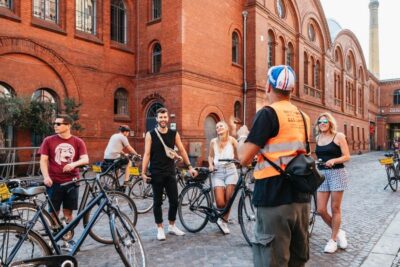
Berlin: Cold War & Berlin Wall History Guided Bike Tour
Read our review →
Berlin: Historic Boat Sightseeing City Center Tour
Read our review →