

Review · BERLIN
Berlin: Berlin Charité Guided History Tour
Berlin’s medical story is full of breakthroughs, odd turns, and painful truths. This two-hour walk connects the Charité’s beginnings as an 18th-century plague house with the doctors and Nobel Prize winners who shaped modern medicine. I like the mix of famous science and lesser-known Berlin history, and I like that the tour finishes inside the Animal Anatomical Theatre, a remarkable old teaching building hidden in a backyard.
The main limitation is clear: you do not go inside the Charité Bed House or onto the hospital grounds. The tour is conducted in German, and the final building can close for a private event or on a public holiday, so check the date before booking.
Key points to know before you book
- Three centuries of medical history: Follow the Charité from its 18th-century plague-house origins to its role as a major university hospital.
- Famous names in science: Hear about Rudolf Virchow, Robert Koch, Emil von Behring, and Ferdinand Sauerbruch.
- A difficult chapter included: The tour addresses doctors who worked with the Nazi regime rather than presenting medicine as a simple story of progress.
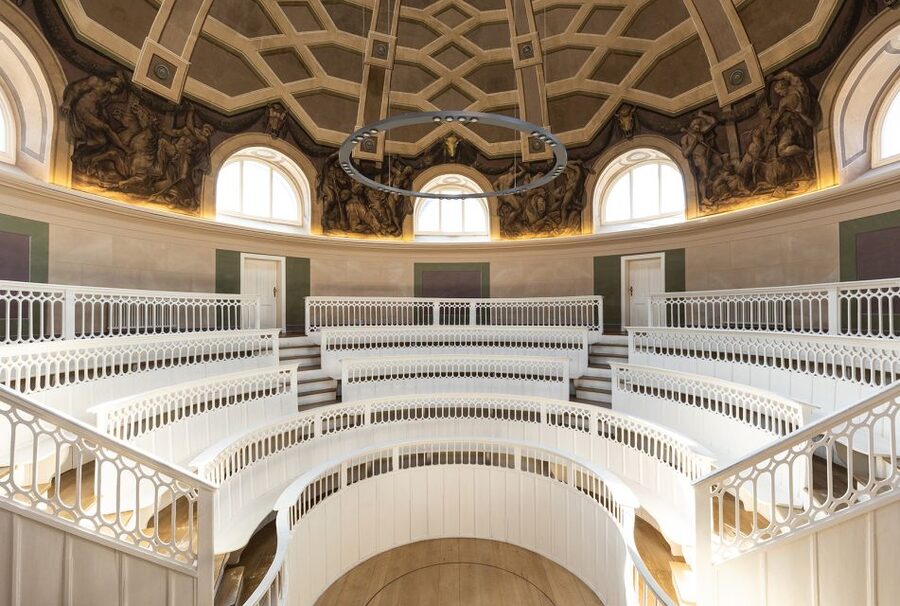
- The Animal Anatomical Theatre: Enter Berlin’s oldest surviving teaching building, known for its unusual, temple-like design.
- Outside views only at Charité: The Bed House and Campus Mitte are not open to group tours.
- German-language guiding: The guide’s explanation and storytelling are in German, with a two-hour walking format.
Why the Charité tells Berlin’s medical story so well

The Charité is more than a hospital name on a map. Its past reaches back to the 18th century, when the site began as a plague house. Over time, it grew into one of Europe’s major university hospitals, tied to research, teaching, and some of the most important developments in modern medicine.
That long timeline gives your guide plenty to work with. You are not simply looking at old buildings and memorizing dates. You are following changing ideas about disease, anatomy, surgery, public health, and the role of doctors in society.
I find this kind of tour especially useful in Berlin, where many historical walks focus on war and politics. The Charité route offers another way to understand the city. Medicine here is connected to science, education, government, social policy, and moral responsibility.
The story is not presented as a parade of medical heroes. The tour also covers the institution’s darker period, when doctors collaborated with the Nazi regime. That part matters. It shows how respected professionals and major institutions can fail badly when science is placed at the service of cruelty and dictatorship.
More Guided Tours in Berlin:
- Berlin: History of the Third Reich Guided Walking Tour
★ 4.7 · 791 reviews - Berlin: Cold War & Berlin Wall History Guided Bike Tour
★ 4.8 · 422 reviews - Berlin: Guided Bike tour of the Berlin Wall and Third Reich
★ 5.0 · 160 reviews
Starting at the Charité Tower
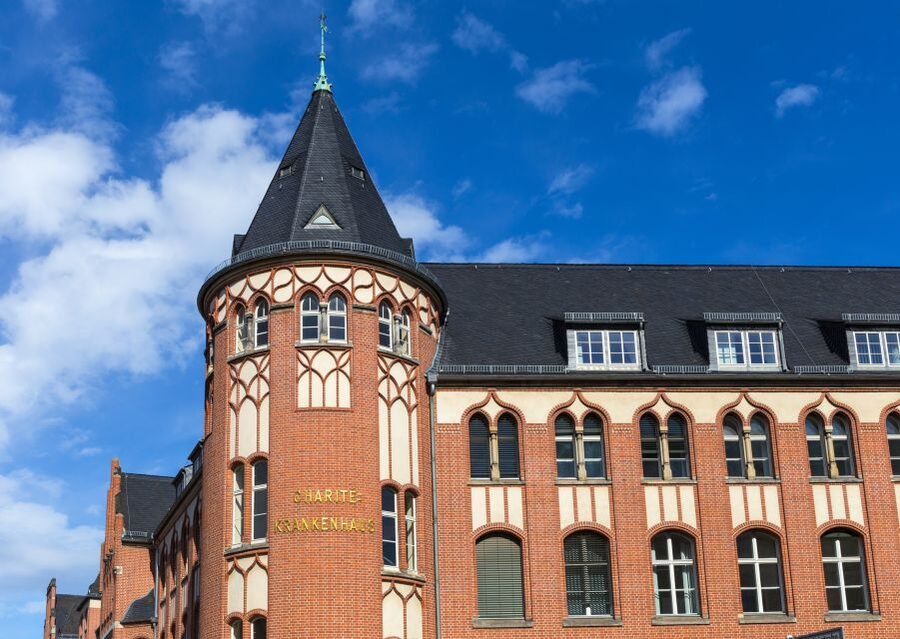
The meeting point is in front of the Charité Tower, at the crossroads of Schumannstraße, Charitéplatz, and Charitéstraße. This is an important detail because the tour starts on time, and a large hospital and university area can be confusing if you arrive at the last minute.
Your first major sight is the Charité Bed House. You view it from outside, since the building remains an active hospital facility with strict hygiene and protection rules. Do not book this tour expecting a hospital interior visit or a guided walk through working wards.
That outside view still gives the opening of the tour a useful sense of place. You are looking at the institution as it functions today while hearing how its role developed over centuries. The contrast is part of the point: the Charité is both a living medical center and a site shaped by older buildings, discoveries, and difficult decisions.
The Bed House is likely to interest anyone who enjoys architecture, but the tour’s value does not depend on entering it. The guide uses the surrounding streets and buildings to explain the wider story.
Walking along Luisenstraße and the university campus
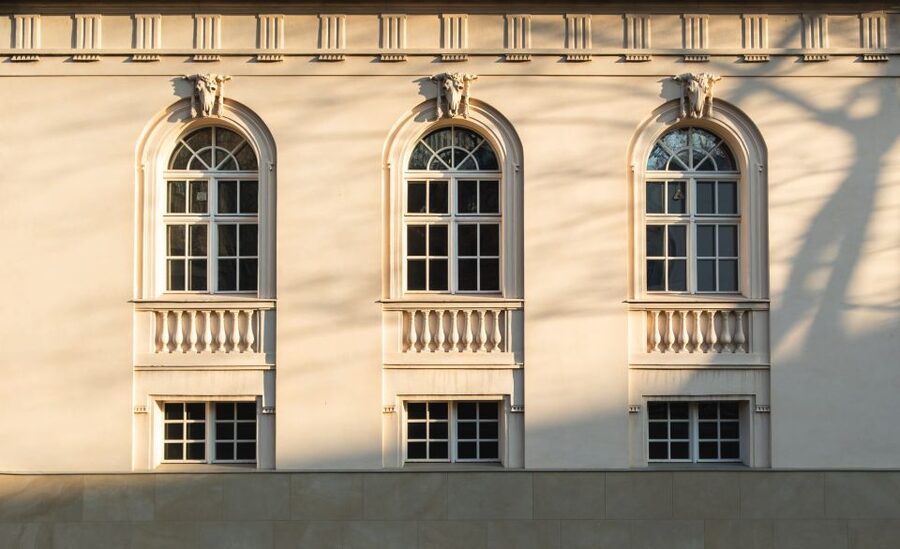
From the starting point, the route continues along Luisenstraße and across the university campus. This walking section links the Charité to Berlin’s academic world, where medical teaching and scientific research developed side by side.
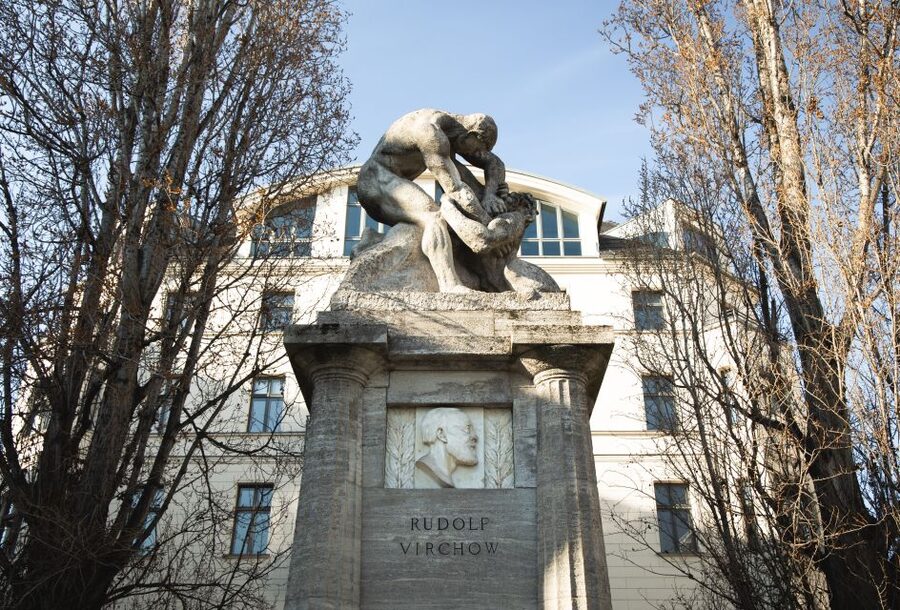
You will hear about doctors and scientists whose names remain familiar far beyond Berlin. Rudolf Virchow is part of the story, as are Robert Koch, Emil von Behring, and Ferdinand Sauerbruch. Each name represents a different piece of medical history, and the guide places these figures within the city rather than treating them as isolated names in a textbook.
The tour also looks at Nobel Prize winners connected with Berlin medicine. That is useful context because scientific fame can make historical figures seem distant. Walking through the area where teaching and research took place helps connect their work to an actual institution and city.
The exact balance between architecture, biography, and medical detail depends on the guide. Recent feedback describes the guiding as especially clear, informative, and well presented. One German participant who already lived in Berlin said the tour was worthwhile even for a local, which suggests that the material goes beyond the most familiar city facts.
You should expect a steady walking tour, not a museum lecture in one room. Wear comfortable shoes and arrive ready to listen while moving between locations. The activity lasts two hours, so it is substantial enough for real context without taking up an entire day.
The scientists behind Berlin’s medical reputation
The list of figures connected to the tour is one of its strongest features. Rudolf Virchow, Robert Koch, Emil von Behring, and Ferdinand Sauerbruch are not included simply as famous names. Their work helps explain why Berlin became such an important medical center.
The guide discusses the achievements and personalities behind Berlin medicine, along with the less obvious stories that do not always make it into standard sightseeing. You might hear details about how medical teaching worked, how research affected the hospital, or why particular buildings mattered.
Robert Koch is especially linked with the development of modern bacteriology, while Rudolf Virchow is strongly associated with pathology and social medicine. Emil von Behring is remembered as a Nobel Prize winning medical researcher, and Ferdinand Sauerbruch became known for major advances in surgery. The tour uses these people to show how medicine changed across different periods.
The benefit for you is a more human account of science. Great discoveries did not happen in a vacuum. They came through institutions, teaching rooms, laboratories, hospitals, rivalries, mistakes, and sometimes serious ethical failures.
If you enjoy science, this section may be the heart of the experience. If you are less interested in medicine, the stories still connect to Berlin’s wider history and should keep the walk from feeling like a list of technical terms.
More History Tours in Berlin:
- Berlin: 3-Hour World Heritage Cruise to Potsdam
★ 4.5 · 1,569 reviews - Berlin Historical Highlights Walking Tour
★ 4.9 · 657 reviews - Berlin Private Complete History All Day Walking Tour
★ 5.0 · 474 reviews - Berlin: Historic Boat Sightseeing City Center Tour
★ 4.5 · 415 reviews
The part that does not avoid moral questions
A pleasant tour about clever doctors and Nobel winners would be easier to sell, but it would also be incomplete. This experience includes the darker years of the Charité, when doctors collaborated with the Nazi regime.
That subject can be uncomfortable, and it should be. The history of medicine is not only a story of cures and progress. Doctors held power over vulnerable people, and professional status did not protect them from political pressure, ideology, or deliberate abuse.
I appreciate that the tour includes this chapter rather than treating the Charité as an institution with an uncomplicated past. It gives the famous names and scientific accomplishments a more honest setting. You are encouraged to think about how medical authority can be used, and what happens when ethical standards collapse.
The exact level of detail will depend on the guide and the group. Still, the inclusion of this period makes the tour more than a sightseeing walk. It asks you to consider the responsibilities that come with scientific knowledge.
Entering Berlin’s old medicine temple
The final indoor stop is the Animal Anatomical Theatre, often described as a mysterious medicine temple. It is Berlin’s oldest surviving teaching building, and its location in a backyard makes the visit feel tucked away from the city’s main tourist routes.
This is the part of the tour where the building itself becomes a major attraction. The unusual name hints at its original educational purpose, while the temple-like description points to an architecture designed to give medical teaching a sense of ceremony and importance.
Inside, your guide explains why the building mattered to medical education. You are not simply looking at an old room. You are seeing a place built for teaching anatomy, a subject that helped shape modern medicine but was once surrounded by strong social and religious taboos.
The Animal Anatomical Theatre provides a satisfying finish because it gives you an interior experience after most of the route has taken place outside. It also makes clear why the tour includes the walk through the campus and surrounding streets. The building is not an isolated curiosity. It belongs to the larger story of how Berlin trained doctors and advanced medical knowledge.
There is one practical warning. The theatre can adjust its opening hours for closed events, and it is closed on public holidays. If entering this building is the main reason you want to book, confirm that it will be open on your selected date.
What the $28 price gets you
At $28 per person, this is a reasonably priced specialist walking tour. You are paying for a two-hour guided explanation, access to the Animal Anatomical Theatre when it is open, and a subject that would be difficult to understand fully by simply walking past the buildings alone.
The value is strongest if you enjoy history, science, architecture, or serious stories about institutions. A self-guided route could show you the Charité Tower, Luisenstraße, and nearby university buildings, but it would not easily connect the plague-house origins, the scientists, the Nobel winners, the Nazi-era history, and the old teaching theatre.
The value is weaker if you expect a behind-the-scenes hospital visit. You will not enter the Charité Bed House, and group tours cannot access the Charité Campus Mitte grounds. The experience is best understood as a historical walk around the Charité area, with one important interior visit at the end.
Free cancellation up to 24 hours before the tour and a reserve-now, pay-later option also reduce the risk of fitting it into a changing Berlin schedule. Those policies do not change the content, but they make the booking more practical.
Who will enjoy this walk most
I would recommend the tour to adults and older students who like focused history rather than broad sightseeing. It suits people who want to understand how a city’s hospitals, universities, and scientists shaped one another.
It is also a good choice for Berlin residents or repeat visitors. The medical story offers a fresh angle on a familiar part of the city, and the theatre is the sort of place you might easily miss without a guide.
You should be comfortable listening in German. The tour is offered in German, and no other language is listed. If you do not understand German well, the experience will be difficult to follow, especially during the sections on scientific figures and the Nazi period.
This is not the best fit if you need a fully indoor activity, want to enter the hospital itself, or prefer a fast list of photo stops. Much of the route is outdoors, and the main reward comes from the guide’s explanations.
Practical advice for making the most of it
Arrive early at the Charité Tower crossroads. The tour starts on time, and the meeting point sits beside a large medical and university complex.
Plan for two hours of walking and standing. Comfortable shoes are a sensible choice, and clothing suited to the weather will matter because the Bed House and campus sections are viewed from outside.
Keep your expectations precise. You will see the Charité from the outside, walk along Luisenstraße and across the university campus, and enter the Animal Anatomical Theatre if it is open. You will not tour hospital wards or enter the Charité grounds with the group.
If you are particularly interested in the theatre, avoid public holidays and check for possible private events. The building can change its opening hours at short notice.
Should you book the Berlin Charité history tour?
Book it if you want a thoughtful, German-language look at Berlin through medicine rather than another general city walk. The combination of Nobel Prize winners, unusual medical facts, the Charité’s plague-house origins, Nazi-era responsibility, and the Animal Anatomical Theatre gives the experience a clear identity.
Skip it if you need English guiding, expect to enter the hospital, or prefer a tour with little walking. At $28, it offers good value for a focused two-hour history experience, especially when the theatre is open and the subject matches your interests.
For the right visitor, this is a memorable way to see Berlin’s scientific past with both its achievements and its failures left in view.
FAQ
Where does the Berlin Charité history tour meet?
It meets in front of the Charité Tower at the crossroads of Schumannstraße, Charitéplatz, and Charitéstraße.
How long does the tour last?
The guided tour lasts two hours.
What language is the tour conducted in?
The live tour guide speaks German.
Can I go inside the Charité Bed House?
No. The Bed House is viewed from outside because it is an active hospital facility with related hygiene and protection regulations.
Can the group enter the Charité Campus Mitte hospital grounds?
No. The hospital grounds are not accessible for group tours.
Does the tour include an indoor visit?
Yes. The tour visits the Animal Anatomical Theatre from the inside, provided it is open.
Is the Animal Anatomical Theatre open on public holidays?
No. The Animal Anatomical Theatre is closed on public holidays, and its opening hours can also change for closed events.
Can I cancel the booking for a full refund?
Yes. You can cancel up to 24 hours in advance for a full refund.
Latest history tours reviewed in Berlin
- Berlin: History and Sightseeing with Kids (Free for Kids)★ 4.9 · 19 reviews
- Berlin: Nazi History Walking Tour★ 4.8 · 33 reviews
- Berlin: Urbex Abandoned Places & History Tour★ 4.8 · 18 reviews
- Berlin: Historic Boat Sightseeing City Center Tour★ 4.5 · 415 reviews
- Berlin: Historical Sights & Berlin Wall Tour with a Berliner★ 5.0 · 62 reviews
- Berlin: Guided Craft Beer & Cultural Tour With Snacks★ 5.0 · 68 reviews
- Berlin (E)Bike Tour Historical Highlights in Small groups★ 4.5 · 24 reviews
- Berlin: Historic Center Walking Tour with a Real Berliner★ 5.0 · 134 reviews
Berlin History Tours, compared.

Berlin: 3-Hour World Heritage Cruise to Potsdam
Read our review →
Berlin: History of the Third Reich Guided Walking Tour
Read our review →
Berlin Private Complete History All Day Walking Tour
Read our review →
Berlin: Cold War & Berlin Wall History Guided Bike Tour
Read our review →
Berlin: Historic Boat Sightseeing City Center Tour
Read our review →
Small group Potsdam: A Journey Through History and Palaces
Read our review →
Berlin: Charité Hospital Walking Tour of Medical History
Read our review →Browse the lists this tour appears in