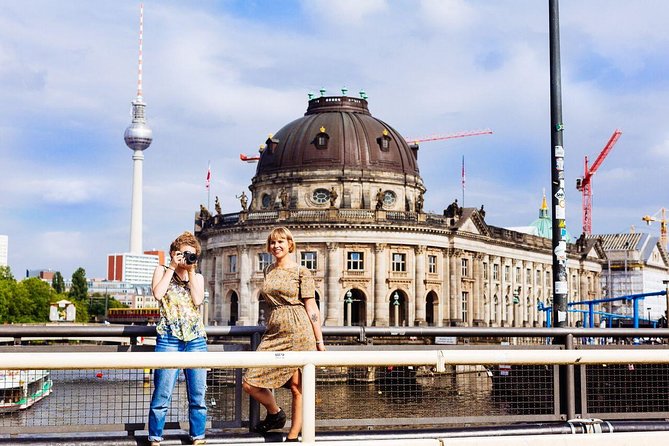
Review · BERLIN
The History of Berlin: WWII PRIVATE Walking Tour With Locals
Berlin’s history is spread across ordinary streets, grand squares, empty lots, and rebuilt buildings. This private walking tour connects those pieces, moving from the Nazi period and Holocaust to the divided city of the Cold War. Instead of following a fixed group, you walk with one local guide and can ask questions as the city unfolds around you.
I like the private format, since it lets your guide adjust the pace and spend more time on the subjects that matter to you. I also like the chance to see Berlin’s famous sites alongside less obvious historical details, with guides such as Seth, Sara, Boyd, Miha, Amelia, Pablo, Michele, and Betty praised for making the past clear and personal.
The main drawback is that the exact route can vary. One guest expected the Berlin Wall, Brandenburg Gate, Checkpoint Charlie, and the Holocaust Memorial but instead spent more time on eastern Berlin architecture. At about four hours, and possibly 15,000 steps, this is a serious walking outing rather than a gentle sightseeing stroll.
Key things to know before booking

- The tour begins at Oranienburger Strasse 36, near public transportation, and ends at the same meeting point.
- The private guide works only with your group, so you can ask questions freely and request changes to the route.
- The history covers both WWII and the Cold War, including Nazi Berlin, the Holocaust, divided Berlin, and escape attempts from East to West.
- Major sights are viewed from outside, and admission to museums or other attractions is not included.
- The route is flexible but not fully predictable, so confirm your must-see places with the guide at the start.
- The tour costs $143.97 per person, making group size important when judging its value.
Why a private walk works well in Berlin
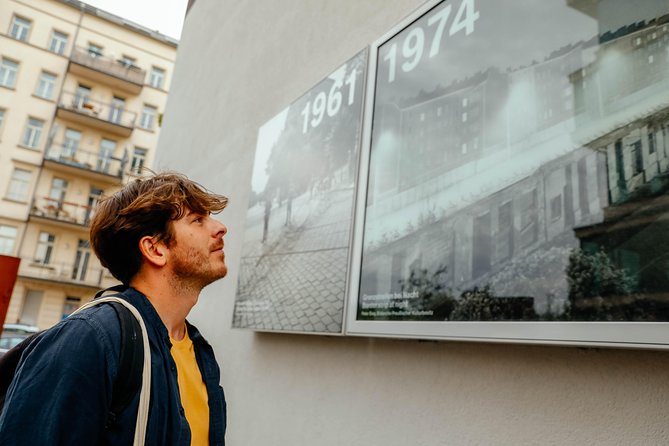
Berlin is not a city where history sits neatly inside one museum. A monument may be on one side of a busy road, a former border crossing may look almost ordinary, and a bunker site may have no dramatic entrance at all.
That is where a private guide can help. You are not simply collecting photographs of the Brandenburg Gate or Reichstag Building. You are learning how each place fits into a larger story. The guide can explain what changed, what was destroyed, what was rebuilt, and why some sites are marked with a small plaque rather than a grand monument.
The personal format also matters for sensitive subjects. WWII, Nazi rule, the Holocaust, and the Cold War are not light sightseeing topics. A good guide gives you enough background to understand the site without turning the experience into a rushed list of dates.
The strongest guide names in the supplied feedback are Seth, Sara, Boyd, and Miha, with Amelia, Pablo, Michele, and Betty also receiving praise. You cannot necessarily select one of them when booking, so it is sensible to ask which guide has been assigned and to share your priorities before the walk begins.
More History Walking Tours in Berlin
- Berlin: History of the Third Reich Guided Walking Tour
★ 4.7 · 791 reviews - Berlin Historical Highlights Walking Tour
★ 4.9 · 657 reviews - Berlin Private Complete History All Day Walking Tour
★ 5.0 · 474 reviews
Starting at Oranienburger Strasse and the New Synagogue
The meeting point is at Oranienburger Strasse 36. This puts you in central Berlin, close to a street known for historic buildings and the New Synagogue.
The New Synagogue is an early visual lesson in Berlin’s complicated past. Its Moorish-style architecture makes it one of the city’s most striking buildings, and the tour pauses here for photographs and context. You can expect the guide to connect the building to Berlin’s Jewish history and the destruction brought by Nazi rule.
Because this is an outdoor walking experience, you view the synagogue rather than automatically entering it. That distinction matters if you want detailed interior time. The attraction admissions are not part of the price, and the tour generally focuses on the city outside.
The Palace of Tears and Berlin’s divided years
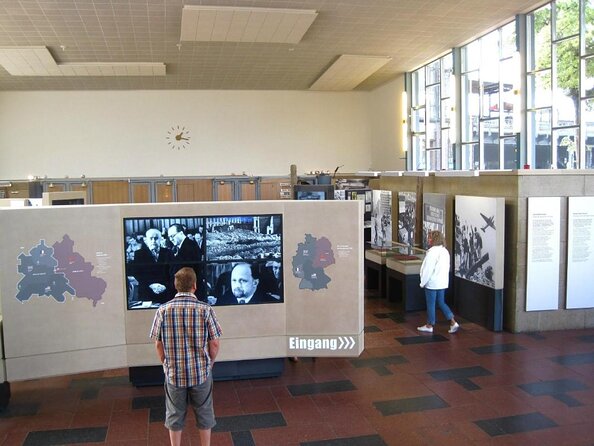
From the New Synagogue, the walk continues to the Palace of Tears, the former border point between East and West Berlin. Its name comes from the tearful farewells that took place there when people from East Berlin had to return after visiting the western side.
This stop shifts the focus from Nazi Germany to the Cold War. You hear about the way the border affected families and the attempts made by residents to leave Russian-occupied East Berlin for Allied-occupied West Berlin.
The exhibition is an important part of the site, but entrance is not included in the tour. Ask your guide whether the planned route allows time to go inside or whether you will visit the building from the outside. That simple question can prevent a mismatch between what you expect and what the four hours actually include.
Brandenburg Gate and the weight of the Holocaust Memorial
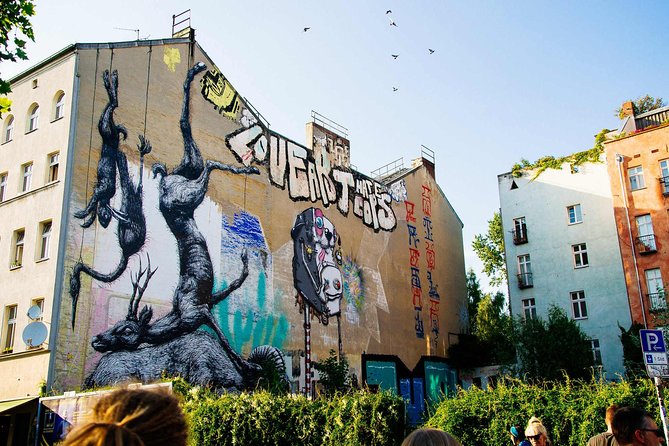
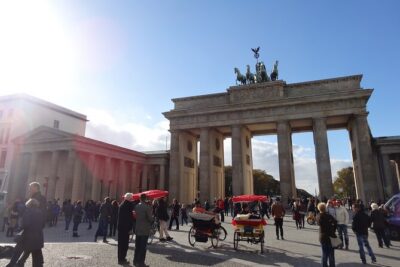
The Brandenburg Gate is one of Berlin’s essential historic monuments. It has witnessed imperial rule, Nazi ceremonies, wartime destruction, division, and reunification. Your guide can help you read the gate as more than a handsome photo stop.
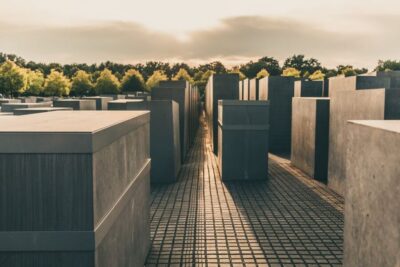
Nearby, the Holocaust Memorial offers a quieter and more difficult moment. Its field of concrete slabs changes as you walk through it, creating a physical sense of uncertainty and disorientation. Your guide can provide the historical setting, but you should also allow yourself time to experience the memorial without constant commentary.
This part of the route is valuable because the sites sit close together yet represent different layers of Berlin’s past. The Brandenburg Gate is often used as a symbol of the city. The Holocaust Memorial asks you to remember the people destroyed by the Nazi regime. The contrast is sharp and useful.
More History Walking Tours in Germany
- Berlin: Charité Hospital Walking Tour of Medical History
★ 4.9 · 276 reviews - Berlin Private Half-Day Walking Tour: Discover the German Capital’s History
★ 5.0 · 244 reviews - Berlin: Historic Center Walking Tour with a Real Berliner
★ 5.0 · 134 reviews - Berlin: Nazi History Walking Tour
★ 4.8 · 33 reviews
Hitler’s bunker site and what you will actually see
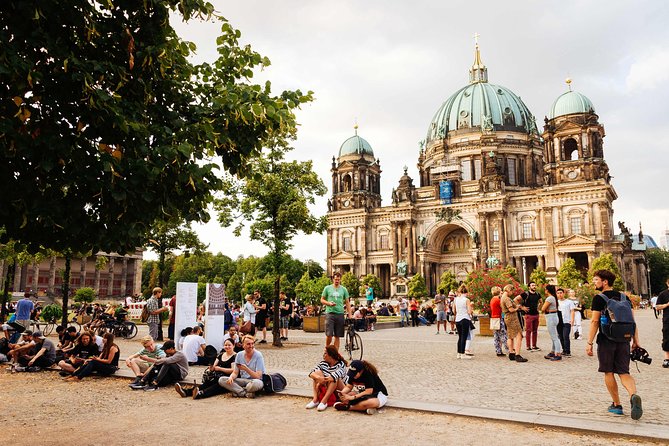
The former site of Hitler’s bunker is included as a WWII stop. Do not expect an intact underground attraction with a dramatic entrance. The bunker was destroyed, and the site is now associated with a relatively plain location in the city.
That lack of spectacle is part of the point. The guide provides the background on Hitler, the Nazi party, and the final days of the regime while showing you where the bunker once stood. You learn why the site is handled carefully and why Berlin has not turned it into a shrine.
If you are looking for extensive museum displays, this tour will not replace a dedicated museum visit. If you want to understand how the bunker fits into the city around it, a local guide adds useful context.
Bebelplatz and Berlin’s architecture
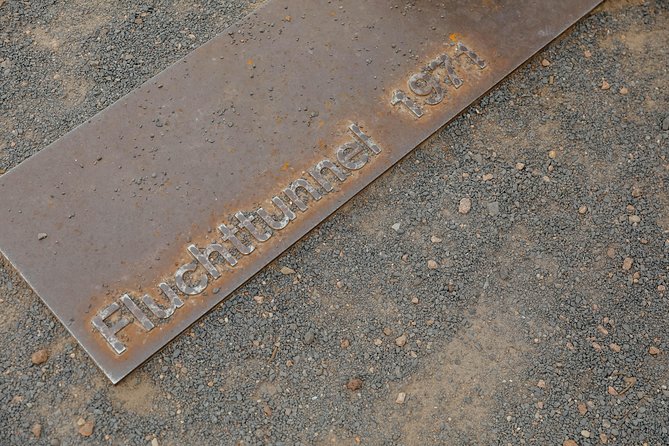
Bebelplatz brings the tour back into a grand urban setting. The square is surrounded by some of Berlin’s most impressive architecture, so the guide can tie together politics, culture, religion, and state power through the buildings around you.
The square also carries a dark Nazi-era memory. Its history is not presented as an isolated event, but as part of the wider story of censorship, propaganda, and the attack on intellectual and cultural life.
I like this type of stop because it shows how Berlin’s history is often layered rather than separated. A beautiful building may represent an earlier age of power, while the pavement nearby recalls a crime committed by a later government. You get more from the architecture when someone explains those connections.
Museum Island and the option to extend the story
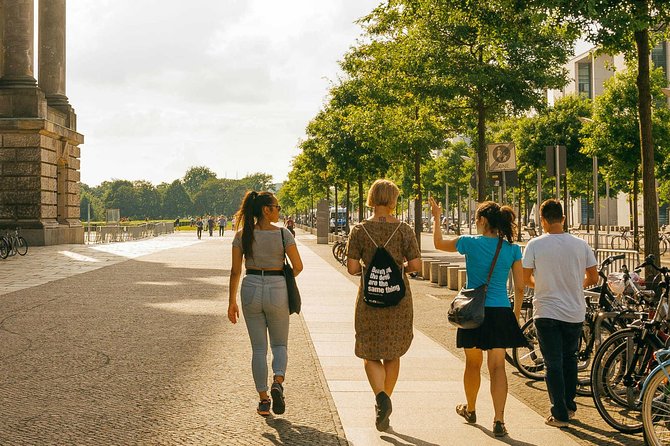
The route reaches Museum Island, the UNESCO-listed museum complex in the historic center of Berlin. You can expect roughly an hour in this area, although museum admission is not included.
Museum Island is a natural place to finish the historical thread. Its buildings reflect Berlin’s ambitions as a cultural and political capital, while the surrounding city shows the damage and reconstruction that followed the war. Even if you do not enter a museum, the island provides plenty to discuss from the outside.
If you want to visit a particular museum, plan that separately or ask the guide how much time is available. A four-hour walking tour cannot provide a full museum visit and cover all the outdoor landmarks at a relaxed pace.
Reichstag Building and Checkpoint Charlie
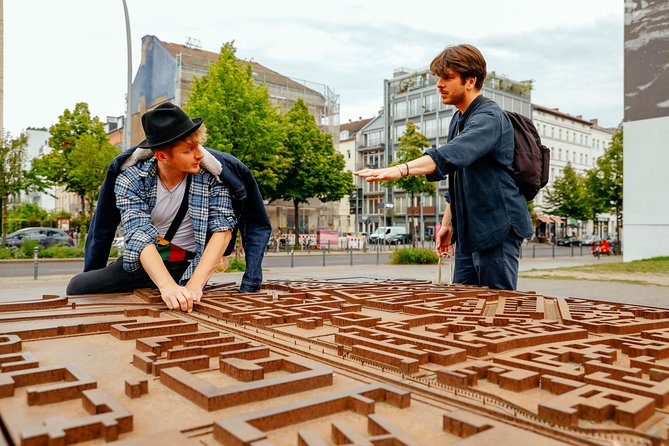
The stated route may also include the Reichstag Building and Checkpoint Charlie. The Reichstag takes about 30 minutes as a stop, and admission is not included. Its story reaches back to the Imperial German government, then to the 1933 fire and the political changes that followed.
Checkpoint Charlie is listed as another 30-minute stop. It was the best-known crossing point between East and West Berlin during the Cold War. Today, the area is a major sightseeing site, but its importance comes from the real tension that once surrounded the crossing.
These stops show why you should talk with your guide at the beginning. The experience includes several possible landmarks, but four hours is not enough for every place in equal detail. If Checkpoint Charlie or the Reichstag matters most to you, say so before setting off.
The value of a $143.97 private tour
At $143.97 per person, this is not a budget walking tour. Its value depends heavily on your group size and how much you use the private format.
For one or two people, the price buys personal attention, the ability to ask unlimited questions, and the chance to adjust the route. If you are traveling with a larger group, the cost becomes easier to justify because the experience is private for your party and group discounts may be available.
The price does not cover entry to attractions, hotel pickup, or drop-off. You are paying mainly for the guide’s time and interpretation. That is a fair arrangement if you want history explained as you walk, but less appealing if you mainly want transportation or indoor museum visits.
The carbon emissions for the tours are offset, which is a small practical benefit for a walking activity. The tour is also offered in English and provides a mobile ticket.
Pace, fitness, and practical planning
This is a walking tour through central Berlin, and you should arrive ready to spend several hours on your feet. One person estimated roughly 15,000 steps, though your total will vary with the route, stops, and pace.
The tour requires a moderate level of physical fitness. It is not a strong choice for very young children unless you tell the guide in advance and arrange a slower, shorter, or more tailored approach.
Wear comfortable shoes and carry water. The route includes time for photographs and occasional refreshment stops, but refreshments are not included. One guide was specifically praised for knowing when to pause for coffee and bathroom breaks, yet you should still plan ahead.
The meeting point is near public transportation. Hotel pickup and drop-off are not included, so you need to reach Oranienburger Strasse 36 yourself and return there at the end.
How to get the most from your guide
Start by naming your priorities. You might want a strong focus on Nazi Berlin, Jewish history, the Holocaust, the Berlin Wall, Cold War escape stories, architecture, or the rebuilding of the city. You might also want a mix, but tell the guide which subjects matter most.
Ask how the route will work before leaving. This is especially important because the flexible format can be a strength or a weakness. One guest appreciated a route centered on buildings and eastern Berlin, while another expected a more familiar list of major WWII and Cold War landmarks.
The best use of the private format is conversation. Guides such as Seth and Sara were praised for answering questions and tailoring the pace. Boyd was noted for adding extra historical context, while Miha was praised for photography advice and for using remaining time to visit the former Gestapo camp area.
You should also ask whether a particular stop will be viewed only from outside. That keeps expectations clear and helps you decide which museums or exhibitions to visit separately.
Who should book this experience
I would recommend this tour to first-time Berlin visitors who want a strong historical framework before exploring on their own. It also suits couples, families with older children, and small groups who prefer questions and conversation over a fixed script.
It is especially useful if you have limited time in Berlin and want to connect several major sites in one morning or afternoon. The guide can help you understand why the places matter rather than leaving you with a string of disconnected photographs.
You may want another option if you need a fully fixed itinerary, guaranteed access to every named landmark, or extensive time inside museums. The route is flexible, and that means the exact experience depends on your guide, your requests, and the time spent at each stop.
The overall rating is 4.9 from 209 ratings, with 97 percent recommending the experience. Those figures point to a strong service overall, but the isolated complaints about route expectations and guide professionalism are worth taking seriously. Confirm the assigned guide and your must-see locations before the walk begins.
Should you book this Berlin history walk?
Book it if you value a private guide who can explain Berlin’s difficult past in plain language and adjust the walk to your interests. The mix of the New Synagogue, Palace of Tears, Brandenburg Gate, Holocaust Memorial, bunker site, Bebelplatz, Museum Island, and possible Reichstag and Checkpoint Charlie stops gives you a solid introduction to the city.
I would skip it if you want a cheap overview, a short stroll, or guaranteed museum entry. For the right group, the personal attention and historical context make the price worthwhile. Just remember that the four hours are active, the route can change, and the clearest booking instruction is simple: tell your guide exactly what you came to see.
FAQ
How long does the private Berlin history tour last?
The tour lasts approximately four hours. Some experiences may run slightly longer, as one account describes a four-and-a-half-hour walk, but the advertised duration is about four hours.
Where does the tour start and end?
You meet at Oranienburger Str. 36, 10117 Berlin, Germany. The tour ends back at the same meeting point.
Is this a private tour?
Yes. Only your group participates, and the itinerary can be adjusted to suit your interests and preferences.
Is admission to museums and attractions included?
No. Entrance tickets are not included. The tour visits the listed attractions from outside unless you arrange otherwise, and Museum Island admission is also excluded.
Is the tour offered in English?
Yes. The experience is offered in English and includes a private guide.
Can I cancel for a full refund?
Yes. You can cancel at least 24 hours before the experience start time for a full refund. Cancellations or changes made less than 24 hours in advance are not accepted for a refund.
More Private History Tours in Germany
More Private History Tours in Berlin
- Private Taxi Tour City East & West History and Architecture 3-4h
★ 5.0 · 42 reviews
Latest history tours reviewed in Berlin
- Berlin: History and Sightseeing with Kids (Free for Kids)★ 4.9 · 19 reviews
- Berlin: Nazi History Walking Tour★ 4.8 · 33 reviews
- Berlin: Urbex Abandoned Places & History Tour★ 4.8 · 18 reviews
- Berlin: Historic Boat Sightseeing City Center Tour★ 4.5 · 415 reviews
- Berlin: Historical Sights & Berlin Wall Tour with a Berliner★ 5.0 · 62 reviews
- Berlin: Guided Craft Beer & Cultural Tour With Snacks★ 5.0 · 68 reviews
- Berlin (E)Bike Tour Historical Highlights in Small groups★ 4.5 · 24 reviews
- Berlin: Historic Center Walking Tour with a Real Berliner★ 5.0 · 134 reviews
Berlin History Tours, compared.

Berlin: 3-Hour World Heritage Cruise to Potsdam
Read our review →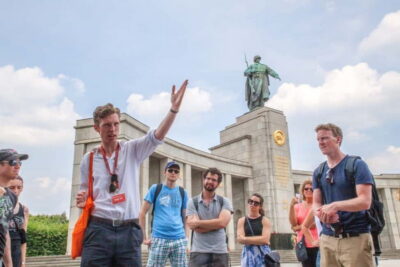
Berlin: History of the Third Reich Guided Walking Tour
Read our review →
Berlin Private Complete History All Day Walking Tour
Read our review →
Berlin: Cold War & Berlin Wall History Guided Bike Tour
Read our review →
Berlin: Historic Boat Sightseeing City Center Tour
Read our review →