Review · BERLIN
Berlin: Nazi History Walking Tour
Berlin’s Nazi past is easiest to grasp on foot, where grand plans, government offices, and the ruins of dictatorship sit close together. This two-hour walk links the Brandenburg Gate with Wilhelmstrasse, the former Nazi government quarter, and the Topography of Terror.
I like the route for two clear reasons: it gives you political background before pointing out the buildings, and it ends at an exhibition where you can continue learning. Guide Stefan has been singled out for lively storytelling and useful detail. The main consideration is that the tour is conducted in German, and many stops are viewed from public streets rather than entered.
Key points at a glance
- Start beside the Brandenburg Gate: Meet near Hotel Adlon, at the corner by the British Embassy, then begin at Paris Square.
- Follow Wilhelmstrasse: See the former Foreign Office, the Reich Chancellery site, the palace of the German President, and other key government buildings.
- Understand Hitler’s Berlin: Learn how the Nazi leadership planned a monumental world capital and how the Weimar Republic came to an end.
- Stand near the place where Hitler died: The guide explains the final days of the regime and identifies the bunker area.
- Trace the machinery of propaganda and violence: Pass the former Ministry of Propaganda and the former Ministry of Aviation before reaching the Topography of Terror.
- Plan around the language: The live guide speaks German, so this tour suits German speakers best.
From Paris Square into Nazi Berlin
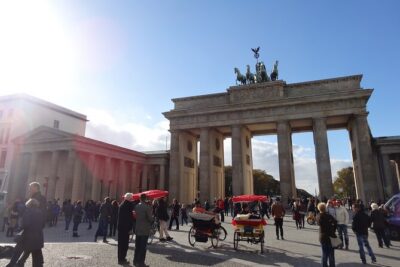
The meeting point is near Hotel Adlon, in front of the jeweler at the corner where the British Embassy is located. This puts you beside Paris Square and the Brandenburg Gate, one of Berlin’s most recognizable public spaces.
That starting point matters. The Brandenburg Gate is often treated as a symbol of modern Berlin, but it also sits at the edge of the old political center. From here, the guide can explain how the first German Republic weakened, how Hitler came to power, and how Berlin became the setting for the Nazi state.
You are not simply being led from one famous building to another. The walk sets up the political story first. You hear about the last days of the Weimar Republic and the fire in the Reichstag, then connect those events to the offices and streets ahead.
The opening section should help you make sense of what follows. Without that context, Wilhelmstrasse can look like an ordinary central Berlin street. With it, government façades and empty sites take on a darker meaning.
More History Walking Tours in Berlin
- Berlin: History of the Third Reich Guided Walking Tour
★ 4.7 · 791 reviews - Berlin Historical Highlights Walking Tour
★ 4.9 · 657 reviews - Berlin Private Complete History All Day Walking Tour
★ 5.0 · 474 reviews
Wilhelmstrasse and the planned capital
The route continues down Wilhelmstrasse, the historic main street of Berlin. During the Nazi period, this area held a dense concentration of ministries and offices. It was a natural place for Hitler’s government to display power, even when the original buildings later disappeared or changed use.
One of the tour’s main themes is the Nazi plan to remake Berlin as a world capital. That vision was far larger than a collection of government buildings. It called for monumental architecture and a city designed to project authority. Your guide explains these plans while you walk through the area that was meant to carry them out.
I like this part of the tour because it places ideology beside ordinary city space. You can see how political ambition affected streets, offices, and public buildings. At the same time, the walk does not turn the subject into architecture alone. The grand plans are tied to dictatorship, repression, and war.
This is also a good reminder to keep your expectations practical. The route includes exterior views, historic sites, and explanations from the pavement. Berlin’s wartime destruction and later rebuilding mean that some important places are marked by absence rather than by a preserved Nazi building.
The Reich Chancellery and Hitler’s final days
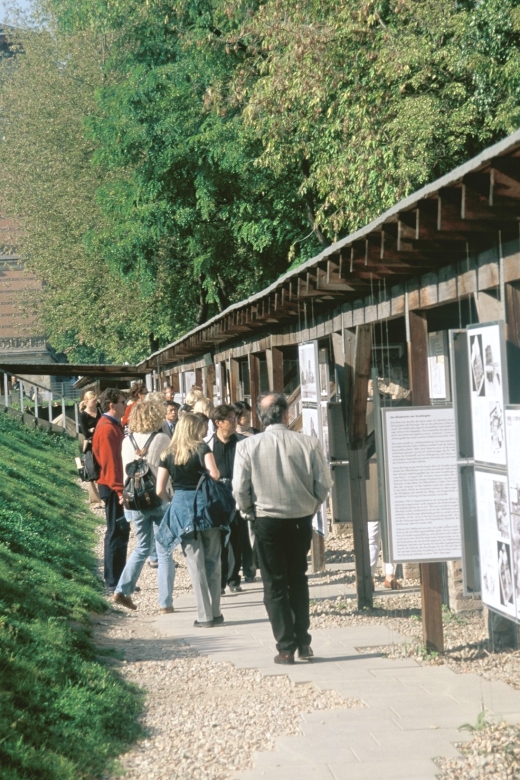
The former Reich Chancellery was the main office of the Nazi government. Its role makes this one of the most important stops on the walk, even though the original building is no longer presented as a grand public attraction.
The guide explains how the Chancellery functioned as the center of Nazi rule and how the building fitted into Hitler’s plans for Berlin. You also hear about the final days of the regime and the site where Hitler died.
This stop is likely to be more about location and explanation than visual spectacle. That is part of the value. A street corner or open area can be historically important even when little of the original structure remains.
For many people, the bunker site is the most emotionally charged moment of the tour. The guide identifies the area and gives the historical account without turning it into a shrine. I appreciate that approach. The subject calls for facts and restraint, not theatrical treatment.
Ministries, offices, and the machinery of control
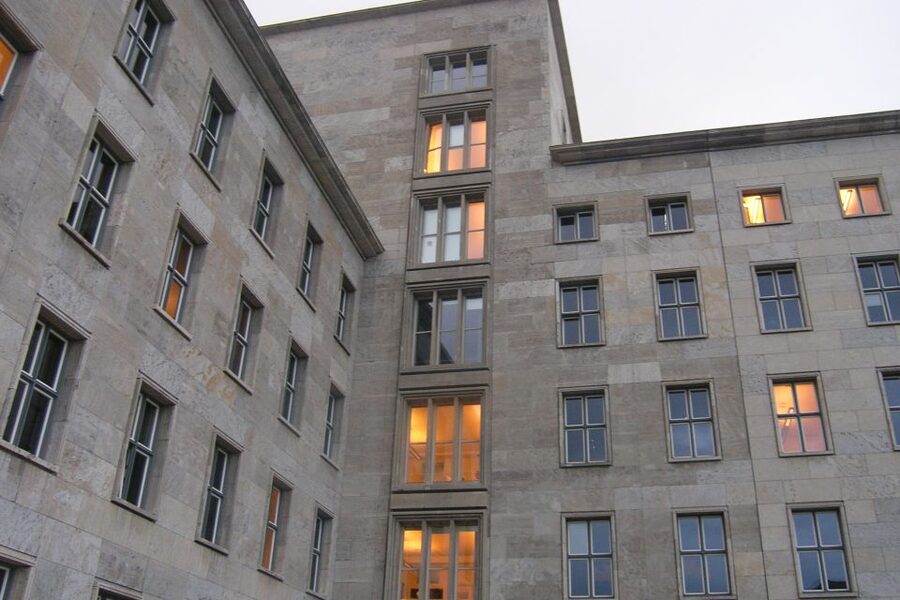
As you continue, the tour points out the Auswärtiges Amt, or former Foreign Office, and the former Ministry of Aviation. These buildings help show how the Nazi system depended on more than speeches and military force.
The Foreign Office connects the government quarter with Nazi foreign policy. The Ministry of Aviation points to the regime’s military expansion and its effort to control the institutions needed for war. Seeing these locations in sequence helps you understand the scale of the state apparatus.
The route also identifies the palace of the German President. This adds another piece to the story of how the Nazi government operated within, and then destroyed, the structures of the earlier German state.
The value here is the grouping. A single building can be interesting, but several ministries close together show how power was organized geographically. You begin to see Berlin not just as a city where events happened, but as the working headquarters of a government that reached into politics, media, diplomacy, and military affairs.
More History Walking Tours in Germany
- Berlin: Charité Hospital Walking Tour of Medical History
★ 4.9 · 276 reviews - Berlin Private Half-Day Walking Tour: Discover the German Capital’s History
★ 5.0 · 244 reviews - The History of Berlin: WWII PRIVATE Walking Tour With Locals
★ 5.0 · 209 reviews - Berlin: Historic Center Walking Tour with a Real Berliner
★ 5.0 · 134 reviews
Goebbels’ Ministry of Propaganda
The former Ministry of Propaganda is one of the most useful stops for understanding how the Nazi leadership shaped public life. The guide explains Joseph Goebbels’ role and the ministry’s place within the regime.
This section can give your walk a wider focus. Nazi rule did not rely only on police power and official decrees. It also depended on controlling messages, images, news, and public opinion. Standing near the former ministry helps connect the political story to the way the regime presented itself.
The building is part of the larger street-level experience, so the guide’s explanation carries much of the weight. If you want a longer look at propaganda, the two-hour walk may leave you wanting more. That is not a flaw in the route so much as a reminder that this is an introduction, not a full museum visit.
Finishing at the Topography of Terror
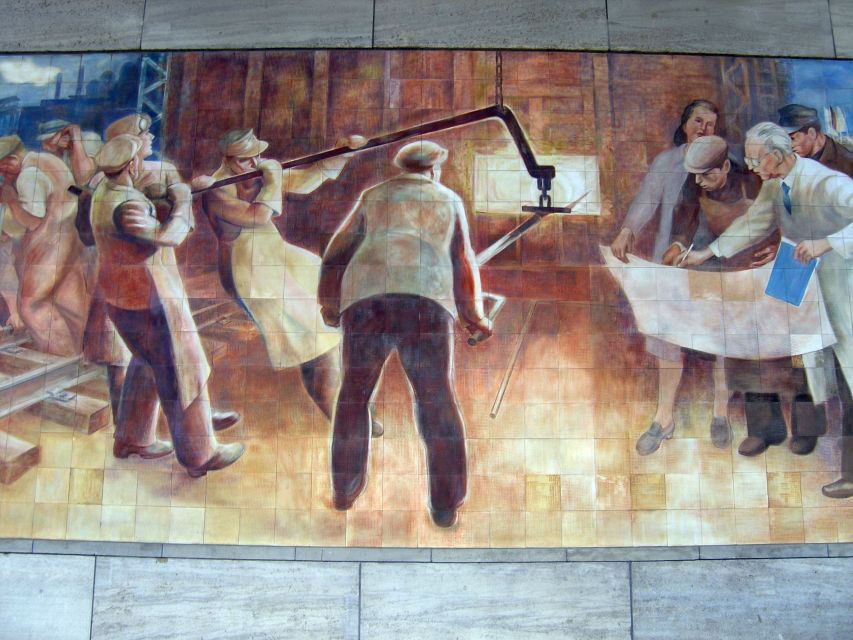
The walk ends at the Topography of Terror exhibition. This is a strong choice because the exhibition focuses on the system of violence used by the Third Reich.
By ending here, the tour moves from political development and government offices to the institutions that enforced terror. The site is associated with the former headquarters of Nazi violence in Berlin, and the exhibition gives you a chance to continue with more documents, photographs, and historical explanation.
I would allow extra time after the guided walk if your schedule permits. The tour itself lasts two hours, but its final stop can serve as a doorway to further study. You may want to examine the exhibition at your own pace rather than trying to absorb everything while keeping up with a group.
The ending also gives the route a clear shape. You begin near the Brandenburg Gate with the collapse of the first German Republic, follow the Nazi government’s central offices, and finish with the system of persecution and violence behind them.
What the two-hour format does well
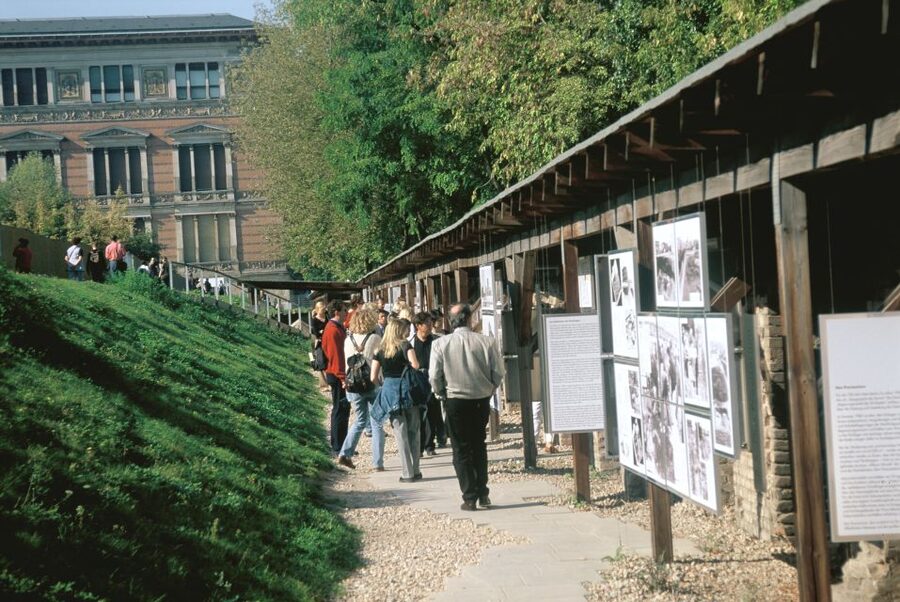
Two hours is enough to cover a substantial section of central Berlin without turning the outing into an exhausting march. The route has a clear subject, and the stops are close enough to form one connected story.
The short format also forces the guide to focus. You receive the political development of Hitler’s Reich, the plans for Berlin, the ministries, the Chancellery, Hitler’s death, propaganda, and the final exhibition stop. That is a lot for one walk, so the experience works best as a framework for your time in Berlin.
You should expect a serious history tour rather than a general city orientation. It will not cover Berlin’s museums, food, architecture, or postwar history in equal measure. If you want a broad introduction to the city, choose another walk. If you want to understand Nazi Berlin through its central government quarter, this focused route makes sense.
The walk also depends heavily on the guide. Stefan, one of the guides associated with the experience, has a reputation for clear explanations, strong subject knowledge, and an engaging manner. His storytelling style is especially useful here, since much of the evidence is found in context rather than in preserved interiors.
Price, language, and practical value
At $21 per person, the tour is reasonably priced for a live, two-hour history walk. You are paying for a guide who connects scattered sites and explains the political meaning behind them, not for admission to a major attraction or a full-day program.
The price offers the best value if you would otherwise walk through this part of Berlin without knowing what you were seeing. It is less compelling if you already have a strong grasp of Nazi history and prefer to read at your own pace.
The live guide speaks German. That is the most important booking point. You should be comfortable following a detailed historical discussion in German, since the explanations are the heart of the experience. The activity information does not list another guide language.
Food, drinks, hotel pickup, and hotel drop-off are not included. You need to reach the meeting point near Hotel Adlon yourself. Since the route begins in central Berlin and ends at the Topography of Terror, plan your next activity around the finishing point rather than assuming you will return to the start.
You can cancel up to 24 hours before the tour for a full refund, and the reserve now, pay later option keeps your plans flexible. Check the available starting times before booking, since the two-hour duration is fixed but the departure time can vary.
Who should book this walk?
I would recommend it to German-speaking visitors who want a focused introduction to Berlin’s Nazi government quarter. It suits anyone interested in political history, the Holocaust, propaganda, military administration, or the physical planning of Hitler’s Berlin.
It is also a good choice early in a Berlin stay. The route can give you useful context before you visit other museums and memorials. Afterward, the Topography of Terror provides a natural place to continue.
You may want another option if you need a tour in English, have difficulty walking for two hours, or want to enter preserved Nazi buildings rather than view sites from public streets. The tour includes substantial historical explanation, so it is not designed as light sightseeing.
Should you book the Nazi History Walking Tour?
Book it if you want a compact, German-language walk that ties the Brandenburg Gate to the Reich Chancellery site, the propaganda ministry, the former Ministry of Aviation, and the Topography of Terror. The route is focused, affordable, and strongest when the guide turns empty spaces and altered buildings into a clear account of how Nazi Berlin worked.
Skip it if you need English commentary or prefer a museum-based experience. For the right audience, especially with a guide such as Stefan, this is a useful way to get your bearings in Berlin’s former government quarter and understand what you are looking at.
FAQ
How long does the Nazi History Walking Tour last?
The walking tour lasts two hours.
Where does the tour begin?
Meet near Hotel Adlon, in front of the jeweler at the corner where the British Embassy is located. The walk begins at Paris Square beside the Brandenburg Gate.
What language is the tour conducted in?
The live tour guide speaks German. German is the listed guide language.
What places does the walking tour cover?
The route includes the Brandenburg Gate area, Wilhelmstrasse, the former Foreign Office, the palace of the German President, the Reich Chancellery site, the place where Hitler died, Goebbels’ former Ministry of Propaganda, and the former Ministry of Aviation.
Where does the tour finish?
The walk finishes at the Topography of Terror exhibition, where you can learn more about the system of violence under the Third Reich.
Are hotel pickup, food, and drinks included?
No. Hotel pickup and drop-off, food, and drinks are not included.
More WWII and D-Day Tours in Berlin
- Vienna: World War II Historical Walking Tour
★ 4.8 · 1,772 reviews - Zagreb: City & History Walking Tour & WW2 Tunnels
★ 4.9 · 1,202 reviews - Pearl Harbor History Remembered Tour from Ko Olina
★ 5.0 · 1,009 reviews - Hiroshima Peace (Heiwa) Walking Tour at World Heritage Sites
★ 5.0 · 872 reviews
More WWII and D-Day Tours in Germany
- Berlin: Guided Bike tour of the Berlin Wall and Third Reich
★ 5.0 · 160 reviews - Eagle’s Nest-Berchtesgaden-Obersalzberg Private Half Day WWII Historical Tour
★ 5.0 · 64 reviews
Latest history tours reviewed in Berlin
- Berlin: History and Sightseeing with Kids (Free for Kids)★ 4.9 · 19 reviews
- Berlin: Urbex Abandoned Places & History Tour★ 4.8 · 18 reviews
- Berlin: Historic Boat Sightseeing City Center Tour★ 4.5 · 415 reviews
- Berlin: Historical Sights & Berlin Wall Tour with a Berliner★ 5.0 · 62 reviews
- Berlin: Guided Craft Beer & Cultural Tour With Snacks★ 5.0 · 68 reviews
- Berlin (E)Bike Tour Historical Highlights in Small groups★ 4.5 · 24 reviews
- Berlin: Historic Center Walking Tour with a Real Berliner★ 5.0 · 134 reviews
- Berlin Beers & Battlefields Tour: War History & German Beer★ 4.9 · 29 reviews
Berlin History Tours, compared.
Berlin: 3-Hour World Heritage Cruise to Potsdam
Read our review →
Berlin: History of the Third Reich Guided Walking Tour
Read our review →
Berlin Private Complete History All Day Walking Tour
Read our review →
Berlin: Cold War & Berlin Wall History Guided Bike Tour
Read our review →
Berlin: Historic Boat Sightseeing City Center Tour
Read our review →