Review · BERLIN
Berlin: Historic Center Walking Tour with a Real Berliner
Berlin’s story is packed into this two-hour walk, from a small trading settlement near the Spree to the capital of Prussia, a divided Cold War city, and today’s reunited Germany. The route links Nikolaiviertel, Museum Island, Unter den Linden, and Brandenburg Gate, so you get a useful first look at Berlin without spending half the day on a bus.
I like the clear progression through Berlin’s past, and I like the small group limit of 10, which gives you a better chance to ask questions. Carlo is often associated with the tour and is praised for explaining complicated events in a warm, easygoing way. The main drawback is simple: two hours is enough for an excellent introduction, but not enough time to visit the museums or enter every landmark.
Key points about this Berlin walk
- A history-first route: Follow Berlin’s development from a riverside trading village to the capital of a reunited Germany.
- Major sights in one walk: See the Television Tower, Museum Island, Berlin Cathedral, Humboldt Forum, State Opera, Humboldt University, and Brandenburg Gate.
- A local-led experience: A certified, multilingual guide leads the walk in English, German, or Italian.
- A small group setting: The tour is limited to 10 participants, with occasional departures operating almost like private walks.
- A strong first-day choice: The route helps you understand Berlin’s layout before you tackle its museums and memorials.
- All-weather planning: The walk runs in all weather and on public holidays, so comfortable shoes and weather protection matter.
Starting beside Berlin’s oldest neighborhood
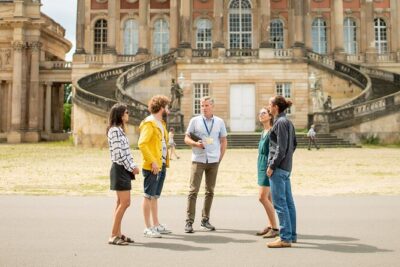
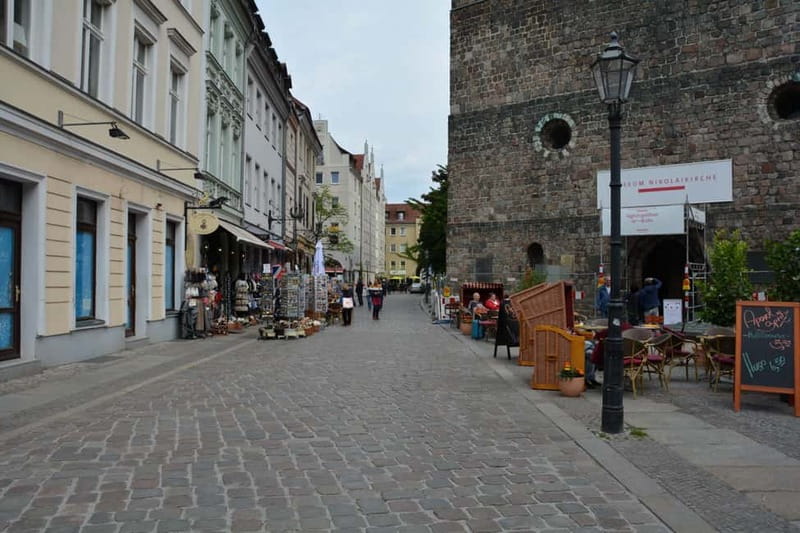
Meet your guide outside the main entrance of the Nikolaikirche Museum, or St. Nicholas’ Church Museum. Look for the Get Your Guide, You in Berlin flag. This is a practical meeting point in central Mitte, though you should arrive with enough time to identify the church and flag before the group sets off.
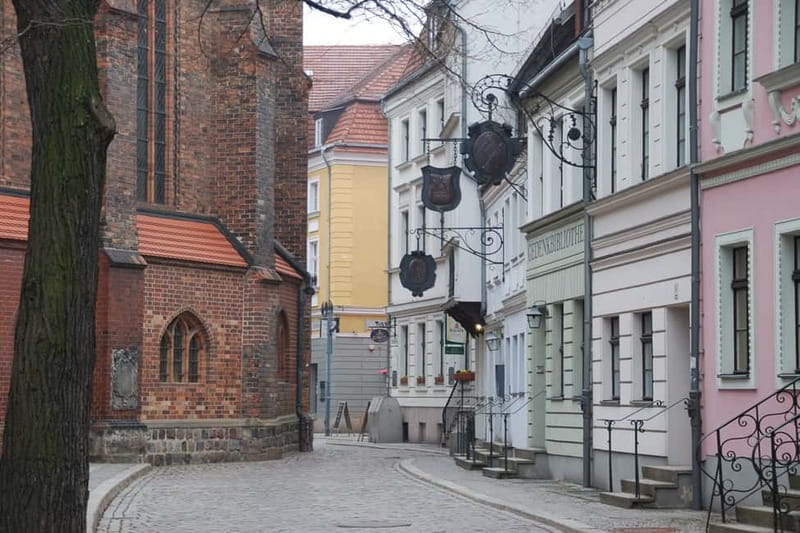
The walk begins in Nikolaiviertel, the area around St. Nicholas’ Church. This is an important place to start because Berlin did not begin as the grand imperial city you see along Unter den Linden. Its early story is tied to settlement, trade, and the Spree River.
Your guide uses this first section to explain Berlin’s beginnings and the way the city grew. That opening matters. Without it, the grand buildings later in the walk can seem like a random collection of monuments. With it, you can connect the small medieval core to the royal capital and modern metropolis that came after.
Nikolaiviertel is also one of the easier places in Berlin to grasp as a historic starting point. The neighborhood gives the tour a sense of place before the route moves toward larger squares, palaces, museums, and state buildings.
The St. Nicholas’ Church Museum itself is a starting point, not a scheduled interior visit. You should not expect admission to the museum as part of the walking tour.
More History Walking Tours in Berlin
- Berlin: History of the Third Reich Guided Walking Tour
★ 4.7 · 791 reviews - Berlin Historical Highlights Walking Tour
★ 4.9 · 657 reviews - Berlin Private Complete History All Day Walking Tour
★ 5.0 · 474 reviews
The Television Tower and the changing face of Berlin
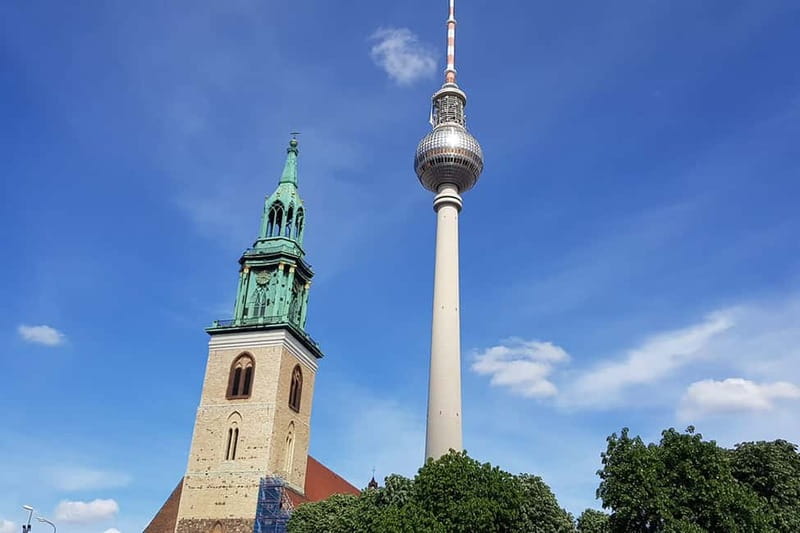
From Nikolaiviertel, the route brings Berlin’s newer history into view with the Television Tower. At 368 meters, it is Berlin’s highest building and one of the clearest markers on the city skyline.
The tower helps your guide explain the city’s divided past. It was built in East Berlin and became an unmistakable symbol of the former German Democratic Republic. Seeing it early in the walk gives you a useful visual reference as you move through central Berlin.
This part of the route also shows how sharply Berlin’s architectural eras meet. The early city grew beside the Spree. Prussian rulers then imposed grand avenues and formal buildings. The 20th century added the marks of war, division, reconstruction, and reunification.
You will pause for explanation and sightseeing rather than climb the Television Tower. If you want to visit the viewing platform or restaurant, plan that separately.
Walking beside the Spree to Museum Island
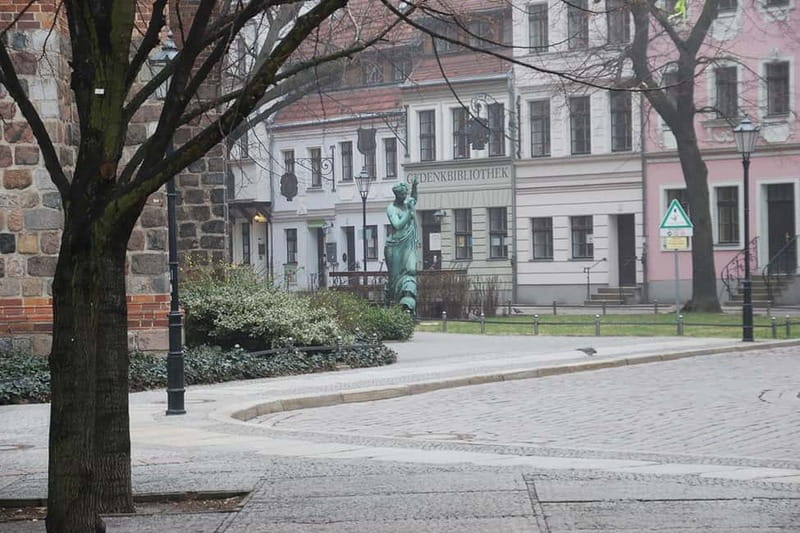
The walk follows the Spree toward Museum Island, one of Berlin’s most important cultural areas. This stretch is particularly good for understanding how the river shaped the city and how the royal capital later gathered its museums and monumental buildings in one central zone.
Museum Island is home to major institutions, but this tour is conducted outdoors. You see the buildings and hear how the area developed. The short format is useful if you are still deciding which museum deserves your time later.
The route includes views of Berlin Cathedral, the Old Museum, and the Humboldt Forum. These buildings represent different chapters of Berlin’s history and different ideas about what a capital should be.
Berlin Cathedral is hard to miss, with its large dome and elaborate exterior. It reflects the confidence and ceremony of imperial Berlin. The Old Museum, facing the Lustgarten, belongs to the grand classical tradition of the 19th century. Together, they show how rulers used architecture to present Berlin as a cultured European capital.
You will not have time to tour the interiors. That is the tradeoff. The walk gives you context and orientation, while a separate museum visit gives you the art, displays, and architecture in depth.
The Humboldt Forum and the reconstructed city palace
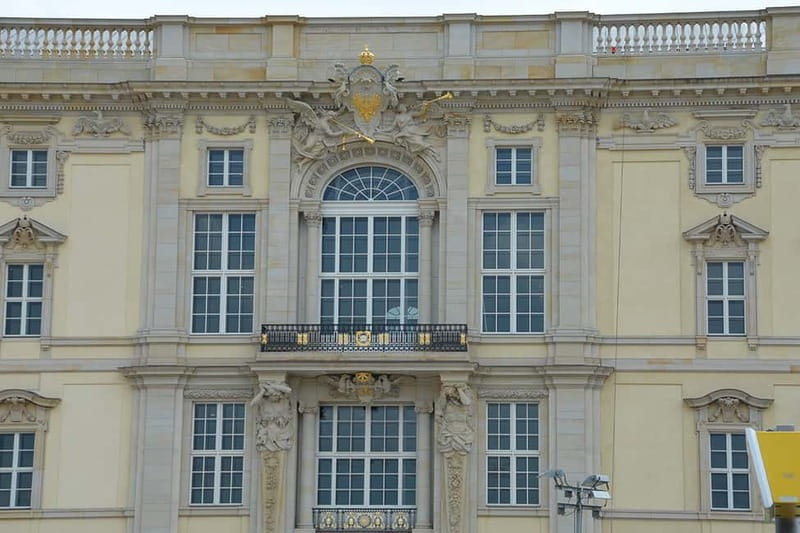
The Humboldt Forum is another major stop. It occupies the site of the former Berlin Palace, also known as the City Palace, and incorporates a reconstructed version of the historic palace exterior.
This is one of the most useful places for a guide-led explanation because the building raises questions about memory, reconstruction, and Berlin’s changing political identity. The palace belonged to the Prussian and German royal tradition. After the Second World War, the East German government demolished the damaged palace and later built the Palace of the Republic on the site. The current Humboldt Forum brought back much of the former palace’s exterior appearance.
You do not need to settle every argument about the reconstruction to appreciate why the site matters. It gives you a physical example of Berlin’s habit of building, destroying, replacing, and rebuilding. A guide can tie those changes to the broader story of monarchy, war, socialism, and reunification.
Expect to hear about the reconstructed Berlin City Palace and the role of the Humboldt Forum today. The tour does not include an extended interior visit, so note the building for a return visit if its museums interest you.
More History Walking Tours in Germany
- Berlin: Charité Hospital Walking Tour of Medical History
★ 4.9 · 276 reviews - Berlin Private Half-Day Walking Tour: Discover the German Capital’s History
★ 5.0 · 244 reviews - The History of Berlin: WWII PRIVATE Walking Tour With Locals
★ 5.0 · 209 reviews - Berlin: Nazi History Walking Tour
★ 4.8 · 33 reviews
Across Palace Bridge into royal Berlin
Crossing the Palace Bridge, or Schlossbrücke, moves the tour into Berlin’s historic center. The bridge itself is part of the grand plan that connected the palace area with Unter den Linden and the royal buildings beyond it.
This is where Berlin’s imperial scale becomes especially clear. The route passes impressive buildings from the time of kings and emperors, and your guide explains how Prussia shaped the city. Berlin was not simply a capital with attractive buildings. It was designed to display power.
I find this kind of context more useful than a list of dates. Look at the width of the avenues, the formal placement of monuments, and the size of the public buildings. The city was making a statement about monarchy, administration, military strength, and culture.
The walk is mostly about exterior views and explanation. If you want to study architectural details, take a few notes and return later. The two-hour schedule keeps moving.
Unter den Linden, Berlin’s grandest historic avenue
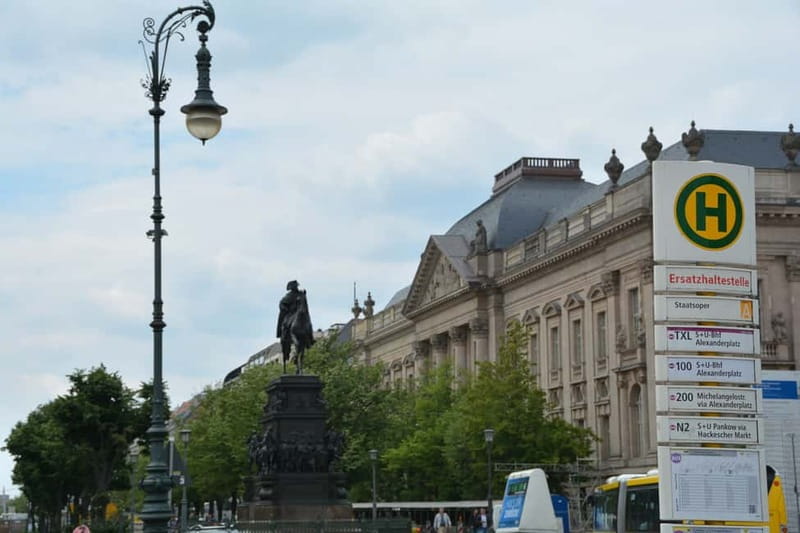
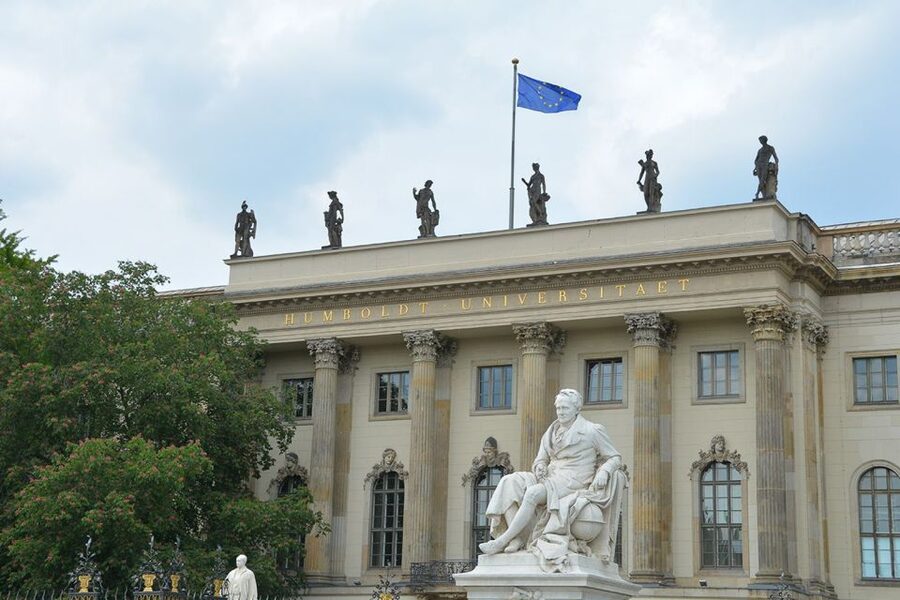
Unter den Linden is the oldest boulevard in Berlin and one of the central scenes of this experience. The route follows the avenue past several major landmarks, including the Equestrian Statue of Frederick the Great, the State Opera, Humboldt University, and St. Hedwig’s Cathedral.
The Equestrian Statue of Frederick the Great introduces the Prussian side of Berlin’s story. Frederick the Great ruled Prussia in the 18th century and helped make Berlin a major European center of power and culture. The statue is more than a photo stop. It opens the question of how Berlin remembers its rulers and how monuments shape public space.
The State Opera reflects Berlin’s long connection with music, court culture, and public performance. You see it from outside, but the guide provides the historical setting that makes the building easier to appreciate.
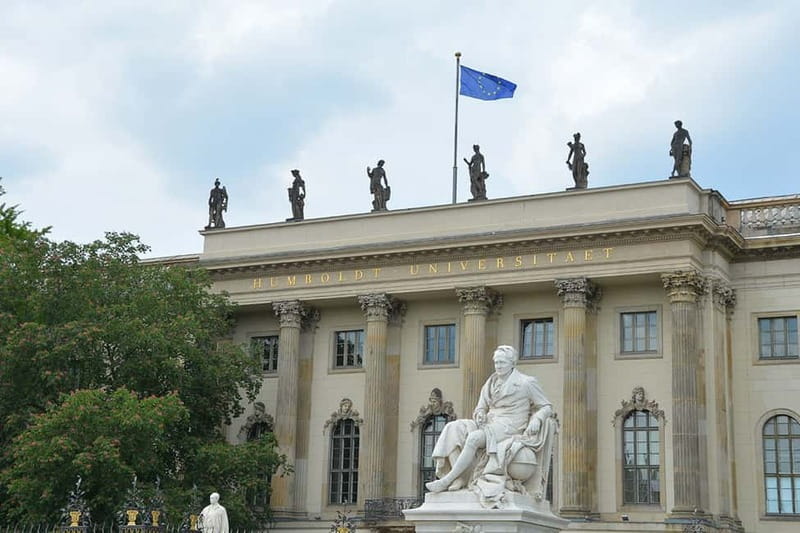
Humboldt University brings another part of Berlin’s identity into view. The city was not only a seat of government. It also sought status as a center of study and ideas. This is a good point to ask your guide about Berlin’s cultural development, especially if you want more than the usual focus on war and the Cold War.
St. Hedwig’s Cathedral adds a religious landmark to the route. Its position along Unter den Linden helps show how royal, academic, cultural, and religious buildings were brought together in the same central district.
The boulevard can be busy, and the route includes regular walking on city streets. Wear comfortable shoes, especially if you plan to continue exploring after the tour.
Reaching Brandenburg Gate and the story of reunification
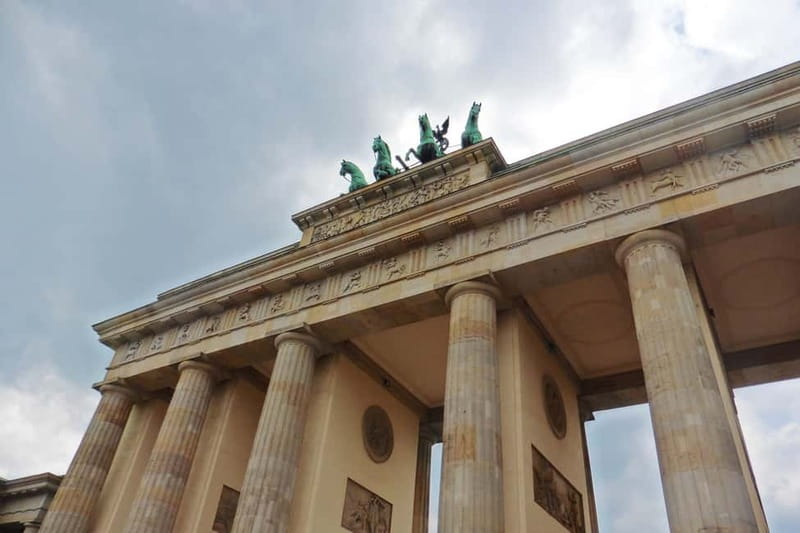
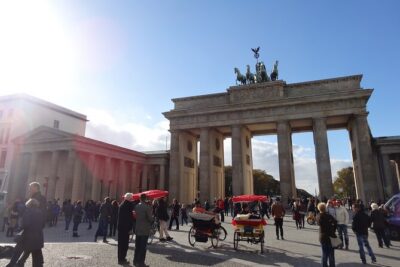
The walk finishes at Brandenburg Gate, Berlin’s most famous symbol. This is not just a grand neoclassical gateway at the end of a pleasant avenue. It has represented different versions of Berlin at different times.
Built as a city gate in the late 18th century, it later became linked with Prussian power, German nationalism, the Nazi period, the division of Berlin, and reunification. During the Cold War, the gate stood in the restricted area near the Berlin Wall and could not function as an open passage through the city.
The guide explains the gate’s meaning before, during, and after Berlin’s division. The focus on reunification in 1990 is particularly important. Brandenburg Gate became a powerful setting for the return of free movement and a united German capital.
This final stop works well because the entire walk has prepared you to read the monument. You have seen the medieval core, the royal center, the museums, the socialist-era Television Tower, and the buildings connected with modern Germany. The gate then brings those chapters together.
The tour ends at Brandenburg Gate. That makes it easy to continue toward other central sights, but no onward transportation or hotel drop-off is included.
What the two-hour format gives you
Two hours is a sensible length for a first walk through Mitte. You cover a lot of ground, but the tour does not demand a full day of standing and listening. It works especially well on your first day in Berlin, when you want a basic map of the center before choosing museums and longer excursions.
The guide’s value lies in connecting the sights. Berlin’s center can feel confusing because its buildings belong to different periods and its open spaces have been repeatedly redesigned. A good explanation turns that confusion into a sequence.
The most praised guide linked with this experience is Carlo. He is described as warm, patient, and able to handle detailed questions without making the tour feel like a lecture. The language options are English, German, and Italian. Some departures may have only a few participants, and the group limit is 10, so the setting should feel more personal than a large city walk.
There is also a practical human touch in the way the tour is run. On one rainy departure, the guide brought umbrellas, and on another, he helped a participant find the bus afterward. Those details are not guaranteed on every outing, but they suggest a guide who pays attention to the people in front of him.
Price, group size, and practical value
At $43 per person, the tour is not the cheapest way to walk around central Berlin. You can see many of these buildings on your own for free. The price pays for structure, historical explanation, and the chance to ask a local guide why the city looks the way it does.
The value is strongest if you are visiting Berlin for the first time, have limited time, or find the city’s history hard to organize. It is also useful if you want to understand more than the usual Second World War and Cold War highlights. The tour covers Berlin’s earlier origins, Prussian rule, cultural growth, division, and reunification.
For Berlin residents or repeat visitors, the value depends on your curiosity. The route is familiar, but the explanations may add details you have missed. One departure even gave two Berlin residents a fresh look at places they already knew.
The small group limit is important. With no more than 10 participants, you have a better chance of hearing the guide clearly and asking a question. If only one or two people book, the walk may operate like a private tour, though you should not assume that will happen.
Weather, walking, and access
The tour operates in all weather and on public holidays. Berlin weather can change quickly, so dress in layers and bring rain protection. Comfortable shoes are essential because the route covers several central areas on foot.
The activity is wheelchair accessible. If you use a wheelchair, it is still sensible to confirm current conditions when booking, since outdoor routes can be affected by crowds, pavement, or temporary street work.
Food and drinks are not included. That is easy to manage in Mitte, where you can arrange a snack or meal before or after the walk, but plan for the full two hours without a scheduled refreshment stop.
Hotel pickup and drop-off are not included. You make your own way to the Nikolaikirche Museum and leave from Brandenburg Gate at the end.
Free cancellation is available up to 24 hours before the start for a full refund. You can also reserve now and pay later, which helps if you are arranging a trip with several moving parts.
Who should book this Berlin walk?
I would choose this tour for a first visit, especially if you want a broad introduction before spending time inside Berlin’s museums. It also suits anyone who likes history explained through buildings, streets, and public spaces rather than through a bus window.
The walk is a good match for couples, solo visitors, families with older children, and small groups who want an English, German, or Italian guide. It is less suitable if you want long museum visits, a specialist architectural tour, or an in-depth examination of one period such as Nazi Germany or the Berlin Wall.
Book it early in your stay if you can. The route gives you a useful mental map, and the guide can help you understand what you see afterward. If your schedule is tight, the walk still covers the core sights efficiently.
Should you book it?
Book this tour if you want Berlin’s main historic center explained in a clear two-hour walk, with a guide who can connect medieval beginnings, Prussian power, cultural ambition, Cold War division, and reunification. The combination of small groups, a central route, multilingual guiding, and a finish at Brandenburg Gate makes it a strong orientation tour.
Skip it if you prefer exploring alone, already know Mitte well, or want to spend your time inside museums. For most first-time visitors, though, $43 is a fair price for a focused introduction that gives the rest of your Berlin visit more meaning.
FAQ
Where does the tour begin?
The meeting point is outside the main entrance of the Nikolaikirche Museum, also called St. Nicholas’ Church Museum. Look for the Get Your Guide, You in Berlin flag.
Where does the tour end?
The walk finishes at Brandenburg Gate.
How long does the tour last?
The tour lasts two hours.
Which languages are available?
The live tour is available in English, German, and Italian.
How large is the group?
The tour is limited to 10 participants.
Is the tour wheelchair accessible?
Yes, the activity is wheelchair accessible.
Does the tour run in bad weather?
Yes. The walk takes place in all weather conditions and on public holidays.
What should I bring?
Bring comfortable shoes and comfortable clothing. Since the walk runs in all weather, weather protection is also sensible.
Are food and drinks included?
No. Food and drinks are not included.
Is hotel pickup available?
No. Hotel pickup and drop-off are not included.
More Old Town and Historic Centre Walks in Berlin
- Madrid Essential: Historic Center, Plaza Mayor & Royal Palace
★ 5.0 · 6,416 reviews - Lisbon: Live Fado Show with Port Wine in Historic Center
★ 4.7 · 4,166 reviews - Valencia Old Town Tour with Wine & Tapas in 11th Century Historic Monument
★ 5.0 · 3,234 reviews - Prague Old Town, Medieval Underground and Dungeon Historical Tour
★ 4.5 · 3,227 reviews
More Old Town and Historic Centre Walks in Germany
- Berlin: 1-Hour Guided Tour of the Historic Center
★ 4.2 · 33 reviews - The Local Tour of Hamburg Historic Centre
★ 5.0 · 1,058 reviews - Trier: Guided Old Town Highlights and History Walking Tour
★ 4.7 · 687 reviews - Cologne: Old Town Beer History Tour
★ 4.7 · 659 reviews
Latest history tours reviewed in Berlin
- Berlin: History and Sightseeing with Kids (Free for Kids)★ 4.9 · 19 reviews
- Berlin: Nazi History Walking Tour★ 4.8 · 33 reviews
- Berlin: Urbex Abandoned Places & History Tour★ 4.8 · 18 reviews
- Berlin: Historic Boat Sightseeing City Center Tour★ 4.5 · 415 reviews
- Berlin: Historical Sights & Berlin Wall Tour with a Berliner★ 5.0 · 62 reviews
- Berlin: Guided Craft Beer & Cultural Tour With Snacks★ 5.0 · 68 reviews
- Berlin (E)Bike Tour Historical Highlights in Small groups★ 4.5 · 24 reviews
- Berlin Beers & Battlefields Tour: War History & German Beer★ 4.9 · 29 reviews
Berlin History Tours, compared.
Berlin: 3-Hour World Heritage Cruise to Potsdam
Read our review →
Berlin: History of the Third Reich Guided Walking Tour
Read our review →
Berlin Private Complete History All Day Walking Tour
Read our review →
Berlin: Cold War & Berlin Wall History Guided Bike Tour
Read our review →
Berlin: Historic Boat Sightseeing City Center Tour
Read our review →