
Review · BERLIN
Berlin Wall History Small Group Cycling Tour
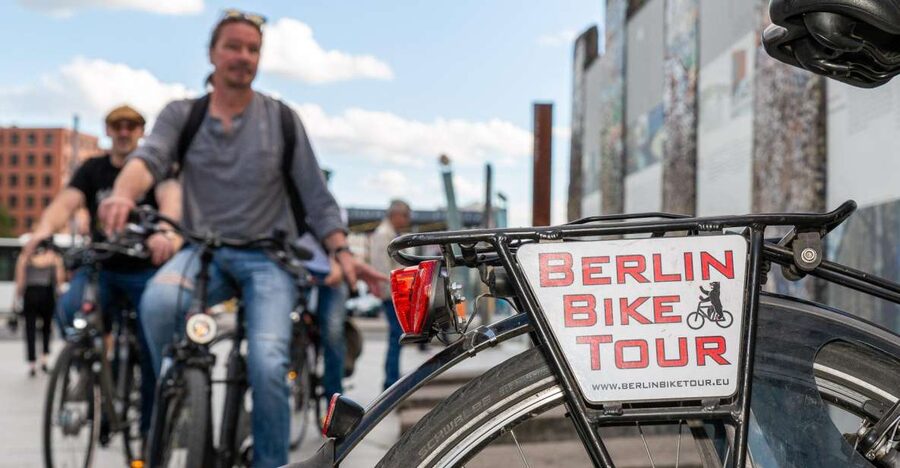
Berlin’s Wall is easiest to understand when you follow its old route, not just one preserved section. This four-hour bike tour begins at Bornholmer Straße, where East German citizens first crossed the border on November 9, 1989, then traces former death strips, watchtowers, escape sites, and border crossings toward Checkpoint Charlie.
I like the small maximum of eight people, which gives a guide room to explain the hard details and answer questions. I also like the mix of major sights and quieter places, especially Invalid Cemetery and the Parliament of the Trees. The main drawback is that the tour is conducted in German, so it is best for you only if you can follow spoken German comfortably.
Key points at a glance
- Begin where the Wall first opened: Bornholmer Straße puts you at the scene of the first border crossing on November 9, 1989.
- See more than a surviving strip of concrete: The route includes watchtowers, parts of the former death strip, escape sites, memorials, and old border crossings.
- Ride through Berlin’s changing city center: Mauerpark, Brandenburg Gate, Potsdamer Platz, Checkpoint Charlie, and the Palace of Tears all appear along the way.
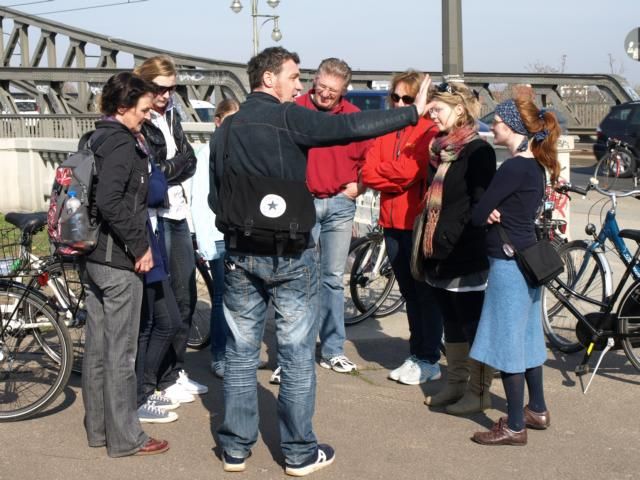
- Travel in a genuinely small group: With three to eight participants, you get a more personal explanation than on a large city tour.
- Expect serious history, not just sightseeing: Stories of failed escapes, deaths, division, and reunification shape the ride.
- Pay $40 for a four-hour experience: The bicycle, guide, fees, and a rain poncho when needed are included, making this a strong value for a half-day tour.
Why a bicycle makes Berlin’s Wall easier to understand
The Berlin Wall was not a single narrow barrier. It was a fortified border zone with walls, fences, patrol paths, watchtowers, open strips of ground, and controlled crossings. Much of it disappeared after reunification, so a walking visit to one surviving section can leave you with only part of the story.
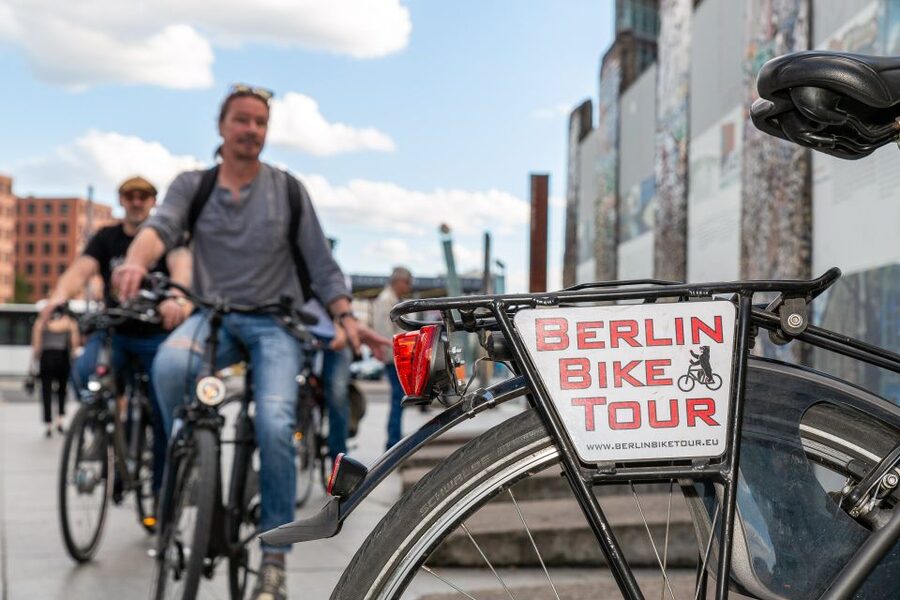
A bicycle gives you a better sense of distance and sequence. You move from one former crossing to another, seeing how the border cut through neighborhoods, parks, cemeteries, government districts, and major public squares. The ride also covers more ground than most visitors manage on foot in four hours.
This is not a casual cycle around Berlin with a few Wall facts added in. The route focuses on the Wall and the human choices made around it. You hear about people who tried to escape, the danger of the death strip, and the events that led to the border opening.
The group size matters here. Three to eight people is small enough for the guide to stop and explain a photograph or answer a question without losing half the group. It also keeps the ride more manageable at urban crossings and sightseeing stops.
More Small-Group History Tours in Germany
- Small group Potsdam: A Journey Through History and Palaces
★ 4.7 · 317 reviews - Small group Potsdam: A Journey Through History and Palaces
★ 4.5 · 151 reviews - Historic Dresden Small-Group Walking Tour in English
★ 5.0 · 160 reviews
Bornholmer Straße: starting at the first breach
Meet at Berlin Bike Tour, 75 Bornholmer Straße, in the city’s north. The location is easy to reach. Björnsonstraße tram stop is about a minute away, Bornholmer Straße S-Bahn station is about two minutes on foot, and Schönhauser Allee is roughly a ten-minute walk.
The tour begins at the Square of November 9, 1989. This is a meaningful place to start because it was the first Berlin border crossing where East German citizens crossed after the Wall opened. Instead of beginning with a general lecture, you begin at the point where the system started to collapse.
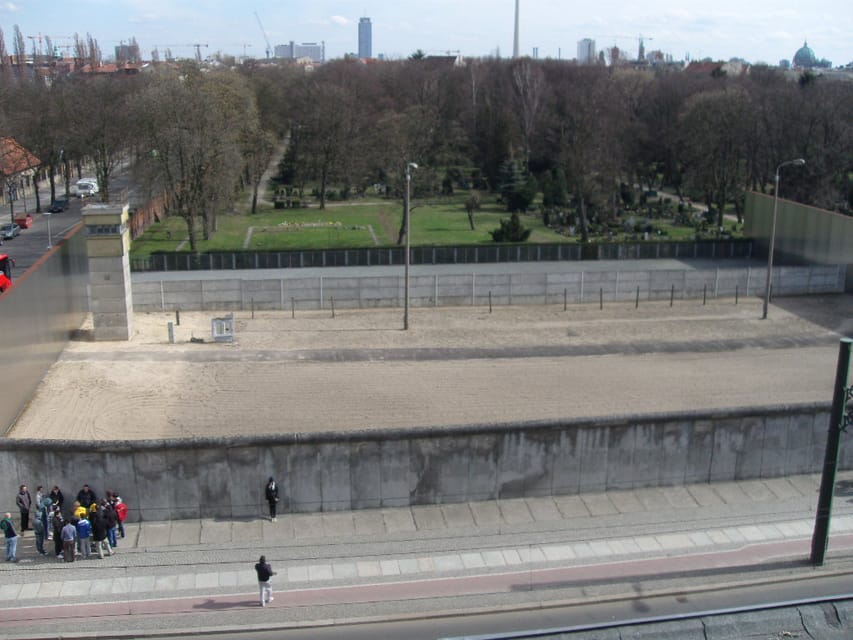
You also learn about the cherry trees planted along Bornholmer Straße. They add a gentle, almost surprising detail to a place linked with fear and armed control. The original watchtower and part of the former death strip help you picture how the crossing once worked.
Do not expect a large intact section of Wall here. The value is in reading the remaining objects and the open space around them. Your guide connects what survives today with what once filled the area.
Mauerpark and Bernauer Straße
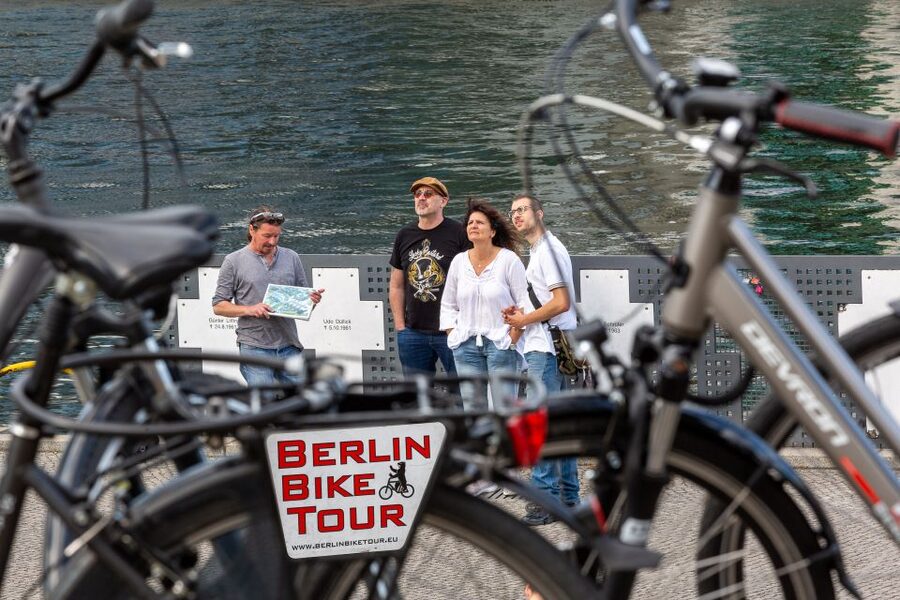
From Bornholmer Straße, the ride continues through Mauerpark. The park occupies part of the former border zone, and its name keeps the Wall present even though the space now feels open and ordinary.
That contrast is useful. Berlin’s former death strip has become parks, paths, and city streets in many places. A bike tour can show you how quickly a threatening border zone can become part of everyday city life, while still pointing out the traces that remain.
The route then reaches the Wall Memorial area around Bernauer Straße, one of the most important places for understanding the border. The Chapel of Reconciliation is included, along with memorial features connected to people who tried to escape and those who died at the Wall.
Bernauer Straße is especially valuable because the former border affected houses and residents directly. The area helps explain how the Wall ran through a real neighborhood, not some distant military edge. Look for the places where the old line, memorial markers, and modern city no longer match neatly.
You will likely stop several times here, so the four-hour schedule is not a race from one landmark to the next. Still, this is a history-heavy tour. If you prefer a fast ride with very little stopping, you may find the pace slow.
Chausseestraße and the Chapel of Reconciliation
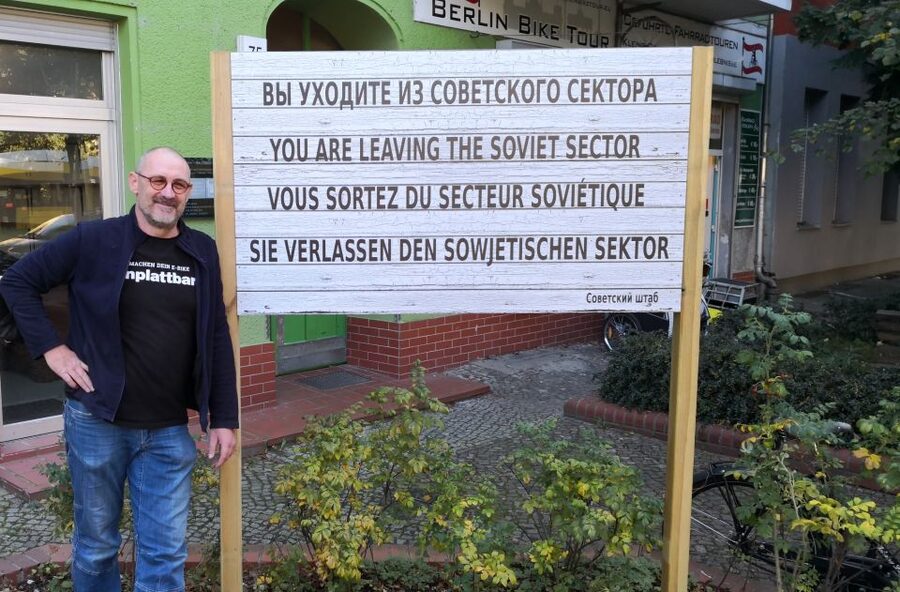
The ride continues south toward Chausseestraße, another former border crossing. This stop helps fill in the gaps between the better-known sites. Berlin’s Wall system had several crossings, and each one had its own practical and political role.
At the Chapel of Reconciliation, the focus turns toward memory and loss. The chapel sits in the former border area and gives the route a quieter pause after the larger scenes around Bernauer Straße.
The tour’s strongest feature is the guide’s ability to connect places with individual stories. Ferenz, one of the guides associated with this experience, is particularly noted for combining clear factual explanations with personal memories from the period around reunification. That personal connection can make the political story easier to grasp, but the tone remains informative rather than theatrical.
The route is in German, and that point deserves attention. Much of the value comes from spoken explanation at places where the physical evidence is incomplete. If your German is limited, you may still recognize the landmarks, but you could miss the meaning that ties them together.
More Cold War and Communism Tours in Berlin:
- Berlin: Cold War & Berlin Wall History Guided Bike Tour
★ 4.8 · 422 reviews - Berlin: Guided Bike tour of the Berlin Wall and Third Reich
★ 5.0 · 160 reviews - Berlin: Historical Sights & Berlin Wall Tour with a Berliner
★ 5.0 · 62 reviews - Prague: Communism History and Nuclear Bunker Guided Tour
★ 4.7 · 2,417 reviews
Invalid Cemetery and the story of escape
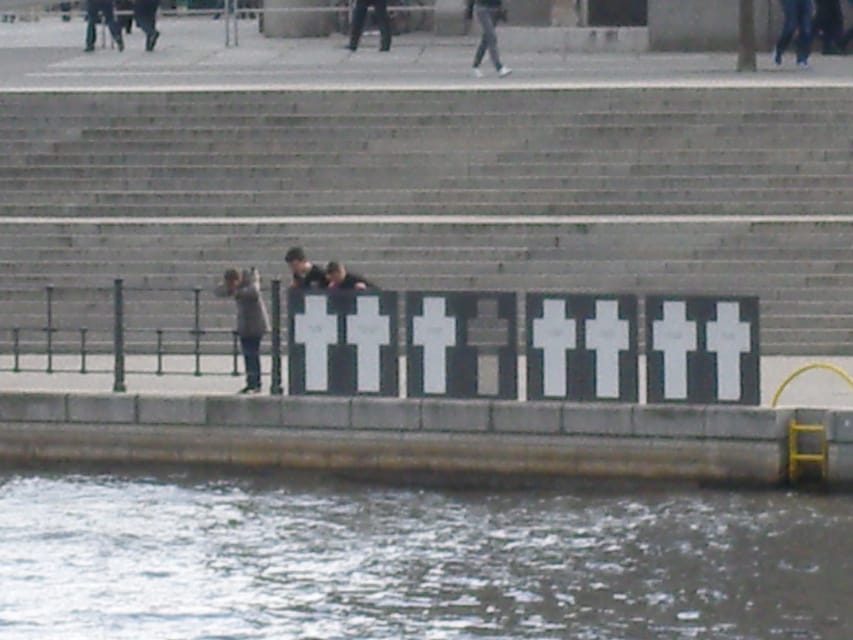
Invalid Cemetery provides one of the more unusual stops on the route. It is not as instantly familiar as Brandenburg Gate or Checkpoint Charlie, but that is part of its value. The former border ran through or alongside places that had long served other purposes, including cemeteries.
The ride also includes the former Invalidenstraße border crossing and the Memorial to Günter Litfin. These places bring the cost of the border into sharper focus. The Wall was not only a political symbol. It was a dangerous barrier where escape attempts could end in death.
This section is likely to appeal to you if you want more than the standard postcard stops. The guide can use the cemetery, crossing, and memorial to explain how the border worked on the ground and how individual stories fit into the larger history.
The subject matter is serious. Families with older children and teenagers may find it valuable, especially since one parent specifically praised the tour as suitable for young people. Very young children, however, may have little interest in the long explanations or the darker stories.
Along the Government Bank to the Parliament of the Trees
The route then moves toward the Government Bank and the Parliament of the Trees. The latter is a memorial installation made from sections of the former Wall, with trees and political artwork forming a quieter place for reflection.
This is a good example of how Berlin remembers the Wall in different ways. Some sites preserve original structures. Others use art, names, or public space to mark what disappeared. The Parliament of the Trees is not a dramatic fortress-like attraction, but it gives you time to consider what the Wall meant after it was gone.
Cycling between these sites also helps you see the city’s physical changes. You move through areas now used for government and public life, following a border that once divided the city and restricted movement.
There is no food or drink included, so bring water or plan for a stop before or after the ride. The tour lasts four hours, and cycling in summer sun or cold weather can make that longer stretch more demanding than the distance alone suggests.
Brandenburg Gate and the route through central Berlin
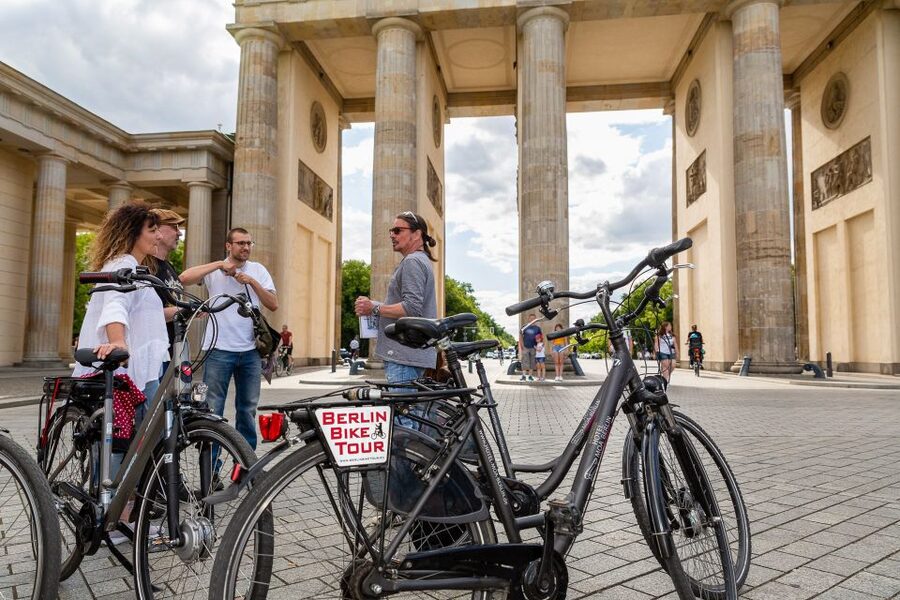
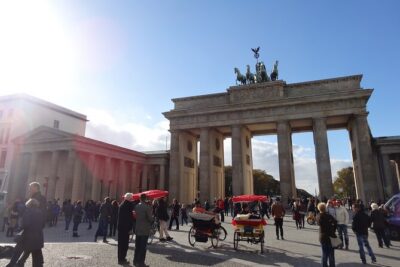
The ride reaches Brandenburg Gate, perhaps Berlin’s most recognizable symbol. It once sat beside the divided border and later became a picture of reunified Germany. Seeing it after the earlier Wall sites gives the monument more weight than it has on a simple city-center photo stop.
The route passes through the gate and continues toward the Palace of Tears, or Tränenpalast, on Friedrichstraße. Along the way, you may see the ground markings associated with the rabbit images that guide parts of the former Wall route.
The route also passes Friedrichstadt Palace, Museum Island, the New Synagogue, and the Old Berlin Post Office. These sights broaden the ride beyond Wall memorials. You are still following the border, but you are also seeing how it cut through Berlin’s cultural and civic center.
For many people, this is where the tour’s geography clicks. The Wall was not just at a far-off memorial site. It passed near museums, theaters, government buildings, train stations, and famous landmarks that are central to a visit to Berlin.
Potsdamer Platz and Checkpoint Charlie
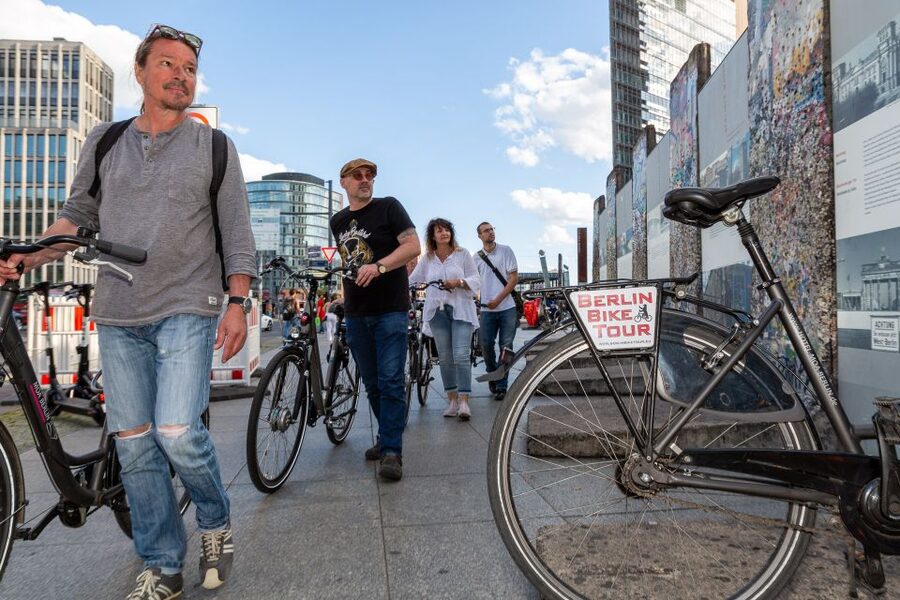
Potsdamer Platz shows another side of Berlin’s change. Today it is a major modern district, but the former Wall line crossed this area when it was divided and heavily restricted. The sharp difference between the present-day city and the former border zone is difficult to understand from a map alone.
The route ends its major sightseeing sequence at Checkpoint Charlie. This former crossing is one of Berlin’s most famous Wall sites, and it can feel more commercial and crowded than the quieter memorials earlier in the ride.
That contrast is worth knowing before you book. Checkpoint Charlie is important, but it is not necessarily the most reflective stop. The tour works best because it places the crossing within a longer chain of sites, from Bornholmer Straße and Bernauer Straße to cemeteries, memorials, and government areas.
The final stop is the Palace of Tears at Friedrichstraße. Its name comes from the farewells that took place there when people crossed between East and West. It gives the tour an emotional closing point, especially after you have seen the border from several different angles.
What the $40 price includes
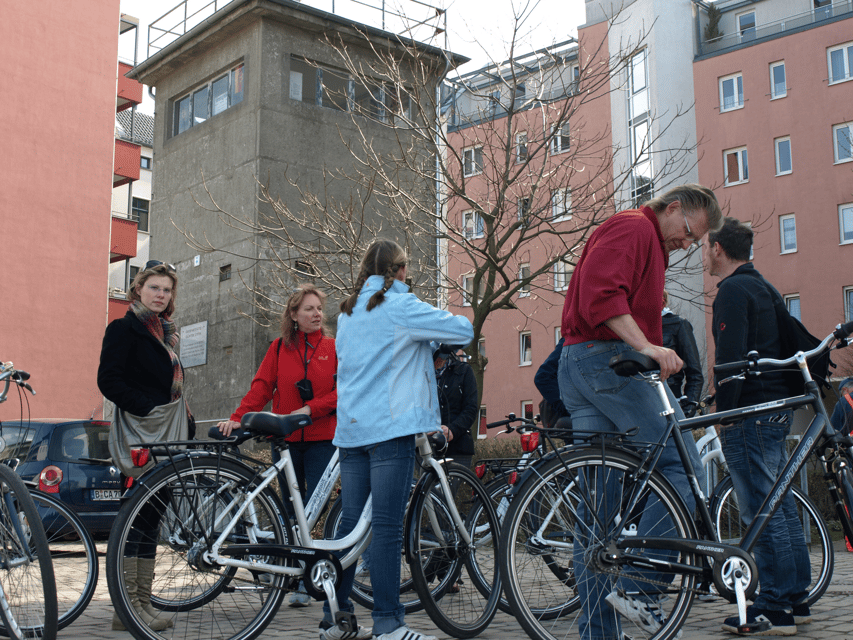
At $40 per person, this is a solid half-day value. The price includes a bicycle, the guide, fees, and a rain poncho when necessary. You are paying not just for bicycle use, but for a carefully connected route through places that are difficult to understand independently in the same time.
The bicycle matters because renting one on your own would not provide the route or historical context. You could visit Brandenburg Gate, Checkpoint Charlie, and Bernauer Straße separately, but linking them with the less obvious stops would take more planning and map work.
The small group also improves the value. A maximum of eight participants gives you a better chance to hear the guide clearly and ask questions. A minimum of three means the tour may not operate as a private ride for one or two people, so keep the group requirement in mind when planning.
You pay separately for food and drinks. Bring a passport or ID card, sunglasses, a sun hat, and a camera. Large bags and luggage are not allowed, which makes sense on a bicycle but means you should not arrive with your main suitcase.
The tour runs in all weather. On rainy days, a poncho is provided. You should still dress for the forecast, since a four-hour ride is a long time to spend in cold wind or steady rain.
Free cancellation is available up to 24 hours before the activity, and you can reserve now and pay later. These options help if your Berlin schedule is still changing, but the central decision is more basic: can you follow a German-speaking guide while cycling for four hours?
Who will enjoy this ride most
I would choose this tour if you want a clear story of the Berlin Wall rather than a short visit to one preserved fragment. It suits history-minded visitors, first-time Berlin visitors who want a strong orientation, and people who prefer active sightseeing to standing in museum rooms.
It is also a good fit for families with teenagers. The cycling keeps the day moving, while the stories give older children a way to understand the city’s recent past. The subject matter includes deaths and failed escape attempts, so you should prepare younger participants for serious material.
You may prefer another option if you want an English-language tour, dislike cycling in poor weather, need to carry a large bag, or want a relaxed ride with few stops. The tour is informative and story-led, not a simple recreational bicycle outing.
The German language requirement is the biggest practical limitation. The tour’s quality depends on the explanations, and the best parts are the connections between locations. Book it only if you can comfortably follow a live guide in German.
Should you book the Berlin Wall cycling tour?
Book it if you want to cover a large stretch of Berlin’s former border in one well-organized morning or afternoon. The route includes the famous sights, but its real strength is the less obvious material: Bornholmer Straße’s first crossing, the former death strip, Bernauer Straße, Invalid Cemetery, the Günter Litfin Memorial, and the Parliament of the Trees.
The $40 price is fair for four hours with a bicycle and a small group. Ferenz’s personal connection to the period can add something that a standard textbook account cannot, while the high rating and repeated praise for clear, friendly explanations support the tour’s appeal.
Skip it if you need English commentary, want a short and easy ride, or are carrying luggage. For everyone else, this is a practical way to see how the Wall shaped Berlin, then disappeared into the city around it.
FAQ
Where does the Berlin Wall cycling tour begin?
Meet at Berlin Bike Tour, 75 Bornholmer Straße, Berlin 10439.
How long does the tour last?
The cycling tour lasts four hours.
How many people are in the group?
The group has a minimum of three participants and a maximum of eight.
What language is the tour conducted in?
The live tour guide speaks German.
What is included in the price?
The price includes a bicycle, fees, a city guide, and a rain poncho when necessary.
What should I bring, and what cannot I bring?
Bring a passport or ID card, sunglasses, a sun hat, and a camera. Luggage and large bags are not allowed.
More Small-Group History Tours in Berlin
- London Small Group Tour of Historical Pubs
★ 5.0 · 10,422 reviews - Boston: Freedom Trail History Small Group Walking Tour
★ 5.0 · 6,450 reviews - Madrid Tapas & Taverns Small Group Food & History Tour
★ 5.0 · 2,664 reviews - Hidden Alleyways and Historic Sites Small-Group Walking Tour
★ 5.0 · 2,335 reviews
More History Bike, Segway and Tuk-Tuk Tours in Berlin
- Berlin (E)Bike Tour Historical Highlights in Small groups
★ 4.5 · 24 reviews - Historical Singapore Bike Tour on Full-Sized Bicycles
★ 5.0 · 1,421 reviews - Charlotte’s Ultimate Southern Charm Historical City Cart Tour
★ 5.0 · 1,347 reviews - Barcelona: 2.5-Hour Bike or E-Bike Historical Tour
★ 4.5 · 1,262 reviews
Latest history tours reviewed in Berlin
- Berlin: History and Sightseeing with Kids (Free for Kids)★ 4.9 · 19 reviews
- Berlin: Nazi History Walking Tour★ 4.8 · 33 reviews
- Berlin: Urbex Abandoned Places & History Tour★ 4.8 · 18 reviews
- Berlin: Historic Boat Sightseeing City Center Tour★ 4.5 · 415 reviews
- Berlin: Historical Sights & Berlin Wall Tour with a Berliner★ 5.0 · 62 reviews
- Berlin: Guided Craft Beer & Cultural Tour With Snacks★ 5.0 · 68 reviews
- Berlin (E)Bike Tour Historical Highlights in Small groups★ 4.5 · 24 reviews
- Berlin: Historic Center Walking Tour with a Real Berliner★ 5.0 · 134 reviews
Berlin History Tours, compared.
Berlin: 3-Hour World Heritage Cruise to Potsdam
Read our review →
Berlin: History of the Third Reich Guided Walking Tour
Read our review →
Berlin Private Complete History All Day Walking Tour
Read our review →
Berlin: Cold War & Berlin Wall History Guided Bike Tour
Read our review →
Berlin: Historic Boat Sightseeing City Center Tour
Read our review →
Small group Potsdam: A Journey Through History and Palaces
Read our review →Browse the lists this tour appears in