
Review · BARCELONA
Barcelona: 2.5-Hour Bike or E-Bike Historical Tour
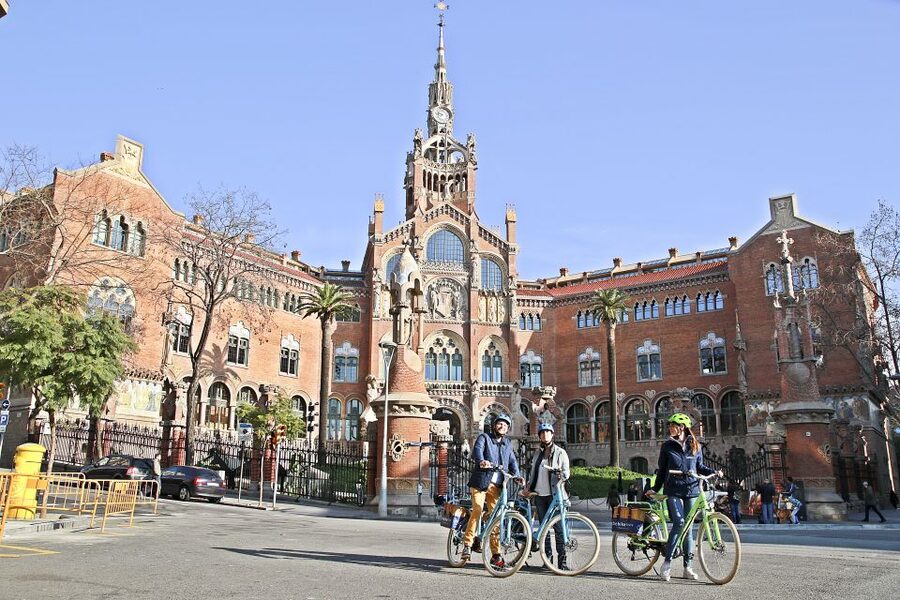
Barcelona’s Gaudí sights make far more sense when you link them by bicycle. This 2.5-hour ride connects the Arc de Triomf, El Born, Casa Batlló, La Pedrera, and Sagrada Familia without asking you to spend the day underground or on crowded buses. You also get a look at Casa Vicens and the streets of Gràcia, where Barcelona feels more local.
I like the choice between a regular bicycle and an easy-to-handle e-bike, especially for the few uphill sections. I also like the small-group format, with two to 15 people per guide, plus multilingual guides such as Sergio, Peter, Marina, and Alex. The main drawback is time: most sights are viewed from outside, and the route packs a lot into one morning or afternoon.
Key points at a glance
- Gaudí’s major façades in one ride: See Casa Batlló, La Pedrera, Casa Vicens, Casa Calvet, and Sagrada Familia from the streets.
- E-bike help where it matters: The motor makes starts after traffic lights and the uphill stretches around Gràcia easier.
- A useful mix of Barcelona: The route joins the monumental Arc de Triomf with El Born, the old city, Passeig de Sant Joan, and modernist avenues.
- Small groups keep the ride manageable: Groups range from two to 15 people per guide, with private tours also available.
- A practical first-day orientation: The route covers many headline sights, helping you decide which interiors deserve a separate visit.
- Good guide flexibility: Guides including Peter and Marina have been praised for adjusting pace, answering questions, and sharing food and shopping suggestions.
Why a bicycle is a smart way to meet Gaudí
Barcelona’s famous modernist buildings are scattered across several neighborhoods. Walking between them takes time, while a taxi gives you little sense of how the city fits together. A bicycle lets you watch the streets change as you move from the old quarters toward Gràcia and the Eixample.
The route is not simply a collection of photo stops. You begin near the Arc de Triomf, pass through Parc de la Ciutadella and El Born, cross the central old city, then follow major avenues toward Gaudí’s best-known works. That progression gives you a useful feel for Barcelona’s layout.
At $28 per person, the tour offers solid value if you want an introduction rather than a full architectural study. Your fee covers the bike, or e-bike if selected, a local guide, helmet, insurance, and a bottle of water. Since admission to the interiors is not listed, think of this as a guided exterior tour and city orientation, not a substitute for visiting Sagrada Familia or Casa Batlló inside.
The e-bike option is worth considering if you are not a regular cyclist. One rider described the hills as manageable with electric assistance, and another noted that restarting after traffic lights felt smooth. A regular bike can work too, since much of the route is described as fairly flat, but the electric motor gives you a little more breathing room.
More History Bike, Segway and Tuk-Tuk Tours in Spain
- Barcelona Historical 3-Hour Bike Tour
★ 4.7 · 222 reviews - Madrid Historical Tour with Local Guide in Eco Tuk Tuk Private
★ 5.0 · 876 reviews - San Sebastian E-bike trour: Basque History and Cultural.
★ 5.0 · 367 reviews
Starting beneath the Arc de Triomf
The meeting point is the activity provider’s office at Passeig de Lluís Companys, 10. The easiest arrival is by metro to Arc de Triomf on the red L1 line. From the station, walk about three minutes along the broad Passeig de Lluís Companys toward Passeig de Sant Joan, with the office on the left.
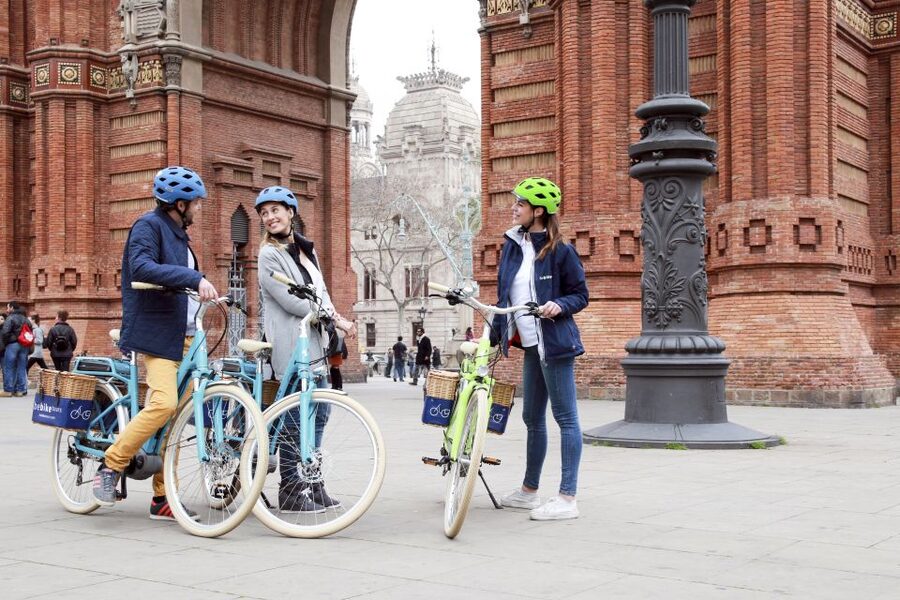
The Arc de Triomf is a fine opening sight. Built in a neo-Mudéjar style, it is less military-looking than many triumphal arches and forms a grand gateway into the city. You will have a photo stop and a short introduction before setting off.
This starting point is practical as well as scenic. You are close to Parc de la Ciutadella, and the return is to the same office. That means you do not need to work out a new route after the ride, which is handy if you have dinner plans or another booking.
Your guide will give you the basic riding instructions and helmet before the group leaves. Small groups range from two to 15 people per guide. A private option is also available if you want more control over the pace or questions.
Parc de la Ciutadella and the edge of El Born
The first section leads into Parc de la Ciutadella, one of the city’s most pleasant green spaces. The fountain has an Italian-inspired design, and a young Gaudí may have contributed to parts of it. The wording matters here: this is a possible connection, not a building you should treat as a confirmed Gaudí masterpiece.
You get a guided look and some free time in the park. That pause helps ease you into the ride before the streets become busier. It also gives you a chance to take photos without trying to balance a camera while moving.
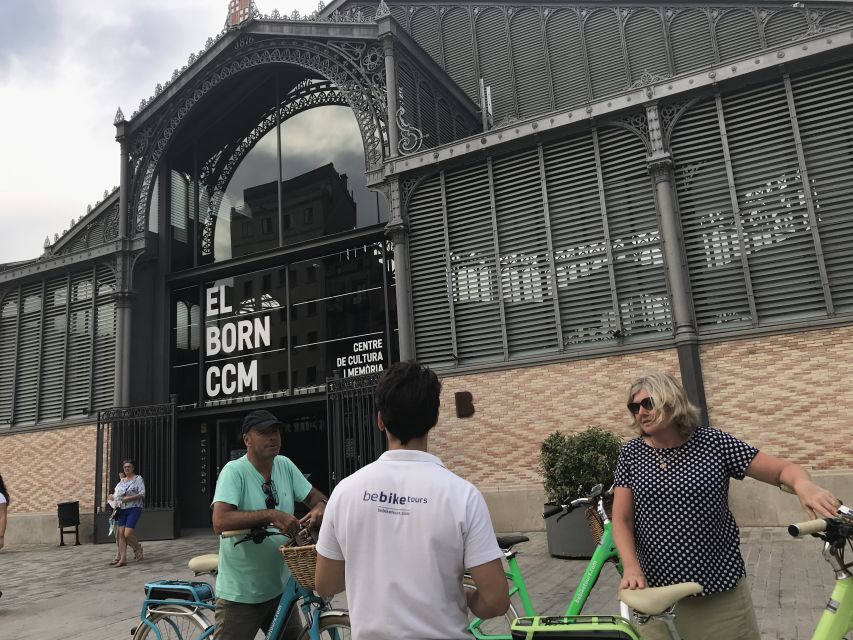
From the park, the route continues toward El Born. This district once served as a seaside retreat for medieval aristocracy and now has a more intimate old-city feel than the broad avenues of the Eixample. You pass the Mercat del Born, a handsome former market building, and the Basilica of Santa Maria del Mar, often called the cathedral of the sea.
The route also reaches Plaça Sant Jaume, the civic heart of Barcelona’s old city. Here, the emphasis is on seeing and hearing about the setting from the bicycle rather than stopping for a long museum-style visit. Keep your expectations clear: you are collecting context and views, not spending twenty minutes inside every church or landmark.
Casa Calvet is another Gaudí stop associated with this part of the route. It was designed as a residential and commercial building and was declared a Place of Cultural Interest in 1969. It is less famous than Casa Batlló, but that is part of its appeal. You can see Gaudí working within a more conventional urban building, rather than only in his wilder forms.
From the old city to Gràcia
The change from El Born to the modern quarter of Gràcia is one of the ride’s most useful features. You move from older lanes and civic squares toward streets shaped by Barcelona’s expansion beyond the medieval walls.
Gràcia was once a separate village and remains one of Barcelona’s most distinctive districts. The tour passes through Vila de Gràcia, described as the area’s administrative and commercial center. You see its 33-meter bell tower, topped by the famous Marieta bell.
This section has a more everyday feel than the formal monuments. You are not only chasing Gaudí façades. You are also seeing a neighborhood of local squares, shops, and regular city life, though the exact amount of riding through each street can vary with traffic and the guide’s route.
The e-bike becomes useful here. The ride includes some uphill sections, though one experienced rider found the route comfortable and another felt a regular bicycle would be suitable because most of the course is flat. If you have not cycled recently, I would choose the e-bike. It costs more only if the selected option carries a surcharge, and the extra help can make the ride more enjoyable.
More History Bike, Segway and Tuk-Tuk Tours in Barcelona:
- Historical Singapore Bike Tour on Full-Sized Bicycles
★ 5.0 · 1,421 reviews - Charlotte’s Ultimate Southern Charm Historical City Cart Tour
★ 5.0 · 1,347 reviews - Asheville Historic Downtown Guided Electric Bike Tour with Scenic Views
★ 5.0 · 1,234 reviews - Private Guided Historic Electric Cart Tour of St. Augustine
★ 5.0 · 1,194 reviews
Casa Vicens and the first Gaudí mood
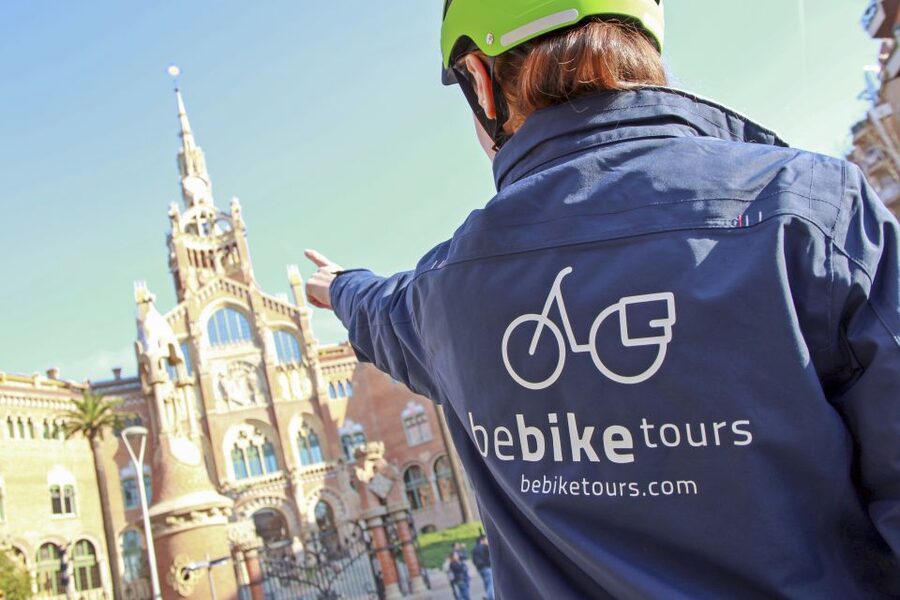
Casa Vicens is one of the most interesting stops for understanding Gaudí’s development. It is considered one of the first Art Nouveau buildings and was the first house he designed. Its decorative treatment gives you an early look at the colors, patterns, and unusual forms that later became more daring.
You get views of the building rather than a listed interior visit. That is enough to appreciate its place in the route, but you should plan a separate admission if you want to explore the rooms. The tour’s job here is to point out the building and explain why it matters.
The route then reaches the better-known modernist façades along Passeig de Gràcia. This is where Barcelona’s architectural competition becomes clear. Wealthy families commissioned eye-catching homes, and Gaudí’s work is set among other grand buildings rather than isolated in a park.
Casa Batlló and La Pedrera from the street
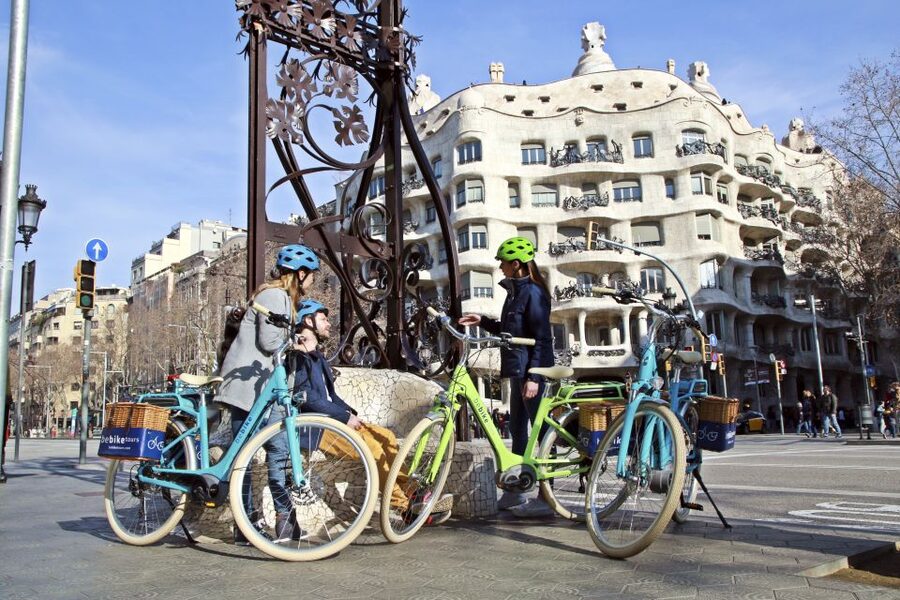
Casa Batlló is one of the ride’s main photo stops. Its curved shapes and colorful surface are easy to recognize, but a guide can help you notice details that get lost in a quick glance. You can stop for photographs and hear about the building while remaining outside.
The tour continues to Casa Milà, commonly called La Pedrera. Its stone exterior and sculptural rooftop make it very different from Casa Batlló. Seeing both close together helps you compare Gaudí’s changing approach: one façade feels more like a fantastical skin, while the other has a heavier, more carved appearance.
You will not have time to tour both interiors during this activity. That is the chief limitation for architecture fans. Still, the exterior stops are useful because they show how the buildings relate to the street, neighboring façades, traffic, and daily city life.
If you plan to visit one interior later, use the ride to decide which one interests you most. The guide can provide orientation, but the tour should not be treated as an admission ticket or an in-depth visit to either building.
Passeig de Sant Joan and Sagrada Familia
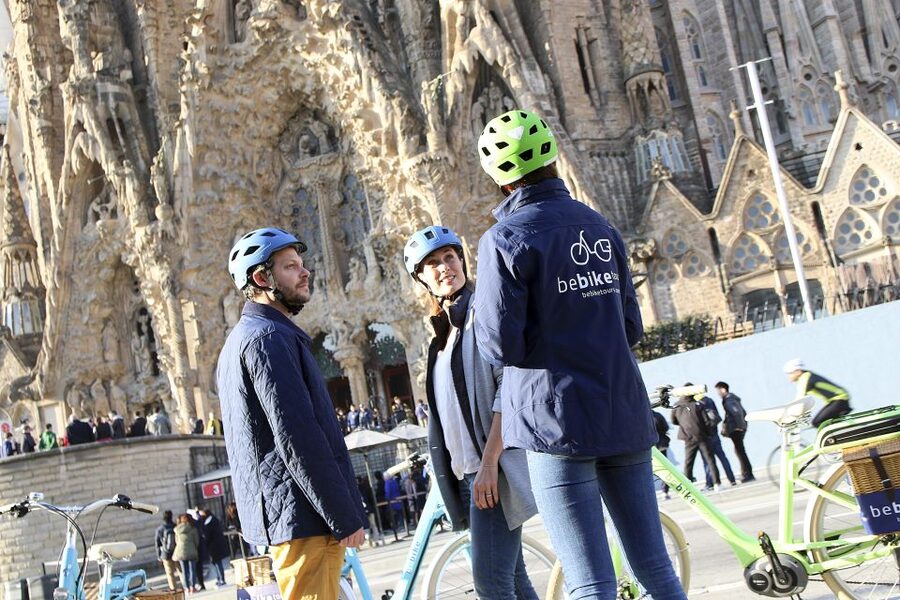
The final major stretch follows Passeig de Sant Joan toward Sagrada Familia. This broad route makes the e-bike especially comfortable, since you can cover ground without arriving worn out.
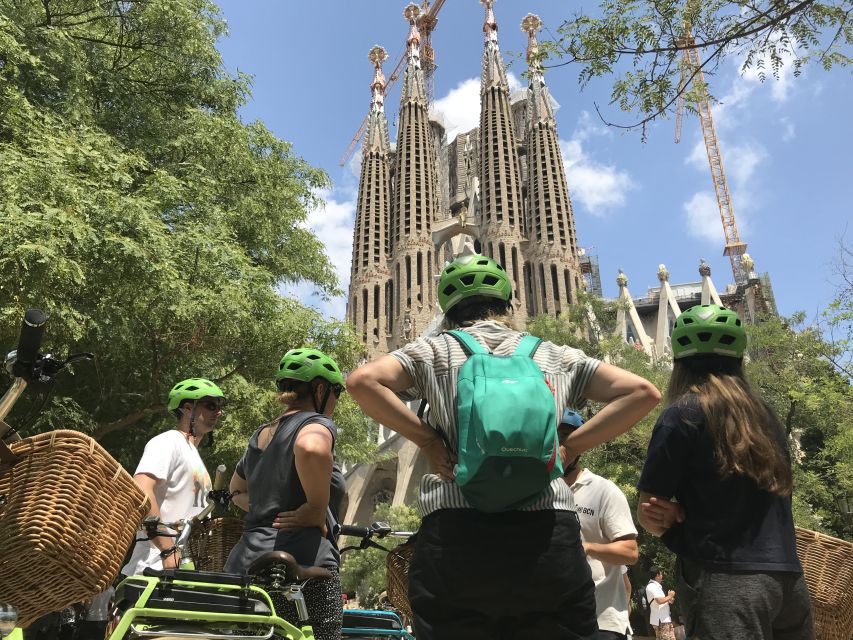
Sagrada Familia is the grand finish. Construction began in 1883 and continues today, making the basilica one of Barcelona’s most unusual works in progress. The tall spires and contrasting façades are best appreciated from several angles, and the route gives you time for photos and a guided explanation.
You get a free-time stop here, but the activity does not include entrance. If you want to see the interior, museum, or towers, arrange a separate visit and allow much more time than this tour provides. The bike ride is best for getting your bearings, understanding the exterior, and seeing how the basilica dominates its surrounding streets.
The return to Passeig de Lluís Companys completes the loop. You drop off the bikes at the same office where you began. The full activity lasts about two and a half hours, although traffic, group pace, and photo stops can affect the rhythm.
The guides make a real difference
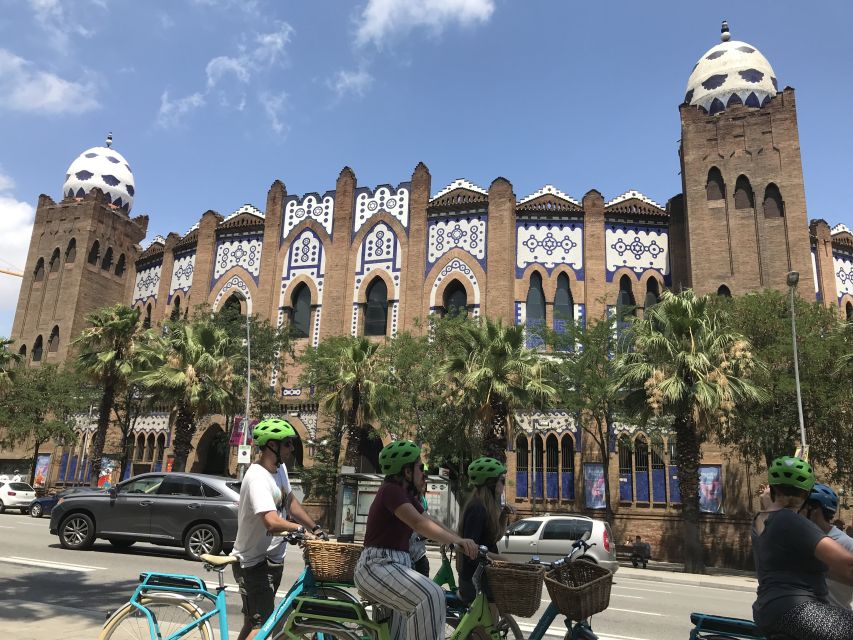
A city bike tour rises or falls with its guide. The named guides associated with this experience include Sergio, Peter, Sergey, Liuba, Alex, Marina, Maria, and others working in several languages. Their strengths are not identical, so your experience may depend on who leads your departure.
Sergio handled a serious bike problem by arranging for a mechanic to come out, allowing the group to wait at a nearby café rather than lose the whole outing. That is a useful sign of practical support, even though mechanical trouble is never something you want to plan around.
Peter guided a solo rider and adjusted the route to match that person’s interests and cycling ability, including a ride toward the beach. That kind of flexibility is more likely in a private or very small group than in a full departure of 15 people.
Marina was praised for a relaxed pace, clear information, and useful suggestions for places to visit after the ride. Alex also gave dining and shopping recommendations. These details matter because a good guide can turn a list of façades into a workable plan for the rest of your Barcelona stay.
The guides speak Spanish, English, French, German, Italian, Russian, Dutch, and Portuguese. Check the available language when booking. A tour is much more useful when you can follow the explanations without strain.
Family details and practical limits
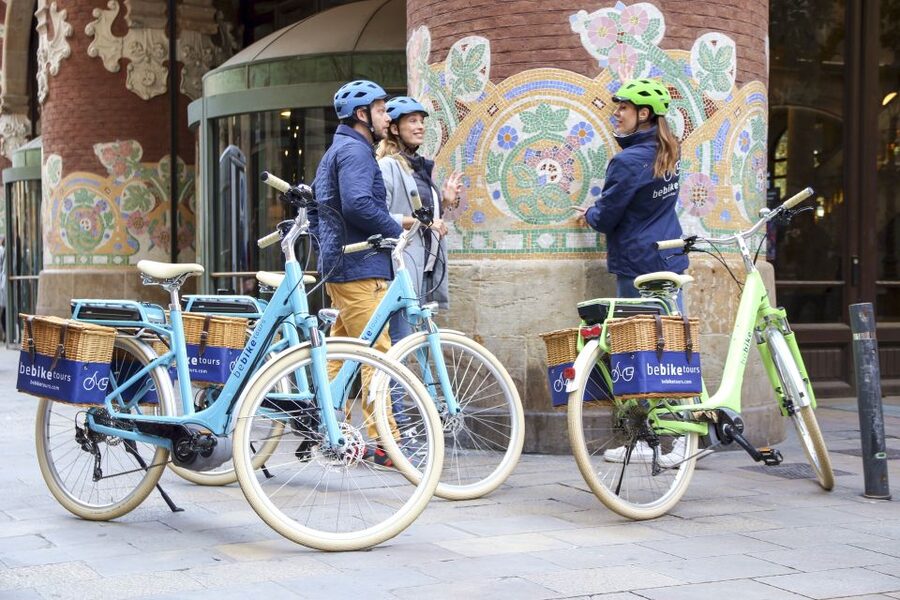
Children under six can join free in a child safety seat on a parent’s bike. Children up to 20 kilograms and 130 centimeters can also ride at no cost in the child seat. Children under two are not suitable for this activity.
The tour is not suitable for people with heart problems. Cycling in city traffic, even with electric assistance, still requires attention and some physical effort. If you are uncertain about your fitness, choose the e-bike and ask the provider about the specific departure.
Helmets, insurance, and water are included. The route uses city streets, so you should be comfortable riding in an urban setting and following the guide. The activity is not a quiet park cycle. You will be moving through Barcelona’s public streets, stopping at lights, and riding as a group.
Cancel up to 24 hours ahead for a full refund, and reserve now while paying later if you need flexible plans. Starting times vary, so check availability before building the rest of your day around the ride.
Who should book this Barcelona bike tour?
I would recommend it most strongly to first-time visitors who want to see a lot of Barcelona without spending a full day walking. It is also useful for people staying near the old city who want a quick orientation before choosing which buildings to visit inside.
Choose the e-bike if you are concerned about hills, restarting in traffic, or keeping up with a group. Choose the regular bike if you cycle often and want the simplest option. Families can benefit from the child-seat policy, but the under-two restriction and city riding make this unsuitable for very young children.
Architecture specialists may find the exterior-only format too brief. You will see many important buildings, but you will not study their interiors in depth. The best plan is to use the ride as a well-organized first look, then return independently to one or two favorites.
Should you book it?
Book this tour if you want a reasonably priced, efficient introduction to Gaudí and Barcelona’s central districts. The strongest points are the logical route, helpful e-bike option, multilingual guides, and mix of famous buildings with less obvious stops such as Casa Calvet and Casa Vicens.
Skip it if you dislike riding in city traffic or want long interior visits. For most visitors, though, $28 is a fair price for the bike, guide, helmet, insurance, water, and two and a half hours of city orientation. Pick the e-bike if you want an easier ride, and try to choose a small group if personal questions and a flexible pace matter to you.
FAQ
Where does the Barcelona bike tour start?
The tour starts at the activity provider’s office at Passeig de Lluís Companys, 10, near Arc de Triomf.
How do I reach the meeting point by metro?
Take the red L1 line to Arc de Triomf. Walk about three minutes along Passeig de Lluís Companys toward Passeig de Sant Joan, with the office on the left.
How long does the tour last?
The tour lasts 2.5 hours and returns to Passeig de Lluís Companys, 10.
Is the tour offered in English?
Yes. Live guides are available in Spanish, English, French, German, Italian, Russian, Dutch, and Portuguese.
Does the tour include an electric bike?
You can select a regular bicycle or an electric bicycle when booking. The included equipment depends on the option you choose.
Which Gaudí buildings can I see?
The route includes Casa Calvet, Casa Vicens, Casa Batlló, Casa Milà, also known as La Pedrera, and Sagrada Familia. The buildings are viewed from the outside, and the tour includes guided explanations and photo stops.
Can young children join?
Children under six can join free in a child safety seat on a parent’s bike. Children up to 20 kilograms and 130 centimeters can also ride free in the child seat. Children under two are not suitable for the activity.
What is included in the price?
The price includes the selected regular or electric bicycle, a local guide, helmet, insurance, and a bottle of water. A full refund is available when you cancel at least 24 hours in advance.
Latest history tours reviewed in Barcelona
- Barcelona Historic Guided Tour★ 4.8 · 24 reviews
- Private Jewish Heritage Journey by Barcelona Dreaming★ 4.8 · 383 reviews
- Barcelona Tapas Tour, Taverns, History & Local Culture★ 5.0 · 25 reviews
- Barcelona: Market, Tasty Tapas/Food and Gothic History Tour★ 4.7 · 48 reviews
- Barcelona Historical 3-Hour Bike Tour★ 4.7 · 222 reviews
- Barcelona & Chocolate Amatller History and Culture + Activity and Tasting★ 4.9 · 173 reviews
- Barcelona: The Spanish Civil War Historical Walking Tour★ 4.9 · 239 reviews
- Barcelona: 3-Hour Sips, Sites & Bites Food & History Tour★ 4.8 · 33 reviews
Barcelona History Tours, compared.

Barcelona: Tapas Walking Tour with Food, Wine, and History
Read our review →
Barcelona Erotic Museum – Explore Art, History & Fun
Read our review →
Private Jewish Heritage Journey by Barcelona Dreaming
Read our review →
Tarragona and Sitges Small Group Tour – Roman History & Culture
Read our review →
Barcelona 1.5h Private Old Town, Gothic & Ramblas Walking Tour
Read our review →
Barcelona: The Spanish Civil War Historical Walking Tour
Read our review →
Barcelona: Tipsy Tapas & History Tour in the Gothic Quarter
Read our review →Browse the lists this tour appears in