
Review · HIROSHIMA
Miyajima Half-day Trip Historical Walking Tour
Miyajima’s famous red torii gate is only the beginning. This five-and-a-half-hour tour brings you from the ferry ride and tidal shoreline to Itsukushima Shrine, Daishō-in Temple, scenic parks, and the island’s food stalls. I like that the guide explains the spiritual meaning behind the sights instead of leaving you with a string of pretty photographs.
I also like the small maximum group of six. Guides such as Hika, Hiro, Eri, Yuji, Mariko, and Kiki have been praised for friendly conversation, good photo help, and flexible pacing. Lunch, shrine and temple admission, and tour photos are included, which makes the $109.43 price easier to justify.
The main drawback is that this is a walking tour with stairs, hills, and nearly six hours on your feet. The ferry costs an extra 500 yen round trip, food choices are limited for strict diets, and one serious complaint reported a guide failing to appear, so double-check your confirmation before setting out.
Key points to know before you book
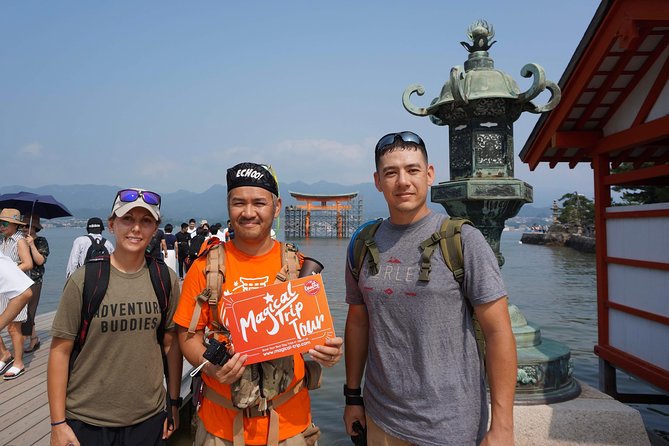
- The group is limited to six people, and some departures may feel almost private if few people book.
- The Ōtorii Gate, Itsukushima Shrine, and Daishō-in Temple give you three different ways to understand Miyajima’s religious traditions.
- A Hiroshima local lunch is included, with oysters and momiji dumplings among the featured foods.
- The ferry is not included, so add 500 yen for the round-trip crossing.
- The tour covers several stops on foot, including stairs and uphill sections near Daishō-in.
- Vegetarian and vegan meals are possible but limited, while gluten-free meals are not available.
Why this Miyajima walk is worth your time
Miyajima can be visited on your own without much trouble. The ferry is simple, the main shrine is easy to find, and Omotesando Street is right in the center. But the island’s meaning is harder to grasp from signs alone. This tour earns its keep by connecting the scenery to Japanese Shinto and Buddhist traditions.
You get more than a quick stop at the torii gate. You walk along the coast, enter Itsukushima Shrine, visit a major Buddhist temple, look into the island’s older buildings, and finish among local food stalls. That broad mix gives you a better sense of Miyajima as a living religious site, not just a famous photo stop.
The guide is central to the experience. Hika has been praised for patient explanations and making sure families see the main sights. Hiro is described as professional, friendly, and easy to talk with. Eri receives especially strong praise for her local knowledge, personal manner, and ability to add breaks when the hills and stairs become tiring.
Tours with Mariko, Kaori, Shun, Kiki, Yuji, and Tomohiro have also been described as warm and adaptable. Some small departures have ended up with only one or two participants, creating a private-tour feel without a private-tour price.
More History Walking Tours in Japan
- Tokyo: Imperial Palace and Shogun Historical Walking Tour
★ 5.0 · 2,251 reviews - Kyoto Gion: 2-Hour Geisha Culture & History Walking Tour
★ 5.0 · 1,186 reviews - Tokyo Castle & Imperial PalaceーShogun Walking Tour
★ 4.7 · 1,068 reviews
Starting at Miyajimaguchi and crossing the Seto Inland Sea
The meeting point is at 1-chōme-3-26 Miyajimaguchi in Hatsukaichi, Hiroshima. From there, the group boards the ferry to Miyajima. The crossing is part of the pleasure of the day, with open views across the Seto Inland Sea and the first sight of the island’s famous Ōtorii Gate.
The ferry fee is 500 yen round trip and is paid separately. That is a small extra cost, but it is easy to overlook when comparing tour prices. Allow a little breathing room at the meeting point so you are not rushing onto the boat.
The guide handles the transition from mainland to island, which is useful if you are unfamiliar with the ferry system or want to start hearing about Miyajima before you reach shore. The experience begins with a sense of arrival rather than with a crowded street and a map in your hand.
Walking the coast to the Ōtorii Gate
After arriving, the route follows the coast toward the Ōtorii Gate and Itsukushima Shrine. This is one of the best parts of the tour for photographs, since the gate is framed by the water and the island’s shoreline.
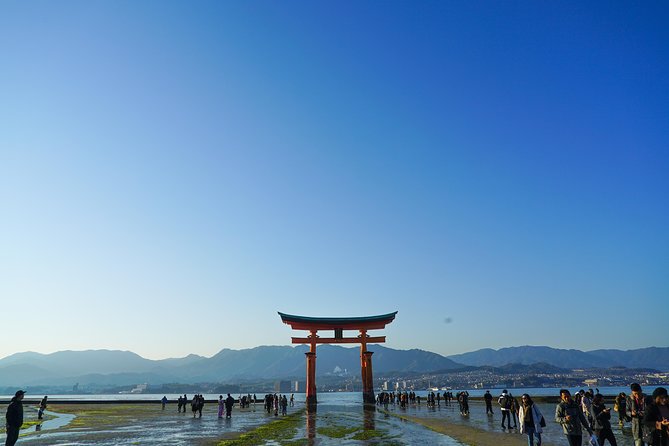
Tides matter here. At low tide, you may be able to walk close to the gate and see its weathered structure from below. One especially memorable account described being able to touch the gate during a low tide. That cannot be promised on every departure, but it shows why checking the tide can add another layer to your visit.
At high tide, the gate appears to float offshore, which is the classic view. At low tide, the experience becomes more physical and close-up. Either way, your guide can help explain why the gate is such an important threshold between ordinary space and the sacred grounds of Itsukushima Shrine.
The shoreline walk is also a good reminder to bring sensible shoes. Miyajima is scenic, but this is not a ride-and-stop excursion. You will be walking on varied surfaces for much of the day.
Itsukushima Shrine and the meaning behind the architecture
Itsukushima Shrine is the tour’s central cultural stop. The complex was built during the Heian period, from 794 to 1192, and its design was made to work with the changing tides. The buildings, walkways, and water create the impression that the shrine floats when the sea is in.
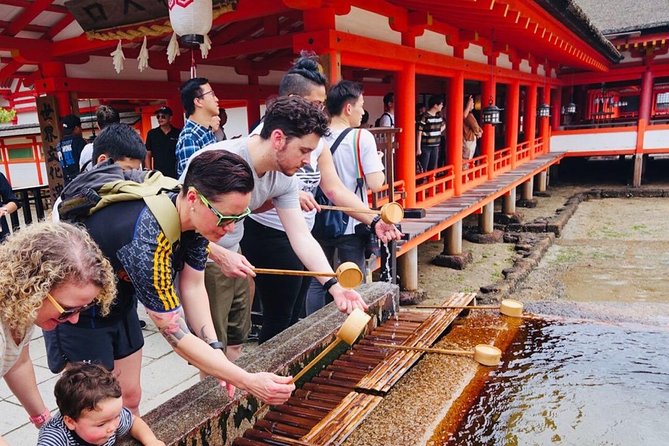
The guide helps you look beyond the bright vermilion paint. You can ask about the role of the shrine, the relationship between land and water, and the customs connected with entering a sacred site. This is where the tour’s spiritual focus becomes most useful.
You will have time for photographs, including pictures with the shrine as a backdrop. That sounds simple, but a guide can help with positioning and timing, especially when you are trying to photograph both the architecture and the surrounding water.
Itsukushima Shrine is also likely to be one of the busier parts of the visit. The tour does not remove the crowds, but it gives you a better way to use your time there. Instead of wandering from one hall to another, you have someone pointing out what matters and answering questions as you go.
Same old streets, another chapter:
- Kyoto: Fushimi Inari, Kinkakuji, Bamboo Grove 1 Day Bus Tour
★ 4.8 · 4,316 reviews - World Heritage Shirakawa-go and Experience Tours from Kanazawa
★ 5.0 · 4,049 reviews - World Heritage Kyoto & Nara Uji Authentic Matcha Experience
★ 5.0 · 1,573 reviews - Kanazawa: World Heritage Shirakawa-go Morning Guided Tour
★ 4.9 · 988 reviews
Daishō-in Temple, the quieter highlight
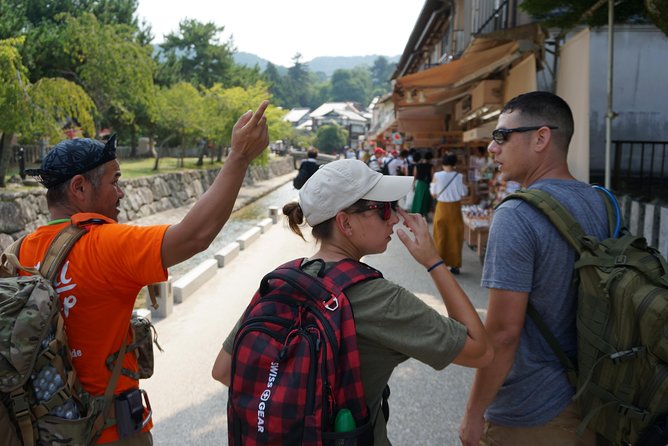
For many people, Daishō-in Temple becomes the emotional high point of the tour. It is the main temple of the Omuro school of Shingon Buddhism and sits higher on the island, with stairs and uphill walking along the way.
The temple is known for its many statues and devotional details. Your guide explains the Buddhist figures and the temple’s role, helping you understand what you are seeing rather than treating the statues as decoration. Several departures have singled out Daishō-in as their favorite stop.
The climb is worth taking seriously. You may need breaks, especially in summer heat or after a full morning of walking. Guides such as Eri have been praised for building in pauses, and that kind of flexibility matters more here than a rigid schedule.
Rain does not necessarily ruin this stop. Miyajima can be beautiful under cloud or drizzle, and wet stone and temple roofs create a quieter mood. Still, bring rain protection and wear shoes with a good grip. The route includes stairs, and the surfaces may become slick.
Momijidani Park and Senjokaku
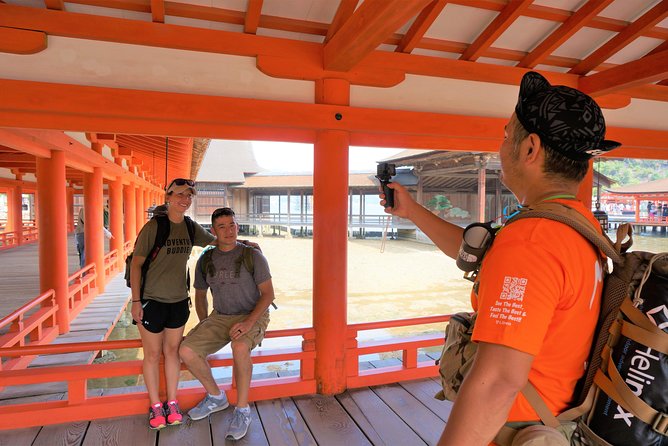
Momijidani Park provides a change of pace after the shrine and temple visits. This is a photo stop, with a chance to enjoy trees, open space, and the natural side of Miyajima. In autumn, the park’s maple trees are especially appealing, though the tour information does not promise a particular seasonal display.
Senjokaku is the common name for the main hall of Toyokuni Shrine, also called Hokoku Shrine. The large wooden hall has a different feel from the more formal corridors of Itsukushima Shrine. Your guide gives context for the building and explains why it belongs on a Miyajima visit.
These stops are not long, about 30 minutes each. That is enough for photographs and a clear explanation, but not enough for a slow, independent exploration of every corner. If you prefer to linger at one site for a long time, the group schedule may feel brisk.
On the other hand, the compact timing lets you cover several different parts of the island in one half-day. You avoid spending the whole visit at one famous gate and miss the wider cultural picture.
Lunch on Omotesando Street
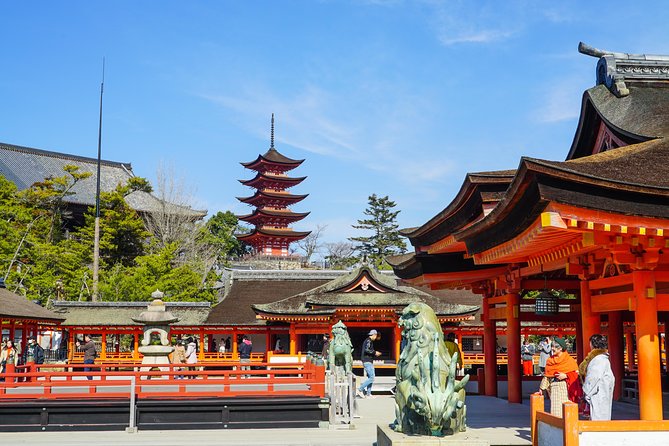
Food is one of the tour’s practical strengths. Lunch is included and focuses on Hiroshima and Miyajima specialties, with fresh or grilled oysters and momiji dumplings among the foods associated with the stop. Some tours have also included dishes such as fried oysters and unagi, or ended with soft-serve ice cream and a visit to a favorite café.
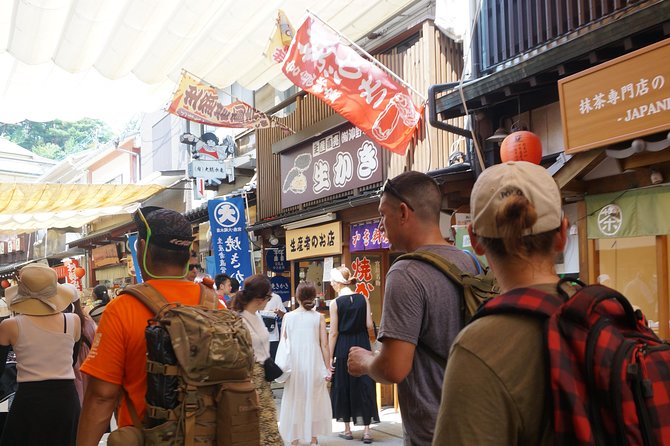
Omotesando Street is lined with food stalls and souvenir shops. It is the liveliest commercial part of the route, and it gives you a chance to see how Miyajima serves both local tastes and sightseeing demand. Your guide can point you toward worthwhile snacks instead of leaving you to choose at random.
The food arrangements require some planning. Vegetarian and vegan choices are available but limited. Gluten-free lunch is not available, and the operator cannot guarantee an allergy-free meal because outside kitchens prepare the food. Tell the operator about allergies or dietary needs at least one day before the tour. Same-day requests cannot be accommodated.
Additional food and drinks are available for purchase, but they are not included. Bring some yen if you want to sample more than the planned lunch.
What the five-and-a-half-hour schedule feels like
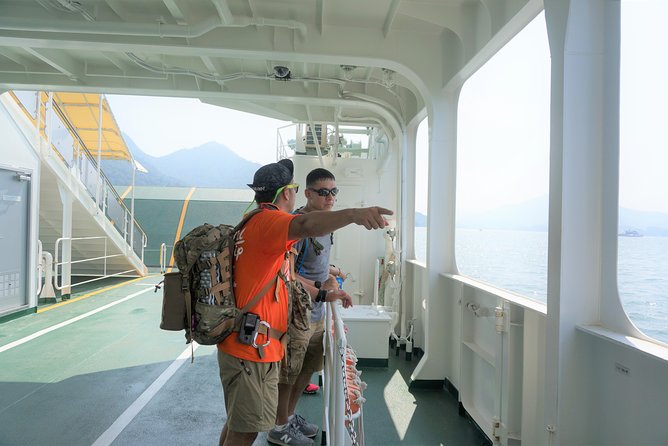
The published duration is about 5 hours and 30 minutes. That gives the guide enough time to combine transport, major religious sites, a meal, photographs, and street food without turning the day into a race.
The trade-off is physical effort. You will walk along the coast, through shrine grounds, up toward Daishō-in, across park paths, and through Omotesando Street. Summer in Japan can be very hot and humid, with reported highs reaching 40°C, or 110°F. Carry water, wear a hat, and take the heat seriously.
Winter can also be cold, with possible lows around -5°C, or 20°F. Dress for the forecast rather than assuming an island day will be mild. Comfortable walking shoes are more important than stylish footwear.
Most people can take part, and all ages are welcome. Still, anyone with limited stamina should tell the guide what pace is comfortable. The small group size makes it easier to ask for a pause than on a large coach excursion.
Is $109.43 a fair price?
At $109.43 per person, this is not the cheapest way to reach Miyajima. You could take the ferry and explore the main streets independently for much less. The value depends on how much you want interpretation, food guidance, and a carefully arranged route.
The price includes entrance fees to the shrines, temples, and museum included in the route, a certified MagicalTrip guide, tour photos, and a Hiroshima local lunch. The 500-yen ferry fee is extra, as are additional foods and drinks.
For a first visit, I think the price is reasonable if you want cultural context and a small group. You are paying to save time, avoid guesswork, and understand why the sites matter. If you already know Miyajima well or prefer to wander at your own speed, the cost may feel high.
The strongest value comes when your group is small. A six-person maximum allows questions and personal attention. On quieter dates, the tour may become a private or near-private experience, as happened for several departures. That can make the price feel surprisingly good.
Weather, food, and booking cautions
The tour operates in conditions that can change the mood without necessarily spoiling the day. Rain may obscure the classic torii photograph, but it can also reduce the crowds and make the temple grounds feel calm. Bring a compact rain jacket or umbrella if the forecast looks uncertain.
The operator offers free cancellation when you cancel at least 24 hours before the start time. Changes or cancellations made within 24 hours are not accepted for a refund. Cutoff times use local time in Japan.
One booking problem has been reported in which the guide did not arrive and the reservation had not been checked properly. That appears to be an isolated but important warning. Keep your confirmation available, verify the meeting details, and contact the operator promptly if anything looks unclear before departure.
Who should book this Miyajima tour?
I would choose this tour if you are visiting Miyajima for the first time and want more than a photo at the torii gate. It suits couples, families, solo visitors, and small groups who enjoy walking and want a guide to explain Shinto and Buddhist traditions in plain language.
It is also a good fit if food is part of your sightseeing. The included lunch and stops along Omotesando Street help you taste the island without building your own plan.
I would think twice if you need a gluten-free meal, have a severe food allergy, dislike stairs, or want a completely flexible day. The route covers a lot, and the island’s hills and weather can test your energy.
Should you book it?
Book this tour if you want a well-rounded first look at Miyajima, with the Ōtorii Gate, Itsukushima Shrine, Daishō-in, local food, and a small group led by a real guide. The best feature is not simply the number of stops. It is the way the guide links the shoreline, shrine buildings, Buddhist statues, and everyday island food into one understandable visit.
Skip it if you are comfortable organizing the ferry and sights yourself, or if dietary restrictions make the included meal risky. For most first-time visitors who value context, personal attention, and an easy route through the island, this is a strong half-day choice.
FAQ
How long does the Miyajima walking tour last?
The tour lasts approximately 5 hours and 30 minutes.
Where does the tour begin?
It begins at 1-chōme-3-26 Miyajimaguchi, Hatsukaichi, Hiroshima 739-0411, Japan.
Does the tour include the ferry to Miyajima?
No. The round-trip ferry costs 500 yen, or about $4, and is paid separately.
What sights are included?
The route includes the Ōtorii Gate, Itsukushima Shrine, Daishō-in Temple, Momijidani Park, Senjokaku, and Miyajima Omotesando Shopping Street.
Is lunch included?
Yes. A Hiroshima local lunch is included, with local foods such as oysters and momiji dumplings featured on the tour.
Are vegetarian or vegan meals available?
Vegetarian and vegan options are available but limited. Gluten-free lunch is not available.
How large is the tour group?
The tour has a maximum of six participants.
What happens if I need to cancel?
You can receive a full refund if you cancel at least 24 hours before the start time. Cancellations or changes made less than 24 hours in advance are not accepted for a refund.
More Day Trips in Japan
- From Tokyo: Nikko World Heritage Site Private Full-Day Trip
★ 4.9 · 243 reviews - Tokyo: Nikko World Heritage Private Day Trip Hotel Pick-up
★ 4.8 · 145 reviews - 1-Day Tour from Nagoya: Hiking the Historic Nakasendo Trail
★ 4.9 · 34 reviews - From Bangkok: Ayutthaya Historical Park Guided Day Trip
★ 4.6 · 3,020 reviews
More Half-Day Tours in Japan
- Nara: Half-Day UNESCO Heritage & Local Culture Walking Tour
★ 4.8 · 250 reviews - Lima’s Vibrant Heritage: Exploring the City’s Landmarks Half-day
★ 4.5 · 581 reviews - From Ho Chi Minh: Cu Chi Tunnels Half-Day History Tour with Guide
★ 5.0 · 480 reviews - Naxos: Half-Day Guided History and Culture Sightseeing Tour
★ 4.7 · 435 reviews
Latest history tours reviewed in Japan
- Authentic Sapporo: Nijo Market Seafood Lunch & History Tour★ 4.8 · 20 reviews
- Asakusa: 3.5-hour Big-picture History Walk★ 4.7 · 39 reviews
- Asakusa: A Big-picture History Walk to Know Japan★ 4.6 · 77 reviews
- 2.5-Hour Nagoya Tour: Castle History, Local Food & City View★ 4.5 · 36 reviews
- 1-Day Tour from Nagoya: Hiking the Historic Nakasendo Trail★ 4.9 · 34 reviews
- From Tokyo: Nikko World Heritage Sight Full Day Private Tour★ 4.9 · 127 reviews
- From Tokyo: Nikko World Heritage Site Private Full-Day Trip★ 4.9 · 243 reviews
- Tokyo: Nikko World Heritage Private Day Trip Hotel Pick-up★ 4.8 · 145 reviews
Hiroshima History Tours, compared.
Hiroshima Historical Walking Tour – Why A-Bomb was Dropped
Read our review →
Hiroshima Peace (Heiwa) Walking Tour at World Heritage Sites
Read our review →
Hiroshima: History of Hiroshima Group Walking Tour
Read our review →Browse the lists this tour appears in