
Review · HIROSHIMA
Hiroshima Historical Walking Tour – Why A-Bomb was Dropped
Hiroshima’s most important story is not told at one monument. This 150-minute walk builds the setting step by step, from Gokoku Shrine and Hiroshima Castle to the Atomic Bomb Dome and Peace Memorial Park, so the bombing is placed in its military, political, and human context.
I like the clear route and the strong English guiding, especially when guides such as Chihiro, Thomas, Emi, and Chisa explain difficult subjects with care. I also like that the walk ends at the Peace Memorial Museum, where you can continue with more detail. The main consideration is emotional weight: this is a serious tour, and two and a half hours on foot may feel long in hot weather or rain.
Key points to know before you book
- The route explains why Hiroshima was chosen: Military history at Hiroshima Castle and Gokoku Shrine comes before the memorial sites.
- The tour ends at the Peace Memorial Museum: You can visit the museum immediately after the guided walk while the background is still fresh.
- Guides bring different perspectives: Chihiro and other Hiroshima-based guides offer local and family connections, while Thomas and other international guides explain the subject clearly for English-speaking visitors.
- The pace is thoughtful: The walk includes guided visits, photo stops, and short pauses rather than a rushed march between monuments.
- It costs $35 per person: That is fair value if you want historical explanation, not just a list of memorials.
- It suits first-time visitors: You get an introduction to Hiroshima’s past, its culture, the bombing, and the city’s peace message in one outing.
Why the order of this Hiroshima walk matters
The clever part of this tour is its sequence. You do not begin with the most painful memorials and try to work backward. Instead, the route first explains Hiroshima as a city with military importance, then moves toward the destruction of August 6, 1945, and finally reaches the city’s peace message.
That order gives you a useful framework. The question in the title, why the atomic bomb was dropped on Hiroshima, cannot be answered by one sentence. You need to understand the city’s military role, Japan’s position during World War II, the intended effect of the bombing, and the human cost.
I appreciate that the route does not treat Hiroshima as only a place of tragedy. The tour also introduces the city before the bomb, its cultural identity, and the way it rebuilt itself around remembrance and peace.
More History Walking Tours in Japan
- Tokyo: Imperial Palace and Shogun Historical Walking Tour
★ 5.0 · 2,251 reviews - Kyoto Gion: 2-Hour Geisha Culture & History Walking Tour
★ 5.0 · 1,186 reviews - Tokyo Castle & Imperial PalaceーShogun Walking Tour
★ 4.7 · 1,068 reviews
Meeting at Gokoku Shrine
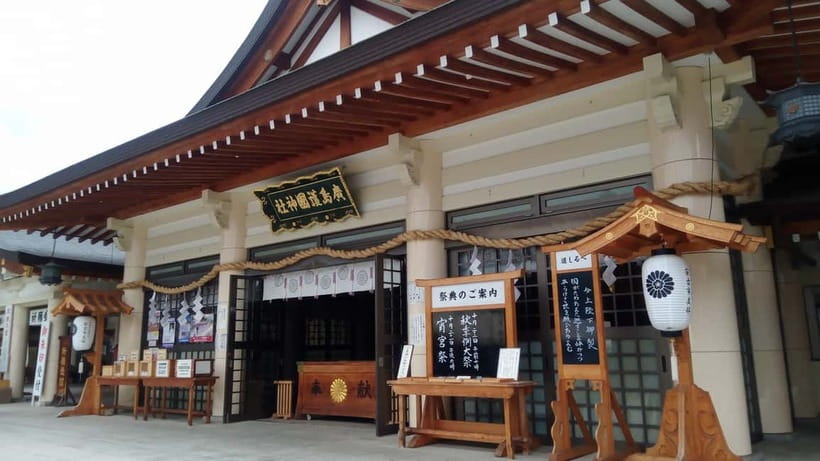
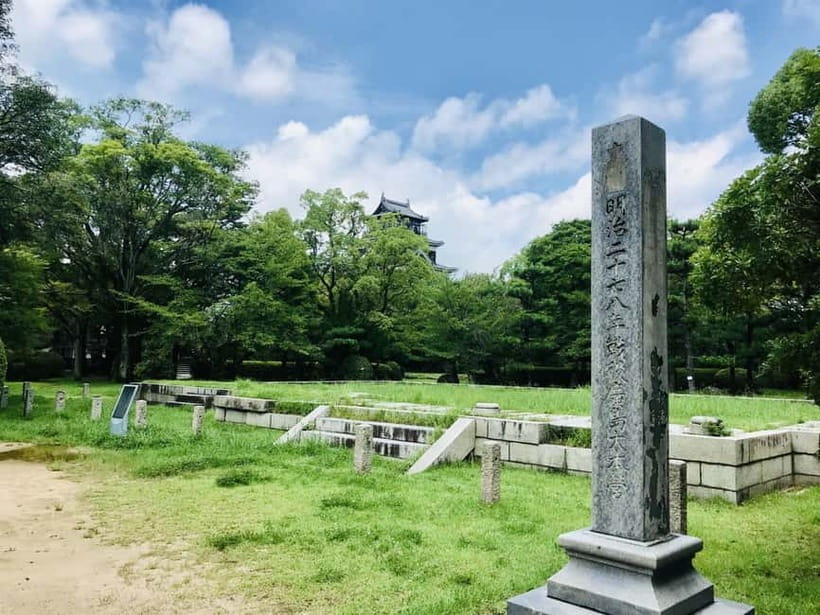
The tour begins at Hiroshima Gokoku Shrine, in front of the torii gate near the main hall. This is a practical meeting point inside the castle area, but allow enough time to find the correct torii gate. The shrine grounds provide a quiet opening for a difficult subject.
Gokoku Shrine is connected with the remembrance of people who died in war. Here, the guide begins explaining Hiroshima’s military background and the role of wartime memory in Japan. That starting point matters because it gives you more than the usual memorial-tour introduction.
You will hear about Hiroshima as a military center and about the people and institutions connected with the war effort. Guides use this first stop to set up the decisions that led to Hiroshima being considered a target.
This is also a good place to ask questions early. The subject quickly becomes complex, and guides including Chihiro, Emi, and Thomas have been praised for taking side questions patiently. If you want to understand a point about Japanese culture, military history, or the city today, speak up rather than saving every question for the end.
Hiroshima Castle and the military story
The next major stop is Hiroshima Castle, where the guided visit lasts about 20 minutes. The castle gives you a physical sense of Hiroshima’s former military importance and helps connect the city’s older history with its wartime role.
The castle you see today is a reconstruction, but the site remains important to the story of Hiroshima. Your guide explains why the area mattered strategically and how the city’s military functions affected its place in World War II.
This part is especially helpful if your knowledge of the bombing begins and ends with the date and the mushroom cloud. The tour gives you the larger chain of events, including why Hiroshima was considered strategically useful and how its location and military facilities shaped the decision.
The castle stop also breaks up the seriousness with a chance to look around and take photos. Still, this is not a castle tour in the usual sense. If you want detailed information about architecture, samurai history, or the castle’s full prewar story, you will get only what supports the central theme.
The route through central Hiroshima
After the castle, the walk continues through central Hiroshima. One brief guided stop lasts about 10 minutes, followed by roughly 30 minutes at Hiroshima Gate Park. The exact emphasis can vary with the guide, but the route links the city’s everyday spaces with the events that changed them.
That contrast is one of the tour’s useful features. Hiroshima is not an open-air ruin. It is a functioning city, and you may find shops, restaurants, public spaces, and ordinary city life alongside monuments tied to the bombing. A guide helps you see how the modern city relates to the historical sites.
The walk is described as accessible for wheelchair users, though you should still consider the total time on foot. The pace is not designed to exhaust you, and several comments describe it as comfortable, with sitting breaks available. Even so, summer heat, winter rain, or crowded public areas can affect how easy the route feels.
The route also leaves room for practical local advice. Guides have suggested restaurants, museums, smoking booths, and other places to visit after the tour. That can be useful in Hiroshima, where a few well-chosen food recommendations can make the rest of your day easier.
Same old streets, another chapter:
- Kyoto: Fushimi Inari, Kinkakuji, Bamboo Grove 1 Day Bus Tour
★ 4.8 · 4,316 reviews - World Heritage Shirakawa-go and Experience Tours from Kanazawa
★ 5.0 · 4,049 reviews - World Heritage Kyoto & Nara Uji Authentic Matcha Experience
★ 5.0 · 1,573 reviews - Kanazawa: World Heritage Shirakawa-go Morning Guided Tour
★ 4.9 · 988 reviews
Hiroshima Gate Park and the city’s present
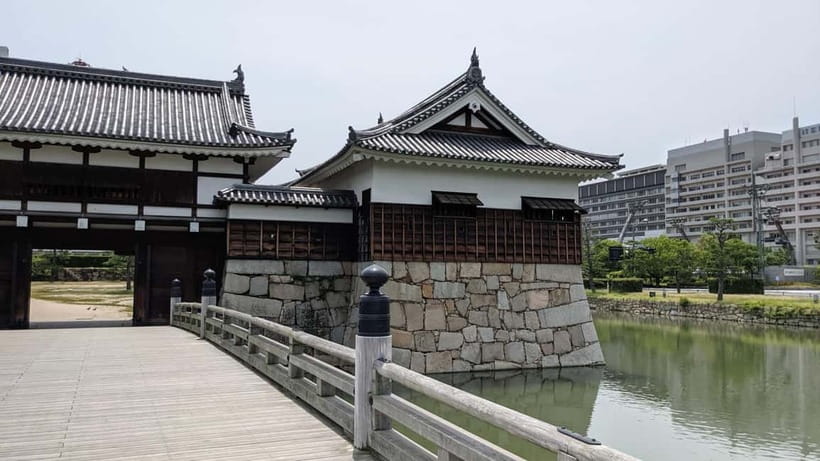
The 30-minute visit at Hiroshima Gate Park adds a modern urban layer to the tour. It is not simply a pause between historic sites. The park helps show how Hiroshima has rebuilt and how public spaces now carry memories of the past.
This is where the tour’s cultural side becomes more visible. Hiroshima is known internationally for the bombing, but the city is also a place where people live, work, eat, and raise families. Guides with local connections, including Chihiro and other Hiroshima-born women who have led the tour, can explain how peace advocacy and family memory remain part of the city’s identity.
The personal element should be handled with care. You are not guaranteed a guide with a family story connected to the bombing, and guides have different backgrounds. Some are from Hiroshima, while others have lived in Japan for years and bring an outside perspective. That variety can be useful, especially when the guide speaks clearly and separates established history from personal interpretation.
The Atomic Bomb Dome
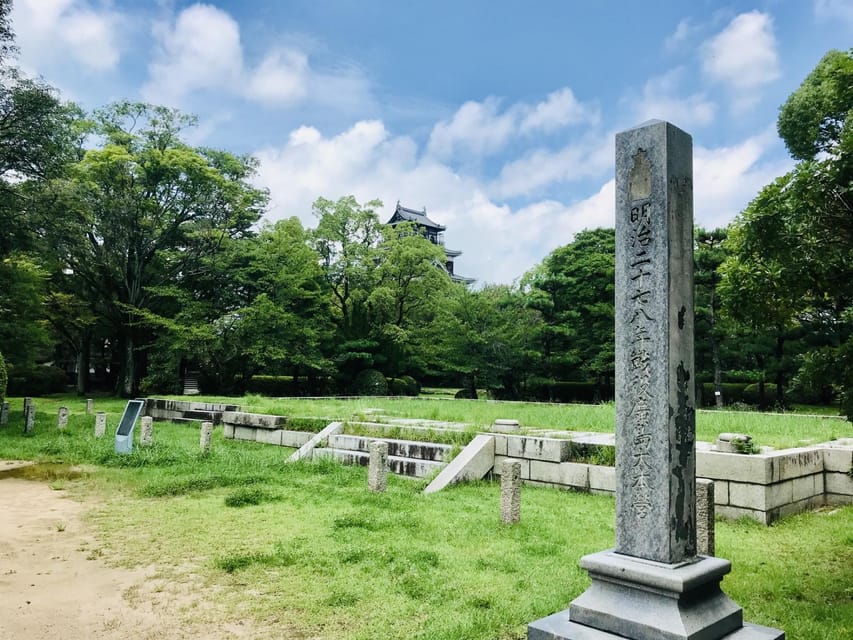
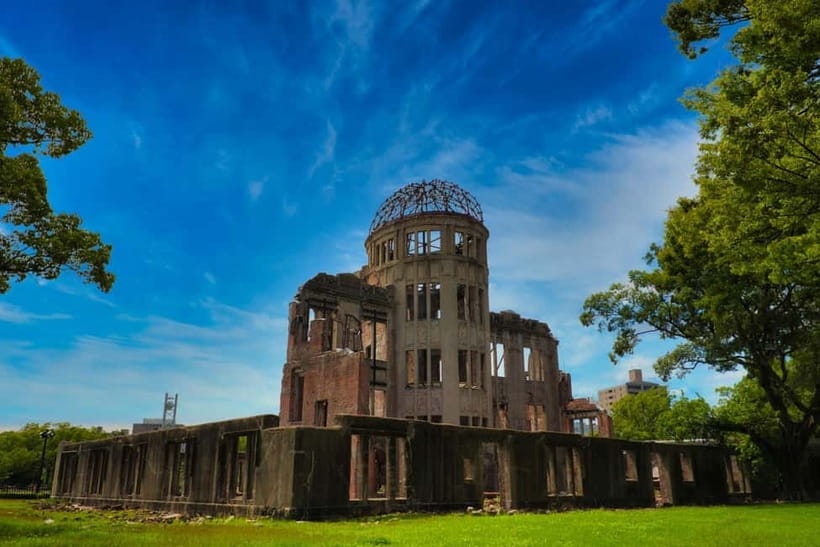
The Atomic Bomb Dome is one of the most recognizable stops, with about 20 minutes of guided time. Seeing the building in person changes the scale of the subject. Photographs often make it look like a lone monument, but standing beside it gives you a clearer sense of its location within the city.
Your guide explains what the building represented before the bombing and why its remains became such a powerful symbol afterward. This is a photo stop, but it is not a casual photo opportunity. The site calls for quiet attention, and the guide helps explain what you are looking at rather than leaving you with only the familiar image.
You will likely want your camera here, but give yourself time to listen. The building is visually striking, yet the more important part is its connection to the people who were nearby and to the city’s decision to preserve the ruins.
The 20-minute visit is enough for an introduction, not a full study. If you want time for close photographs, reflection, and reading every sign, return later on your own.
Peace Memorial Park and the meaning of paper cranes
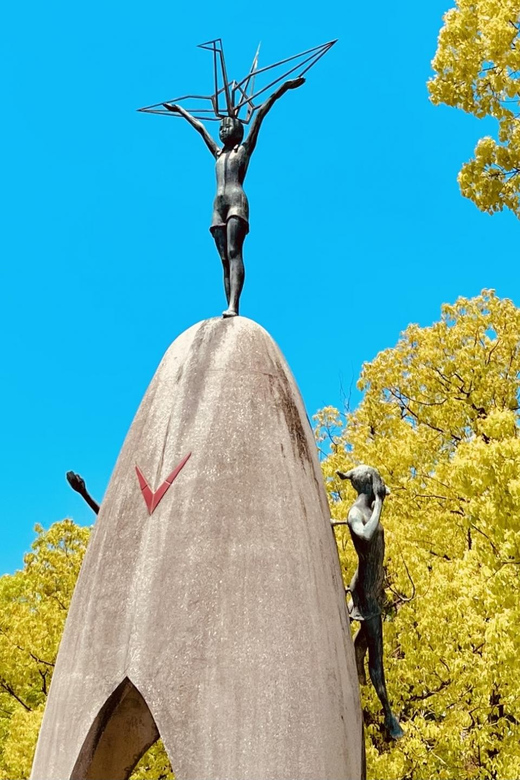
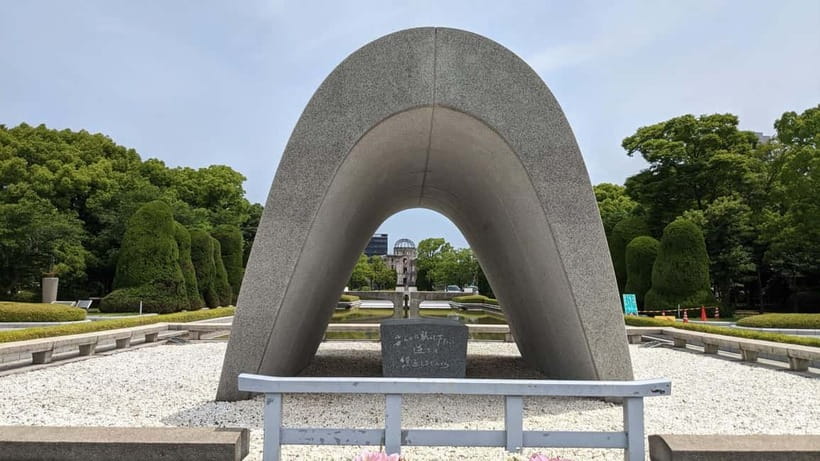
The tour then moves into Hiroshima Peace Memorial Park for about 30 minutes. This is the emotional center of the route. Here, the guide explains the memorials and the city’s continuing call for peace.
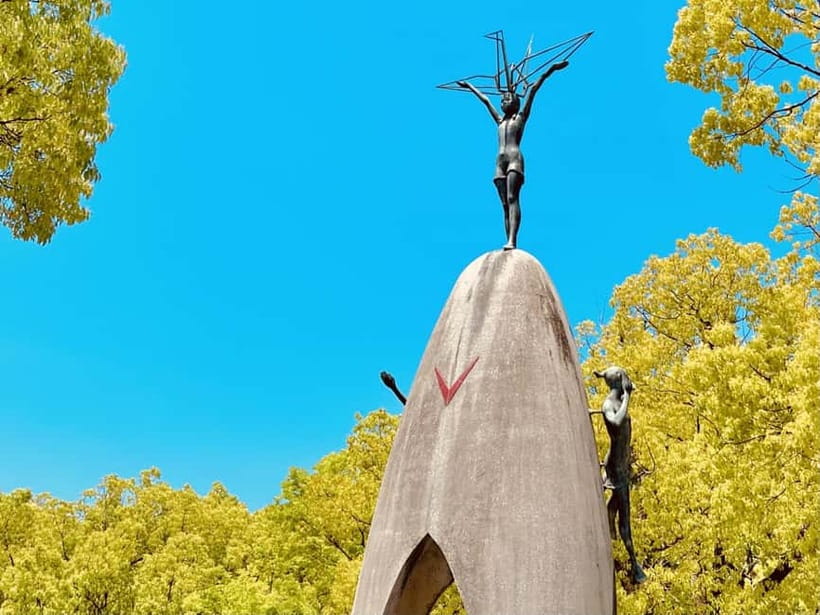
You may hear about the Children’s Peace Monument and the paper cranes gathered there. The cranes are not merely decoration. They connect the park with the story of children affected by the bombing and with the wider tradition of folding cranes as a symbol of hope and peace.
Some guides also point out nearby places connected with the peace movement and the city’s recovery. The park has several monuments close together, and without explanation it can be hard to understand who or what each one remembers. The guide gives those sites a clear purpose.
This section can feel confronting. The subject includes mass death, injury, radiation, and the destruction of a city. The best guides do not sensationalize it. They explain the facts, allow quiet moments, and make room for questions. Several guides, including Thomas and Emi, have been praised for handling the difficult material with patience and clarity.
Finishing at the Peace Memorial Museum
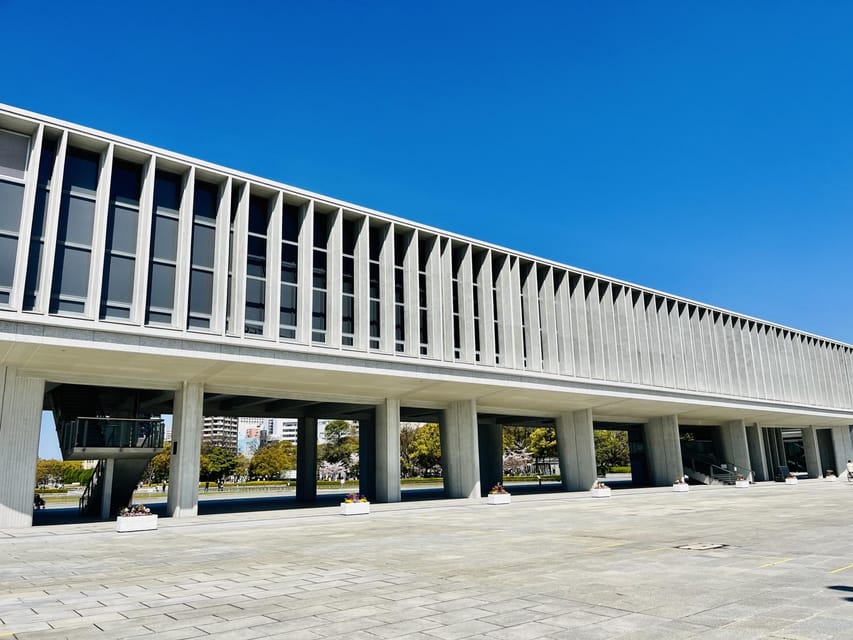
The tour finishes at the Hiroshima Peace Memorial Museum, which is one of its strongest practical features. You are not left at the park with the hardest questions still hanging in the air. Instead, you arrive at the museum with a better sense of the history and a clearer idea of what to look for.
The guided portion does not replace the museum. It prepares you for it. The museum contains material that can be disturbing, and understanding the city’s military background and the sequence of events can help you process the exhibits more thoughtfully.
Plan to give yourself extra time at the museum if your schedule allows. The tour itself lasts 150 minutes, but the end point does not mean your Hiroshima visit is finished. It means the guided introduction has reached its natural handoff.
Because the tour ends there, booking it early in your Hiroshima visit makes sense. You can return later to the Atomic Bomb Dome, Peace Memorial Park, or museum if you need more time.
Guides and the value of different perspectives
The guides are a major part of the experience. Chihiro is repeatedly singled out for clear explanations, local perspective, and a personal commitment to peace. Emi and Emmy are praised for strong English, engaging storytelling, and the ability to make a heavy subject understandable for both adults and children.
Thomas receives similar praise for preparation, clear English, patience, and practical help. He is not Japanese, but his long period living in Japan gives him a useful perspective for explaining Japanese culture to English-speaking visitors. Other guides, including Chisa, Kasha, Katja, and Chiiro, have also been described as friendly, organized, and easy to follow.
You should not book this expecting one guaranteed guide. Names can change from one departure to another. The reliable feature is the English-language format and the tour’s focus on historical context, not a particular individual.
I like that the guiding appears to allow questions. Hiroshima’s history can raise difficult issues about war, responsibility, memory, and peace. A scripted commentary may leave you unsatisfied. A guide who can answer follow-up questions makes the walk far more useful.
Is $35 a fair price?
At $35 per person, this is good value for a 150-minute guided walk if you want more than independent sightseeing. You are paying for a route through several important sites, historical interpretation, English-language guidance, and a useful finish at the Peace Memorial Museum.
The value is strongest for first-time visitors. You could walk between many of these places yourself, but the meaning of Gokoku Shrine, Hiroshima Castle, the Atomic Bomb Dome, and the park is not always obvious from the buildings alone.
The price does not include a tip for the guide. It also does not replace any museum admission or other personal expenses, so keep that in mind when setting your day’s budget.
Free cancellation up to 24 hours before the start and reserve-now, pay-later booking make it easier to fit into a changing Japan itinerary. The tour is offered with an English-speaking guide and is listed as wheelchair accessible.
Who should book this walking tour?
This is best for you if you want:
- A clear introduction before visiting the Peace Memorial Museum
- Historical background on why Hiroshima was selected
- A guided route through the castle, shrine, dome, and peace sites
- Time to ask questions about Japanese culture and wartime history
- Local recommendations for food and other places to visit
- A thoughtful pace rather than a fast checklist of monuments
Families can also use it well, especially with older children who can handle a serious subject. One guide has been praised for keeping a 12-year-old engaged while still treating the history respectfully.
You may prefer to explore alone if you want complete control over your pace or need long periods of silence at each memorial. The guided format keeps the group moving, and the 150-minute duration leaves limited time for lingering.
Should you book it?
Book this tour if you want the difficult history of Hiroshima explained in a clear sequence, not just presented as isolated memorials. The combination of military context, local culture, personal perspective, and a museum finish gives you a strong first look at the city.
I would schedule it before your museum visit and avoid packing another major attraction immediately afterward. Bring comfortable shoes, water, and an open mind. The route is manageable, but the subject deserves time and attention.
Skip it only if you already know Hiroshima’s history well and prefer a completely independent visit. For most first-time visitors, $35 is a reasonable price for an informed introduction that helps the rest of Hiroshima make sense.
FAQ
How long does the Hiroshima Historical Walking Tour last?
The tour lasts 150 minutes, or two and a half hours.
Where does the tour begin?
It begins in front of the torii gate of Hiroshima Gokoku Shrine, near the main hall.
Where does the tour finish?
The tour finishes at the Hiroshima Peace Memorial Museum.
What sites are included?
The route includes Gokoku Shrine, Hiroshima Castle, Hiroshima Gate Park, the Atomic Bomb Dome, Hiroshima Peace Memorial Park, and the Peace Memorial Museum area.
Is the tour offered in English?
Yes. The tour includes a live English-speaking guide.
Is the tour wheelchair accessible?
Yes, the activity is listed as wheelchair accessible.
Can I cancel for a refund?
You can cancel up to 24 hours in advance for a full refund. The booking option also allows you to reserve your place and pay later.
Latest history tours reviewed in Japan
- Authentic Sapporo: Nijo Market Seafood Lunch & History Tour★ 4.8 · 20 reviews
- Asakusa: 3.5-hour Big-picture History Walk★ 4.7 · 39 reviews
- Asakusa: A Big-picture History Walk to Know Japan★ 4.6 · 77 reviews
- 2.5-Hour Nagoya Tour: Castle History, Local Food & City View★ 4.5 · 36 reviews
- 1-Day Tour from Nagoya: Hiking the Historic Nakasendo Trail★ 4.9 · 34 reviews
- Tokyo: Nikko World Heritage Private Day Trip Hotel Pick-up★ 4.8 · 145 reviews
- 2.5 Hour Private History and Culture Tour in Himeji Castle★ 5.0 · 185 reviews
- From Tokyo: Nikko World Heritage Sight Full Day Private Tour★ 4.9 · 127 reviews
Hiroshima History Tours, compared.

Hiroshima Peace (Heiwa) Walking Tour at World Heritage Sites
Read our review →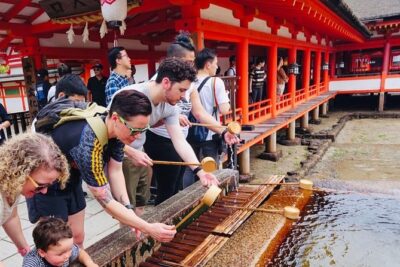
Miyajima Half-day Trip Historical Walking Tour
Read our review →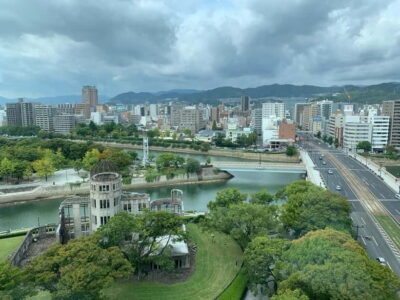
Hiroshima: History of Hiroshima Group Walking Tour
Read our review →Browse the lists this tour appears in