
Review · TOKYO
Tokyo Castle & Imperial PalaceーShogun Walking Tour
Edo Castle was never breached, yet much of it has vanished. This two-hour walk helps you read the clues that remain: massive stone walls, narrow gates, samurai guardhouses, a watchtower, and the gardens that once served Japan’s rulers. The castle’s defenses are the star of the show.
I like the manageable price, $23.88, and the way the route mixes military history with quiet garden scenery. Guides such as K, Keiko, Yuuki, and Anju have been praised for clear English, humor, and useful visual aids. The main drawback is that this is an outdoor walking tour, with steep slopes and stairs, and the Emperor’s residence itself is not open to the public.
Key points at a glance
- Edo Castle’s defense system: See gates, stone walls, guardhouses, and a turret built to protect the shogun.
- A practical two-hour route: The walk covers nine main stops without taking up your whole day in Tokyo.
- English-speaking guidance: The tour is conducted in English only, with no Japanese-language support.
- A good history primer: Learn how samurai, shoguns, emperors, and Edo Castle fit into Japan’s past.
- Gardens after fortifications: The route ends with the calmer side of the grounds, including Ninomaru Garden and its koi pond.
- Outdoor conditions matter: Bring water and sun protection, wear comfortable shoes, and expect a security check.
What this Tokyo castle walk actually shows you
The name Imperial Palace can create the wrong picture. This is not a tour inside the Emperor’s residence, and you do not walk through opulent palace rooms. Instead, you explore parts of the former Edo Castle complex, now spread across the Imperial Palace grounds and East Gardens.
That distinction is important. The real appeal lies in seeing how power worked in the open air. A gate was not just an entrance. A guardhouse was not just a small building. Each wall, turn, slope, and checkpoint helped control access to the shogun.
The route also explains the shift from shogun rule to Japan’s modern imperial system. At $23.88, I consider this a reasonable way to get the basic story in place, especially if terms such as Edo, shogun, samurai, and Imperial Palace are still a little tangled in your head.
The tour is described as a small-group experience for up to 10 people, which should make it easier to hear the guide and ask questions. The booking information also lists a maximum of 60 participants, so group size may vary by departure. If a small group matters to you, confirm the conditions when booking.
More Castle and Palace History Tours in Japan
- Tokyo: Imperial Palace and Shogun Historical Walking Tour
★ 5.0 · 2,251 reviews - Tokyo Castle & Imperial PalaceーShogun Walking Tour
★ 4.7 · 1,068 reviews - Tokyo: Imperial Palace Japanese History Walking Tour
★ 4.9 · 987 reviews
Starting at Wadakura Fountain Park
The meeting point is the Starbucks Coffee at Kokyo Gaien Wadakura Fountain Park, 3-1 Kōkyogaien in Chiyoda City. This is a useful starting area because it puts you near the Imperial Palace grounds and public transportation.
Arrive ready to walk. The route is about two hours, and nearly all the sightseeing takes place outside. There is no need to dress formally, but comfortable footwear is important. You will encounter slopes and stairs, and much of the route is exposed to the weather.
The tour is in English only. That sounds obvious, but it matters here because the subject includes unfamiliar names, political changes, and several layers of Japanese history. The strongest guides make the material easier to follow with stories, questions, and visual aids. Keiko, for example, has used laminated images of old castle layouts, guard towers, and members of the imperial family.
Sakurada Tatsumi Yagura and the first look at castle defenses
The first stop is Sakurada Tatsumi Yagura, a surviving turret from the Edo period. You get an early look at the practical side of the castle: watch points, controlled approaches, and the systems designed to protect the palace area.
This is a good opening because it gives you something solid to study while the guide explains the larger story. The castle was Japan’s largest fortress, and its defenses were designed around more than thick walls. The layout forced people through carefully managed spaces, with guards positioned at key points.
You spend about 20 minutes here, the longest stop on the first part of the route. That gives the guide time to explain why this remaining turret matters and how the security systems worked.
Otemon Gate and the logic of a shogun’s entrance

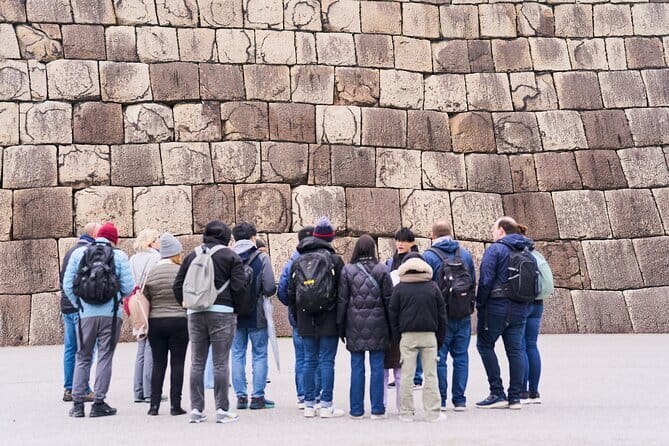
At Kokyo Otemon Gate, you see two large gates and stone walls from the original castle. This is where the tour focuses on the castle’s entrance system and the way the design slowed, screened, and controlled anyone trying to get inside.
The value of this stop is not just visual. Without an explanation, you might see an impressive gate and move on. With context, you start noticing the sequence of entrances and the sheer amount of effort required to reach the inner castle.
You spend about 10 minutes here. The pace is brisk, but that works well because the route has several related stops. The guide can build the defense story piece by piece rather than giving you one long lecture at the beginning.
More History Walking Tours in Japan
- Kyoto Gion: 2-Hour Geisha Culture & History Walking Tour
★ 5.0 · 1,186 reviews - Hiroshima Historical Walking Tour – Why A-Bomb was Dropped
★ 4.8 · 893 reviews - Hiroshima Peace (Heiwa) Walking Tour at World Heritage Sites
★ 5.0 · 872 reviews - Miyajima Half-day Trip Historical Walking Tour
★ 5.0 · 284 reviews
Three guardhouses, three levels of samurai duty
The Constable Guardhouse, Hyakunin Bansho Guardhouse, and Obansho Guardhouse form the core of the samurai section. Each stop takes about 10 minutes, and together they show that the castle’s security depended on layers of personnel as well as architecture.
At the Constable Guardhouse, the discussion centers on lower-ranking samurai. This is a useful reminder that samurai society was not made up only of famous warriors and powerful lords. Many samurai had assigned duties within a strict social order.
The Hyakunin Bansho Guardhouse was larger and housed many samurai. Here, you learn how personnel were stationed around the castle and how their presence supported the larger security plan.
At the Obansho Guardhouse, the focus shifts to higher-ranking samurai and their responsibilities near the inner gate. Seeing these three posts in sequence helps you understand rank and access. The castle was not simply defended by a crowd of armed men. Different groups had different roles and positions.
This is also where a good guide makes a real difference. K, Shin, Dai, and other guides have been praised for answering questions clearly and explaining the Edo period in an engaging way. The route is easy to walk without a guide, but the meaning of these guardhouses is much harder to grasp from signs alone.
Fujimi-yagura and the missing castle tower
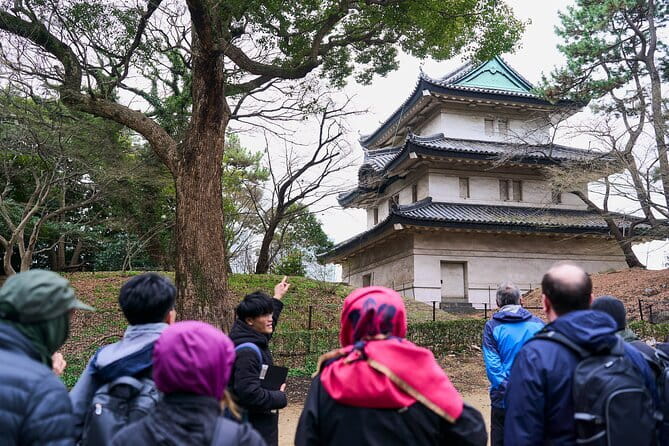
Fujimi-yagura is an old watchtower overlooking the grounds. The guide explains its purpose and what made it important in the castle’s earlier days.
This stop is a good chance to pause the close-up study of gates and guardhouses. From a watchtower, the castle’s layout makes more sense as a whole. You can think about sight lines, control, and the need to monitor movement around the inner sections.
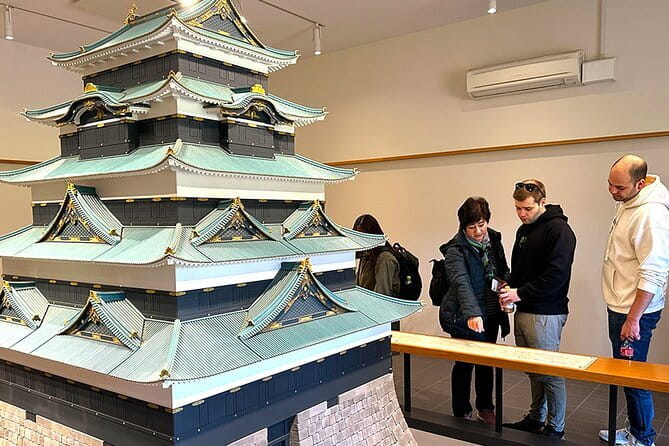
The route then reaches Kokyo Sannomaru Shozokan, where you can see a scale model of the former Edo Castle. A model is particularly helpful here because the present-day grounds do not show the full size and complexity of the old fortress. You also have access to a souvenir shop with palace-related goods.
The model helps fill in what the surviving structures cannot show. It gives you a clearer sense of the former castle’s footprint, including the parts that no longer exist.
Edo Castle’s main tower and the story of what disappeared
The East Gardens of the Imperial Palace include the former site of Edo Castle’s main tower. The tower itself is gone, and the guide explains why it no longer stands and what remains.
This is one of the most useful parts of the walk for understanding Tokyo’s layers. You are not looking at a preserved medieval castle in the usual sense. You are looking at a working imperial area and public garden built around remnants of a much larger political center.
The stop lasts about 15 minutes. Give yourself time to picture the scale of the former tower rather than expecting a dramatic intact building. The absence is part of the lesson. The guide connects the remaining foundations and open space to the castle’s former role.
If you want interior palace rooms, this tour will disappoint you. The Emperor’s residence is not open to the public, so the experience is about the grounds, ruins, defenses, and historical setting.
Ninomaru Garden brings a quieter change of pace
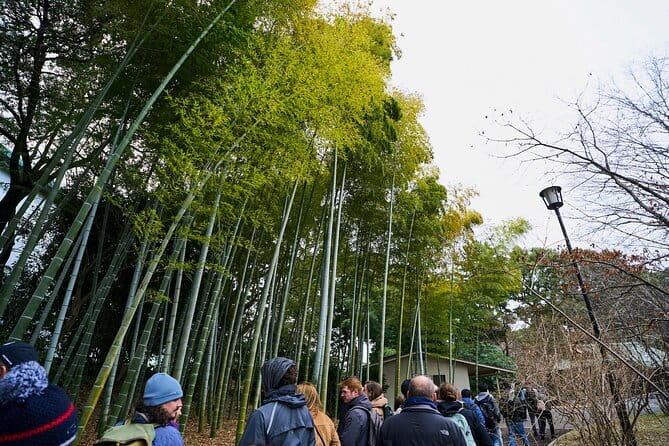
Ninomaru Garden is the gentlest part of the route. It has seasonal plants, a traditional Japanese garden design, and a pond with koi. After gates, guardhouses, and military planning, the garden offers a welcome change of mood.
I like this contrast. It keeps the tour from becoming two straight hours of walls and dates. You see the castle as a place of power, then experience the careful beauty of the grounds around it.
The garden stop also gives you better photo opportunities. Several people have singled out the pond, trees, and garden scenery as highlights. Still, do not expect a long garden visit. The scheduled time is about 15 minutes, so the guide must keep the group moving.
The route concludes near the ginkgo-lined avenue stretching toward Tokyo Station, although the activity information also states that it ends back at the meeting point. Since those details do not perfectly match, check the exact end point for your departure. Either way, the walk keeps you close to central Tokyo and major transport links.
How much history do you get in two hours?
You get a useful introduction, not a full course in Japanese history. The main themes are the Edo period, samurai ranks, shogun authority, castle defense, the imperial system, and the physical remains of Edo Castle.
The best guides add the human side. K has been singled out for being funny, passionate, and able to answer questions in clear English. Anju, Nana, Yuuko, Yuta, Tomo, Mayuko, Mako, Franky, and Shin have also been praised for friendly explanations and patience.
The quality of a walking tour can depend heavily on the individual guide. One poor experience involved weak English and an early departure, so I would keep expectations realistic. The tour gives the guide a compact route and strong subject matter, but the storytelling style can vary.
Several guides have used pictures and flashcards to show former layouts and past members of the imperial family. That is especially useful because many structures are ruins, foundations, or altered spaces. A picture can bridge the gap between what you see now and what once stood there.
Walking conditions, weather, and what to bring
Plan for outdoor conditions. The tour includes slopes and stairs, and much of the route is exposed to the sun. In hot weather, bring water, a hat, and sun protection. One guide has reportedly handed out sweets and menthol wipes during a very hot walk, but you should not depend on that.
Comfortable footwear is more important than stylish footwear. The route is not described as having health restrictions, and most people can participate, but steep sections may be tiring for anyone with mobility concerns.
There is a security check to enter the Imperial Palace grounds. Do not bring knives or alcohol. Keep your belongings simple so the entrance process does not slow you down.
Rain does not necessarily cancel the experience. A guide has conducted the walk in rainy conditions, but weather will affect how long you want to linger and how good your photos turn out. Check the forecast and carry suitable protection.
Is $23.88 good value?
For the price, I think this tour offers solid value if you want context rather than a self-guided stroll. The grounds are free to enter at the listed stops, so you are mainly paying for the guide’s explanation, route planning, and help connecting scattered remains into one story.
The value is strongest for a first visit to Tokyo. The tour can give you a working grasp of the shogun era early in your trip, making later sights and museums easier to understand.
You may not need it if you already know Japanese history well or prefer to read signs at your own pace. The route is not a private tour, and the Emperor’s residence is not included. Still, the cost is modest for two hours with an English-speaking guide and access to a carefully arranged sequence of historic sites.
Free cancellation is available if you cancel at least 24 hours before the start time. Changes or cancellations inside that window are not accepted for a refund.
Who should book this castle walk?
I would recommend it to first-time visitors who want a clear introduction to Tokyo’s political history. It also suits families and mixed-age groups because the route combines short explanations, visible structures, gardens, and frequent chances to ask questions.
It is a good match for anyone who enjoys understanding why a place looks the way it does. The gates and stone walls are impressive on their own, but the guide explains the tactics behind them.
I would be more cautious if you want an indoor palace tour, a long garden visit, or a slow photography walk. The pace covers many stops in two hours, and the weather can make the route harder than the price suggests.
Should you book the Tokyo Castle and Imperial Palace Shogun Walking Tour?
Book it if you want the castle story, not palace interiors. The strongest reasons are the sensible two-hour length, low price, English-language guidance, and the mix of defense architecture, samurai history, castle ruins, and Ninomaru Garden.
To get the most from it, schedule it early in your Tokyo stay, wear comfortable shoes, bring water, and arrive ready for sun or rain. If the guide is as strong as K, Keiko, Shin, Yuuki, or the other praised guides, you will leave with a much clearer sense of how Edo Castle shaped Tokyo.
FAQ
How long is the Tokyo Castle and Imperial Palace Shogun Walking Tour?
The tour lasts approximately two hours.
How much does the tour cost?
The listed price is $23.88 per person.
Is the tour conducted in English?
Yes. The tour is conducted in English only, and Japanese-language support is not available.
Where does the tour begin?
The meeting point is Starbucks Coffee at Kokyo Gaien Wadakura Fountain Park, 3-1 Kōkyogaien, Chiyoda City, Tokyo 100-0002, Japan.
Where does the tour end?
The activity information says the tour ends back at the meeting point. It also describes a conclusion near the ginkgo-lined avenue leading toward Tokyo Station, so confirm the exact end point for your departure.
Can I enter the Emperor’s residence?
No. The Emperor’s residence is not open to the public. The tour visits outdoor grounds, historic structures, castle ruins, and gardens.
Are there security restrictions?
Yes. There is a security check to enter the Imperial Palace grounds. Do not bring knives or alcohol.
Is the walk physically demanding?
You need to walk for about two hours and may encounter steep slopes and stairs. Most people can participate, but comfortable footwear is recommended.
Can I cancel for a full refund?
Yes, if you cancel at least 24 hours before the experience start time. Cancellations or changes made less than 24 hours before the start time are not accepted for a refund.
Latest history tours reviewed in Japan
- Authentic Sapporo: Nijo Market Seafood Lunch & History Tour★ 4.8 · 20 reviews
- Asakusa: A Big-picture History Walk to Know Japan★ 4.6 · 77 reviews
- Asakusa: 3.5-hour Big-picture History Walk★ 4.7 · 39 reviews
- 2.5-Hour Nagoya Tour: Castle History, Local Food & City View★ 4.5 · 36 reviews
- 1-Day Tour from Nagoya: Hiking the Historic Nakasendo Trail★ 4.9 · 34 reviews
- 2.5 Hour Private History and Culture Tour in Himeji Castle★ 5.0 · 185 reviews
- From Tokyo: Nikko World Heritage Sight Full Day Private Tour★ 4.9 · 127 reviews
- From Tokyo: Nikko World Heritage Site Private Full-Day Trip★ 4.9 · 243 reviews
Tokyo History Tours, compared.
Tokyo: Imperial Palace and Shogun Historical Walking Tour
Read our review →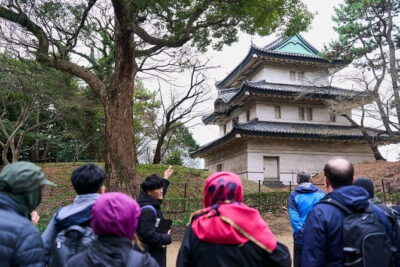
Tokyo Castle & Imperial PalaceーShogun Walking Tour
Read our review →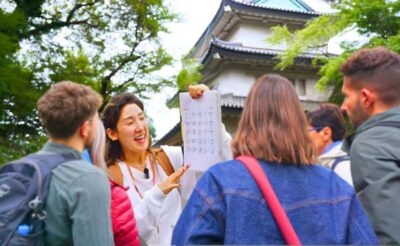
Tokyo: Imperial Palace Japanese History Walking Tour
Read our review →
From Tokyo: Nikko World Heritage Site Private Full-Day Trip
Read our review →
Tokyo: The Best of Izakaya in Shinjuku Food & Cultural Tour
Read our review →
Tokyo: Nikko World Heritage Private Day Trip Hotel Pick-up
Read our review →From Tokyo: Nikko World Heritage Sight Full Day Private Tour
Read our review →
Asakusa: A Big-picture History Walk to Know Japan
Read our review →Browse the lists this tour appears in