
Review · TOKYO
Asakusa: 3.5-hour Big-picture History Walk
Asakusa is one of the few parts of Tokyo where a single neighborhood can take you from a sacred temple courtyard to old pubs, theater history, Edo-era streets, and Japan’s dramatic return to the world. This 3.5-hour walk uses famous sights as clues to a much larger story.
I like the way the tour links Shinto and Buddhism to ordinary Japanese life instead of treating them as museum pieces. I also like the small-group format, limited to eight people, and the route’s mix of major landmarks with quieter streets. Guides such as Yasu, Yoko, Taka, Ai, and Jun have been praised for clear explanations and thoughtful pacing.
The main consideration is the amount of walking. The route includes several outdoor stops and operates in all weather, so comfortable shoes, water, and suitable clothing matter. If mobility is a concern, contact the provider before booking.
Key points to know before you book
- Japan’s opening to the world: Learn why Japan limited foreign contact, why the Netherlands remained an important trading partner, and how the country later reopened.
- Two faiths, one daily life: See how Shinto and Buddhism have shared worshippers and complemented each other for centuries.
- A full Asakusa story: The route covers the Sumida River, Kaminarimon, Nakamise, Sensō-ji, Asakusa Shrine, side streets, old entertainment districts, and Hoppy Street.
- Small group, personal attention: Groups are capped at eight, with headsets supplied for groups of three or more.
- History with snacks: Freshly made Japanese traditional snacks and sweets are part of the experience.
- A practical half-day choice: The tour gives you a useful introduction to Asakusa, leaving you free to stay for dinner or explore more afterward.
Why this Asakusa walk offers more than temple photos
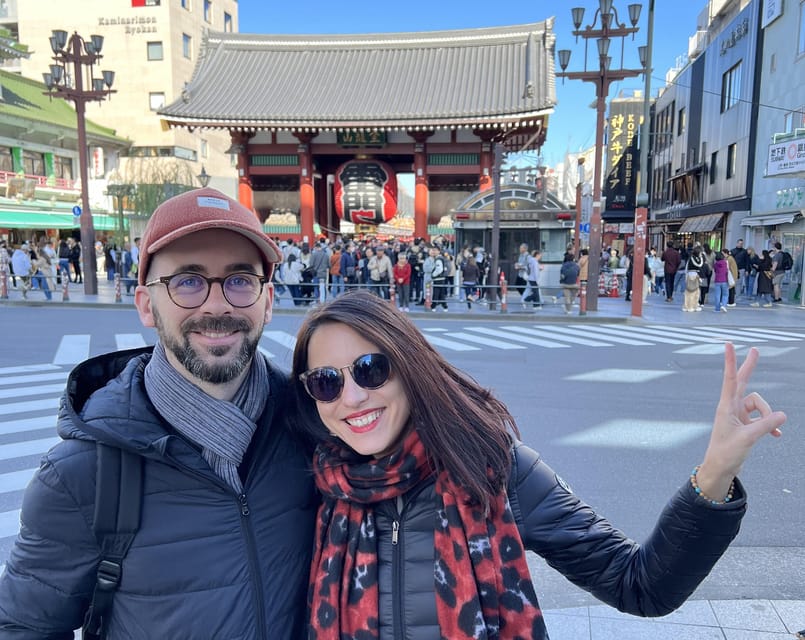
Many Asakusa visits follow a simple pattern: take a photo at Kaminarimon, walk along Nakamise, see Sensō-ji, and move on. This tour gives those sights a place in Japan’s larger story.
You learn how a country that restricted outside contact later became a major global power. You also look at the less tidy side of human life. Right beside one of Tokyo’s most important temples, Asakusa developed as a center for pleasure, theater, food, and working-class nightlife.
That contrast is the heart of the walk. Japan can feel carefully ordered and deeply traditional at a temple gate, then lively and informal a few steps away. The route keeps showing you both sides.
The tour is conducted in English by a certified guide. The strongest guide experiences described by name include Yasu, Yoko, Taka, Ai, Akiko, Satchi, Jun, and Yoko. Since guides rotate, you cannot choose a particular person from the information provided, but the tour clearly depends on a guide who can explain history in context rather than simply identify buildings.
More History Walking Tours in Japan
- Tokyo: Imperial Palace and Shogun Historical Walking Tour
★ 5.0 · 2,251 reviews - Kyoto Gion: 2-Hour Geisha Culture & History Walking Tour
★ 5.0 · 1,186 reviews - Tokyo Castle & Imperial PalaceーShogun Walking Tour
★ 4.7 · 1,068 reviews
Starting beside Asakusa Station and the Sumida River
Meet in front of the Burger King beside Exit 4 of Asakusa Station on the Ginza Line. This is a useful meeting point because you can reach it without searching through a large station complex. Step outside Exit 4 and look for the restaurant.
The first route section includes about 15 minutes at the Tokyo Cruise Asakusa Pier. The river setting helps you get your bearings before entering the temple district. It also gives the guide a chance to place Asakusa within Tokyo’s wider development.
You may want to arrive a little early. Asakusa Station serves several lines and operators, and large stations can take time even when the meeting point itself is easy to identify.
The Culture Tourist Information Center and the view above Asakusa
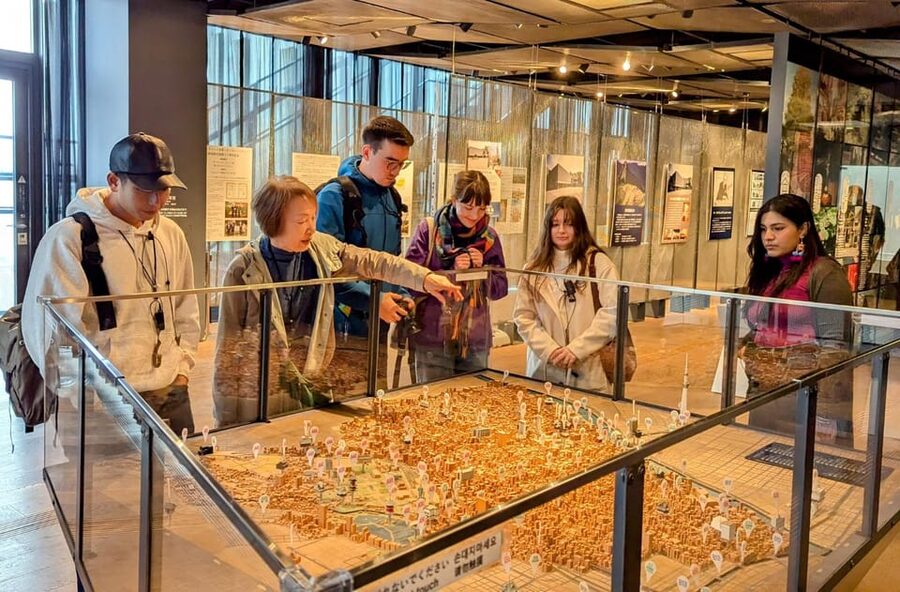
The Asakusa Culture Tourist Information Center receives about 30 minutes of guided attention. Its contemporary design provides a useful contrast with the older religious buildings across the street.
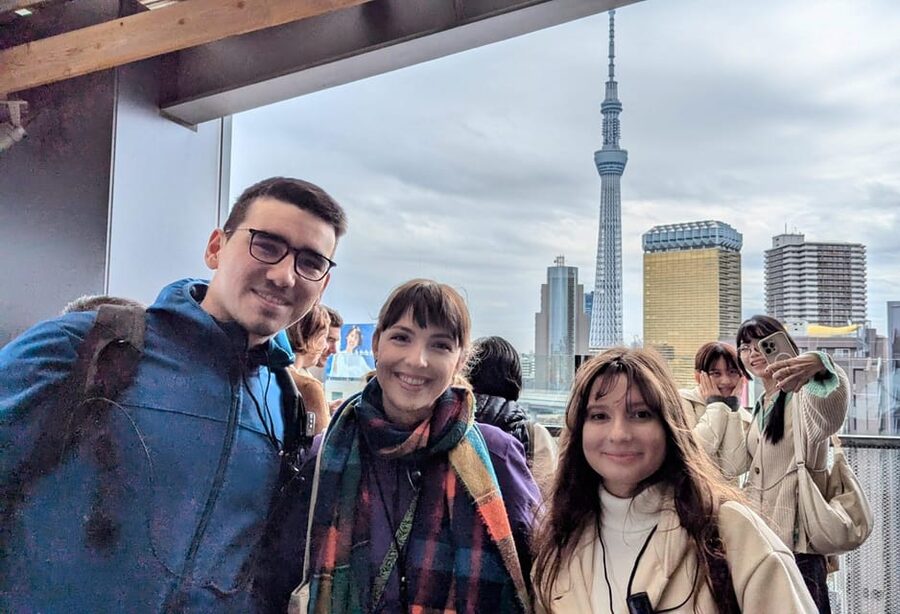
A visit here is not just a pause indoors. The building is also a good place to look across the district and understand how modern Tokyo surrounds the older temple quarter. One tour participant particularly appreciated the rooftop view and returned later during the same trip.
The guide may also use this point to discuss Tokyo Skytree. Its height, 634 meters, can be connected to the Japanese reading roku, san, yon, creating a memorable language and number detail. It is the sort of small observation that helps you notice how Japanese words and numbers can carry extra meaning.
Kaminarimon and the road into Sensō-ji
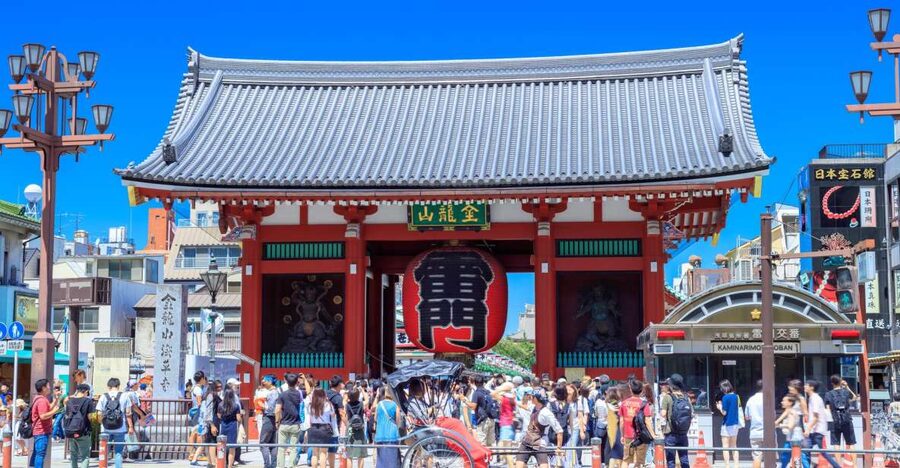
Kaminarimon, or the Thunder Gate, is one of Tokyo’s best-known entrances. You spend about 15 minutes here before moving toward Nakamise Shopping Street.
The gate works well as an opening lesson because it is both a religious threshold and a major public meeting point. Your guide can explain what you are seeing instead of leaving you to decode the statues, colors, and huge lantern on your own.
Expect crowds in this part of the route. Kaminarimon and Nakamise are among Asakusa’s most photographed places, so the group may need to pause at the side while the guide speaks. This is one reason the headsets are useful for groups of three or more. You can hear the explanation without standing directly beside the guide.
Same old streets, another chapter:
- Kyoto: Fushimi Inari, Kinkakuji, Bamboo Grove 1 Day Bus Tour
★ 4.8 · 4,316 reviews - World Heritage Shirakawa-go and Experience Tours from Kanazawa
★ 5.0 · 4,049 reviews - World Heritage Kyoto & Nara Uji Authentic Matcha Experience
★ 5.0 · 1,573 reviews - Kanazawa: World Heritage Shirakawa-go Morning Guided Tour
★ 4.9 · 988 reviews
Nakamise Shopping Street and the small details behind souvenir stalls
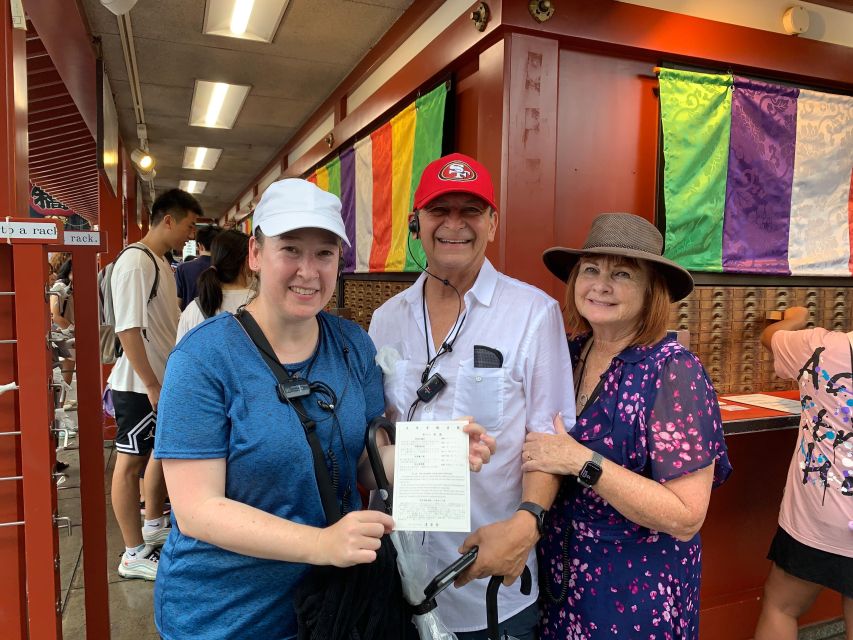
The walk along Nakamise takes about 30 minutes. This is the main shopping approach to Sensō-ji, lined with food, souvenirs, and traditional goods.
It is easy to treat Nakamise as a shopping stop, but the tour places it within the history of the temple approach and Asakusa’s role as a public destination. You can shop if something catches your eye, but you will not be pushed to buy. One guide, Taka, was especially attentive to guests who preferred architecture, history, and gardens over shopping, and adjusted the pace accordingly.
The included traditional snacks and sweets fit naturally here. You receive a chance to try freshly made Japanese treats while continuing the walk. The food is not presented as a full meal, so plan to eat beforehand or afterward if you need something substantial.
Hōzōmon Gate and the 45-minute Sensō-ji visit
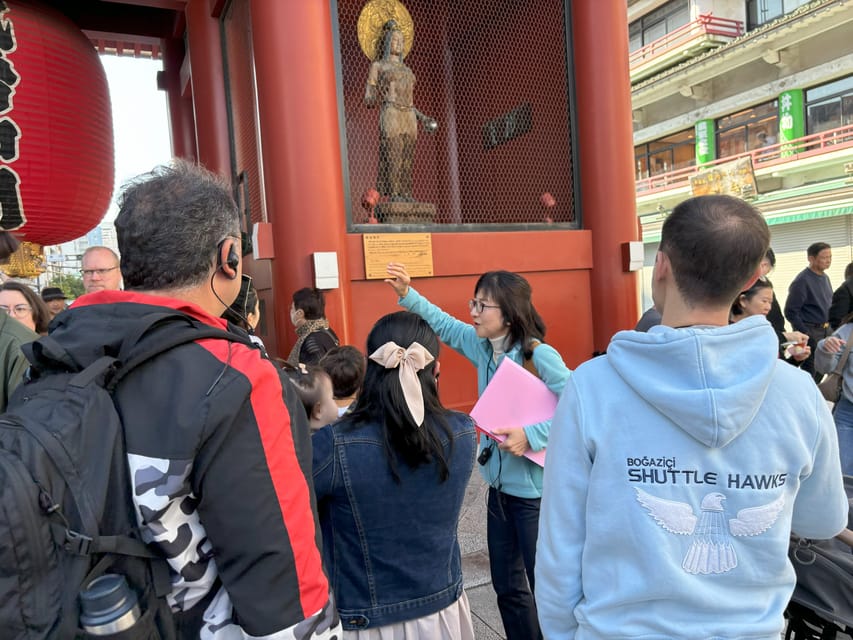
Hōzōmon Gate marks another important entrance into the Sensō-ji complex. The tour allows about 15 minutes here before the main temple visit.
Sensō-ji receives the longest stop, about 45 minutes. That extra time matters. A quick photo at the main hall tells you little, while a guided visit can explain the religious setting, the role of the gate, and the way visitors use the complex.
This is also where the discussion of Japan’s two major religions becomes most useful. Shinto and Buddhism have often shared worshippers in Japan, with different roles and practices existing side by side. The tour explains how that arrangement has shaped daily life rather than presenting the faiths as sealed-off categories.
You should expect a working religious site, not a quiet museum. People come to pray, make offerings, take part in customs, and visit with family. The guide’s job is to help you observe respectfully while explaining what is happening.
Sensō-ji can be crowded, especially around the best-known viewpoints. Keep your group together and be ready for the pace to slow around gates and the main hall.
Asakusa Shrine and Yōgō-dō Pavilion
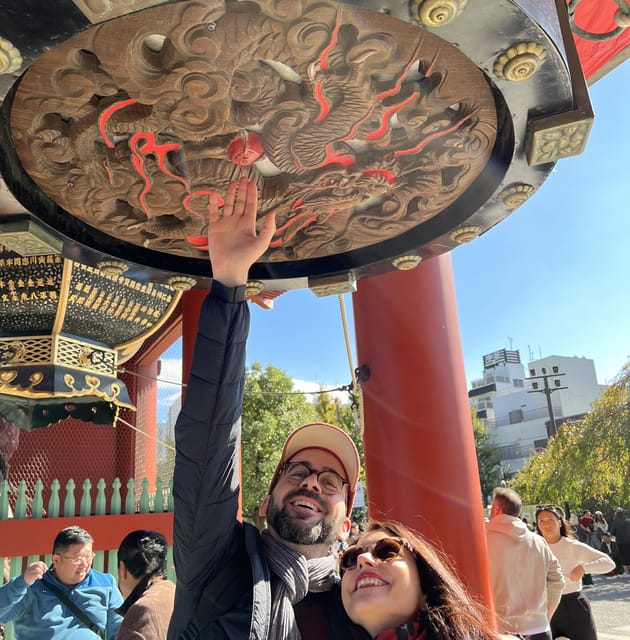
The route then moves to Asakusa Shrine for about 15 minutes. Its presence beside Sensō-ji makes the relationship between Shinto and Buddhism especially clear. You do not need a long academic lecture to see that different religious traditions can share the same neighborhood and worshippers.
The stop at Yōgō-dō Pavilion also lasts about 15 minutes. Together, these visits give the religious portion of the walk enough room without turning the whole experience into a formal lecture.
The tour’s wider point is that Japanese beliefs are often practiced through routines, places, and seasonal customs. You come away with a better sense of how religion can be part of daily life even when people do not describe themselves in strict Western categories.
Nishi-sandō and the Asakusa of nostalgia
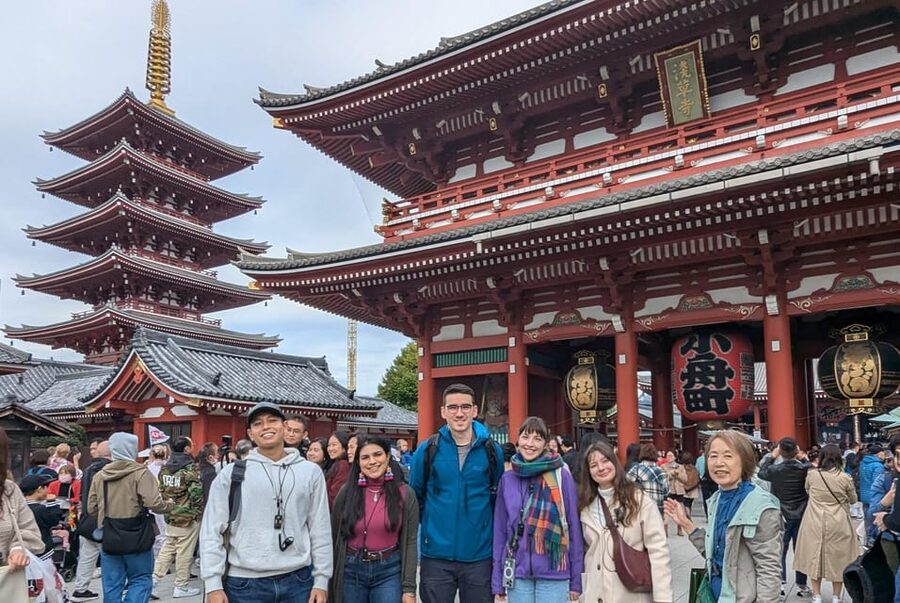
Asakusa Nishi-sandō Shopping Street offers a change of pace. It is smaller and quieter than Nakamise, with a more nostalgic feel.
This is where the tour turns toward older Tokyo and the Edo period. The guide uses the street to help you imagine an earlier city, not through a reconstructed theme park, but through the scale and mood of a traditional shopping lane.
You should not expect a large attraction with extensive displays. The pleasure comes from slowing down and noticing the atmosphere. It is a good section for photographs, but the explanation is what gives the street weight.
The route’s historical comparisons also reach beyond Japan. You may discuss surprising parallels between East and West, including the different meanings attached to dragons and similarities in how people from a thousand years ago understood power, fear, and the unknown.
Mokubakan and Asakusa’s theater past
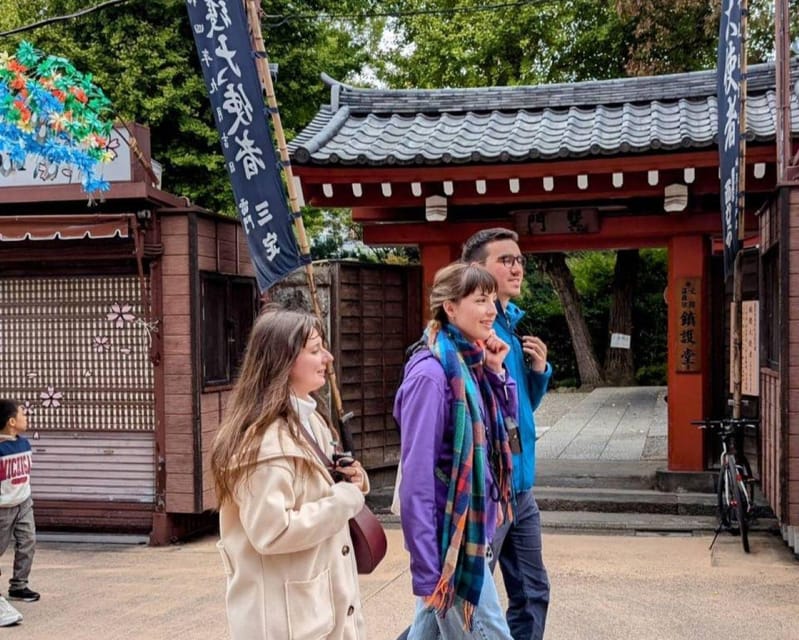
Asakusa Mokubakan adds another layer to the neighborhood’s story. The visit lasts around 15 minutes and helps explain Asakusa as an entertainment center.
Before Shinjuku and Shibuya took much of Tokyo’s modern nightlife spotlight, Asakusa was known for cinemas, vaudeville theaters, and performance halls. The area drew people looking for shows, food, drinks, and a night out.
This history keeps the tour from becoming a procession of sacred buildings. Asakusa was never only a religious district. It has long brought together worship, commerce, performance, and ordinary pleasure.
The guide may also connect this part of the route to the postwar period, when the area reflected working-class energy and resilience. That context helps you see the older pubs and entertainment lanes as living parts of the neighborhood rather than decorative leftovers.
Hoppy Street and the secular side of Asakusa
The final stop is Hoppy Street, with about 15 minutes for a guided look. The narrow lane is known for old-style Japanese pubs and carries a very different mood from Sensō-ji.
This is a useful ending because it returns to the tour’s central contrast. A few streets can take you from sacred worship to casual drinks, from temple etiquette to the direct, social atmosphere of a traditional pub lane.
The stop is a look at the area, not a promised pub crawl or included meal. If you like the atmosphere, stay after the tour for dinner or a drink. If you prefer a quieter evening, you can simply treat it as the final history lesson and continue elsewhere.
The tour officially ends with this Asakusa exploration, but the neighborhood makes it easy to continue on your own. One useful plan is to remain in Asakusa for the evening rather than immediately returning to your hotel.
What the $88 price gets you
At $88 per person, this is not the cheapest way to see Sensō-ji. You can visit the major temple sights without paying an admission fee, and you can walk through Nakamise on your own.
The value comes from interpretation and structure. Over 210 minutes, you get an English-speaking certified guide, a small group limited to eight, guided time at each major stop, traditional snacks and sweets, and headsets for groups of three or more. You are paying for a connected explanation of Asakusa, not entry to a single attraction.
I think the price makes the most sense early in a Tokyo visit. The tour can give you a working framework for Japanese history, religion, and urban culture, which may help you understand later visits across the country.
It is less useful if you already know Asakusa well or want only independent photography time. The pace is shaped by the group and the guide, and the route includes several explanations that require attention.
Timing, comfort, and practical details
The walk lasts three and a half hours, so wear comfortable shoes. Water is recommended, although vending machines are available.
The tour operates in all weather. Rain or cold can affect the outdoor sections, as one guide, Ai, took particular care of the group when cold rain began. Bring suitable clothing rather than assuming Tokyo weather will cooperate.
The route involves a moderate amount of walking. The activity is not considered suitable for people with mobility impairments, although the provider asks anyone with mobility concerns to contact them and will try to help.
Children under six can join without charge. The historical focus suits adults best, but families are welcome. Older children who can manage the walking and listen to extended explanations may get more from it than very young children.
You can cancel up to 24 hours before the start for a full refund, and the reserve-now, pay-later option keeps your schedule flexible.
Who should book this walk
Book it if you want more than a list of famous Tokyo sights. It suits first-time visitors who want a clear introduction to Japan’s political history, religions, art connections, and everyday culture.
It is also a good match for people who prefer small groups and questions. The eight-person limit gives the guide more room to respond to personal interests, point out photo locations, and manage the crowds.
You should think twice if you dislike guided pacing, have trouble walking for several hours, or want a food tour centered on eating. Snacks are included, but food is not the main subject.
FAQ
Where does the Asakusa walk begin?
Meet in front of the Burger King restaurant next to Exit 4 of Asakusa subway station on the Ginza Line, station G19.
How long does the tour last?
The tour lasts 210 minutes, or three and a half hours.
What language is the tour conducted in?
The live tour guide and included audio support are in English.
How large is the group?
The maximum group size is eight participants.
Are headsets provided?
Headsets are provided for groups of three or more so you can hear the guide clearly.
Are snacks included?
Yes. The experience includes a selection of freshly made Japanese traditional snacks and sweets.
Does the tour include hotel pickup?
No. Hotel pickup and drop-off are not included.
What should I bring?
Bring comfortable shoes and water. Vending machines are available, and you should dress for the weather because the tour operates in all conditions.
Can children join the walk?
Children younger than six may join without charge. Families are welcome, although the historical focus is recommended mainly for adults.
Should you book the Asakusa Big-picture History Walk?
I would book this tour if you want Asakusa to make sense, not just look attractive. Its best feature is the connection between places that are easy to see but harder to understand: the river, temple gates, religious sites, shopping streets, old theaters, and pub lanes.
The $88 cost is reasonable for a small-group history walk with a certified English guide, snacks, headsets, and three and a half hours of structured attention. It is not the right choice for a relaxed, self-guided stroll or a dedicated food outing.
For a first or second day in Tokyo, this is a useful way to get your bearings. Wear good shoes, prepare for crowds and weather, and leave time afterward to enjoy Asakusa at your own pace.
Latest history tours reviewed in Japan
- Authentic Sapporo: Nijo Market Seafood Lunch & History Tour★ 4.8 · 20 reviews
- Asakusa: A Big-picture History Walk to Know Japan★ 4.6 · 77 reviews
- 2.5-Hour Nagoya Tour: Castle History, Local Food & City View★ 4.5 · 36 reviews
- 1-Day Tour from Nagoya: Hiking the Historic Nakasendo Trail★ 4.9 · 34 reviews
- Tokyo: Nikko World Heritage Private Day Trip Hotel Pick-up★ 4.8 · 145 reviews
- 2.5 Hour Private History and Culture Tour in Himeji Castle★ 5.0 · 185 reviews
- From Tokyo: Nikko World Heritage Sight Full Day Private Tour★ 4.9 · 127 reviews
- From Tokyo: Nikko World Heritage Site Private Full-Day Trip★ 4.9 · 243 reviews
Tokyo History Tours, compared.
Tokyo: Imperial Palace and Shogun Historical Walking Tour
Read our review →
Tokyo Castle & Imperial PalaceーShogun Walking Tour
Read our review →
Tokyo: Imperial Palace Japanese History Walking Tour
Read our review →
From Tokyo: Nikko World Heritage Site Private Full-Day Trip
Read our review →
Tokyo: The Best of Izakaya in Shinjuku Food & Cultural Tour
Read our review →
Tokyo: Nikko World Heritage Private Day Trip Hotel Pick-up
Read our review →From Tokyo: Nikko World Heritage Sight Full Day Private Tour
Read our review →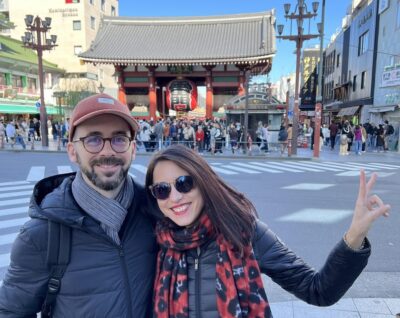
Asakusa: A Big-picture History Walk to Know Japan
Read our review →Browse the lists this tour appears in