
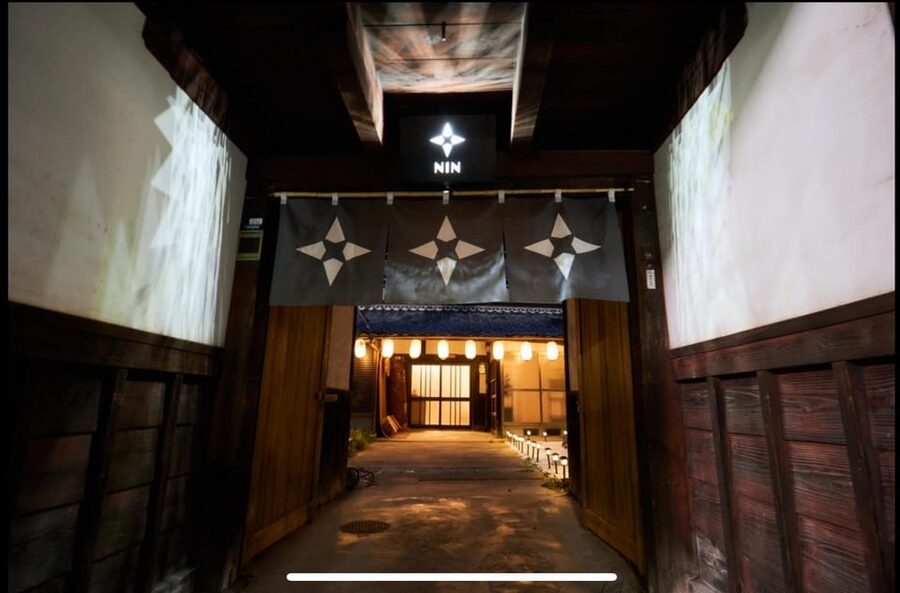
Review · KYOTO
Kyoto: Ninja Weapon Forging Experience
The best part of this Kyoto activity is that you do more than watch a craftsman work. You heat real steel in an 800°C furnace, hammer it, sharpen it, sand it, darken it, polish it, and finish it with your chosen kanji. That makes this feel like a proper workshop, not a quick souvenir stop.
I like the hands-on pace and the friendly English-speaking team, especially energetic instructors such as Taka and Daiki. I also like that you leave with something you made yourself, packed in a box rather than tucked loose into your luggage. The main drawback is the location: it is one minute from Hieizanguchi Station, but getting there from central Kyoto can take about 40 minutes by bus, with an uphill walk near the studio.
Key points to know before booking
- You forge real steel: Heat, hammer, sharpen, sand, blacken, and polish your own shuriken or kunai.
- You choose the design: Pick from three shuriken styles, or reserve the kunai option for an additional ¥3,000.
- You add personal detail: Staff engrave a kanji character of your choice onto the finished weapon.
- You learn while working: The session covers ninja history, symbolism, and traditional forging methods.
- You dress for the part: A samue uniform and tenugui head wrap are provided.
- You need checked luggage: Your finished weapon can fly home, but it cannot go in your carry-on bag.
Why this workshop feels different from a standard Kyoto souvenir
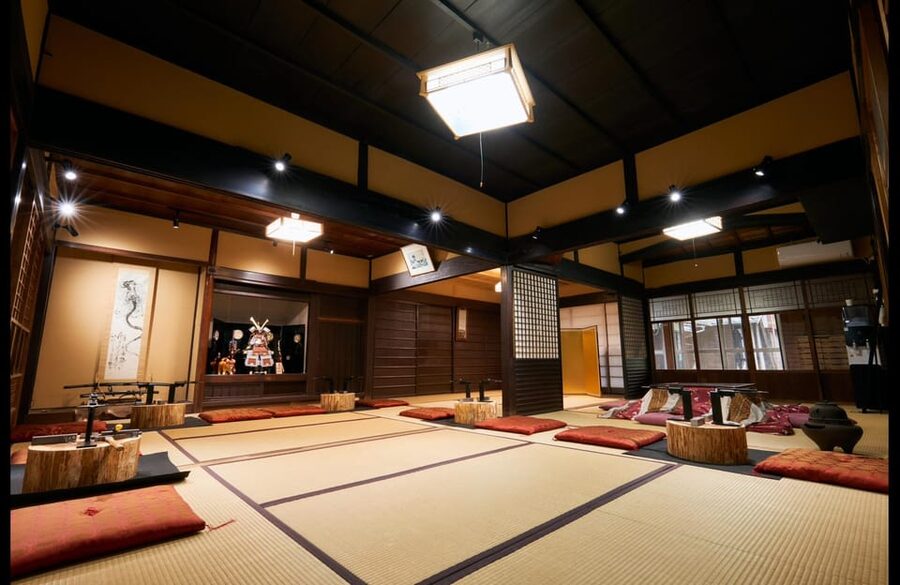
Kyoto offers plenty of polished cultural demonstrations. This one asks you to get involved. You are not simply watching a swordsmith or posing in a costume. You take part in the stages that give a small steel object its shape and finish.
The weapon is made from real steel, though you should keep your expectations sensible. This is a guided tourist workshop, not an apprenticeship in traditional blade making. The basic outline is prepared for you, and the instructors control the hotter and more demanding parts of the work. Still, you handle the hammer, work the sander, choose the finish, and help produce the final piece.
That balance works well. You get the thrill of sparks and hot metal without being left alone with a dangerous tool. The team explains each step before you try it, then helps when your hand position or pressure needs correcting.
The session is conducted in English. Taka is often praised for his energy and humor, while Mits, Ako, Yok, and Daiki are among the team members who help with instruction, engraving, and filming. The guides keep the mood light, but the work itself remains focused.
More of the past to walk through in Japan:
- Kyoto: Fushimi Inari, Kinkakuji, Bamboo Grove 1 Day Bus Tour
★ 4.8 · 4,316 reviews - World Heritage Shirakawa-go and Experience Tours from Kanazawa
★ 5.0 · 4,049 reviews - Tokyo: Imperial Palace and Shogun Historical Walking Tour
★ 5.0 · 2,251 reviews
Getting to Hieizanguchi Station and the workshop
The meeting point is a one-minute walk from Hieizanguchi Station. Once you arrive, look for the red postbox in front of the station and walk up the hill in that direction.
The station access is simple once you are there. The less simple part is reaching this quiet area from central Kyoto. One account describes a bus ride of roughly 40 minutes, while another notes that a taxi may be the easiest choice because public transport does not bring you right to the door without an uphill walk.
Allow extra time, especially for a morning booking. You do not want to arrive hot, rushed, or already tired before handling tools. The out-of-town setting is not a reason to reject the workshop, but it does make this better as a planned half-day outing than a last-minute add-on between downtown sights.
The neighborhood is described as peaceful, including after dark. If you finish late and plan to use a taxi, arrange your onward transport before the session ends.
Changing into samue sets the tone
You begin by changing into samue, the loose work clothing traditionally associated with Japanese artisans and blacksmiths. A tenugui head wrap completes the outfit.
This is not just costume dressing. The clothing helps you switch from sightseeing mode into workshop mode. You look the part in photos, and loose workwear is more practical around a furnace and sanding equipment than ordinary travel clothes.
Bring a camera or phone if you want pictures and videos. The staff can help capture the process, particularly around the furnace. Wear something comfortable underneath, and avoid bringing clothing you would be upset to expose to workshop dust or metal filings.
Choosing between a shuriken and a kunai
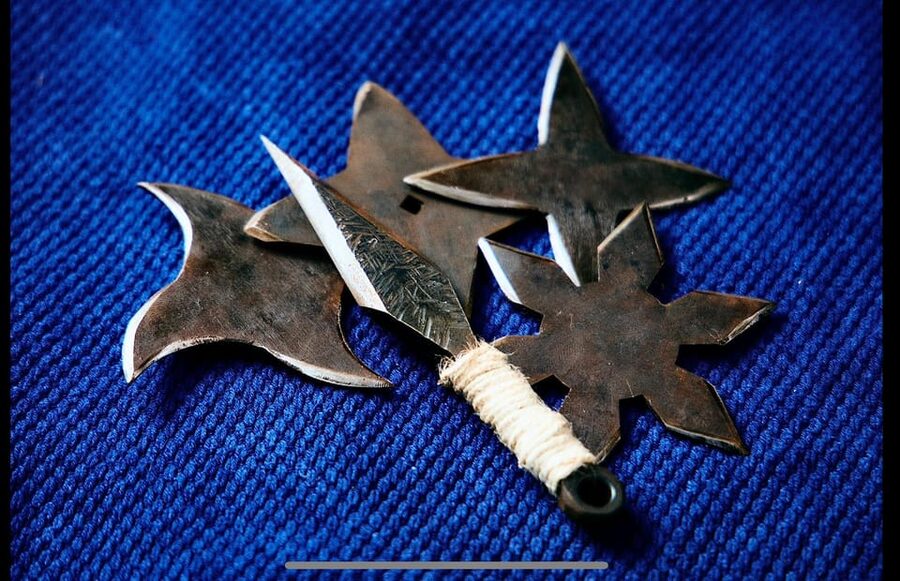
You choose your weapon before the forging begins. The standard choices include three different shuriken styles. Each has a different outline and character, so take a moment to pick rather than selecting the first shape you see.
A kunai is also available, but you must select the kunai option when booking. It costs an additional ¥3,000 to cover material and processing costs. Do not assume you can change your mind at the studio without arranging it in advance.
The shuriken is included in the listed price of $148 per person. The kunai is popular with people who want a knife-like form, but the extra charge matters when you are comparing this with other Kyoto activities.
This choice also affects the souvenir you take home. You are not buying a generic ninja star from a shop shelf. You are shaping and finishing the piece yourself, then adding a personal kanji engraving.
Same old streets, another chapter:
- World Heritage Kyoto & Nara Uji Authentic Matcha Experience
★ 5.0 · 1,573 reviews - Kyoto Gion: 2-Hour Geisha Culture & History Walking Tour
★ 5.0 · 1,186 reviews - Tokyo Castle & Imperial PalaceーShogun Walking Tour
★ 4.7 · 1,068 reviews - Kanazawa: World Heritage Shirakawa-go Morning Guided Tour
★ 4.9 · 988 reviews
Heating steel at 800°C
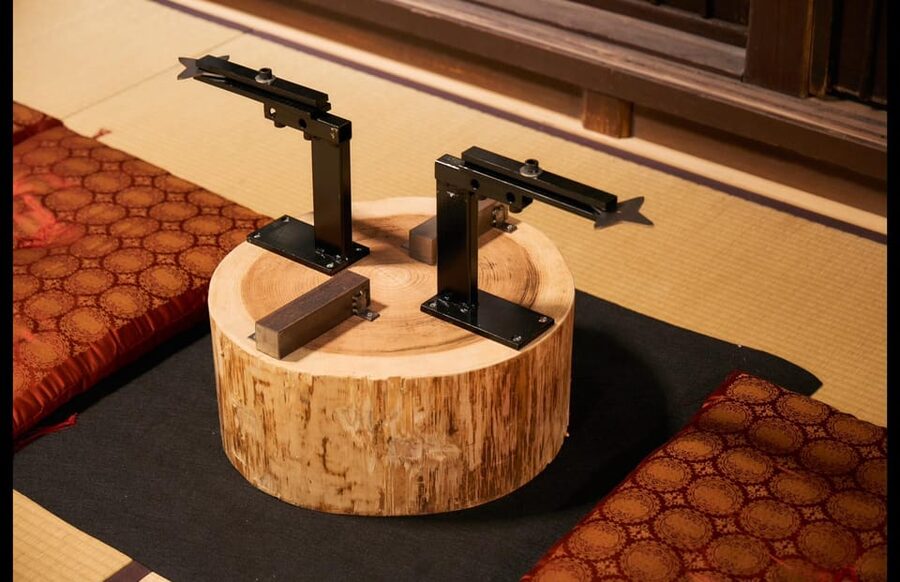
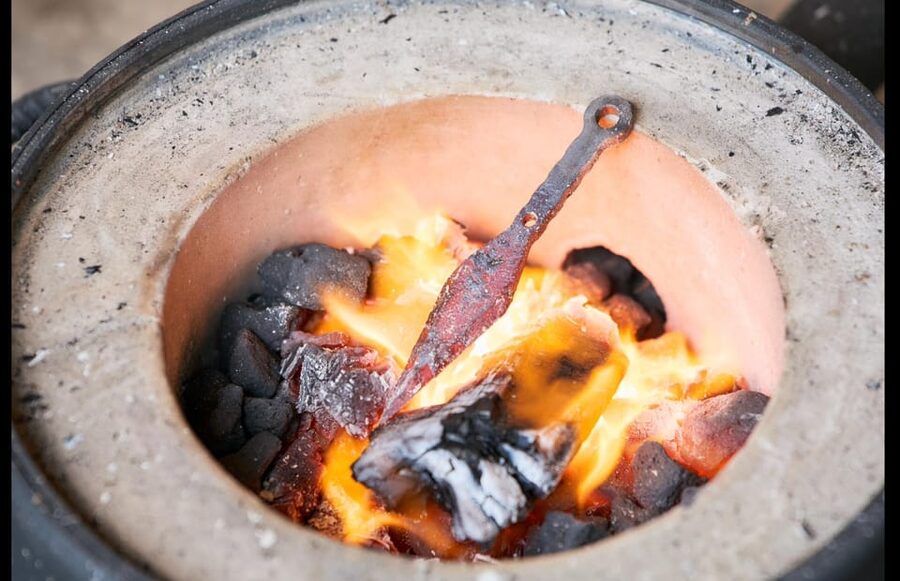
The furnace is the dramatic center of the workshop. You watch the metal glow as it heats to around 800°C, then follow the instructor’s directions as you strike it with a hammer.
The hammering is controlled and supervised. You are not expected to shape an entire blade from a raw lump of iron. Instead, you work on a prepared piece and help bring its form into focus. The short bursts of hammering give you the feel of the craft without turning the session into exhausting manual labor.
This is where the activity feels most authentic. The heat, noise, sparks, and changing color of the steel are things a video cannot reproduce. You also learn quickly that forging is not just about force. Timing, control, and repeated small corrections matter.
Some people would prefer a longer forging section. The workshop moves through several stages, so hammering is only one part of the overall session. If you are booking mainly for blacksmithing rather than the complete ninja-themed process, that is worth knowing.
Sanding reveals the shape
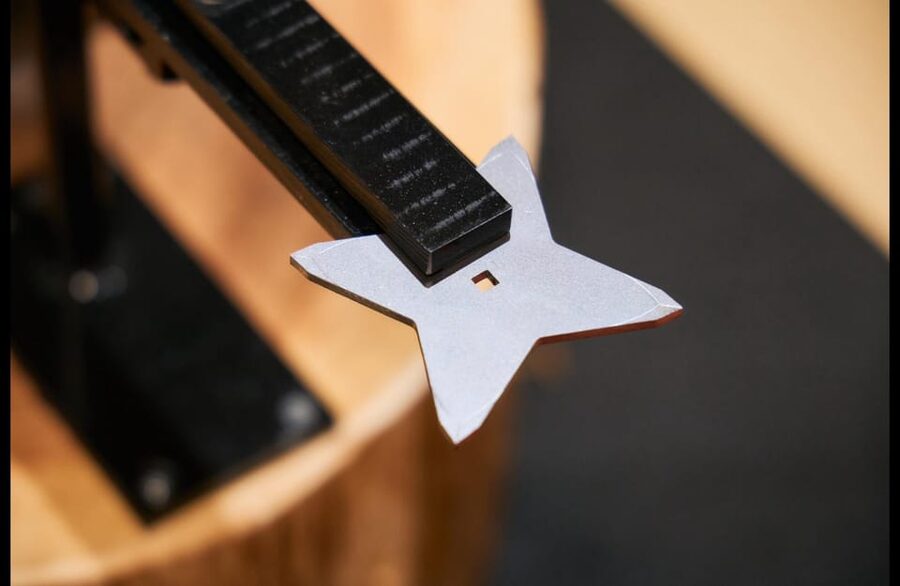
After heating and hammering, you refine the weapon with a professional belt sander. This is one of the clearest stages because the outline changes quickly under the abrasive belt.
You remove roughness, sharpen lines, and clean up the shape while the instructor watches your technique. The machine does much of the work, but your control still affects the result. This is also the point when the object begins to look less like a piece of workshop steel and more like a finished ninja tool.
The sanding station requires attention. You will be close to moving equipment, so listen carefully to the instructions and do not rush. The staff guide you through the process step by step, which makes it workable for first-timers and families.
One useful detail from the experience is that you can choose how sharp your finished piece should be. A duller finish may make more sense if you want to display it at home or take it into a classroom as a teaching prop. The activity is about craft and history, not testing the weapon.
Kanji engraving gives the piece a personal mark
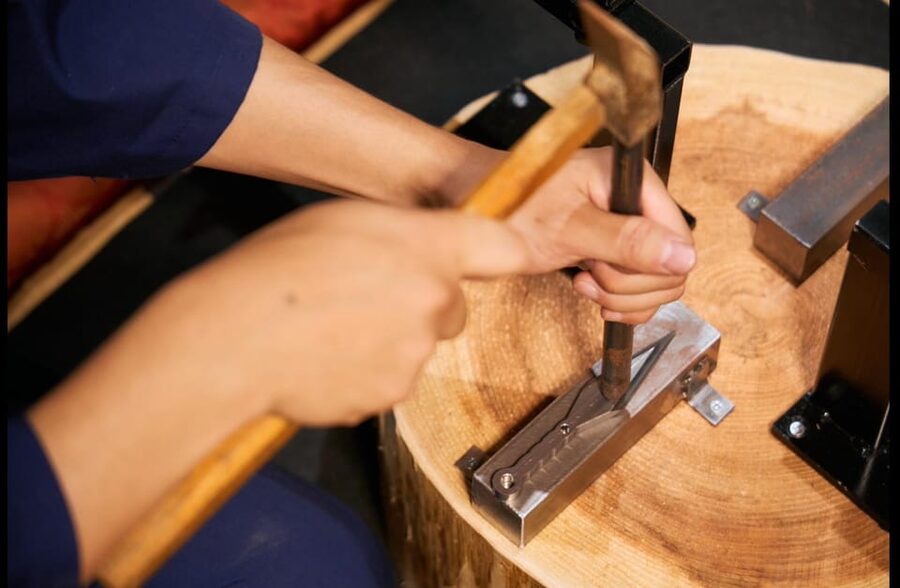
Once the basic form is complete, you choose a kanji character to be engraved onto the weapon. Staff carry out the engraving with precision, turning a shared workshop project into a more personal object.
Choose your character carefully. The kanji is part of the finished design, and you will see it every time you display the piece. If you are unsure which character fits your idea, ask the staff for help before the engraving begins.
This is one of the strongest parts of the workshop for families and couples. Each person can leave with a different character and a different weapon style, even when everyone attends the same session.
The engraving is not something you do yourself. It is handled by a skilled member of the team, including staff praised for careful work such as Yok. That division of labor makes sense: you get the satisfaction of making the main form, while the fine lettering receives professional treatment.
A short lesson on ninja history and symbolism
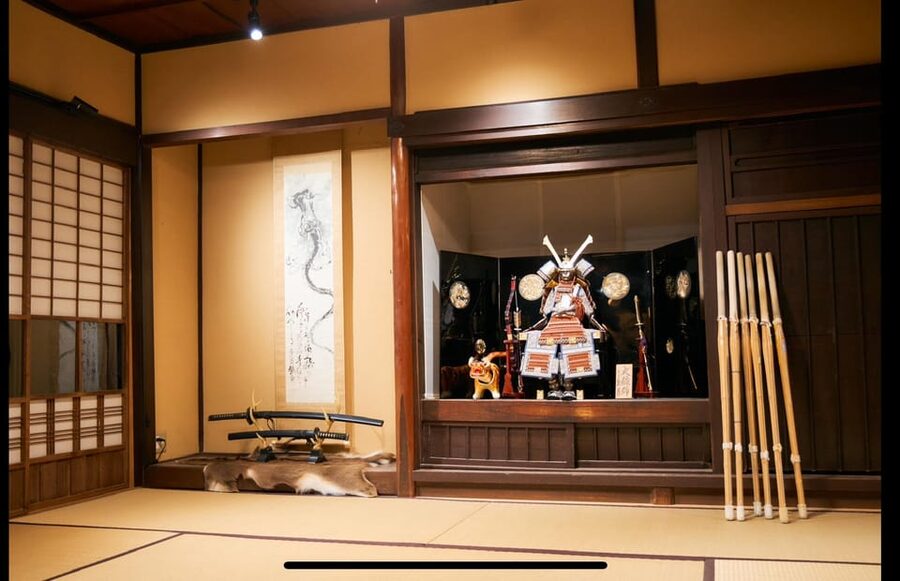
The workshop includes a history session covering ninja culture, weapon symbolism, and the hidden techniques associated with ninja. This gives the object some context beyond its appearance.
Keep your expectations grounded. You are not taking a full academic course on medieval Japan. The lesson is designed to support the hands-on work, giving you a better sense of why these tools mattered and how they fit into popular ideas about ninja.
That combination is useful. Without the history, the activity could feel like making a novelty prop. Without the practical work, the history could feel like a lecture. Here, the two parts reinforce each other.
The staff use humor and stories to keep the lesson moving. Families with children have found the format accessible, and children as young as eight have taken part with close guidance. Parents should still stay attentive around hot metal, sanding machinery, and sharp edges.
Blackening and polishing create the final finish
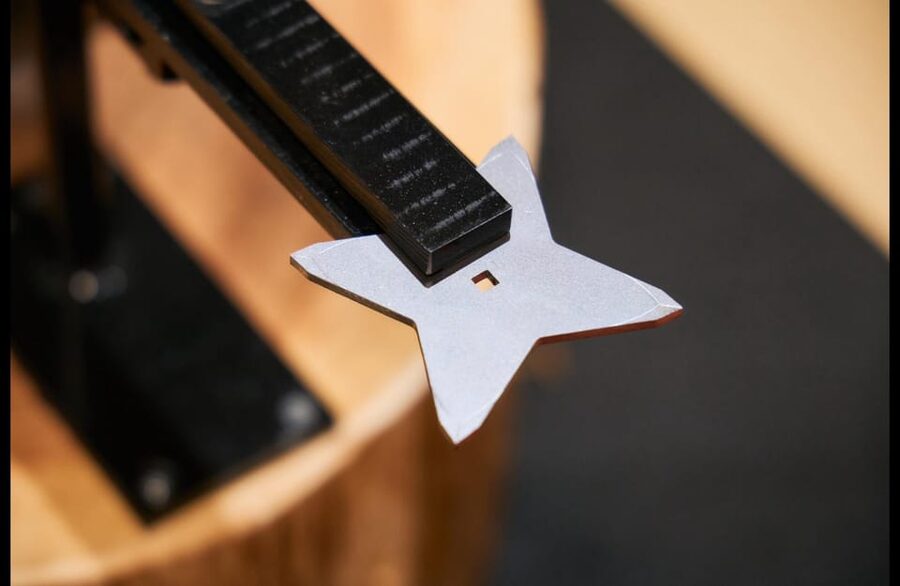
The next step is to apply a special solution that darkens the steel and helps protect it from rust. The black finish gives the weapon a subdued look associated with ninja tools.
This is a particularly satisfying visual change. The piece moves from bright worked metal to a darker, more finished object. The blackening also serves a practical purpose, since it offers protection against rust rather than being decoration alone.
You then complete the final polishing. Depending on your chosen piece and how much work you do at each stage, the surface can range from muted to noticeably shiny. You may also be able to choose how sharp or display-friendly you want the result to be.
The final object will not be a perfect professional weapon. That is not the point. Its value comes from the marks of your own work, the kanji, and the memory of producing it under guidance.
What you take home, and how to pack it
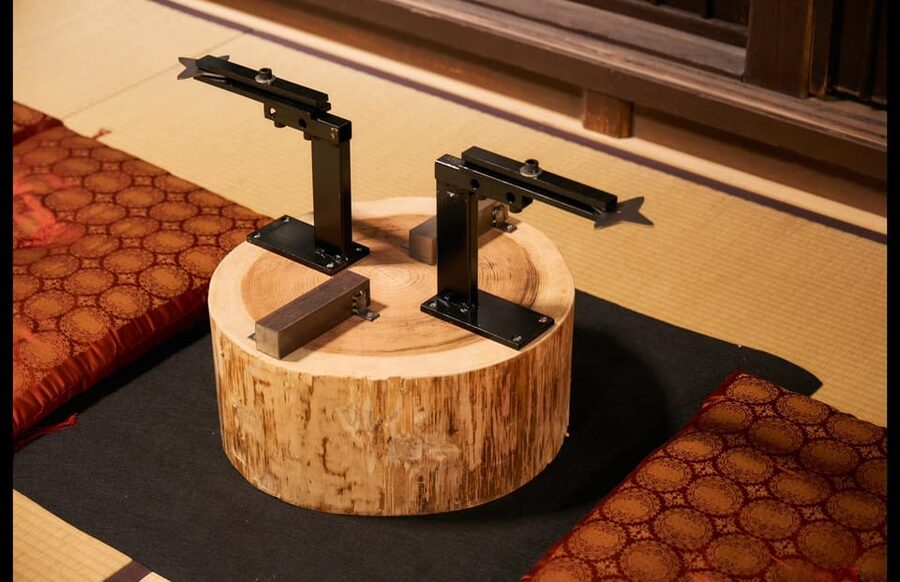
Your finished weapon is placed in a presentation box, which makes it easier to protect and display. That small detail adds real value to the $148 price because you are receiving both a guided activity and a substantial handmade souvenir.
Replica swords are also sold at the studio for an additional fee. They are separate purchases, not part of the weapon-making class, so budget for them only if you want an extra display item.
The most important packing rule is simple: you may bring the weapon home only in checked luggage. It cannot go in your carry-on bag. Check the rules for your airline and destination, and declare the item at customs if required. One family returning to Australia reported declaring theirs successfully, but you remain responsible for following your own country’s rules.
If you are traveling with only a cabin bag, this is a serious practical issue. Arrange checked baggage before booking, not after you have finished the workshop.
Is $148 a fair price?
At $148 per person, this is not a cheap craft class. The price makes more sense when you count the included uniform, instructor, tools, forging work, engraving, finishing stages, and boxed weapon.
You are also paying for supervision. A furnace, belt sander, hot steel, and sharpening equipment require more staff attention than a simple pottery painting session. The English instruction and help with photos and video add to the ease of the experience.
The value is strongest for people who care about making something physical. If you only want a quick ninja photo, this is too long and too expensive. If you want a Kyoto souvenir with a story attached, the cost is easier to justify.
The extra ¥3,000 for a kunai is reasonable if that shape matters to you, but remember to select it at booking. The included shuriken options already provide a complete activity, so you do not need the upgrade for the experience to feel substantial.
Who will enjoy this most?
I would recommend this to first-time visitors who want a break from temples, gardens, and museums. It is also a strong choice for families with older children and teenagers, couples who want a shared project, and solo visitors who like meeting people through an activity.
The staff create a welcoming atmosphere for solo participants. One solo visitor made friends during the session and continued the evening with them, though that kind of social connection naturally depends on the group you join.
Children can enjoy it, but this is not a free-form play session. Everyone must listen closely and follow instructions around hot metal and machines. The family groups who enjoyed it most had children old enough to stay engaged through several separate steps.
I would be more cautious about booking it for someone who dislikes heat, noise, workshop dust, or hands-on tools. The studio is safe when you follow instructions, but it is still a working craft environment.
Booking details worth knowing
The activity lasts 150 minutes, though some participants describe the full session as closer to three hours. Keep the rest of your day flexible rather than scheduling a temple visit immediately afterward.
The class is taught in English. The price is $148 per person, with some weapon types carrying an extra fee. You can reserve now and pay later, and cancellation is free up to 24 hours before the start time for a full refund.
The meeting point is near Hieizanguchi Station, by the red postbox and up the hill. Check your route before leaving central Kyoto, particularly if you plan to use a bus or taxi.
Should you book the Kyoto Ninja Weapon Forging Experience?
Book it if you want a hands-on cultural activity, enjoy making things, and have checked luggage for the trip home. The combination of hot steel, hammering, sanding, kanji engraving, and a boxed keepsake gives you far more than a standard souvenir purchase.
Skip it if your schedule is packed, you want a central Kyoto activity, or you are unwilling to pay extra for the kunai. The workshop takes time and requires a trip out to Hieizanguchi.
For most people who enjoy practical experiences, I would make room for it. Taka and the wider team bring plenty of humor and patience, while the step-by-step format keeps beginners involved. You leave with a small piece of Japan that carries your own fingerprints, not just a shop receipt.
FAQ
How long does the Kyoto Ninja Weapon Forging Experience last?
The stated duration is 150 minutes. Some participants describe spending closer to three hours at the workshop, so keep your schedule flexible.
Where does the activity take place?
The workshop is a one-minute walk from Hieizanguchi Station in Kyoto. From the station, go up the hill near the red postbox.
What weapons can I make?
You can choose from three shuriken styles. A kunai is also available if you select the kunai option when booking.
Does the kunai cost extra?
Yes. Making a kunai requires an additional fee of ¥3,000 for processing and materials.
Is the class taught in English?
Yes. English-speaking instructors lead the activity.
What is included in the price?
The price includes an instructor, the weapon-making class, a uniform, tools, and the weapon you make to take home.
Can I choose a kanji engraving?
Yes. You choose a kanji character, and a staff member engraves it onto your finished weapon.
Can I take the weapon home on an airplane?
Yes, but only in checked luggage. It cannot be carried onto the plane in your carry-on bag.
Can I cancel for a refund?
You can cancel up to 24 hours before the activity for a full refund. The reserve-now, pay-later option is also available.
Latest history tours reviewed in Japan
- Authentic Sapporo: Nijo Market Seafood Lunch & History Tour★ 4.8 · 20 reviews
- Asakusa: 3.5-hour Big-picture History Walk★ 4.7 · 39 reviews
- Asakusa: A Big-picture History Walk to Know Japan★ 4.6 · 77 reviews
- 2.5-Hour Nagoya Tour: Castle History, Local Food & City View★ 4.5 · 36 reviews
- 1-Day Tour from Nagoya: Hiking the Historic Nakasendo Trail★ 4.9 · 34 reviews
- Tokyo: Nikko World Heritage Private Day Trip Hotel Pick-up★ 4.8 · 145 reviews
- 2.5 Hour Private History and Culture Tour in Himeji Castle★ 5.0 · 185 reviews
- From Tokyo: Nikko World Heritage Sight Full Day Private Tour★ 4.9 · 127 reviews
Kyoto History Tours, compared.
Kyoto: Fushimi Inari, Kinkakuji, Bamboo Grove 1 Day Bus Tour
Read our review →
Kyoto Gion: 2-Hour Geisha Culture & History Walking Tour
Read our review →
Kyoto: Nara & Traditional Matcha Experience Bus Tour
Read our review →
Browse the lists this tour appears in