
Review · KYOTO
Kyoto: Nara & Traditional Matcha Experience Bus Tour
Nara’s deer and Todaiji’s huge bronze Buddha are the headline acts, but the best part of this day is the contrast: ancient Nara in the morning, tea-centered Uji in the afternoon. You’ll visit three major heritage sites, ride between them in an air-conditioned coach, and make matcha by hand rather than simply drinking it.
I like the thoughtful pacing and the guides. At-chan, Nanami, Mai, Tsubasa, and others have been praised for teaching simple Japanese phrases, giving clear directions, and helping people who fall behind. I also like that the tour includes temple admissions, transportation, and the matcha session in its $122 price.
The tradeoff is time. Nara Park, Kasuga Taisha, and Todaiji each receive a short visit, and traffic can affect the schedule. You’ll cover a lot in 8 hours and 30 minutes, but this is a highlights tour, not a slow inspection of every temple hall.
Key points to know before booking
- Todaiji’s Great Buddha: Enter one of Japan’s most famous wooden temple buildings and see the giant Buddha statue inside.
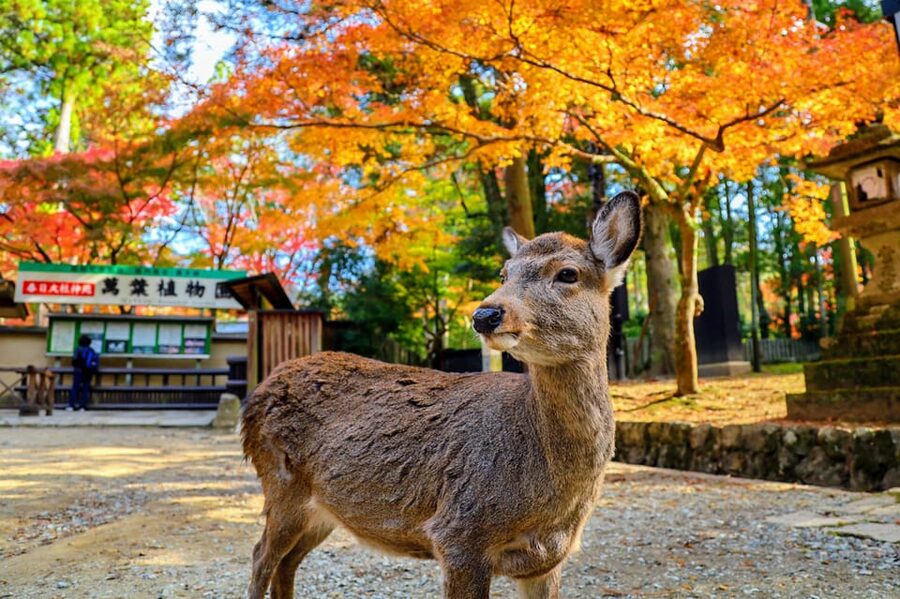
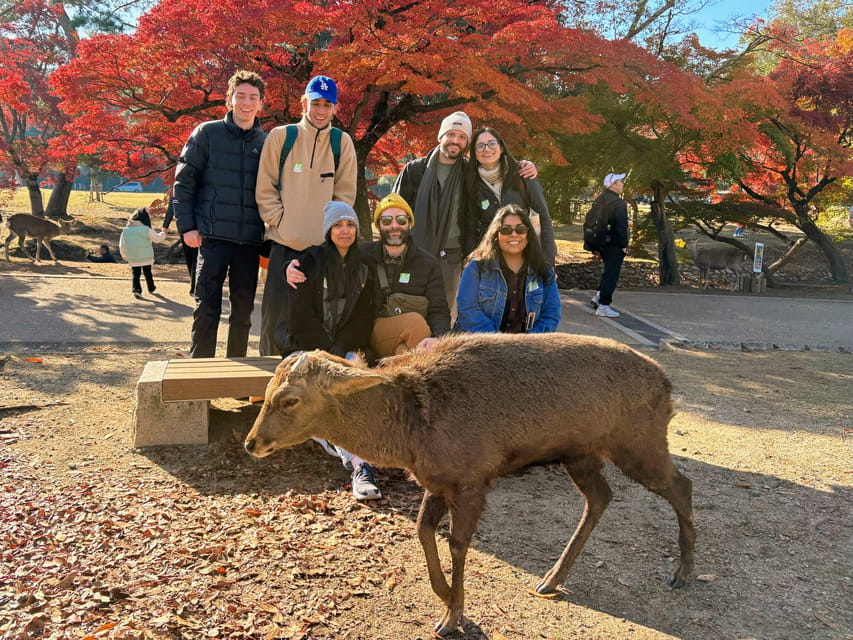
- Nara’s wild deer: Feed the deer with rice crackers, but keep your hands moving after the crackers are gone. They can nip.
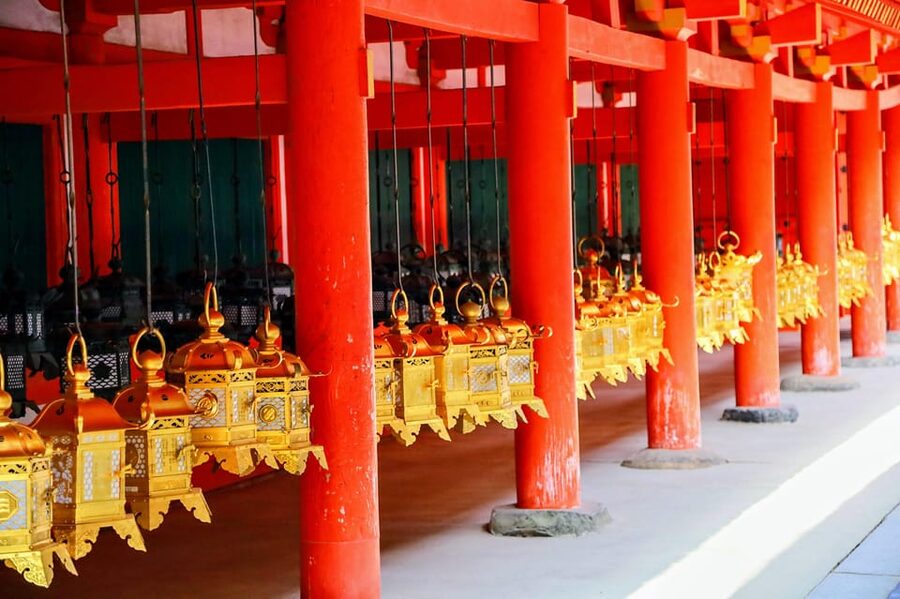
- Kasuga Taisha’s lanterns: The shrine’s 3,000 stone lanterns give this stop a quiet, almost magical feel.
- Uji matcha from scratch: Make finely ground green tea yourself in the area best known for matcha.
- A guide-led day: English commentary is provided throughout, with extra audio support in six languages.
- Good value for a packed day: Temple admissions, coach transport, Wi-Fi, and the tea activity are included. Lunch costs extra unless you choose the lunch option.
A full day from Kyoto to Nara and Uji
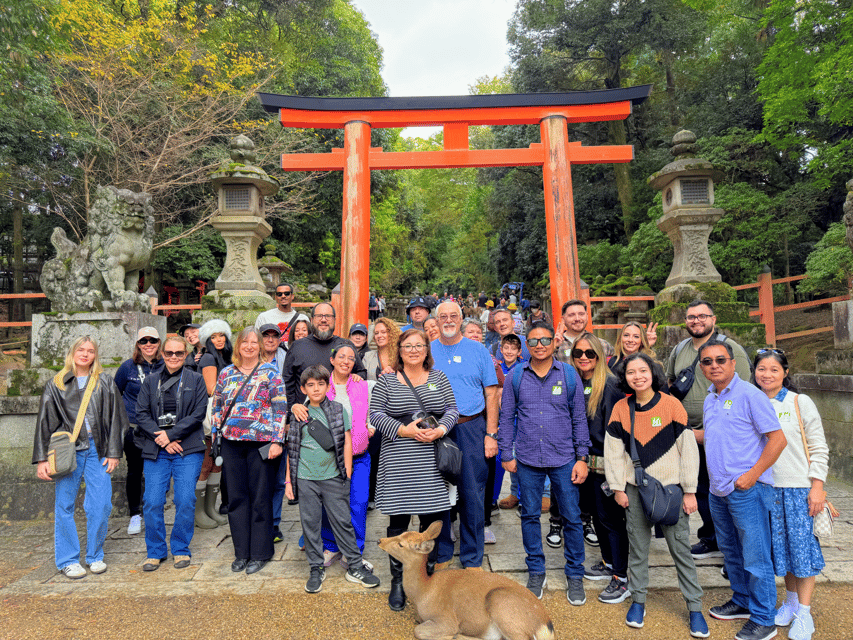
This tour leaves from the Tully’s Coffee Kyoto Avanti Store at 8:00 a.m. Check-in is at 7:50 a.m., and the meeting point is in front of the café at 31 Higashikujo Nishisannocho, near Kyoto Station.
Give yourself extra time to find the café. The meeting point can be confusing if you are crossing Kyoto Station or coming through the Avanti shopping center. Look for the green and white Japan Panoramic Tours flag. Latecomers and no-shows do not receive refunds or changes, so this is not the morning to cut things close.
Once aboard, you have a comfortable base for the day. The coach is air-conditioned, has free Wi-Fi, and is regularly ventilated. The ride toward Nara takes about an hour, with views or mentions of places such as Fushimi Castle and the old Heijokyo palace area along the way.
Your English-speaking guide handles the main commentary. Audio headsets are also available in French, German, Italian, Portuguese, Spanish, and Ukrainian. The guides do more than point out buildings. Several, including Mai, At-chan, and Tsubasa, are praised for teaching numbers, greetings, and useful Japanese phrases during the bus rides.
That extra instruction is a small but welcome touch. Long coach transfers become part of the experience instead of dead time.
More Local Culture and Traditions Tours in Japan
- Kyoto Gion: 2-Hour Geisha Culture & History Walking Tour
★ 5.0 · 1,186 reviews - Nara: Half-Day UNESCO Heritage & Local Culture Walking Tour
★ 4.8 · 250 reviews - Tokyo: The Best of Izakaya in Shinjuku Food & Cultural Tour
★ 4.9 · 221 reviews
Kasuga Taisha and its forest of stone lanterns
The first main stop is Kasuga Taisha, one of Nara’s best-known Shinto shrines. You have about 30 minutes here, enough to see the approach, take in the lanterns, and hear the basic story of the shrine.
The striking feature is the collection of roughly 3,000 stone lanterns. They line the paths and give the shrine a distinctive mood, especially when you move away from the busiest entrance areas. Your guide can explain the customs and visual details that are easy to miss when you walk through on your own.
Thirty minutes is not long. You should treat this as an introduction rather than a full shrine visit. Wear shoes that handle uneven ground, and be ready for stairs and hills. The tour is not suitable for wheelchair users or people with mobility impairments.
Meeting Nara’s deer in Nara Park

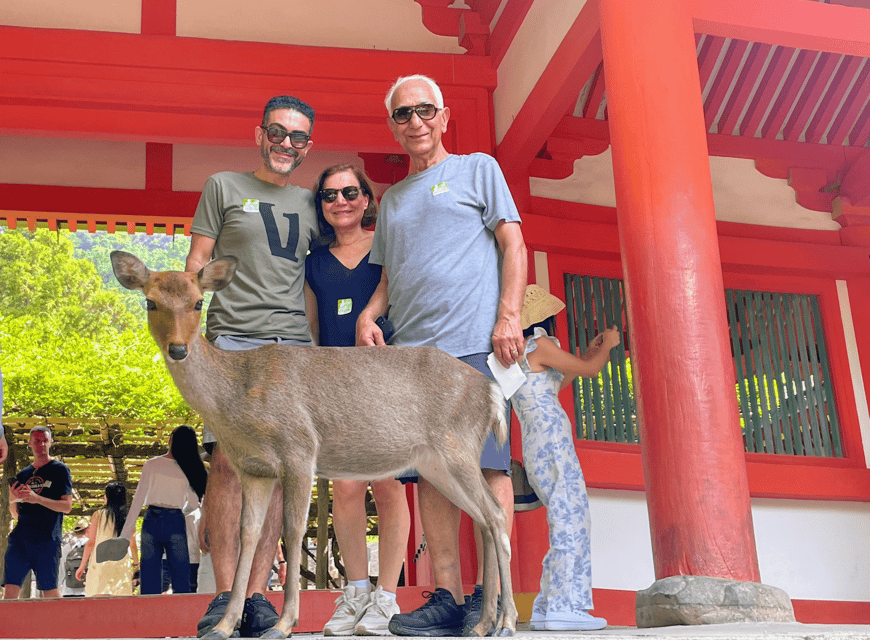
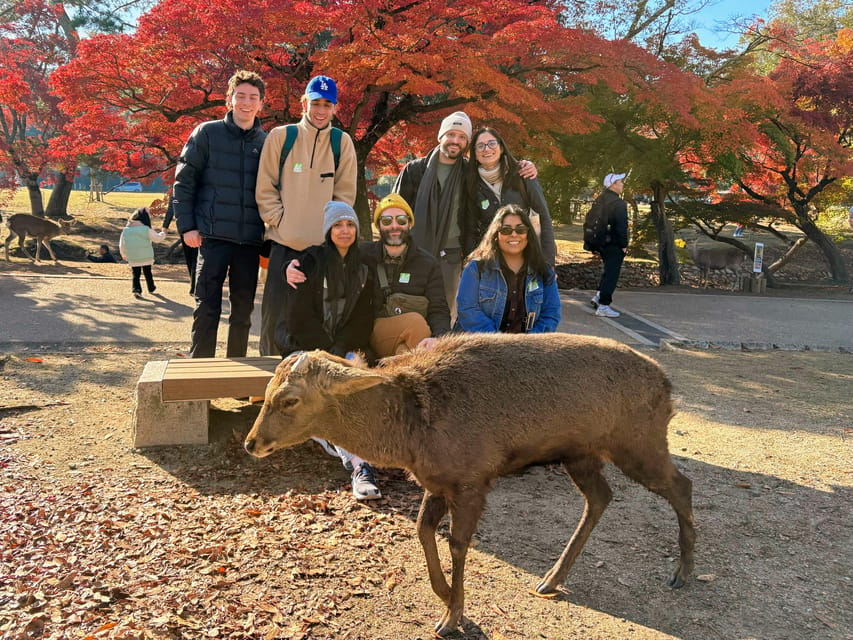
Next comes Nara Park, with about 30 minutes to walk among the famous wild deer. The deer are accustomed to people and may approach when they see rice crackers for sale at stalls along the paths.
Feeding them is simple, but use care. Offer the crackers with an open hand, and once they are finished, show the deer that you have no more. They may bow for another piece, which is charming, but they can also bite, as one guide sensibly warned.
The deer stop is one of the most memorable parts of the day because it is not just a photo opportunity. It gives you a direct look at one of Nara’s best-known local traditions. Keep your belongings secure and follow your guide’s instructions around the animals.
The short time here works well for a first visit. You can feed the deer, take photos, and walk toward Todaiji. If deer are your main reason for coming to Nara, you may prefer a separate visit with more time.
Inside Todaiji’s enormous wooden hall
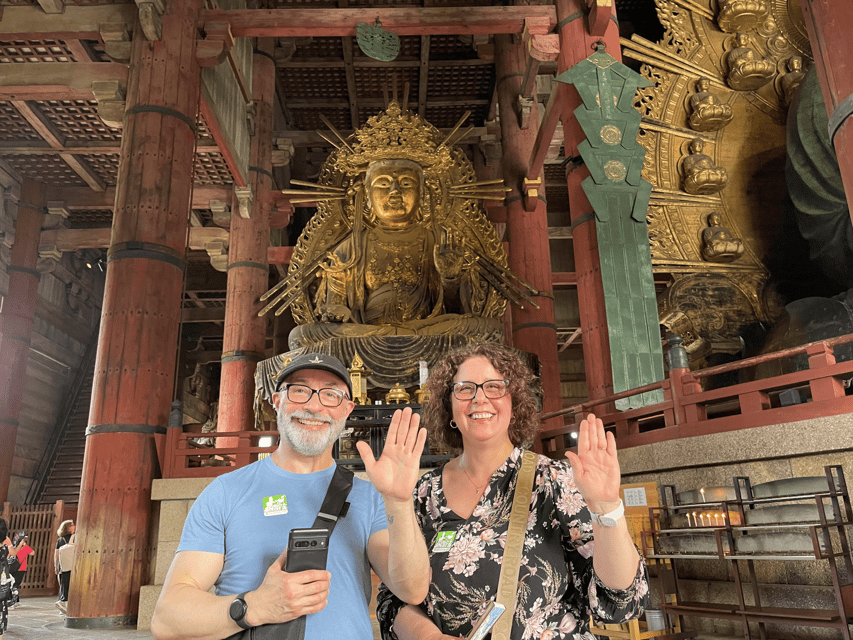
Todaiji receives about 50 minutes, making it the main historical stop in Nara. The temple’s Daibutsuden Hall houses the Great Buddha of Nara, one of the country’s most famous religious images.
The building itself is part of the spectacle. It is one of the world’s largest wooden buildings, and its scale becomes clear as you approach the entrance. Inside, the Great Buddha gives the visit its focus, while the hall helps explain the power and ambition of ancient Nara.
The admission fee is included, so you do not need to budget separately for entry. Your guide provides the historical and cultural background, then gives you time to look around and take photographs.
Fifty minutes is enough to see the main hall without rushing through it, but you will not have time to explore every corner of the wider Todaiji complex. If you want quiet contemplation, arrive expecting the visit to be active and structured.
Still, this is the strongest temple visit of the morning. Combined with the deer and Kasuga Taisha, it gives you three very different views of Nara in a compact period.
Same old streets, another chapter:
- Kyoto: Fushimi Inari, Kinkakuji, Bamboo Grove 1 Day Bus Tour
★ 4.8 · 4,316 reviews - World Heritage Shirakawa-go and Experience Tours from Kanazawa
★ 5.0 · 4,049 reviews - Tokyo: Imperial Palace and Shogun Historical Walking Tour
★ 5.0 · 2,251 reviews - World Heritage Kyoto & Nara Uji Authentic Matcha Experience
★ 5.0 · 1,573 reviews
Lunch and the move toward Uji
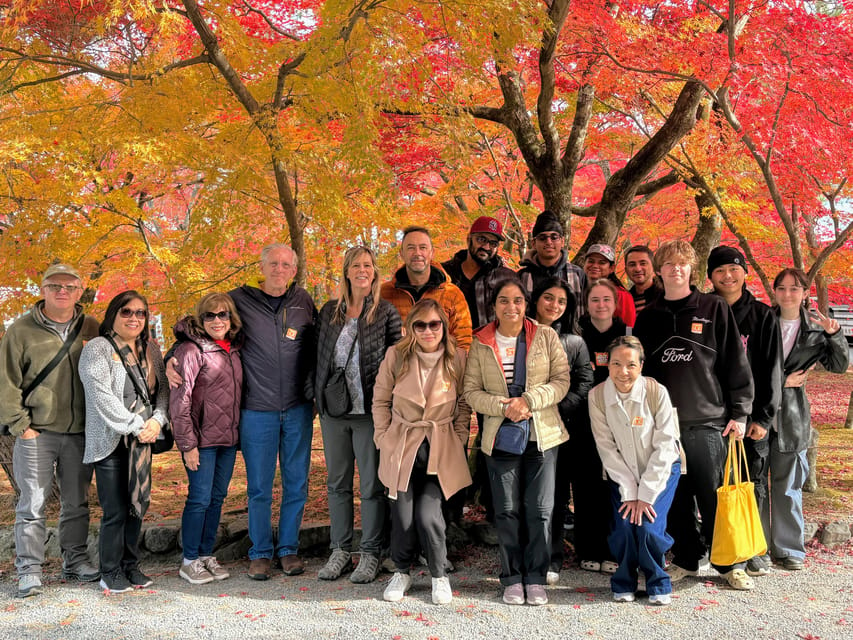
After Nara, the coach travels for about an hour toward Uji. Lunch follows at a local restaurant, with around 50 minutes set aside.
The Japanese lunch is optional. If you select the lunch option, it is included as part of that booking choice. Vegetarian arrangements can be made up to two days before the tour date, while last-minute bookings receive the regular meal. If you do not choose lunch, additional food and drinks are not included, so bring cash and plan accordingly.
This meal break also divides the day neatly. The morning focuses on Nara’s temples, shrine, and deer. The afternoon shifts to Uji’s tea culture and Byodoin Temple.
Byodoin Temple and the Phoenix Hall
Byodoin Temple is one of Uji’s major sights and is especially famous for its Phoenix Hall. You may recognize the building from the image on Japan’s 10-yen coin.
The temple is part of the Historic Monuments of Ancient Kyoto UNESCO World Heritage Site. The included admission means you can enter without arranging a separate ticket, and the one-hour visit gives you time to see the main temple setting and listen to the guide’s explanation.
Byodoin brings a different mood from Todaiji. Todaiji impresses through size and power. Byodoin is more closely tied to elegance, religious symbolism, and Uji’s long connection with tea and classical culture.
Traffic or operating conditions can change the order of the stops. If a scheduled place closes, an alternative is provided. That flexibility is practical, though it means you should not treat the timetable as exact.
Making Uji matcha by hand
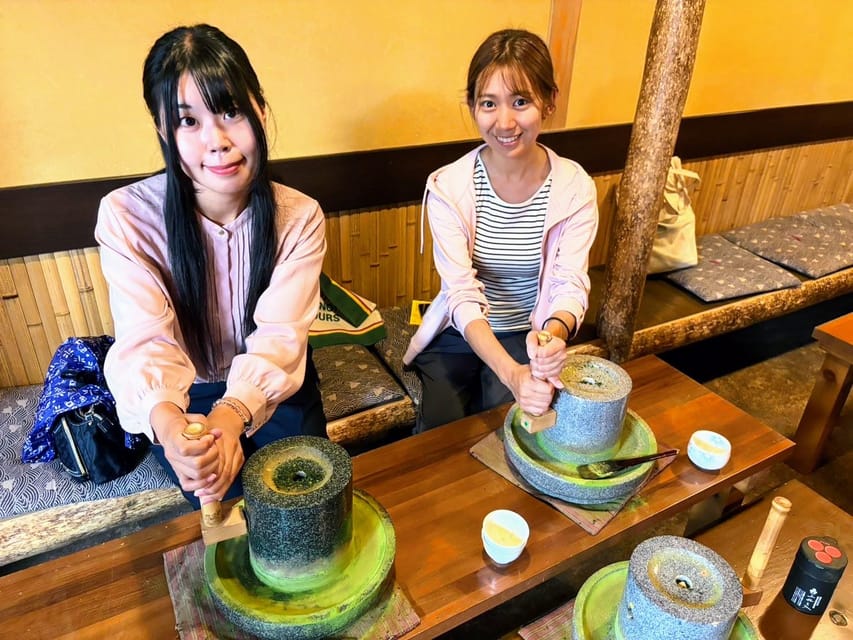
The final major activity is the matcha experience in Uji, with about 70 minutes for free time and tea making. Here you learn that matcha is not simply green tea poured into a cup. It is powder made from finely ground tea leaves and is also used in sweets and cooking.
The hands-on session is the reason this tour feels more complete than a basic Nara sightseeing bus trip. You make the tea yourself, follow the preparation steps, and taste the result. The activity gives you a better sense of why Uji is associated with matcha.
The setting also leaves room for shopping. Near the matcha experience, you will find small shops, restaurants, and other attractions. You can buy tea, sweets, or souvenirs, though those purchases are your own expense.
Allow enough attention for the class before browsing. The tea session is not just a quick sample, and the 70-minute block includes both the activity and free time. It is a good chance to slow the pace after the busy temple stops.
Several guides have been especially praised for making this part easy to follow. Nanami has been noted for using handmade visual material, while other guides help connect the tea process with Japanese customs and language. The exact guide varies by departure, so you should not book solely to secure a particular person.
What the $122 price really covers
At $122 per person, this is not the cheapest way to visit Nara and Uji. The value comes from what is bundled together: round-trip coach transportation, an English-speaking guide, admission to Todaiji, admission to Byodoin, and the matcha experience.
You also avoid organizing separate train journeys, local buses, temple tickets, and a tea activity. For a first visit, that saves planning time and reduces the chance of losing part of the day to transfers.
The lunch option changes the calculation. You need to choose it separately, and extra food or drinks are not included. If you prefer to pick your own meal, the standard arrangement gives you more control, but you should carry cash.
The tour has a 4.9 rating from 185 verified bookings, and 96 percent of ratings give the transport a perfect score. That fits the practical strength of the day: clean, comfortable transport and guides who keep the group moving.
Who will enjoy this tour most
I would choose this tour if you are staying in Kyoto and want to see Nara and Uji in one day without managing several train connections. It works especially well for first-time visitors, families needing clear directions, and people who want cultural context rather than a self-guided checklist.
The guides have repeatedly been praised for their warmth, organization, and personal help. At-chan has helped people locate specific tea shops during free time. Nanami and Mai have been praised for clear explanations and Japanese language lessons. Tsubasa has been noted for keeping the schedule efficient while leaving time for photos, shopping, and food.
The tour can also suit families with older relatives, provided everyone can manage stairs, hills, and walking. One family specifically appreciated a guide’s care with both children and elderly parents.
I would hesitate if your priority is slow temple photography, independent restaurant hunting, or long hours at Nara Park. You will see much in one day, but each stop has a fixed time. Summer heat can also make the walking tiring, so bring water and comfortable shoes.
The tour operates for 510 minutes, or 8 hours and 30 minutes, returning to the same Kyoto Avanti meeting point. Free cancellation is available up to 24 hours before departure, and you can reserve now and pay later, which helps if your Kyoto plans are still shifting.
Should you book the Nara and Uji day?
Book it if you want a well-organized introduction to Nara’s major sights plus a hands-on tea activity that gives the day a local focus. The combination of deer, Todaiji, Kasuga Taisha, Byodoin, and matcha is varied enough to keep the long day interesting.
The strongest reasons to choose it are the guides, the included admissions, and the simple transport plan. You receive more than a bus ride and a list of photo stops. You get explanations, basic Japanese lessons on some departures, and help with the practical details of moving through unfamiliar places.
Skip it if you already know Nara well or want to spend half a day at one temple. For everyone else, especially first-time visitors with one free day from Kyoto, the $122 cost is fair for the amount covered. Arrive early, wear good shoes, carry water and cash, and keep a little patience in reserve for traffic.
FAQ
Where does the tour start?
The meeting point is in front of Tully’s Coffee at the Kyoto Avanti Store, 31 Higashikujo Nishisannocho, Minami Ward, Kyoto. Check-in is at 7:50 a.m., with departure at 8:00 a.m. Look for the green and white Japan Panoramic Tours flag.
What is included in the tour price?
The tour includes an English-speaking guide, air-conditioned coach transportation with free Wi-Fi, admission to Todaiji and Byodoin Temple, and the matcha-making experience. A Japanese lunch is included only if you select the lunch option.
Is lunch included?
Lunch is optional. If you choose the lunch option, you receive a Japanese meal at a local restaurant. Vegetarian arrangements can be requested up to two days before the tour date. Last-minute bookings receive the regular meal.
Which languages are available?
The live tour guide speaks English. Audio headsets are available in French, German, Italian, Portuguese, Spanish, and Ukrainian.
Is the tour suitable for wheelchair users?
No. The experience is not suitable for wheelchair users or people with mobility impairments. You should also expect stairs and hills during the day.
What happens if I need to cancel?
You can cancel up to 24 hours before the tour for a full refund. Late arrivals and no-shows do not receive refunds or changes.
Latest history tours reviewed in Japan
- Authentic Sapporo: Nijo Market Seafood Lunch & History Tour★ 4.8 · 20 reviews
- Asakusa: 3.5-hour Big-picture History Walk★ 4.7 · 39 reviews
- Asakusa: A Big-picture History Walk to Know Japan★ 4.6 · 77 reviews
- 2.5-Hour Nagoya Tour: Castle History, Local Food & City View★ 4.5 · 36 reviews
- 1-Day Tour from Nagoya: Hiking the Historic Nakasendo Trail★ 4.9 · 34 reviews
- Tokyo: Nikko World Heritage Private Day Trip Hotel Pick-up★ 4.8 · 145 reviews
- 2.5 Hour Private History and Culture Tour in Himeji Castle★ 5.0 · 185 reviews
- From Tokyo: Nikko World Heritage Sight Full Day Private Tour★ 4.9 · 127 reviews
Kyoto History Tours, compared.
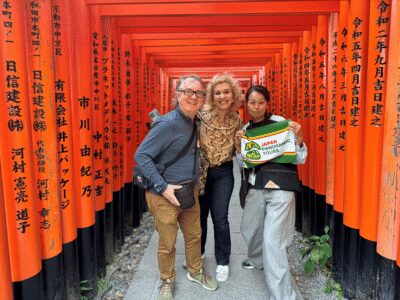
Kyoto: Fushimi Inari, Kinkakuji, Bamboo Grove 1 Day Bus Tour
Read our review →
Kyoto Gion: 2-Hour Geisha Culture & History Walking Tour
Read our review →
Browse the lists this tour appears in