Review · BARCELONA
Tarragona and Sitges Small Group Tour – Roman History & Culture
Tarragona gives this day trip its real weight. You walk across a nearly 2,000-year-old Roman aqueduct, pass through ancient walls, and look down on an amphitheater where a later Christian church was built from the arena’s own stone. I like that the tour adds three hours in Sitges, so the day is not only about ruins and dates.
I also like the small minivan, the mix of guided sightseeing and free time, and the chance to swim at a Sitges beach. Guides such as Sergio, Rod, Xavier, and Stephen have been singled out for clear explanations, good driving, and useful local suggestions. The main drawback is time: if Roman sites are your chief interest, you may wish Tarragona received more of the day.
Key points to know before booking
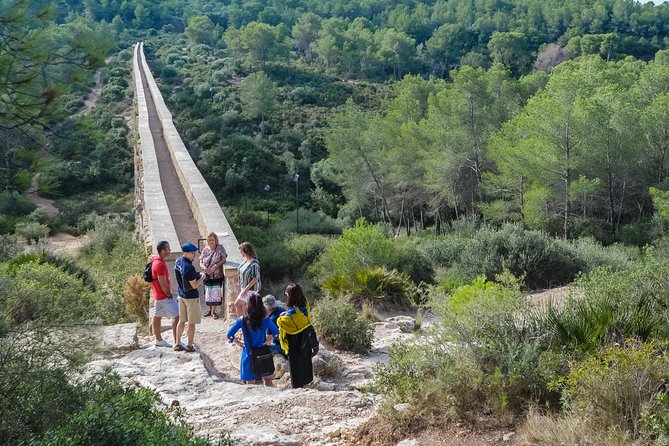
- Walk across a Roman aqueduct: The Pont del Diable is the day’s most memorable photo stop, and you can cross the top on foot.
- See Tarragona in layers: Roman walls, a medieval hospital, the cathedral, forum, circus, and amphitheater all sit within the modern city.
- Roc de Sant Gaieta is a brief pause: Allow about 20 minutes for its white houses and rocky seafront.
- Sitges is your relaxed finish: You get roughly three hours for lunch, beaches, cafes, shopping, and old streets.
- Expect a full day: The tour leaves central Barcelona at 8:30 a.m. and returns around 7:00 to 7:15 p.m.
- Bring beach gear: Comfortable shoes, sun protection, a swimsuit, and a towel will make the day easier.
Why this Barcelona day trip works
Barcelona has enough sights to fill a week, but that is also the problem. The city can feel crowded and tightly packed. This tour gives you a full day outside the capital, with Roman remains, Mediterranean views, small-town streets, and beach time in one outing.
The appeal is the contrast. Tarragona is about the machinery of Roman power: aqueducts, walls, a circus, an amphitheater, and the old provincial capital of Tarraco. Sitges feels lighter and more modern, with whitewashed houses, cafes, boutiques, and long sandy beaches. Roc de Sant Gaieta sits between them as a short coastal stop.
At $119.48 per person, the price is fair if you value the convenience of transport and a guide who can connect the sites. A train and self-guided visit might cost less, but you would need to plan the route, arrange local transport, and make sense of Tarragona’s scattered Roman remains yourself. The tour also saves you from driving and parking.
You are paying for a long day, not for admission to every monument. Food, drinks, and entrance fees for museums and monuments are extra. Read that carefully if you want to enter paid sites rather than see them from the outside.
More Local Culture and Traditions Tours in Spain
- Barcelona & Chocolate Amatller History and Culture + Activity and Tasting
★ 4.9 · 173 reviews - Barcelona Tapas Tour, Taverns, History & Local Culture
★ 5.0 · 25 reviews - Sevilla Food Tour: Tapas, Wine, History & Traditions
★ 5.0 · 3,468 reviews
Starting near Palau de la Música
You meet at C/ Palau de la Música, 1, beside the famous concert hall in central Barcelona. The stated meeting time is 8:15 a.m., with departure at 8:30. Arrive with time to find the office, use the restroom, and buy a quick coffee.
The first drive takes about 90 minutes. As you leave through Barcelona’s Eixample district, your guide gives a short introduction to the city and the day ahead. This is a useful start because it gives you some context before the Roman remains appear.
The vehicle is an air-conditioned minivan. That matters on a ten-and-a-half-hour outing, especially since the day includes a lot of walking in the sun. The group is described as small, with a maximum listed as either 15 or 8 in the supplied tour details. Since those figures conflict, confirm the current group limit when booking. Either way, the format is intended to be more personal than a large coach tour.
The tour operates in English only. The guides vary, but names associated with the experience include Sergio, Rod, Xavier, Stephen, Jordi, Sergi, and Henrique or Enrique. The strongest pattern is clear, engaging commentary and a willingness to answer questions. Sergio has received particular praise for making Roman history easy to follow, while Rod has been valued for his broad knowledge and practical suggestions.
Pont del Diable: the day’s best single stop
Around 10:00 a.m., you stop just outside Tarragona at the Pont del Diable, also called the Les Ferreres Aqueduct. The structure dates from the first century BC and once formed part of Tarragona’s water supply.
This is not a quick roadside photo. You can walk across the top of the aqueduct from one side to the other. Standing on the stonework gives you a direct sense of its scale and age. Modern explanations are useful, but the walk itself is the point. You are using the same elevated structure that carried water toward the Roman city almost 2,000 years ago.
Allow about 40 minutes here. Wear shoes with a firm sole, since the day includes uneven surfaces and plenty of walking. You should also bring sun protection. The aqueduct is one of those places where the physical setting explains more than a long lecture could.
Several people who loved the tour wished they had more time at this stop. That is worth noting if Roman engineering is your main reason for booking. The visit is memorable, but it is still one part of a packed schedule.
Tarragona, where Roman and modern life overlap
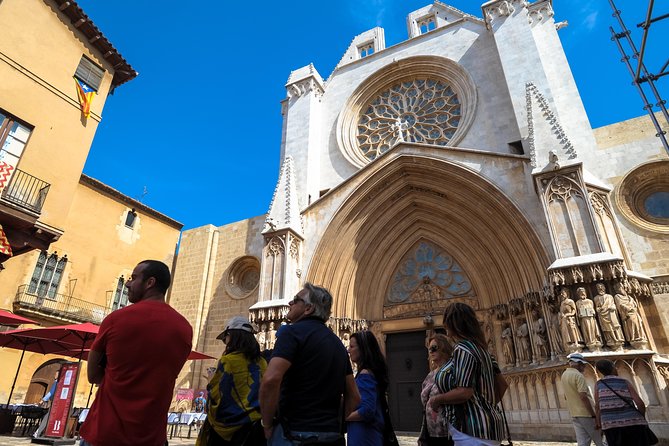
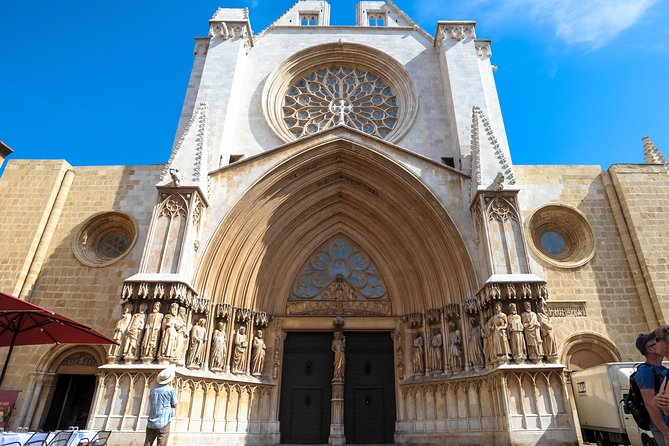
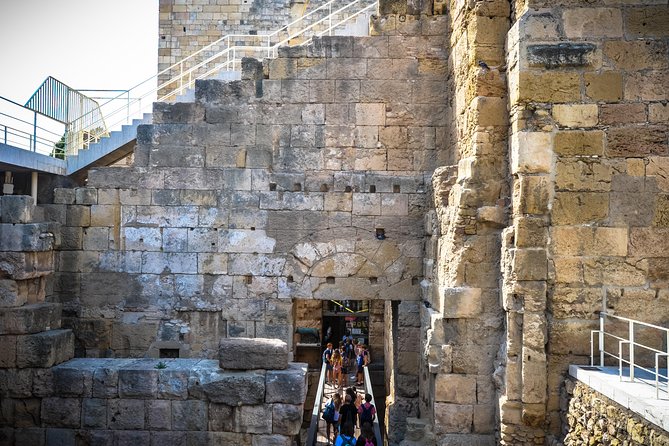
You reach Tarragona at about 11:00 a.m. The old city is entered through a narrow gate in the ancient walls, a fitting way to begin. The modern city has grown around and over the Roman remains, so do not expect one isolated archaeological park. Instead, you find fragments woven into ordinary streets and squares.
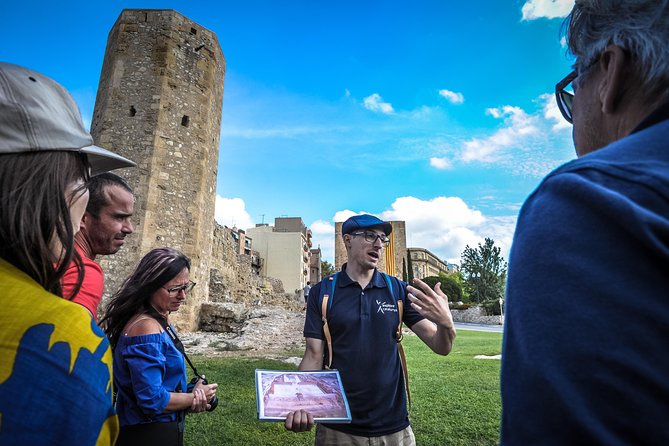
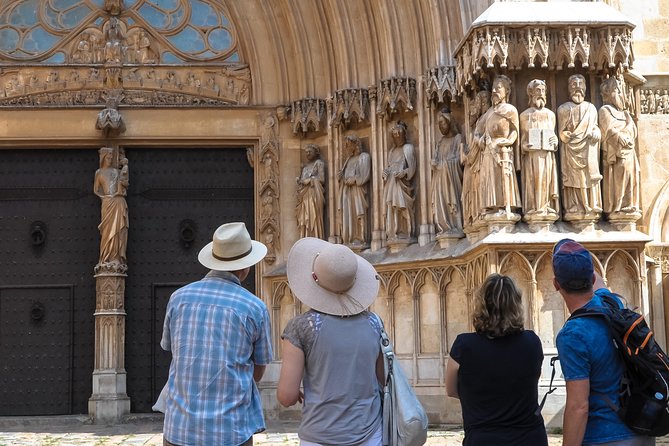
The route begins along the Archaeological Walkway, where surviving Roman walls show how strongly the old city was fortified. You then pass the medieval hospital and continue toward the cathedral. Depending on the day, a Sunday antique market may fill the area around the cathedral, adding a local street scene to the morning.
From there, the route moves downhill through the old quarter to the Roman Forum and Circus. Tarragona’s circus once held chariot races, and parts of its structure now sit beneath the modern urban plan. You walk through underground passageways that supported the circus seating before emerging near Plaça de la Font, a popular square occupying part of the former circus site.
This is where a good guide matters. Without explanation, Roman stones can look like disconnected walls. With a guide such as Sergio, Xavier, Rod, or Stephen, you get a clearer picture of how the forum, circus, streets, and public buildings once worked together.
The Tarragona visit lasts about two hours. That is enough for a strong introduction, but it is not a complete museum day. Entrance to museums and monuments is not included, so you should not assume that the tour takes you inside every major site. One common point of disappointment is the limited free time for entering the coliseum and Roman circus. If your priority is detailed archaeological study, a dedicated Tarragona day would serve you better.
More Small-Group History Tours in Spain
- Madrid Tapas & Taverns Small Group Food & History Tour
★ 5.0 · 2,664 reviews - Ultimate Seville Tapas, Wine & History Small Group Tour
★ 5.0 · 1,766 reviews - Alicante Historic Small Group Tour with Tapas Tasting
★ 5.0 · 559 reviews - Bilbao Historical Tour in small group
★ 4.7 · 52 reviews
The amphitheater and a view over the sea
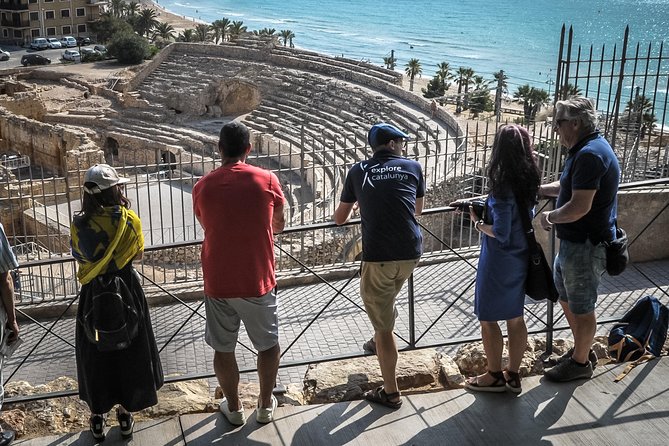
The final Tarragona highlight is the Roman amphitheater. From the viewpoint, you can look down toward the arena and the Mediterranean beyond. This combination gives the site its power: Roman public entertainment took place beside the sea, while the modern city continues around it.
The amphitheater also shows how later generations reused ancient buildings. A Christian church was built in the middle of the arena using blocks from the Roman structure. That detail turns the site into more than a ruin. It shows how Tarragona changed from Roman center to medieval Christian city and then to a modern Catalan capital.
You will have time to take in the view and hear the story, but the schedule keeps moving. The group generally leaves Tarragona around 1:00 p.m. If you want to enter paid monuments, check what is possible before the day begins. The tour’s strength is the broad picture, not a long, slow examination of each site.
I like this balance for a first visit. You see the major Roman markers, hear how they fit together, and still have time for a coastal afternoon. I would choose another arrangement if you already know Tarragona well or want to study Roman architecture in detail.
Roc de Sant Gaieta: a short coastal interlude
Around 1:30 p.m., the minivan stops at Roc de Sant Gaieta on the way to Sitges. The visit lasts about 20 minutes, so think of it as a change of pace rather than a full sightseeing stop.
The village sits on a rocky shoreline and has tiny white houses with a style influenced by Mediterranean and Roman-Greek ideas. It is a pleasant place to stretch your legs, take a few pictures, and look at a quieter piece of the coast.
The short timing is both good and limiting. You get a glimpse without losing the afternoon in Sitges, but you will not have time for a long walk or a leisurely drink. If you prefer a slower tour with fewer stops, this may feel rushed. If you like variety, it breaks up the history-heavy morning nicely.
Three hours in Sitges
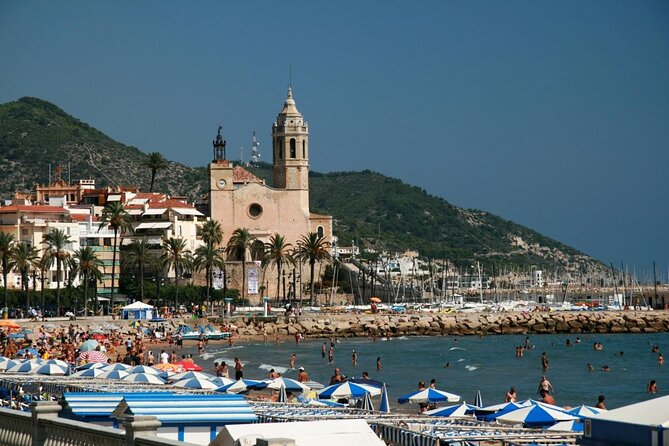
You arrive in Sitges around 2:30 p.m. This former fishing village has become a fashionable seaside town, but its older character remains in the whitewashed houses and narrow side streets.
The tour gives you about three hours here, with departure at roughly 5:30 p.m. That is the most flexible part of the day. You can walk through the old streets, browse boutiques, sit in a cafe, eat lunch, or head to one of the town’s 17 beaches.
Sitges works well as the final stop because you can choose your own pace. After several hours of Roman remains and guided commentary, you may want a table by the water. You might prefer a short swim, a quiet beach break, or a look around the shops. Bring a swimsuit and towel if you want that choice. The water can feel cold, especially after walking in the sun, but the chance to cool off is a welcome feature.
Plan your lunch with the clock in mind. Sitges has restaurants and cafes for different budgets, but a long meal can take up much of the free time. On Sundays, the town can be especially busy, which may make finding a table slower and the streets more crowded. If you want beach time, eat promptly or choose something simple.
Sitges is not an afterthought. It gives the tour a different mood and makes the day useful for people who want more than archaeology. Still, it can split opinions. If you came mainly for Rome, you may wish to trade some Sitges time for another hour in Tarragona. If you want a holiday-like afternoon after a cultural morning, Sitges is exactly the right finish.
What the small group adds
A minivan is more practical than a full-size coach on this route. You spend less time loading a large group and can move between the aqueduct, Tarragona, Roc de Sant Gaieta, and Sitges without arranging several connections yourself.
The small-group format also makes questions easier. Several guides, including Sergio, Xavier, Rod, and Henrique, are praised for adjusting their explanations to the group and offering ideas for free time. That can be especially useful in Tarragona, where the remains are spread through the city rather than gathered in one obvious place.
The tradeoff is that a minivan has limited personal space. On a full group, the ride may feel snug, especially during the long drives. You should also be ready for a full schedule. This is not a lazy beach day or a private archaeological tour. It is a fast-moving sampler of Roman Tarragona and the Catalan coast.
Who should book this day trip?
I would choose this tour if you have several days in Barcelona and want one organized day outside the city. It suits couples, families with older children, and anyone who likes a mix of history, walking, scenery, food, and free time.
It is also a good option if you enjoy having a guide explain the big picture but do not need to spend hours inside every museum. Guides such as Sergio, Rod, Xavier, and Stephen have been especially well received for making the history lively rather than dry.
You should think twice if you have mobility concerns, dislike uneven walking, or want a slow schedule. The tour involves ancient streets, viewpoints, stairs or irregular surfaces, and time outside. It is not recommended for children aged four and under.
Pack light but sensibly:
- Comfortable walking shoes
- Hat and sunscreen
- Water
- Swimsuit and beach towel
- Money or a card for lunch, drinks, and optional admission fees
The tour is offered in English, and hotel pickup and drop-off are not included. You start near Palau de la Música and finish at Plaça de Catalunya, although the exact return point can be the tour office or Arc de Triomf depending on traffic and group size.
Is Tarragona and Sitges worth $119.48?
For $119.48, you get transport, a professional guide, and a carefully connected full day outside Barcelona. The price makes the most sense if you would otherwise need to combine train tickets, local transfers, a Tarragona plan, and a Sitges plan on your own.
The value is less compelling if you only want beach time or only want to enter Tarragona’s monuments. In those cases, a focused self-guided day may give you more control. You will also need to budget separately for food, drinks, and paid museum or monument entrances.
The cancellation terms are straightforward: cancel at least 24 hours before the start time for a full refund. If the minimum number of participants is not reached and the tour is canceled, you are offered another date or experience, or a full refund.
Should you book it?
Book this tour if you want Roman Tarragona and a Mediterranean afternoon without renting a car or managing several connections. The aqueduct walk, Tarragona’s amphitheater view, and the flexible Sitges stop give the day a pleasing range.
Skip it if you want a deep archaeological visit or prefer to spend most of your time in one place. For most first-time visitors looking for an easy Barcelona escape, though, this is a strong choice. Keep your expectations clear: it is a broad, well-paced introduction, not an exhaustive tour of Tarragona’s monuments.
FAQ
Where does the tour begin?
It begins at C/ Palau de la Música, 1, in Barcelona’s Ciutat Vella, beside Palau de la Música. The meeting time is 8:15 a.m., with departure at 8:30 a.m.
Where does the tour end?
The planned end point is Plaça de Catalunya. Depending on traffic and group size, the minivan may instead return to the tour office or Arc de Triomf, about a ten-minute walk from the office.
How long does the tour last?
The experience lasts about 10 hours and 30 minutes. It generally begins at 8:30 a.m. and returns to central Barcelona around 7:00 to 7:15 p.m.
Is transportation included?
Yes. Transport is provided in an air-conditioned minivan. Hotel pickup and drop-off are not included.
What is included in the price?
The price includes a professional guide, minivan transport, and the small-group format. Food, drinks, and entrance fees for museums and monuments in Tarragona are not included.
Can I swim in Sitges?
Yes. The schedule gives you free time in Sitges, including the chance to swim. Bring a swimsuit and beach towel if you want to use the beach.
Is the tour offered in languages other than English?
No. This experience operates in English only.
Can I cancel for a refund?
You can cancel at least 24 hours before the start time for a full refund. Cancellations or changes made less than 24 hours before the start time are not refunded or accepted.
More Small-Group History Tours in Barcelona
- London Small Group Tour of Historical Pubs
★ 5.0 · 10,422 reviews - Boston: Freedom Trail History Small Group Walking Tour
★ 5.0 · 6,450 reviews - Hidden Alleyways and Historic Sites Small-Group Walking Tour
★ 5.0 · 2,335 reviews - New Orleans Small-Group Haunted History Carriage Tour
★ 4.5 · 2,289 reviews
More Local Culture and Traditions Tours in Barcelona
- Amsterdam Food and Cultural Tour with Tastings
★ 5.0 · 4,315 reviews - Tromsø: Reindeer Camp and Sami Cultural Tour with Lunch
★ 4.7 · 3,326 reviews - Half Day Dominican Republic Cultural Tour : Small Group
★ 4.5 · 1,862 reviews - Ultimate Melbourne Walking Tour: History, Laneways & Culture
★ 5.0 · 1,451 reviews
Latest history tours reviewed in Barcelona
- Barcelona Historic Guided Tour★ 4.8 · 24 reviews
- Private Jewish Heritage Journey by Barcelona Dreaming★ 4.8 · 383 reviews
- Barcelona Tapas Tour, Taverns, History & Local Culture★ 5.0 · 25 reviews
- Barcelona: Market, Tasty Tapas/Food and Gothic History Tour★ 4.7 · 48 reviews
- Barcelona Historical 3-Hour Bike Tour★ 4.7 · 222 reviews
- Barcelona & Chocolate Amatller History and Culture + Activity and Tasting★ 4.9 · 173 reviews
- Barcelona: The Spanish Civil War Historical Walking Tour★ 4.9 · 239 reviews
- Barcelona: 3-Hour Sips, Sites & Bites Food & History Tour★ 4.8 · 33 reviews
Barcelona History Tours, compared.

Barcelona: Tapas Walking Tour with Food, Wine, and History
Read our review →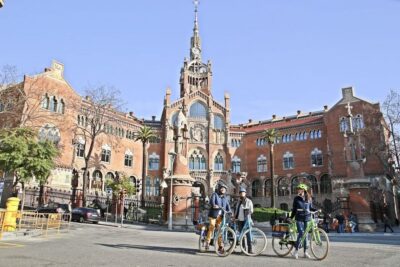
Barcelona: 2.5-Hour Bike or E-Bike Historical Tour
Read our review →
Barcelona Erotic Museum – Explore Art, History & Fun
Read our review →
Private Jewish Heritage Journey by Barcelona Dreaming
Read our review →
Barcelona 1.5h Private Old Town, Gothic & Ramblas Walking Tour
Read our review →
Barcelona: The Spanish Civil War Historical Walking Tour
Read our review →