
Review · BARCELONA
Private Jewish Heritage Journey by Barcelona Dreaming
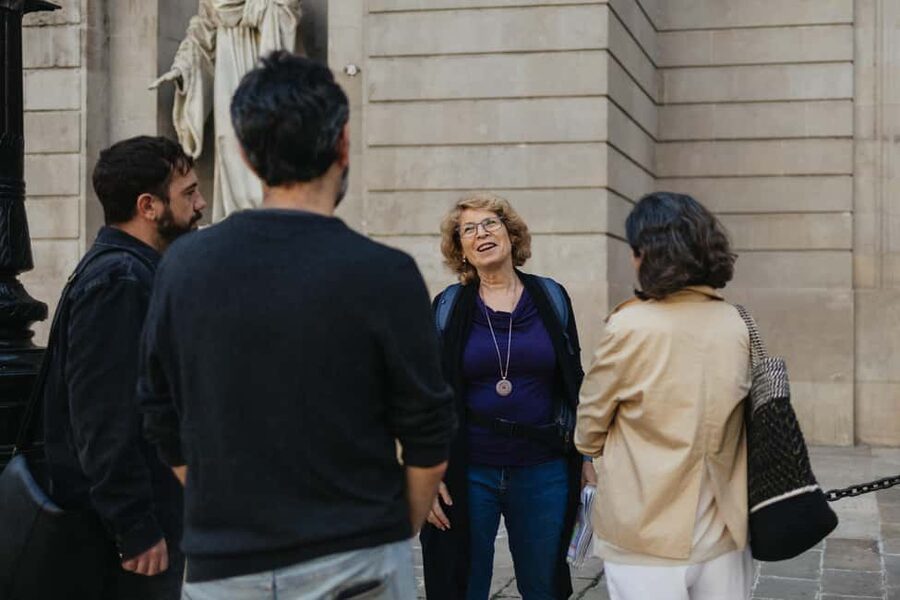
Barcelona’s Jewish Quarter is easy to miss. The lanes are tucked into the Gothic Quarter, and the clues to Jewish life can look like ordinary stonework unless someone points them out. This private walk leads you through the medieval Call, into the Ancient Synagogue, and toward the story of scholars such as Ramban and Rashba.
I like the private format, especially for families who want to pause, ask questions, or adjust the pace. I also like that the tour goes beyond a standard old-city walk, with a hidden Mikveh, Casa Adret, maps, old images, and discussion of both Sephardic achievement and persecution.
The main caution is practical: this is a real walking tour on old cobblestones, and the synagogue has a few steps. One previous booking also found the synagogue closed, so it is sensible to confirm access if that site is central to your plans.
Key points at a glance
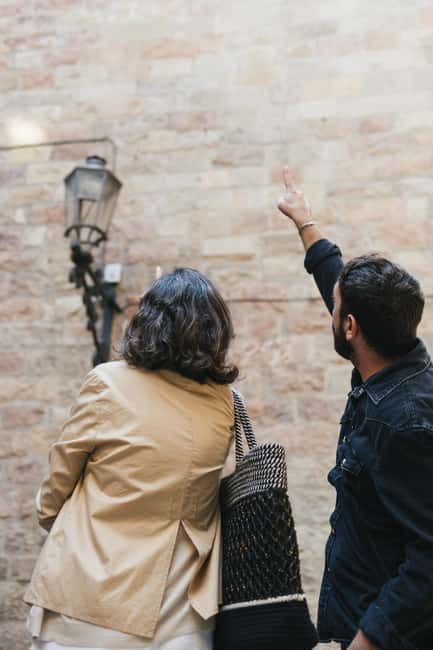
- Ancient synagogue access: Enter one of Europe’s oldest synagogues, with the reminder that occasional closures can affect entry.
- A private two-hour route: Set the pace for your family, ask detailed questions, and stop when you need to.
- The medieval Call: Follow narrow Gothic Quarter lanes where Jewish Barcelona once formed a major community.
- Stories with substance: Learn about Ramban, Rashba, the golden age of Sepharad, and the later impact of the Inquisition.
- Useful local advice: Finish with recommendations for kosher and local dining, along with ideas for the rest of your stay.
- Good guide choice: The company offers English, Hebrew, and Spanish, with guides including Edu, Ella, Alan, Lilach, Dina, Eyal, and others.
Why Barcelona’s Call is worth two focused hours
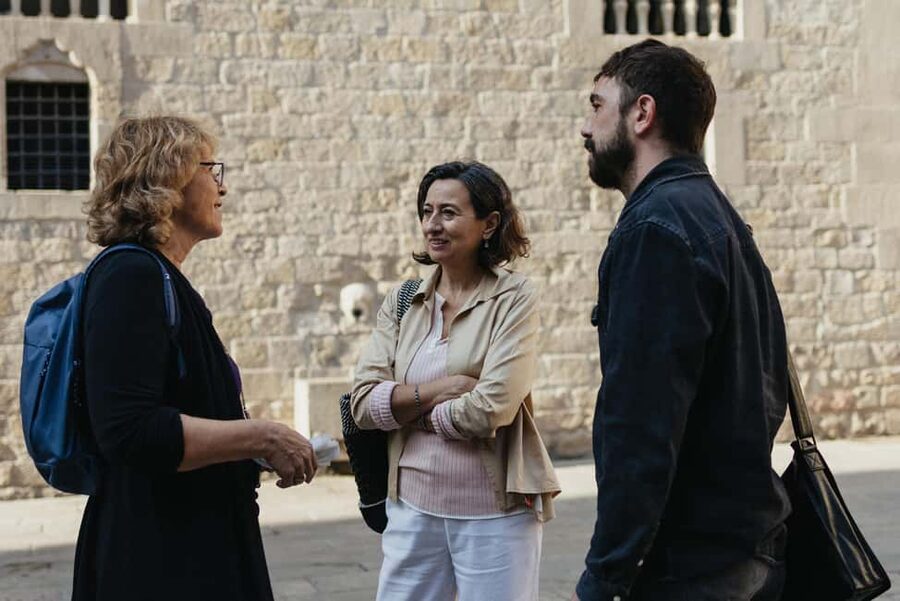
Barcelona’s medieval Jewish Quarter is not a single grand monument. It is a cluster of lanes, walls, former homes, religious sites, and traces that require explanation. That makes a private guide especially useful here. You are not simply ticking off buildings. You are learning how to read a district whose Jewish identity was partly erased, repurposed, or left in fragments.
The tour presents Jewish life in Barcelona across a long stretch of time, reaching back more than 2,000 years while focusing closely on the medieval community. You hear about daily life, scholarship, religious practice, contact with Catalan society, and the eventual pressure that led to expulsion and persecution.
I appreciate the stated effort to keep the story balanced. The walk covers a period of flourishing and coexistence, but it does not turn the past into a simple golden-age tale. You also hear about the Inquisition and the less visible signs of Jewish persecution. That wider view gives the quarter more meaning than a quick visit to one old building.
The format suits people with a family connection to Sephardic history, but you do not need Jewish ancestry to benefit. If you are interested in medieval Barcelona, religious history, or the way cities preserve and conceal their past, this is a strong use of two hours.
More Private History Tours in Spain
- Barcelona 1.5h Private Old Town, Gothic & Ramblas Walking Tour
★ 5.0 · 318 reviews - Madrid Historical Tour with Local Guide in Eco Tuk Tuk Private
★ 5.0 · 876 reviews - Segway Private Tour in the Historic Center of Madrid
★ 5.0 · 310 reviews
Meeting near Conesa Entrepans in Plaça Sant Jaume
The meeting point is in Plaça Sant Jaume, next to Conesa Entrepans in the Gothic Quarter. This is a central place to begin, but the square can be busy and crowded, so arrive with enough time to locate your guide.
One useful detail is guide identification. A previous participant suggested that a shirt or sign would make the guide easier to spot. I would contact Barcelona Dreaming before setting out if you have trouble recognizing people in busy squares, especially if your group includes children or older family members.
The opening walk takes about 15 minutes and leads toward the first historical discussion. Your guide may begin by asking about your interests, family background, mobility needs, or the level of detail you want. That matters because a private tour should not feel like a memorized speech delivered at one fixed speed.
The company works in English, Hebrew, and Spanish. Guides named in past bookings include Edu, Ella, Alan, Lilach, Dina, Eyal, Leiach, and others. The strongest pattern is clear: you should expect a guide who can explain the subject at length and handle questions, rather than someone who simply points out buildings.
Plaça de Sant Jaume and the public heart of old Barcelona
Plaça de Sant Jaume helps place Jewish Barcelona within the wider city. It is a civic center in the Gothic Quarter, and from here the guide can explain how the Call fitted into medieval Barcelona’s political, commercial, and religious life.
This is where the tour begins to move from general city sightseeing to a more precise reading of space. You may discuss where the Jewish quarter lay, how its streets connected with the rest of the city, and why Jewish communities often developed close to, but distinct from, the Christian center.
The walk through this part of the old city is short, but the stones underfoot are not always smooth. Comfortable shoes are a must. The route runs in rain or shine, so water and a quick look at the forecast are sensible preparations.
I would not treat this as a fast sightseeing circuit. The value lies in stopping for an inscription, a wall detail, or a story that would be easy to miss alone. A private group can make those pauses without worrying about holding up a larger crowd.
King’s Square and the story behind the stones
The next scheduled stop is King’s Square, reached by about a 30-minute walk and guided visit. This is one of the longer portions of the route, so it provides room for context and conversation.
Here, the guide connects the Jewish quarter to the wider medieval city. You can expect discussion of Jewish scholars, communal life, and the intellectual role of Barcelona. Ramban and Rashba are central names in the program. Their presence helps turn an abstract lesson about medieval Jewish scholarship into a story tied to actual streets and houses.
The guide may also use maps, photographs, and reconstructions to show how the area changed over time. One past guide, Alan, was specifically noted for using maps and visual material to explain older settlements and city development. That sort of aid is useful because the modern Gothic Quarter does not always make the medieval layout obvious.
This part of the walk is also where the larger political story comes into view. You learn about periods of coexistence and contribution, then the later tension, discrimination, and violence that reshaped Jewish life in Spain. The subject can be difficult, but the tour aims to explain it rather than soften it.
If you have a strong interest in family history, tell the guide at the start. A private tour can leave more room for questions about names, migration, Sephardic roots, or the fate of Jewish communities in Spain. It cannot provide a genealogy search, but it can give you a clearer historical setting for your own research.
More Jewish Heritage Tours in Barcelona:
- Budapest Jewish Heritage Memorial Walking Tour & Synagogue Entry
★ 5.0 · 568 reviews - 3-Hour Porto Jewish Heritage Walking Tour with Local Guide
★ 4.5 · 396 reviews - Warsaw: Jewish History Guided Walking Tour in English
★ 4.7 · 324 reviews - Anne Frank and the Jewish History of Amsterdam Private Tour
★ 5.0 · 307 reviews
Entering the Ancient Synagogue
The Ancient Synagogue is the central physical stop. Entry is included in the $94 price, and the guide explains why this small, old space matters within the history of Barcelona’s Jewish community.
This is not a vast religious complex. Its appeal comes from its age, scale, and setting within the tight medieval street plan. A guide’s explanation is important because the building’s meaning is not always apparent from its size or plain surfaces.
The program also includes a hidden medieval Mikveh. That adds a more personal layer to the tour by showing how religious practice shaped the community’s buildings and routines. The guide can explain the role of ritual bathing and why such a feature might survive in a place that many people pass without noticing.
There is an accessibility point to keep in mind. Most of the walking route works for wheelchairs and strollers, but the Ancient Synagogue has a few steps and may not be accessible to every visitor. If someone in your group has mobility needs, contact the provider in advance and ask exactly what assistance is possible.
Also confirm that the synagogue will be open on your date. One booking found it closed, even though the walk itself remained worthwhile. Since entry is one of the tour’s main selling points, this is the one detail I would verify before booking if the interior visit is essential.
Casa Adret and the quieter traces of Jewish Barcelona
Casa Adret is another key stop. The house is tied to the medieval Jewish quarter and is the sort of place that benefits from a guide who knows which details matter.
The walk does not promise a museum-style collection at every stop. Instead, it uses the surviving buildings and fragments to explain how Jewish homes, study, worship, and community life once occupied these lanes. You may be shown faint symbols on old stone walls or details that are easy to overlook without local knowledge.
The tour also points out the Rashba House. This is a useful stop for connecting intellectual history to a physical address. Rather than treating Rashba as a name in a textbook, the guide places his legacy within the neighborhood where Jewish scholarship once had a daily presence.
The route returns to the Conesa Entrepans area. That central finish is convenient if you want to continue sightseeing in the Gothic Quarter, find lunch, or use the guide’s recommendations for kosher and local restaurants.
A private pace that works well for families
The private format is the tour’s biggest practical advantage. You are not trying to keep up with a large group or wait while a guide answers questions unrelated to your interests. A family can request more history, more genealogy discussion, fewer stairs, or a slower pace.
This flexibility has mattered for groups with teenagers, older adults, and walking difficulties. One family with teenagers aged 15 and 17 found the combination of conversation and historical explanation worked well for the whole group. Another older group said the guide stopped for rests and adjusted the speed when needed.
That does not make the tour effortless. You still walk on uneven surfaces, and some parts of the old quarter offer limited places to sit. One participant specifically wished for more rest stops. Bring water, wear supportive shoes, and tell the guide early if anyone needs regular breaks.
The experience is listed as suitable for private groups and wheelchair accessible in general, but the synagogue steps are the clear exception. It is also not designed for people over 95, according to the activity information.
Guides who make the difference
A history walk rises or falls on the guide. The most frequently praised qualities here are preparation, clarity, warmth, and the ability to answer questions without losing the thread of the route.
Edu has been singled out for adjusting pace, speaking clear English, and making space for conversation. Ella has been praised for her command of Catalan, Barcelona, and medieval Jewish history. Alan is known for visual explanations and careful attention to safety in bad weather. Lilach, Dina, Eyal, and Leiach have also been described as engaging and well prepared.
Because this is private, the guide can respond to your group instead of delivering the same talk to everyone. You might ask a broad question about Jewish life in Spain, then move to a very specific question about a symbol, a scholar, or a family connection. That is where the $94 price has its strongest value.
The rate is per person, so the total cost rises with group size. For one or two people, it is more expensive than a standard group walk. For a family or small group, the difference can be reasonable because the price includes a private guide, synagogue entry, and a focused route without a larger crowd.
What the $94 price really buys
At $94 per person for two hours, this is not a bargain city orientation. You are paying for subject expertise, privacy, entry to the Ancient Synagogue, and the ability to shape the conversation around your group.
I see the best value for people who have a clear interest in Jewish Barcelona or Sephardic history. If you only want a quick introduction to the Gothic Quarter, a less specialized walk may serve you better. But if you want to understand what happened in these streets and why the remaining traces matter, the extra cost is easier to justify.
The tour also offers value beyond its scheduled end. Your guide provides suggestions for kosher and local dining and can recommend places for the rest of your visit. That is especially useful if Barcelona is your first stop in Spain and you want help planning the next few hours.
Booking flexibility is another plus. You can reserve and pay later, and cancellation is free up to 24 hours ahead for a full refund. Those terms help if your Barcelona schedule is still shifting.
Who should book this Jewish heritage walk
I would choose this tour for a family with mixed ages, a couple tracing Sephardic roots, or anyone who wants more than a general Gothic Quarter stroll. It is also a good first activity in Barcelona if you like starting a trip with a local guide who can suggest restaurants and further sights.
You should be comfortable walking for two hours on cobblestones and uneven surfaces. If you need frequent seating or cannot manage a few steps, ask about the synagogue before reserving.
The tour is not mainly about food, shopping, or grand architecture. Its reward is the connection between small physical traces and a larger story about scholarship, faith, civic life, persecution, and survival.
Should you book Barcelona Dreaming?
Book it if the Jewish history of Barcelona matters to you and you want a private guide who can adjust the route and answer serious questions. The synagogue, Mikveh, Casa Adret, Rashba connection, and stories of Ramban give the walk more substance than a simple neighborhood tour.
Skip it if you want a broad city overview, dislike walking on old streets, or would be disappointed by a possible synagogue closure. For everyone else, $94 per person is a fair price for a focused private experience, especially when shared by a family or small group.
Confirm the synagogue opening, wear good shoes, bring water, and arrive ready to ask questions. Those small steps will help you get the most from Barcelona’s quiet, easily missed Jewish quarter.
FAQ
How long is the Private Jewish Heritage Journey?
The tour lasts two hours.
How much does the tour cost?
The listed price is $94 per person.
Where does the tour meet?
Meet in Plaça Sant Jaume, next to Conesa Entrepans in the Gothic Quarter.
What sites are included?
The route includes Plaça de Sant Jaume, King’s Square, the Ancient Synagogue of Barcelona, and Casa Adret. The guide also discusses the medieval Jewish Quarter, the Mikveh, Rashba House, Jewish scholars, and Jewish life in Spain.
Is entry to the Ancient Synagogue included?
Yes. Entry and all entrance fees for the Ancient Synagogue are included. The site has a few steps, and access may not be suitable for every wheelchair user or stroller.
Which languages are available?
The tour is offered in English, Hebrew, and Spanish.
Can I cancel or pay later?
You can reserve now and pay later. Cancellation is free up to 24 hours in advance for a full refund.
More Private History Tours in Barcelona
- Private Historical Walking Tour of York
★ 5.0 · 1,324 reviews - Private Guided Historic Electric Cart Tour of St. Augustine
★ 5.0 · 1,194 reviews - Istanbul: Acemoglu Historical Turkish Bath w/Private Options
★ 4.6 · 1,190 reviews - From Cairo: Private Full-Day Tour of Historical Alexandria
★ 4.1 · 1,155 reviews
Latest history tours reviewed in Barcelona
- Barcelona Historic Guided Tour★ 4.8 · 24 reviews
- Barcelona Tapas Tour, Taverns, History & Local Culture★ 5.0 · 25 reviews
- Barcelona: Market, Tasty Tapas/Food and Gothic History Tour★ 4.7 · 48 reviews
- Barcelona Historical 3-Hour Bike Tour★ 4.7 · 222 reviews
- Barcelona & Chocolate Amatller History and Culture + Activity and Tasting★ 4.9 · 173 reviews
- Barcelona: The Spanish Civil War Historical Walking Tour★ 4.9 · 239 reviews
- Barcelona: 3-Hour Sips, Sites & Bites Food & History Tour★ 4.8 · 33 reviews
- Barcelona: Cemetery Tour – Gothic Graves & Local History★ 4.9 · 33 reviews
Barcelona History Tours, compared.

Barcelona: Tapas Walking Tour with Food, Wine, and History
Read our review →
Barcelona: 2.5-Hour Bike or E-Bike Historical Tour
Read our review →
Barcelona Erotic Museum – Explore Art, History & Fun
Read our review →
Tarragona and Sitges Small Group Tour – Roman History & Culture
Read our review →
Barcelona 1.5h Private Old Town, Gothic & Ramblas Walking Tour
Read our review →
Barcelona: The Spanish Civil War Historical Walking Tour
Read our review →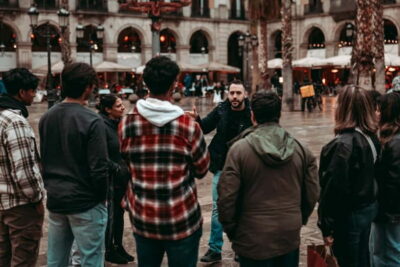
Barcelona: Tipsy Tapas & History Tour in the Gothic Quarter
Read our review →Browse the lists this tour appears in