
Review · CHARLESTON
Charleston historical walking tour with a Professor of History at The Citadel
Charleston’s past is not confined to a museum. It is built into the streets, churches, squares, and harbor, and Eric Lager, a professor of history at The Citadel, connects those pieces into one walking lesson. In about three hours, you move from the colonial era through the Revolution, the early republic, and the Civil War.
I especially like the 12-person limit, which lets you hear clearly and ask real questions. I also like the range: Dock Street Theater, St. Michael’s Church, the French Quarter, civic buildings, and a Battery view toward Fort Sumter all appear in one route. The main drawback is the pace and length. Three hours on foot, with a lot of history packed in, may feel demanding if you want a light sightseeing stroll.
Key points
- A true academic guide: Eric Lager, Ph.D., teaches history at The Citadel and leads the tour himself.
- A small group of no more than 12: You can hear the explanations and ask follow-up questions without shouting.
- A broad historical sweep: The route links Charleston’s colonial, religious, political, architectural, and Civil War stories.
- A useful first-day tour: The route helps you decide which buildings and neighborhoods deserve a closer visit later.
- A Battery finish: You see Fort Sumter from Charleston Harbor, but the tour does not travel out to the fort.
- A three-hour commitment: Expect steady walking and bring water, since bottled water is not included.
Why a history professor changes the walk
Many city walks give you a string of dates and names. This one is designed to explain how Charleston developed and why its buildings matter. Eric Lager’s background in American and European 19th-century history gives the tour a classroom quality, but the format remains conversational.
You can ask about architecture, politics, religion, military events, or the people tied to a particular building. That flexibility matters because Charleston’s stories overlap. A church is not only a church. A square may also point to government, commerce, war, and social change.
The small group helps here. With no more than 12 people, you are not stuck at the back of a large crowd trying to catch every word. You also have a better chance to ask the question that occurs to you halfway through a story.
This is not the best choice if you want only pretty façades and quick photo stops. It is aimed at people who want context, detail, and a serious look at Charleston’s past. The many positive comments about Eric’s humor and conversational manner suggest that the material is delivered with energy rather than as a dry lecture.
More History Walking Tours in Charleston
- Historic Charleston Guided Sightseeing Walking Tour
★ 5.0 · 6,216 reviews - Hidden Alleyways and Historic Sites Small-Group Walking Tour
★ 5.0 · 2,335 reviews - Charleston: Old Walled City Historical Walking Tour
★ 4.7 · 705 reviews
Starting at the Mills House and Dock Street Theater
The meeting point is at 108 Meeting Street, near the Mills House Charleston, Curio Collection by Hilton. The hotel provides the first lesson. Its place in Charleston’s early Civil War story gives Eric a chance to set the political and military scene before the route moves deeper into the historic district.
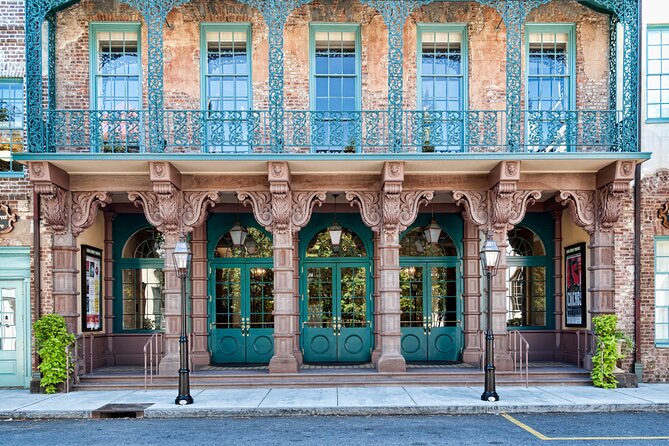
You then reach Dock Street Theater, where the focus shifts to performance, public life, and the people connected with Charleston’s theater tradition. The stop concerns the first theater built in North America and the colorful figures tied to its past. At about 10 minutes, this is an explanation stop rather than an extended interior visit.
The route works well because it does not treat history as a straight line. You are moving through streets that hold stories from different centuries, and Eric uses the buildings to show how one era left its mark on the next.
The Pink House and Charleston’s early built fabric
The Pink House Gallery is one of the shortest stops, at about five minutes, but it gives you a look at one of Charleston’s oldest buildings, dating to around 1712. This is a useful reminder that the city’s historic character is not limited to grand churches and public monuments.
You are viewing the building from the route rather than spending a long period inside. That is typical of the tour: the goal is to understand the city as a whole, not to provide lengthy admissions to individual sites.
For photography, this section should appeal to you. For a full interior tour of historic houses, it may feel brief. The experience gives you the setting and the story, while separate house visits would require extra time and admission.
Washington Square and the workings of civic Charleston
Washington Square receives about 15 minutes, one of the longer stops on the route. Its monuments provide a way to discuss the people and events that shaped Charleston and South Carolina.
The square also gives you a pause from the narrower streets. A public space like this helps explain how Charleston functioned beyond its private homes and churches. Listen for the connections between memorials, government, military service, and the city’s changing political identity.
From there, the route turns toward Charleston City Hall. The building’s earlier lives as a meat market and bank make it a particularly useful stop. Its later role as City Hall shows how old structures can change purpose as the city grows.
I like this part of the tour because it moves beyond the standard parade of famous names. You are looking at the practical machinery of city life: markets, banks, public offices, and the buildings that supported them.
More History Walking Tours in the USA
- Historic Charleston Walking Tour: Rainbow Row, Churches, and More
★ 5.0 · 691 reviews - Charleston: History and Architecture Guided Walking Tour
★ 4.8 · 349 reviews - Semi-private SMALL group Historic Walking Tours w/certified guide
★ 5.0 · 224 reviews - Charleston walking tour with a Citadel history professor
★ 5.0 · 105 reviews
The old statehouse, St. Michael’s, and colonial power
At the Charleston County Courthouse, Eric explains the building’s connection to the former South Carolina statehouse. This stop brings state politics into the route and helps explain why Charleston was such an important center of public affairs.
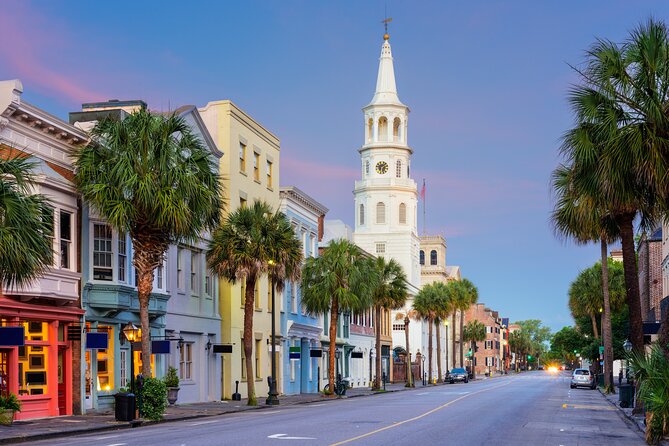
St. Michael’s Church follows, with about 10 minutes devoted to the city’s oldest church edifice, completed in 1761. The church is important for its age, architecture, and place in Charleston’s religious and civic story.
You do not need to be an architecture specialist to get something from this section. Eric connects buildings to the institutions that used them, so you can see how religion and government shaped the city side by side.
The route includes several historic structures in quick succession. That creates a rewarding rhythm for history buffs, but it also means you should stay attentive. If your interest is mostly visual, the amount of explanation may feel heavy. If you want to understand why these places matter, this is one of the strongest stretches.
George Washington, the Old Exchange, and French Huguenot Charleston
The Heyward-Washington House marks the 1791 visit of George Washington to Charleston. Admission is not included, and the tour does not appear to be structured as a full house visit. You see the site and learn about its connection to Washington, then continue through the district.
Next comes the Old Exchange and Provost Dungeon, described as the last public building built by the British in North America. It is also tied to the ratification of the Constitution in 1788. Admission is not included here either, so plan on treating this as an exterior history stop unless you arrange a separate visit.
These two locations help you connect Charleston to national events. Washington’s visit belongs to the early republic, while the Old Exchange brings in British rule, imprisonment, trade, and constitutional politics. The route keeps the focus on how local streets fit into larger American stories.
The French Huguenot Church adds another layer. You learn about the French Huguenots in Charleston and see the first church built in the Gothic Revival style. This is one of the route’s clearest reminders that Charleston was shaped by different religious and cultural communities.
I find this section especially valuable for people who enjoy architecture. The buildings are not presented as isolated monuments. Their styles and congregations become clues to migration, faith, politics, and changing taste.
Through the French Quarter to Hibernian Hall

The French Quarter gets about 15 minutes, allowing time to take in its streets and character while Eric explains how the area fits into Charleston’s development. This is a visual highlight, but the walk does not stop at atmosphere. You are encouraged to connect the neighborhood’s appearance with its history.
Hibernian Hall brings the discussion toward political conflict and Greek Revival architecture. The building is associated with the early seeds of disunion, and Eric explains its place in Charleston’s story.
That combination is typical of the tour. You may be looking at columns and formal façades, then suddenly discussing sectional politics and the forces that pulled the country apart. If you like learning why a building looks the way it does, this section should keep you engaged.
Do not expect long indoor visits at every site. The strength here is the route itself: you walk through the French Quarter while the guide supplies the political, social, and architectural background.
Ending on the Battery with Fort Sumter in view
The tour ends at 39 East Battery, near the Rainbow Row area. This is a smart finish because the Battery gives you a broad view across Charleston Harbor and toward Fort Sumter National Monument.
The fort is where the first shots of the Civil War were fired. You do not take a boat to Fort Sumter on this tour. You see it from the Battery, which keeps the walk focused and avoids turning the experience into a separate harbor excursion.
The final stop also gives the larger story a strong setting. After hearing about Charleston’s political divisions and early Civil War connections, you are looking across the harbor toward one of the conflict’s most important sites.
If Fort Sumter itself is high on your list, plan a separate visit. This tour provides the historical context and the view, not admission or transportation to the fort.
What the $40 price buys you
At $40 per person, the value depends on how much you want from a walking tour. You are paying for roughly three hours with a Ph.D. historian, a small group, and a route covering a large portion of central Charleston’s historic core.
The price includes fees and taxes. It does not include bottled water, private transportation, or admission to the Heyward-Washington House, Old Exchange and Provost Dungeon, or Hibernian Hall. Most of the stops are viewed from the public route, so you are not paying for a long list of separate entrances.
For me, the strongest value is the chance to ask detailed questions. A standard sightseeing walk may give you the main facts, while this experience is better suited to someone who wants to ask how a building connects to a political movement or why a particular architectural style appeared in Charleston.
You should also consider the opportunity cost. Three hours is a sizeable part of a short Charleston visit. I would take this early in my stay, since the route can help you choose which historic houses, churches, museums, and harbor sites to explore later.
Walking conditions, weather, and who will enjoy it
The activity calls for a moderate level of physical fitness. You are on foot for about three hours, with repeated stops and starts through the historic district. Wear comfortable shoes and bring water. Bottled water is not supplied.
The tour requires good weather. If poor weather cancels it, you are offered another date or a full refund. Rain has not necessarily prevented the walk in every case, but weather can affect comfort, footing, and how well you hear the guide, so check the forecast and dress sensibly.
The experience is offered in English. Service animals are allowed, and the route is near public transportation. The tour is not private, so you should be comfortable sharing the experience with a small group.
I would recommend it most strongly to:
- People who want history, politics, religion, and architecture in one walk
- Visitors who prefer an academic guide to a quick list of facts
- First-time visitors who want a useful orientation to central Charleston
- Repeat visitors who want more depth than a casual sightseeing circuit
- Anyone who enjoys asking questions during a tour
I would choose something else if you want a short, low-information stroll, a ghost tour, or a visit inside every building. This walk is content-heavy and moves across a substantial section of the historic city.
Booking timing and cancellation
The tour is often booked about 22 days ahead, so reserve early if your dates are fixed. The group limit of 12 is one reason not to wait until the last minute.
You can cancel for a full refund up to 24 hours before the start time. Cancellations or changes made within 24 hours are not refunded or accepted. The cut-off uses local Charleston time, so check the exact start time before making changes.
Should you book this Charleston walk?
Book it if you want Charleston explained by someone with serious academic training, not simply pointed out. Eric Lager’s format brings together the French Quarter, old government buildings, historic churches, Civil War sites, and harbor views in a single walk.
I would make it one of my first activities in Charleston. The small group, question-friendly format, and Battery finish give you both a useful introduction and enough detail to guide the rest of your visit.
Skip it if three hours of walking and sustained historical discussion sounds tiring. For everyone else, $40 is a fair price for a focused, small-group tour led by a Citadel history professor, especially if you care more about understanding Charleston than collecting quick photographs.
FAQ
How long is the Charleston historical walking tour?
The tour lasts approximately three hours.
How many people can join the tour?
The group is limited to a maximum of 12 travelers.
Who leads the tour?
The tour is led by Eric Lager, Ph.D., a professor of history at The Citadel.
What language is the tour offered in?
The tour is offered in English.
Where does the tour start?
It starts at 108 Meeting Street, Charleston, South Carolina 29401, near the Mills House Charleston.
Where does the tour end?
It ends at 39 East Battery near the Rainbow Row area of Charleston.
Does the tour visit Fort Sumter?
The tour views Fort Sumter National Monument from the Battery. It does not travel out to the fort.
Are admissions to the historic houses and buildings included?
Admission is not included for the Heyward-Washington House, Old Exchange and Provost Dungeon, or Hibernian Hall. All fees and taxes for the tour itself are included.
What is the cancellation policy?
You can cancel at least 24 hours before the start time for a full refund. Cancellations or changes made less than 24 hours before the start time are not accepted or refunded. If poor weather cancels the tour, you are offered another date or a full refund.
More Castle and Palace History Tours in Charleston
- Edinburgh: Edinburgh Castle Guided History Tour with Tickets
★ 4.8 · 9,933 reviews - Madrid Essential: Historic Center, Plaza Mayor & Royal Palace
★ 5.0 · 6,416 reviews - Venice’s Best: Basilica, Doge’s Palace, Gondola & History Gallery
★ 4.5 · 2,478 reviews - Tokyo: Imperial Palace and Shogun Historical Walking Tour
★ 5.0 · 2,251 reviews
Latest history tours reviewed in Charleston
- Charleston:Evening Haunted History Horse-Drawn Carriage Tour★ 4.7 · 38 reviews
- Charleston: Sip History Cocktail Making Class w Drinks Incl.★ 4.8 · 28 reviews
- Charleston walking tour with a Citadel history professor★ 5.0 · 105 reviews
- Take a History Tour with an actual Historian – Cooper!★ 4.8 · 61 reviews
- Charleston: Historic City Tour & Magnolia Plantation Combo★ 4.4 · 187 reviews
- Charleston: Historic City Tour and Harbor Cruise★ 4.5 · 260 reviews
- Charleston: Historic Downtown Food Tour★ 4.7 · 67 reviews
- Charleston: History and Architecture Guided Walking Tour★ 4.8 · 349 reviews
Charleston History Tours, compared.

Charleston’s Old South Carriage Historic Horse & Carriage Tour
Read our review →
Historic Charleston Guided Sightseeing Walking Tour
Read our review →
Charleston Horse-Drawn Carriage Tour: Explore Historic Charleston
Read our review →
Charleston Harbor History Day-Time or Sunset Boat Cruise
Read our review →
Hidden Alleyways and Historic Sites Small-Group Walking Tour
Read our review →
Charleston: Daytime or Sunset Historic Harbor Cruise
Read our review →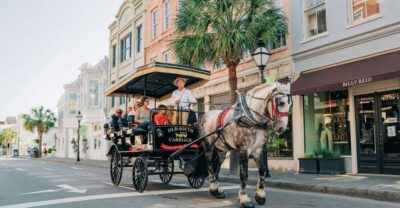
Charleston: Historical Downtown Tour by Horse-drawn Carriage
Read our review →
Undiscovered Charleston: Half Day Food, Wine & History Tour with Cooking Class
Read our review →Browse the lists this tour appears in