Review · SPAIN
San Sebastian E-bike trour: Basque History and Cultural.
San Sebastián’s best feature is how much city you can cover without turning the day into a workout. This small-group e-bike tour links beaches, bridges, palaces, modern art, old neighborhoods, and riverfront streets in about two hours and 20 minutes.
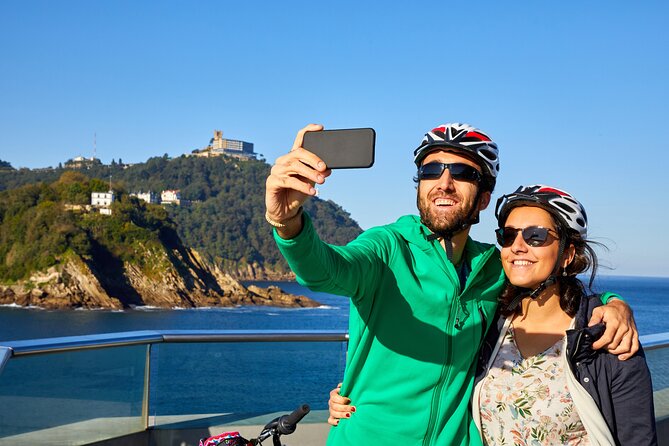
I like the practical route and the local angle. You get superb views from Zurriola, La Concha, and the Peine del Viento, while guides such as Lorenzo, Jacob, Paulo, Jake, and Tarik explain Basque culture, politics, food, and city life. I also like that the ride begins and ends near Reyes Católicos, close to restaurants and pintxos bars.
The main consideration is city traffic. One rider found busy areas a little tricky, and you should already feel comfortable on a bicycle. The electric assistance makes the ride easy, but it does not remove the need to watch pedestrians, other cyclists, and road crossings.
Key points to know before you book
- You cover the city’s main sides: Historic bridges, Gros, Zurriola Beach, La Concha, Ondarreta, the river, and several less familiar districts all fit into one ride.
- The e-bikes reduce the effort: You can handle the distance and small rises without arriving worn out, though basic cycling confidence still matters.
- The guides shape the experience: Lorenzo, Jacob, Paulo, Jake, Carlos, and Tarik have led tours praised for clear English, humor, history, and useful local advice.
- The views are a major payoff: The route gives you repeated looks across the Bay of Biscay, La Concha Bay, the city skyline, and the ocean.
- Basque culture gets real attention: The talk covers language, identity, politics, food, local costs, and the forces that shaped Donostia.
- Weather matters: The tour requires good weather. You can cancel free up to 24 hours before the start for a full refund.
Starting at Reyes Católicos with an easy first ride
You meet at La Bicicleta Donostia, Reyes Católicos Kalea 14, in the city center. The bike office is easy to locate and close to public transportation, which helps if you are still learning San Sebastián’s layout.
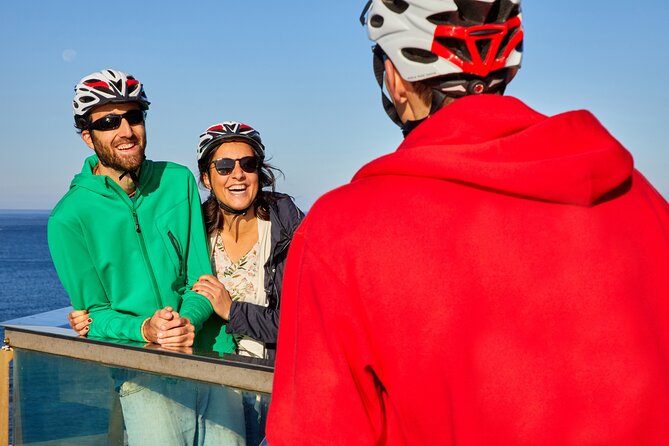
The guide gets you acquainted with the e-bike before setting off. This matters more than it sounds. An electric bicycle should feel simple after a short introduction, and the ride is designed to keep a group of up to 12 together rather than turn into a race.
The opening route heads toward Buen Pastor Cathedral and then the historic center. You start seeing how San Sebastián fits together almost at once: the older core, the later city expansion, the beaches, and the river are all within a manageable ride.
I recommend taking this tour early in your stay. It gives you a useful mental map, and the guides often share suggestions for restaurants, drinks, and places to return later. One family even used the ride as a first look at the city, with a nine-year-old managing the full route. Still, every child and adult should be comfortable riding in an urban setting.
More History Bike, Segway and Tuk-Tuk Tours in Spain
- Barcelona: 2.5-Hour Bike or E-Bike Historical Tour
★ 4.5 · 1,262 reviews - Madrid Historical Tour with Local Guide in Eco Tuk Tuk Private
★ 5.0 · 876 reviews - Segway Your Way Through Granada’s History: The Ultimate Ride
★ 5.0 · 334 reviews
Catalina Bridge and the story of a growing city
Puente de Santa Catalina is the first formal stop. It was the first bridge built in San Sebastián, making it a good place to discuss how the city developed around the Urumea River.
You are not stopping only for a bridge photograph. From here, the guide can point out emblematic buildings and explain how San Sebastián grew over the decades. The stop lasts about eight minutes, enough time to hear the story and take in the architecture without losing the ride’s pace.
This is an effective early lesson because the city’s buildings are not presented as isolated sights. You begin to see the relationship between the old center, the river, and the newer districts. If you enjoy architecture, keep your camera ready here, but also listen for the urban history behind the façades.
Gros, Cataluña Plaza, and everyday Donostia
The route continues into Gros, one of the city’s busiest and most fashionable neighborhoods. Here the tone shifts from landmark history to ordinary city life.
At Cataluña Plaza, you hear about the local community, people-watching spots, and the cost of living in this popular area. That is useful context. A city can look beautiful on a short visit, but knowing how residents experience it gives you a clearer sense of what you are seeing.
The stop takes about 10 minutes. Gros also helps break up the grand beach views with a look at a lived-in neighborhood. You are riding through a part of San Sebastián where locals work, meet, shop, and spend time, rather than simply passing from one postcard view to another.
Zurriola Beach, Kursaal, and the modern edge
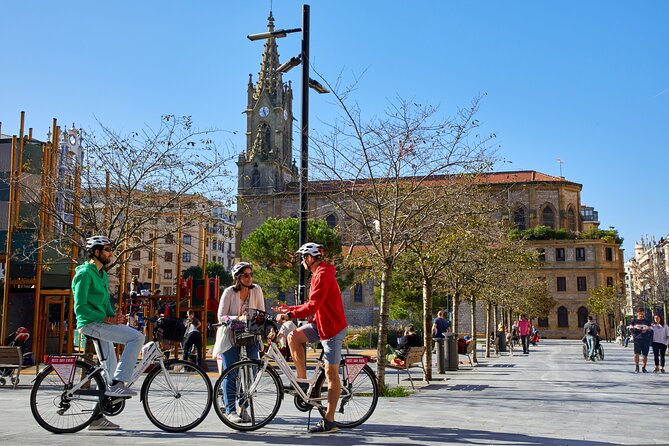
At Zurriolako Hondartza, the Bay of Biscay opens up. You can watch surfers and enjoy a broad coastal view that feels more exposed and energetic than the sheltered curve of La Concha.
The guide also discusses the Kursaal, one of San Sebastián’s most important and controversial buildings. Its modern design and glamorous history offer a useful contrast to the city’s older architecture. The building marks a shift in mood as the tour moves between historic San Sebastián and its contemporary cultural identity.
This part of the ride is especially good for photographs. The ocean, beach, surfers, and angular modern architecture give you several different subjects in one short stretch. The drawback is that coastal paths and busy urban areas can have more people moving around. Follow the guide closely and do not treat the e-bike like a motorcycle.
More Local Culture and Traditions Tours in Spain
- Sevilla Food Tour: Tapas, Wine, History & Traditions
★ 5.0 · 3,468 reviews - Taste of Malaga Tour : Tapas, History and Local Customs
★ 5.0 · 758 reviews - Málaga: 2h Walking Historical Tour–Art, Culture and Legends
★ 4.9 · 341 reviews - Tarragona and Sitges Small Group Tour – Roman History & Culture
★ 4.5 · 339 reviews
La Concha and the elegant central waterfront
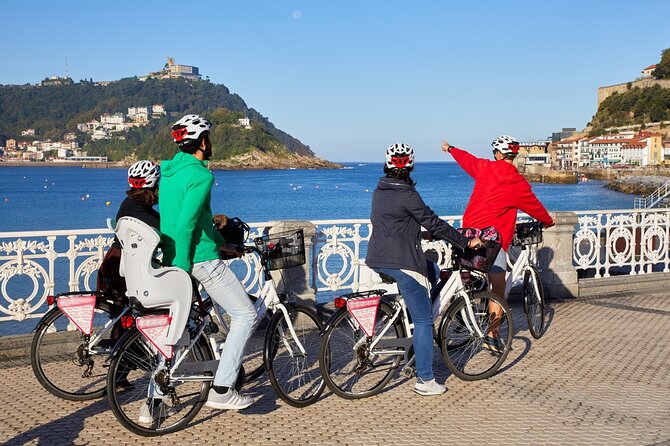
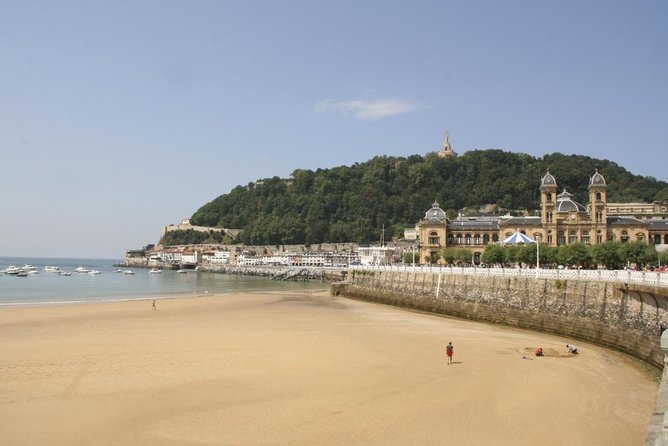
From the Boulevard separating the Old Town from the newer part of the city, the ride heads toward La Concha Beach. This is the tour’s most familiar postcard setting, but the guide adds details that make the stop more than a photo break.
You learn why so many small trees appear in the area and hear the local legend connecting San Sebastián with Japan. The stop lasts about 15 minutes, giving you time to look across the bay and understand why this waterfront became central to the city’s identity.
La Concha is also a good place to appreciate the difference between sightseeing by bicycle and sightseeing on foot. You reach the beach after already seeing several neighborhoods, and you can continue along the shore without spending your energy on a long walk. The e-bike is useful here because it lets you save your legs for the rest of the route.
Miramar Palace and Ondarreta Beach
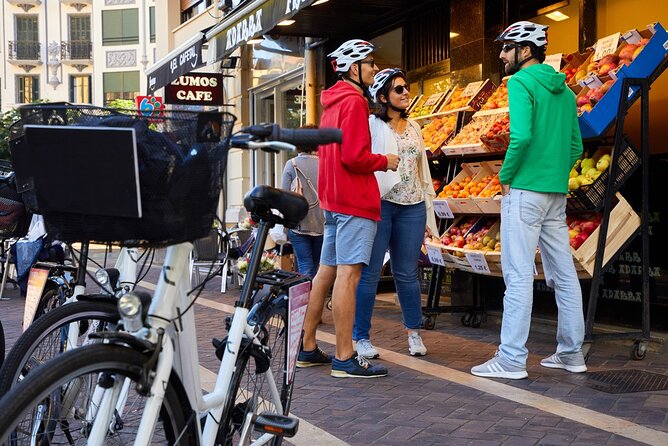
Next, you follow the bidegorri, the dedicated red bike path, along La Concha toward Miramar Palace and Ondarreta Beach. The route gives you a changing view of the bay rather than one fixed lookout.
Ondarreta has its own story, and the guide stops for about 10 minutes to explain the beach’s history. It is a calmer counterpoint to Zurriola, where the surf and open Bay of Biscay create a different atmosphere.
This section shows why the tour is more useful than a simple central-city bike rental. You are not just pedaling from one famous place to another. You get a route chosen to connect the beaches and a guide who explains why each area matters.
Peine del Viento and art beside the sea
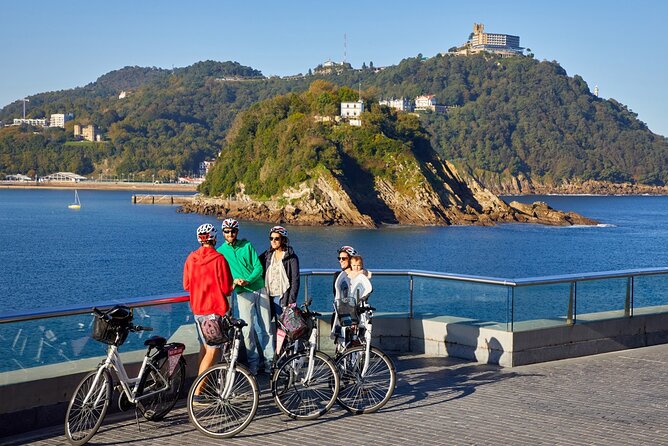
The short stop at Peine del Viento, or Comb of the Wind, brings you to one of San Sebastián’s best-known pieces of contemporary art. You see the city from another angle and look out toward the meeting point of rock, water, and sculpture.
The stop is only about five minutes, so do not expect a long gallery-style explanation. Its strength is the setting. The artwork belongs to the shoreline, and the sea gives the visit its full impact.
If you enjoy modern art, this is one of the tour’s most memorable moments. If you prefer major historic monuments, it may feel brief, but the ride places the work within the wider story of San Sebastián’s changing public spaces.
The city beyond the postcard route
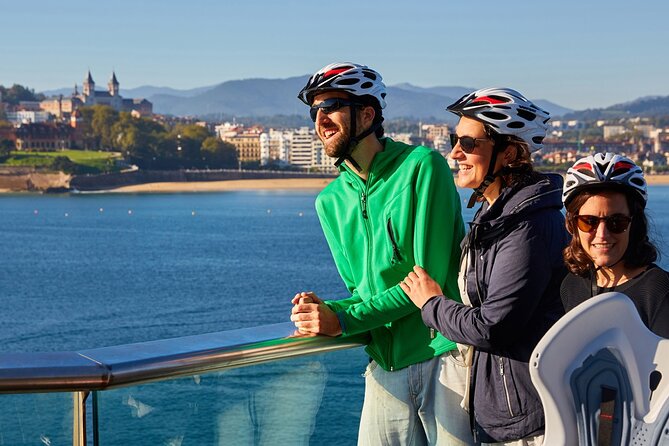
After the waterfront, the tour heads toward the end of the bay, where nature and the built city meet. You see more Basque modern art and pass through one of San Sebastián’s older, more authentic neighborhoods.
A particularly unusual part of the route is a secret passage connecting two parts of the city. The exact details are best heard from the guide in person, but the point is clear: this is not a straight run between only the famous sights.
The ride also shows different sides of San Sebastián, from the workers’ city to the grand Belle Époque districts associated with aristocratic life. That contrast gives the cultural discussion some depth. Basque identity is not treated as a costume or a food label. Guides talk about the history, political emotions, local life, and pressures that shaped the region.
One rider specifically appreciated the Morlans tunnel during very hot weather. That detail points to another benefit of the route: it uses the city’s varied infrastructure, not just its open waterfront. Conditions can change quickly, though, so bring suitable clothing for sun or rain.
Following the Urumea River back to the center
The return follows the Urumea River, passing villas and bourgeois palaces before bringing you back toward Reyes Católicos. This final stretch ties together much of what you have seen.
The river helps explain San Sebastián’s shape, while the villas and palaces show the city’s more polished, historic side. After the beaches, modern art, and working neighborhoods, the return route gives you one last look at the architecture that helped make the city a fashionable destination.
The activity ends where it began. That is convenient if you have left other plans nearby, and it also makes the tour easy to fit into a first morning or afternoon.
What the guides add to the ride
The guide is the most important variable in a city tour, and the feedback here is unusually consistent. Lorenzo is praised for clear English, strong historical explanations, and a relaxed manner. Jacob and Jake are described as engaging, funny, and good at connecting Basque history to the places along the route.
Paulo is repeatedly associated with enthusiasm, family-friendly energy, and useful city advice. Carlos is noted for a friendly, accommodating style and an unhurried blend of facts and stories. Tarik has also led a well-organized overview of the city.
You should expect more than directions and dates. The guides discuss food, drinks, restaurants, local costs, Basque identity, and political history. That makes the tour useful for anyone who wants to understand why San Sebastián feels culturally distinct from other Spanish cities.
The English-language presentation is a clear strength. If you have questions, ask them. The guides are described as welcoming questions, waiting for slower riders, and helping people beyond the formal route when needed.
Price, group size, and practical value
At $59.28 per person, this is not the cheapest way to see San Sebastián. You are paying for the bike, the guide, route planning, and the ability to cover a lot of ground in a short time.
I think the price is fair if you value orientation and cultural explanation. A standard bike rental may cost less, but you would need to plan the route, find the viewpoints, manage navigation, and learn the background yourself. Here, the e-bike also reduces the physical cost of crossing the city.
The maximum group size is 12, which is small enough for the guide to keep an eye on the group without making the experience feel private. The full ride lasts about two hours and 20 minutes, so it fits well into a half-day plan.
The tour is offered in English and includes bicycle use and a professional guide. Tips are not included. If food is calling at the end, Reyes Católicos has restaurants nearby, and the company also points riders toward pintxos and cider options.
You can cancel for a full refund up to 24 hours before the start. Poor weather can also lead to a new date or full refund, and the same applies if the minimum number of participants is not reached. Rain is worth taking seriously, since cycling conditions affect the whole experience.
Who should book this San Sebastián e-bike tour?
I would choose this for a first visit, especially if you have only a few days in town. It gives you beaches, architecture, local districts, modern art, and cultural background in one organized outing.
It also suits families and active adults who want to see more without a hard workout. The e-bikes are easy to use, but you should still have basic cycling experience and feel comfortable around other people on city paths.
You may want a different activity if you dislike riding in traffic, want long uninterrupted time at each sight, or prefer a slow walking tour focused only on the Old Town. The brief stops are designed for variety, not extended museum visits.
Should you book it?
Book this tour if you want to get your bearings quickly, see both famous and less obvious parts of San Sebastián, and hear a local explanation of Basque culture along the way. The combination of La Concha, Zurriola, Ondarreta, the river, and the city’s contrasting districts is the strongest reason to go.
I would schedule it near the start of your stay, then use the guide’s food and neighborhood suggestions for the rest of your visit. Skip it only if urban cycling makes you uneasy or if rain looks likely. For most confident cyclists, the route offers a very efficient and enjoyable introduction to Donostia.
FAQ
Where does the San Sebastián e-bike tour start?
It starts at La Bicicleta Donostia, Bike Rental, Workshop & Tours, at Reyes Católicos Kalea 14, Bajo, 20006 Donostia / San Sebastián.
Where does the tour end?
The activity ends back at the meeting point on Reyes Católicos Kalea.
How long does the e-bike tour last?
The tour lasts approximately two hours and 20 minutes.
What language is the tour offered in?
The tour is offered in English.
What is included in the price?
The price includes use of the bicycle and a professional guide.
Are tips included?
No. Tips are not included in the tour price.
How many people can join the tour?
The maximum group size is 12 participants.
What happens if the weather is poor?
The experience requires good weather. If it is canceled because of poor weather, you will be offered another date or a full refund.
Latest history tours reviewed in Spain
- Barcelona Historic Guided Tour★ 4.8 · 24 reviews
- Essential Madrid: Walking Tour of the Historic Center★ 4.7 · 58 reviews
- Discover the fascinating Alcazaba: History and unique views★ 4.8 · 30 reviews
- Cordoba: Segway Tour historic center★ 4.5 · 21 reviews
- Private Jewish Heritage Journey by Barcelona Dreaming★ 4.8 · 383 reviews
- Cartagena: Ancient Roman Walking Tour with Entry Tickets★ 4.5 · 89 reviews
- Caceres: Highlights, History and Jewish Quarter Walking Tour★ 4.7 · 20 reviews
- Bilbao Historical Tour in small group★ 4.7 · 52 reviews
Spain History Tours, compared.
Madrid Essential: Historic Center, Plaza Mayor & Royal Palace
Read our review →
Barcelona: Tapas Walking Tour with Food, Wine, and History
Read our review →
Sevilla Food Tour: Tapas, Wine, History & Traditions
Read our review →
Valencia Old Town Tour with Wine & Tapas in 11th Century Historic Monument
Read our review →
Madrid Tapas & Taverns Small Group Food & History Tour
Read our review →
Ultimate Seville Tapas, Wine & History Small Group Tour
Read our review →
Córdoba: Skip-the-Line Great Mosque-Cathedral History Tour
Read our review →