
Review · BERLIN
Berlin: Cold War & Berlin Wall History Guided Bike Tour
Berlin’s Wall is easier to understand when you follow its old line by bicycle. This tour links Mauerpark, Bernauerstraße, Checkpoint Charlie, and Brandenburg Gate, giving you the geography as well as the politics. You are not just looking at a single surviving section of concrete. You are tracing the border that split streets, families, and a city.
I like two things here. First, the relaxed 15-kilometer route covers a lot of ground without turning into a race. Second, the guides bring the Wall to life with stories of escape attempts, the border crossings, and the sudden events of November 1989. The main consideration is simple: you need to be comfortable cycling for about three and a half hours, often through city streets.
Key points to know before booking

- The route covers about 15 kilometers: You see far more than you could comfortably visit on foot in one morning.
- It begins at Kulturbrauerei: The former 19th-century brewery in Prenzlauer Berg is an unusual and memorable starting point.
- The history unfolds in sequence: The ride connects the Wall’s creation, daily life beside it, escape attempts, and its fall.
- You visit several Cold War symbols: Expect Checkpoint Charlie, former crossings, Wall remains, Mauerpark, and one of the last watchtowers.
- The pace is relaxed: There is time for explanations, questions, and stops rather than a hard workout.
- The $41 price is reasonable: A bicycle, guide, helmet and gloves on request, sunscreen, rain ponchos, and a 210-minute route are included.
Starting at Kulturbrauerei in Prenzlauer Berg
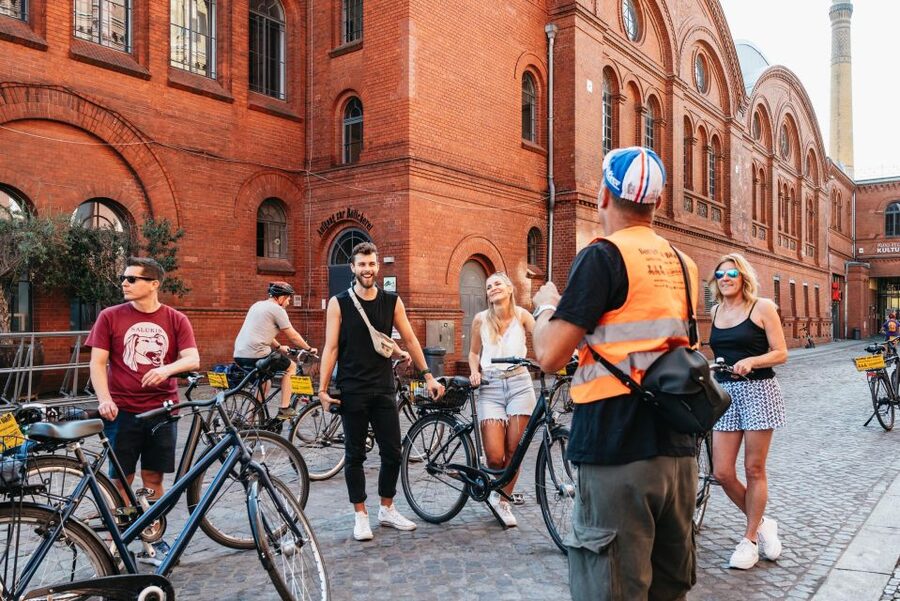
The meeting point is the Berlin on Bike Depot inside Kulturbrauerei, a large former brewery complex in Prenzlauer Berg. This is more interesting than meeting beside an anonymous shopfront. The red-brick industrial buildings give you a quick sense of Berlin’s older working districts before the tour turns toward the city’s divided past.
From Alexanderplatz, take the red U2 line toward Pankow for three stops to Eberswalder Straße. Leave through the exit marked Kulturbrauerei, walk along Danziger Straße for about 150 meters, turn right onto Knaackstraße, and enter the complex through the large doorway. Yellow signs point you to the bicycle depot.
Give yourself enough time to find the depot. The directions are clear, but Kulturbrauerei is a sizeable complex, and you do not want to begin the morning hunting for the start point.
At the depot, you can choose from a large fleet of bicycles. That matters because the right bike can make a long city ride feel easy, while the wrong one can distract you for hours. Helmet and gloves are available on request. Trouser clips help keep loose clothing away from the chain, and sunscreen is provided.
One useful tip comes from a past participant: if you are not used to a coaster brake, choose a bike with hand brakes instead. A coaster brake works by pushing backward on the pedals, which can feel unfamiliar. Ask for an explanation before setting off.
More Cold War and Communism Tours in Berlin:
- Berlin: Guided Bike tour of the Berlin Wall and Third Reich
★ 5.0 · 160 reviews - Berlin Wall History Small Group Cycling Tour
★ 4.9 · 152 reviews - Berlin: Historical Sights & Berlin Wall Tour with a Berliner
★ 5.0 · 62 reviews
Mauerpark and the first view of the former border
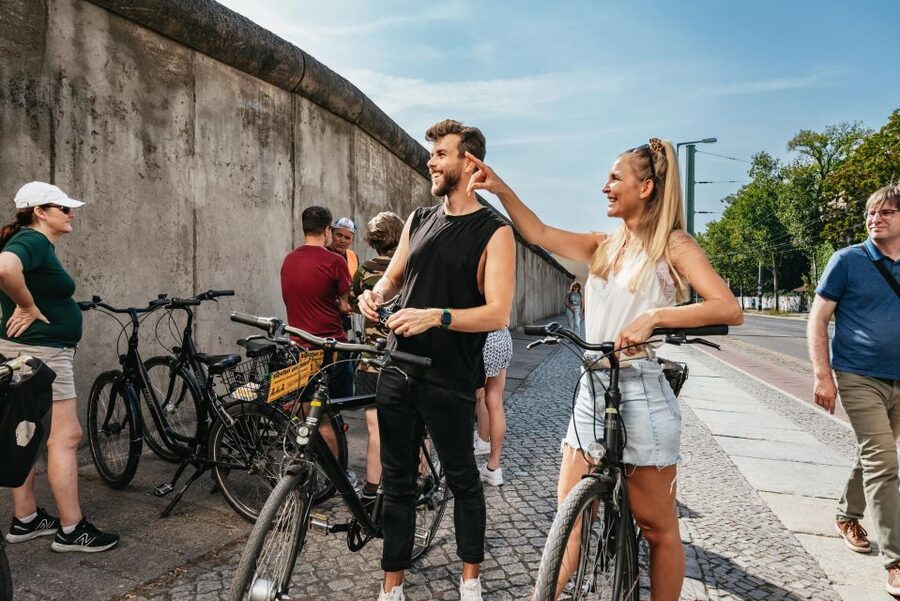
The route heads toward Mauerpark, a green strip whose name still points to the Wall that once ran here. The park occupies part of the former border zone, so it is a useful place to begin thinking about how the barrier cut through ordinary neighborhoods.
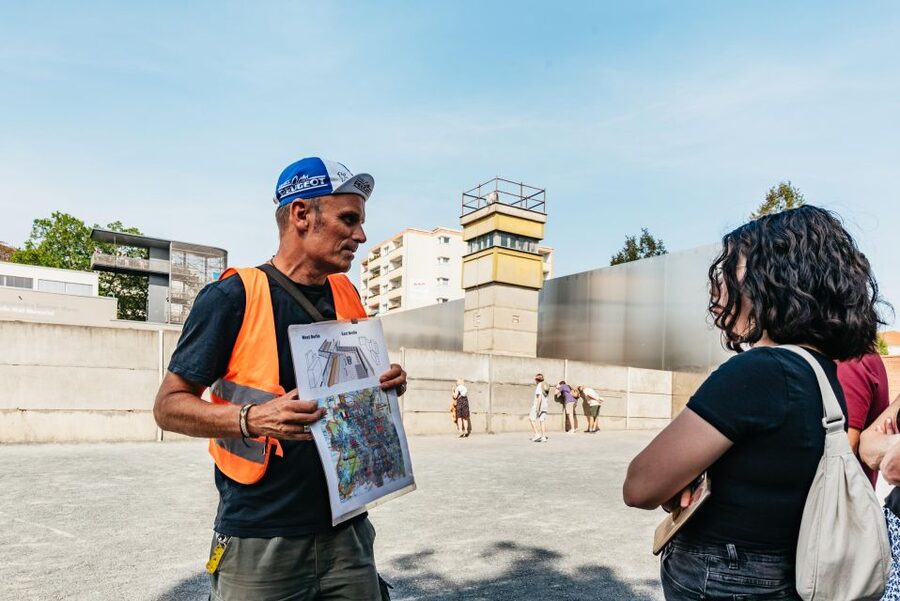
The contrast is striking. Today, you are cycling through an open public space. During the division of Berlin, this was not a casual place to cross. The guide explains how the border functioned and how the Wall was more than one slab of concrete. It involved fences, patrol areas, watchtowers, controlled crossings, and a wide security zone.
This is where a bicycle tour earns its keep. You can move from one section of the old border to another without repeatedly figuring out public transport or retracing your steps. You also get a sense of distance, which is important in Berlin. A map can show the route, but cycling along it helps you understand how neighborhoods were split apart.
The pace is designed for sightseeing rather than exercise. You stop for explanations, and the guide keeps the group together while moving through the city. Past guides have included Paul, Oleg, Lauren, Anna, Jacob, Isabelle, and others, with strong praise for their storytelling, humor, patience, and ability to answer questions. Your guide will depend on the date and language you book.
Bernauerstraße and the human cost of the Wall
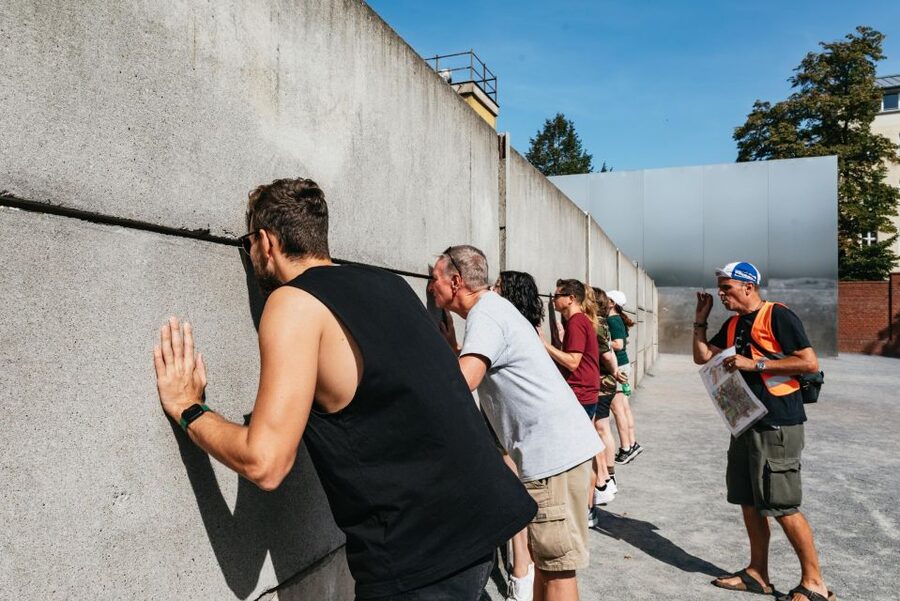
Bernauerstraße is one of the most meaningful sections of the ride. The street became famous because the Wall ran directly along it, separating buildings, sidewalks, and residents. It is also closely tied to escape attempts and the painful effects of the border on daily life.
Here, the history becomes personal. You hear about people who tried to get from East Berlin to West Berlin, including attempts that succeeded and others that ended in tragedy. The guide uses the remaining structures and spaces to explain what you are seeing, so the stories are connected to actual places rather than presented as a list of dates.
This part can be emotionally heavier than the sightseeing stops. The tour does not treat the Wall as a colorful photo background. It explains how the border affected Berliners and why its legacy remains complicated. If you prefer a quick overview with little political detail, this ride may feel more serious than expected. If you want to understand the people behind the history, Bernauerstraße is one of the strongest reasons to choose it.
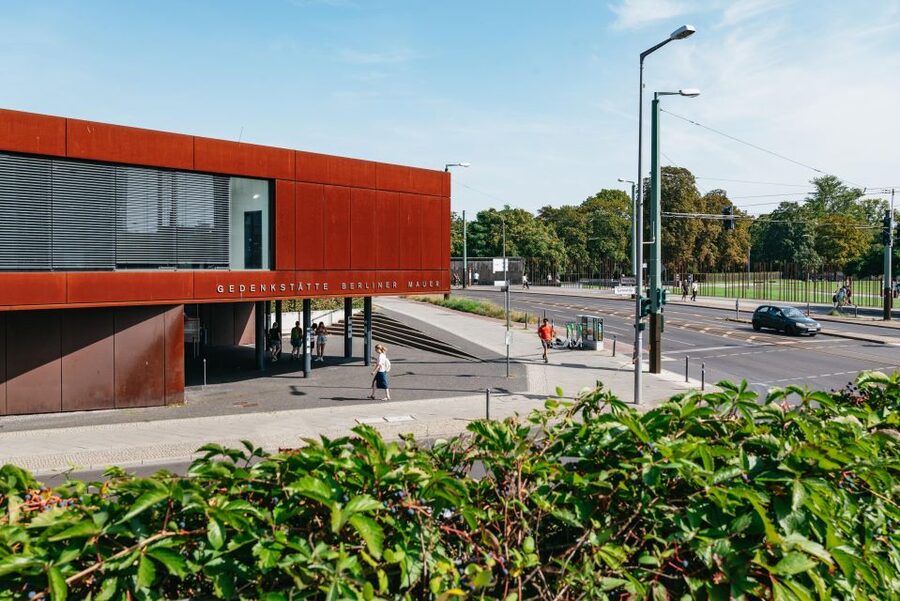
You may also notice fragments and traces rather than one continuous barrier. That is part of the point. Much of the Wall disappeared after 1989, and the city changed quickly. The surviving pieces, memorial areas, former border lines, and watchtowers work together as evidence of a system that once seemed permanent.
Former crossings, watchtowers, and escape stories
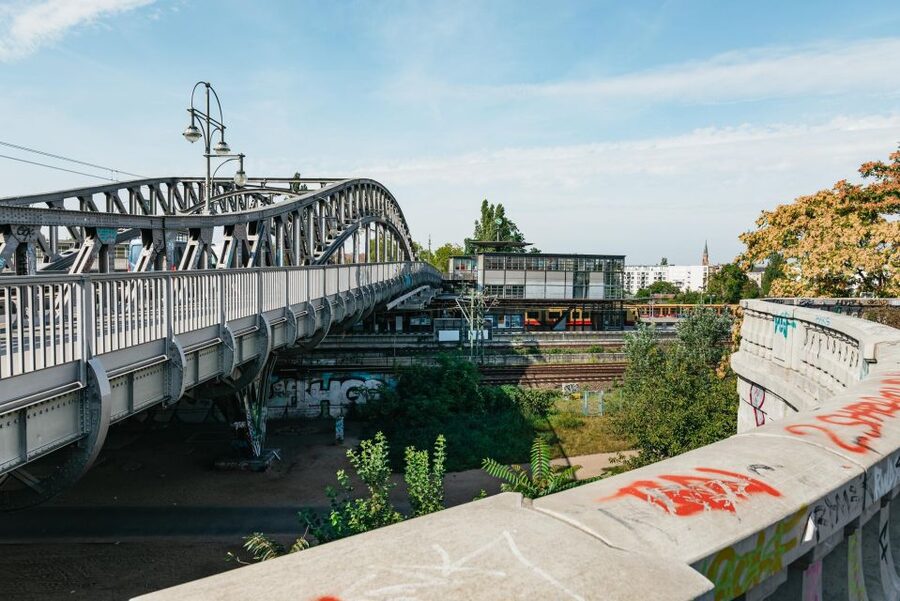
The ride continues along the former boundary toward old border crossings, including Bornholmerstraße and Checkpoint Charlie. Each crossing had its own role and reputation, and the guide explains how movement between East and West was controlled.
Checkpoint Charlie is the best-known name on the route. It has become one of Berlin’s major Cold War symbols, but a brief photo stop alone cannot explain why it mattered. The guide places it within the wider border system and the tension between the two political blocs.
You also see one of the last remaining watchtowers. This is a valuable stop because it gives a physical sense of how the border was monitored. A watchtower is not just an old military object. It helps you picture the surveillance, restricted movement, and danger that shaped life around the Wall.
The guide’s stories are a major part of the experience. Paul has been praised for holding a large group together while answering questions, and Oleg has been singled out for finding quieter bike paths and less obvious Wall remains. Those details tell you what kind of tour this is at its best: not simply a ride between famous addresses, but a route that uses side streets and surviving traces to connect the main sights.
A potential drawback is that Berlin’s streets can be busy, and special events can affect the route. A half marathon once made parts of the ride harder to navigate, though the guide adjusted the plan. The route may also change if street conditions require it. That flexibility is useful, but it means the exact order and length of some stops may vary.
More History Bike, Segway and Tuk-Tuk Tours in Berlin:
- Berlin (E)Bike Tour Historical Highlights in Small groups
★ 4.5 · 24 reviews - Historical Singapore Bike Tour on Full-Sized Bicycles
★ 5.0 · 1,421 reviews - Charlotte’s Ultimate Southern Charm Historical City Cart Tour
★ 5.0 · 1,347 reviews - Barcelona: 2.5-Hour Bike or E-Bike Historical Tour
★ 4.5 · 1,262 reviews
How the Wall came down
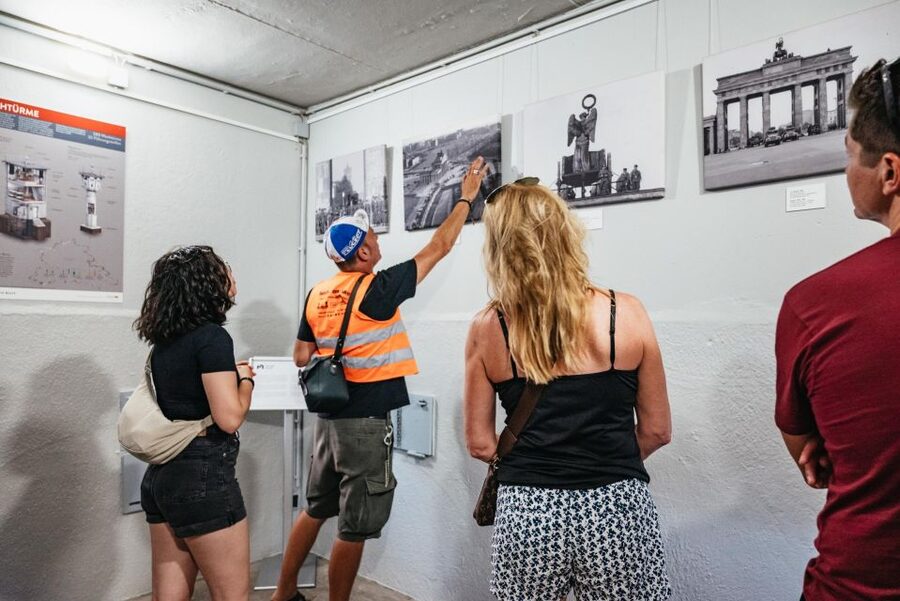
One of the tour’s key themes is the Wall’s fall after almost 30 years. The guide explains how the border came down unexpectedly in November 1989 and why the change happened so quickly after years of tight control.
The value here is the connection between political decisions and ordinary reactions. You learn not just that the Wall fell, but how Berliners responded and how the event changed the city. The tour also addresses the lasting effects of division, rather than treating reunification as a tidy finish.
A good guide makes this section feel like the payoff to the whole ride. You have already seen the border line, the crossing points, the watchtower, and the spaces where people tried to escape. Now the political story connects those places and explains why Berlin changed almost overnight.
Several past guides have used photos and diagrams to support the explanations. That can be especially helpful when the modern city looks nothing like the divided one described in the stories. You will still need to listen closely, since the surviving evidence is scattered across a large area.
Brandenburg Gate and the wider story of Berlin
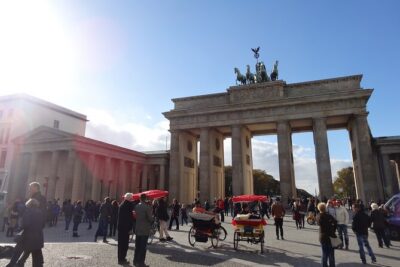
The route continues from Mauerpark and Bernauerstraße toward the historic Brandenburg Gate. This is the grand final stop, but it is not only a monument for photographs.
The gate dates from the 18th century and became one of Berlin’s most recognizable symbols. During the Cold War, it stood close to the divided border and took on an added political meaning. The guide explains how the gate fits into Berlin’s older history as well as the city’s more recent division.
I like ending here because the route widens the story. The Wall was not an isolated event. It shaped the capital around major landmarks, everyday streets, public squares, and government buildings. Brandenburg Gate helps place the Cold War within the longer story of Berlin.
The gate can be crowded, so do not expect a quiet, private viewing. Your guide’s explanation is the main benefit, while the final stop also gives you a strong central landmark from which to continue exploring Berlin on your own.
The ride itself: pace, distance, and comfort
The tour lasts 210 minutes, or three and a half hours, and covers about 15 kilometers. That is enough time to cross a broad section of Berlin while still leaving room for stops and explanations.
You do not need to be a serious cyclist. The pace is described as relaxed, and the route is designed around sightseeing. Still, you should be comfortable sitting on a bike and riding through city streets for several hours. Wear comfortable clothes and shoes. Bring a light layer if the weather looks uncertain.
Rain does not necessarily end the tour. Ponchos are available in bad weather, and one past ride continued successfully despite rain. Berlin weather can shift, so practical clothing matters more than dressing for photographs.
The tour is not suitable for children under eight. A private group is available if you want a more personal format or need the route adjusted around your group’s interests. The listed languages are English, French, Dutch, and German.
The guide is responsible for keeping the group moving safely, but you should still pay attention at crossings and in traffic. The best moments often come on quieter bike paths and smaller streets, yet the route does include normal city riding.
What the $41 price gets you
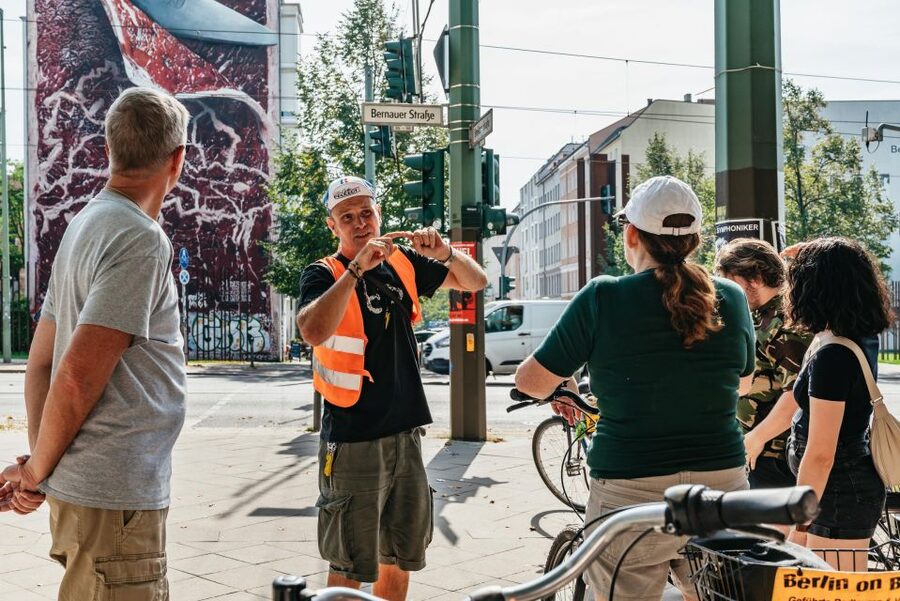
At $41 per person, this is a fair price for a 210-minute guided route. You are paying for more than bike hire. The cost includes the bicycle, a live guide, sunscreen, trouser clips, and rain ponchos when needed. Helmets and gloves are available on request.
The value is strongest if you want context. You could visit Checkpoint Charlie or a Wall memorial independently, but you would need to piece together the route and research what each location means. Here, the stops are tied together by one historical thread, and you cover ground that would take much longer on foot.
It is less appealing if you already know Berlin’s Cold War story well and mainly want a casual bike rental. In that case, the guide may provide more explanation than you need. For a first visit, though, the mix of movement, landmarks, and personal stories makes the price sensible.
Free cancellation is available up to 24 hours before the tour, and you can reserve now and pay later. Check the available start times when booking, since the duration is fixed but departure times can vary.
Who should choose this Berlin bike tour?
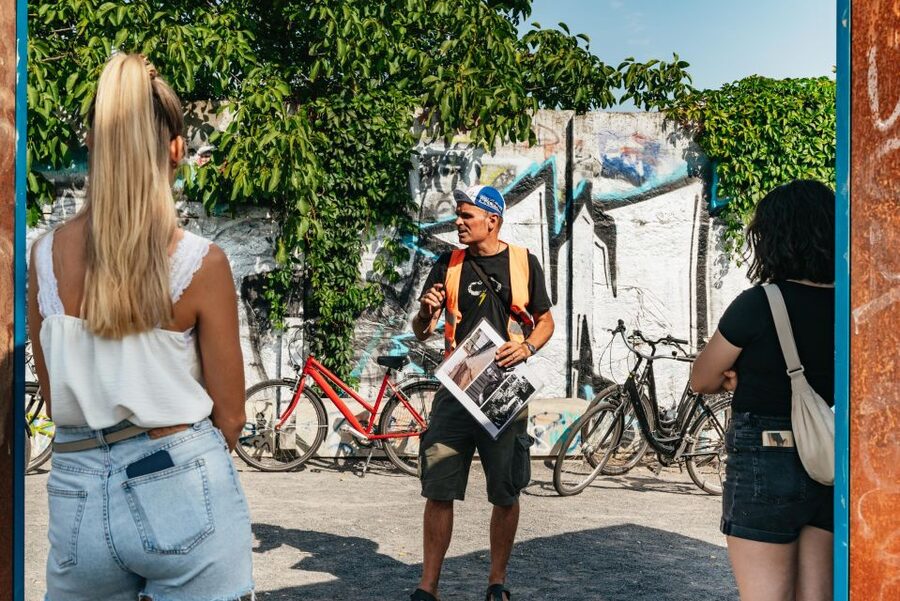
I would choose this tour if you want to understand the Wall through real places rather than a museum display alone. It suits first-time visitors, history fans, couples, families with older children, and anyone who finds Berlin’s size difficult to tackle on foot.
It is also a good fit if you want more than the standard central sights. The route reaches former border areas and Wall traces that you might miss while walking between Brandenburg Gate and Checkpoint Charlie. Guides such as Paul, Oleg, Lauren, Jacob, and Isabelle have been praised for clear explanations, humor, patience, and strong storytelling, though guide assignments change.
You should think twice if cycling for three and a half hours sounds tiring, if you dislike city traffic, or if you want a very short sightseeing activity. The 15-kilometer distance is manageable at a relaxed pace, but this is still an active tour.
Should you book it?
Book it if you want a clear, human explanation of Berlin’s division and you like seeing a city from a bicycle. The route covers the major symbols, but its real strength is the connection between them: Mauerpark, Bernauerstraße, escape stories, former crossings, the watchtower, Checkpoint Charlie, and Brandenburg Gate.
The high 4.8 rating from 422 ratings fits the tour’s strongest qualities: friendly guides, easy pacing, good route coverage, and stories that make the Wall easier to grasp. My practical advice is to arrive early, choose your bike carefully, ask for hand brakes if coaster brakes are unfamiliar, and dress for changing weather. For $41, this is one of the more useful ways to get your bearings in Berlin while learning why the city still carries the marks of its divided past.
FAQ
How long is the Berlin Cold War bike tour?
The tour lasts 210 minutes, or three and a half hours.
How far do you cycle?
You cover approximately 15 kilometers at a relaxed pace.
Where does the tour begin?
It begins at the Berlin on Bike Depot inside Kulturbrauerei in Prenzlauer Berg. The nearest metro station is Eberswalder Straße, three stops from Alexanderplatz on the U2 line.
Which sights are included?
The route includes Kulturbrauerei, Mauerpark, Bernauerstraße, remains of the Berlin Wall, former crossings including Bornholmerstraße, Checkpoint Charlie, one of the last watchtowers, and Brandenburg Gate.
Are bicycles and safety equipment included?
A bicycle is included. Helmets and gloves are available on request. Sunscreen, trouser clips, and rain ponchos in bad weather are also provided.
What languages are available, and can children join?
Guides speak English, French, Dutch, or German. Children under eight cannot join this tour. A private group option is available.
Latest history tours reviewed in Berlin
- Berlin: History and Sightseeing with Kids (Free for Kids)★ 4.9 · 19 reviews
- Berlin: Nazi History Walking Tour★ 4.8 · 33 reviews
- Berlin: Urbex Abandoned Places & History Tour★ 4.8 · 18 reviews
- Berlin: Historic Boat Sightseeing City Center Tour★ 4.5 · 415 reviews
- Berlin: Historical Sights & Berlin Wall Tour with a Berliner★ 5.0 · 62 reviews
- Berlin: Guided Craft Beer & Cultural Tour With Snacks★ 5.0 · 68 reviews
- Berlin (E)Bike Tour Historical Highlights in Small groups★ 4.5 · 24 reviews
- Berlin: Historic Center Walking Tour with a Real Berliner★ 5.0 · 134 reviews
Berlin History Tours, compared.
Berlin: 3-Hour World Heritage Cruise to Potsdam
Read our review →
Berlin: History of the Third Reich Guided Walking Tour
Read our review →
Berlin Private Complete History All Day Walking Tour
Read our review →
Berlin: Historic Boat Sightseeing City Center Tour
Read our review →
Small group Potsdam: A Journey Through History and Palaces
Read our review →
Berlin: Charité Hospital Walking Tour of Medical History
Read our review →Browse the lists this tour appears in