
Review · LISBON
Lisbon: Jewish History Tour of Lisbon
Lisbon’s Jewish past is mostly a story told through streets, squares, archives, and historical memory. This three-hour walk follows that vanished world from Praça do Comércio through Alfama, Mouraria, Baixa, Praça da Figueira, and Rossio, explaining how Jewish life changed under royal rule, forced conversion, and persecution.
I like two things right away: the route places Jewish history inside the larger story of Lisbon, and the private format lets your guide adjust the pace and answer questions. Guides such as José, Filipa, Filippa, Rita, and Jorge have earned especially warm praise for clear storytelling. The main drawback is simple: few physical traces remain, so this is a history walk rather than a tour of preserved synagogues or Jewish monuments.
Key points to know before you book
- The story begins at Praça do Comércio, where your guide connects Lisbon and the Exodus before moving into the city’s Jewish past.
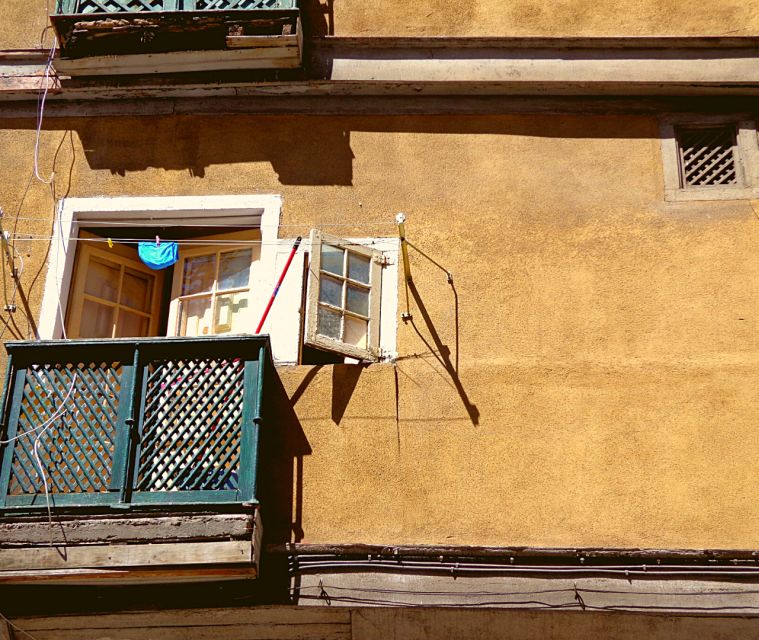
- Alfama and the castle hill reveal the old Jewish quarters, including medieval segregation and the streets of the former Judiarias.
- Rossio carries one of Lisbon’s darkest stories, the Pessah massacre of 1506.
- Baixa explains forced conversion, the rise of New Christians, and the pressure placed on Portuguese Jews.
- The walk reaches into modern history, including the passage of Jewish refugees through Lisbon during the Second World War.
- This is an oral and interpretive tour, best for people who value context, questions, and a strong guide more than surviving artifacts.
Why Lisbon’s Jewish story requires a walking tour
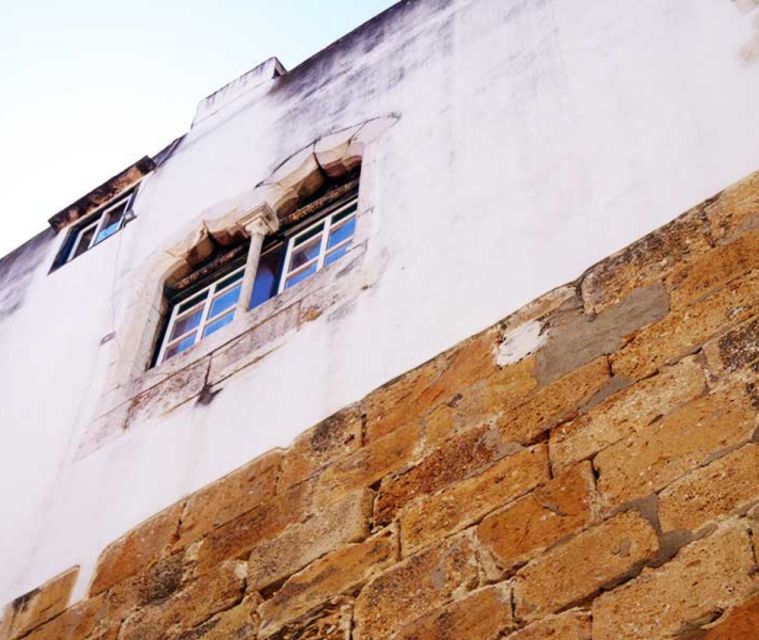
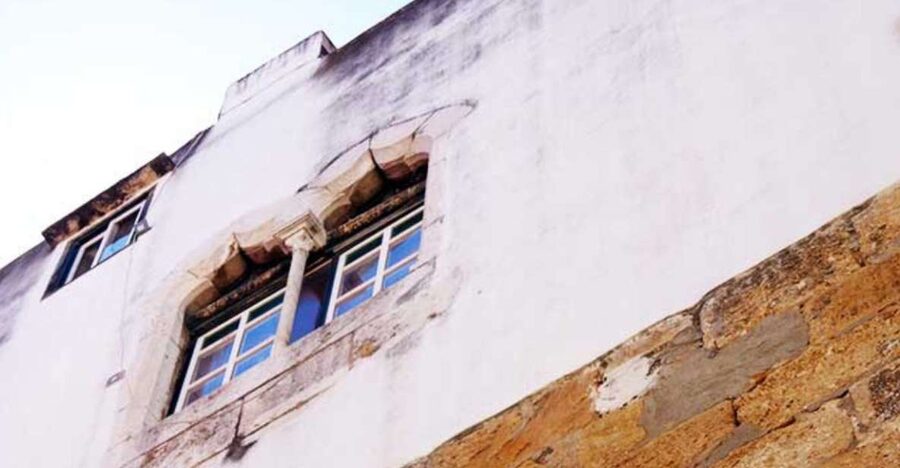
You will not spend three hours moving from one intact Jewish building to another. Lisbon’s medieval Jewish quarters were changed, rebuilt, damaged, or absorbed into later neighborhoods, and the physical evidence is limited.
That may sound like a weakness, but it also explains why the guide matters so much. A good guide turns an ordinary street corner into a place connected to medieval segregation, royal policy, religious pressure, migration, or trade. José, one of the most frequently praised guides, is especially noted for linking Jewish history to the broader history of Portugal. Other guides, including Filipa, Filippa, Rita, and Jorge, have also been praised for clear explanations and engaging storytelling.
The tour’s strength is its setting. You are walking through the actual city where these events unfolded, not looking at a detached museum display. You hear about Jewish communities in relation to Lisbon’s port, commercial streets, churches, royal power, and later international connections.
That approach suits you if you want to understand how a community fits into a city’s development. It may be less satisfying if you expect visible medieval remains at every stop.
More Jewish Heritage Tours in Portugal
- Lisbon Jewish Heritage and History – Private Tour Van
★ 5.0 · 294 reviews - 3-Hour Porto Jewish Heritage Walking Tour with Local Guide
★ 4.5 · 396 reviews - Porto: Jewish Heritage Walking Tour
★ 4.7 · 266 reviews
Praça do Comércio and the route into Lisbon’s past
The meeting point is under the large triumphal arch at Praça do Comércio. Look for a guide carrying an orange backpack or a tote bag with the large Lisbon Walker logo.
This broad waterfront square is a useful starting place because it connects Lisbon’s modern identity with older stories of movement, exile, and arrival. The tour description links the origin of Praça do Comércio to the Exodus, giving your guide a way to discuss Jewish history through the larger idea of diaspora.
From here, the walk continues toward Praça do Município, Rua do Comércio, Casa dos Bicos, and Ribeira. These early stops help place Jewish life in Lisbon’s commercial and civic center. The route is not only about religious history. It also considers the role of Jewish communities in Portuguese culture, science, trade, gastronomy, and the wider movement of people across the Atlantic, the Mediterranean, Asia, and northern Europe.
Casa dos Bicos is included as part of this historic center route. You should think of it as a stop within the city’s broader urban story rather than a guaranteed Jewish monument. The value comes from the explanation of how Lisbon functioned as a place of exchange and departure.
The waterfront opening also gives the walk a clear shape. You begin with Lisbon as a port city and then move uphill and inward, following the places where Jewish communities lived, worked, worshipped, and faced restrictions.
Alfama, the Judiarias, and medieval separation
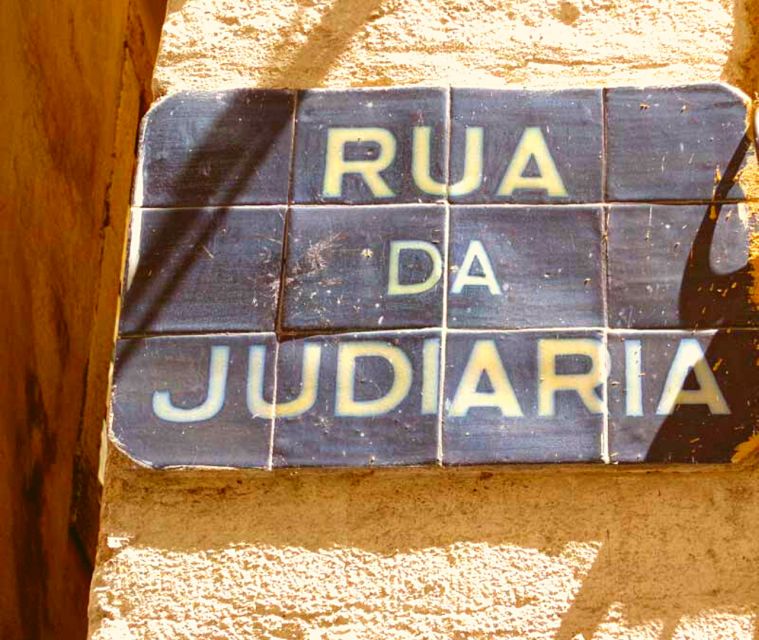
Alfama is one of the most important parts of the walk. Its steep lanes and tightly packed streets make it easier to picture a medieval city divided into districts, even though you should not expect every wall or doorway to retain its original function.
Your guide discusses the Judiarias, the Jewish quarters, and the medieval practice of segregation. This is one of the tour’s most useful subjects because it explains that Jewish life in Lisbon was not simply a matter of private faith. Location, movement, work, and relations with Christian authorities all shaped daily life.
The route covers Alfama more than once in the advertised highlights, which reflects its central place in the experience. You may hear about the old Jewish quarter, the castle hill, and the way the neighborhood fits into Lisbon’s medieval structure.
The physical walking can be demanding in parts of the old city. Several people found the route substantial but manageable, and one guide adapted the pace for older participants on a hot day. Still, wear comfortable shoes and expect a fair amount of walking. The tour is not a bus ride with occasional photo stops.
The castle hill section can also involve uneven pavement and inclines. The exact level of hill climbing may depend on the starting point and how the private group shapes the route. If mobility is a concern, discuss the route when booking, since the tour can be adapted to different time frames and starting points.
Baixa and the painful story of forced conversion
The route then moves into Baixa, where the guide explains forced conversions and the emergence of the New Christian community. This section adds an important layer to the story. Jewish history in Portugal did not end when Jews were ordered to convert. Instead, identity, belief, family memory, and public behavior became tangled together for generations.
The Baixa streets are also a reminder that Lisbon’s current layout does not always reveal the age of the events being discussed. Much of the central city was rebuilt after the 1755 earthquake, so the modern street plan can make the medieval past feel distant.
That is where interpretation becomes essential. Your guide helps you connect present-day streets with earlier religious and social divisions, even when the original buildings are gone. The walk can also explain how New Christians shaped Portuguese life and how suspicion continued long after formal conversion.
I appreciate that this approach avoids treating the story as a simple sequence of dates. The tour places forced conversion beside everyday life, public policy, and Portugal’s later global connections. It gives you a better sense of how historical pressure can continue through families and institutions.
At the same time, keep your expectations realistic. Baixa offers context, not a preserved medieval Jewish quarter. If you want an artifact-heavy experience, you may want to pair this walk with a museum visit elsewhere in Lisbon, but no additional museum is included here.
More Jewish Heritage Tours in Lisbon:
- Budapest Jewish Heritage Memorial Walking Tour & Synagogue Entry
★ 5.0 · 568 reviews - Private Jewish Heritage Journey by Barcelona Dreaming
★ 4.8 · 383 reviews - Warsaw: Jewish History Guided Walking Tour in English
★ 4.7 · 324 reviews - Anne Frank and the Jewish History of Amsterdam Private Tour
★ 5.0 · 307 reviews
Rossio and the 1506 Pessah massacre
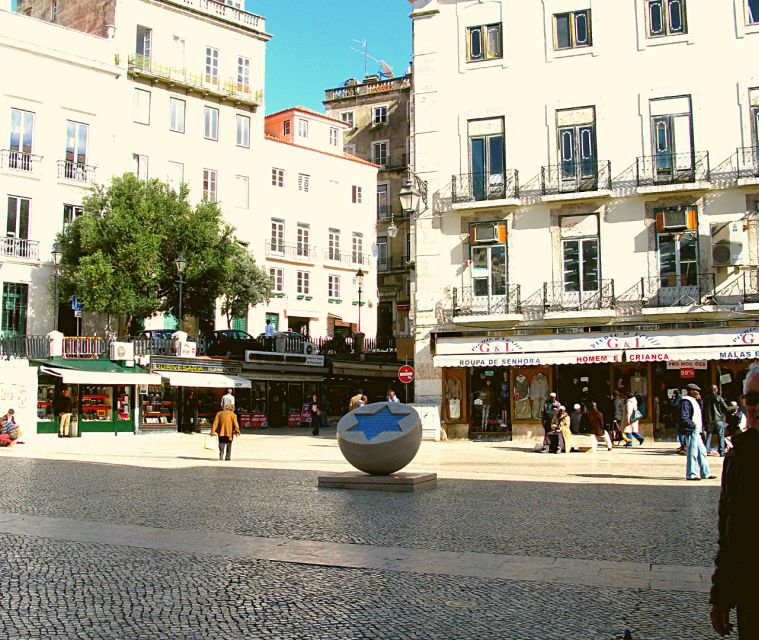
Rossio is one of the emotionally hardest stops. Here the guide discusses the 1506 Pessah massacre, a violent event that became a defining episode in Lisbon’s Jewish history.
A busy public square can make the subject feel especially stark. You are standing in a normal part of modern Lisbon while hearing about a period of mob violence and religious persecution. The contrast is part of what makes a walking tour effective, but it also means the guide’s tone and judgment matter.
This is not a light sightseeing walk. You will hear about discrimination, forced conversion, violence, and the destruction of community life. The subject is handled through historical explanation rather than spectacle, and the private group format gives you room to ask questions or pause.
Rossio also helps bring the route back toward central Lisbon after the older neighborhoods. By this point, the stops at Praça do Comércio, Alfama, Baixa, and the castle hill have created a connected story rather than a list of unrelated locations.
Mouraria, Ribeira, and the city’s changing communities
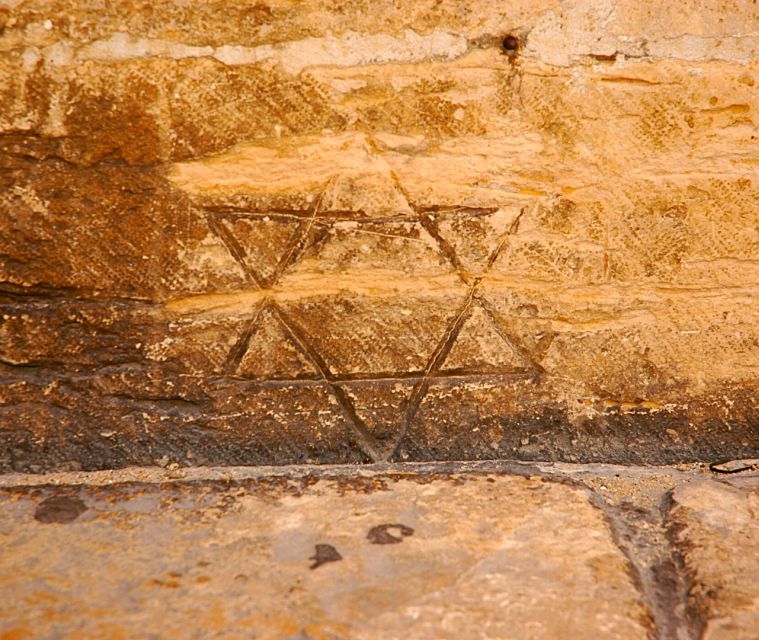
Mouraria and Ribeira add more neighborhood context. The route uses these districts to show how Lisbon’s communities developed and changed over time.
Mouraria is especially useful for understanding the city as a place shaped by many groups. The tour does not present Jewish history in isolation. Instead, it places the old Jewish quarters alongside other communities, changing political powers, and the city’s commercial life.
Ribeira brings the story back toward the river and Lisbon’s international connections. Your guide may explain how people, ideas, goods, and religious identities moved outward from Portugal. The tour also covers the Jewish diaspora that spread from Lisbon across the Atlantic, toward the Mediterranean, Asia, and northern Europe.
The Resistance Museum is included in the route description as another historical stop. The provided details do not specify a museum visit or admission, so treat it as a place connected to the wider story of resistance and modern Portugal rather than assume that an indoor entry is included. The tour price covers the three-hour guided walk, not food, drinks, or hotel transport.
The Second World War and Lisbon as a place of passage
The tour does not stop in the medieval period. It also discusses the contemporary Jewish presence and the passage of refugees through Lisbon during the 1940s.
This modern section matters because it shows that Lisbon’s Jewish story continued after the Inquisition and the destruction of earlier communities. The city became part of a twentieth-century story of flight, transit, uncertainty, and diaspora.
For you, this gives the walk a wider time span than a standard medieval-quarter tour. You move from the Judiarias and forced conversions to the modern experience of Jewish people passing through Portugal during the Second World War.
The tour also considers the lasting contribution of Jewish communities to Portuguese culture, science, and gastronomy. These subjects make the experience more than a record of persecution. They show how communities can leave an imprint even when their buildings and formal institutions no longer survive.
What the guides do best
The strongest part of this experience is the guide. With so few visible remains, a flat or poorly organized explanation would leave you wandering through attractive streets without a clear sense of place.
The guides named in the feedback include José, Filipa, Filippa, Rita, Jorge, and Sofia. José is repeatedly praised for his command of Portuguese and Jewish history, his enthusiasm, and his ability to answer detailed questions. Filippa is noted for speaking excellent English, adapting to older participants, and allowing rest breaks during a hot day. Jorge’s strength is described as extensive historical knowledge and strong storytelling.
You should not expect every booking to have the same guide, so the experience can vary in style. Still, the consistently high rating, 4.8 from 84 ratings, points to a reliable level of satisfaction. The guide’s ability to make history clear is more important here than a long list of photo stops.
Because this is a private group, you can ask about family history, Portuguese Jewish communities, New Christians, diaspora routes, or the modern period. The tour can also be tailored to different time frames and starting points. That flexibility is useful if you have limited time or want to avoid some of Lisbon’s steeper sections.
Price, length, and what you receive
The price is $106 per person for the three-hour guided tour. That is not a bargain walking tour, especially if you are traveling alone or as a couple, but the private format changes the value calculation.
You are paying for a dedicated guide rather than joining a large group. If three or four people share the booking, the cost may feel more reasonable because you receive a route shaped around your group’s interests and pace. The value is strongest if you ask questions and want historical context, not if you simply want to tick off landmarks.
The summary describes the experience as lasting one day, but the included service is a three-hour guided tour. Plan for the walking portion to take three hours, with any extra time spent on your own before or afterward.
Hotel pickup and drop-off are not included. Food and drinks are also not included. Meet under the triumph arch at Praça do Comércio, and arrive ready to walk.
Free cancellation is available up to 24 hours before the tour for a full refund. You can also reserve now and pay later, subject to availability and booking terms. English and Portuguese are the available tour languages.
Who will enjoy this Lisbon walk
I would recommend this tour to you if you want Jewish history explained within Portugal’s wider political and cultural story. It is particularly suitable if you value a private guide, enjoy asking questions, and are comfortable learning from streets where the original buildings have largely disappeared.
It also works well as an introduction at the beginning of a Lisbon stay. After three hours, you will recognize Alfama, Baixa, Rossio, Ribeira, Mouraria, and Praça do Comércio as more than sightseeing districts.
You should think twice if you need a highly visual tour with preserved synagogues, inscriptions, or large collections of artifacts. The lack of physical remains is the one consistent limitation. The experience relies on spoken history, neighborhood context, and the guide’s ability to make invisible layers understandable.
Bring comfortable shoes. Lisbon’s historic center includes slopes and uneven pavement, and the walk covers a fair distance. If you are visiting in hot weather or traveling with older relatives, use the private format to request pauses and discuss the route in advance.
Should you book this Jewish history tour?
Book it if you want a thoughtful account of Lisbon’s Jewish past and you accept that much of the evidence survives through stories rather than buildings. The route covers a lot: medieval segregation in Alfama, forced conversion in Baixa, the 1506 massacre at Rossio, the Jewish diaspora, Portuguese culture, and Second World War refugees.
The best reason to choose it is the guide. José, Filipa, Filippa, Rita, Jorge, and Sofia are all associated with the clear, engaging style this subject requires. The $106 price makes the most sense for a private group that will use the opportunity to ask questions and adjust the pace.
Skip it if you want a short list of intact Jewish monuments. Choose it if you want Lisbon’s streets to explain how Jewish life, Portuguese power, persecution, migration, and memory shaped one another.
FAQ
How long is the Jewish History Tour of Lisbon?
The guided tour lasts three hours. The activity is listed as valid for one day, but the included guided experience is the three-hour walking tour.
How much does the tour cost?
The price is $106 per person.
Is this a private tour?
Yes. The group type is private, so the route and pace can be adapted to the group.
Which languages are available?
The tour is available in English and Portuguese.
Where does the tour meet?
Meet your guide under the large triumph arch at Praça do Comércio.
How will I recognize the guide?
The guide will carry an orange backpack or a tote bag with a large Lisbon Walker logo.
Does the tour include hotel pickup?
No. Hotel pickup and drop-off are not included.
Are food and drinks included?
No. Food and drinks are not included in the price.
What should I bring?
Bring comfortable shoes, since the experience involves walking through Lisbon’s historic districts.
Can the tour be changed to suit my schedule?
Yes. The tour can be tailored to different time frames and starting points. Availability and the exact arrangement should be confirmed when booking.
Latest history tours reviewed in Lisbon
- Lisbon on a Tuk Tuk Tour: History & Viewpoints★ 4.9 · 204 reviews
- Lisbon Fado History Cultural Walking Tour★ 5.0 · 118 reviews
- Lisbon city tour on history, culture and current topics★ 5.0 · 41 reviews
- Lisbon Jewish Heritage and History – Private Tour Van★ 5.0 · 294 reviews
- Historic Walking Tour Through Lisbon’s Oldest Neighborhood★ 5.0 · 233 reviews
- Lisbon: Private Dark History Walking Tour with Drinks★ 4.8 · 387 reviews
- Lisbon Essential Walking Tour: History, Stories and Lifestyle★ 5.0 · 316 reviews
- Lisbon: Guided Tuk-Tuk Tour Along the Historic Tram Line 28★ 4.8 · 475 reviews
Lisbon History Tours, compared.
Lisbon: History, Stories and Lifestyle Walking Tour
Read our review →
Lisbon: Live Fado Show with Port Wine in Historic Center
Read our review →
Lisbon: Fado Show with Wine in a Historic Venue
Read our review →
Lisbon: Daytime or Sunset Boat Cruise with History and Wine
Read our review →
Explore Lisbon by Tuk Tuk: History and Viewpoints
Read our review →
Private Tuk Tuk Tour Through Lisbon’s Historical Streets
Read our review →
Lisbon Highlights – Private Tour with Van and Local Guide
Read our review →
Templar Tour Convent of Christ & Almourol Castle from Lisbon
Read our review →Browse the lists this tour appears in