
Review · LISBON
Lisbon Essential Walking Tour: History, Stories and Lifestyle
Lisbon makes you work for its views, but this three-hour walk gives you a smart route through the city’s hills, old lanes, churches, and central squares. You’ll move from Bairro Alto to Baixa and Alfama, with a tram ride and a coffee-and-pastry break to keep the pace varied. The city’s story is the real attraction, from the 1755 earthquake to the Carnation Revolution.
I like the way this tour joins major sights with smaller details, especially the contrast between the plain outside of San Roque and its ornate interior. I also like that guides such as Ricardo, Beatrice, Paulo, Ana, and Sofia bring local tips about restaurants, Fado, and getting around. The main drawback is physical: you’ll walk close to four miles in some groups, with hills, stairs, and uneven streets.
Key things to know before booking
- San Roque’s interior is a surprise: Its simple façade gives little warning of the gilding, tiles, and paintings inside.
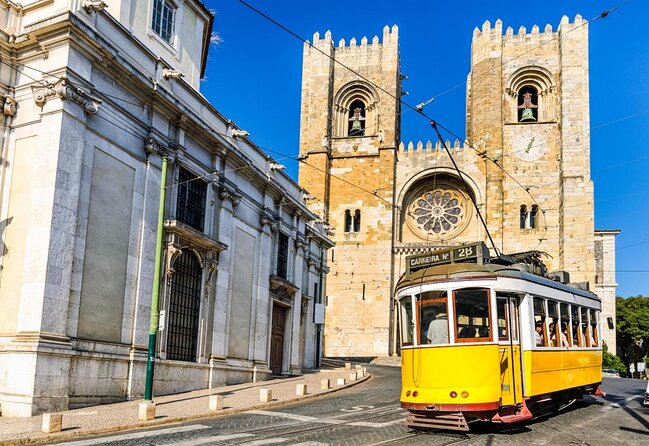
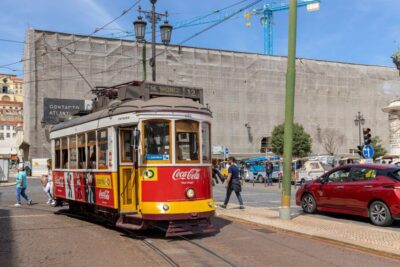
- You ride part of Tram 28: The tram links the central area with Portas do Sol and adds a very Lisbon-style way to move between districts.
- The route connects three major neighborhoods: Bairro Alto, Baixa, and Alfama each show a different side of the city.
- Coffee and pastry are included: The mid-tour stop gives you a short rest in a local café.
- The walking is serious: Comfortable shoes and water are essential, especially in warm weather.
- The group is capped at 15 people: That is small enough for questions and easier movement through narrow streets.
Why this makes a strong first day in Lisbon
Lisbon can be confusing at first. Its neighborhoods climb over several hills, names change quickly, and the best route between two nearby sights is not always obvious. This walk gives you a basic map in your head before you explore on your own.
You begin in Bairro Alto, a neighborhood with five centuries of development behind it. The guide explains how the area changed after the 1755 earthquake, when families from Baixa and nearby districts moved in and helped renew the neighborhood. That setting gives the history a clear place rather than leaving you with a list of dates.
The route then links viewpoints, churches, public squares, and old streets. You do not spend three hours inside one museum or church. Instead, you keep moving and see how Lisbon’s parts fit together.
I especially like this format for a first full day in town. You can note the places you want to return to, ask about Fado or food, and use the guide’s practical suggestions for the rest of your stay. Guides have recommended restaurants, places to hear Fado, and simple ways to get around the city.
More History Walking Tours in Lisbon
- Lisbon: History, Stories and Lifestyle Walking Tour
★ 4.8 · 10,902 reviews - Lisbon: Private Dark History Walking Tour with Drinks
★ 4.8 · 387 reviews - Historic Walking Tour Through Lisbon’s Oldest Neighborhood
★ 5.0 · 233 reviews
Bairro Alto and São Pedro de Alcântara
Bairro Alto is the starting point, and it is a good choice. The neighborhood is old enough to carry several layers of Lisbon’s story, yet central enough to lead naturally toward the city’s major sights.
The guide sets up the city’s development here, including the changes that followed the earthquake of 1755. This matters because Lisbon is not just an old city preserved in amber. It has been damaged, rebuilt, reshaped, and lived in through major political and social changes.
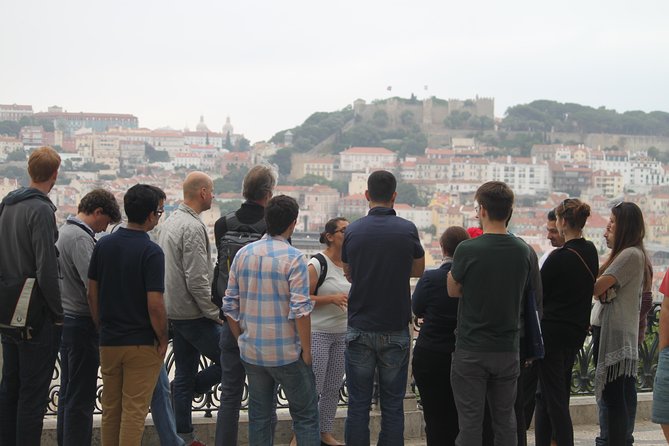
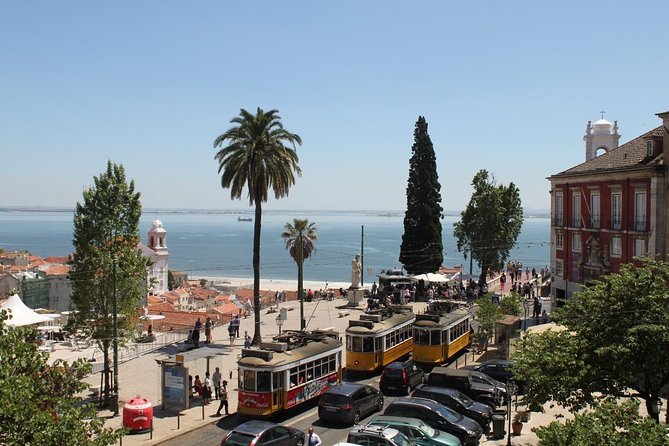
From Bairro Alto, you pass through the garden at Miradouro São Pedro de Alcântara. This is one of the tour’s best early pauses. From the viewpoint, you can look across Baixa toward the south bank of the Tagus River.
The stop lasts about 15 minutes, enough for photographs and orientation. You get a sense of Lisbon’s hills from above, then walk into the streets you have just seen from the viewpoint. That change in perspective is useful and helps the city feel less tangled.
Do not expect a long rest here. The itinerary allows about 15 minutes, and the route continues downhill toward San Roque.
San Roque, a plain façade with an ornate interior
The Church and Museum of San Roque is one of the most rewarding stops on the route. Built by the Jesuits, it was one of the first Jesuit churches in Portugal and among the earliest in the world.
From outside, the church is austere. Inside, you find gilding, tiles, and paintings in Mannerist and Baroque styles. That contrast makes the visit memorable. It also gives your guide a chance to explain how religious buildings could communicate wealth, power, and devotion through decoration.
The stop lasts about 20 minutes. That is long enough to see the main interior and hear the story without turning the walk into a full museum visit. Admission is listed as included in the experience.
I like this part because it rewards careful looking. You are not simply ticking off a church. You are learning to expect Lisbon’s habit of hiding elaborate interiors behind restrained exteriors.
Carmo and the Carnation Revolution
The route heads down toward the Carmo Convent and Church, important for both architecture and modern Portuguese history. The remains are fine examples of Gothic architecture, and the site is tied to the Carnation Revolution of 1974.
That revolution ended nearly five decades of dictatorship. The tour uses Carmo to connect an older monument with a much more recent turning point in Portugal. This is one of the strongest parts of the walk for anyone who wants more than pretty streets and viewpoints.
The stop lasts about 20 minutes. Your guide can put the site into a political timeline, then show how the physical setting relates to the events. The material is especially useful because Portugal’s modern history is easy to overlook when you are focused on churches, trams, and tiled buildings.
The Carmo area also marks the transition from the upper neighborhoods toward Baixa. You have already seen Lisbon from above. Now you descend into the rebuilt central district.
More History Walking Tours in Portugal
- Lisbon Fado History Cultural Walking Tour
★ 5.0 · 118 reviews - Porto: Historic City Center Walking Tour
★ 4.7 · 1,172 reviews - Porto: Historical Center Walking Tour
★ 4.8 · 898 reviews - 3-Hour Porto Jewish Heritage Walking Tour with Local Guide
★ 4.5 · 396 reviews
Santa Justa and Lisbon’s central Baixa
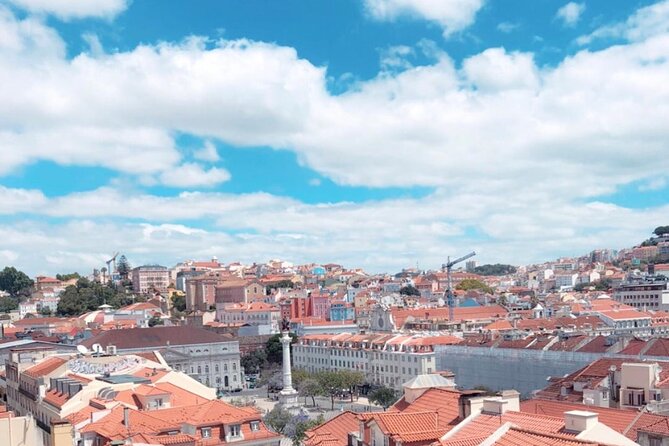
The Santa Justa elevator comes next. This Gothic Revival structure is one of Lisbon’s most recognizable monuments and offers one of the city’s best viewpoints.
The tour allows about 15 minutes at the site. The elevator ticket is not included, so do not assume the price covers a ride or access to every viewing area. The stop is still useful even if you only examine the structure from street level and hear how it fits into the city.
From here, the route continues through Baixa, the central district rebuilt after the earthquake. This is where the history you heard in Bairro Alto becomes visible in the broad streets and organized city plan.
A short coffee and pastry break follows in a local café. Coffee and cake are included, while other food and drinks are not. It is a simple touch, but a practical one. Three hours on Lisbon’s slopes is easier with a pause, and the break gives you time to ask questions or compare notes with your guide.
The pastry stop is also a small local ritual rather than a formal meal. Do not treat it as lunch. If you need a substantial meal, plan one before or after the walk.
Praça da Figueira and the Tram 28 ride
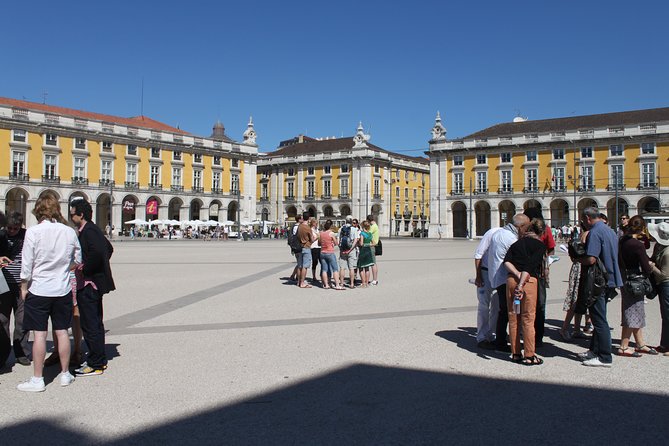
After the break, you continue through Baixa toward Praça da Figueira. The square sits in the heart of the central city and helps connect the walking portion with the tram ride.
The tram trip is included. The route goes uphill from the castle area toward Portas do Sol, giving you a taste of one of Lisbon’s classic forms of transport without requiring the entire tour to be on foot.
This is a useful change of pace. You have been walking downhill and across central streets, and now the tram carries you toward Alfama. Guides such as Beatrice have been praised for explaining how to handle the Tram 28 journey and how it fits into the city’s layout.
Keep expectations realistic. The tram ride is one part of a longer walking tour, not a dedicated tram excursion. The experience also depends on normal city transport conditions, so the ride is best understood as a practical and atmospheric link between two sections of the route.
Alfama and the final approach to the cathedral
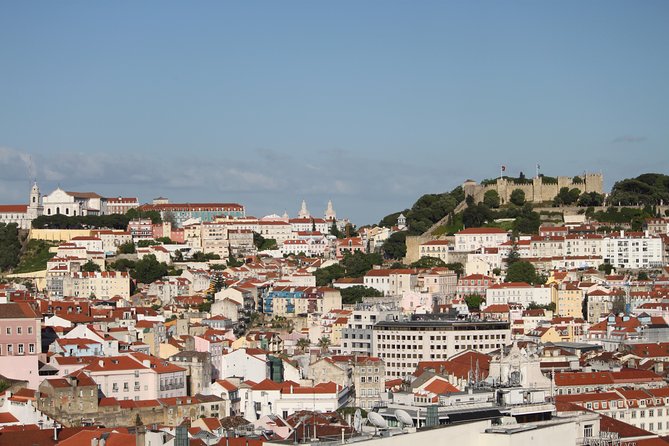
The tram brings you to Portas do Sol, where the tour turns toward Alfama. From this viewpoint, you can see the Monastery of São Vicente de Fora, the National Pantheon, and the old neighborhood spreading down toward the Tagus.
Alfama is one of Lisbon’s oldest and most traditional districts. Its narrow streets, Fado houses, and saint festivals give it a different feel from the planned streets of Baixa. The neighborhood is associated especially with the festivals of the saints, including St. Anthony.
This section lasts about 20 minutes, but the walk through Alfama is one of the portions you may remember most clearly. The tight lanes and changing views help explain why a local guide is useful. A map can show you where Alfama is. A guide can explain how the streets, music, celebrations, and old buildings relate to one another.
The tour finishes at Lisbon Cathedral, built in 1150, three years after the city was retaken from the Moors. The cathedral has changed over time, so its appearance combines several architectural styles.
Ending here works well. The route has moved from the upper Bairro Alto area through the rebuilt center and into one of the oldest parts of Lisbon. If you want to continue sightseeing, the cathedral gives you a clear place from which to plan your next stop.
What the guides add to the experience
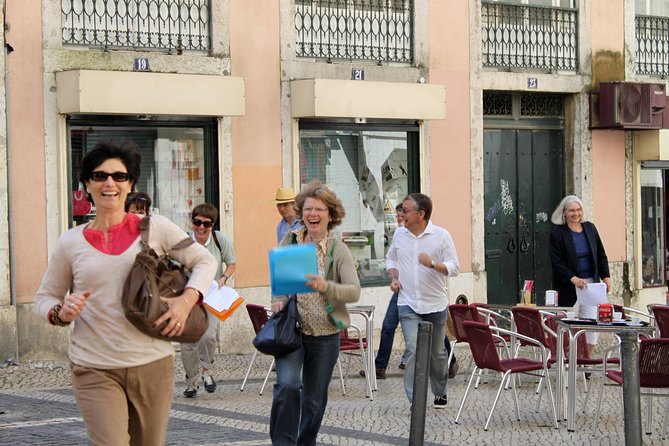
The strongest praise goes to the guides, and the individual names matter because the tone can vary from one departure to another. Ricardo is repeatedly described as especially strong on Lisbon and Portuguese history, with an engaging style and clear explanations. One account identifies him as a professor, which helps explain the academic depth some people experience on the walk.
Beatrice is noted for being attentive, organized, and good at managing the busy streets. She has also given practical advice about restaurants, Fado, and using Tram 28. Paulo is described as friendly, funny, and good with families of different ages.
Ana has led a longer-feeling version of the walk, with one group covering nearly four miles while exploring back streets and historic areas. Sofia is praised for her enthusiasm and ability to keep the group interested. Joao is described as interactive and enjoyable.
Guide quality can never be guaranteed by name alone, but the range of positive comments points to the central strength of the experience: the walk depends on storytelling. One less favorable account found the explanations unclear and enjoyed mainly the tram ride. That is worth keeping in mind if you prefer silent sightseeing or a very tightly scripted tour.
How difficult is the three-hour route?
The tour is not a gentle stroll. Lisbon is hilly, and the route includes uphill and downhill sections, narrow lanes, steps, and uneven pavement. One group covered close to four miles, so comfortable shoes are more important here than stylish footwear.
Bring water. That advice comes directly from the nature of the route, not just from warm-weather concerns. The coffee stop is helpful, but it does not replace carrying a drink.
Most people can participate, and service animals are allowed. Still, anyone with trouble walking should think carefully before booking. The walk is better suited to people who can manage several hours on their feet and handle Lisbon’s slopes without frequent long rests.
The group maximum is 15 people. That keeps the tour more personal than a large coach outing and makes it easier to ask questions. It also means the group must stay together in narrow streets and around busy transport areas.
Is $30.25 a fair price?
At $30.25 per person, the value is solid if you want a guided introduction rather than a self-guided checklist. The price includes a professional guide, the tram trip, coffee and cake, and liability and personal accident insurance.
You are paying for the route and the explanation as much as for admission. San Roque and the other main stops give the walk substance, while the guide connects the earthquake, Portuguese political change, religious architecture, Fado, and the city’s neighborhood patterns.
The Santa Justa elevator is not included, and other food and drinks are extra. Transfers to the meeting point are also not covered. The meeting details simply place the start and finish in Lisbon, so check the exact location carefully when booking.
The tour is often booked about 29 days ahead. That suggests you should reserve early if your Lisbon dates are fixed, particularly since departures are limited to 15 people. Confirmation is normally received at booking, though bookings made within 18 hours of the start depend on availability.
Free cancellation is available up to 24 hours before the experience. Changes or cancellations inside that window are not accepted for a refund.
Who should book this Lisbon walk?
I would choose this tour for a first visit, especially on day one or day two. It gives you the broad outline of Lisbon before you spend time on individual museums, food stops, or Fado performances.
It also suits you if you want history delivered through places. Carmo explains the Carnation Revolution, San Roque reveals Lisbon’s religious art, Baixa shows the post-earthquake city plan, and Alfama brings you into the city’s older traditions.
Families can enjoy it, and one group with a 14-year-old found the mix of stories and movement suitable. The guide style matters, though, so younger children who dislike history talks may find three hours long.
You may want a different experience if you are looking for an easy, flat walk, a long museum visit, or a food-focused tour. The snack is modest, the walk is active, and some parts depend heavily on how clearly and energetically the guide explains the story.
Should you book the Essential Walking Tour?
Book it if you want a well-planned first look at Lisbon, can handle hills, and value a guide who explains why the city looks and feels the way it does. The route covers the right introductory mix: viewpoints, San Roque, Carmo, Santa Justa, Baixa, Tram 28, Alfama, and the cathedral.
The best reason to book is the combination of place and context. You get the city’s essential sights, but you also hear about the 1755 earthquake, the 1974 revolution, Fado, local neighborhoods, and daily ways to get around.
Skip it if walking several miles would be a strain or if you prefer to set your own pace. For most first-time visitors who want a solid orientation, the $30.25 price is reasonable, especially with the tram ride, café stop, and small group size included.
FAQ
How long is the Lisbon Essential Walking Tour?
The tour lasts approximately three hours.
What sights are included on the route?
The route includes Bairro Alto, Miradouro São Pedro de Alcântara, the Church and Museum of San Roque, Carmo Convent and Church, Santa Justa, Baixa, Praça da Figueira, Alfama, Portas do Sol, and Lisbon Cathedral.
Is the tram ride included?
Yes. A tram trip is included in the experience, traveling uphill toward Portas do Sol.
Is food included?
Coffee and a pastry at a local café are included. Other food and drinks are not included.
Is the Santa Justa elevator ticket included?
No. Admission for the Santa Justa elevator is not included.
Is the tour offered in English?
English is one of the available languages. Other languages may also be offered, and you should select your preferred language when booking.
How many people can join the tour?
The tour has a maximum group size of 15 people.
Latest history tours reviewed in Lisbon
- Lisbon on a Tuk Tuk Tour: History & Viewpoints★ 4.9 · 204 reviews
- Lisbon Fado History Cultural Walking Tour★ 5.0 · 118 reviews
- Lisbon city tour on history, culture and current topics★ 5.0 · 41 reviews
- Lisbon Jewish Heritage and History – Private Tour Van★ 5.0 · 294 reviews
- Lisbon: Jewish History Tour of Lisbon★ 4.8 · 84 reviews
- Historic Walking Tour Through Lisbon’s Oldest Neighborhood★ 5.0 · 233 reviews
- Lisbon: Private Dark History Walking Tour with Drinks★ 4.8 · 387 reviews
- Lisbon: Guided Tuk-Tuk Tour Along the Historic Tram Line 28★ 4.8 · 475 reviews
Lisbon History Tours, compared.
Lisbon: History, Stories and Lifestyle Walking Tour
Read our review →
Lisbon: Live Fado Show with Port Wine in Historic Center
Read our review →
Lisbon: Fado Show with Wine in a Historic Venue
Read our review →
Lisbon: Daytime or Sunset Boat Cruise with History and Wine
Read our review →
Explore Lisbon by Tuk Tuk: History and Viewpoints
Read our review →
Private Tuk Tuk Tour Through Lisbon’s Historical Streets
Read our review →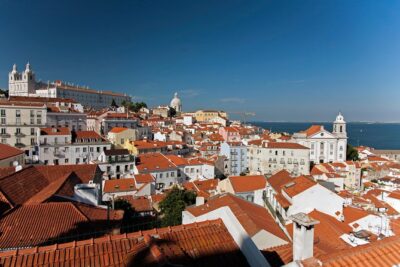
Lisbon Highlights – Private Tour with Van and Local Guide
Read our review →
Templar Tour Convent of Christ & Almourol Castle from Lisbon
Read our review →Browse the lists this tour appears in