
Review · LISBON
Lisbon: History, Stories and Lifestyle Walking Tour
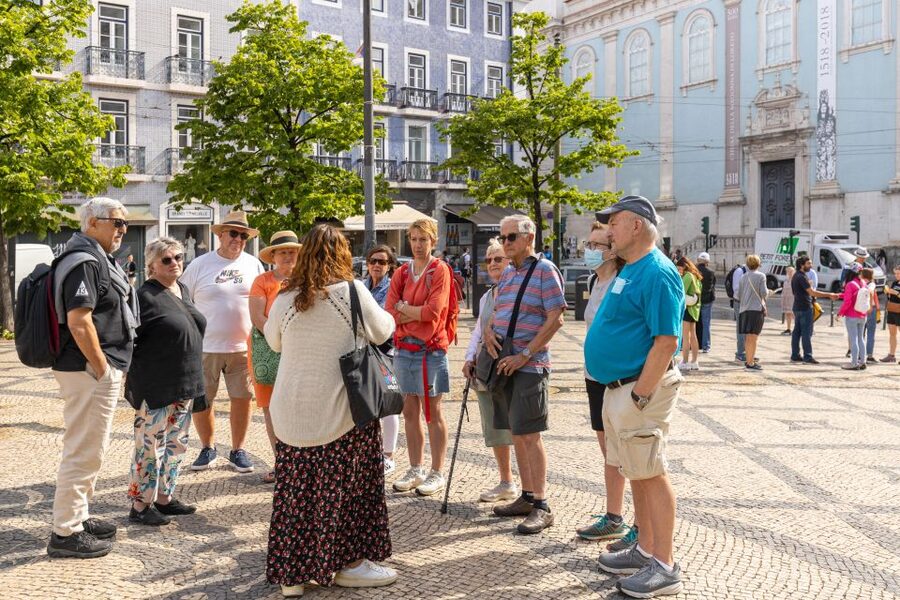
Lisbon’s best introduction may be its hills. This three-hour walk links Bairro Alto, Baixa, and Alfama, so you see how the city changes from nightlife quarter to grand downtown to old lanes above the Tagus. A tram ride, coffee, and pastel de nata keep it from feeling like a three-hour history lecture.
I like the mix of major sights and local texture, especially the small churches, tiled streets, and views from São Pedro de Alcântara and Portas do Sol. I also like the human touch: guides such as Paulo, Beatrice, Ricardo, and Anna are praised for clear storytelling, humor, and useful advice for the rest of your stay.
The main thing to weigh is the terrain. Lisbon is hilly, and the route includes inclines, narrow streets, and steps. The pace is often relaxed, with stops for photos and explanations, but this is still a walking tour. Tram service can also change, as one guide had to adjust the route during heavy rain and a breakdown.
Key points to know before booking
- The route covers three defining Lisbon districts: Bairro Alto, Baixa, and Alfama.
- A classic tram ride is included, taking you uphill toward Portas do Sol.
- São Roque Church and Carmo add serious art and political history to the walk.
- Coffee and pastel de nata provide a welcome break and a taste of everyday Lisbon.
- Guides bring different strengths: Paulo is praised for personal stories, while Beatrice, Ricardo, Anna, and others are known for warmth, humor, and strong local knowledge.
- The $29 price is good value if you want an orientation tour with transport, refreshments, and a live guide.
Why this is a smart first look at Lisbon
Lisbon can be hard to read at first. Its districts sit on steep hills, its streets change character quickly, and many important details are easy to pass without context. This route gives you a useful framework early in your trip.
You begin in Bairro Alto, a district dating from the 16th century. It is now strongly linked with bars and evening life, but the guide explains how it developed and how the 1755 earthquake changed the city. After the disaster, families from Baixa and nearby districts moved into and helped renew this part of Lisbon.
That broad view is one reason I would place this tour near the start of a visit. You get a sense of how Lisbon grew, how it was rebuilt, and how its neighborhoods fit together. Later, you can return to the areas that caught your attention instead of wandering without a plan.
The tour also brings together several layers of Portugal’s past. You hear about the Moorish period, the city’s recovery by Christian forces, the earthquake, the dictatorship that ended in 1974, and the customs that still shape daily life. The best guides keep these topics connected to the streets around you.
More History Walking Tours in Lisbon
- Lisbon: Private Dark History Walking Tour with Drinks
★ 4.8 · 387 reviews - Lisbon Essential Walking Tour: History, Stories and Lifestyle
★ 5.0 · 316 reviews - Historic Walking Tour Through Lisbon’s Oldest Neighborhood
★ 5.0 · 233 reviews
Bairro Alto and São Pedro de Alcântara
Bairro Alto is a strong starting point because it does not feel like a formal museum district. Its narrow streets and compact blocks give you an immediate sense of old Lisbon, while the guide explains how the area changed over several centuries.
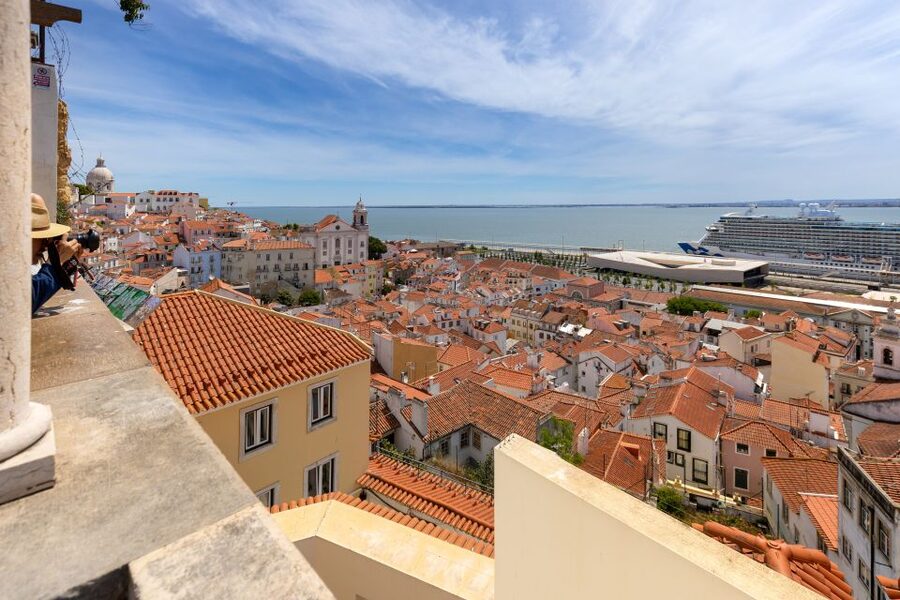
The route then reaches the garden at Miradouro São Pedro de Alcântara. This is one of the tour’s most rewarding pauses. From here, you look across Baixa toward the south bank of the Tagus River, with Lisbon spread out below.
You should have time for photos, but do not treat the viewpoint as just a quick picture stop. The panorama helps you understand the city’s shape. Lisbon is built across hills, and the view makes clear why the walk later feels like a series of climbs and descents.
This is also where a good guide can turn a scenic stop into useful orientation. You can identify the lower downtown area, the river, and the hills you will visit later. Guides including Beatrice and Paulo receive particular praise for making these explanations lively rather than dry.
San Roque Church and its ornate interior
San Roque Church has an austere exterior, which makes the inside more surprising. The building was associated with the Jesuits, and its interior includes gilding, tiles, and paintings connected with Mannerist and Baroque art.
This is a worthwhile stop for anyone who wants more than street views. Lisbon’s churches can look plain from outside, yet open into highly decorated interiors. San Roque gives you a clear example of that contrast without requiring a separate museum visit.
The stop also breaks up the walking in a useful way. You are not simply moving from one viewpoint to another. You get time to look closely at architecture and decoration while the guide explains what you are seeing.
The exact balance of explanation and walking depends on the guide and group. Paulo is praised for storytelling and personal links to Lisbon, while several guides are described as clear, friendly, and willing to answer questions. If you care about art, ask questions here rather than waiting for the guide to move on.
Carmo Convent and the 1974 revolution
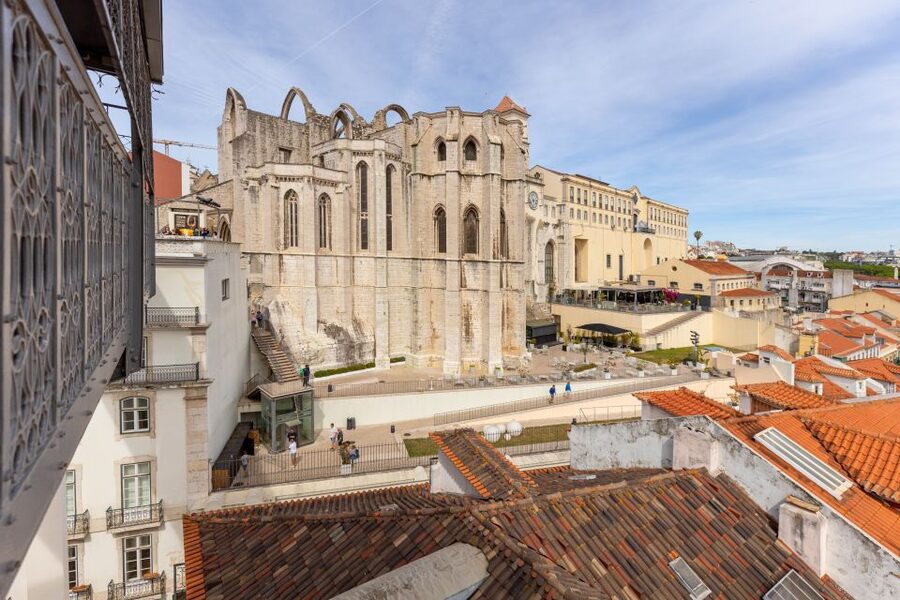
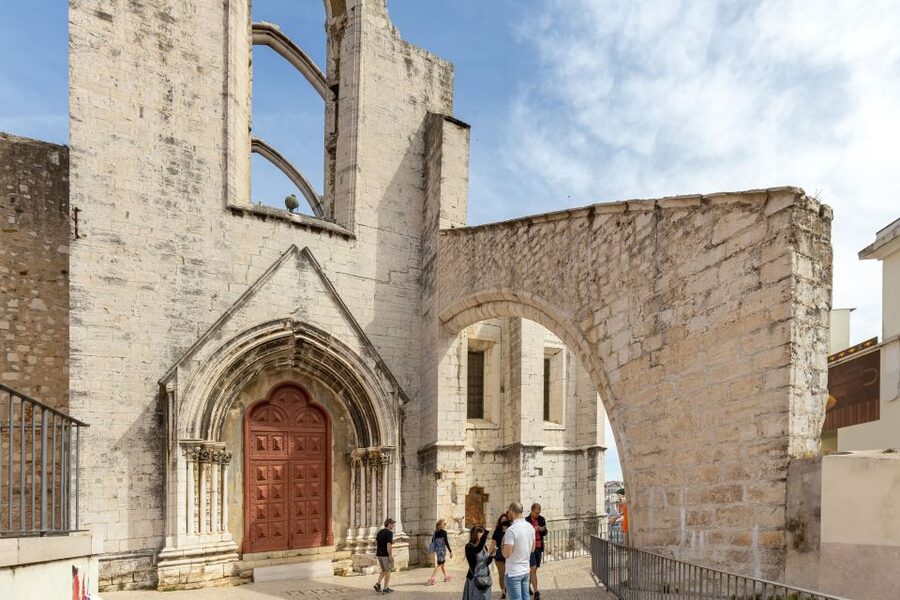
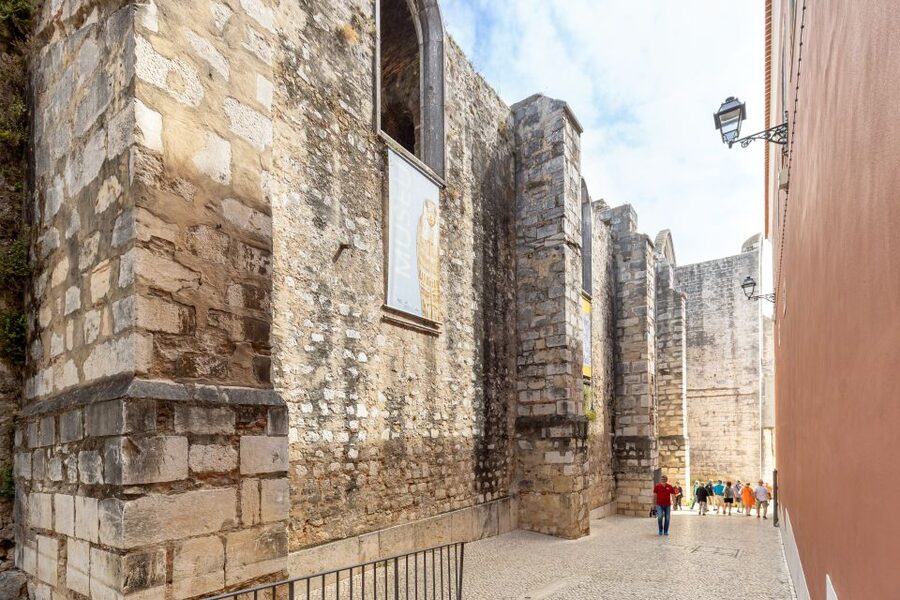
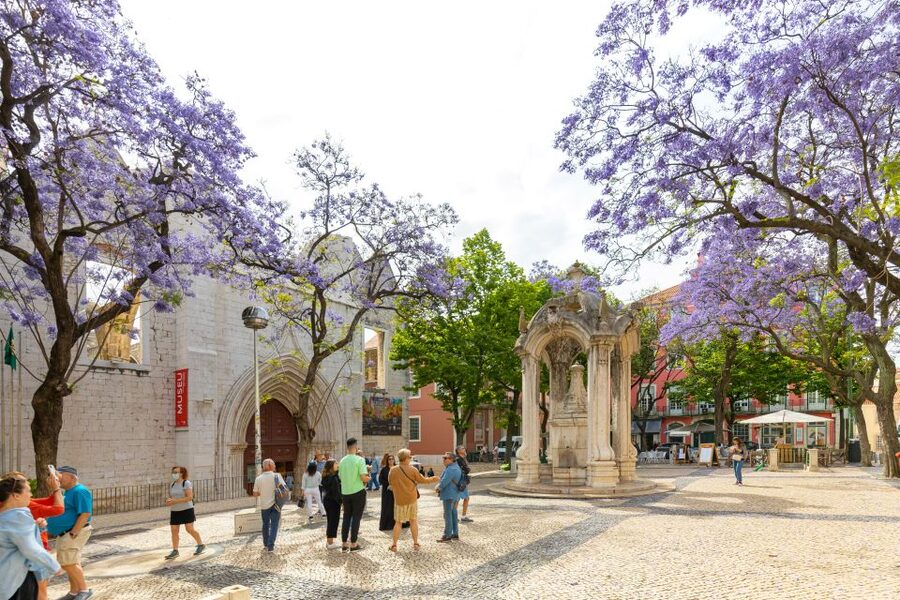
Heading downhill, you reach Carmo Convent and Church. The Gothic remains are among Lisbon’s most memorable architectural sights, especially because the open roofline gives the site a dramatic appearance.
Carmo matters for another reason. It was one of the places connected with the Carnation Revolution in 1974, the movement that ended nearly five decades of dictatorship. That political story gives the walk a modern edge. Lisbon is not presented only as a city of medieval streets, royal buildings, and church interiors.
The 1974 revolution is a particular highlight for many people because it helps explain Portugal today. The tour gives you a chance to connect a physical place with a major national change. One guide, Paulo, is described as having grown up in Lisbon and lived through the period as a child, giving the subject a personal angle.
You should not expect a long political seminar. The value is in hearing the key facts while standing in a place tied to the event. If recent European history interests you, this may be one of the most useful sections of the tour.
More History Walking Tours in Portugal
- Lisbon Fado History Cultural Walking Tour
★ 5.0 · 118 reviews - Porto: Historic City Center Walking Tour
★ 4.7 · 1,172 reviews - Porto: Historical Center Walking Tour
★ 4.8 · 898 reviews - 3-Hour Porto Jewish Heritage Walking Tour with Local Guide
★ 4.5 · 396 reviews
Santa Justa and the rebuilt Baixa
The route continues toward the Santa Justa elevator, one of Lisbon’s most recognizable structures. Its Gothic Revival design makes it look more like a piece of monumental architecture than ordinary public transport.
The elevator is linked with one of the city’s best viewpoints, though the tour description does not promise a ride up it. You should expect to see and discuss the structure as part of the Baixa section. That distinction matters if riding Santa Justa is a priority for you.
Baixa is the city center rebuilt after the 1755 earthquake. The streets here feel more orderly than the lanes of Alfama or Bairro Alto, and the change in layout helps explain the scale of the disaster and the rebuilding that followed.
This section is useful because it gives you a visual comparison. You have already seen the older, hillier quarters. Now you see the planned downtown area, with its broader streets and more open arrangement. The guide connects these physical differences to Lisbon’s past rather than treating each sight as an isolated photo stop.
The tram ride toward Portas do Sol
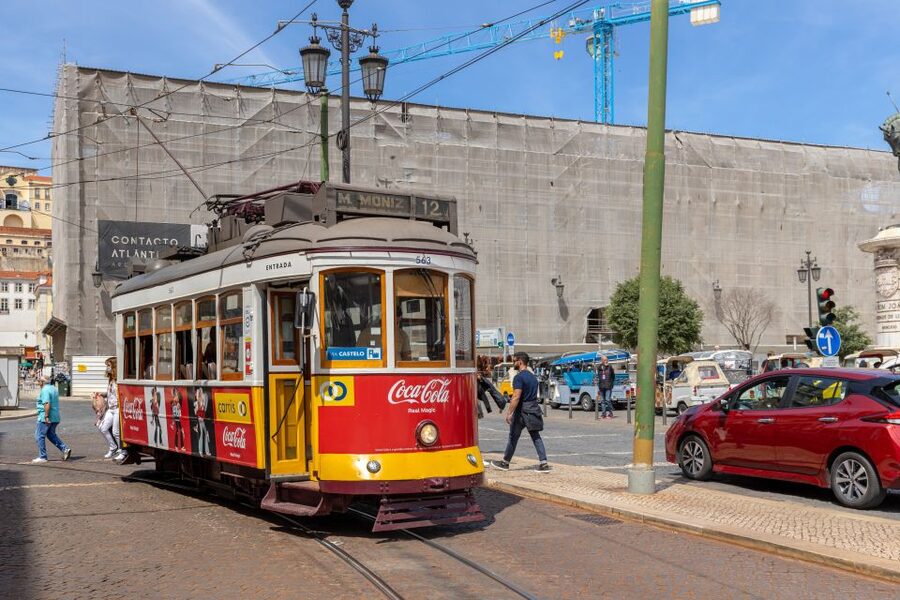
A short tram ride is included, and it adds something a normal walking route cannot. Lisbon’s trams are part of the city’s identity, but they are also practical transport through steep and crowded streets. Riding one gives you a brief taste of how the older districts connect.
The route goes uphill from the castle area toward Portas do Sol. The ride may be short, but it is an important change of pace after the first part of the walk. It also saves your legs for Alfama, where the narrow streets and uneven routes can take more effort than the distance suggests.
Keep your expectations sensible. This is not a dedicated tram tour, and service can be affected by weather or mechanical problems. One guide adapted the route when a tram broke down during heavy rain, and the group still found the experience worthwhile. That is a useful reminder that public transport in a living city does not always run to a neat schedule.
The ride also works best when you treat it as part of the day rather than the main event. You are paying for a guided city walk that happens to include a tram, not a full tram excursion.
Portas do Sol and Alfama’s old lanes
At Portas do Sol, you get another fine view toward the Tagus and the older quarters. The stop brings several important sights into one frame, including the Monastery of São Vicente de Fora, the National Pantheon, and the spread of Alfama below.
Alfama is the oldest and most picturesque neighborhood on the route. Its narrow streets run down toward the river, and the district is strongly linked with fado houses and Lisbon’s popular saint festivals, especially the celebrations for St. Anthony.
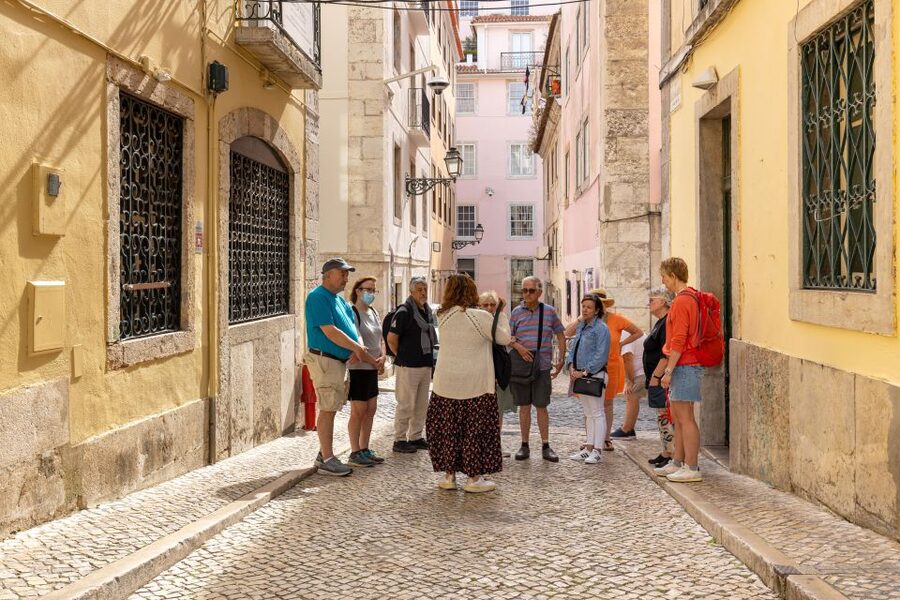
This is where the tour becomes less about individual monuments and more about atmosphere and daily life. You walk through lanes that do not follow the broad, planned pattern of Baixa. The guide helps explain why the neighborhood feels so different and points out details you could easily miss alone.
Alfama is also where the physical demands become clearest. You may walk on uneven streets and use steps. The route is described as relaxed, and guides have adapted their pace for older group members, but you should wear firm, comfortable shoes and avoid booking if you want a completely flat outing.
Lisbon Cathedral and a final piece of the city’s story
The tour ends at Lisbon Cathedral, built in 1150, only a few years after the city was taken back from the Moors. Its appearance reflects later changes, so it is a useful final example of Lisbon’s layered architecture.
The cathedral is not presented as a single-style building. Additions and alterations over time have left it with a mixture of forms. That fits the wider lesson of the tour: Lisbon is not one tidy historical period but a city repeatedly changed by conquest, faith, disaster, politics, and everyday life.
Ending here makes practical sense. You finish in one of the oldest parts of the city after seeing how Lisbon’s neighborhoods connect. From this point, you can continue exploring Alfama, look for a fado venue, or use the guide’s suggestions to plan the rest of your day.
Coffee, pastel de nata, and the value of the $29 price
Coffee and cake are included, usually described as a bica and pastel de nata. The stop is small, but it adds real value. You get a chance to sit down, try a familiar Portuguese treat, and ask the guide about food, neighborhoods, or places to visit later.
One guide adjusted the snack for a vegetarian participant, offering a vegan spinach item with espresso. That suggests it is sensible to mention dietary needs when you meet the guide, though the supplied details do not promise a set range of alternatives.
At $29 per person, the tour is fairly priced for three hours of guiding, a tram trip, coffee, and cake. You are also paying for the route design. Seeing Bairro Alto, Baixa, Alfama, several viewpoints, churches, Carmo, Santa Justa, and the cathedral in one outing would take more planning on your own.
The value is strongest for first-time visitors. If you already know Lisbon well, you may find some stops familiar, and you might prefer a more specialized tour. Private and small-group options are available, but the price given is per person and the exact cost may depend on the option you select.
Guides, group size, and the feel of the walk
The strongest part of this experience is the guiding. Paulo is praised for humor, personal memories, and a warm way of explaining Lisbon. Beatrice is described as energetic and attentive, while Ricardo receives praise for combining ancient history, recent politics, local culture, and practical suggestions.
Anna, Ana, Helena, Lucia, João, Claudio, and other named guides also receive positive comments for clear explanations, patience, and good pacing. You cannot choose a particular guide based on the information provided, so book this for the route and format rather than expecting one specific person.
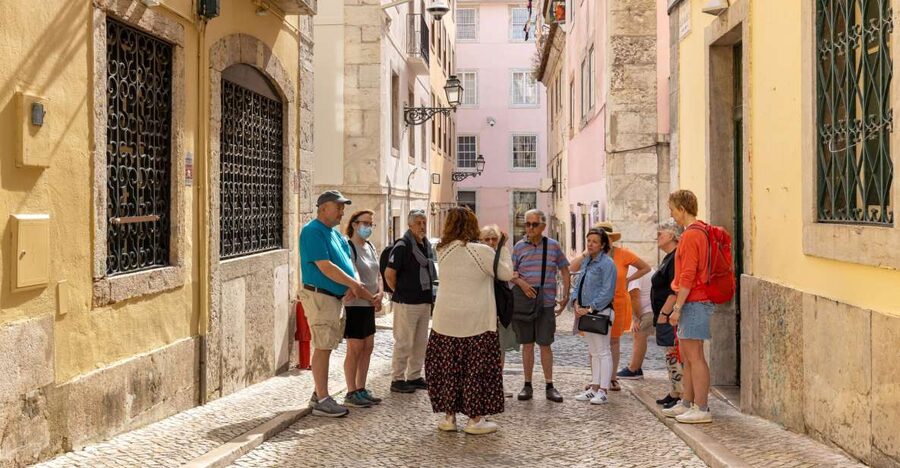
Small groups can make a real difference. You are more likely to hear the guide in narrow streets, ask questions, and stay together at busy sights. Private and small-group formats are available, while the standard group size can vary.
The walk is described as easygoing, with frequent stops and photo chances. Still, do not confuse a relaxed pace with a flat route. Lisbon’s hills remain part of the experience, and the three hours can run a little over, so leave a buffer before your next fixed booking.
Who should book this Lisbon walking tour?
I would choose this tour if you are visiting Lisbon for the first time and want a fast, useful orientation. It suits couples, solo visitors, and families who want history mixed with views, neighborhoods, a tram ride, and a simple local snack.
It also suits you if you like a guide who can answer questions rather than recite dates. The route gives enough structure to cover major sights, while the personal style of guides such as Paulo, Beatrice, and Ricardo can add local detail.
You may want something else if you have limited mobility, dislike hills, or want long interior visits at every monument. The pace can be adapted, but the route still includes slopes, steps, and uneven streets. Rain can also change the tram portion or the order of the walk.
Should you book it?
Yes, if you want a well-priced first-day introduction to Lisbon that combines major sights with real neighborhood walking. The tram, coffee, and pastel de nata are pleasant extras, but the main value is the route and the guide’s ability to connect Lisbon’s architecture, politics, food, and daily life.
Book it early in your stay, keep your schedule flexible afterward, and wear good shoes. If you want a flat city tour or a specialist focus on art, food, or fado, choose a narrower experience instead.
FAQ
How long is the Lisbon History, Stories and Lifestyle Walking Tour?
The tour lasts three hours. Starting times depend on availability.
How much does the tour cost?
The listed price is $29 per person.
Is a tram ride included?
Yes. The tour includes a tram trip from the castle area uphill toward Portas do Sol.
Are coffee and cake included?
Yes. Coffee and cake are included, with the snack commonly described as a bica and pastel de nata.
Which Lisbon neighborhoods does the route visit?
The route includes Bairro Alto, Baixa, and Alfama.
Which languages are available?
Live guiding is available in Portuguese, Spanish, Italian, German, French, and English.
Is the tour private or shared?
Private and small-group options are available. The exact group type depends on the option booked.
Does the tour include hotel pickup?
No. Hotel pickup and drop-off are not included.
Is the tour suitable for people who are not very fit?
The pace includes stops, explanations, and photo opportunities, and guides can adapt to some group needs. However, Lisbon’s hills, steps, and narrow streets remain part of the route.
What happens if the tram is delayed or unavailable?
The route may be adapted. One guide changed the plan during heavy rain and a tram breakdown, so the tram portion can depend on operating conditions.
Latest history tours reviewed in Lisbon
- Lisbon on a Tuk Tuk Tour: History & Viewpoints★ 4.9 · 204 reviews
- Lisbon Fado History Cultural Walking Tour★ 5.0 · 118 reviews
- Lisbon city tour on history, culture and current topics★ 5.0 · 41 reviews
- Lisbon Jewish Heritage and History – Private Tour Van★ 5.0 · 294 reviews
- Lisbon: Jewish History Tour of Lisbon★ 4.8 · 84 reviews
- Lisbon Essential Walking Tour: History, Stories and Lifestyle★ 5.0 · 316 reviews
- Historic Walking Tour Through Lisbon’s Oldest Neighborhood★ 5.0 · 233 reviews
- Lisbon: Private Dark History Walking Tour with Drinks★ 4.8 · 387 reviews
Lisbon History Tours, compared.

Lisbon: Live Fado Show with Port Wine in Historic Center
Read our review →
Lisbon: Fado Show with Wine in a Historic Venue
Read our review →
Lisbon: Daytime or Sunset Boat Cruise with History and Wine
Read our review →
Explore Lisbon by Tuk Tuk: History and Viewpoints
Read our review →
Private Tuk Tuk Tour Through Lisbon’s Historical Streets
Read our review →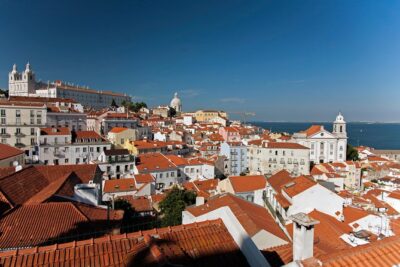
Lisbon Highlights – Private Tour with Van and Local Guide
Read our review →
Templar Tour Convent of Christ & Almourol Castle from Lisbon
Read our review →
Lisbon: Guided Tuk-Tuk Tour Along the Historic Tram Line 28
Read our review →Browse the lists this tour appears in