
Review · SPAIN
Guided Tour of Historic and Monumental Trujillo
Trujillo’s appeal is packed into a walkable medieval hill town: grand palaces around Plaza Mayor, narrow streets inside the old walls, a Muslim fortress above town, and churches tied to Spain’s royal and colonial past. I like that this tour connects those pieces instead of treating each monument as an isolated stop. I also like the practical photo advice, especially in a place where a small turn can reveal a fine view or a handsome stone doorway.
The main consideration is pace. Two hours is enough for a strong introduction, not a slow inspection of every building. Some stops receive only a few minutes, and admission is listed as free for the tour stops, but the schedule does not promise extended interior visits. Guide Ana has led an especially pleasant and complete version of the walk, with plenty of comments about the old quarter.
Key points before you book
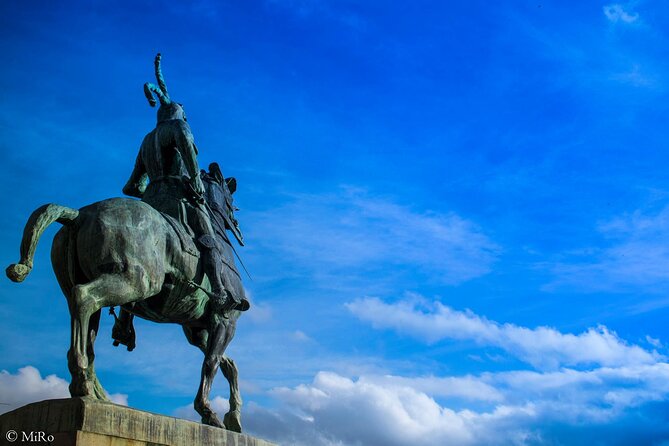
- Plaza Mayor sets the scene: Begin among Renaissance palaces and the equestrian statue of Francisco Pizarro.
- The route covers more than one famous square: Expect fortified houses, churches, convents, wall gates, the alcazaba, and old noble residences.
- The castle brings Muslim Trujillo into view: The fortress includes an alcazaba and a cistern dating from the 10th to 12th centuries.
- Pizarro’s story is handled in several places: His statue, family palaces, and the Pizarro House Museum all appear along the walk.
- The guide adds useful visual tips: The route includes suggestions for good photographs and less obvious corners.
- The price is modest for a structured introduction: At $13.90 per person, you get a two-hour guided orientation rather than a full museum tour.
Plaza Mayor gives you Trujillo in one broad view
The walk begins at TurismoTrujillo.es Actividades Turísticas, at Plaza Mayor, 20. This is the right place to start. Trujillo’s central square gathers the city’s wealth and ambition in one open space, with Renaissance palaces lining the edges and the equestrian monument to Francisco Pizarro at its center.
Allow about 20 minutes here at the opening stop. You get time to understand the square’s role before heading into the older streets. The setting also gives your guide room to explain how Trujillo’s noble families used wealth from Spain’s age of conquest to build or improve grand homes.
A second look at Plaza Mayor focuses on its 16th-century development. Construction began in 1562 by order of Hernando Pizarro, Francisco’s brother. That detail gives the square a more personal connection to the Pizarro family, rather than leaving the statue as a stand-alone symbol.
The equestrian monument itself receives a short stop of about two minutes. That is enough for a quick explanation and photographs, but not a long art-history discussion. If the statue is your main reason for coming, you will want to return after the tour and look at it at your own pace.
More Guided Tours in Spain:
- Madrid Historical Tour with Local Guide in Eco Tuk Tuk Private
★ 5.0 · 876 reviews - Guided Tour of Madrid of the Austrias and the Historic Center
★ 5.0 · 520 reviews - Barcelona Historic Guided Tour
★ 4.8 · 24 reviews
Palaces show how Trujillo’s elite lived
From the square, the route introduces the Palacio de San Carlos, also known as the Palacio de los Vargas-Carvajal. Its Plateresque design belongs to the ornate Spanish Renaissance, when facades became a public display of family position and money.
You get only a brief stop here, around four minutes. That makes the guide’s explanation useful. The building keeps its original Plateresque facade, along with another facade facing Domingo Street. You will not have time to study every carved detail, but you will know where to look.
The Casa-Fuerte de Luis de Chaves El Viejo brings a different mood. This was a fortified residence from the 13th and 14th centuries, built for defense as much as comfort. The Catholic Monarchs stayed here during the Wars of Succession, giving the building a direct link to one of Spain’s major political struggles.
That ten-minute stop should appeal to anyone who likes buildings with a practical purpose. Trujillo’s old houses were not simply elegant addresses. Thick walls, strong entrances, and defensive features mattered in a town shaped by conflict.
The route also includes the Casa Fuerte de los Escobar, a 15th-century military building. It was home to María de Escobar, remembered as the first woman to bring wheat and barley seeds to Peru. Her story adds an unusual personal detail to the broader account of conquest and exchange.
These fortified homes help balance the grander palace stops. They show you a town where domestic life, military duty, noble status, and royal politics often occupied the same building.
Enter the walled town and its old religious landmarks
The historic center is the heart of the experience. The route covers the Muslim alcazaba and walls, strong houses, manor houses, palaces, convents, and churches. You are not simply walking from one famous monument to another. You are learning how the old town fits together.
The medieval center is compact but uneven in character. Plaza Mayor feels open and formal. Inside the walls, streets and buildings create a more enclosed setting. The change is one of the pleasures of the walk, and a guide helps you notice it instead of rushing straight to the castle.
The Palacio Viejo, or Palacio de la Cadena, is linked with a 13th-century church founded by the Military Order of Santiago. The stop lasts about five minutes. That is short, but the connection to the military order explains why religious buildings in medieval Spain could also be tied to defense, land, and royal power.
The walk also reaches the Church of Santa María la Mayor, described as a Gothic national monument. Earlier Romanesque remains survive here, including the Torre Julia. The church also has a Spanish-Flemish altarpiece by Fernando Gallego, an important reason to pay close attention if interior access is available during your visit.
The schedule does not give this church a fixed duration in the same way as some other stops. Do not assume that the tour will allow a long visit inside. Still, its mixture of Romanesque remains, Gothic structure, and Spanish-Flemish art makes it one of the most substantial church stops on the route.
The castle explains Trujillo’s defensive position
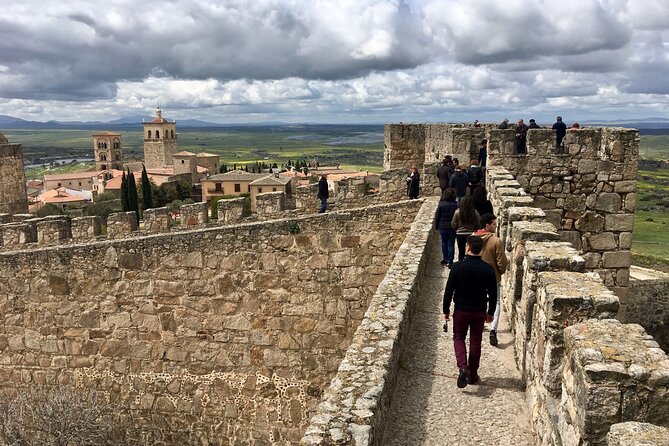
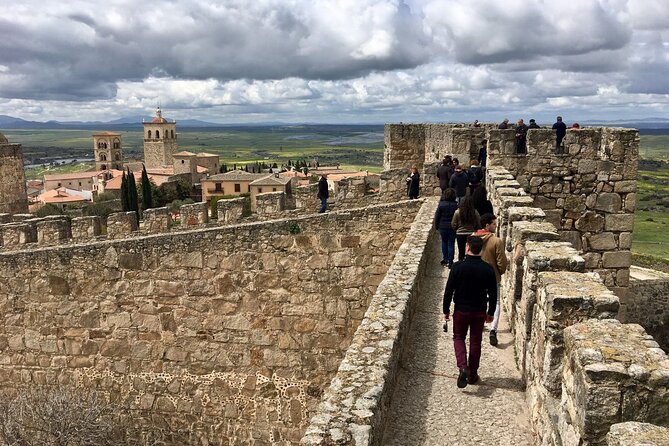
The Castillo de Trujillo is the high point of the route, both literally and historically. The fortress includes a Muslim alcazaba and a cistern, or aljibe, dating from the 10th to the 12th centuries.
The scheduled stop is about ten minutes. That is enough to grasp the castle’s role and see its major features, but you should not expect a long fortress exploration. The tour is designed to place the castle within the story of the town, not to replace a separate visit if you want to examine every wall and corner.
The Muslim construction matters because it pushes Trujillo’s story earlier than the Christian palaces around Plaza Mayor. You can see layers of power here: Islamic rule, Christian military orders, royal politics, noble families, and the later wealth linked to overseas conquest.
The uphill setting also gives the castle practical importance. Its position helped defend the settlement and offered control over the surrounding area. The tour’s promised photo suggestions are particularly helpful around high points and old stonework, where the strongest views may not be the first ones you notice.
Wear sensible shoes for the route. The supplied details do not specify the exact amount of climbing or the surface of every street, but a fortified hill town naturally calls for care on uneven ground. Most people can participate, and service animals are allowed.
More History Tours in Spain:
- Madrid Essential: Historic Center, Plaza Mayor & Royal Palace
★ 5.0 · 6,416 reviews - Barcelona: Tapas Walking Tour with Food, Wine, and History
★ 4.8 · 4,261 reviews - Sevilla Food Tour: Tapas, Wine, History & Traditions
★ 5.0 · 3,468 reviews - Valencia Old Town Tour with Wine & Tapas in 11th Century Historic Monument
★ 5.0 · 3,234 reviews
Pizarro’s name appears across the route
Francisco Pizarro’s monument is the most visible reminder of Trujillo’s connection with Peru, but the tour gives you more than a quick photograph beside his statue. The Pizarro family appears in the square, in the Palacio de San Carlos, and in the story of the town’s noble houses.
The Pizarro House Museum is a 15th-century hidalgo manor house. A ten-minute stop gives you a look at the kind of home associated with a lower-ranking noble family, rather than a royal palace. Its value is partly architectural and partly biographical: it brings the Pizarro story back to a domestic setting.
The tour also points toward the wider thematic routes associated with Trujillo. These include the Route of the Discoverers, the Route of Isabel la Católica, the Route of Carlos V, and locations used as film settings. That makes the experience useful for planning the rest of your time in town. You can identify which theme interests you most and return for a slower look.
The treatment is best understood as local history in layers. The route does not only celebrate conquest. It places famous figures beside churches, defensive buildings, royal stays, and ordinary urban structures. That broader view gives you a better sense of the town than a single monument could.
Gates and fortified corners finish the walk
Near the end, the route reaches the Puerta del Triunfo, or Triumph Gate. This was one of the important entrances through the medieval defenses. The Bejarano Redoubt, a 13th-century strong house, defended the gate.
Those two stops work well together. A gate tells you where people entered and left the walled town. A redoubt shows how residents protected that point. The connection is easy to miss when you walk alone, but a guide can make the defensive layout readable.
The final listed stop is Puerta de San Andrés, one of the seven gates in the wall. It sits beside the Church of San Andrés. This is a fitting end because it brings you back to the practical structure of medieval Trujillo: walls, controlled entrances, churches, and strong houses all close together.
The activity ends back at the meeting point in Plaza Mayor. That is convenient for a meal, another look at the square, or a return visit to any building that caught your attention.
What two hours gives you for $13.90
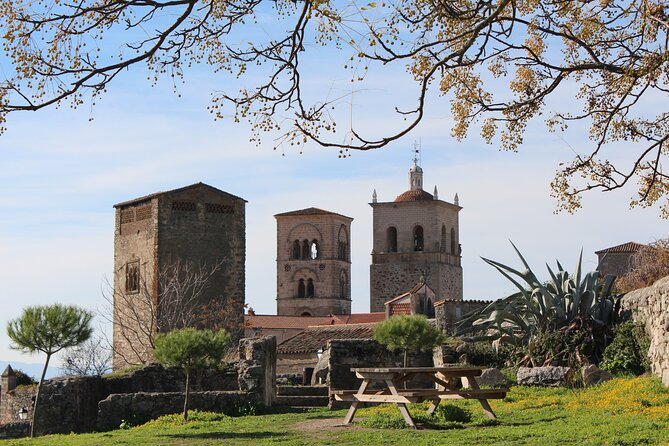
At $13.90 per person, this is a low-cost way to get oriented in Trujillo. The value comes from the route’s range. In roughly two hours, you cover the main square, several noble residences, the castle, churches, the walls, gates, and the Pizarro connections.
You are paying for structure and explanation, not a long series of formal museum entries. The tour lists admission as free at the stops, so the price is primarily for the guided walk. If you want detailed time inside Santa María la Mayor, the castle, or the Pizarro House Museum, check what is open and included on your chosen date.
The group can reach a maximum of 30 people. That is not a private tour, and a larger group may make it harder to hear in a narrow street or crowded square. At the same time, the size is limited rather than unlimited, which gives the guide a workable setting for a standard walking tour.
The tour is booked about eight days ahead on average. That is a useful planning clue, not a rule. If your visit to Trujillo is fixed, booking several days ahead is sensible, especially if you want a particular start time.
You receive confirmation when booking, and the mobile ticket is handy for a day of sightseeing. The meeting point is easy to identify at Plaza Mayor, and the tour returns there rather than leaving you at an unfamiliar part of town.
Who will get the most from this walk
I would choose this tour for a first visit to Trujillo, especially if you want the main story explained before exploring alone. It suits people interested in medieval defenses, Spanish royal history, Renaissance architecture, churches, and the Pizarro connection.
It is also a good choice if you are stopping in Extremadura for a short time. You get a clear introduction without giving up a full day. Afterward, you can decide which places deserve a second look.
Families and mixed-interest groups may find the variety helpful. The route changes subject often enough to keep the walk moving: a statue, a palace, a fortified home, a church, a castle, and a gate. The guide’s comments about photo spots are a practical bonus for anyone who wants more than a checklist of names.
I would be more cautious if you want a long, specialist tour of art or architecture. The short stops mean that some buildings receive a quick explanation rather than a detailed study. You may also prefer a private guide if a group of up to 30 feels too large for your style.
Free cancellation is available if you cancel at least 24 hours before the start time. Changes or cancellations made inside that window are not accepted for a refund, so keep the local cut-off time in mind.
Should you book the Historic and Monumental Trujillo tour?
Book it if you want an affordable, well-organized introduction to a town where Muslim, medieval Christian, royal, and Pizarro-era stories overlap. The route is especially useful because it links famous sights with quieter fortified houses and wall gates.
The strongest reason to choose it is coverage. You see the core of Trujillo in two hours, with guide Ana among the names associated with an engaging and full explanation. The main limitation is depth: you will see many places, but only a few receive more than ten minutes.
For most first-time visitors, that is a fair trade at $13.90. Take the walk early in your stay, note the photo corners and buildings you want to revisit, then use the rest of your time to explore at a slower pace.
FAQ
Where does the Trujillo tour begin?
It begins at TurismoTrujillo.es Actividades Turísticas, Plaza Mayor, 20, 10200 Trujillo, Cáceres, Spain.
Where does the tour finish?
The activity ends back at the meeting point in Plaza Mayor.
How long does the tour last?
The guided walk lasts approximately two hours.
What does the tour visit?
The route includes Plaza Mayor, Palacio de San Carlos, the Francisco Pizarro monument, Trujillo’s medieval center, fortified houses, the castle, Pizarro House Museum, Santa María la Mayor, the Triumph Gate, Bejarano Redoubt, and Puerta de San Andrés.
How much does the tour cost?
The listed price is $13.90 per person.
Can I cancel for a refund?
Yes. You can cancel at least 24 hours before the experience starts for a full refund. Cancellations or changes made less than 24 hours before the start time are not accepted for a refund.
Latest history tours reviewed in Spain
- Barcelona Historic Guided Tour★ 4.8 · 24 reviews
- Essential Madrid: Walking Tour of the Historic Center★ 4.7 · 58 reviews
- Discover the fascinating Alcazaba: History and unique views★ 4.8 · 30 reviews
- Cordoba: Segway Tour historic center★ 4.5 · 21 reviews
- Private Jewish Heritage Journey by Barcelona Dreaming★ 4.8 · 383 reviews
- Cartagena: Ancient Roman Walking Tour with Entry Tickets★ 4.5 · 89 reviews
- Caceres: Highlights, History and Jewish Quarter Walking Tour★ 4.7 · 20 reviews
- Bilbao Historical Tour in small group★ 4.7 · 52 reviews
Spain History Tours, compared.
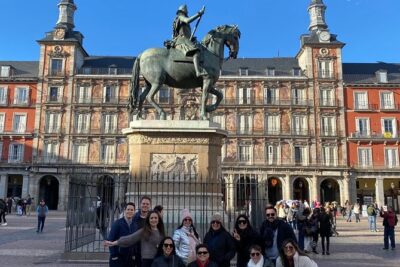
Madrid Essential: Historic Center, Plaza Mayor & Royal Palace
Read our review →
Barcelona: Tapas Walking Tour with Food, Wine, and History
Read our review →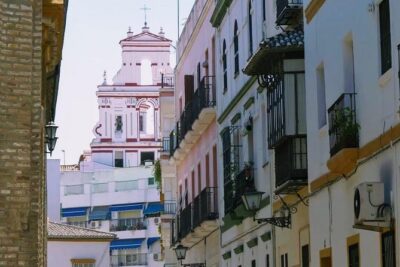
Sevilla Food Tour: Tapas, Wine, History & Traditions
Read our review →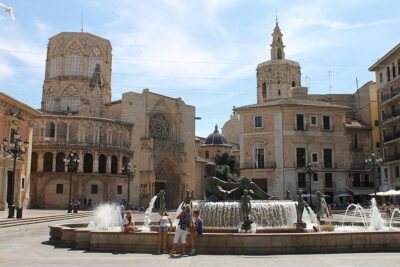
Valencia Old Town Tour with Wine & Tapas in 11th Century Historic Monument
Read our review →
Madrid Tapas & Taverns Small Group Food & History Tour
Read our review →
Ultimate Seville Tapas, Wine & History Small Group Tour
Read our review →
Córdoba: Skip-the-Line Great Mosque-Cathedral History Tour
Read our review →
Barcelona: 2.5-Hour Bike or E-Bike Historical Tour
Read our review →Browse the lists this tour appears in