
Review · BUDAPEST
Budapest: Jewish History Guided Walking Tour with Historian
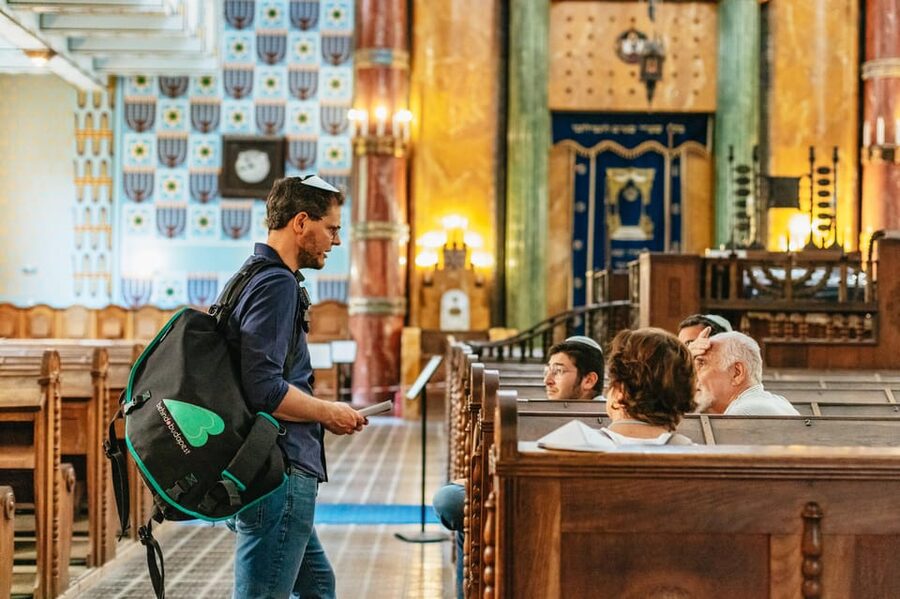
Budapest’s Jewish Quarter is more than a cluster of handsome synagogues and fashionable ruin pubs. It is a place where Jewish life, forced confinement, wartime courage, loss, and modern renewal all meet within a few streets. This walking tour gives you that difficult story in human scale, with a historian guiding you through the former ghetto rather than simply pointing out pretty buildings.
I like the small group of up to 10, which makes it easier to hear the guide and ask questions. I also like the stop for flódni, a traditional Jewish cake, because the coffee break adds a small but memorable taste of local culture. The main drawback is clear: you see the three synagogues from outside only, so you will need a separate ticket if you want to enter them.
I would book this for the first part of a Budapest stay, especially if you want context before visiting the Jewish Quarter on your own. Guides such as Noémi, Gábor, András, Barbara, and Daniel have been praised for clear storytelling, humor, and a willingness to discuss Hungary’s uncomfortable past without smoothing away the hard parts.
Key points to know before you book
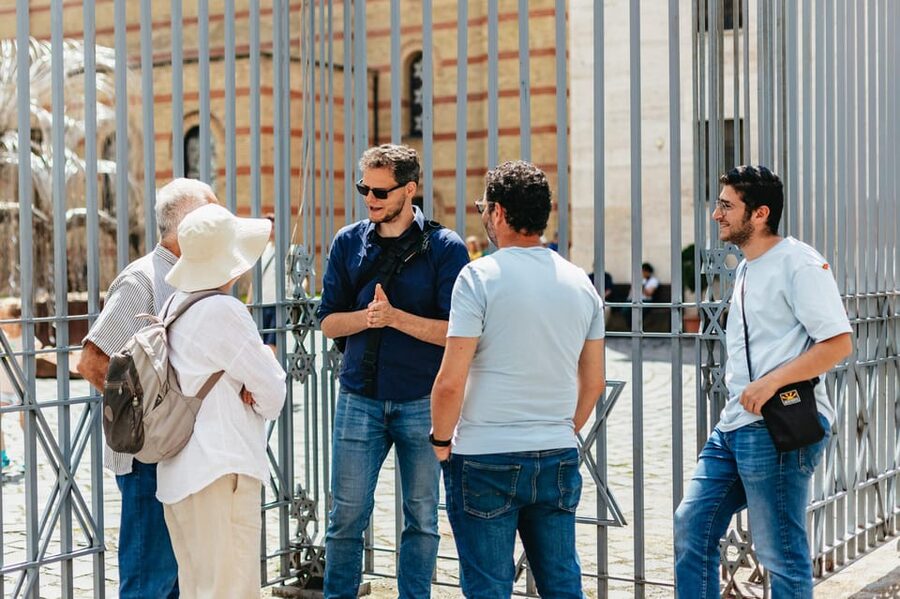
- Three important synagogues from the street: See the exteriors of the grand Dohány Street Synagogue, Rumbach Street Synagogue, and Kazinczy Street Orthodox Synagogue.
- A serious history tour with a human focus: Learn about Jewish life, persecution, the Budapest ghetto, and rescuers including Raoul Wallenberg and Carl Lutz.
- Flódni and a drink included: The tour ends with coffee or a soft drink and a slice of local Jewish cake in a café.
- A compact walking route: The main neighborhood walk lasts about 2 hours and 15 minutes, followed by a 15-minute café stop.
- Useful local orientation: You get tips about Gozsdu Passage, ruin pubs, nightlife, kosher shops, restaurants, and street art.
- No indoor synagogue visits: Plan extra time and money if seeing the interiors matters to you.
A thoughtful walk through Budapest’s Jewish Quarter
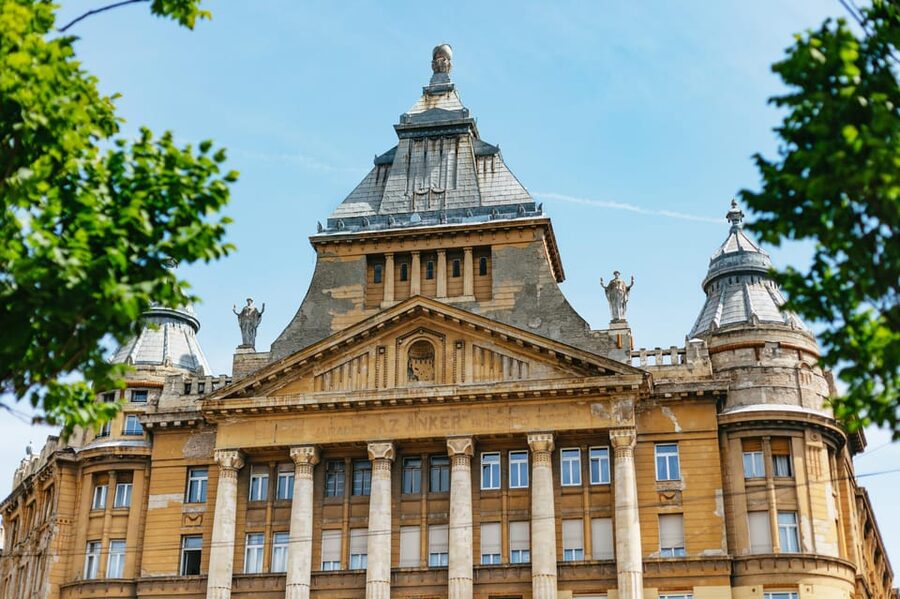
The tour begins in front of the Kempinski Hotel Corvinus Budapest, facing the Ferris wheel on Erzsébet Square. This is a practical meeting point in central Budapest, close to Deák Ferenc tér, where the M1, M2, and M3 metro lines meet. Several buses and trams also stop nearby.
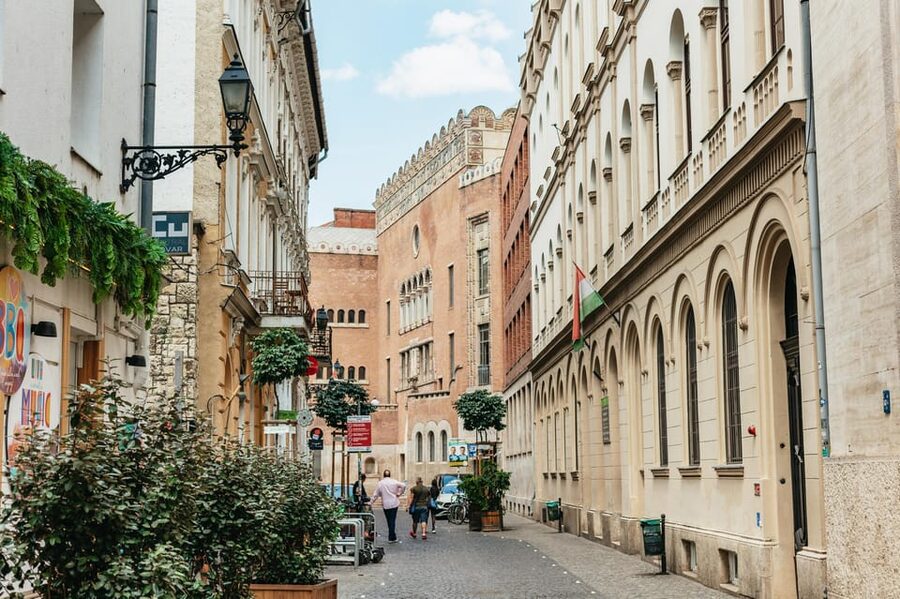
From there, you walk into the 7th District, often called Erzsébetváros or Elizabeth Town. The area can feel young and lively today, filled with bars, cafés, restaurants, and street art. That modern energy sits beside buildings and memorials tied to one of the darkest periods in Budapest’s past.
The guide’s job is to connect those layers. You are not simply looking at façades. You are learning how Jewish communities developed in Budapest, how laws restricted Jewish life, how the neighborhood changed during World War II, and how Jewish culture continues in the district today.
That broader setting is one of the tour’s strongest features. If you only visit the Dohány Street Synagogue, you see an important monument. If you walk the surrounding streets with a historian, you begin to understand how religious buildings, shops, homes, courtyards, and public spaces formed a living community.
More Jewish Heritage Tours in the world:
- Budapest Jewish Heritage Memorial Walking Tour & Synagogue Entry
★ 5.0 · 568 reviews - 3-Hour Porto Jewish Heritage Walking Tour with Local Guide
★ 4.5 · 396 reviews - Private Jewish Heritage Journey by Barcelona Dreaming
★ 4.8 · 383 reviews
The three synagogues, seen from outside
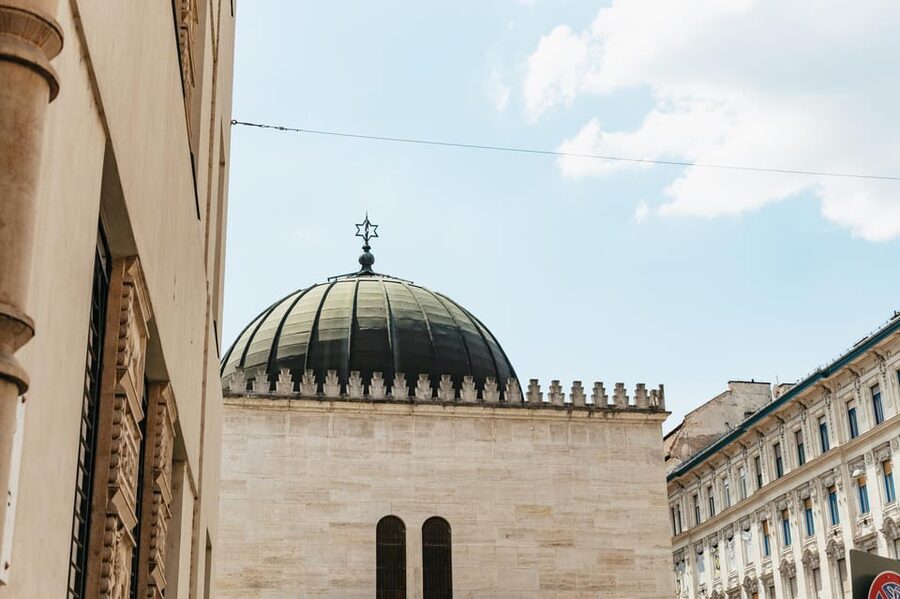
The route includes the exteriors of three major synagogues, each linked to a different branch of Jewish life in Budapest.
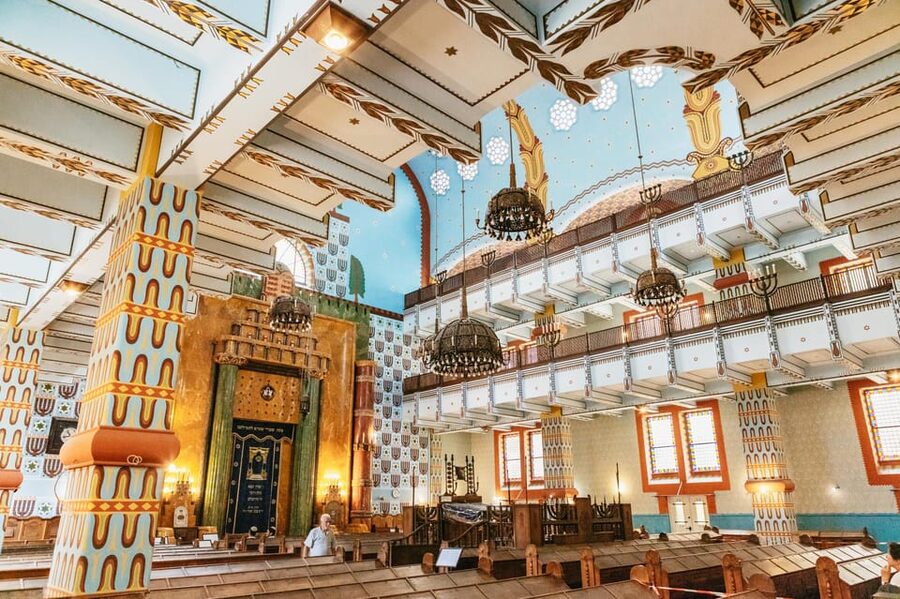
The Dohány Street Synagogue is the largest and most famous of the three. Its grand exterior makes an immediate impression, but the guide supplies the useful context: this was not just a religious building. It reflected the size, confidence, and importance of Budapest’s Jewish community when the synagogue was built.
The tour does not include entry, so you cannot inspect the interior or the memorial area inside the complex as part of this experience. Still, the outside visit gives you a strong introduction, particularly if you plan to return later for a separate admission.
You also see the Rumbach Street Synagogue, built in 1872 by Viennese architect Otto Wagner. Its exterior offers a different architectural character from Dohány Street, and the guide explains its place in the district’s religious and social life.
The third is the Kazinczy Street Orthodox Synagogue. Seeing all three in one walk helps explain that Budapest’s Jewish community was not a single, uniform group. Different religious traditions had their own institutions and identities, and those distinctions shaped the neighborhood.
Do not book this tour expecting a synagogue-inspection tour. Book it if you want the buildings placed within their social and historical setting. The outside-only format is a limitation, but it also keeps the focus on the streets and the people who lived around these institutions.
From early Jewish life to the Budapest ghetto
The historical portion reaches well beyond World War II. Guides explain how Jewish communities formed in Budapest, how Jewish residents moved through Hungary and the wider region, and how legal and social restrictions affected daily life.
One useful element, noted by people who appreciated the historical framing, is the explanation of Hungary’s changing borders and political position. That background helps you understand why Jewish communities moved into and out of Hungary and Poland, and why the treatment of Jewish residents changed over time.
The discussion also covers pressure to convert and the restrictions placed on Jewish people. These details matter because they show that persecution did not begin with the ghetto. The ghetto was the most visible and brutal stage of a process that had already narrowed people’s rights and choices.
As you walk through the former ghetto area, the guide points out surviving traces and explains how quickly the wartime ghetto was created and dismantled. A remaining section of the original ghetto wall is especially sobering. The fact that the ghetto existed for less than two months can make its history seem brief, but the compressed timeline is part of what makes the story so shocking.
This is serious material, and the quality of the guide matters. The best guides on this route appear to combine dates and political events with stories about ordinary life. That approach keeps the history from becoming a list of names and years.
Raoul Wallenberg, Carl Lutz, and acts of courage
The route includes memorials connected with Raoul Wallenberg and Carl Lutz, two diplomats who helped save Jewish lives during the winter of 1944 and 1945.
You learn about the scale of their efforts and the risks involved. Both are recognized as Righteous Among the Nations, an honor given to non-Jews who helped save Jewish people during the Holocaust. Their stories provide a needed counterpoint to the cruelty and official persecution described elsewhere on the walk.
I value this part of the route because it shifts the focus from institutions and government decisions to individual action. Wallenberg and Lutz did not erase the suffering of Budapest’s Jewish community, but their work shows that choices still mattered, even under terrible conditions.
The guide also places Hungarian responsibility into the story. Several guides have been praised for not softening the facts or avoiding difficult questions about Hungary’s role in the treatment of Jewish people. That honesty is essential here. A polished, feel-good account would miss the point of the neighborhood.
At the same time, this is not presented as a memorial-only tour. The route also considers Jewish life before the war and the community’s present-day activity. That balance makes the walk more useful than a narrow account focused only on 1944 and 1945.
More History Walking Tours in the world:
- History and Hauntings of Salem Guided Walking Tour
★ 5.0 · 14,564 reviews - Lisbon: History, Stories and Lifestyle Walking Tour
★ 4.8 · 10,902 reviews - Boston: Freedom Trail History Small Group Walking Tour
★ 5.0 · 6,450 reviews - Historic Charleston Guided Sightseeing Walking Tour
★ 5.0 · 6,216 reviews
Gozsdu Passage, street art, and modern Elizabeth Town
The route passes through Gozsdu Passage, one of the district’s busiest pedestrian areas. Today it is associated with restaurants, bars, nightlife, and a younger social scene. Your guide explains how this contemporary district relates to the older Jewish Quarter.
You also see examples of Budapest’s street art. These murals and painted walls add another layer to the walk. Some respond directly or indirectly to memory, identity, and city life, while others simply bring color and wit to aging façades.
The modern sights are not filler. They help you understand that the 7th District is not a preserved museum quarter. It is a working neighborhood where religious life, nightlife, tourism, commerce, memorials, and local residents share the same streets.
Your guide can also point out kosher restaurants and shops, along with the area’s famous ruin pubs. These tips are useful if you plan to return later for dinner or an evening out. Just keep the priorities straight: the nightlife information is an added benefit, not the main reason to reserve this tour.
The flódni stop adds a welcome local taste
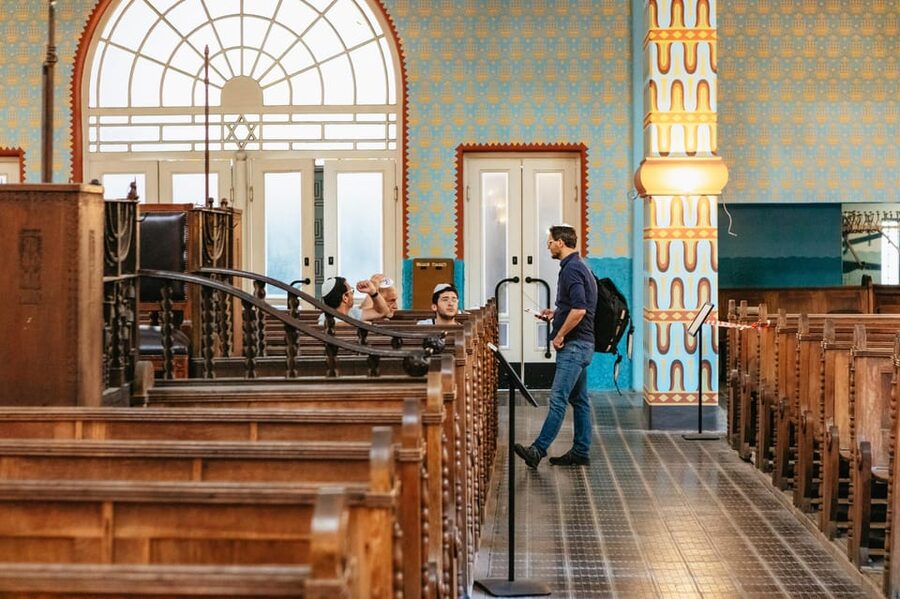
After roughly 2 hours and 15 minutes of walking and sightseeing, the group stops at a local café for about 15 minutes. A coffee or soft drink and a slice of flódni are included.
Flódni is a traditional Jewish cake associated with Hungarian Jewish cooking. It is a small detail, but it gives the tour a welcome sensory finish. You have been hearing about customs, communities, and upheaval, and now you get a chance to connect the subject with food.
Do not expect a full meal. The café stop is short, and the inclusion is a taste rather than a dining experience. If you need lunch, plan to eat before or after the tour.
This stop also gives the group a natural pause. A walking tour with so much historical material can become tiring, particularly in warm weather. The short break lets you ask follow-up questions and think over what you have seen.
Why the guide matters so much
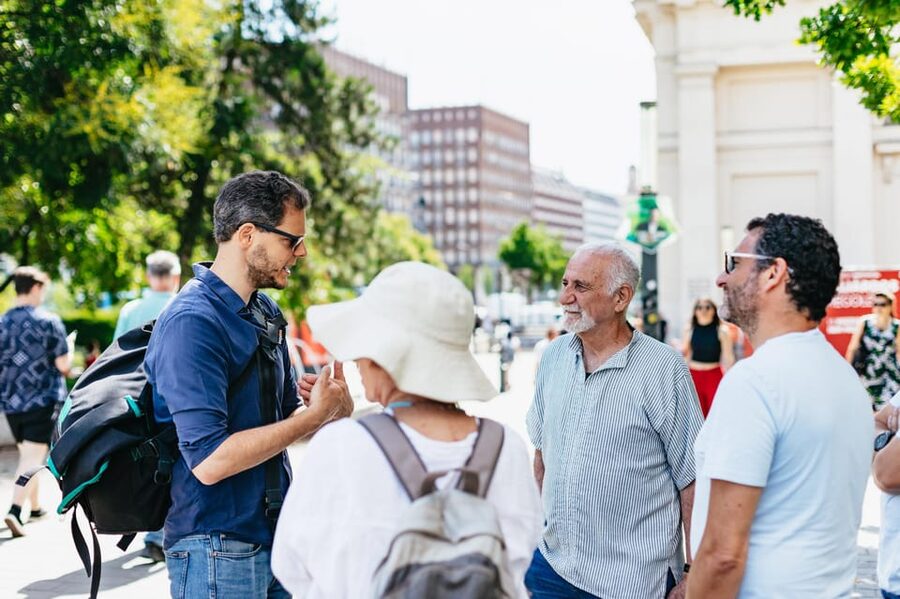
This experience depends heavily on the person leading it. The strongest guide names associated with the tour include Noémi, Gábor, András, Barbara, Daniel, Judit, and Maggie. You should not assume a particular guide will lead your departure, but the repeated pattern is clear: the tour works best when the historian can explain complicated events in plain language and respond to questions.
Past participants have singled out guides who used maps or a tablet to explain Hungary’s changing borders, connected national history to Jewish life, and shared family or local stories. Others appreciated guides who maintained a good pace and adjusted explanations to the group.
That last point matters. The walk covers a great deal in a short time. A strong guide keeps the timeline moving without rushing the people in front of them. The small group helps, since a group limited to 10 is easier to manage than a large crowd gathered around a distant microphone.
There is one fair criticism to keep in mind. The tour can feel less structured if synagogue opening information changes or if the group spends extra time on questions. That is not necessarily bad, but it means the exact rhythm can vary. If you prefer a tightly timed presentation with every stop fixed, this may feel somewhat loose.
How much walking and time should you allow?
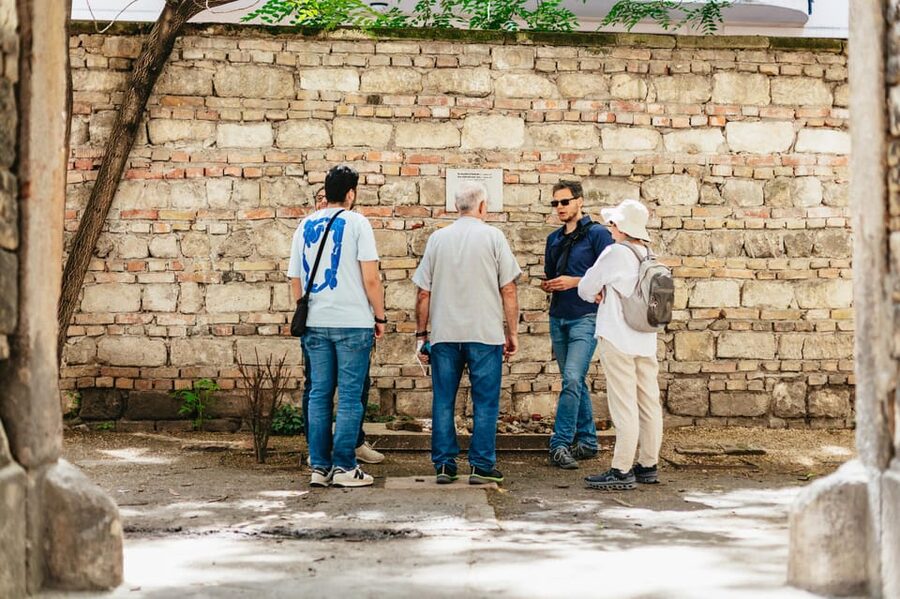
The advertised duration is 2.5 hours. The walking and sightseeing portion lasts about 2 hours and 15 minutes, followed by the 15-minute café stop.
You should wear comfortable shoes and dress for the weather. The tour operates in all weather conditions, so rain, cold, heat, or strong sun can affect your comfort. The route is described as a substantial walk, and one person specifically noted that a hot day made it feel like good exercise.
The pace is generally intended to be manageable, but you should still be ready to stay on your feet for most of the experience. If you need a slower pace, tell the guide early. One guide was praised for making adjustments for individual needs, though no specific accessibility arrangements are guaranteed in the information provided.
The central meeting point makes this an easy activity to fit into a Budapest day. Since it begins near Deák Ferenc tér, you can reach it from several parts of the city without arranging private transport.
Is $63 a fair price?
At $63 per person, this is not the cheapest way to walk through the Jewish Quarter. You can stroll through the neighborhood independently for little or no cost. The question is what you want from the visit.
The price pays for a live historian, a small group, nearly two and a half hours of interpretation, and the café stop with flódni and a drink. The value is strongest if you want political context, careful explanations, and a chance to ask questions rather than simply collect photos.
It is also good value for visitors who know little about Hungarian history. Several people who came from North America found the explanation of Hungary’s shifting borders, religious divisions, and wartime policies especially useful. Without that foundation, the district’s buildings and memorials can be difficult to place.
The value is weaker if your main goal is entering the synagogues. Admission is not included, and all three synagogue visits are exterior visits only. In that case, compare the cost of a synagogue entry tour before booking, or use this walk as a historical introduction and arrange indoor visits separately.
Free cancellation up to 24 hours before the start and the option to reserve now and pay later reduce the risk of fitting it into a changing Budapest schedule.
Who should book this walking tour?
I would recommend it to you if:
- You want Jewish history presented within the wider story of Hungary.
- You prefer a small group and a live guide to a self-guided route.
- You are interested in World War II history but also want to learn about earlier and present-day Jewish life.
- You enjoy walking through ordinary streets and noticing details beyond the major monuments.
- You want practical suggestions for kosher food, ruin pubs, nightlife, and street art.
- You plan to visit a synagogue interior separately.
I would hesitate if you want a short, light sightseeing walk or if you find wartime history too heavy for a holiday morning. I would also choose another experience if indoor synagogue visits are your top priority.
Should you book it?
Book this tour if you want the Jewish Quarter explained rather than merely photographed. The strongest parts are the guide’s historical storytelling, the small group, the former ghetto route, and the memorials to Wallenberg and Lutz. The flódni stop is a pleasant bonus, while the street art and nightlife tips connect the past with present-day Budapest.
The main compromise is simple: you pay $63 for context and guidance, not synagogue admission. For many visitors, that is a fair trade. Take the tour early in your stay, wear shoes suited to a couple of hours on foot, and leave time afterward to visit the synagogue interiors that interest you most.
FAQ
Where does the tour begin?
Meet your guide in front of the Kempinski Hotel Corvinus Budapest, facing the Ferris wheel on Erzsébet Square.
How do I reach the meeting point?
You can reach the meeting point by the M1, M2, or M3 metro lines, as well as several buses and trams. Get off at Deák Ferenc tér.
Are the synagogue interiors included?
No. The Dohány Street, Rumbach Street, and Kazinczy Street synagogues are visited from the outside only. Entry tickets are not included.
What food and drink are included?
The tour includes a Jewish cake called flódni and either coffee or a soft drink at a local café.
What language is the tour conducted in?
The tour is conducted in English with a live guide.
What happens if the weather is poor?
The tour runs in all weather conditions, so you should dress appropriately for the forecast.
Latest history tours reviewed in the world
- From Athens: Explore Ancient Corinth & Charming Nafplion★ 4.6 · 102 reviews
- From Athens: Explore Ancient Greece 4-Day Tour★ 4.7 · 73 reviews
- From Athens: Ancient Olympia Full-Day Private Tour★ 4.8 · 22 reviews
- From Albufeira: Wine Tasting & Historic Silves Tour★ 4.9 · 421 reviews
- From Albufeira: Historical Algarve Region Tour★ 4.7 · 585 reviews
- From Alexandria: Full-Day Guided Tour of Historical Sights★ 4.5 · 54 reviews
- Franklin: Ghost Tour in Historic Franklin★ 4.8 · 65 reviews
- Freiburg: Exciting City Tour with sightseeing and history★ 4.3 · 103 reviews
Budapest History Tours, compared.

Buda Castle District Dark History, Legends and Vampire Night Tour
Read our review →
BloodThirsty Hungary: Walking tour & Dark Historical Stories
Read our review →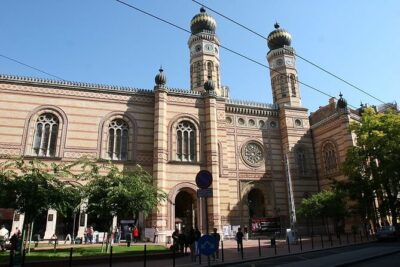
Budapest Jewish Heritage Memorial Walking Tour & Synagogue Entry
Read our review →
Budapest Paddle Steamer Danube Cruise with Tokaj & Audio Guide
Read our review →
Budapest: Communist History Tour with House of Terror Option
Read our review →
Budapest: Historic Downtown Bicycle Ride with Scenic Views
Read our review →Browse the lists this tour appears in