
Review · BUDAPEST
Budapest: Historic Downtown Bicycle Ride with Scenic Views
Budapest is a big city with sights spread across two banks of the Danube, and this 3.5-hour bicycle ride covers an impressive amount of ground without turning into a race. You pedal from the Jewish Quarter to Heroes’ Square, along the river, across Chain Bridge, and back through Buda and Pest.
I like the relaxed route and the small groups of up to 10. Guides such as Oliver, Karol, and Bálint have been singled out for clear storytelling and local insight. The main thing to consider is that the tour has no meal stop, and the long route may not suit anyone who is uncomfortable on a bike or has limited mobility.
Key points to know
- A fast first look at Budapest: See major sights on both Buda and Pest in one morning or afternoon.
- A well-planned route: Ride from Madách Square through the Jewish Quarter, City Park, the Danube, and Buda.
- Frequent photo stops: You pause at Heroes’ Square, Parliament, the baths, Chain Bridge, Fisherman’s Bastion, and more.
- History along the way: Hear about Hungarian medieval history, the 20th century, and the city’s changing identity.
- Gentle pace, according to the route: The ride is designed for sightseeing rather than speed or athletic training.
- Practical limits: Bikes and child seats are limited, and the tour is not suitable for wheelchairs, non-riders, pregnant women, or people over 110 kilograms.
Why a bicycle is a smart way to see Budapest
Budapest rewards a broad first look. The Jewish Quarter, Andrássy Avenue, City Park, Parliament, the riverfront, Buda Castle District, and the Central Market Hall are not gathered around one compact center. On foot, you would need several outings to cover the same ground.
A bicycle links these areas neatly. You get enough time at each major sight for photographs and a short explanation, then keep moving before the day becomes a series of long walks. I especially like this for a first day in the city. It helps you decide where to return later, perhaps for a museum, bath visit, longer river walk, or meal.
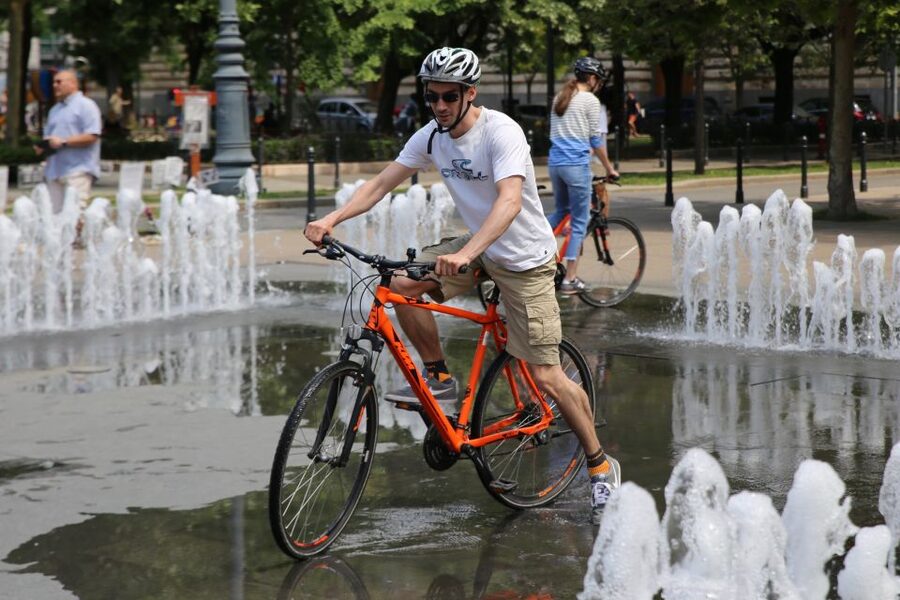
This is sightseeing, not a cycling workout. The route is described as easygoing, and one rider who had taken many city bike tours called it especially safe and manageable. You still need to ride confidently, watch traffic, and stay with the guide, but the aim is a comfortable city ride.
The tour costs about $45 per person. That is fair value if you want orientation, transport between far-flung sights, and a guide’s historical commentary in one package. It is less attractive if you already know Budapest well or prefer to spend long stretches inside museums and buildings. The price covers the bike, guide, and a refreshing drink, but not food or additional drinks.
More Old Town and Historic Centre Walks in the world:
- Madrid Essential: Historic Center, Plaza Mayor & Royal Palace
★ 5.0 · 6,416 reviews - Lisbon: Live Fado Show with Port Wine in Historic Center
★ 4.7 · 4,166 reviews - Valencia Old Town Tour with Wine & Tapas in 11th Century Historic Monument
★ 5.0 · 3,234 reviews
Starting in the Jewish Quarter at Madách Square
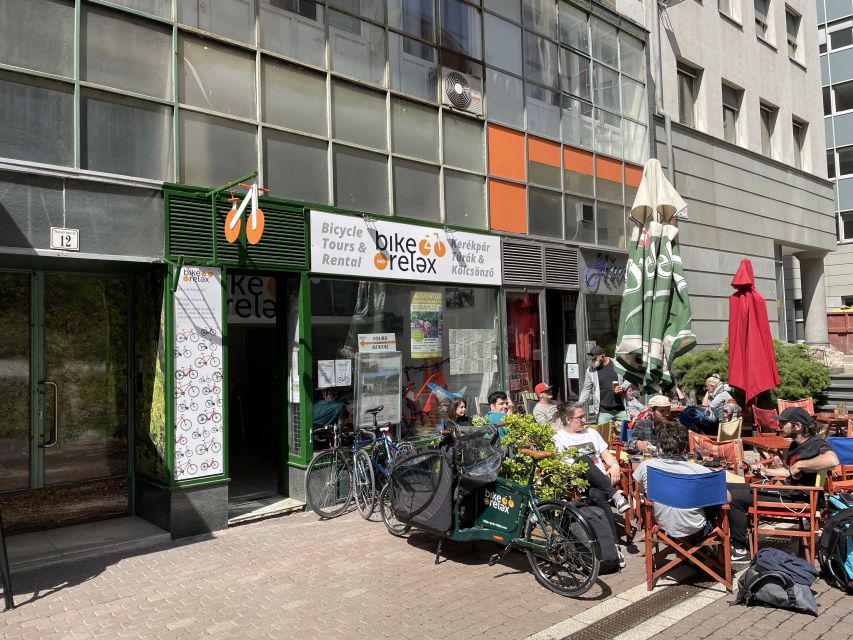
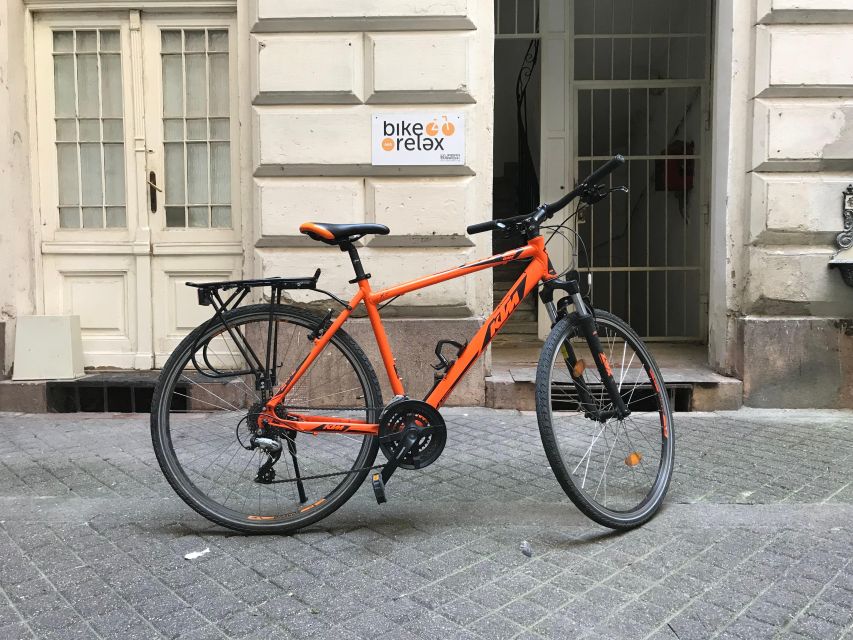
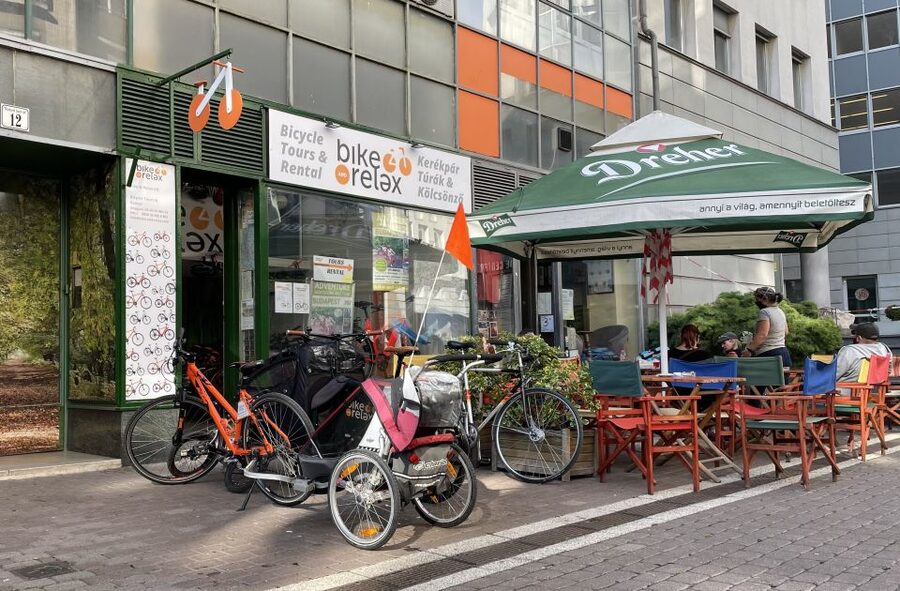
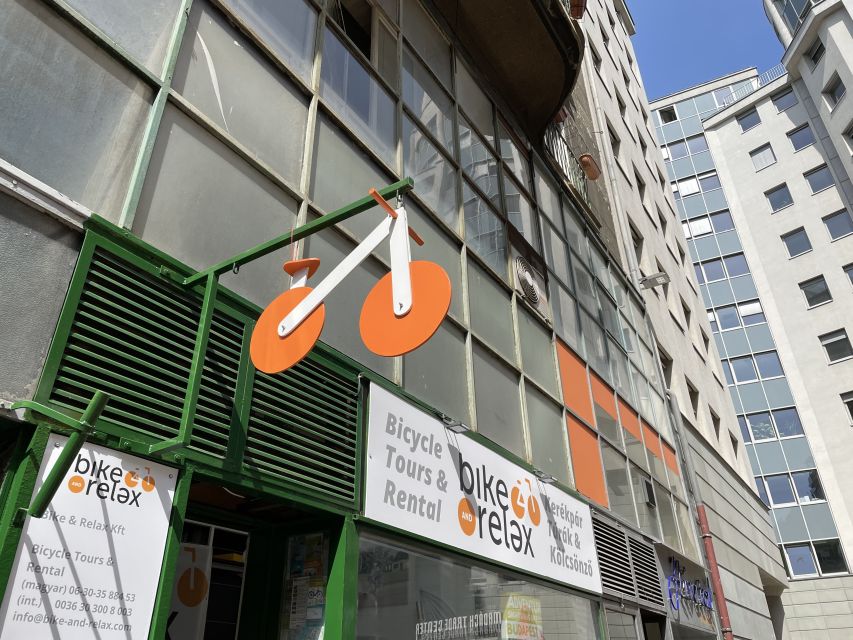
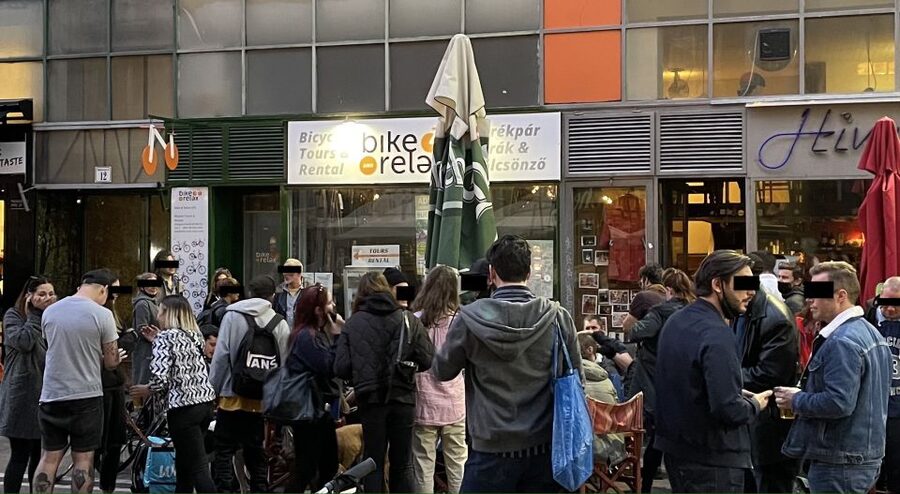
The meeting point is at Madách Imre út 12, between Madách Square and Gozsdu Court. Look for Bike & Relax beside Cafe Hivatal. The shop is near Gozsdu Court and Deák Square, a handy central location served by all three metro lines and several trams.
This part of town is a useful starting point because the Jewish Quarter is both historic and lively. The ride begins with a guided look at the district before heading toward Andrássy Avenue. You are not simply collecting postcard views here. The route places Budapest’s nightlife district, grand boulevards, memorials, baths, and government buildings into one connected story.
The meeting point can be easy to miss, so arrive with the address ready. One rider found the doorway poorly marked and noticed a difference between GPS directions and the app location. That is a small issue, but it is worth allowing extra time rather than arriving at the last minute.
Andrássy Avenue and the road to Heroes’ Square
The first major stretch leads past the Franz Liszt Academy of Music and onto Andrássy Avenue. The avenue is one of Budapest’s grandest routes, lined with formal buildings and linked to the city’s cultural life. You stop at the academy for photographs, then continue toward Heroes’ Square.
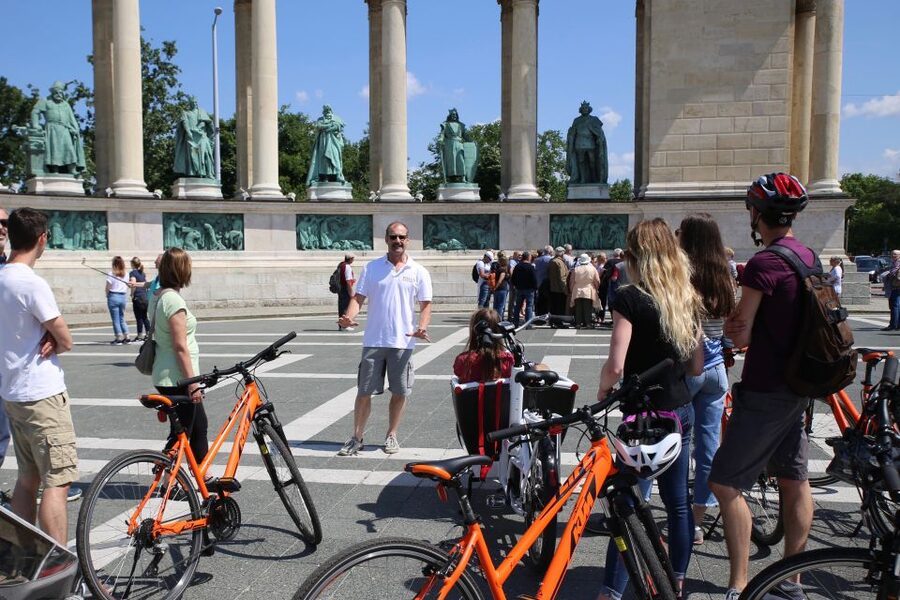
Heroes’ Square is one of the tour’s main set pieces. Its broad open space and monument honor important figures from Hungarian history. You get around 15 minutes for photographs, which is enough for a good look but not a museum visit.
Nearby, the House of Terror brings a darker chapter into the route. The building is associated with Hungary’s Nazi and Communist periods, and the exterior stop gives your guide a chance to explain the city’s more recent past. You do not go inside, so plan a separate visit if you want the full museum experience.
This pairing works well: Andrássy Avenue and Heroes’ Square show imperial-era ambition, while the House of Terror points to the political violence that followed. The route gives you useful context without pretending that Budapest’s story is only grand architecture and pretty views.
City Park, Vajdahunyad Castle, and the thermal baths

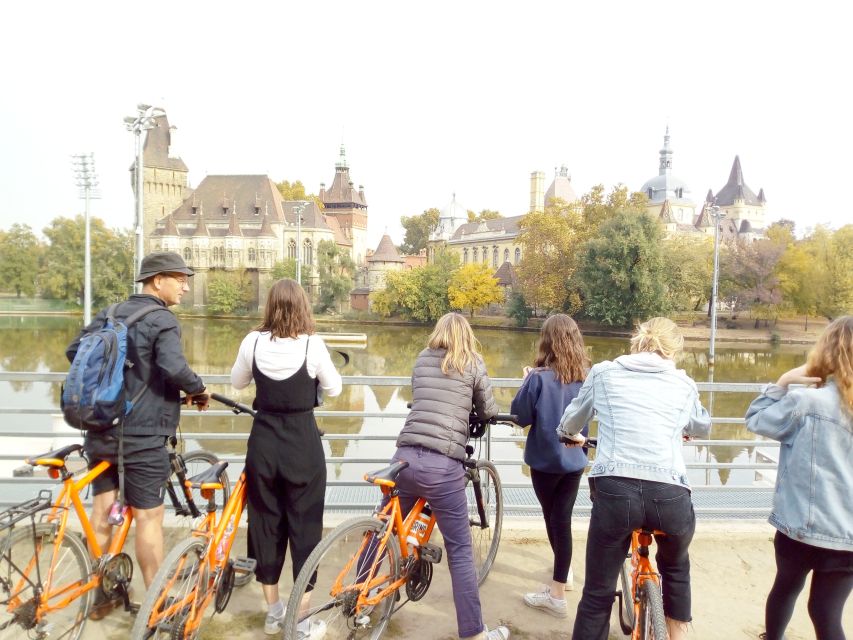
From Heroes’ Square, you ride into Városliget, or City Park. This is a welcome change from central streets. The park gives the ride more breathing room and brings you to Vajdahunyad Castle, a striking complex that draws on several Hungarian architectural styles.
The castle is a particularly good photo stop because it looks older and more romantic than its actual mixed design suggests. Your guide also uses the area to discuss Hungarian medieval history. You should not expect a full historical lecture, but the setting makes the explanation easier to remember.
Next comes the Széchenyi Thermal Bath, one of Budapest’s best-known bathing complexes. You stop outside for photographs rather than entering the pools. That distinction matters. If bathing is high on your list, schedule a separate half-day, since this tour only gives you an introduction.
I like this section because it shows a side of Budapest that can be missed on a standard downtown walk. The city is not only boulevards, churches, and government buildings. Its parks and thermal culture are central to its character.
More History Bike, Segway and Tuk-Tuk Tours in the world:
- Historical Singapore Bike Tour on Full-Sized Bicycles
★ 5.0 · 1,421 reviews - Charlotte’s Ultimate Southern Charm Historical City Cart Tour
★ 5.0 · 1,347 reviews - Barcelona: 2.5-Hour Bike or E-Bike Historical Tour
★ 4.5 · 1,262 reviews - Asheville Historic Downtown Guided Electric Bike Tour with Scenic Views
★ 5.0 · 1,234 reviews
Opera House, St. Stephen’s Basilica, and Liberty Square
The route returns toward central Pest, passing the Hungarian State Opera House. The stop is brief, around 10 minutes, so you have time to admire the exterior and take photographs. You will not have time for a performance or a full interior visit.
St. Stephen’s Basilica follows. Its large dome and central location make it one of the city’s easiest landmarks to recognize. Again, the stop is for viewing and photographs. I would treat this as a useful preview and return later if you want to see the inside at a slower pace.
At Liberty Square, the guide turns to Hungary’s more recent history. The square brings together grand civic buildings and reminders of the country’s difficult 20th century. This is one of the points where a live guide adds real value. A quick photograph cannot explain why the square matters, but a short account can give the place meaning.
The pace is deliberately broken into short stops. That suits people who want a broad introduction, though anyone hoping for long visits at every monument may find the schedule brisk.
Parliament and the Shoes on the Danube Bank
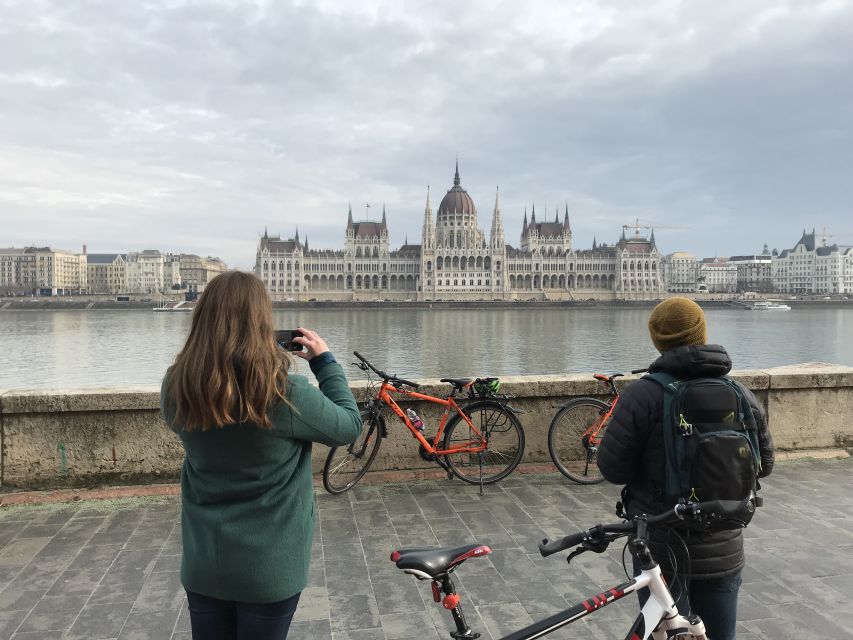
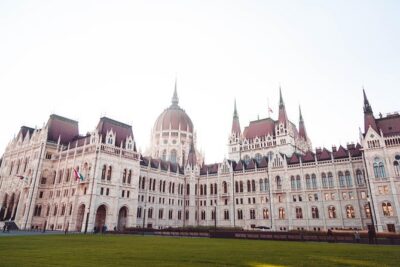
The Hungarian Parliament Building is the visual high point for many people. From the river side, its Gothic Revival form and long riverside frontage are especially impressive. You stop for photographs and an explanation, but the tour does not include entry.
The route then reaches the Shoes on the Danube Bank memorial. The stop is listed as a five-minute photo visit, and direct access to the monument is not granted. You may see the site from the route, but do not expect to walk right up to the shoes.
That limitation is important because this memorial deserves quiet attention. If you want more time, return later on foot. The bicycle stop gives you an introduction, not a complete visit.
From here, the route follows the Danube downstream toward Chain Bridge. Riding beside the river gives you a better sense of how Buda and Pest fit together. You are seeing the city as a connected whole rather than as isolated attractions.
Crossing Chain Bridge into Buda
Chain Bridge is the symbolic link between the two halves of Budapest. Crossing it by bicycle is one of the more memorable parts of the route, even though the stop itself is brief. You get a strong view of the river and the hills rising on the Buda side.
The route continues past Rudas Bath and toward Gellért Bath. These stops are short, around five minutes each, but they point out two important parts of Budapest’s bathing tradition. The baths are not included as admissions, so save your swimming plans for another time.
The itinerary also includes Matthias Church and Fisherman’s Bastion as photo stops. These landmarks sit in the Castle District and are among the city’s best-known viewpoints and architectural sights. The visit is brief, but it gives you a reason to return for a longer walk through the district.
I would not book this tour expecting a full exploration of Buda Castle. You get a useful taste of the area and a chance to see major landmarks, but the schedule is built around coverage. If you want interiors, quiet lanes, or a long view from the bastion, plan another visit.
Back through Pest to the Central Market Hall
After Buda, the bicycle crosses Liberty Bridge back to Pest. The bridge provides another good river view and makes the two-bank structure of the city clear. From there, the route passes the Central Market Hall and the Hungarian National Museum.
The Central Market Hall is a practical place to revisit after the tour. The stop during the ride is short, so you will not have time to browse every stall or eat a full meal. Still, it gives you a useful landmark for a later visit and helps place the southern part of central Pest.
The National Museum adds another cultural marker to the route. As with the other stops, the outside view is the focus. If museums are your priority, use the tour to mark locations rather than trying to treat the ride as a museum program.
The final stop is the Dohány Street Synagogue, returning you to the Jewish Quarter. The tour ends near where it began, with plenty of restaurants and bars nearby. That makes the finish convenient for a meal, although you should not count on eating during the ride itself.
What the pace, bikes, and group size feel like
The small-group format is a real advantage. With no more than 10 participants, it is easier to hear the guide, stay together, and ask questions than on a large city tour. Private touring may also be available when booking, but the listed group limit applies to the standard small-group option.
Several guides have received strong praise for their approach. Oliver is described as clear and generous with historical detail. Karol is noted for leading confidently and keeping the route safe, while Bálint is remembered as friendly and engaging. Esther and Naomi have also led rides for past groups.
The bikes are intended for city sightseeing. One rider used an electric function and another chose not to use it for a little extra exercise. That suggests the equipment can help with the distance, though the tour is still mainly about getting from sight to sight efficiently.
Bring comfortable shoes and clothing suited to the weather. Pack water and a snack because there is no planned food stop. Public toilets may cost a small amount, so carrying a little Hungarian forint or euros is sensible.
The provider limits participation for children because child bikes and seats are available only in small numbers. Contact the local partner before booking with children or anyone under 1.50 meters tall.
Who should book this Budapest bike tour?
I would choose this ride for a first visit, especially if you have limited time or want to get your bearings before choosing later activities. It suits confident cyclists who enjoy history, outdoor sightseeing, and frequent short stops.
It is not suitable for people who cannot ride a bike, anyone with mobility impairments, wheelchair users, pregnant women, people with epilepsy or visual impairments, or those prone to motion sickness. The stated weight limit is 110 kilograms. Babies under one year are not accepted.
The route is also a poor match if your ideal day includes long museum visits, a leisurely meal, or extended time at the baths. You will see many places, but you will not fully explore each one.
Should you book it?
Book it if you want a well-paced city overview with access to both Buda and Pest, strong photo opportunities, and a guide who can connect medieval Hungary with its recent past. At $45, the combination of bike, guide, drink, and transport across a wide route is good value.
Skip it if you dislike cycling in cities, need step-free access, or prefer to spend an entire morning at only one or two sights. For most first-time visitors who can ride comfortably, I would schedule it early in the stay. You will see what deserves a return visit, and Budapest will make much more sense afterward.
FAQ
How long does the Budapest bicycle tour last?
The tour lasts 3.5 hours.
Where does the tour begin and end?
It begins and ends at Madách Imre út 12 in central Budapest, near Madách Square, Gozsdu Court, Deák Square, and Cafe Hivatal.
What is included in the price?
The price includes the 3.5-hour bicycle tour, a guide, and a refreshing drink.
Is food included?
No. Meals and additional drinks are not included, so bring a snack and water.
What language is the tour conducted in?
The live tour guide speaks English.
How large is the group?
The standard tour is a small-group experience limited to 10 participants. Private touring may also be available when booking.
Can children join the tour?
Children may be able to join, but child bikes and child seats are limited. Contact the local partner in advance if you are bringing small children or anyone under 1.50 meters tall.
Latest history tours reviewed in the world
- From Athens: Ancient Olympia Full-Day Private Tour★ 4.8 · 22 reviews
- From Athens: Explore Ancient Corinth & Charming Nafplion★ 4.6 · 102 reviews
- From Athens: Explore Ancient Greece 4-Day Tour★ 4.7 · 73 reviews
- From Albufeira: Wine Tasting & Historic Silves Tour★ 4.9 · 421 reviews
- From Albufeira: Historical Algarve Region Tour★ 4.7 · 585 reviews
- From Alexandria: Full-Day Guided Tour of Historical Sights★ 4.5 · 54 reviews
- From Abu Dhabi: Grand Mosque, Royal Palace& Heritage Village★ 4.6 · 197 reviews
- Franklin: Ghost Tour in Historic Franklin★ 4.8 · 65 reviews
Budapest History Tours, compared.

Buda Castle District Dark History, Legends and Vampire Night Tour
Read our review →
BloodThirsty Hungary: Walking tour & Dark Historical Stories
Read our review →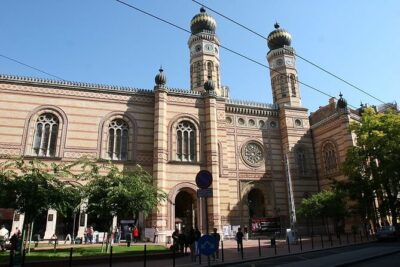
Budapest Jewish Heritage Memorial Walking Tour & Synagogue Entry
Read our review →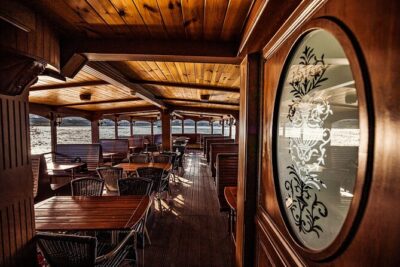
Budapest Paddle Steamer Danube Cruise with Tokaj & Audio Guide
Read our review →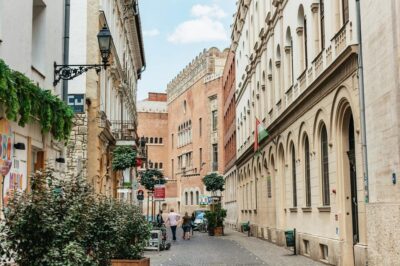
Budapest: Jewish History Guided Walking Tour with Historian
Read our review →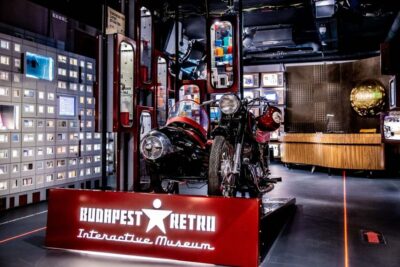
Budapest: Communist History Tour with House of Terror Option
Read our review →Browse the lists this tour appears in