Review · BARCELONA
Barcelona Historical Walking Tour: Gothic Quarter and El Born
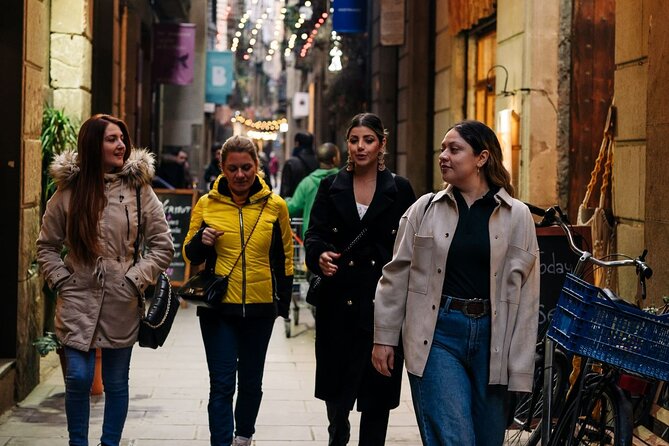
Barcelona’s oldest quarters reveal their secrets best on foot, and this tour moves through them at a useful pace. You’ll pass Roman remains, Gothic churches, medieval lanes, Civil War scars, and places linked to Picasso and Gaudi. The stories give the stone streets a human scale.
I especially like the compact two-hour format, which gives you a solid first look without taking half a day. I also like the route’s mix of famous sights and easy-to-miss corners, including Casa de l’Ardiaca and Plaça de Sant Felip Neri. The main consideration is that the schedule is tight, with about ten minutes at each stop, and admission to Barcelona Cathedral and Santa Maria del Mar is not included.
Key points to know before booking
- The route links two essential old-town districts: You walk from the Gothic Quarter into El Born, ending at Santa Maria del Mar.
- Roman Barcelona appears beneath the medieval city: Casa de l’Ardiaca and the streets around the cathedral reveal traces of ancient Barcino.
- Picasso and Gaudi enter the story early: Els 4 Gats connects the modernist city with two of its best-known artists.
- The tour is made for orientation: At $30.25, it works well as a first-day introduction before you explore individual sights on your own.
- Guides shape the experience: Juan, Lidia, Darren, Vanesa, Jordan, Petra, Sonia, and others have led recent departures, with praise focused on storytelling, humor, and local suggestions.
- Book ahead if your dates are fixed: The tour averages booking 26 days before departure and allows up to 20 people.
Why this two-hour walk works in Barcelona
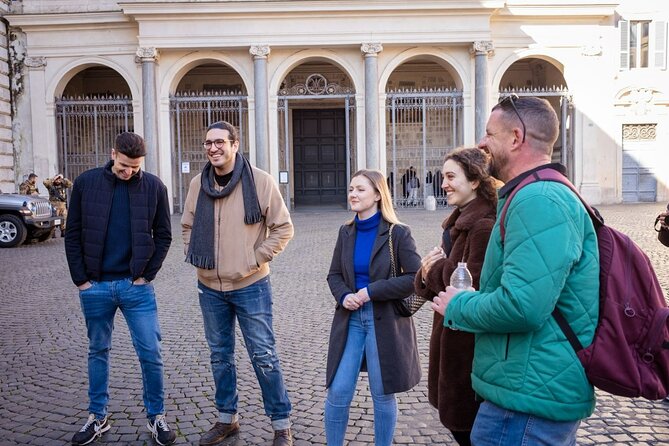
Barcelona can feel confusing at first. The modern boulevards, the Gothic Quarter, the Roman grid, and El Born all overlap, but they belong to different periods of the city’s past. This walk helps you see those layers in a short stretch of time.
The starting point is Plaça del Vuit de Març, a small square in Ciutat Vella. From there, the route moves through narrow streets and compact plazas rather than following the broad roads used by sightseeing buses. That matters here. Much of the old city is best understood at walking speed, where a doorway, wall fragment, or crooked alley can carry more weight than a grand avenue.
The group limit of 20 is sensible for this setting. Streets in the old town can be tight, and a larger group would make it harder to hear or gather around a building. Still, this is a public walking route, not a private tour, so expect city noise, foot traffic, and occasional pauses while the guide brings everyone together.
More History Walking Tours in Barcelona
- Barcelona: Tapas Walking Tour with Food, Wine, and History
★ 4.8 · 4,261 reviews - Barcelona Tapas Walking Tour: Food, Wine & History
★ 4.5 · 1,928 reviews - Barcelona: Dark History Night Walking Tour
★ 4.8 · 344 reviews
Els 4 Gats and Barcelona’s artistic crowd
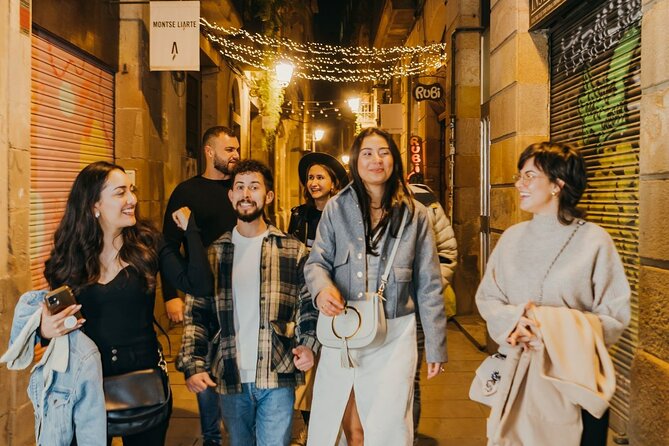
Els 4 Gats is a strong opening stop. This historic café and restaurant became a meeting place for artists, intellectuals, and modernists, including Pablo Picasso and Antoni Gaudi. Its Art Nouveau design gives you an immediate connection to the Barcelona of cafés, debate, and new artistic ideas.
You spend about ten minutes here, so think of it as a story stop rather than a full restaurant visit. The value comes from learning how the city’s creative circles overlapped. If you are especially interested in Picasso or Gaudi, guides such as David and Juan have been praised for adding useful context about Gaudi and Spain’s wider history.
Do not expect a full Gaudi architecture tour. The focus is on the people and atmosphere connected with the place. That makes this a good introduction, but you will need a separate visit for the architect’s major buildings.
A city told through memory at El Món Neix en Cada Besada
The next stop is El Món Neix en Cada Besada, a large photo mosaic created in 2014. Its name means The World Begins With Every Kiss, but the work also carries a political and civic meaning tied to Catalonia’s defeat on September 11, 1714.
That date became linked with La Diada, Catalonia’s national day. The mosaic offers a useful reminder that Barcelona’s public art can carry ideas about identity and freedom, not just decoration. Your guide can help place the work within the city’s modern civic life.
Again, the stop is brief. You will have time to look, take photographs, and hear the basic story, but not to study every image in detail. It is one of the tour’s more modern pauses, and that contrast helps keep the walk from becoming a string of medieval buildings.
Barcelona Cathedral, Roman walls, and Casa de l’Ardiaca

Barcelona Cathedral occupies the heart of the Gothic Quarter and honors Saint Eulalia, the city’s patron saint. The church is linked to the story of Eulalia, who was tortured and killed by the Romans. That religious history is part of the reason the cathedral matters, but the building also anchors the old city’s street plan.
The tour gives you around ten minutes here. Admission is not included, so check the arrangements before you go if you want to enter. Based on the short stop, you should treat this as an exterior introduction and orientation point rather than a full cathedral visit.
Nearby Casa de l’Ardiaca offers a different kind of surprise. Its Gothic and Renaissance elements sit against the remains of the Roman wall and aqueducts. This is where Barcelona’s layers become easy to read: Roman foundations, medieval architecture, and later changes occupy the same small area.
I like this section because it shows why a walking tour can outperform a bus route in the old city. You can stop beside a wall, turn into a side passage, and see how the city grew around its earlier boundaries. A bus can show you the scale of Barcelona. It cannot give you this close-up view.
More History Walking Tours in Spain
- Barcelona 1.5h Private Old Town, Gothic & Ramblas Walking Tour
★ 5.0 · 318 reviews - Barcelona: The Spanish Civil War Historical Walking Tour
★ 4.9 · 239 reviews - Barcelona Dark History Night Walking Tour With Drinks
★ 5.0 · 153 reviews - Barcelona El Raval Dark History Walking Tour
★ 5.0 · 70 reviews
Pont del Bisbe and the scarred walls of Plaça Sant Felip Neri
Carrer de Bisbe follows one of the main routes through Roman Barcino, and the Neo-Gothic Pont del Bisbe now crosses the street above it. The bridge is one of the Gothic Quarter’s most photographed details, though its appearance can make it seem older than it is.
Your guide will also share the superstition attached to the bridge. This is a good example of the kind of local story that gives a familiar photograph more character. It is a small detail, but it can make the street easier to remember later.
Plaça Sant Felip Neri changes the mood. The quiet square carries painful memories from the Spanish Civil War, and marks on the surrounding walls remain visible. It is not a light sightseeing stop, and the guide’s tone matters here. The best approach is respectful and measured, allowing the physical scars to speak while providing enough historical context.
This is also a spot where the tour’s ten-minute rhythm may feel short. You can hear the main story and look around, but anyone wanting a fuller account of the Civil War will need to continue researching independently.
El Call, the old Jewish Quarter
MUHBA El Call takes you into Barcelona’s former Jewish Quarter. The narrow streets and medieval buildings offer a glimpse into the Jewish community that once lived in this part of the city. The route includes the area around the synagogue and stories connected with the quarter.
This section rewards close attention. The lanes are not grand, and the buildings may not announce their importance. That is precisely why a guide helps. You get a sense of how communities lived within the old city’s tight street pattern and how little details can point to a much larger past.
The tour does not promise an extended museum visit. Think of El Call as a concise introduction to Jewish Barcelona, with enough background to help you return later if the subject interests you.
Plaça de Sant Jaume and the city’s political center

Plaça de Sant Jaume is one of Barcelona’s main civic squares. Government buildings surround it, and the space remains a center for public activity. It gives the walk a wider view after the narrow lanes of the Gothic Quarter.
This stop helps connect the old city with modern Barcelona. You are not only looking at architecture. You are seeing a place where civic decisions, public gatherings, and Catalan identity remain visible in the daily life of the city.
The square can be active and crowded, so listen carefully when the guide gathers the group. A guide such as Jordan, praised for mixing humor with clear historical explanation, can make a public square feel more approachable rather than simply another photo stop.
Plaça del Rei and Barcelona’s royal past
Plaça del Rei is one of the route’s most impressive historic spaces. The Royal Palace gives it a formal, regal character, while the surrounding buildings point to Barcelona’s medieval power.
The square also carries darker stories. That contrast is useful. Medieval Barcelona was not only a picturesque city of palaces and churches. Power, punishment, religion, and political conflict were part of daily life as well.
You spend roughly ten minutes here, enough to understand the setting and hear the main story. If you want to tour the buildings around the square in depth, plan a separate visit. The walking tour’s strength is its connection between sites, not extended time inside each one.
Plaça de l’Àngel and the turn toward El Born
Plaça de l’Àngel was once known as Wheat Square, reflecting its role in grain trading. The current name comes from a religious legend, which gives the stop another example of Barcelona’s habit of layering commerce, belief, and folklore in the same place.
From here, the route turns toward El Born. This shift is one of the most useful parts of the tour because the two districts can feel similar when you first arrive, yet they have different moods and histories. The route helps you understand the transition rather than treating the old town as one featureless block.
This is also where the tour’s practical value becomes clear. After two hours, you should have a mental map of several streets and squares, making it easier to return for food, shopping, museums, or another church visit.
Ending at Santa Maria del Mar
The final stop is the Basilica de Santa Maria del Mar, one of Barcelona’s finest examples of Catalan Gothic architecture. Its story is closely connected with the city’s maritime life and the people who worked around the harbor.
The church makes a strong ending because it brings together several ideas from the walk: Gothic design, civic identity, trade, religion, and the growth of El Born. Admission is not included, so you should allow extra time and check entry arrangements if you want to go inside.
The end point is Plaça de Santa Maria, 1. That is convenient for continuing through El Born, but the tour itself ends here. You are not left at the starting point, so plan your next activity from the finish rather than assuming a return transfer.
Guides, pace, and the feel of the walk
The guide can make a real difference. Juan has been praised for using an iPad to show historical images, answering questions, and offering suggestions for restaurants, bars, and other sights. Lidia is known for energy, humor, and local storytelling, while Darren has been especially effective at keeping a teenager engaged.
Vanesa has worked well with children, and Jordan brings comedy into the history without losing the main thread. Petra, Sonia, Craig, Justin, Sara, Thami, Mariah, and Tammy have also led well-received tours, with praise centered on clear explanations, warmth, and lively delivery.
There is one important caveat. One departure received a serious complaint because the guide spoke too softly for the group to hear. That appears to be an exception among the supplied feedback, but it is worth remembering that guide quality and microphone use can affect a walking tour. Rain can also slow the pace. One guide spent extra time explaining things while the group avoided heavy downpours.
The walk itself is described as easy and manageable for most people. Morning is a smart choice if you can arrange it, since one guide specifically noted cooler temperatures and quieter streets at that time.
Is $30.25 good value?
At $30.25 per person, the tour is reasonably priced for a two-hour guided walk with a maximum of 20 people. You are paying less for entry tickets and more for orientation, local explanation, and the ability to find places you might pass without understanding.
The value is strongest if this is your first visit to Barcelona. In two hours, you get a usable overview of the Gothic Quarter and El Born, along with ideas for what to revisit. It also works for repeat visitors who want more context on Roman Barcelona, the Jewish Quarter, or local legends.
The price is less attractive if you want long interior visits. Cathedral and Santa Maria del Mar admissions are not included, and the route allows only about ten minutes at each stop. Think of it as a guided introduction, not a substitute for museum and church visits.
Free cancellation is available up to 24 hours before the start time. Changes or cancellations inside that window are not accepted for a refund. Since the tour averages booking 26 days ahead, I would reserve early if your Barcelona dates are fixed.
Who should book this walk?
I would choose this tour for first-time visitors, families wanting a manageable introduction, and anyone who prefers stories to a list of dates. It is also a good first-morning activity because it helps you get your bearings before tackling Barcelona on your own.
The tour suits you less if you dislike group walks, need a slow stop-by-stop museum experience, or mainly want to tour Gaudi interiors. It covers Gaudi and Picasso connections, but it does not replace a dedicated architecture tour.
Should you book it?
Book it if you want a short, focused introduction to Barcelona’s oldest districts and value a guide who can connect Roman walls, saints, artists, political memory, and local legends. The route is varied, the walking is generally easy, and the finish at Santa Maria del Mar places you in a useful part of El Born.
Skip it if you already know the Gothic Quarter well or want extensive time inside the cathedral and basilica. For most first visits, though, $30.25 buys a practical start, especially when you book a morning departure and use the guide’s restaurant and sightseeing suggestions to plan the rest of your day.
FAQ
How long does the Barcelona Historical Walking Tour last?
The tour lasts approximately two hours.
Where does the tour begin?
It begins at Plaça del Vuit de Març in Ciutat Vella, Barcelona.
Where does the tour end?
The tour ends at Basílica de Santa Maria del Mar, Plaça de Santa Maria, 1, in El Born.
What language is the tour offered in?
The tour is offered in English.
How large can the group be?
The maximum group size is 20 people.
Are admission tickets included?
Admission to Barcelona Cathedral and Santa Maria del Mar is not included. The other listed stops have no admission charge.
Can I cancel for a full refund?
Yes. You can cancel at least 24 hours before the experience start time for a full refund. Cancellations or changes made less than 24 hours before the start time are not accepted for a refund.
More Medieval History Tours in Barcelona
- Barcelona: Tipsy Tapas & History Tour in the Gothic Quarter
★ 4.8 · 227 reviews - Barcelona: Gothic Quarter Tour Dark History & Ghosts Tour
★ 4.8 · 64 reviews - Barcelona: Market, Tasty Tapas/Food and Gothic History Tour
★ 4.7 · 48 reviews - Barcelona: Cemetery Tour – Gothic Graves & Local History
★ 4.9 · 33 reviews
Latest history tours reviewed in Barcelona
- Barcelona Historic Guided Tour★ 4.8 · 24 reviews
- Private Jewish Heritage Journey by Barcelona Dreaming★ 4.8 · 383 reviews
- Barcelona Tapas Tour, Taverns, History & Local Culture★ 5.0 · 25 reviews
- Barcelona: Market, Tasty Tapas/Food and Gothic History Tour★ 4.7 · 48 reviews
- Barcelona Historical 3-Hour Bike Tour★ 4.7 · 222 reviews
- Barcelona & Chocolate Amatller History and Culture + Activity and Tasting★ 4.9 · 173 reviews
- Barcelona: The Spanish Civil War Historical Walking Tour★ 4.9 · 239 reviews
- Barcelona: 3-Hour Sips, Sites & Bites Food & History Tour★ 4.8 · 33 reviews
Barcelona History Tours, compared.

Barcelona: Tapas Walking Tour with Food, Wine, and History
Read our review →
Barcelona: 2.5-Hour Bike or E-Bike Historical Tour
Read our review →
Barcelona Erotic Museum – Explore Art, History & Fun
Read our review →
Private Jewish Heritage Journey by Barcelona Dreaming
Read our review →
Tarragona and Sitges Small Group Tour – Roman History & Culture
Read our review →
Barcelona 1.5h Private Old Town, Gothic & Ramblas Walking Tour
Read our review →