Review · BARCELONA
Barcelona El Raval Dark History Walking Tour
Barcelona’s El Raval Dark History Walking Tour looks beyond Gaudí and the grand boulevards. Over two hours, you move from an old foundling wheel and a notorious criminal’s former street to a medieval church, a former hospital, and the old theater district along Paral·lel. The stories are grim at times, but the walk is also about poverty, art, social change, and the people who shaped this part of town.
I like the small group limit of 15, which gives the guide room to answer questions and keep the story conversational. I also like the route’s variety: you get architecture, local legends, crime, industrial history, and street art instead of six versions of the same ghost tale. The main drawback is that the tour covers some gritty material and ends outside central Raval, so it may not suit anyone seeking a gentle sightseeing stroll.
Key things to know before booking
- The story begins with Barcelona’s foundling wheel, an unusual reminder of how desperate families once dealt with unwanted infants.
- Carrer de Joaquín Costa brings the tour into the darker world of crime and the tale of the Vampire of the Raval.
- The former Hospital de la Santa Creu adds medical history, autopsies, and a look at how Barcelona treated the dead.
- Sant Pau del Camp supplies the oldest church on the route and a violent chapter from the city’s medieval past.
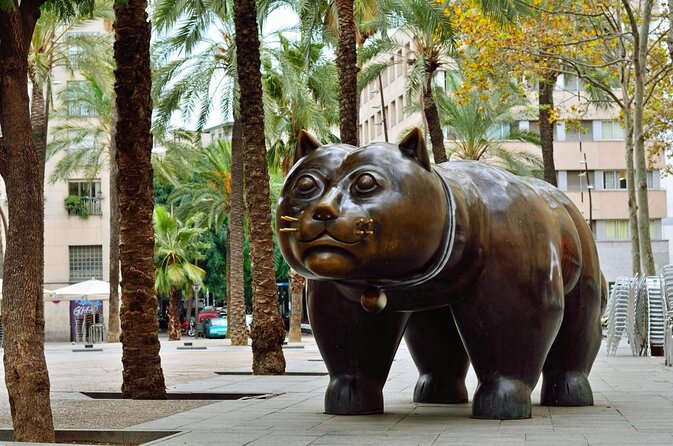
- Avenida del Paral·lel reveals the old Chinese district and the nightlife Barcelona guidebooks often skip.
- The walk finishes at Tres Xemeneies, where former industrial ground now provides a backdrop for graffiti art.
Why this Raval walk feels different from a standard Barcelona tour
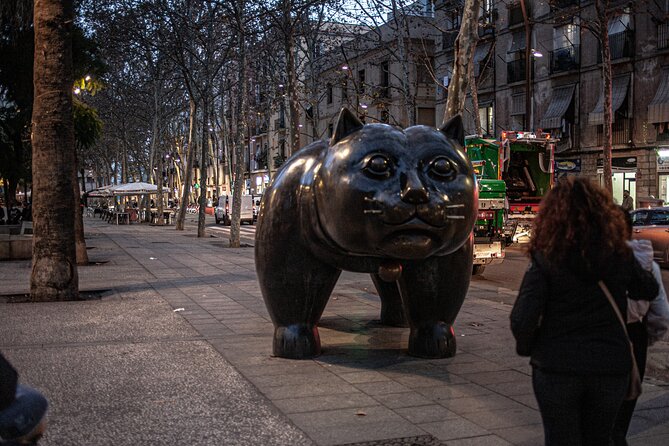
The usual first look at Barcelona centers on the Sagrada Família, the Gothic Quarter, Las Ramblas, and Gaudí. Those places deserve your time, but they give only one version of the city. This walk takes you into El Raval, a district shaped by poverty, immigration, factories, hospitals, theaters, churches, nightlife, and urban renewal.
The tour does not present Raval as a collection of spooky anecdotes. Its darker stories work best as a way into the neighborhood’s social past. A tale about crime points to unsafe streets and desperate conditions. A story about the hospital opens a window onto old medical practice. A stop at a church reveals how faith, politics, and violence were tied together.
That makes this a good early activity if you want to understand Barcelona before spending several days exploring on your own. You leave with a better sense of how the central districts connect and why some streets feel polished while others retain a rougher edge.
The tone depends partly on the guide. Eoghan has led this route with humor, warmth, and strong storytelling, while Zeynep, Zaynab, Callum, Andres, and Cal have also been associated with engaging versions of the walk. The precise guide is not guaranteed, but the format leaves plenty of room for personality. Several guides have also offered suggestions for places to eat and other things to do, which can be useful at the start of a stay.
More Dark History and Haunted Tours in Barcelona
- Barcelona: Dark History Night Walking Tour
★ 4.8 · 344 reviews - Barcelona’s Dark History Night Tour
★ 5.0 · 181 reviews - Barcelona Dark History Night Walking Tour With Drinks
★ 5.0 · 153 reviews
Starting at Sant Pere Nolasc Mercedaris
The meeting point is at Parròquia de Sant Pere Nolasc Mercedaris, at Plaça de Castella, 6. This places you near the north side of Raval, close to public transportation and within easy reach of central Barcelona.
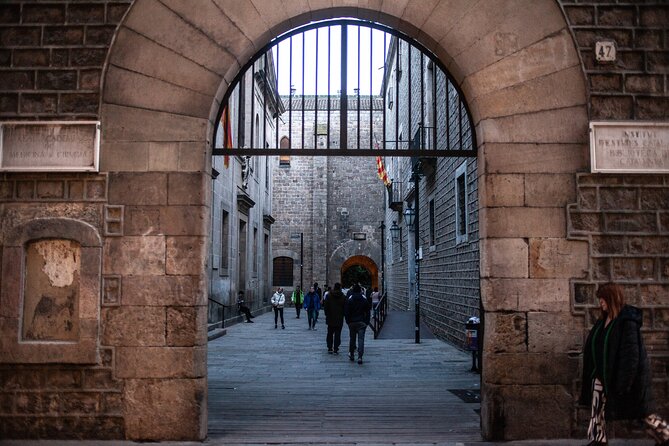
The first stop is the Fundació Privada Casa de Misericòrdia de Barcelona. Here, the guide explains the foundling wheel, a device used by parents who could not care for an infant and wanted to leave the child anonymously. The wheel is a small feature with a large emotional weight. It offers a blunt look at poverty, family hardship, religious charity, and the limits of social support in earlier Barcelona.
You do not come here for an elaborate monument. The appeal is the story and the fact that such a serious part of city life can remain easy to miss. If you prefer history that connects buildings to ordinary people, this is a strong opening.
The stop lasts about 20 minutes, and admission is free. Since this is an outdoor walking experience with stops rather than a series of indoor visits, you should expect the guide to provide most of the context.
Carrer de Joaquín Costa and the Vampire of the Raval
From the opening stop, the route moves toward Carrer de Joaquín Costa. This street is linked to the notorious figure known as the Vampire of the Raval, Barcelona’s answer to the classic criminal legend.
The story brings a theatrical edge to the tour, but the better reason to pay attention is the setting. Joaquín Costa helps you see how narrow streets, crowded housing, and poor conditions created the backdrop for crime stories that later became city folklore. The guide connects the person and the legend to the neighborhood instead of treating the tale as a free-floating horror story.
You can expect the subject matter to be unsettling. The tour description openly promises grim material, and this is one of the clearest examples. Parents with young children should consider the tone carefully, especially if anyone in the group is sensitive to stories about violence or exploitation.
Again, the stop is free and lasts around 20 minutes. Wear shoes that are comfortable for walking and standing. The route is urban, and the value comes from listening closely while looking at the streets around you.
The former Hospital de la Santa Creu
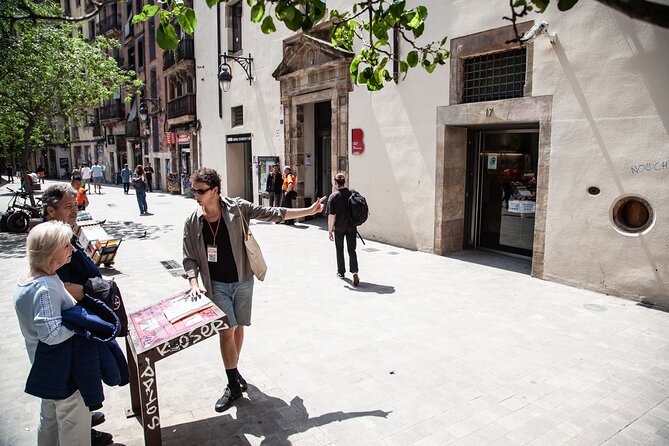
The Real Academia de Medicina de Cataluña occupies part of the former Hospital de la Santa Creu. This stop shifts the mood from criminal folklore to medicine, death, and the old treatment of human remains.
The building is tied to autopsies, giving the guide a chance to explain Barcelona’s medical past through a place that once served a very different purpose. You may find this one of the most interesting stops if you like the history of science or want to understand how hospitals functioned before modern medicine.
It also adds balance to the tour. The route is not only about villains and haunted buildings. It considers the institutions that dealt with illness, death, and the poor. The stories can be macabre, but they also show how a city organized care and knowledge.
The tour does not include a separate admission charge at this stop. The experience remains focused on the exterior setting and the guide’s explanation, so do not expect a full museum visit or an extended look inside every building.
More History Walking Tours in Barcelona
- Barcelona: Tapas Walking Tour with Food, Wine, and History
★ 4.8 · 4,261 reviews - Barcelona Tapas Walking Tour: Food, Wine & History
★ 4.5 · 1,928 reviews - Barcelona 1.5h Private Old Town, Gothic & Ramblas Walking Tour
★ 5.0 · 318 reviews - Barcelona: The Spanish Civil War Historical Walking Tour
★ 4.9 · 239 reviews
Sant Pau del Camp and medieval Barcelona
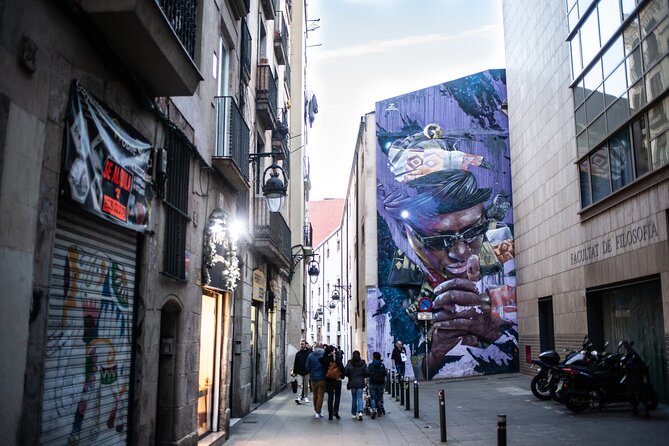
Sant Pau del Camp is presented as Barcelona’s oldest church. Its former monastery history includes a violent chapter, making it a natural fit for a dark-history route.
This stop offers one of the strongest changes of scenery. After streets linked to crime and an old medical institution, you reach a religious site with a much older connection to the city. The church helps widen the time frame from modern urban legends to medieval Barcelona.
I like this kind of stop because it makes the route feel like a history walk, not just a true-crime outing. You can look at the building’s age and form while hearing how religious spaces were affected by conflict. The church also gives the guide a chance to connect Raval to the wider story of Barcelona’s growth.
Plan on roughly 20 minutes here. The tour data does not promise entry into every interior, so your experience may focus on the setting and the explanation rather than a formal church tour. Admission is listed as free.
Avenida del Paral·lel and the old nightlife district
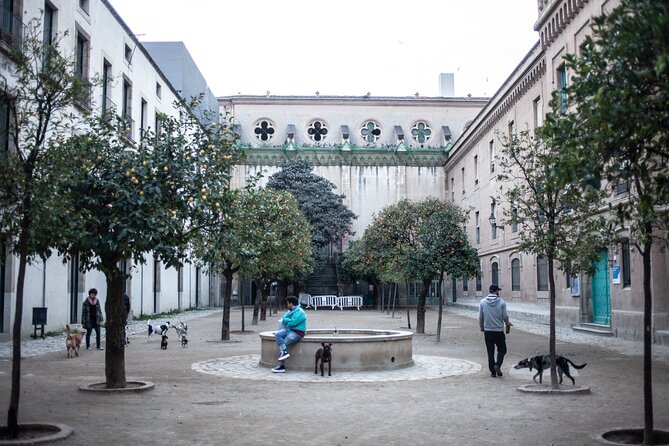
The route then heads toward Avenida del Paral·lel, once associated with Barcelona’s Chinese district and the city’s seedier 20th-century nightlife.
This is where the tour moves from medieval and institutional history into modern popular culture. The avenue was a center for theaters, clubs, entertainment, and nightlife. Its past helps explain why this part of Barcelona developed a reputation very different from the elegant image presented by the Eixample.
The phrase Chinese district refers to an old nickname for the area, not a neatly defined enclave that you should expect to find intact today. The useful point is how Barcelona’s labels reflected attitudes toward nightlife, poverty, immigration, and marginal communities.
This stop suits you if you want to understand the city’s social history as well as its architecture. It also gives the walk a little energy after the heavier stories about hospitals and violence. The guide can show how an area once judged disreputable becomes part of the city’s changing cultural identity.
The stop lasts about 20 minutes, with the rest of the time spent moving between locations. Since lunch is not included, this area may also be a practical point to note places for a later meal, though the tour itself does not provide food.
Tres Xemeneies and the final look at industrial Barcelona
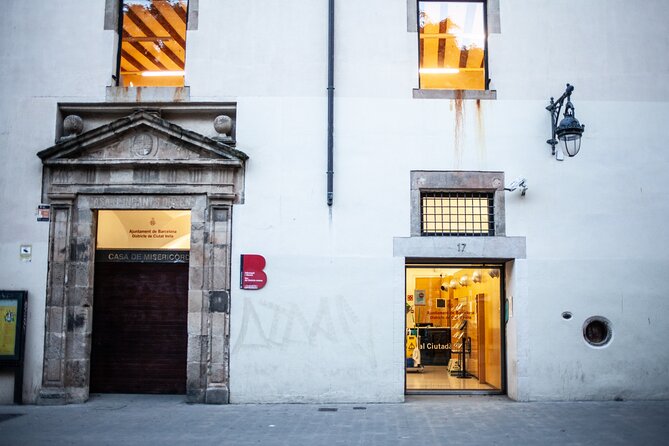
The walk ends at Jardins de les Tres Xemeneies, beside Avenida del Paral·lel. The name refers to the three chimneys that recall the area’s industrial past. Today, the gardens are known for graffiti and public art.
This ending gives the tour a welcome change in tone. You begin with abandoned infants, crime, autopsies, and violence, then finish in a public space shaped by contemporary art. The route suggests that Raval and the districts around it are not frozen in their darkest periods.
If you enjoy street art, allow yourself a little time after the official end to look around. The gardens are the last stop, and the tour description identifies them as a particularly good place for graffiti art. The activity ends at Plaça de Les Tres Xemeneies, at Av. del Paral·lel, 49, in Sants-Montjuïc.
The ending is also practical. You are no longer at the starting point, so check your plans before booking. If you have a restaurant reservation near Plaça de Catalunya immediately afterward, allow time for the onward journey.
What the $33.42 price gets you
At $33.42 per person, this is not the cheapest way to spend two hours in Barcelona, since the stops themselves are listed as free. You are paying for the guide’s preparation, storytelling, route design, and ability to connect scattered places into one coherent walk.
That value depends on how much you enjoy guided history. If you are happy reading a guidebook plaque and wandering without context, the price may feel high. If you want access to stories and locations you might otherwise pass without noticing, the cost is easier to justify.
The small group size matters here. With no more than 15 people, the guide can keep the group together and respond to questions. It also reduces the chance that you will spend the whole tour at the back of a large crowd trying to hear.
The tour is booked, on average, about 21 days ahead. That is useful planning information, especially for a short Barcelona visit. If you know you want this particular route, reserve before your arrival rather than leaving it to the last day.
How demanding is the walk?
The tour lasts about two hours and takes place outdoors, with several stops of approximately 20 minutes each. Most people can participate, and the experience is near public transportation. Service animals are allowed.
You should still expect regular walking and periods of standing. The tour does not list lunch, drinks, or transport as included, so bring what you need for the time of day. A mobile ticket makes entry simple, but you should have your booking available on your phone at the meeting point.
The start and finish are in different parts of the city. That is not a problem if you are prepared, but it is an important detail for planning. The route begins near Plaça de Castella and ends at Tres Xemeneies, giving you a useful chance to continue exploring instead of retracing your steps.
Who should book this experience?
I would choose this tour if you have already seen the headline sights, or if you want your first Barcelona walk to include more than beautiful facades. It is also a good match for people who enjoy urban history, crime stories, old hospitals, church history, nightlife, and graffiti.
The route suits solo visitors and couples particularly well, since the small group makes it easier to ask questions and talk with the guide. It can also work for families, but I would judge that based on the ages and comfort level of everyone in your party. The subject matter includes crime, violence, unwanted infants, autopsies, and Barcelona’s darker nightlife.
You should skip it if you want a relaxed architecture tour with little discussion of hardship or death. You should also think twice if you need a fully indoor activity, since the route is built around walking through city streets and stopping at outdoor locations.
Cancellation is free if you cancel at least 24 hours before the start time. Changes or cancellations inside that window are not accepted for a refund. The experience also requires a minimum number of participants, so a cancellation by the operator can result in another date, another experience, or a full refund.
Should you book the Raval Dark History Walking Tour?
Book it if you want Barcelona’s other side: the old institutions, crimes, churches, industrial spaces, nightlife, and street art that sit beyond the usual postcard route. At $33.42, the price is reasonable when you value a skilled guide and a well-planned story more than paid entry tickets.
I especially like the route’s range and the way it ends at Tres Xemeneies rather than finishing with another grim tale. Just go in ready for serious subjects, ordinary city streets, and a guide-led experience instead of a major attraction with an impressive interior.
If that sounds like your kind of Barcelona, this is a useful two-hour introduction to El Raval and the city’s less polished past.
FAQ
How long does the Barcelona El Raval Dark History Walking Tour last?
The tour lasts approximately two hours.
Where does the tour begin?
It begins at Parròquia de Sant Pere Nolasc Mercedaris, Plaça de Castella, 6, in Barcelona’s Ciutat Vella district.
Where does the tour finish?
The tour ends at Jardins de les Tres Xemeneies, also called Plaça de Les Tres Xemeneies, at Avenida del Paral·lel, 49.
How many people can join the tour?
The group has a maximum of 15 participants.
Is lunch included?
No. Lunch is not included in the tour price.
Can I cancel for a full refund?
Yes. You can cancel for a full refund if you do so at least 24 hours before the experience start time. Cancellations or changes made less than 24 hours beforehand are not refunded.
More History Walking Tours in Spain
- Barcelona Historical Walking Tour: Gothic Quarter and El Born
★ 5.0 · 217 reviews - Madrid Historical Walking Tour
★ 5.0 · 721 reviews - Valencia: Essentials and World Heritages Sites Walking Tour
★ 4.7 · 684 reviews - Seville: Tapas, Taverns, and History Walking Tour
★ 4.9 · 676 reviews
Latest history tours reviewed in Barcelona
- Barcelona Historic Guided Tour★ 4.8 · 24 reviews
- Private Jewish Heritage Journey by Barcelona Dreaming★ 4.8 · 383 reviews
- Barcelona Tapas Tour, Taverns, History & Local Culture★ 5.0 · 25 reviews
- Barcelona: Market, Tasty Tapas/Food and Gothic History Tour★ 4.7 · 48 reviews
- Barcelona Historical 3-Hour Bike Tour★ 4.7 · 222 reviews
- Barcelona & Chocolate Amatller History and Culture + Activity and Tasting★ 4.9 · 173 reviews
- Barcelona: The Spanish Civil War Historical Walking Tour★ 4.9 · 239 reviews
- Barcelona: 3-Hour Sips, Sites & Bites Food & History Tour★ 4.8 · 33 reviews
Barcelona History Tours, compared.

Barcelona: Tapas Walking Tour with Food, Wine, and History
Read our review →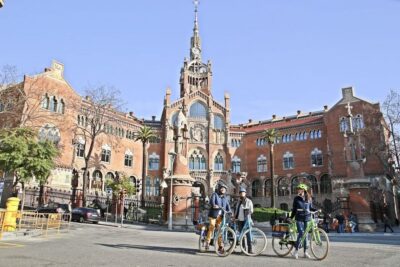
Barcelona: 2.5-Hour Bike or E-Bike Historical Tour
Read our review →
Barcelona Erotic Museum – Explore Art, History & Fun
Read our review →
Private Jewish Heritage Journey by Barcelona Dreaming
Read our review →

Tarragona and Sitges Small Group Tour – Roman History & Culture
Read our review →
Barcelona 1.5h Private Old Town, Gothic & Ramblas Walking Tour
Read our review →