
Review · CROATIA
Zagreb: City & History Walking Tour & WW2 Tunnels
The most unusual part of this Zagreb walk is the WWII-era Grič Tunnel, an underground passage beneath the Upper Town that once served as a wartime shelter. It gives the tour a useful change of pace: you move from grand squares and churches into a darker, more recent chapter of the city’s past.
I like the small-group format, which makes it easier to ask questions and hear your guide. I also like the mix of major sights and local life, from the Cathedral and St. Mark’s Church to café culture on Tkalčićeva Street and the chapel inside Stone Gate.
The main consideration is the route’s accessibility. It is not suitable for wheelchair users, and two planned elements need a check before you book: the Grič Tunnel can close for events, while Zagreb’s funicular is closed for renovation until March 2026.
Key points at a glance
- Walk into Zagreb’s wartime past: The Grič Tunnel adds a rare underground stop to a standard city walk.
- Start among grand Austro-Hungarian-era sights: Zrinjevac Park, Ban Jelačić Square, the Cathedral, and Dolac Market form the first part of the route.
- Hear local stories, not just dates: Guides such as Petra, Tomislav, Maja, and Tomislav’s fellow guide Tom are praised for humor, clear explanations, and practical recommendations.
- See the original Upper Town: The route includes Strossmayer Promenade, Lotrščak Tower, St. Mark’s Church, the Stone Gate, and a stop near the Museum of Broken Relationships.
- Plan around Zagreb’s daily rhythm: Dolac Market closes in the afternoon and on public holidays, so a morning start gives you the liveliest market visit.
- Good value at $11: For 150 minutes with a licensed local guide, this is one of the cheaper ways to get your bearings before exploring on your own.
Why the Grič Tunnel gives this walk an edge
Many Zagreb walking tours follow the same postcard route. This one adds the Grič Tunnel, and that matters because it connects the city’s older landmarks with its 20th-century story.
The tunnel runs beneath the Upper Town and was used as a wartime shelter during World War II. Today, it can also host exhibitions, theater performances, or other events. If something is taking place inside, the tunnel may be closed during your tour, so treat it as an important feature rather than an absolute guarantee.
The underground setting also breaks up the walk nicely. You are not standing in another square listening to a long talk about architecture. You are moving through a practical piece of Zagreb’s past, then returning to the streets above.
At $11, the tunnel alone is not the whole value of the experience. The real bargain is the combination of a local guide, a well-planned central route, and useful advice at the end. You get enough background to understand the city without committing half a day to a museum-heavy tour.
More History Walking Tours in Croatia
- Dubrovnik Old Town History Walking Tour
★ 5.0 · 1,684 reviews - Dubrovnik: Ancient City Walls & Wars Walking Tour
★ 5.0 · 1,270 reviews - Walking Tour of Split with a ‘Magister’ of History
★ 5.0 · 1,122 reviews
Starting in Zrinjevac Park
The meeting point is beside the small meteorological station on the north side of Zrinjevac Park, at Trg Nikola Šubić Zrinski 2. Look for the display showing the temperature and barometric pressure. This is more precise than simply being told to meet at Zrinjevac, since the park has several paths and entrances.
Zrinjevac is a graceful place to begin. The park forms part of Zagreb’s Lower Town and gives your guide room to introduce the city before the streets grow tighter. The planned guided stop here lasts about 15 minutes.
I like this opening because it avoids launching straight into a list of names and dates. You start with the city’s layout and learn how the Lower Town connects to the older Upper Town. From here, the group walks toward the central square.
The route is in English, and the guide makes a difference. Petra, Tomislav, Maja, and Tom are among the guides who have led this experience. The strongest descriptions of the tour focus on their ability to explain clearly, add humor, and answer questions without rushing the group.
Ban Jelačić Square and the story behind Zagreb
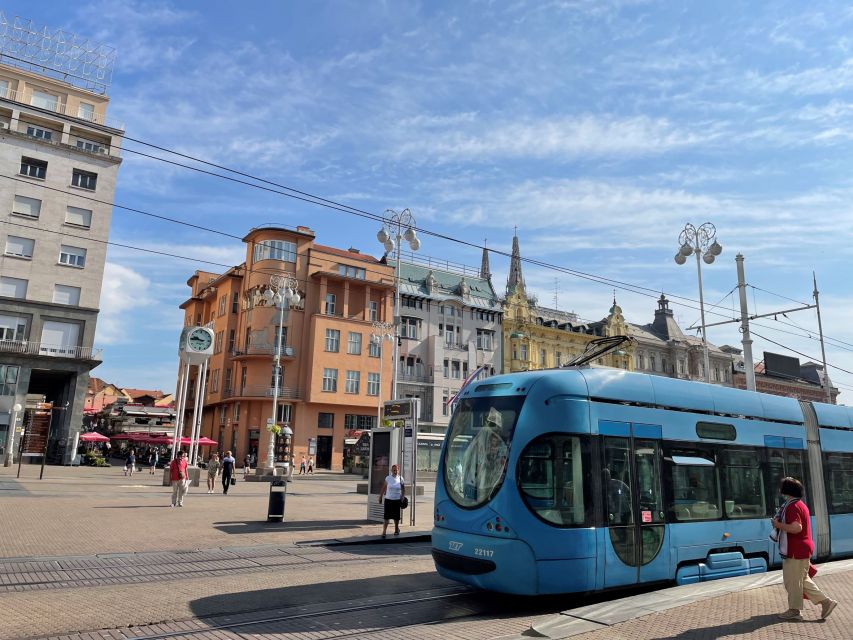
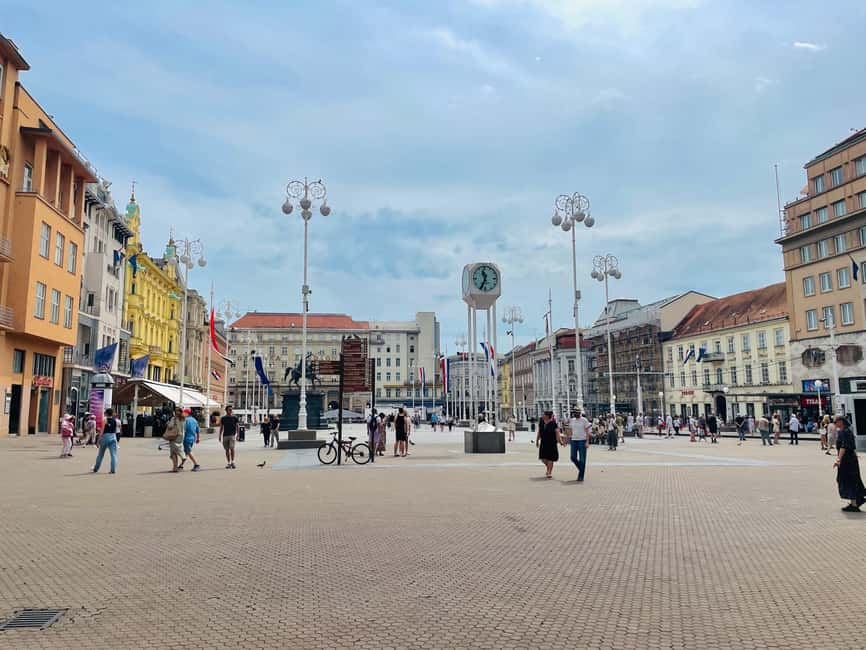
Ban Josip Jelačić Square is Zagreb’s main meeting place and the center of the modern city. The tour pauses here for about 15 minutes, using the square to explain Zagreb’s name and the legends connected with its founding.
This is one of the most useful early stops because it gives you a fixed point for the rest of your visit. Streets, trams, cafés, and shopping areas radiate from the square. Once you know where it is, navigating the center becomes much easier.
Your guide also helps connect the square to local life. It is not just a grand open space for photographs. It is where people arrange to meet, pass through on daily errands, and orient themselves before heading uphill.
The pace sounds sensible here. You get time for photographs and questions, but the tour does not linger so long that the first half becomes a lecture. That balance was a repeated strength of this experience, with the walk described as informative but relaxed.
Zagreb Cathedral and Dolac Market
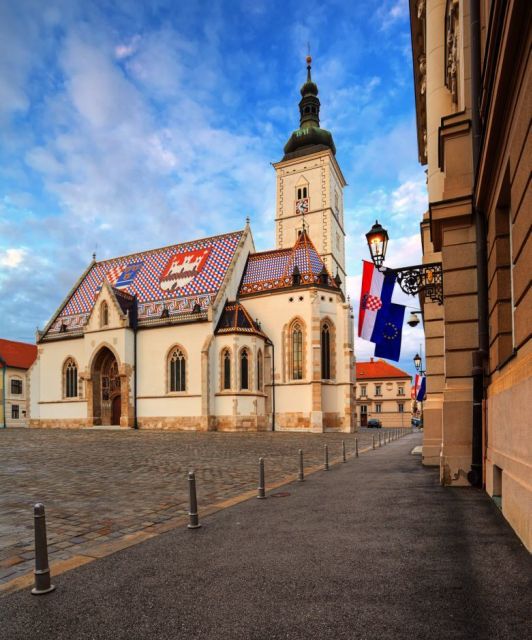
The Cathedral of the Assumption of the Blessed Virgin Mary is the next major landmark. You stop outside for about 15 minutes to hear about its origins, damage, and repeated restoration.
The Cathedral is especially useful for understanding how Zagreb has changed over time. Its story is not a straight march from construction to completion. Earthquakes, political changes, and restoration work have shaped the building and the city around it. Your guide explains those shifts in plain language rather than expecting you to arrive with architectural knowledge.
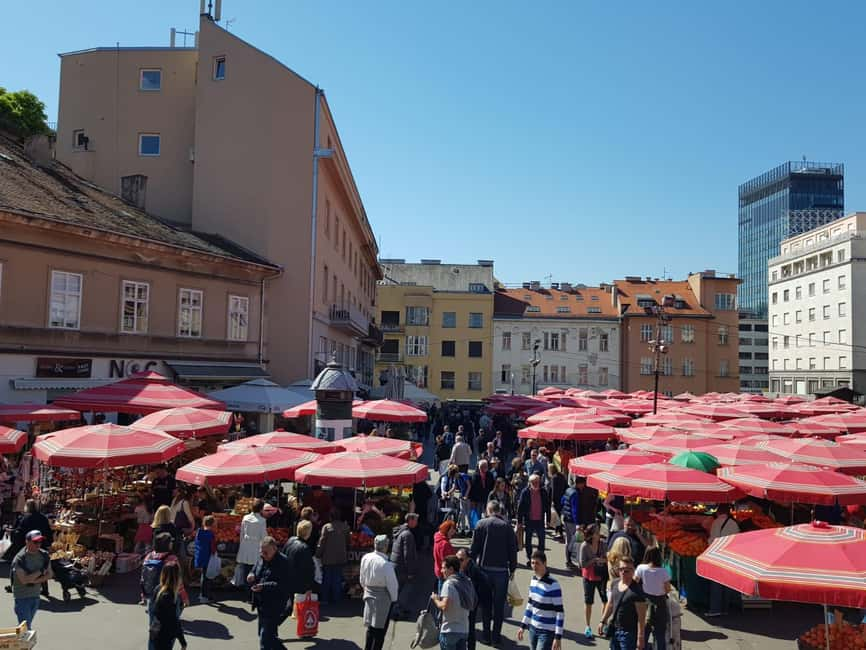
From the Cathedral, the route continues to Dolac Market, known locally as the belly of Zagreb. The market is one of the most practical stops on the walk because it shows daily life rather than ceremonial Zagreb. You can see where locals shop for produce and hear why the market has such a central place in the city.
Timing matters here. Dolac Market is closed in the afternoon and on public holidays. If you want to see it operating, choose a morning departure. On a later tour, you may still hear about the market and see the space, but you should not expect the same activity.
This is also a good point to ask your guide about food. Several guides, including Petra and Tomislav, have offered restaurant suggestions and post-tour eating tips. The tour does not include food or drinks, so you will pay for anything you sample separately.
More WWII and D-Day Tours in Croatia:
- Vienna: World War II Historical Walking Tour
★ 4.8 · 1,772 reviews - Pearl Harbor History Remembered Tour from Ko Olina
★ 5.0 · 1,009 reviews - Hiroshima Peace (Heiwa) Walking Tour at World Heritage Sites
★ 5.0 · 872 reviews - Berlin: History of the Third Reich Guided Walking Tour
★ 4.7 · 791 reviews
Tkalčićeva Street and the art of lingering
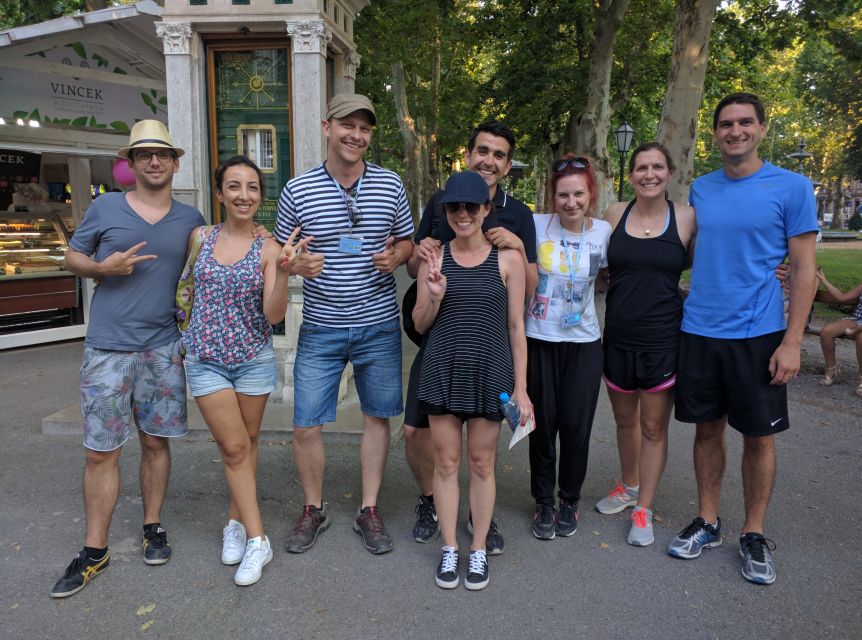
The walk continues toward Tkalčićeva Street, one of Zagreb’s best-known café streets. Here the focus shifts from monuments to social habits, especially the local pleasure of sitting down, talking, and taking your time over a drink.
That small cultural explanation is worth more than another photograph. Zagreb is easier to understand when you notice how people use public space. Tkalčićeva is a good place to ask your guide where to return later, since the street changes character depending on the time of day.
The route does not turn this into a food tour. You are not promised tastings, and refreshments are not included. Instead, the street serves as a window into café culture and as a practical source of ideas for the rest of your stay.
Inside the Grič Tunnel
The Grič Tunnel is the tour’s most distinctive stop. You enter an underground passage that served as a wartime shelter and now offers a look at Zagreb’s more recent past.
The guided portion here lasts about 20 minutes. That is enough time to understand why the tunnel exists and how its use has changed, while keeping the tour moving toward the Upper Town.
Expect a different atmosphere from the open squares. The tunnel is enclosed, and the subject matter is more serious. It is a useful reminder that Zagreb is not only church towers, market stalls, and café tables. The city has also had to manage war, shelter, fear, and later public use of old infrastructure.
Keep the closure warning in mind. The tunnel can be unavailable when an exhibition, theater show, or similar event occupies the space. If the tunnel is essential to your decision, confirm its availability close to your tour date.
The Upper Town, Lotrščak Tower, and the funicular
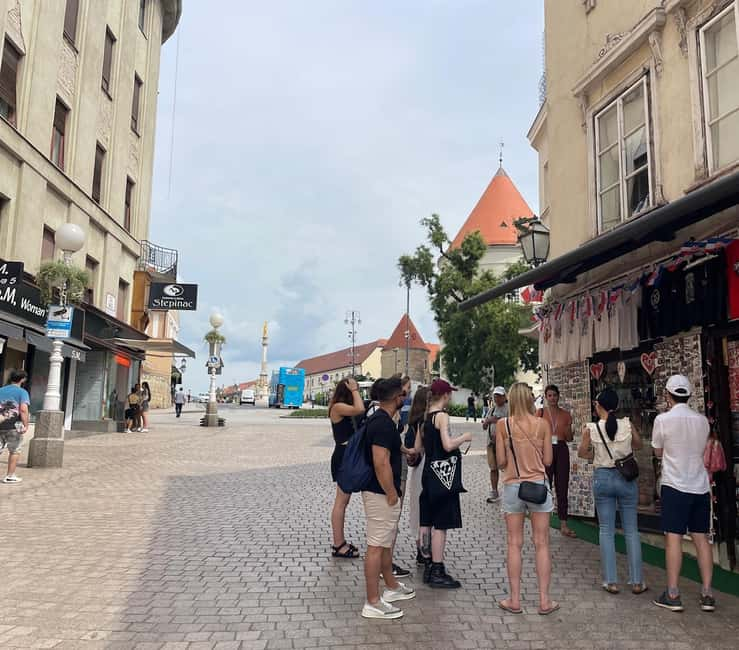
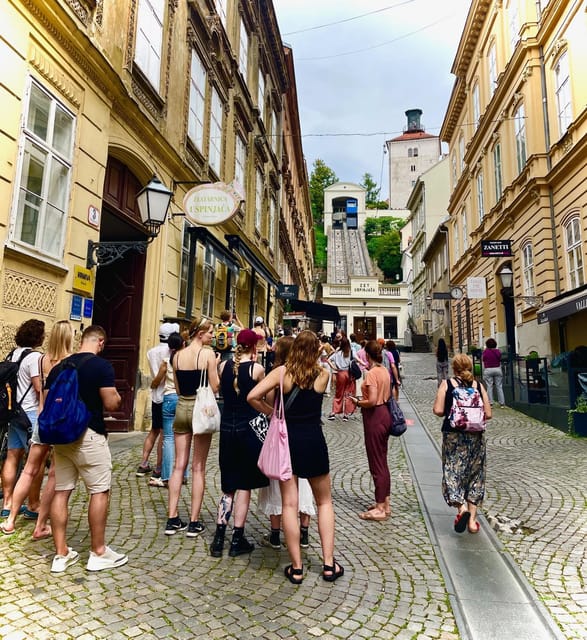
The route then reaches Zagreb’s Upper Town, or Gradec, one of the city’s original medieval settlements. The walk uphill is part of the experience, but it is not presented as a strenuous hike. One guide described the tour as varied and not too demanding, while another made a point of keeping the group together and using shade during hot weather.
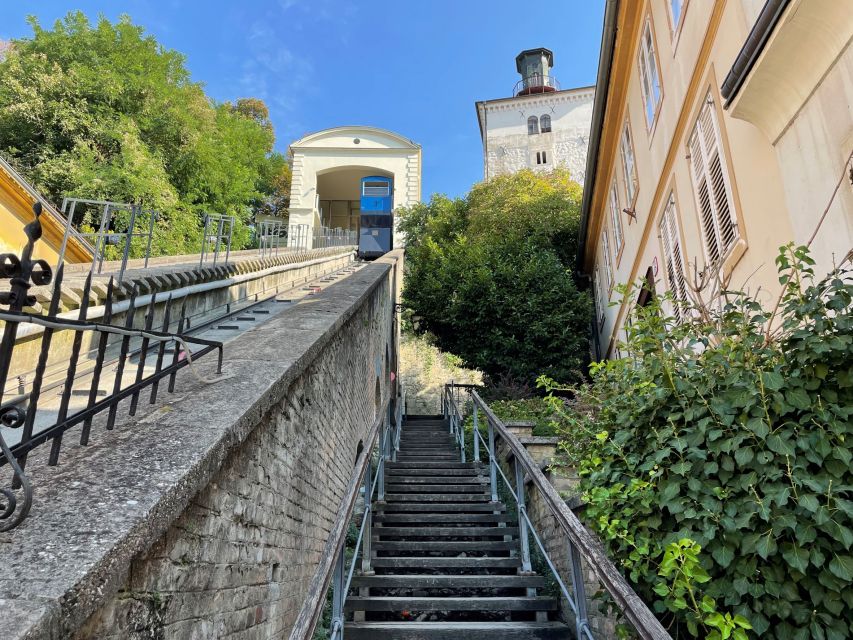
The funicular is nearby and normally offers a short, scenic connection between the Lower and Upper Town. It is also Zagreb’s oldest public transport. At present, however, it is closed for renovation until March 2026. You should therefore expect to walk rather than ride it, and you should not count on boarding it for rooftop views.
Strossmayer Promenade is one of the pleasantest portions of the route. This leafy terrace gives you broad views across Zagreb and a quieter break from the tighter lanes of Gradec. Your guide can use the overlook to explain how the Lower Town, Upper Town, and wider city fit together.
Lotrščak Tower receives a longer stop of about 20 minutes. The tower is strongly linked with Zagreb’s old defenses and with the noon cannon tradition. If your tour timing allows, you may reach the area around midday and hear or witness the cannon firing. Several guides have made a point of timing the walk for this local ritual, but it should not be treated as guaranteed for every departure.
St. Mark’s Church and Stone Gate
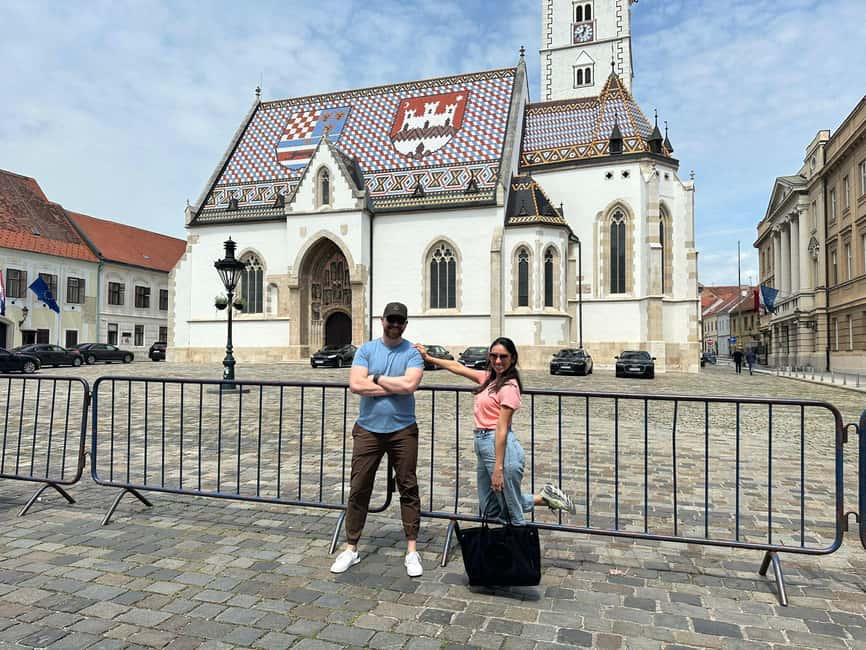
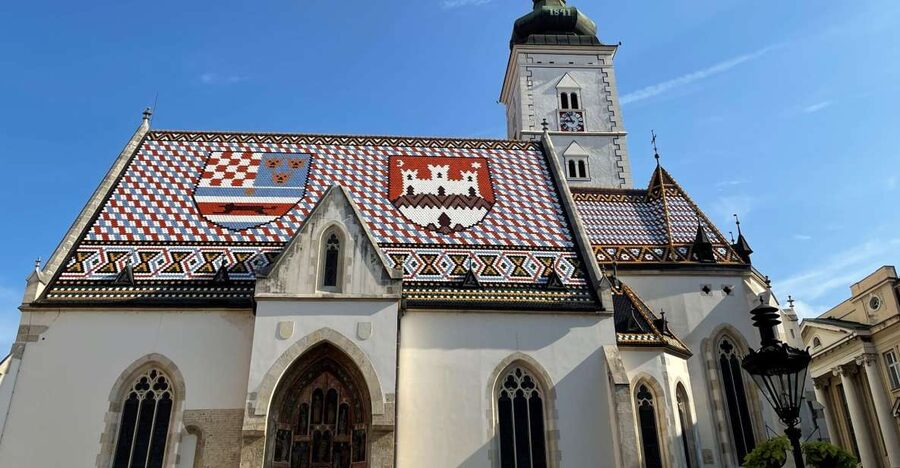
St. Mark’s Square brings you to one of Zagreb’s most recognizable sights. St. Mark’s Church is easy to spot because of its colorful tiled roof, which displays the historic coats of arms associated with Zagreb and Croatia.
The stop lasts about 15 minutes and is mainly about the church, the square, and the political importance of the Upper Town. This is a place where your guide’s storytelling matters. A quick photograph will show you the roof, but the explanation helps you understand why this small church has such symbolic weight.
The route also passes the oldest pharmacy in Zagreb. The stop is brief, yet it adds texture to the walk. Zagreb’s past is not limited to major churches and defensive towers. It also survives in working addresses, old trades, and small details that are easy to miss when walking alone.
Stone Gate is perhaps the most personal stop on the Upper Town route. It is the only surviving gate from Zagreb’s old fortifications. Inside is a chapel containing a painting of Our Lady, believed by many locals to be miraculous.
The chapel is tucked into the passage, so you might walk past it without realizing what you are seeing. Your guide explains its place in local devotion and gives you time to look quietly. This is one of the points where the tour moves beyond a checklist of sights and shows how Zagreb’s history remains part of everyday life.
Passing the Museum of Broken Relationships and the final surprise
The route passes the Museum of Broken Relationships for about 10 minutes. You do not enter as part of the walking tour, but the museum is a useful landmark and a good suggestion for later if its subject interests you.
You also pass a secret stop near the end of the walk. The exact detail is not specified in advance, which is part of the appeal. Do not expect a major attraction or a long museum visit. Think of it as a short local addition away from the main route.
The tour finishes at Ban Jelačić Square, returning you to the same central area where the middle section of the walk began. That is convenient if you want to continue shopping, eat nearby, or make your way to a tram or bus.
Before you leave, ask your guide for recommendations. Petra, Tomislav, Maja, and Tom have all been praised for answering questions and suggesting places to eat or visit next. This final conversation can be especially useful if the tour is your first activity in Zagreb.
Group size, pace, and guide quality
The small-group setup is one of the strongest reasons to choose this walk. A group of eight was described on one departure, and the advantage is clear: you can hear the guide, ask follow-up questions, and stay connected while moving through crowded streets.
Group size may vary, so do not assume every departure will have exactly eight people. Still, the experience is designed around personal attention rather than a large crowd. That is valuable in the Upper Town, where narrow streets and busy squares can make a big group awkward.
The guides are the heart of the tour. Petra is repeatedly singled out for funny stories, local detail, and helpful answers. Tomislav is praised for clear explanations, patience, humor, and restaurant suggestions. Maja has been especially attentive to keeping groups together and finding shade in hot weather, while Tom is noted for his easy humor and detailed history talks.
The route is not deeply academic, and that is a strength for most people. You get a broad understanding of Zagreb’s past, architecture, customs, and recent events without spending 20 minutes on every church façade. If you want a specialist architecture tour or a long visit inside each attraction, this is not the right format.
Is $11 a good value?
Yes, for most first-time visitors, $11 is a strong price for 150 minutes with a licensed local guide. You are paying less than many short attraction visits while covering a wide area of central Zagreb.
The value comes from the connections between stops. A self-guided walk can take you to the Cathedral, Dolac Market, and St. Mark’s Church, but it is easy to miss the story behind the city’s name, the wartime purpose of the tunnel, the chapel at Stone Gate, or the social meaning of Tkalčićeva Street.
The price does not include food or drinks, and the tour is entirely on foot. You should also allow extra time if you want to visit the Museum of Broken Relationships or explore the market beyond the guided portion.
Free cancellation is available up to 24 hours before the start, and you can reserve now and pay later. Those terms help if your Zagreb plans are still shifting, though the main decision is still timing the tour for the market and checking the tunnel.
Who should book this Zagreb walk?
I would choose this tour for a first morning or afternoon in Zagreb, especially if you want context before exploring alone. It suits couples, solo visitors, and small groups who prefer conversation over a large guide-led procession.
It is also a good fit for a short stay. If you have only a few hours before a bus, train, or onward trip, the route covers many central sights without requiring separate transport between them. One departure was used in exactly that kind of tight schedule.
Families and older visitors should consider the walking surface, uphill sections, and lack of wheelchair suitability. The pace is described as relaxed, but the tour still requires walking through streets, market areas, and the Upper Town.
I would skip it if the Grič Tunnel is your only reason for booking, since it may close for an event. I would also avoid relying on the funicular during its renovation period. For a broad, friendly introduction to Zagreb with strong local storytelling, though, this is an unusually good deal.
FAQ
How long does the Zagreb walking tour last?
The tour lasts 150 minutes, or two and a half hours.
Where does the tour begin?
It begins at Trg Nikola Šubić Zrinski 2 in Zrinjevac Park, beside the meteorological station on the north side of the park.
Where does the tour finish?
The tour finishes at Ban Josip Jelačić Square in central Zagreb.
Is the tour conducted in English?
Yes. The live tour guide speaks English.
Is the Grič Tunnel always open during the tour?
No. The tunnel may be closed if an exhibition, theater show, or similar event is taking place inside.
Can I ride the Zagreb funicular during this tour?
No. The funicular is closed for renovation until March 2026, so you should expect to walk to the Upper Town.
Is the tour suitable for wheelchair users?
No. The activity is not suitable for wheelchair users.
Should I book this tour in the morning?
A morning departure is best if you want to see Dolac Market operating. The market is closed in the afternoon and on public holidays.
What is included in the $11 price?
The price includes the walking tour and a licensed local guide. Food and drinks are not included.
Can I cancel the booking?
Yes. You can cancel up to 24 hours in advance for a full refund, and you can reserve now and pay later.
Latest history tours reviewed in Croatia
- Experience Split History Walking Tour With Local Historian★ 5.0 · 28 reviews
- Dubrovnik: Small-Group Guided Old Town History Walking Tour★ 4.9 · 37 reviews
- Dubrovnik: Game of Thrones & History Tour★ 4.7 · 72 reviews
- Dubrovnik History and Game of Thrones Locations Tour★ 4.8 · 49 reviews
- Dubrovnik Old Town: Night tour with History, Wine & Bites★ 4.7 · 59 reviews
- Dubrovnik Old Town: Easy paced and accessible History tour★ 4.9 · 20 reviews
- Dubrovnik: Historical Tour with Game of thrones details★ 4.9 · 43 reviews
- Dubrovnik: History and Game of Thrones Walking Tour★ 4.7 · 85 reviews
Croatia History Tours, compared.

Dubrovnik: Ancient City Walls & Wars Walking Tour
Read our review →
Walking Tour of Split with a ‘Magister’ of History
Read our review →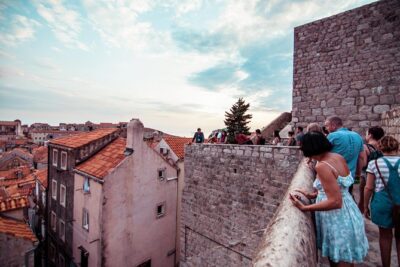
Dubrovnik Combo: Old Town & Ancient City Walls
Read our review →
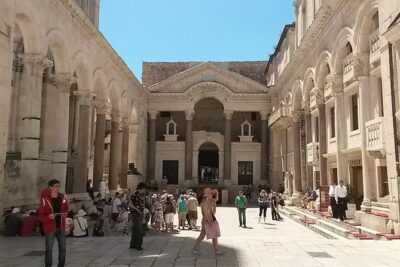
SPLIT-PRIVATE Walking Tour of Diocletian’s Palace & Old Town
Read our review →
Split History and Gastro Small-Group Tour with Food and Drinks
Read our review →Browse the lists this tour appears in