
Review · SPLIT
Experience Split History Walking Tour With Local Historian
Split is easiest to understand when you stop treating Diocletian’s Palace as a single ancient monument. This living Roman palace is woven into the modern city, with homes, cafés, churches, shops, and narrow lanes tucked into its old walls. This two-hour walk brings those layers together with a local historian, often Boris, who explains the site through stories, pictures, and daily life.
I like the small maximum of 12 people, which gives you a fair chance to ask questions. I also like the 3D reconstruction images, especially when broken walls make it hard to picture the palace as Emperor Diocletian knew it. The main drawback is the pace: two hours covers a lot, so you will get a useful city introduction rather than a close study of every monument.
Key points before you book
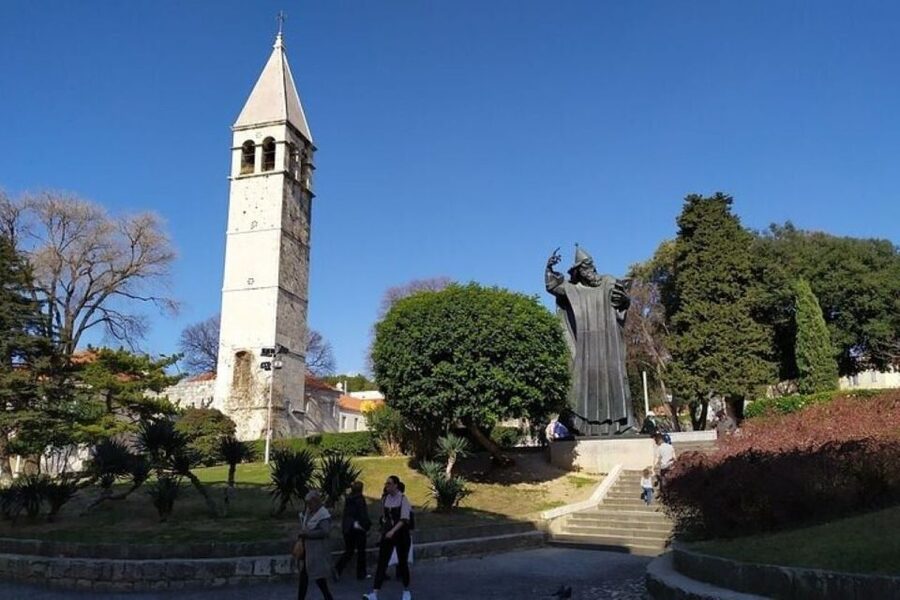
- Start at the Golden Gate: Enter Diocletian’s Palace through the old northern entrance and begin with Split’s most famous statue, Gregory of Nin.
- See the palace in layers: Peristil, Jupiter’s Temple, the Vestibule, the cathedral, and the cellars each show a different part of Roman and later Split.
- Connect Rome with local life: The walk moves from imperial architecture to the Riva promenade and the everyday pomalo way of life.
- Look for small details: You will hear about a very narrow church, a very narrow street, a lost sphinx head, and a secret garden.
- Finish in medieval Split: Fruit Square and People’s Square show that the city’s story continued long after the Roman emperor left.
- Useful practical format: The tour lasts two hours, runs in English or Croatian, and costs $37 per person.
Why this Split walking tour works
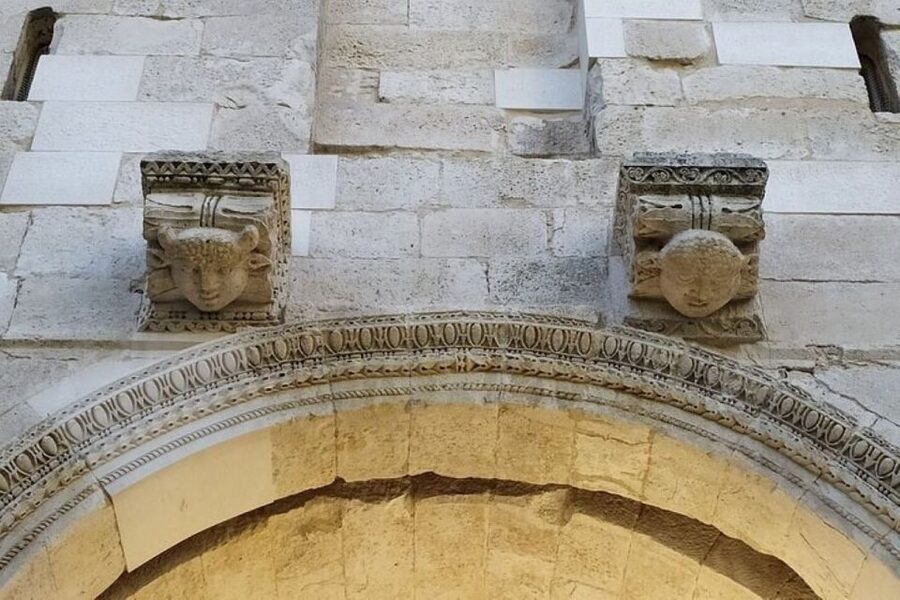
Many tours of Split focus only on Diocletian’s Palace, then stop when the Roman marble runs out. This walk takes a broader view. You begin with the emperor and his retirement palace, then follow the city as it changed through the medieval period and into modern Croatian life.
That matters because the palace is not a sealed archaeological park. People still live and work inside it. The ancient walls form part of the city center, while later buildings fill the old Roman spaces. You will hear how local Croat communities adapted the palace over the centuries, rather than simply hearing about Rome as a distant, finished chapter.
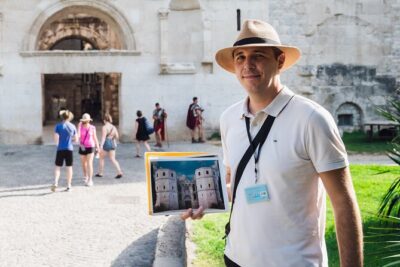
The guide is a licensed local professional with a master’s degree in history. Boris is the guide named in several recent bookings, and his approach includes plenty of time for questions, local food suggestions, and explanations of Croatian culture, religion, and community life. Guide availability can vary, but the experience is designed around a historian rather than a script-reading escort.
The cost is $37 per person. That is a fair price if you want context and orientation before exploring Split on your own. You are paying for a small group, a trained guide, and a carefully connected route through the palace and old town. If you only want quick photographs of the main square, it may feel like more than you need. If you want to understand why the city looks the way it does, the price makes better sense.
More History Walking Tours in Croatia
- Dubrovnik Old Town History Walking Tour
★ 5.0 · 1,684 reviews - Dubrovnik: Ancient City Walls & Wars Walking Tour
★ 5.0 · 1,270 reviews - Zagreb: City & History Walking Tour & WW2 Tunnels
★ 4.9 · 1,202 reviews
Meeting Gregory of Nin at the Golden Gate
The tour begins at the Golden Gate, the northern entrance to Diocletian’s Palace. Look for the eight-meter statue of Gregory of Nin directly opposite the gate. This is an easy meeting point because both landmarks are large, central, and familiar in Split.
The opening explanation covers Split and Croatia, then focuses on the name, purpose, and importance of the Golden Gate. You enter the palace through the same general approach used by the Roman emperor and empress, which gives the first few minutes a strong sense of arrival.
Gregory of Nin adds a later Croatian layer to the setting. The guide explains who he was and why the statue matters to Split. The stop lasts about 15 minutes at the gate, followed by around eight minutes with Gregory, so you get more than a quick greeting before moving inside.
Take a moment to orient yourself here. The palace has many lanes and entrances, and the old city can feel confusing at first. Starting at the Golden Gate gives you a clear reference point for the rest of the walk.
Inside Diocletian’s Palace and across Peristil
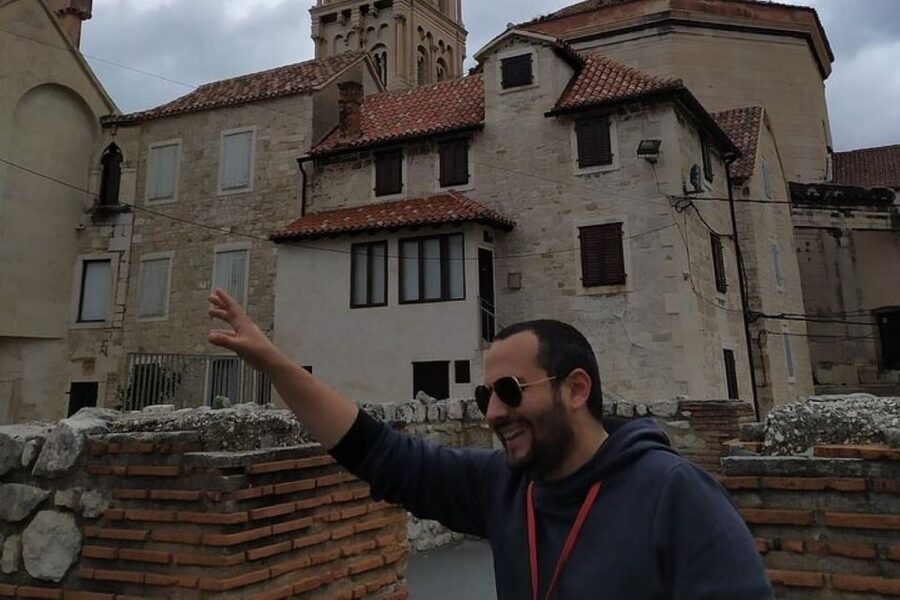
The palace visit begins with the broad idea behind Diocletian’s retirement home. The guide explains the emperor’s life in and outside the palace, along with why the complex was built and how its purpose changed over time.
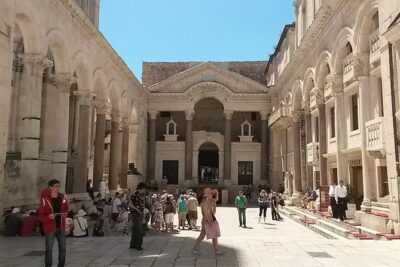
Peristil, the main palace square, is the visual center of the tour. Its monumental surroundings help you picture the formal Roman setting that once greeted visitors approaching the emperor. The tour spends about 15 minutes here, enough to discuss the square’s design, function, and later changes without turning the stop into a long lecture.
I especially value this part of the route because Peristil can look simple at first glance. A guide points out what your eye might skip, including the relationship between the square, the cathedral, the Vestibule, and the palace’s ceremonial spaces.
The itinerary also includes a brief secret stop, listed at about five minutes. The name is not specified in advance, so the precise feature may depend on the guide’s route. Expect a small discovery rather than a major monument, with the guide using the stop to show how much of Split’s past is tucked beside ordinary city life.
Jupiter’s Temple and the cathedral’s Roman past
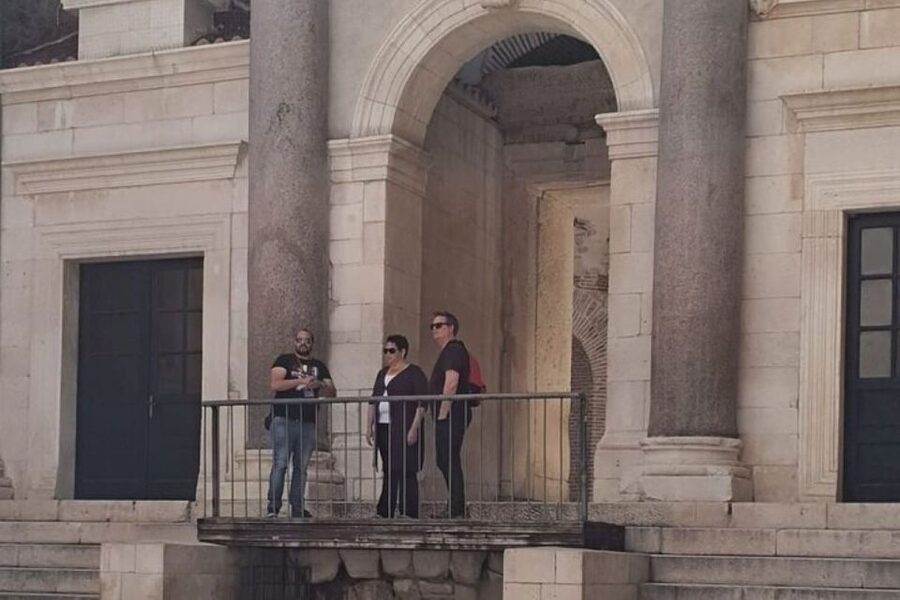
Jupiter’s Temple receives about 10 minutes of guided attention. This stop gives you a chance to consider how religious spaces inside the palace changed as Split’s rulers and residents changed. The guide connects Roman beliefs with the later Christian use of the area.
The nearby Cathedral of Saint Domnius is another major point. Its setting is especially useful for understanding how Roman and medieval Split overlap. You are not simply moving from one attraction to another. You are seeing how an older structure could take on a new religious role and remain part of the city’s daily identity.
The tour also includes a two-minute stop at another lesser-known feature. The short timing suggests that this is a quick look or explanation, not a full visit. That is typical of this tour: it gives you a map of things worth returning to instead of asking you to spend the whole morning at each site.
If you want extended interior time inside the cathedral or the palace cellars, plan to return later. This walk helps you decide where your extra time will be best spent.
Same old streets, another chapter:
- Walking Tour of Split with a ‘Magister’ of History
★ 5.0 · 1,122 reviews - Dubrovnik Combo: Old Town & Ancient City Walls
★ 5.0 · 1,019 reviews - Split Walking Tour with Professor of History
★ 5.0 · 926 reviews - Game of Thrones & History of Dubrovnik Tour
★ 5.0 · 628 reviews
The Vestibule, palace cellars, and the shape of Roman life
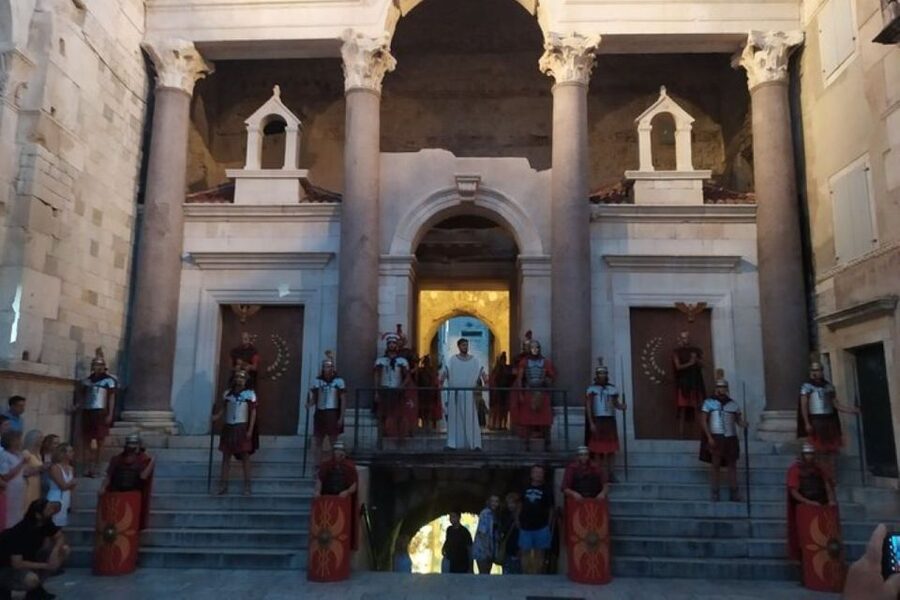
The Vestibule gets about 10 minutes. Its form helps show how the palace was organized and how visitors moved toward more private or ceremonial areas. The guide uses facts, legends, and stories to give the space more meaning than a quick photograph would provide.
The Diocletian’s Cellars receive another 10-minute visit. The central substructures are among the clearest places to understand the palace’s original layout because their plan reflects the rooms above. They also offer a useful contrast with the busy streets at ground level.
The guide uses 3D reconstruction images and a display book during the walk. This is one of the tour’s most practical features. Ancient remains can be hard to read when you see only fragments, but a reconstruction lets you compare the surviving stone with the building that once occupied the space.
The cellars are also one reason to wear comfortable shoes. The walk covers old paving, narrow lanes, and several historic areas. Water and a hat or cap are sensible on sunny days, particularly during the warmer months.
Riva and Split’s pomalo rhythm
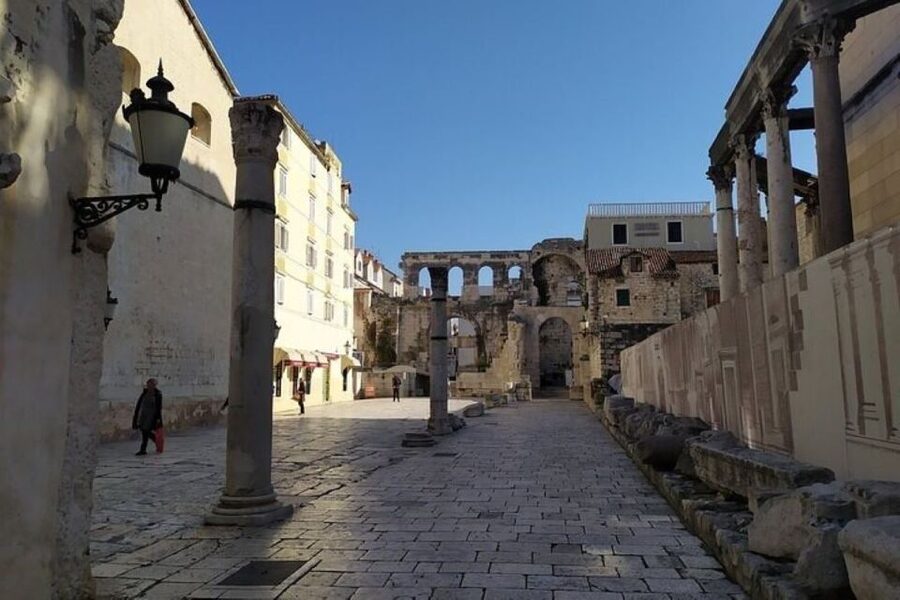
After the palace, the route reaches Riva, Split’s waterfront promenade. The stop is short, about five minutes, but it serves an important purpose. Here the guide explains the link between Roman and medieval Split and introduces the local pomalo way of life.
Pomalo is a relaxed approach to daily life, and the guide uses it as a way to discuss how people in Split spend time, meet one another, and relate to their city. This keeps the tour from becoming a string of dates and architectural terms.
Riva also gives you a change of scale. Inside the palace, the streets and walls press close around you. At the promenade, you can step back and consider how the old center connects with the wider city.
I would pay attention to local recommendations at this point. One guide recommendation for ice cream proved particularly useful, and food suggestions can be a practical bonus after a warm walk. The tour does not include food or drinks, so you will pay for anything you choose to enjoy afterward.
Fruit Square and People’s Square
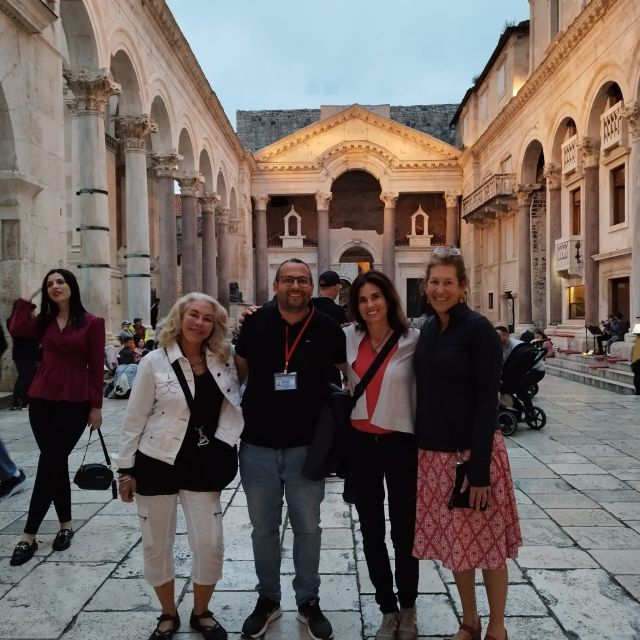
Fruit Square is the first of two medieval squares on the final part of the route. Its name, architecture, and past activity help explain how Split developed beyond the Roman palace. You spend about 10 minutes here, listening to stories about the square and the buildings around it.
People’s Square receives another 10 minutes and marks the end of the tour at Narodni trg. Together, these two squares widen the story of Split. You get the Roman foundation, the medieval city that grew around it, and the modern center where people still gather.
This ending works well for practical sightseeing. By the time you reach People’s Square, you have a better sense of the old town’s layout and can choose where to return. The route does not finish back at the Golden Gate, so note that you end in a different part of the historic center.
The small discoveries that make the walk memorable
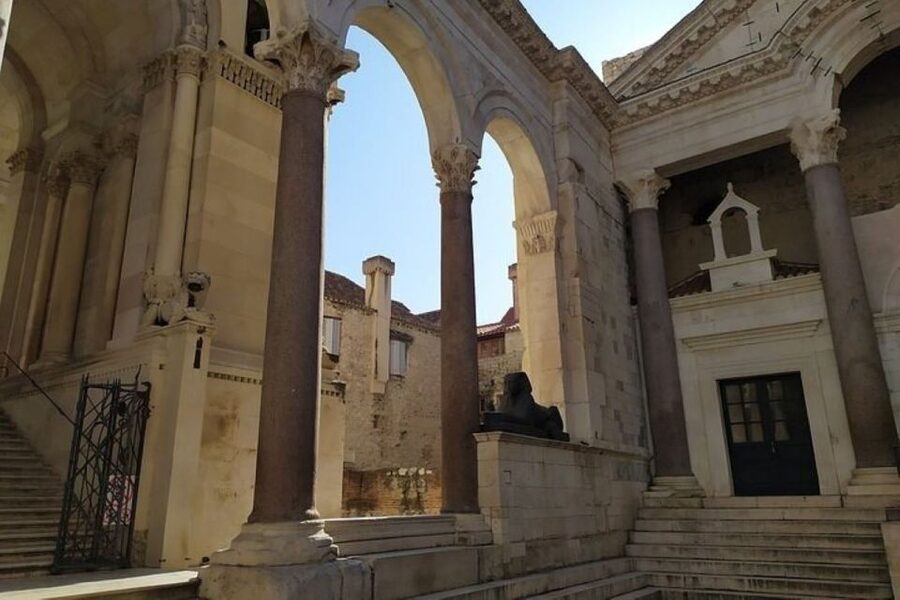
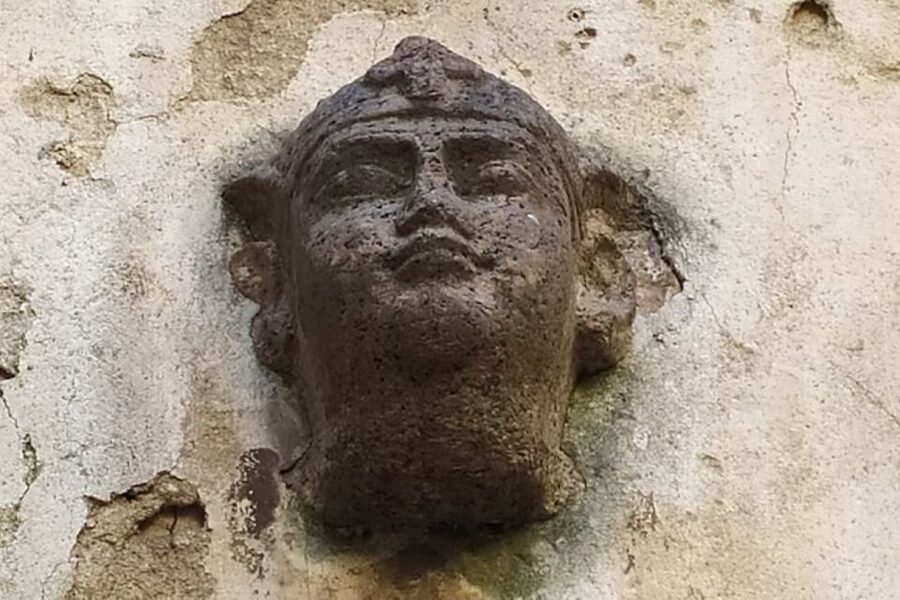
The tour reserves some of its most unusual details for narrow corners and overlooked features. You hear about the narrowest church, the narrowest street, a lost sphinx head, and a secret garden.
These details are not the reason to book the walk by themselves. Their value is that they train you to look closely. Once the guide points out how much has been altered, reused, or concealed, you begin noticing the way modern Split fits around ancient stone.
The lost sphinx head is tied to the palace’s Egyptian elements, while the narrow lanes show how a formal imperial complex became an ordinary city. The exact amount of time spent at each feature is brief, but the stories give you useful leads for a later solo wander.
Group size, pace, and accessibility
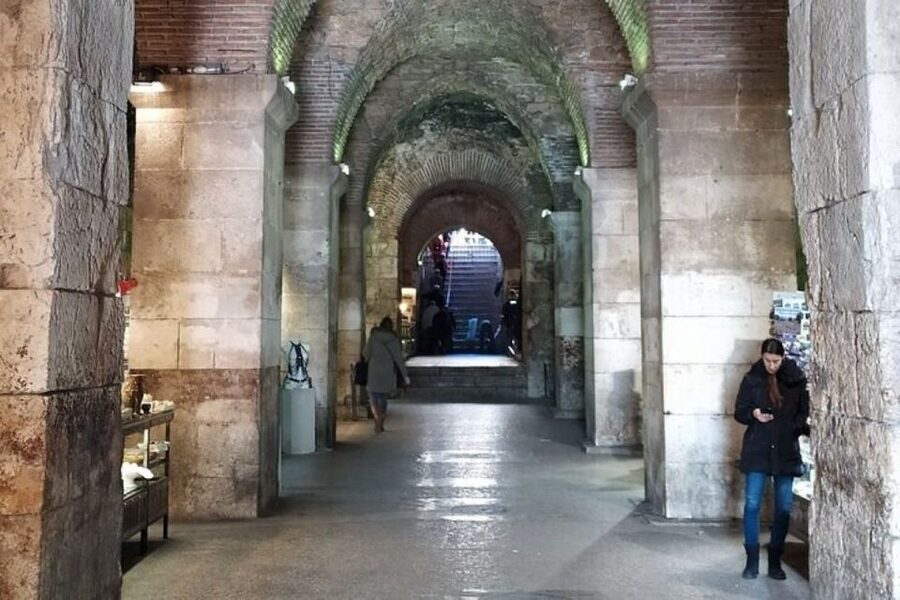
The group is limited to 12 people. That is small enough for questions and easier communication in narrow streets, though it is not the same as a private tour. A group of five can feel especially personal, while a full group of 12 will naturally have less individual attention.
The pace is described as easy, but the tour is still a walking route through old urban spaces. People with mobility impairments and wheelchair users should not book this experience. Comfortable shoes are recommended, and water is a sensible addition.
The two-hour length is another strength. It fits well on a first day in Split, before a ferry connection, or as a morning introduction to the old town. It is also short enough that you can return to the cathedral, cellars, or a square afterward.
The tour is offered in English and Croatian. The guide is live rather than audio-based, which matters when you want to ask about a detail, a local custom, or a place to eat.
Who will get the most from this tour
I would choose this tour if you are visiting Split for the first time and want to understand the old center before exploring it alone. It suits people who like history but also want food tips, local customs, legends, and a sense of how residents use the city now.
It is particularly useful for travelers who find Roman ruins hard to picture. The 3D images and display book give you a visual aid, while the guide connects the remains to later Croatian life.
Families with older children may also appreciate the short stories about secret corners and lost pieces. The route is less suitable for anyone who wants a slow, highly detailed archaeological study, or for visitors who cannot manage uneven historic streets.
Should you book the Split History Walking Tour?
Book it if you want a small-group orientation to Split that joins Roman, medieval, and modern life in one route. The strongest points are the historian guide, the accessible explanations, the reconstruction images, and the careful attention to details you might miss alone.
Skip it if you prefer to set your own pace, spend a long time inside each monument, or avoid walking on old city surfaces. At $37, the tour offers good value for a first visit, especially when Boris is leading and you want thoughtful answers rather than a quick list of dates.
Plan to bring comfortable shoes, water, and sun protection. After the tour, use the guide’s suggestions to revisit the palace cellars, cathedral, or a favorite square at your own speed.
FAQ
How long does the Split History Walking Tour last?
The tour lasts two hours.
What is the price per person?
The price is $37 per person.
Where does the tour begin?
The meeting point is at the Golden Gate, the northern gate of Diocletian’s Palace, opposite the statue of Gregory of Nin.
Where does the tour finish?
The tour finishes at Narodni trg, also known as People’s Square.
What languages are available?
The live guide speaks English or Croatian.
How many people can join the tour?
The group has a maximum of 12 participants.
Is a professional historian included?
Yes. The tour includes a local professional guide with a master’s degree in history.
Are food and drinks included?
No. Food and drinks are not included in the price.
Is the tour suitable for wheelchair users?
No. The experience is not suitable for wheelchair users or people with mobility impairments.
Latest history tours reviewed in Croatia
- Dubrovnik: Small-Group Guided Old Town History Walking Tour★ 4.9 · 37 reviews
- Dubrovnik: Game of Thrones & History Tour★ 4.7 · 72 reviews
- Dubrovnik History and Game of Thrones Locations Tour★ 4.8 · 49 reviews
- Dubrovnik Old Town: Night tour with History, Wine & Bites★ 4.7 · 59 reviews
- Dubrovnik Old Town: Easy paced and accessible History tour★ 4.9 · 20 reviews
- Dubrovnik: Historical Tour with Game of thrones details★ 4.9 · 43 reviews
- Dubrovnik: History and Game of Thrones Walking Tour★ 4.7 · 85 reviews
- Dubrovnik: Old Town History Walking Tour★ 4.9 · 474 reviews
Split History Tours, compared.
Walking Tour of Split with a ‘Magister’ of History
Read our review →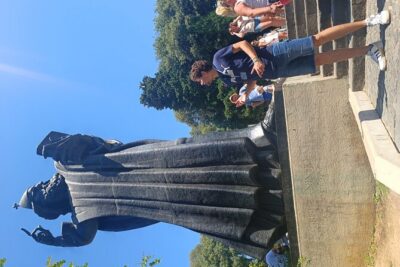
SPLIT-PRIVATE Walking Tour of Diocletian’s Palace & Old Town
Read our review →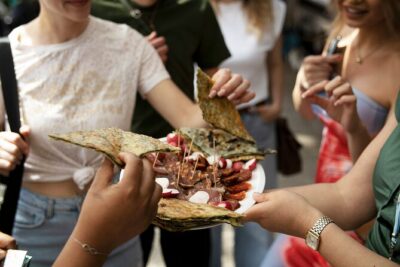
Split History and Gastro Small-Group Tour with Food and Drinks
Read our review →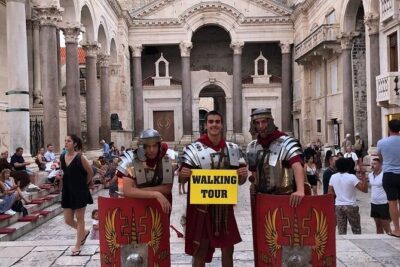

Split: Historical Tour of Salona, Klis Fortress and Trogir
Read our review →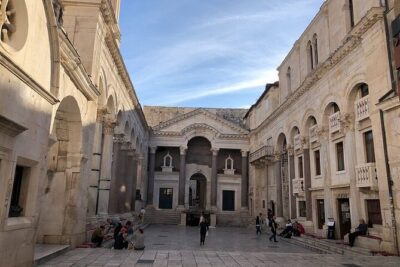
History & Cultural Walking Tour of Split and Diocletian’s Palace
Read our review →
Jewish Heritage & Diocletian’s Palace Private Split Tour
Read our review →Browse the lists this tour appears in