Review · SPLIT
SPLIT-PRIVATE Walking Tour of Diocletian’s Palace & Old Town
Diocletian’s Palace is not a lonely ruin. It is the working heart of Split, with homes, cafés, shops, lanes, and public squares built into a Roman emperor’s retirement residence. This private walk brings that odd, fascinating mix into focus, especially in the well-preserved palace cellars and around the Peristyle.
I like the small private format, which lets Joško, Josko, or Joseph adjust the pace and answer questions. I also like the guide’s gift for making long stretches of Roman and Croatian history easy to follow, with humor and local stories rather than a dry list of dates.
The main consideration is that the advertised tour lasts about two hours, so the route gives you a broad introduction rather than a slow examination of every monument. The Palace cellars, cathedral interior, and Temple of Jupiter also require extra payment.
Key points to know before booking
- Private for your group: You can book the entire experience for up to 12 people at $240 per group.
- A living Roman palace: Diocletian’s Palace was built in AD 305 and is now woven into everyday Split.
- Strong local guiding: Joško and the other named guides are praised for clear storytelling, humor, and personal attention.
- The cellars cost extra: Entry to the Museum of Diocletian’s Cellars is €10 per person.
- Several optional paid stops: Cathedral entry is €3.50 per person, and the Temple of Jupiter costs €1.50 per person.
- A useful first tour: The route covers the Riva, Old Town, main palace gates, squares, and landmarks, helping you get oriented quickly.
Why Diocletian’s Palace feels different from a normal ruin
The most interesting part of this walk is the palace itself. Diocletian’s Palace is not set apart from modern life. It forms much of central Split, and the route takes you through spaces where ancient stone, medieval construction, and present-day city life occupy the same few streets.
Roman Emperor Diocletian built the palace in AD 305. He used it as a private residence after stepping away from imperial rule. That basic fact becomes easier to grasp when you see the division between public ceremonial areas and the private sections connected with the emperor’s residence.
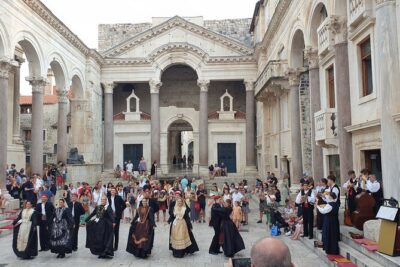
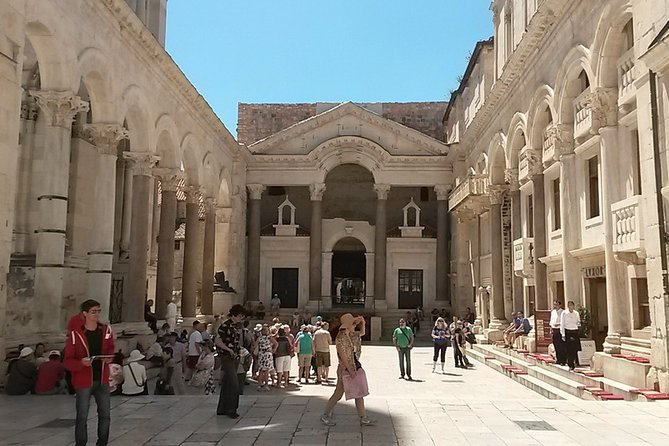
The Peristyle, or imperial square, is the visual center of the palace. The Vestibule marks the main entrance to the private residence, while the Golden Gate served as the palace’s grandest entrance. The route also points out the Temple of Jupiter, later adapted for Christian use, and the Cathedral of Saint Domnius, which occupies the former mausoleum of Diocletian.
You will not simply walk past these sites and collect names. The guide’s job is to connect the stones with the rulers, wars, religious changes, and everyday life that shaped Split over more than 1,700 years. That storytelling is the reason this tour works better than a quick self-guided circuit for anyone who wants context.
More Castle and Palace History Tours in Croatia
- Split: Historical Tour of Salona, Klis Fortress and Trogir
★ 4.1 · 108 reviews - History & Cultural Walking Tour of Split and Diocletian’s Palace
★ 5.0 · 104 reviews - Jewish Heritage & Diocletian’s Palace Private Split Tour
★ 5.0 · 80 reviews
Starting on the Riva promenade
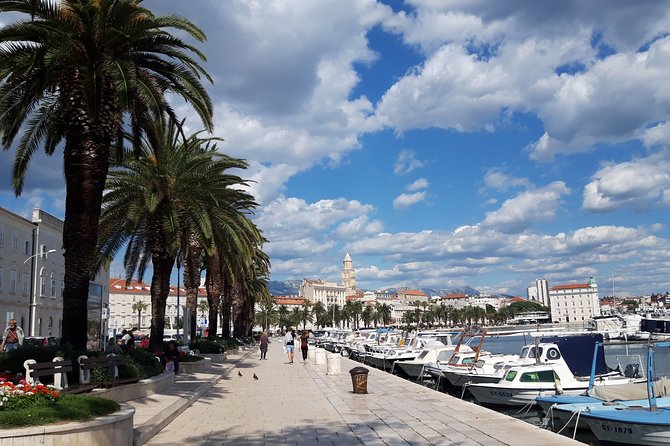
The walk begins and ends at the main Riva promenade, at Obala Hrvatskog narodnog preporoda 22. This is a practical meeting point near the waterfront and public transportation, and it gives you an immediate sense of Split’s position between the palace and the harbor.
The Riva is not the main history lesson, but it is a useful opening scene. You begin in the modern city, then move inland toward the Roman core. At the end, you return to the same point, which makes the tour easy to fit around other plans.
Because the tour is private, you can ask questions at the start about restaurants, sights, or places to revisit later. Several experiences with these guides included advice about additional points of interest, and that can be especially helpful if this is your first few hours in Split.
Entering through the palace gates
The Golden Gate is the most impressive of the palace entrances included on the walk. It gives you a sense of scale and ceremony before the route narrows into the older streets inside.
The guide also explains the palace’s layout through the Vestibule, the formal entrance to Diocletian’s private residence. Today, the passage between Roman structures and later buildings can feel confusing. A well-paced explanation helps you understand which spaces served the emperor, which were public, and how the city grew inside the old walls.
You will also see the statue of Grgur Ninski, an important Croatian historical figure. The stop adds a national story to the Roman focus and helps widen the tour beyond Diocletian alone.
The route then reaches Fruit’s Square, officially Trg Braće Radić. This former green market is associated with the statue of Marko Marulić, often called the father of Croatian literature. It is a good reminder that Split’s identity is not only Roman. The city’s cultural and medieval layers matter just as much.
The Peristyle and the Cathedral of Saint Domnius
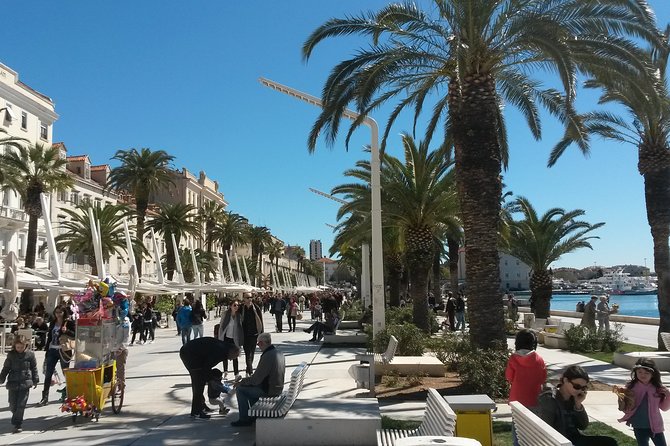
The Peristyle is the palace’s heart and the place where the original imperial ambition is easiest to picture. The square was built for ceremony, and the surrounding stonework gives the guide a natural setting for explaining Diocletian’s rule and the palace’s purpose.
The tour sees the Cathedral of Saint Domnius from outside. The cathedral is an especially useful stop because it shows how a Roman imperial structure was later absorbed into Christian Split. You can choose to go inside, but admission is not included and costs €3.50 per person.
That optional fee is modest, but the short tour timetable matters. If you want to enter, tell the guide early so you understand how the stop will fit into the route. If you prefer to keep moving, the exterior explanation still gives you the main historical connection.
More History Walking Tours in Croatia
- Dubrovnik Old Town History Walking Tour
★ 5.0 · 1,684 reviews - Dubrovnik: Ancient City Walls & Wars Walking Tour
★ 5.0 · 1,270 reviews - Zagreb: City & History Walking Tour & WW2 Tunnels
★ 4.9 · 1,202 reviews - Walking Tour of Split with a ‘Magister’ of History
★ 5.0 · 1,122 reviews
Old Split through People’s Square
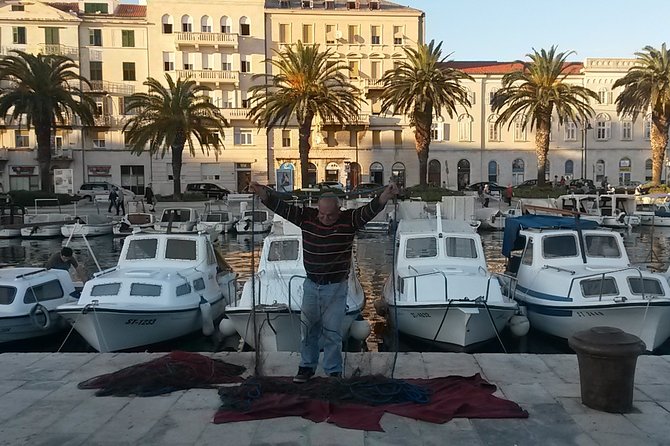
Narodni Trg, or People’s Square, is the largest and liveliest piazza in the Old Town. It offers a change of mood from the enclosed palace spaces, with a broader urban setting and a clearer sense of medieval Split.
The Old Town portion is not just filler between palace landmarks. It shows how the city expanded, changed use, and carried on after the Roman period. The guide brings together the Roman, medieval, and modern sections so you can see Split as one continuing city instead of a set of unrelated monuments.
If you want a longer stroll through side streets, markets, and the Old Town, keep your expectations realistic. The experience has a packed route, and much of the time is given to the palace and its history. Some people may prefer more unstructured walking, while others will value the amount of information covered in a short time.
The Temple of Jupiter and the 500-year-old clock
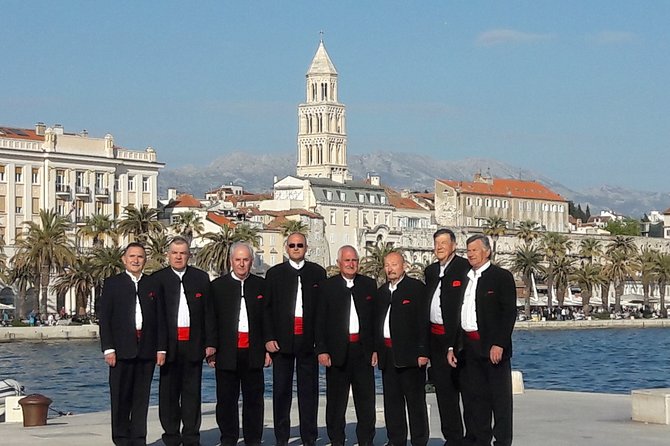
The Temple of Jupiter is viewed from outside, with an optional interior visit costing €1.50 per person. The guide uses it to explain the religious world of the Roman palace and the way the building’s role changed after antiquity.
The City Clock is another small but memorable detail. The tour points out its 24-hour face and its reported 500-year age. It is exactly the kind of feature you could walk past without noticing, yet once identified, it gives the Old Town another layer of character.
These short stops work well because they do not require you to spend long periods at each site. The guide keeps the route moving while adding the kind of local detail that makes an independent walk afterward more rewarding.
The palace cellars are the tour’s strongest stop
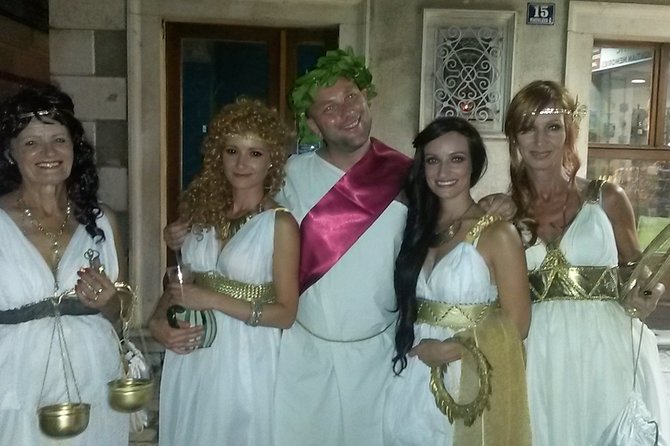
The Diocletian Palace Substructures are the most important paid part of the experience. They are described as the best-preserved section of the palace, and they help you understand the shape of the upper rooms and imperial residence above.
Entry to the Museum of Diocletian’s Cellars is not included. The fee is €10 per person, so add it to the group’s budget if you want the full palace experience.
The cellars also explain why the tour can feel different from a standard sightseeing walk. You spend meaningful time underground, among the preserved foundations and storage areas, rather than simply viewing the palace from streets and squares. If you want only open-air views and photographs, this may be more than you need. If you want to understand how the palace was built and preserved, the extra fee is worthwhile.
The underground setting can also affect comfort. Wear practical shoes and be ready for a walking route that includes uneven historic surfaces. The tour information says most people can participate, but it does not promise a step-free route or provide detailed accessibility information, so contact the provider if that matters for your group.
Why the private format improves the experience
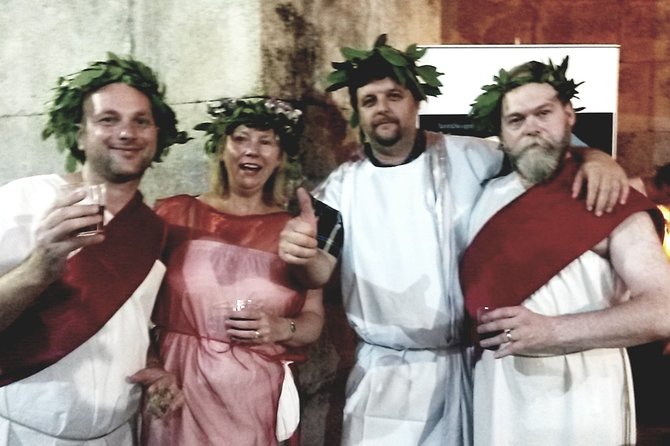
The cost is $240 per group of up to 12 people. For one or two people, that is a significant price for a two-hour walk. For a larger family or group, the calculation becomes more favorable because the cost does not rise per person.
The private format gives you several real advantages. You do not share the guide with a large mixed group, you can ask questions without holding up strangers, and the guide can adjust explanations for adults, children, or people with a strong interest in Roman history.
Family groups have found the format useful because the guides mix facts with humor and stories. Teenagers and younger children are more likely to stay with the tour when the information is presented as a sequence of characters, rulers, and changes rather than a lecture.
The private setting can also make practical matters easier. One family had a rainy-day tour rescheduled, and another group appreciated the guide finding shade while explaining a site. Those details are not guaranteed, but they show the value of having a guide who can respond to the group in front of him.
The guides and their storytelling style
Joško receives the most consistent praise in the supplied material, with Josko, Josic, Joko, Joseph, and Joska also appearing in different accounts. The names may reflect spelling differences or different guide references, so ask at booking if you want to confirm who will lead your departure.
The strongest feature is the presentation. The guides explain Roman history, the palace, Split’s rulers, and Croatian culture in clear sections, with humor woven through the walk. They are especially good at making a large amount of information manageable in a short time.
That matters in Split because the city can look simple at first glance. A doorway may belong to one period, a wall to another, and a square may have served several purposes over time. Without explanation, you see attractive stone. With a good guide, you understand why the city looks the way it does.
The tour is also a good match for experienced sightseers who still want a local framework. One account describes the guide as professional, friendly, and highly detailed without losing the human side of the city. You can expect history first, but not history without personality.
Timing, tickets, and practical planning
The experience is advertised at approximately two hours and is offered in English. The listed route contains many short stops, so the pace is active, though the private format can allow some flexibility.
Budget for optional admissions separately:
- Museum of Diocletian’s Cellars: €10 per person
- Cathedral of Saint Domnius: €3.50 per person
- Temple of Jupiter: €1.50 per person
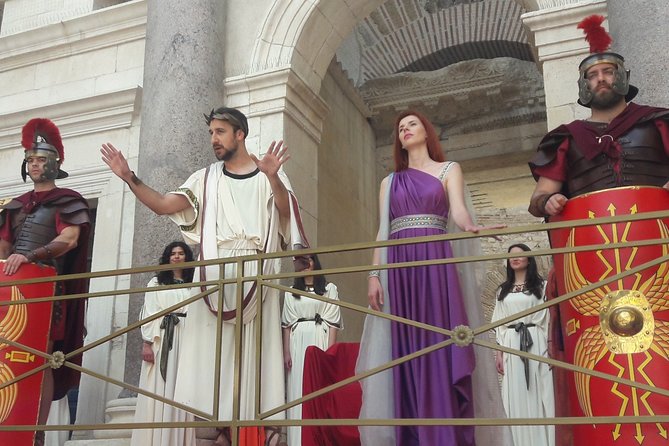
The palace and Old Town portions themselves list no admission charge. Gratuities for the guide are not included, and the tour does not include a costumed theater show or similar performance.
The booking confirmation is sent at the time of booking. Free cancellation is available up to 24 hours before the start time. Changes or cancellations within 24 hours are not accepted for a refund, and the activity depends on good weather and a minimum number of participants. If poor weather or an unmet minimum cancels the tour, you are offered another date, another experience, or a full refund.
Who should book this Split walking tour
I would choose this tour if you want a strong introduction to Split before exploring independently. It is particularly useful for first-time visitors, families, history fans, and anyone who wants the Roman and medieval layers explained in plain language.
It also suits people arriving with limited time. In about two hours, you see the Riva, palace entrances, the Peristyle, Old Town squares, the cathedral exterior, the Temple of Jupiter, the clock, Grgur Ninski’s statue, and the cellars if you pay for entry.
I would think twice if you want a relaxed photography walk, a long food-focused outing, or a tour devoted mainly to modern Split. The route is packed with historical explanation, and the cellars take a central role. You should also decide in advance whether the optional admissions fit your budget.
Should you book it?
Book this private Split walking tour if you want the city’s stones to make sense. The strongest reasons are the local guide, the private pace, and the chance to connect Diocletian’s AD 305 palace with the medieval Old Town and modern Riva.
For a group of several people, $240 can be good value, especially when divided among the group. Add the €10 cellar admission if you want the most complete palace visit, and expect to pay separately for the cathedral or Temple of Jupiter if you enter.
I would book it early if your dates are fixed, since the experience is often reserved well ahead of time. Choose it as a first activity in Split, then use what you learn to return on your own to the squares, gates, and palace passages that deserve a second look.
FAQ
Where does the tour start and finish?
It starts at Obala Hrvatskog narodnog preporoda 22 on Split’s main Riva promenade and ends back at the same meeting point.
How long does the tour last?
The tour lasts approximately two hours.
Is this a private tour?
Yes. Only your group participates, with a maximum group size of 12 people.
What language is offered?
The tour is offered in English.
Is admission to Diocletian’s Palace included?
The listed palace and Old Town stops do not require an admission fee, but entry to the Museum of Diocletian’s Cellars is not included and costs €10 per person.
Does the cathedral admission cost extra?
Yes. The Cathedral of Saint Domnius is viewed from outside, while optional interior admission costs €3.50 per person.
Does the Temple of Jupiter admission cost extra?
Yes. The temple is viewed from outside, and optional interior admission costs €1.50 per person.
Are gratuities included?
No. Gratuities for the guide are not included.
Can I cancel for a full refund?
Yes, if you cancel at least 24 hours before the experience start time. Cancellations or changes made less than 24 hours in advance are not accepted for a refund.
More Private History Tours in Croatia
- Private History Split Walking Tour in English
★ 5.0 · 159 reviews - Dubrovnik Jewish Heritage Private Walking Tour
★ 5.0 · 121 reviews
More Old Town and Historic Centre Walks in Croatia
- Dubrovnik Combo: Old Town & Ancient City Walls
★ 5.0 · 1,019 reviews - Dubrovnik: Old Town History Walking Tour
★ 4.9 · 474 reviews - Dubrovnik Old Town: Small-Group Walking Tour With A Local
★ 5.0 · 123 reviews - Dubrovnik Old Town: Night tour with History, Wine & Bites
★ 4.7 · 59 reviews
Latest history tours reviewed in Croatia
- Experience Split History Walking Tour With Local Historian★ 5.0 · 28 reviews
- Dubrovnik: Small-Group Guided Old Town History Walking Tour★ 4.9 · 37 reviews
- Dubrovnik: Game of Thrones & History Tour★ 4.7 · 72 reviews
- Dubrovnik History and Game of Thrones Locations Tour★ 4.8 · 49 reviews
- Dubrovnik Old Town: Night tour with History, Wine & Bites★ 4.7 · 59 reviews
- Dubrovnik Old Town: Easy paced and accessible History tour★ 4.9 · 20 reviews
- Dubrovnik: Historical Tour with Game of thrones details★ 4.9 · 43 reviews
- Dubrovnik: History and Game of Thrones Walking Tour★ 4.7 · 85 reviews
Split History Tours, compared.
Walking Tour of Split with a ‘Magister’ of History
Read our review →

Split History and Gastro Small-Group Tour with Food and Drinks
Read our review →

Split: Historical Tour of Salona, Klis Fortress and Trogir
Read our review →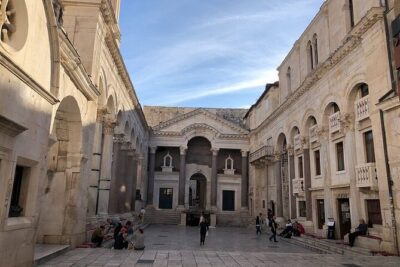
History & Cultural Walking Tour of Split and Diocletian’s Palace
Read our review →
Jewish Heritage & Diocletian’s Palace Private Split Tour
Read our review →