
Review · SPAIN
Alcalá World Heritage Tour
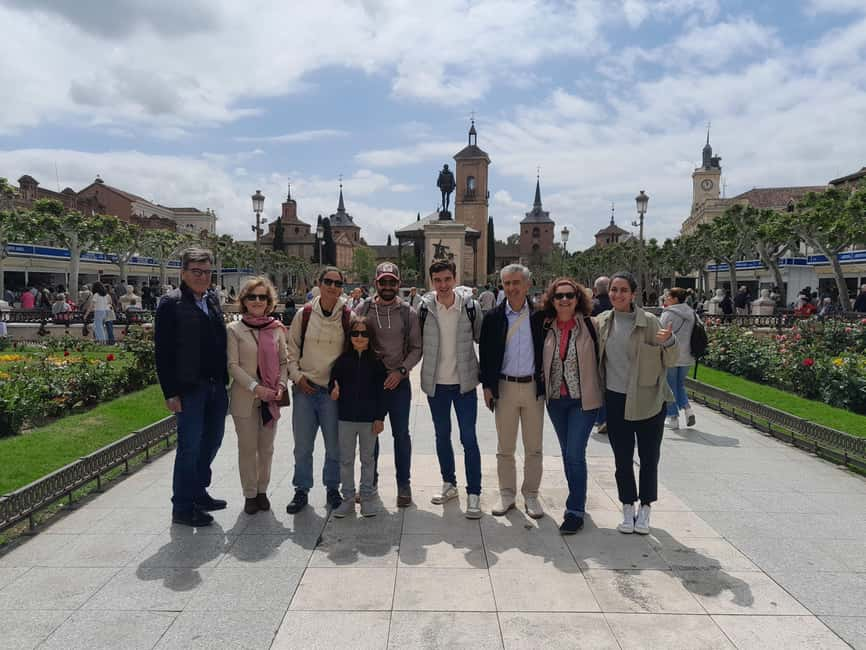
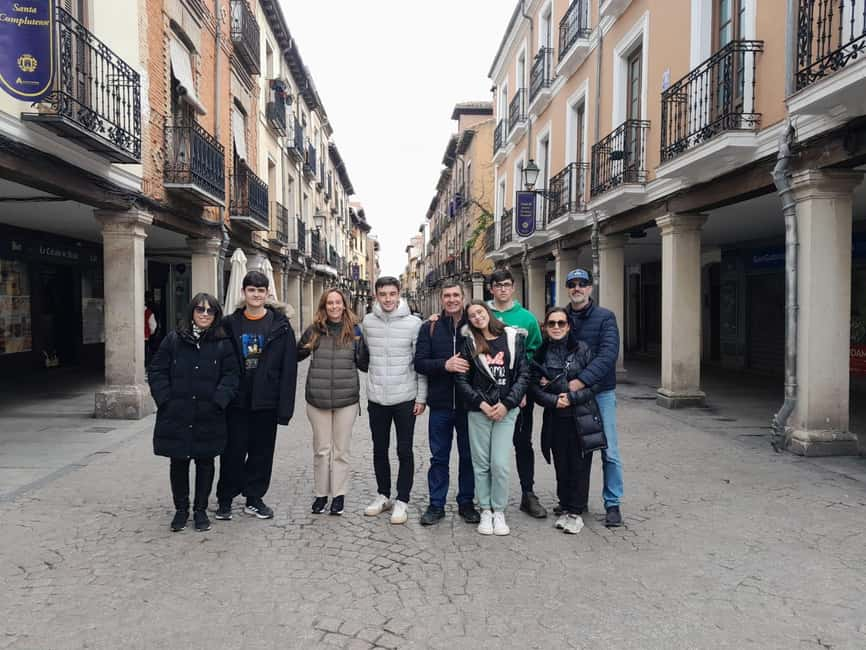
Alcalá de Henares tells its story in a compact historic center, where Cervantes, Cardinal Cisneros, three faiths, and Spain’s university tradition all meet on one walk. The tour begins at the quieter Plaza de las Bernardas and builds toward the old University of Alcalá, the city’s grand finale.
I like the route’s steady flow and its mix of famous sights with less obvious corners, especially the Cervantes birthplace area and Oidor Chapel, where his baptismal certificate is kept. I also like David Alba’s lively approach: he brings in good events, hard chapters, and local counter-stories instead of giving you a string of dates. The main caution is language. The activity information says the live tour is in Spanish, while the description asks English speakers to contact David, so confirm the language before paying.
Key points at a glance
- A $11 introduction to Alcalá: The price is low for a guided walk through the city’s main historic sights.
- David Alba leads the tour: He is a certified guide and a tourism graduate from the University of Alcalá de Henares.
- The route ends at the university: The 15-minute visit to the old university gives the walk a clear climax.
- Cervantes is part of the city story: You’ll see his birthplace museum, the old Hospital de Antezana, Cervantes Square, and his baptismal site.
- Mostly an exterior walk: The only listed interior visit is the Capilla del Oidor, except for the 6:00 pm group.
- Spanish is the stated tour language: Contact the provider in advance if you need English.
Why Alcalá makes a good day from Madrid
Alcalá de Henares is in the Community of Madrid, but it feels like a proper historic city rather than a quick city-center extension. Its story reaches back more than two thousand years, and the old quarter gathers many of its key chapters within walking distance.
That compact layout is the reason this tour works. You do not spend the day riding between scattered sights. Instead, you move from square to square, along the old main street, and into the university quarter. The route gives you a useful framework before you return to any place that catches your eye.
The city is known as a World Heritage City and as the first university city in the world, a role linked to Cardinal Cisneros. The tour also introduces Alcalá as a city of three cultures, then connects that past with Miguel de Cervantes Saavedra, author of Don Quixote de la Mancha.
I like this kind of introduction because Alcalá is easy to underestimate. A short look at the main street and university can leave you with a pretty town but little sense of why it matters. A guide gives the buildings a purpose and helps you see how religion, education, literature, and civic life overlap.
More UNESCO World Heritage Tours in Spain:
- World Heritage Shirakawa-go and Experience Tours from Kanazawa
★ 5.0 · 4,049 reviews - From Tirana: Berat UNESCO Heritage & Belshi Lake Tour
★ 4.9 · 3,863 reviews - Bali: Tanah Lot UNESCO World Heritage Sites Full-Day Tour
★ 4.7 · 1,947 reviews
Starting quietly at Plaza de las Bernardas
Meet at the obelisk in Plaza de las Bernardas. David says he will be easy to recognize, wearing a card around his neck marked Discover with David. That is a useful detail in a city where several groups may gather at popular meeting points.
The square is a smart place to begin because it is less hectic than the center of the historic quarter. The opening explanation lasts about five minutes, enough to set the scene without using up your attention before the major sights.
You’ll also see the Arch of San Bernardo as part of the opening area. The tour does not treat this first stop as a major visit, but it helps establish Alcalá’s old-town scale. From here, the route gradually moves toward the city’s better-known monuments.
The Archbishop’s Palace and Casa de la Entrevista
The Archbishop’s Palace receives about ten minutes of guided explanation. You visit it from outside, so your interest here depends on David’s storytelling and on the building’s role in Alcalá’s religious and civic past.
Next comes Casa de la Entrevista, or the Interview House, with about five minutes of commentary. Again, this is an exterior stop. That may sound brief, but the short format keeps the route moving and prevents the first part of the walk from becoming a long architectural lecture.
The tour’s pattern is clear: a little context, a visible monument, then onward. I find that helpful in Alcalá because the buildings can otherwise blur together. You get enough information to understand the stop, while saving energy for the cathedral, Cervantes sites, and university.
Seeing the Cathedral of the Holy Children from outside
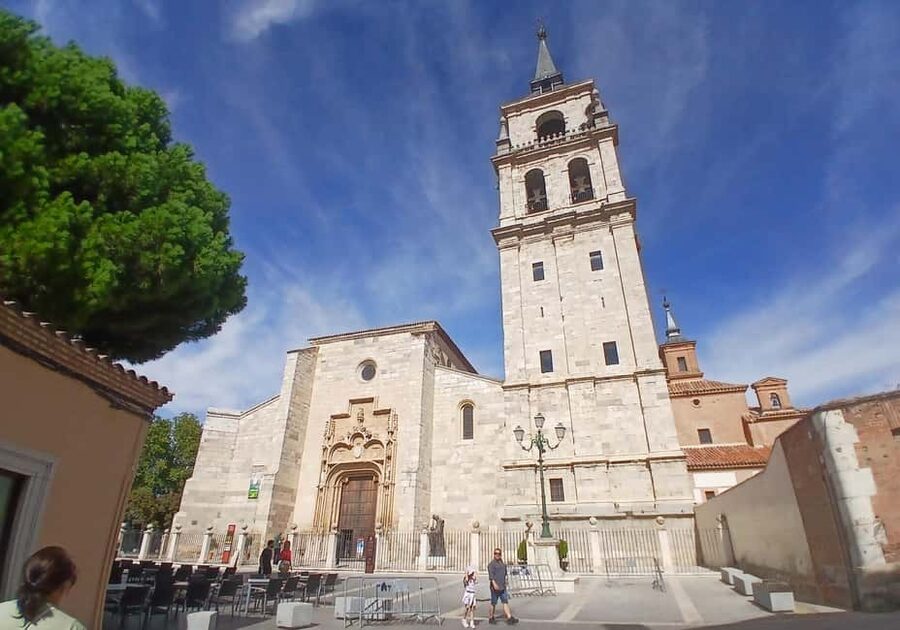
The Cathedral of the Holy Children, also called the Magistral Cathedral of the Holy Children, receives around ten minutes. It is one of the principal religious sights on the route, but this tour does not include a general interior visit.
That distinction matters. If you want to study the inside of the cathedral, inspect chapels, or linger over art, you will need to return on your own. The value here is the guide’s explanation of the cathedral within Alcalá’s larger religious story.
The cathedral also helps connect the city’s sacred landmarks to its university identity. Alcalá was not shaped by one institution alone. Its churches, palaces, schools, hospitals, and public squares all form part of the old city that you are walking through.
More History Tours in Spain:
- Madrid Essential: Historic Center, Plaza Mayor & Royal Palace
★ 5.0 · 6,416 reviews - Barcelona: Tapas Walking Tour with Food, Wine, and History
★ 4.8 · 4,261 reviews - Sevilla Food Tour: Tapas, Wine, History & Traditions
★ 5.0 · 3,468 reviews - Valencia Old Town Tour with Wine & Tapas in 11th Century Historic Monument
★ 5.0 · 3,234 reviews
Calle Mayor and the road to Cervantes
Calle Mayor gets roughly ten minutes, and it is one of the route’s most enjoyable stretches because the street itself is part of the sightseeing. You are not simply walking from one monument to another. The street gives you a sense of how the historic center is organized.
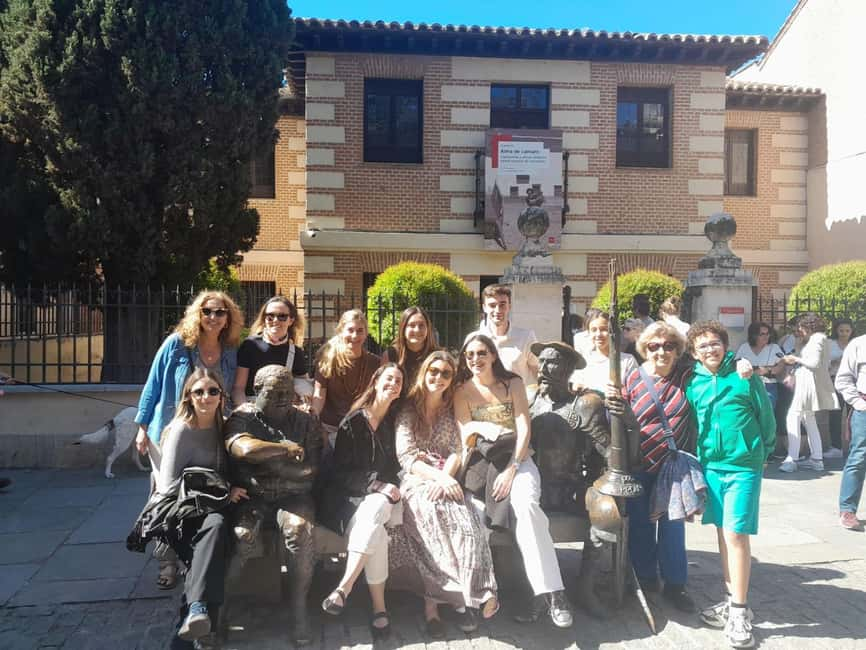
From there, the tour reaches the Cervantes Birthplace Museum. The stop is outside, despite the museum name, so do not expect an included museum entry on this activity. You’ll receive about ten minutes of explanation about Cervantes and his connection with Alcalá.
This is where the literary side of the city becomes personal. Cervantes is not presented only as a famous author attached to a statue or a plaque. The route places him within an actual neighborhood, alongside the old hospital and the public square that carries his name.
If you have read Don Quixote, the stop adds a useful sense of place. If you have not, it still works because the guide connects Cervantes to the city’s identity without requiring a literature lesson.
The Old Hospital of Antezana
The Old Hospital of Antezana is a shorter stop, about five minutes. It is another exterior visit, but it adds a social layer to the walk.
Palaces and universities tell you about power and learning. A hospital points to care, charity, and ordinary urban life. The tour’s inclusion of this building keeps Alcalá from becoming only a parade of grand institutions.
You should expect a concise explanation rather than a long visit. That is consistent with the whole route. The activity is designed as a light introduction, not a full architectural or museum study.
Cervantes Square and the Corral de Comedias
Cervantes Square receives around ten minutes. It is one of the route’s most natural places to pause, since Cervantes’ name has already appeared at the birthplace museum and the old hospital.
The square helps bring together the literary and public sides of Alcalá. You’ll hear more about Cervantes, but you also get a feel for the city’s central meeting spaces. This is a good point to take a photo, listen for the next explanation, and keep track of the route’s growing focus on Cervantes and theater.
The Corral de Comedias follows with about five minutes. It is an important stop for understanding Spain’s theater tradition, but the tour presents it from outside. You will not have a full performance or extended interior tour included in the $11 price.
That limitation is worth noting, especially if you are keen on historic theaters. Still, the stop earns its place because it broadens the city’s cultural story. Alcalá is not only about classrooms and churches. It also has a stage, an audience, and a long connection with performance.
The Capilla del Oidor and Cervantes’ baptismal record
The Capilla del Oidor is the one listed interior visit. The chapel holds Cervantes’ baptismal certificate, giving the literary story a precise document and location.
You receive about five minutes here, so think of it as a focused stop rather than a long chapel visit. The guide’s explanation is the key part. The certificate makes Cervantes’ connection to Alcalá tangible, and the chapel provides a quiet change from the more open public spaces along the route.
There is one timing exception: the 6:00 pm group does not enter the chapel. If this stop is important to you, avoid that departure or confirm the current arrangement before booking.
The activity also says to expect some content in its original language. That reinforces the need to check the language details, especially for English speakers.
Finishing at the old University of Alcalá
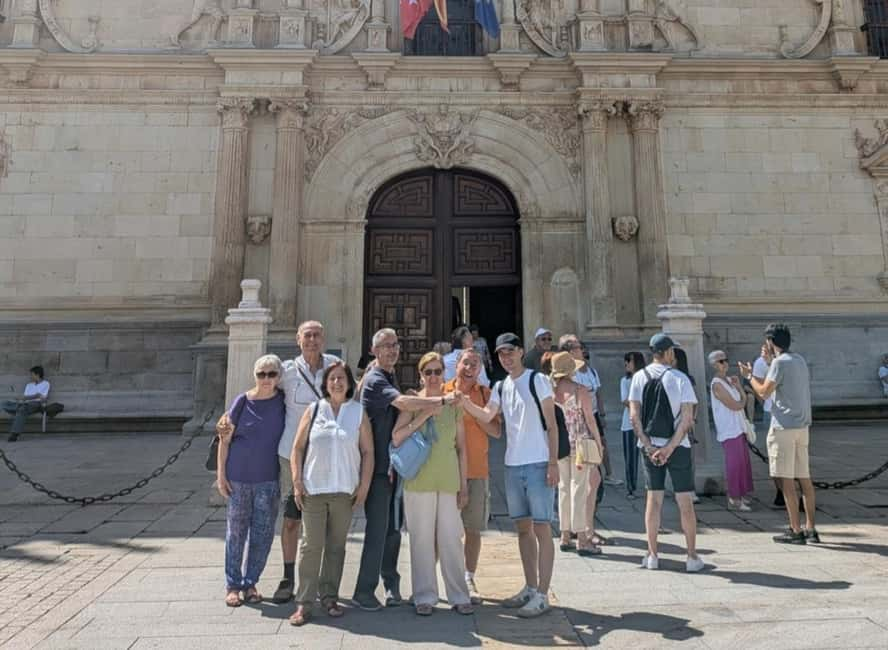
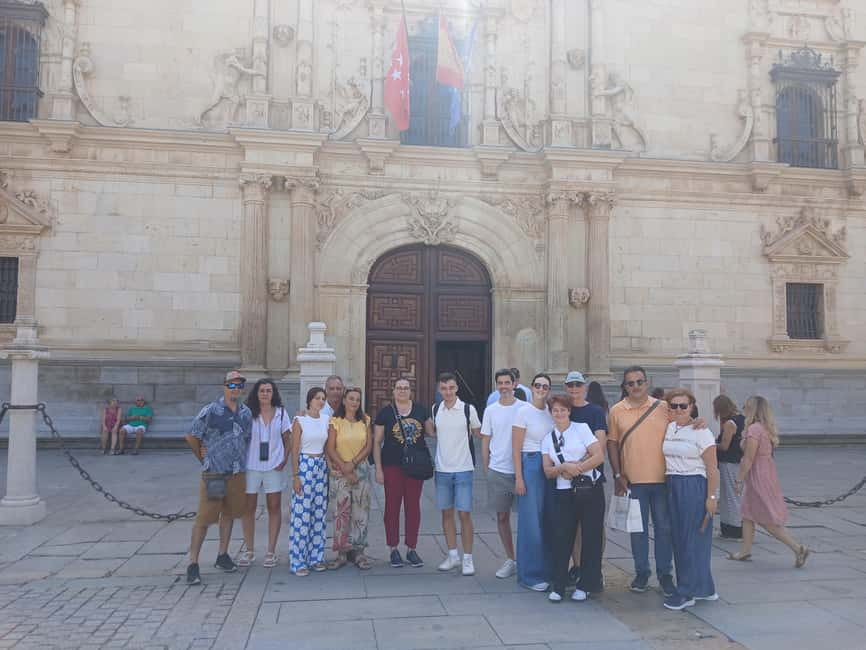
The walk ends at Plaza de San Diego, after a guided stop of about 15 minutes at the old University of Alcalá. This is the most important part of the tour, and the route sensibly saves it for last.
Cardinal Cisneros is central to the university story. David introduces Alcalá as the first university city in the world, a phrase that helps explain why the city’s historic identity reaches well beyond one famous author.
The university is visited from outside, so you should not expect a full interior tour of the historic college buildings. Even so, the exterior gives the route a satisfying finish. By this stage, you have seen the religious institutions, civic spaces, Cervantes landmarks, theater, and hospital. The university pulls those themes together around education and public life.
The advertised 15 minutes is short, but the final position at Plaza de San Diego is useful. You finish in the university quarter rather than being dropped back at the starting square. That gives you a natural point from which to continue exploring Alcalá on your own.
What David Alba adds to the walk
David Alba is a certified guide and a graduate in tourism from the University of Alcalá de Henares. That local academic link matters here. He is not simply guiding you through a generic old town. He has a direct connection with the university that gives the route its main subject.
The strongest feature of his style is its pace. The tour is described as light and enjoyable, and the feedback points to a guide who keeps the walk moving, explains clearly, uses humor, and does not waste minutes. He also includes both positive and difficult events, along with counter-histories.
That last point is important. A city tour is more useful when it does not polish every chapter into a feel-good tale. Alcalá’s religious, academic, and political past had winners and losers. Hearing more than the official version can make the city easier to understand.
There is also a game during the tour, with the result revealed at the end. The exact format is not given, so I would treat it as a small extra rather than a reason to book on its own. It may be especially welcome for families or anyone who prefers a little participation over a nonstop lecture.
Is $11 good value?
At $11 per person, this is inexpensive for a guided introduction to a World Heritage City. The route covers the main historic areas, and the guide gives you a structure that would take longer to build from scattered signs and online notes.
The value is strongest if you want orientation. You’ll learn where the major sights are, how Cervantes fits into the city, why the university matters, and which places deserve a return visit.
The price does not include a broad set of interior entries. Most stops are viewed from outside, with the Capilla del Oidor as the listed interior visit. If you want museum time, cathedral interiors, or a detailed university visit, budget for separate admission and extra time.
That is not a flaw at this price. It simply defines the product clearly. You are paying for a guided walking introduction, not an all-access monument pass.
Timing, language, and practical details
The activity is valid for one day, with starting times shown according to availability. The route includes many short stops, with the longest listed explanation at the old university. You should allow enough time for the full walk, transitions, and the guide’s commentary, though the supplied information does not give a total hour count.
The tour is wheelchair accessible according to the activity details. Since most of the program is an exterior walk, that is useful information, but the exact surface and access conditions at each stop are not specified. Ask David about any particular access need before booking.
The stated live-tour language is Spanish. The tour description also asks English speakers to contact David, so do not assume an English departure. Confirm this point directly.
Free cancellation is available up to 24 hours before the activity for a full refund. You can also reserve and pay later, which helps if your Madrid plans are still shifting.
Who should book this Alcalá tour?
I would choose this walk if you are visiting Alcalá for the first time and want the main story in a single outing. It suits people who enjoy history, literature, religious architecture, and university towns, especially when those subjects are mixed together rather than treated separately.
It is also a good fit if you want a low-cost starting point before exploring the city independently. The route identifies the places that deserve more time, and the final stop at Plaza de San Diego leaves you near the university quarter.
Families may appreciate the short explanations, humor, and included game. The route has enough variety to avoid becoming one long lecture about dates and rulers.
I would hesitate if your priority is entering every monument. This is mainly an exterior tour, and the cathedral, Cervantes Birthplace Museum, Corral de Comedias, and old university are not listed as interior visits. I would also confirm the language before booking if you do not speak Spanish.
Should you book it?
Book this tour if you want a friendly, inexpensive introduction led by someone with a direct connection to Alcalá’s university. David Alba’s clear explanations, humor, attention to both good and bad chapters, and brisk pace are the main reasons it earns strong marks.
Skip it if you want long visits inside monuments or a full museum program. For most first-time visitors, though, the $11 price, compact route, Cervantes focus, and university finale make this a sensible way to get your bearings in Alcalá de Henares.
FAQ
Where does the Alcalá World Heritage Tour begin?
The meeting point is at the obelisk in Plaza de las Bernardas.
How will I recognize the guide?
David Alba says he will be wearing a card around his neck marked Discover with David.
Where does the tour finish?
The tour finishes at Plaza de San Diego, by the old University of Alcalá.
Who guides the tour?
The guide is David Alba, a certified guide and tourism graduate from the University of Alcalá de Henares.
What language is the tour in?
The activity information lists Spanish as the live tour language. English speakers are asked to contact David, so confirm the language before booking.
Is the Capilla del Oidor visited inside?
Yes. The Capilla del Oidor is listed as the interior visit, except for the 6:00 pm group.
Is the old university visited inside?
The old University of Alcalá is included as a guided stop, but the activity specifies that the tour is mainly exterior. It does not list a general interior university visit.
Is the tour wheelchair accessible?
The activity is listed as wheelchair accessible.
How much does the tour cost?
The listed price is $11 per person.
Can I cancel for a full refund?
Yes. You can cancel up to 24 hours in advance for a full refund. You can also reserve now and pay later.
Latest history tours reviewed in Spain
- Barcelona Historic Guided Tour★ 4.8 · 24 reviews
- Essential Madrid: Walking Tour of the Historic Center★ 4.7 · 58 reviews
- Discover the fascinating Alcazaba: History and unique views★ 4.8 · 30 reviews
- Cordoba: Segway Tour historic center★ 4.5 · 21 reviews
- Private Jewish Heritage Journey by Barcelona Dreaming★ 4.8 · 383 reviews
- Cartagena: Ancient Roman Walking Tour with Entry Tickets★ 4.5 · 89 reviews
- Caceres: Highlights, History and Jewish Quarter Walking Tour★ 4.7 · 20 reviews
- Bilbao Historical Tour in small group★ 4.7 · 52 reviews
Spain History Tours, compared.
Madrid Essential: Historic Center, Plaza Mayor & Royal Palace
Read our review →
Barcelona: Tapas Walking Tour with Food, Wine, and History
Read our review →
Sevilla Food Tour: Tapas, Wine, History & Traditions
Read our review →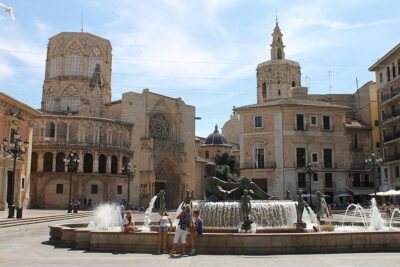
Valencia Old Town Tour with Wine & Tapas in 11th Century Historic Monument
Read our review →
Madrid Tapas & Taverns Small Group Food & History Tour
Read our review →
Ultimate Seville Tapas, Wine & History Small Group Tour
Read our review →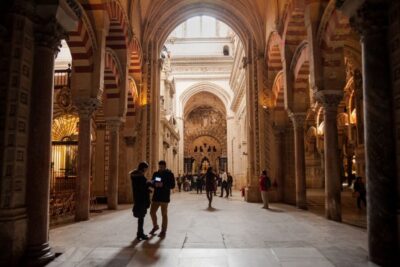
Córdoba: Skip-the-Line Great Mosque-Cathedral History Tour
Read our review →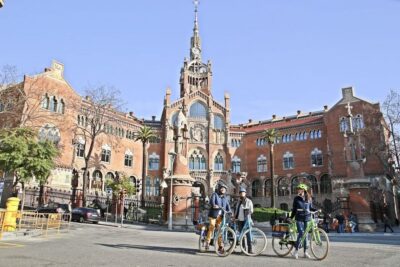
Barcelona: 2.5-Hour Bike or E-Bike Historical Tour
Read our review →Browse the lists this tour appears in