
Review · SPLIT
History & Cultural Walking Tour of Split and Diocletian’s Palace
Diocletian’s Palace is not a fenced-off ruin. It is Split’s living center, with cafés, shops, homes, and lanes built into the remains of a Roman emperor’s retirement palace. This 90-minute walking tour helps you read the stones, from the Peristyle and Vestibule to the Golden Gate and Riva Harbor.
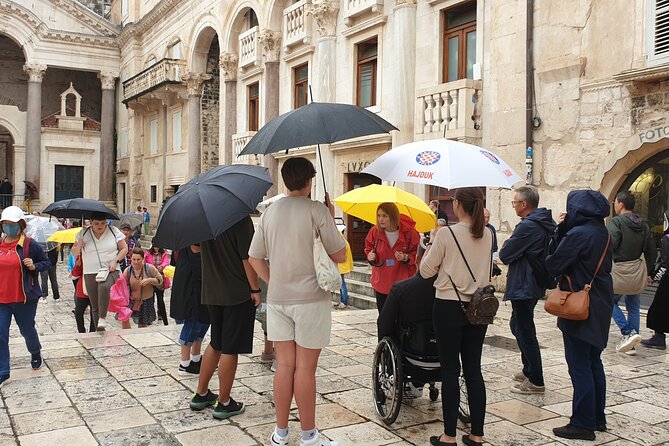
I like the small maximum of 15 people, which gives you a fair chance to hear the guide and ask questions. I also like the mix of major sights and local culture, including the story of Gregory of Nin, Croatian literature, Dalmatian singing, and Split’s Jewish heritage.
The main drawback is its brisk schedule. Seven stops fit into about an hour and a half, and the tour does not include the museum section of the palace substructures. Expect steps and uneven old-city surfaces, too.
Key points to know before you book
- A living Roman palace: The tour explains how Diocletian’s Palace became the heart of modern Split, rather than treating it as a separate archaeological site.
- Seven stops in 90 minutes: You cover the Peristyle, Vestibule, substructures, Golden Gate, Riva Harbor, Fruit’s Square, and the synagogue area.
- Small-group format: The group can include up to 15 people, with more room for questions than a large city tour.
- Local culture included: Along with Roman history, you hear about klapa singing, Croatian language, Marko Marulić, and the Jewish community of Split.
- Good first-day orientation: The route gives you a useful map of the old center before you explore on your own.
- Simple value: At $22.98 per person, the price is reasonable for an English-speaking guided walk, though paid attractions afterward cost extra.
Why Diocletian’s Palace makes a good walking tour
Split’s old center can be confusing at first. Roman walls, medieval buildings, Venetian traces, modern shops, and cafés all crowd into the same compact area. A guide gives you the basic framework, so you can make sense of what you are seeing instead of simply passing through attractive stone lanes.
The palace was built for Emperor Diocletian, and the tour keeps him at the center of the story. You learn how the palace was planned, how its rooms connected, and how later generations adapted the structure. That second part matters. Split is interesting because the old palace did not remain frozen in the Roman period. It became the core of a working city.
I would use this tour early in a Split visit. The route touches several key points, then leaves you close to places you may want to revisit. The guide can also help connect the palace to Croatian culture and the city’s later Venetian and local traditions.
The tour is offered in English and takes about 1 hour 30 minutes. The published price is $22.98 per person, which I consider fair for a short guided introduction in a city where the architecture rewards explanation. You are paying for context and orientation, not admission to a major paid museum. Gratuities are not included.
More Castle and Palace History Tours in Croatia
- SPLIT-PRIVATE Walking Tour of Diocletian’s Palace & Old Town
★ 5.0 · 467 reviews - Split: Historical Tour of Salona, Klis Fortress and Trogir
★ 4.1 · 108 reviews - Jewish Heritage & Diocletian’s Palace Private Split Tour
★ 5.0 · 80 reviews
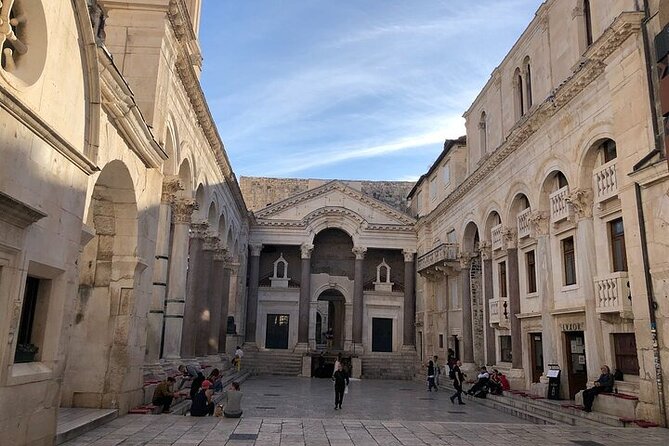
Starting at the Peristyle, the palace’s great open square
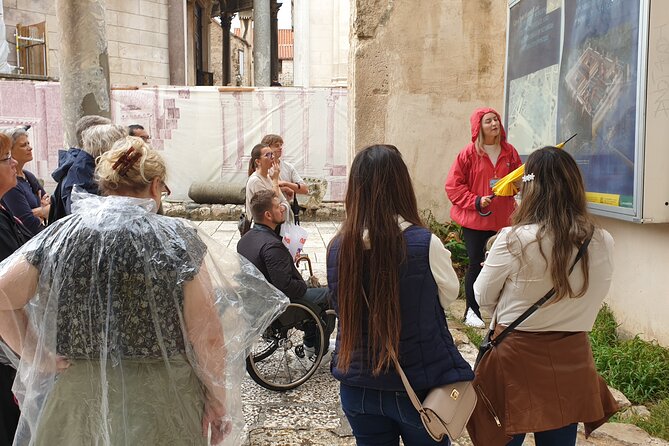
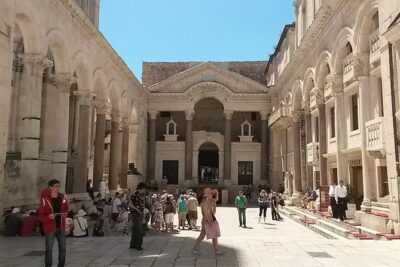
The tour begins at Peristil, also called the Peristyle, the central square of Diocletian’s Palace. This is the natural starting point because paths from here lead toward many of the palace’s other important sections.
You spend about 15 minutes here. That may sound brief, but the square gives the guide a useful stage for explaining the palace plan and Diocletian’s role. Look around before the talk begins. The scale of the surrounding stone, columns, and old facades helps you see why this is more than a normal town square.
The Peristyle can be busy, especially at popular times of day. An early start may help you hear more clearly and view the space with fewer people around. One group of four specifically chose a 9 a.m. start for that reason. Early timing is not a guarantee of quiet, but it is a sensible choice in Split.
This is also where a small group earns its keep. With no more than 15 people, you should be able to stay near the guide without forming a large crowd in the middle of the square.
The Vestibule and the sound of Dalmatian culture
From the Peristyle, the route moves into the Vestibule, where you spend around five minutes. This circular entrance area once served the emperor’s palace and gives the guide a chance to explain how people moved through the complex.
The stop is short, but it may include one of the most memorable cultural touches on the route: traditional Dalmatian klapa singing. Some tours have the chance to hear this local vocal style in the Vestibule. You should treat it as a possible part of the experience rather than a guaranteed performance.
This is a good example of the tour’s wider approach. It is not only a Roman architecture walk. The guide connects the palace to living Croatian culture, so the old stone does not feel detached from the city around it.
Palace substructures and the parts left below street level
The substructures take about 10 minutes. These lower areas help explain how the palace was built and how their function changed over time.
The substructures are especially useful for understanding the layout above. In ancient buildings, the lower level often preserves the shape of rooms that have disappeared or changed upstairs. A guide can point out how construction and later use affected the palace.
You will pass through the substructures, but this tour does not include the museum section. That distinction matters. If you want a fuller visit below ground, you can see the museum afterward, but you should budget extra time and any required admission separately.
This stop may involve steps, and the tour provider specifically warns that it is not recommended for people who have trouble with high steps. The old center also has uneven surfaces. Wear shoes you can walk in comfortably, and do not choose this tour expecting a flat, effortless stroll.
More History Walking Tours in Croatia
- Dubrovnik Old Town History Walking Tour
★ 5.0 · 1,684 reviews - Dubrovnik: Ancient City Walls & Wars Walking Tour
★ 5.0 · 1,270 reviews - Zagreb: City & History Walking Tour & WW2 Tunnels
★ 4.9 · 1,202 reviews - Walking Tour of Split with a ‘Magister’ of History
★ 5.0 · 1,122 reviews
The Golden Gate and Gregory of Nin
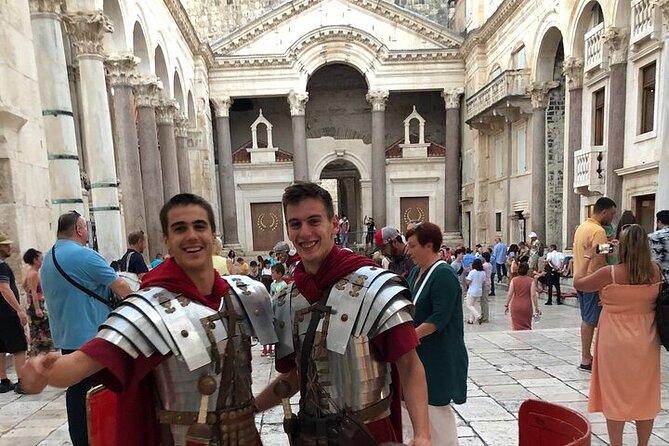
The Golden Gate is the palace’s main entrance and takes about 10 minutes. This is one of the clearest places to understand the defensive and ceremonial side of the palace.
The guide also introduces the statue of Gregory of Nin, an important figure in Croatian history and language. The stop gives you more than a photo opportunity. It explains why the statue matters and how national identity, language, and public monuments connect in Croatia.
You may notice people rubbing the statue’s toe for luck. The tour’s value here is not simply pointing out the shiny spot. It gives you the background needed to understand why this figure has such a strong place in Split’s public life.
The Golden Gate is also a useful reference point if you plan to explore on your own later. After the guided walk, you can use the palace gates and squares as a mental map instead of relying only on a phone.
Riva Harbor and Split’s seafront promenade
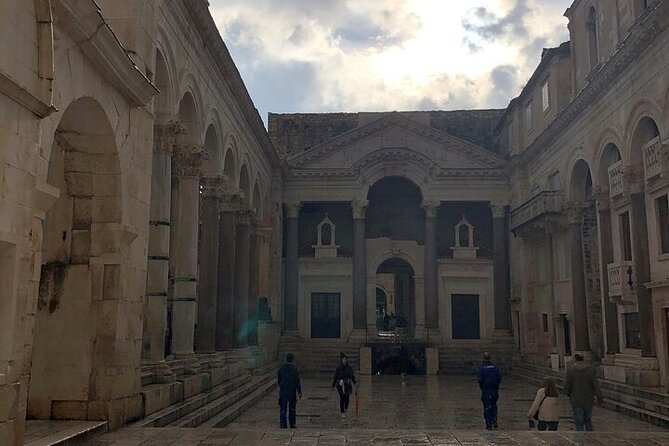
The walk continues to Riva Harbor, where you spend about 15 minutes. Riva is Split’s broad waterfront promenade and one of the city’s most pleasant places for a pause.
The guide shows you a bronze model of Diocletian’s Palace and explains the history of the Riva. The model can help you understand the full shape of the palace, especially after seeing its interior spaces in pieces.
Riva also gives the tour a change of mood. The palace stops focus on stone, walls, and ancient planning. Here, you get the open waterfront and a clearer sense of how Split faces the sea.
I like having this stop in the middle of the route because it links the old center to everyday city life. You are not only studying an ancient complex. You are seeing how the palace district meets the harbor and remains part of Split’s daily rhythm.
Fruit’s Square, Venetian traces, and Marko Marulić
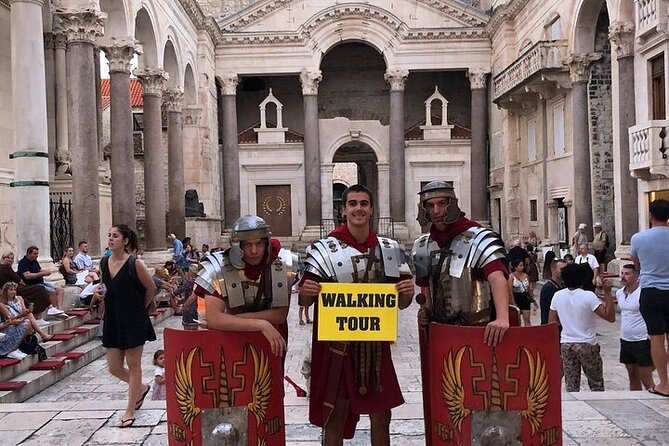
Fruit’s Square, or Trg Braće Radić, takes about 10 minutes. Here, the guide explains a 15th-century Venetian citadel and the place of Marko Marulić, often called the father of Croatian literature.
This stop widens the story beyond Diocletian. Split’s identity was shaped over many periods, and the Venetian presence is an important part of that later history. The square also introduces literature and language, giving you another way to understand Croatian culture.
The tour’s short length means you will not receive a full lecture on Venetian rule or Marulić’s writings. Instead, you get the key points and a reason to look more closely when you return. If you enjoy history, this is one of the moments where a good guide can make a small square feel much more significant.
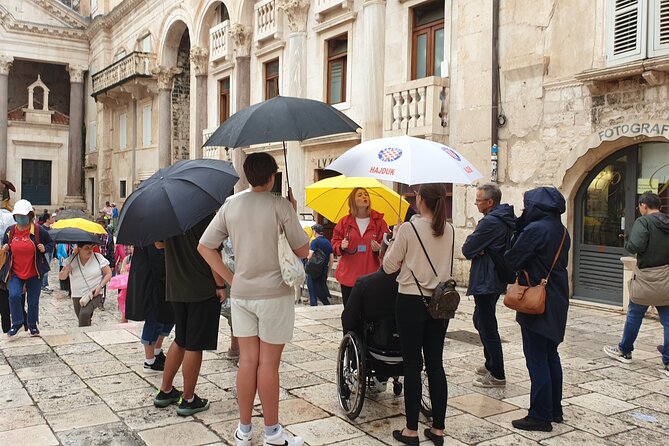
A guide such as Ivana has used questions and answers to keep the group involved, and that approach suits stops like this. It helps you remember a person or building better than a long list of dates.
The Split Synagogue and a less visible part of city history
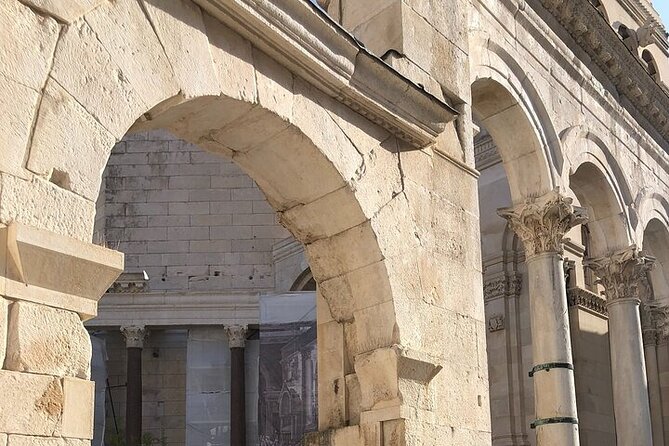
The final stop is the Split Synagogue, or the area around the 16th-century synagogue. You spend about 10 minutes learning about the Jewish community in Split.
This stop is valuable because it adds a part of the city’s story that can be easy to miss when your attention is fixed on Roman ruins and grand squares. The tour passes by the synagogue rather than presenting it as a separate museum visit, and admission is not included.
You should keep your expectations clear. This is an exterior stop and a short introduction, not a long visit inside a religious or cultural institution. Still, it helps place Split’s history in a wider human setting, with different communities contributing to the city over time.
How the guides shape the experience
The guide makes a large difference on a short walking tour. The experience is designed around explanation, questions, and local perspective rather than simply moving from one photo stop to the next.
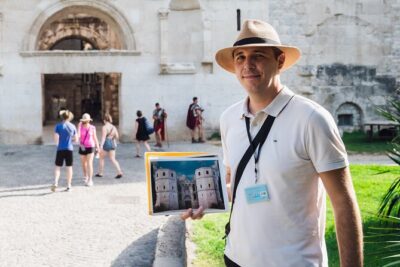
Guides named in past tour experiences include Darko, Ante, who also uses Anthony in English, and Ivana. Their approaches vary, but useful qualities include clear English, humor, personal warmth, and strong command of Split and Croatian history. One guide kept a small group of three for nearly three hours, far longer than the scheduled time, though you should not assume every departure will run that long.
That example points to one strength of a small group: the guide may have more freedom to answer questions or add detail when the group is engaged. Another guide used questions and answers to help people retain the material. A history graduate also found the content suitably detailed, which suggests the tour can work for people who already know something about the subject.
At the same time, this remains a 90-minute group walk. Your guide, group size, pace, and exact amount of extra discussion can vary. Book it for a well-organized introduction, not a private seminar.
Who gets the best value from this tour
I would recommend this walk to you if Split is your first stop in Croatia, if you want historical context before exploring alone, or if you have only a short stay. It is especially useful for people who see the palace as a puzzle of arches, lanes, and reused buildings and want the pieces explained.
It also suits history fans who want a focused introduction to Diocletian and the city’s later development. The tour does not stay only in the Roman period. It brings in Venetian influence, Croatian literature, local singing, language, and Jewish history.
Families and mixed-interest groups may appreciate the humor and question-based style reported from guides such as Ivana and Darko. The route is not designed as a children’s program, but a friendly guide can make the material easier to follow.
You should think twice if you want a slow photographic walk, a full museum visit, or a completely step-free route. Seven stops in 90 minutes means the pace is purposeful. The high steps warning is important, and the paid museum section of the substructures is outside the tour.
Price, timing, and practical value
At $22.98 per person, this is a modest way to get an organized introduction to Split’s center. The strongest value comes from the guide’s interpretation. You can walk around the palace for free, but you may miss why the spaces matter and how the Roman, Venetian, Croatian, and modern layers connect.
The group maximum of 15 is another reason the price feels reasonable. You are not paying private-tour rates, yet the group should remain small enough for the guide to speak directly to you.
The meeting point is on Peristil ulica at the Peristyle, and the activity ends back at the meeting point. The tour is close to public transportation, and confirmation arrives when you book. Service animals are allowed, and most people can participate, subject to the steps and old-city walking conditions.
Free cancellation is available if you cancel at least 24 hours before the start time. Changes or cancellations made later are not accepted for a refund. The tour also needs a minimum number of people, so if that minimum is not met, you are offered another date or experience, or a full refund.
Should you book the History and Cultural Walking Tour?
Book it if you want a compact, small-group introduction to Split before you set off on your own. The route covers the city’s essential Roman spaces, then adds local culture and later history through the Riva, Fruit’s Square, Marko Marulić, Gregory of Nin, and the synagogue.
I especially recommend it for a first morning or first evening in town, when a clear orientation can save you time later. The price is sensible, the group is limited, and guides such as Darko, Ante, and Ivana have brought warmth, humor, and strong local detail to the walk.
Skip it if you need a fully accessible route, want to spend a long time in the palace museum, or prefer to explore without a fixed pace. For most people who want to understand Split rather than only photograph it, this is a practical and personable start.
FAQ
How long is the History and Cultural Walking Tour of Split?
The tour lasts approximately 1 hour 30 minutes.
Where does the tour begin and end?
It begins at Peristil ulica, at the Peristyle in Split, and ends back at the meeting point.
What language is the tour offered in?
The tour is offered in English.
How many people can join the tour?
The maximum group size is 15 people.
Does the tour include the museum section of the palace substructures?
No. The walk goes through the palace substructures, but the museum section is not included. You can visit it separately after the tour.
Is the tour suitable for people who have trouble with high steps?
It is not recommended for people who have issues with high steps. The old city also includes walking surfaces and historic spaces that may not be completely level.
More Local Culture and Traditions Tours in Croatia
- Amsterdam Food and Cultural Tour with Tastings
★ 5.0 · 4,315 reviews - Sevilla Food Tour: Tapas, Wine, History & Traditions
★ 5.0 · 3,468 reviews - Tromsø: Reindeer Camp and Sami Cultural Tour with Lunch
★ 4.7 · 3,326 reviews - Half Day Dominican Republic Cultural Tour : Small Group
★ 4.5 · 1,862 reviews
Latest history tours reviewed in Croatia
- Experience Split History Walking Tour With Local Historian★ 5.0 · 28 reviews
- Dubrovnik: Small-Group Guided Old Town History Walking Tour★ 4.9 · 37 reviews
- Dubrovnik: Game of Thrones & History Tour★ 4.7 · 72 reviews
- Dubrovnik History and Game of Thrones Locations Tour★ 4.8 · 49 reviews
- Dubrovnik Old Town: Night tour with History, Wine & Bites★ 4.7 · 59 reviews
- Dubrovnik Old Town: Easy paced and accessible History tour★ 4.9 · 20 reviews
- Dubrovnik: Historical Tour with Game of thrones details★ 4.9 · 43 reviews
- Dubrovnik: History and Game of Thrones Walking Tour★ 4.7 · 85 reviews
Split History Tours, compared.
Walking Tour of Split with a ‘Magister’ of History
Read our review →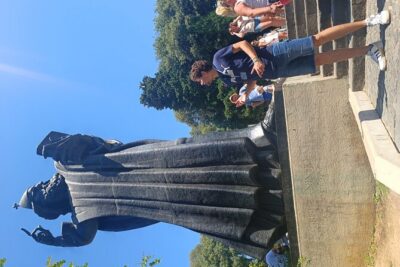
SPLIT-PRIVATE Walking Tour of Diocletian’s Palace & Old Town
Read our review →
Split History and Gastro Small-Group Tour with Food and Drinks
Read our review →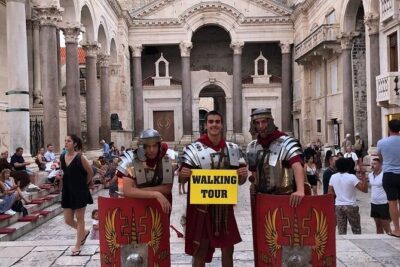

Split: Historical Tour of Salona, Klis Fortress and Trogir
Read our review →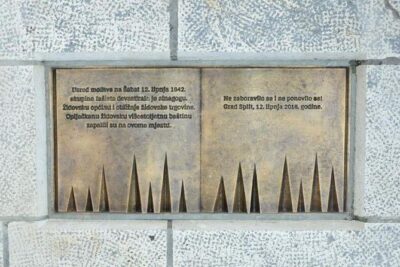
Jewish Heritage & Diocletian’s Palace Private Split Tour
Read our review →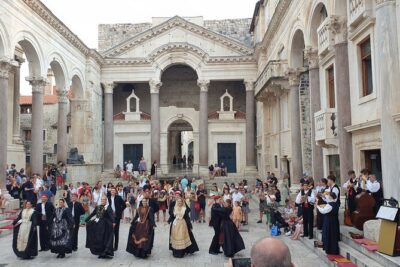
History Split Walking Tour in French -Small group
Read our review →Browse the lists this tour appears in