
Review · SPLIT
Private History Split Walking Tour in English
Split’s Old Town is not simply built around Diocletian’s Palace. It is built inside it. This private walking tour helps you read the city’s unusual mix of Roman walls, medieval lanes, Venetian defenses, and modern life. In 90 minutes, you move from the imperial Peristyle to the Riva harbor, with stops at the Golden Gate, Fruit’s Square, and Split’s old synagogue.
I like the private format, since your guide can keep the pace suited to your group and answer questions without a crowd around you. I also like the broad range of subjects, from Emperor Diocletian and palace construction to Gregory of Nin, Croatian literature, Dalmatian singing, and Jewish life in Split.
The main consideration is the price of $66.54 per person for a short tour. It can be good value for a first look at Split, especially if several people share the private experience, but you should know that admission to the museum section of the palace substructures is not included. High steps also make this a poor choice for anyone with mobility concerns.
Key points to know before you book
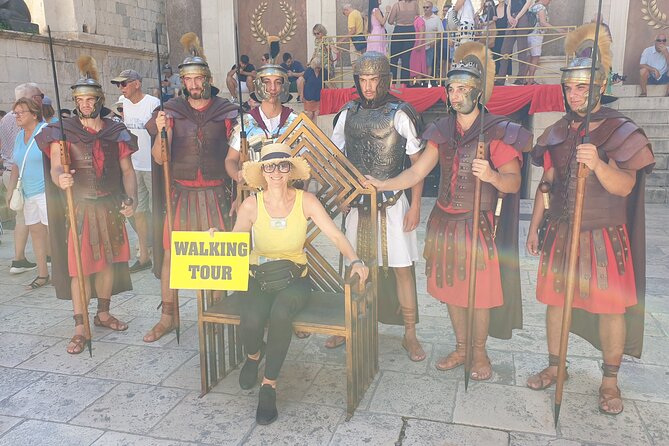
- A private route through the Roman palace: Only your group takes part, giving the tour a more personal pace than a large city walk.
- The Peristyle is the central anchor: From this grand square, your guide explains how the palace fits together and points you toward several important areas.
- You hear more than Roman history: The walk covers Venetian Split, Croatian literature, Jewish heritage, and the city’s Riva promenade.
- The Golden Gate includes Gregory of Nin: You learn why this statue matters to Croatian history and language.
- Substructure admission is separate: You pass through the palace foundations, but the museum section is not part of the tour price.
- The tour is easy to fit into a day: At about 90 minutes, it works well near the start of a stay, before a ferry, or between other plans.
Why this private Split walk works well as an introduction
Split can feel confusing at first. The palace is not a sealed monument with a clear entrance, ticket hall, and exit. Its Roman walls form the core of today’s Old Town, and homes, shops, cafés, churches, and narrow lanes occupy spaces that once served an emperor.
That is why a guide can make a real difference here. The tour begins at the Peristyle, the palace’s central square, then uses that point to explain how the rest of the complex connects. You are not just checking off old stones. You are learning how Roman planning still shapes the way you move through Split.
The private setup is especially useful if your group has its own interests. You can ask more about Diocletian, architecture, Croatian culture, or the city’s Jewish community without waiting for a large group to catch up. The tour is offered in English, and it is led by an educated guide with strong local knowledge. Antonella is one guide associated with the experience, though your assigned guide may be someone else.
The walk has an easy, conversational character. The strongest praise focuses on clear explanations, historical detail, and guides who make the subject enjoyable rather than dry. That matters in Split, where a short lane can involve Roman engineering, medieval use, and modern daily life all at once.
More History Walking Tours in Croatia
- Dubrovnik Old Town History Walking Tour
★ 5.0 · 1,684 reviews - Dubrovnik: Ancient City Walls & Wars Walking Tour
★ 5.0 · 1,270 reviews - Zagreb: City & History Walking Tour & WW2 Tunnels
★ 4.9 · 1,202 reviews
Starting at the Peristyle of Diocletian’s Palace
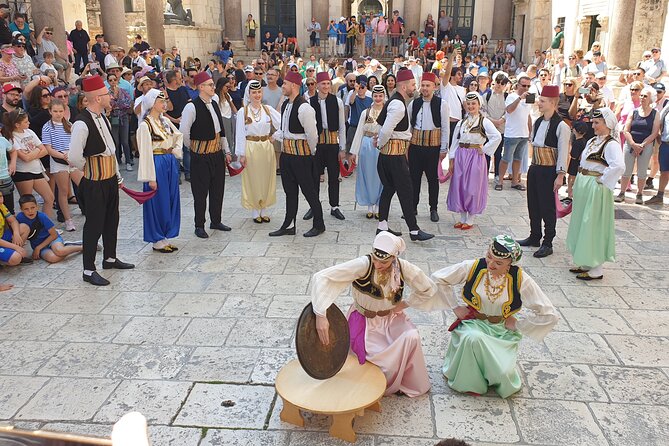
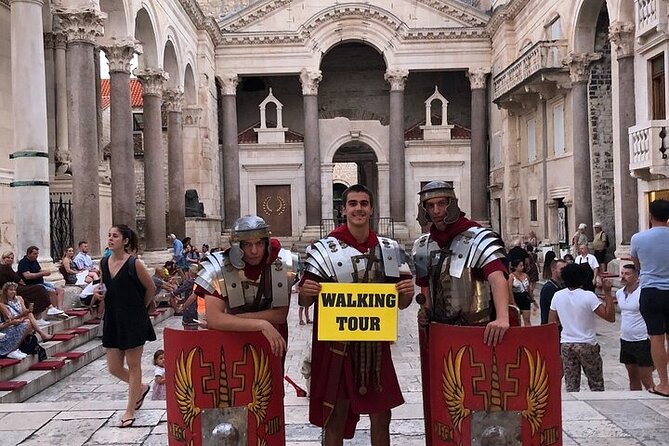
The Peristyle is the tour’s natural starting point. This open square sits at the heart of the palace and leads toward several major areas, including the Vestibule and the substructures.
You spend about 15 minutes here. That may not sound long, but the square gives your guide plenty to work with. You learn about the palace’s layout and Diocletian’s role, while the surrounding columns and stonework provide the setting.
The Peristyle is also one of the places where Split’s layers are easiest to see. Imperial architecture forms the backdrop, while present-day city life continues around it. Your guide can help you notice the connections instead of treating the square as a single Roman-era stop.
Because this is the first stop, it is also where you begin to understand the scale of Diocletian’s project. The palace was not just a residence in the modern sense. It was a fortified complex with ceremonial spaces and service areas. The rest of the walk makes more sense once you have this basic plan in mind.
The Vestibule and the sound of Dalmatia
The Vestibule takes only about five minutes, but it offers a different mood from the open Peristyle. This was an entrance space connected with the emperor’s residence, and your guide explains its past use and design.
There is also a chance you may hear traditional Dalmatian singing here. The experience does not promise a performance, so treat it as a possible bonus rather than a guaranteed part of the tour. Still, the mention is useful: this is not only a stop for architecture. It can connect the old palace with a living local tradition.
The short timing suits the Vestibule. You get the historical explanation, look at the structure, and continue without spending too long in one enclosed area.
Seeing the palace from below
The substructures of Diocletian’s Palace are among the most useful stops for understanding the building. You pass through the lower areas and learn how they were constructed and how their function changed over time.
About 10 minutes is devoted to this section. Your guide focuses on the construction and purpose of the substructures rather than taking you through the museum portion. The museum area is not included, and admission is not part of the tour, so you can visit it separately if you want more time underground.
That arrangement has both a benefit and a limit. The benefit is that you get a concise explanation without turning a 90-minute city walk into a longer museum visit. The limit is that anyone wanting a full examination of the palace foundations will need to arrange and pay for that extra visit.
For most people, the stop gives useful context. It shows that the palace was carefully engineered, not merely decorated above ground. It also helps explain why the modern Old Town can occupy and reuse so much of the Roman complex.
More Private History Tours in Croatia
- SPLIT-PRIVATE Walking Tour of Diocletian’s Palace & Old Town
★ 5.0 · 467 reviews - Dubrovnik Jewish Heritage Private Walking Tour
★ 5.0 · 121 reviews - Jewish Heritage & Diocletian’s Palace Private Split Tour
★ 5.0 · 80 reviews
The Golden Gate and Gregory of Nin
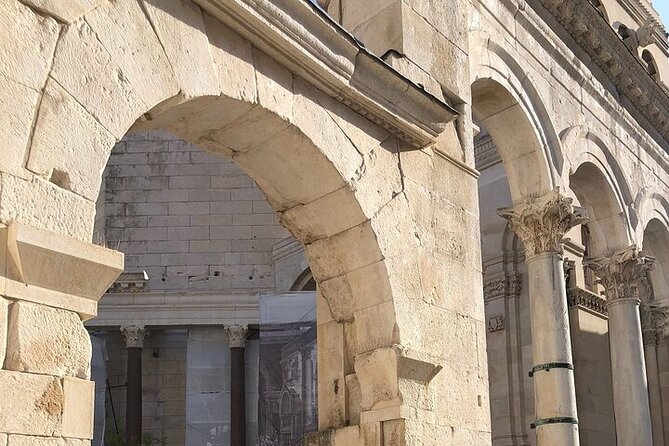
The Golden Gate is the main entrance to Diocletian’s Palace and one of the tour’s clearest visual landmarks. You learn how the entrance worked and why it mattered within the palace’s design.
The stop lasts about 10 minutes and includes the statue of Gregory of Nin. This is more than a quick photo opportunity. Your guide explains Gregory’s importance to Croatian history and language, giving you a local cultural connection beyond the Roman period.
That shift in subject is one of the walk’s strengths. Split is not frozen in antiquity. The Golden Gate lets you move from Roman imperial power to Croatian identity and language in a short distance.
The area also helps you get your bearings. After seeing the palace from its central spaces and below ground, you encounter one of its major outer entrances. If you are exploring on your own afterward, that orientation can make the Old Town less puzzling.
Riva Harbor and Split’s daily face
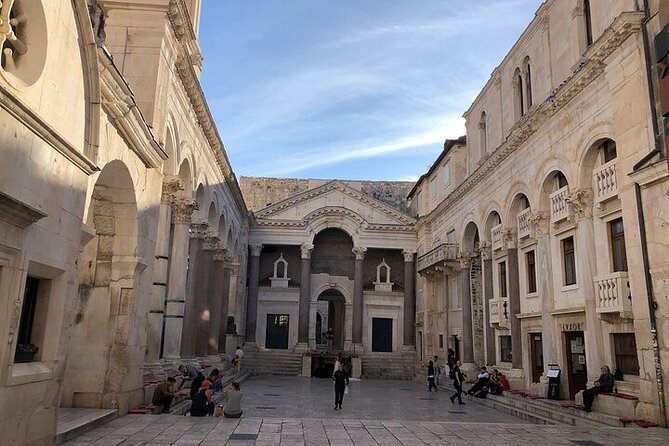
At Riva Harbor, you step away from the palace’s enclosed lanes and see Split’s broad waterfront promenade. The stop takes about 15 minutes, making it one of the longer sections of the walk.
Your guide points out a bronze model of Diocletian’s Palace and explains the history of the Riva. The model is useful because it gives you a compact way to see the palace’s overall form after walking through its pieces.
The Riva also offers a change of pace. Roman walls and narrow lanes can make Split feel like an archaeological site, but the waterfront shows the city as a place where people meet, walk, and spend ordinary time. You get a better sense of how the Old Town connects to the harbor.
This is a good moment to ask your guide for recommendations. The experience includes practical suggestions for things to see and do, which can help you decide how to use the rest of your time in Split. Since the tour ends where it begins, you can return to the central area easily after the final stop.
Fruit’s Square and the Venetian chapter
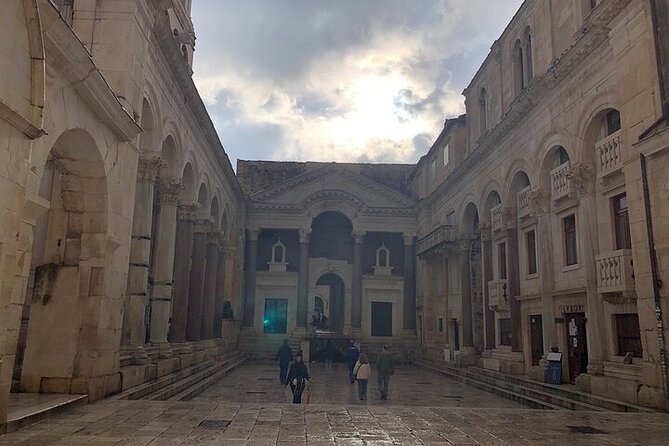
Fruit’s Square, officially Trg Brace Radic, introduces another period in Split’s story. Here you learn about a 15th-century Venetian citadel and the importance of Marko Marulić, often described as the father of Croatian literature.
The stop lasts about 10 minutes. It is a compact lesson in how Split’s identity developed after the Roman period. The Venetian fortification shows the city’s later military and political concerns, while Marulić connects the square to Croatian language and literature.
This is the sort of detail that separates a useful city tour from a walk focused only on famous monuments. If your interest is limited to Roman ruins, the stop may feel like a detour. I see it as a strength because it places Diocletian’s Palace inside the longer story of Split.
It also gives you another memorable public space to return to later. A guide’s explanation can help you recognize why an apparently simple square deserves attention.
Passing Split’s old synagogue
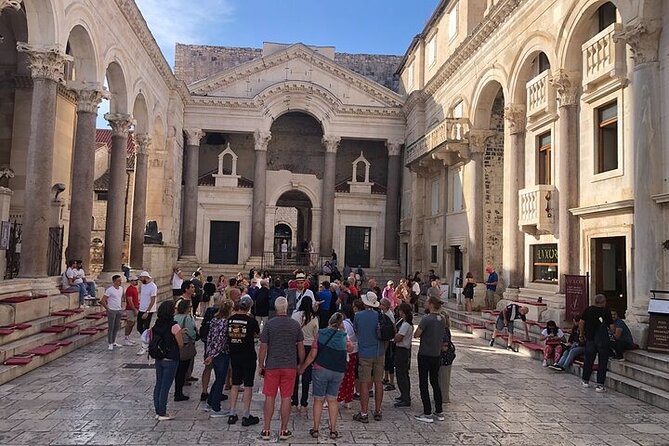
The final listed stop is Split’s 16th-century synagogue. You pass by it and learn about the history of Jewish people in the city.
About 10 minutes is set aside for this subject. The synagogue is not presented as a separate museum visit, and admission is not included. Instead, the guide gives you historical context as part of the walking route.
This is a valuable inclusion because it broadens the picture of Split. You are not only hearing about emperors, fortifications, and famous Croatian figures. You are also learning about a community that formed part of the city’s past.
The stop may feel brief if you want a detailed study of Jewish heritage. Still, it works well within a short introductory tour, especially for anyone who might otherwise overlook this part of Split’s story.
What $66.54 per person gets you
At $66.54 per person, this is not the cheapest way to see Split. The price makes more sense when you value a private guide and want to ask questions along the way. Group discounts may improve the value, particularly for a family or group of friends booking together.
You are paying for roughly 90 minutes of an English-language private experience, not for entry to every attraction in the palace. Most of the listed stops are free, but admission to the substructure museum section is not included.
I would compare the cost with your priorities. If you want a quick orientation, local recommendations, and an organized explanation of the Old Town, the fee can be reasonable. If you mainly want to wander the palace at your own pace and read signs, you may find the price harder to justify.
The tour is booked an average of nine days ahead, so planning early is sensible if your Split dates are fixed. Confirmation arrives when you book. Free cancellation is available up to 24 hours before the start time, while later cancellations and changes are not accepted. A minimum number of participants is required, and if that is not met, you are offered another date or experience, or a full refund.
Pace, access, and who should book
The walk is suitable for most people and takes place near public transportation. Service animals are allowed. It begins and ends at Peristil ulica, at the Peristyle, which keeps the route simple to join.
The important warning concerns high steps. If you have difficulty with steps, ask about the route before booking. The palace contains uneven and elevated areas, and the substructures may not feel comfortable for everyone.
I would recommend this tour to first-time visitors, history fans, families wanting a private pace, and anyone who wants more context before exploring Split alone. It also suits visitors with only a short time in town, since the walk covers several major areas in about an hour and a half.
It is less suitable if you need a fully accessible route, want a long museum visit, or prefer a tour with a fixed focus on only one period. The walk covers a lot: Roman history, Croatian identity, Venetian defenses, literature, the waterfront, and Jewish heritage. That range is useful, but each topic receives only a short treatment.
Should you book the Private History Split Walking Tour?
Book it if you want a strong first orientation to Split and value personal attention. The best parts are the private format, the clear historical storytelling, and the way the route connects the palace to later chapters of the city.
Before booking, decide if $66.54 per person fits your budget and remember that the substructure museum is separate. If high steps are a concern, check the practical details first.
For a short stay, this tour gives you a useful framework. Afterward, you can return to the Peristyle, Golden Gate, Fruit’s Square, or Riva with a better idea of what you are seeing. That makes the experience worthwhile for anyone who wants Split to feel like a city, not just a collection of old stones.
FAQ
How long is the Private History Split Walking Tour?
The tour lasts approximately 1 hour and 30 minutes.
What language is the tour offered in?
The tour is offered in English.
Is this a private tour?
Yes. Only your group participates in the activity.
Where does the tour start?
The meeting point is Peristil ulica, Peristil ul., 21000 Split, Croatia.
Where does the tour end?
The tour ends back at the meeting point.
Is admission to the palace substructures included?
No. The tour passes through the substructures, but admission to the museum section is not included.
Is the tour suitable for people with mobility concerns?
Most people can participate, but the experience is not recommended for anyone who has difficulty with high steps.
Can I cancel for a full refund?
Yes. You can cancel for a full refund if you do so at least 24 hours before the experience starts. Cancellations or changes made later are not accepted for a refund.
Latest history tours reviewed in Croatia
- Experience Split History Walking Tour With Local Historian★ 5.0 · 28 reviews
- Dubrovnik: Small-Group Guided Old Town History Walking Tour★ 4.9 · 37 reviews
- Dubrovnik: Game of Thrones & History Tour★ 4.7 · 72 reviews
- Dubrovnik History and Game of Thrones Locations Tour★ 4.8 · 49 reviews
- Dubrovnik Old Town: Night tour with History, Wine & Bites★ 4.7 · 59 reviews
- Dubrovnik Old Town: Easy paced and accessible History tour★ 4.9 · 20 reviews
- Dubrovnik: Historical Tour with Game of thrones details★ 4.9 · 43 reviews
- Dubrovnik: History and Game of Thrones Walking Tour★ 4.7 · 85 reviews
Split History Tours, compared.
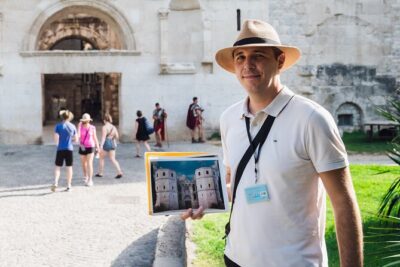
Walking Tour of Split with a ‘Magister’ of History
Read our review →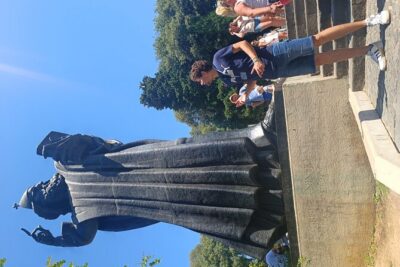
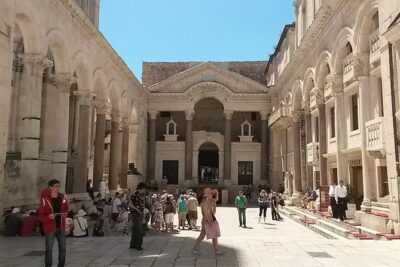
SPLIT-PRIVATE Walking Tour of Diocletian’s Palace & Old Town
Read our review →
Split History and Gastro Small-Group Tour with Food and Drinks
Read our review →
Split: Historical Tour of Salona, Klis Fortress and Trogir
Read our review →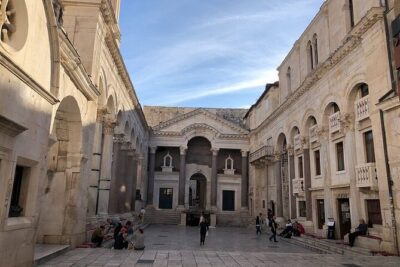
History & Cultural Walking Tour of Split and Diocletian’s Palace
Read our review →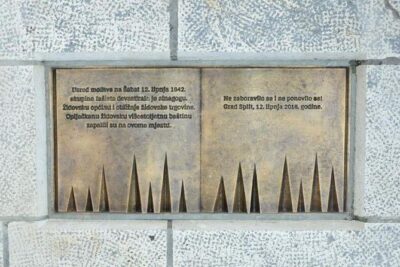
Jewish Heritage & Diocletian’s Palace Private Split Tour
Read our review →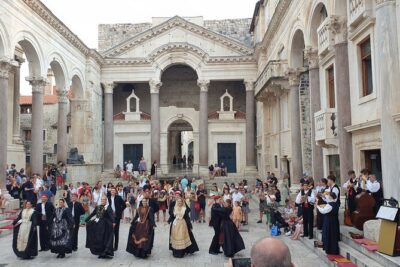
History Split Walking Tour in French -Small group
Read our review →Browse the lists this tour appears in