
Review · BERLIN
Berlin Historical Highlights Walking Tour
Berlin’s past is packed into a surprisingly walkable central route. In a few hours, you move from modern Potsdamer Platz to the Berlin Wall, Hitler’s former bunker site, the Holocaust Memorial, Brandenburg Gate, and Museum Island. The history keeps changing under your feet, which is the real strength of this tour.
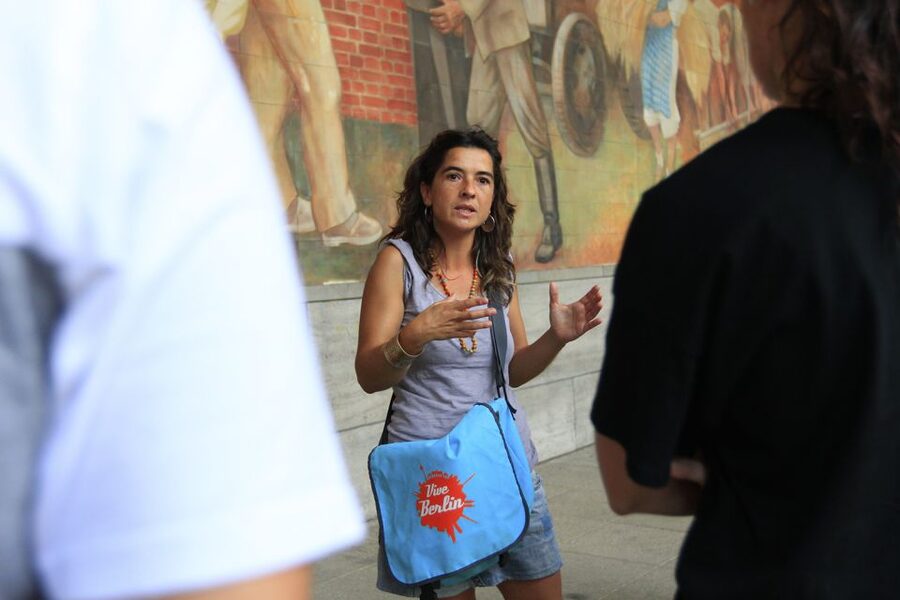
I like the small-group format and the chance to ask questions as you go. I also like the guides’ personal touch: Paul, Jean Charles, Celine, and Paolo are among the guides named in recent feedback, and the tour’s French, Italian, Spanish, and English options make it easier to follow difficult subjects. The main drawback is the walking distance, especially in cold, snow, or rain, and the price is high for solo visitors or couples.
Key points at a glance
- One route, many eras: See Prussian Berlin, Nazi Berlin, the divided city, and today’s reunited capital in one walk.
- Potsdamer Platz sets the tone: Begin with modern Berlin, then trace how war and division reshaped this part of town.
- Serious history is handled on site: The route includes the Topography of Terror, Hitler’s bunker area, and the Holocaust Memorial.
- Cold War landmarks are built into the walk: The Berlin Wall and Checkpoint Charlie give the city’s division a physical presence.
- The final stretch turns grand: Walk Unter den Linden to Bebelplatz, Museum Island, and the Humboldt Forum.
- Best for a private small group: At $389 for up to six people, the price makes more sense when shared.
From Potsdamer Platz into Berlin’s broken twentieth century
The tour begins at Potsdamer Platz, one of Berlin’s clearest examples of reinvention. Today, it is associated with modern architecture and a busy central location. The guide uses it as a starting point for explaining how Berlin was cut apart and later put back together.
That opening matters because Berlin is not a city where the past sits neatly in one old quarter. You will see new buildings beside traces of war, dictatorship, and division. Potsdamer Platz gives you a quick lesson in that contrast before the route moves toward harder subjects.
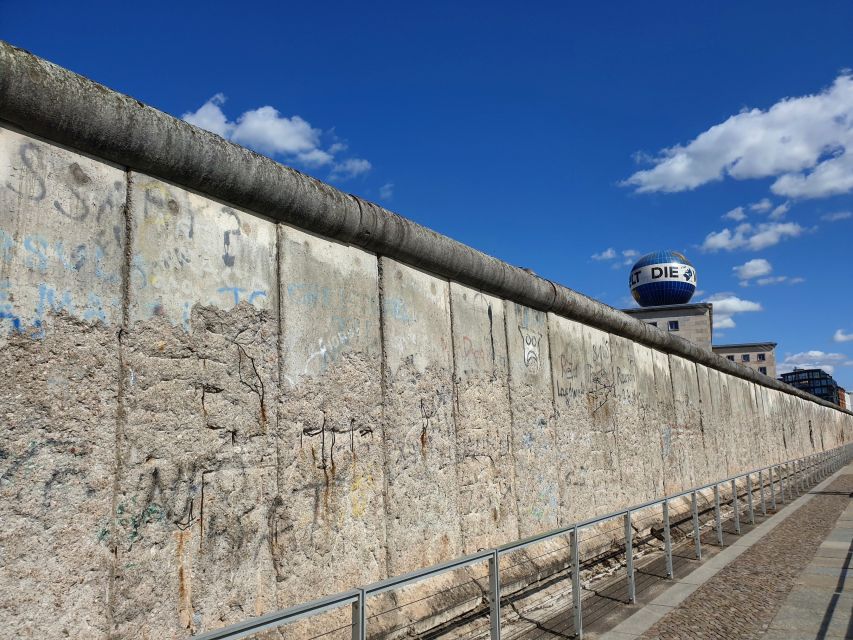
The first major stop is a section of the Berlin Wall. You should not expect a long museum visit here. The stop is built around seeing the remains and understanding what the Wall meant to daily life in a city split in two.
A guide can add the missing scale. The surviving pieces are easy to photograph, but the story is much larger than the concrete itself. This was a border through neighborhoods, streets, and families. The walking format lets you connect the Wall with the streets around it rather than treating it as an isolated monument.
More History Walking Tours in Berlin
- Berlin: History of the Third Reich Guided Walking Tour
★ 4.7 · 791 reviews - Berlin Private Complete History All Day Walking Tour
★ 5.0 · 474 reviews - Berlin: Charité Hospital Walking Tour of Medical History
★ 4.9 · 276 reviews
Topography of Terror and Checkpoint Charlie
The Topography of Terror provides a short guided stop connected with the Nazi period. The site is near former government and security offices, and the guide uses it to explain how dictatorship operated in Berlin.
The visit is listed as about ten minutes, so this is an introduction rather than a full museum session. If you want to read every display inside the Topography of Terror, you will need to return on your own. Still, its place in the route is useful. It moves the story beyond famous names and buildings and toward the machinery of persecution.
Next comes Checkpoint Charlie, perhaps Berlin’s most famous Cold War address. The original crossing point became a symbol of the city’s division, and the tour uses it to explain the political tension between East and West.
Checkpoint Charlie can feel theatrical today, with its well-known sign and busy surroundings. That is exactly why a guide helps. You can separate the modern tourist setting from the serious role the checkpoint played during the Cold War. The stop lasts about ten minutes, giving you the essential context without letting one landmark take over the morning.
Hitler’s bunker area and the Holocaust Memorial
The route then passes the site associated with Hitler’s bunker. The bunker itself is not presented as a visitor attraction, and that is important. You are seeing the area where the final days of the Nazi regime unfolded, not touring an intact underground room.
This stop works best when the guide keeps the focus on historical fact rather than spectacle. The plainness of the location can be striking. Berlin has deliberately avoided turning it into a shrine or dramatic showpiece.
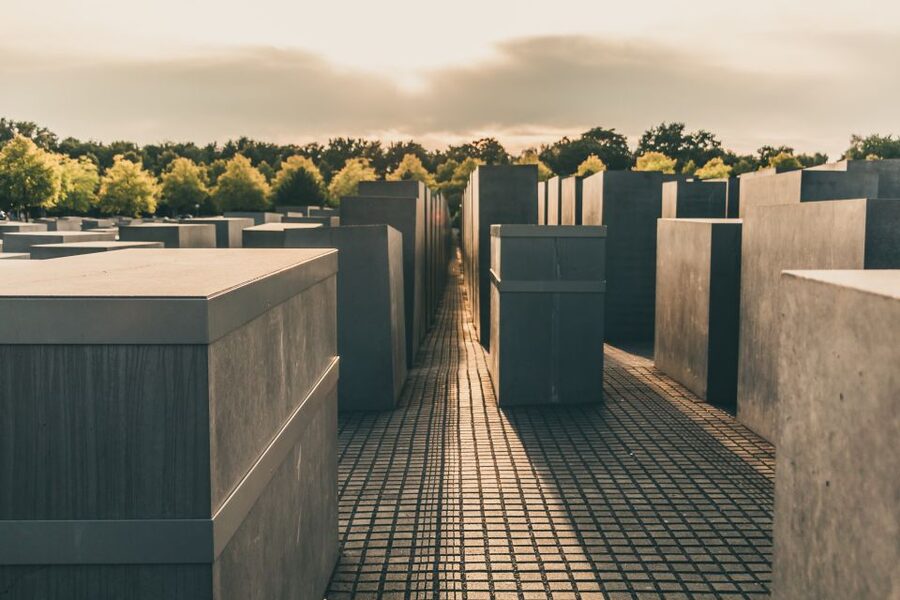
From there, the walk reaches the Memorial to the Murdered Jews of Europe, commonly called the Holocaust Memorial. You will pass through the field of concrete blocks, with the ground changing beneath you as the blocks rise and fall around the paths.
The scheduled guided portion lasts about twenty minutes. That gives you time to consider the memorial and hear why it was built, though it is not a substitute for the underground information center if you want a fuller account of individual lives and the Holocaust. The memorial is powerful, but it deserves quiet attention. Keep your camera use respectful and allow yourself time to walk rather than rush across it.
This is one of the strongest parts of the route because the subject is treated as part of Berlin’s central story, not as an optional side trip. You move from the Nazi state’s offices and bunker area to a public memorial that asks you to stop and remember the people destroyed by that regime.
Reichstag and the Brandenburg Gate
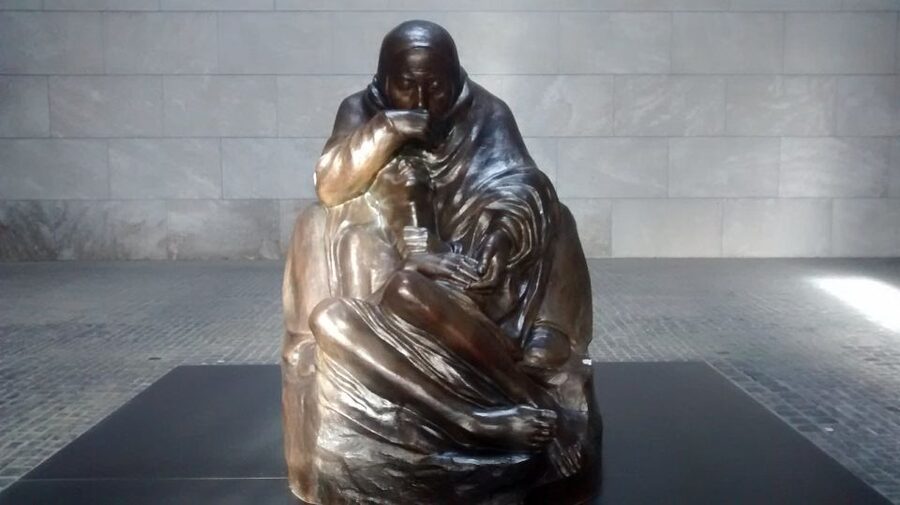
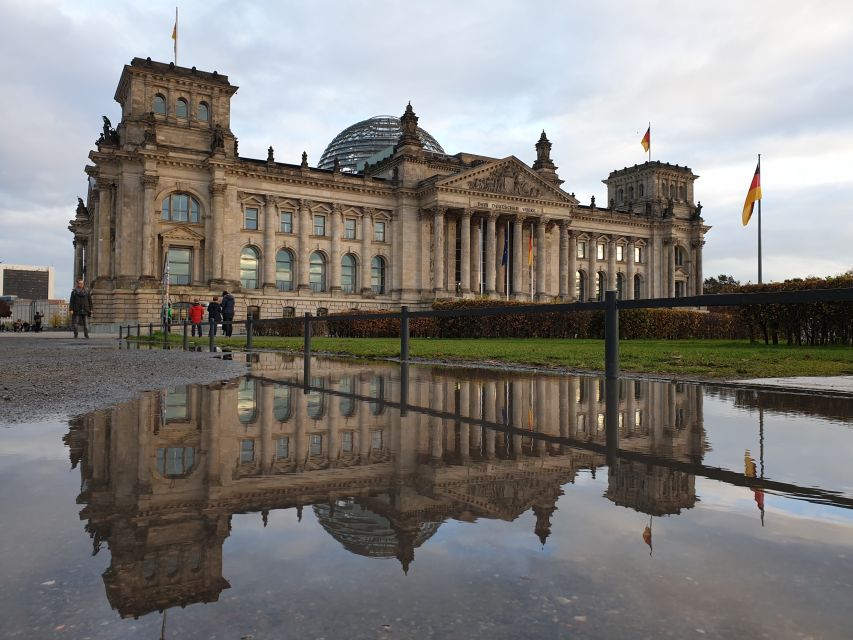
The walk continues to the Reichstag, Germany’s national parliament building. The exterior links nineteenth-century imperial Berlin with the country’s modern democratic government. The guide provides a short explanation, around ten minutes, rather than taking you inside.
If you want to visit the glass dome, you must arrange that separately. This walking tour is about the building, its setting, and its place in Berlin’s political story. That limitation is worth knowing before you book.
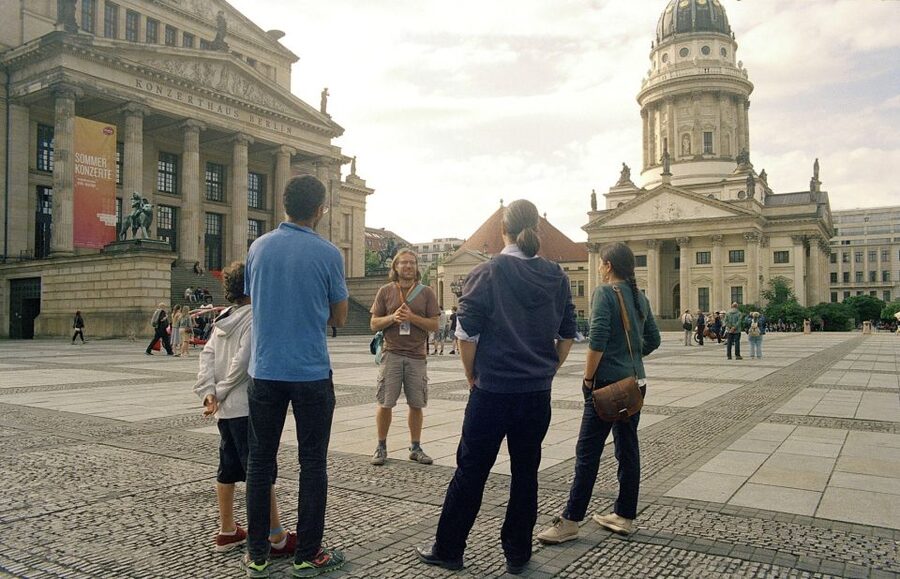
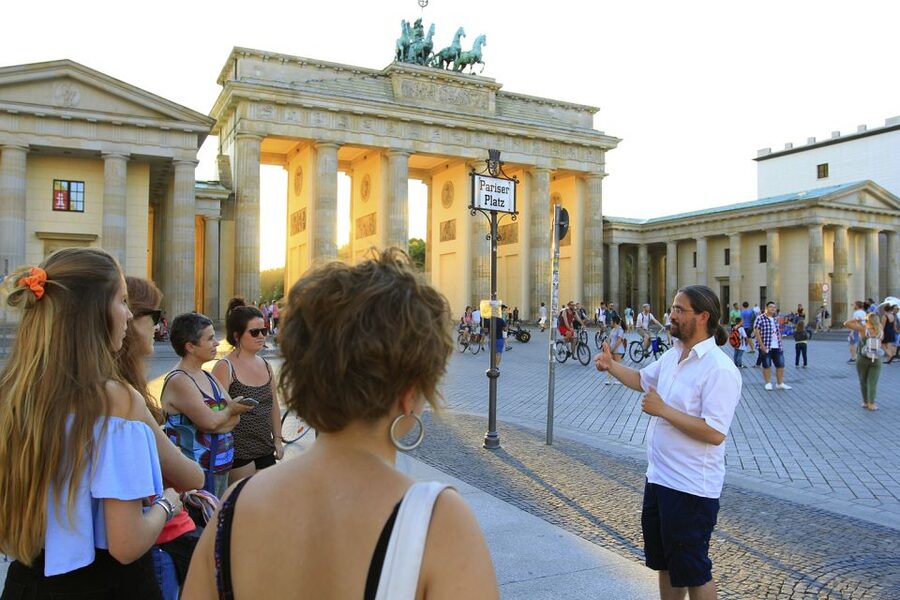
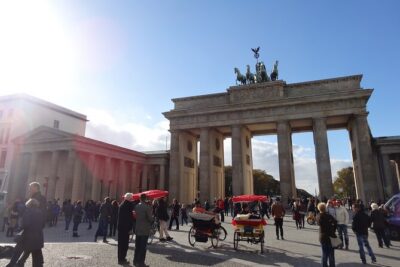
A few minutes later, the Brandenburg Gate provides one of the tour’s most recognizable views. Built in the eighteenth century, it has witnessed kings, empire, war, Nazi rule, division, and reunification. Few monuments summarize Berlin’s changes so neatly.
The scheduled stop here includes guided explanation and a short break. That pause is welcome. You can take photographs, catch your breath, and absorb the scale of the gate without being hurried straight into the next story.
The gate is also a good place to understand why this route works. A single landmark can represent several different periods, but the guide helps you avoid flattening them into one simple tale. The Brandenburg Gate was not always a symbol of unity. Its meaning changed with the city around it.
More History Walking Tours in Germany
- Berlin Private Half-Day Walking Tour: Discover the German Capital’s History
★ 5.0 · 244 reviews - The History of Berlin: WWII PRIVATE Walking Tour With Locals
★ 5.0 · 209 reviews - Berlin: Historic Center Walking Tour with a Real Berliner
★ 5.0 · 134 reviews - Berlin: Nazi History Walking Tour
★ 4.8 · 33 reviews
Unter den Linden, Bebelplatz, and the old royal center
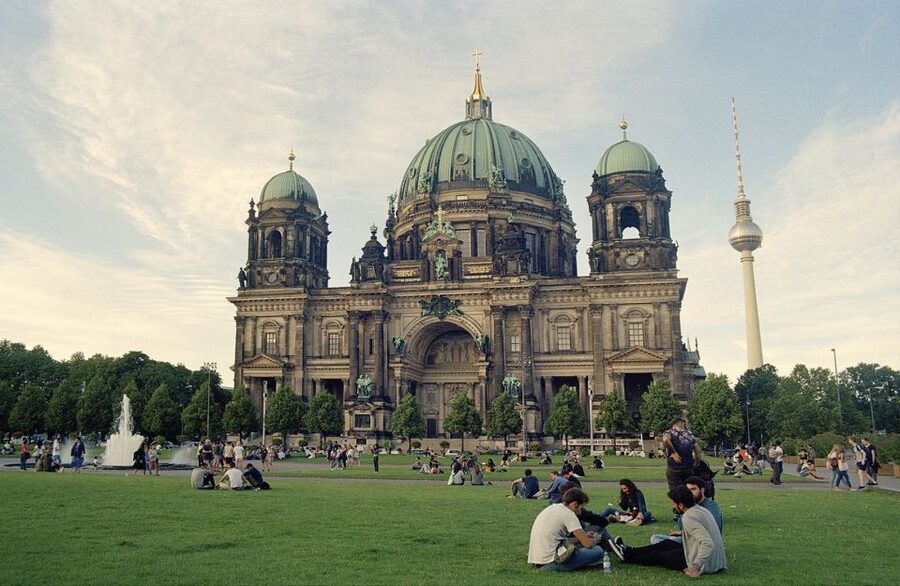
After the Brandenburg Gate, you walk along Unter den Linden. This grand avenue leads into Berlin’s historic center, where monuments connected with Prussia, the monarchy, education, religion, and culture gather close together.
The walk lasts about fifteen minutes. It is a chance to slow the pace and look at the city’s proportions. Berlin can feel scattered, but Unter den Linden gives this part of the route a clear spine.
Bebelplatz follows. The square is associated with the former royal and university district, and it is also linked with the Nazi book burning of 1933. The guide explains the square’s buildings and the darker event that made the place a symbol of censorship and political repression.
The stop is short, about ten minutes, so expect an overview rather than an extended examination of every building. I like its position on the route because it shows that Nazi history did not happen only in distant administrative offices. It took place in the heart of Berlin, beside institutions that still shape the city’s identity.
Museum Island and the Humboldt Forum
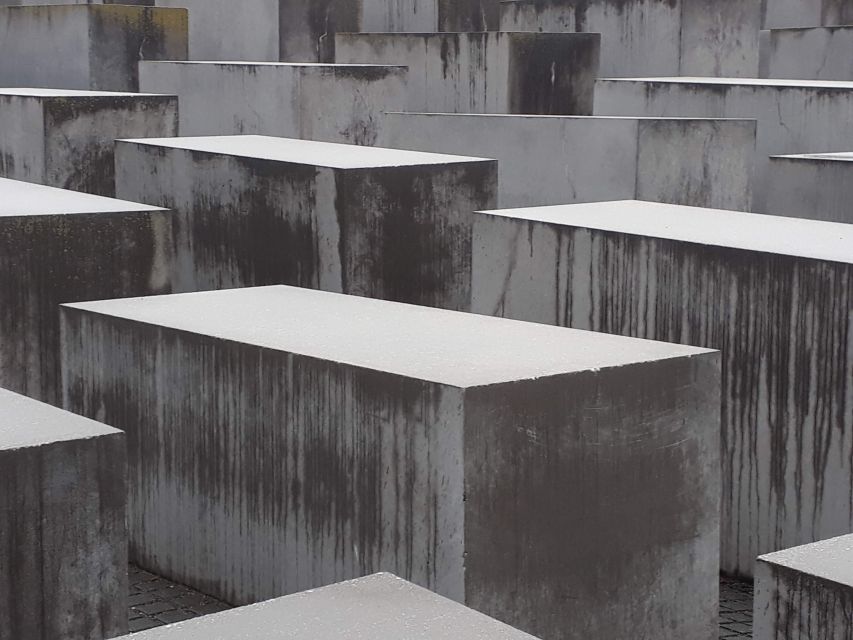
The final part of the walk takes you toward Museum Island, one of Berlin’s most important cultural areas. The guide explains the island and its role in the city’s museum tradition, but entry to the museums is not included.
That distinction matters. You will see the setting and hear how it fits into Berlin, but you should plan a separate museum visit if you want to go inside. Museum Island can easily fill several hours on its own, so many people will prefer to return another day rather than squeeze a rushed visit into this tour.
The route also includes the Humboldt Forum. The building is a major modern addition to Berlin’s historic center, and its appearance invites discussion about reconstruction, memory, collections, and the way Germany presents its past.
You get about ten minutes of guided attention here. That is enough to place the Humboldt Forum in the city’s story, but not enough for a full interior visit. The tour ends around Unter den Linden 5, rather than returning to the original starting point. This is useful if you want to continue toward Museum Island or central Berlin, but you should not expect a loop back to Potsdamer Platz.
How the walking pace feels
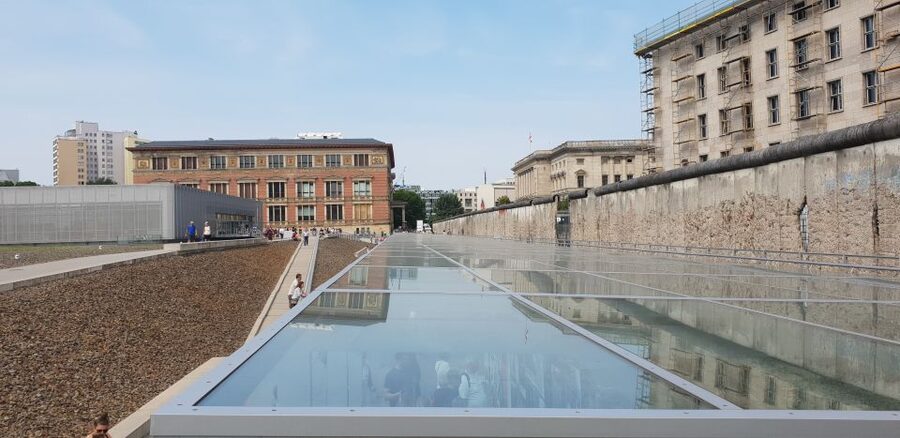
The planned stops and transitions add up to about three hours, with the full activity listed as three to six hours depending on the selected option. A private pickup, a slower pace, questions, or transport during difficult weather can change the timing.
You should wear comfortable shoes. This is a real city walk, not a series of short transfers between attractions. The tour may use the metro if weather makes walking difficult, but public transport is not included.
Berlin’s central districts are broad, and the route covers several major areas. In winter, the cold can be a serious factor. One recent January tour continued during a snowstorm, with the guide managing the conditions well, but that does not make warm clothing optional. Plan for wind, wet pavement, and long periods outdoors.
Buy a day ticket for Berlin’s AB zones if you need to reach the meeting point and continue sightseeing afterward. The tour may begin at different locations depending on your booking, and it does not end at the meeting point. The public transport ticket is also useful if bad weather changes the route.
What $389 means for value
The price is $389 per group of up to six people. That makes the math very different for a family or group of friends. Split six ways, the cost is about $65 per person. Split between two people, it is closer to $195 each.
You are paying for a dedicated guide rather than admission tickets. No museum entries, public transport, or other paid attractions are included. The value comes from having one person connect a large number of sites and adjust the conversation to your interests.
For six people who want a private introduction to Berlin, the price can be fair. It is less attractive if you are alone, traveling as a couple, or mainly want entrance to museums. In that case, you may prefer a shorter public walking tour and spend the savings on museum admission.
The private format is particularly useful for families, older relatives, or mixed-interest groups. You can ask for more explanation at Checkpoint Charlie, pause longer at the Holocaust Memorial, or move faster through a site that interests you less. The available languages are English, French, Italian, and Spanish.
Who should book this Berlin walk
I would choose this tour for a first visit when you want a strong orientation before exploring independently. The route covers enough ground to show how Berlin’s major periods connect, while the guide supplies the dates, stories, and practical suggestions that are easy to miss on your own.
It is also a good fit if you have only one full day in central Berlin. You will not enter every museum, but you will see the key exterior sights and know where to return.
This is less suitable if you dislike walking, want a relaxed café-and-neighborhood day, or need long indoor visits at each attraction. The route deals with heavy material, too, including Nazi persecution, the Holocaust, and the Berlin Wall. It is rewarding, but it is not light sightseeing.
Give the guide at least several days to arrange the tour. A private version cannot be organized in less than 72 hours, and hotel pickup requires the hotel name and address in your booking. If pickup is selected, wait in the hotel lobby ten minutes before the agreed time.
Should you book it?
Book this tour if you want Berlin’s main historical landmarks explained in one connected walk, especially if you can fill most or all of the six-person capacity. Paul, Jean Charles, Celine, and Paolo are among the guides praised by name for clear explanations, helpful advice, and calm handling of difficult weather.
Skip it if your priority is entering museums or keeping costs low for one or two people. For everyone else, the route offers a useful first reading of Berlin: modern Potsdamer Platz, the Wall, Nazi sites, the Holocaust Memorial, Brandenburg Gate, Prussian Berlin, Museum Island, and the Humboldt Forum, all in one thoughtful day.
FAQ
How long does the Berlin Historical Highlights Walking Tour last?
The tour is listed as lasting three to six hours, depending on the selected option. The main walking route is described as a three-hour experience.
What sights are included?
The route includes Potsdamer Platz, a section of the Berlin Wall, the Topography of Terror, Checkpoint Charlie, Hitler’s bunker area, the Holocaust Memorial, the Reichstag, Brandenburg Gate, Unter den Linden, Bebelplatz, Museum Island, and the Humboldt Forum.
Is the tour private?
A private group option is available. The price is $389 for a group of up to six people.
Which languages are available?
The live guide options are English, French, Italian, and Spanish.
Is public transport included?
No. Public transport tickets are not included. An AB-zone day ticket is recommended, and the metro may be used during the tour if weather conditions make walking difficult.
Is hotel pickup available?
Pickup is optional. If you select it, provide your hotel name and address when booking, wait in the lobby ten minutes before the scheduled time, and allow several days for arrangements.
Is the tour wheelchair accessible?
Yes, the activity is listed as wheelchair accessible.
What should I bring?
Bring comfortable shoes. The tour is designed to be completed on foot, covers several central Berlin areas, and may involve extended time outdoors.
Latest history tours reviewed in Berlin
- Berlin: History and Sightseeing with Kids (Free for Kids)★ 4.9 · 19 reviews
- Berlin: Nazi History Walking Tour★ 4.8 · 33 reviews
- Berlin: Urbex Abandoned Places & History Tour★ 4.8 · 18 reviews
- Berlin: Historic Boat Sightseeing City Center Tour★ 4.5 · 415 reviews
- Berlin: Historical Sights & Berlin Wall Tour with a Berliner★ 5.0 · 62 reviews
- Berlin: Guided Craft Beer & Cultural Tour With Snacks★ 5.0 · 68 reviews
- Berlin (E)Bike Tour Historical Highlights in Small groups★ 4.5 · 24 reviews
- Berlin: Historic Center Walking Tour with a Real Berliner★ 5.0 · 134 reviews
Berlin History Tours, compared.
Berlin: 3-Hour World Heritage Cruise to Potsdam
Read our review →
Berlin: History of the Third Reich Guided Walking Tour
Read our review →
Berlin Private Complete History All Day Walking Tour
Read our review →
Berlin: Cold War & Berlin Wall History Guided Bike Tour
Read our review →
Berlin: Historic Boat Sightseeing City Center Tour
Read our review →
Small group Potsdam: A Journey Through History and Palaces
Read our review →
Berlin: Charité Hospital Walking Tour of Medical History
Read our review →Browse the lists this tour appears in