
Review · BERLIN
Berlin (E)Bike Tour Historical Highlights in Small groups
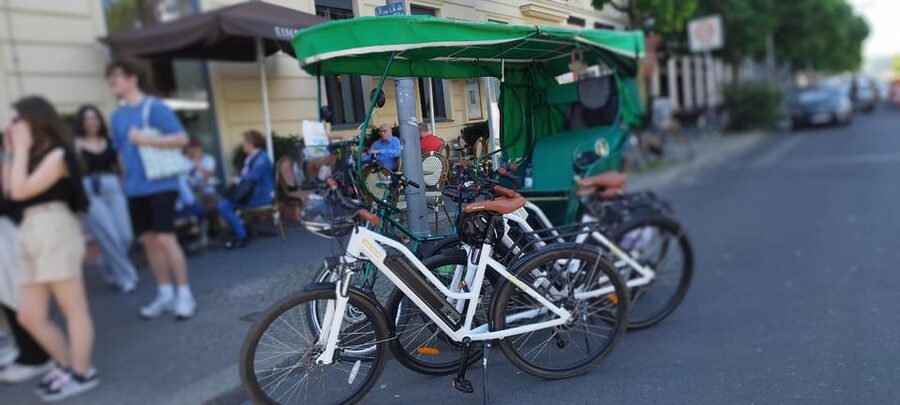
Berlin’s historic center is too spread out for a comfortable walk and too compact for a sightseeing bus. This small-group e-bike tour solves that problem neatly, carrying you from the TV Tower and Museum Island to Checkpoint Charlie, the Berlin Wall, Brandenburg Gate, and the Reichstag in three and a half hours. I like the efficient route and the choice of a traditional rickshaw for anyone who cannot or does not want to cycle.
I also like the personal touch: guides stop often for photos, provide bottled water, and explain Berlin’s difficult past without rushing from one landmark to the next. The main caution is that the experience depends on smooth equipment and clear coordination. One poor outing involved an e-bike losing power and a guide responding badly to questions, so check your bike before setting off.
Key points to know before booking
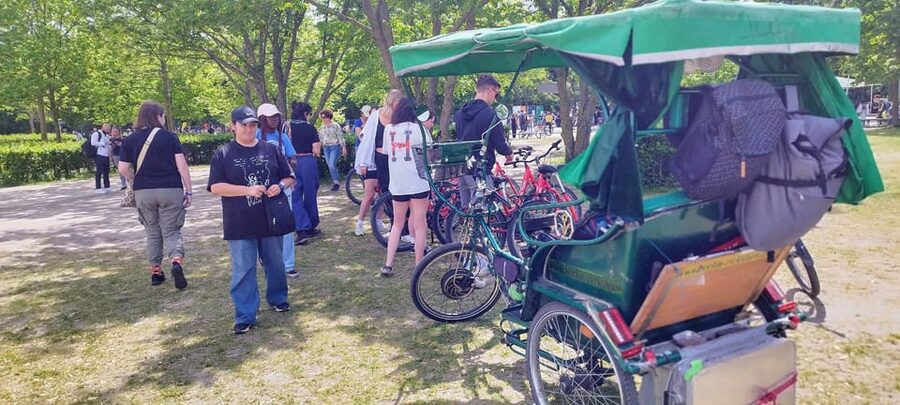
- A rickshaw makes this a mixed-ability tour: Two people can ride together while others use e-bikes.
- The route covers a lot in 210 minutes: You see nearly every major historic sight in Berlin Mitte.
- The group is limited to six: That makes questions and photo stops easier than on a large bus tour.
- The tour begins at Rosenthaler Platz: Weinbergsweg 6 is close to the U-Bahn and cafes.
- The strongest feature is the guiding: Levent has led an enthusiastic Dutch-language outing, while Jakob has also earned praise for his guiding.
- Expect exterior sightseeing: The focus is on landmarks, stories, views, and photos rather than entering museums or government buildings.
Why an e-bike or rickshaw makes sense in Berlin
Berlin’s central sights sit in a long, loose chain. Museum Island is east of Unter den Linden. The Brandenburg Gate, Reichstag, Holocaust Memorial, Checkpoint Charlie, and the Topography of Terror are farther west and south. You can walk between them, but the distances add up quickly.
Public transport can get you close, yet every transfer costs time and breaks the flow. A bicycle gives you a practical middle ground. You cover more ground than on foot, still feel the streets around you, and can stop at places a bus cannot reach easily.
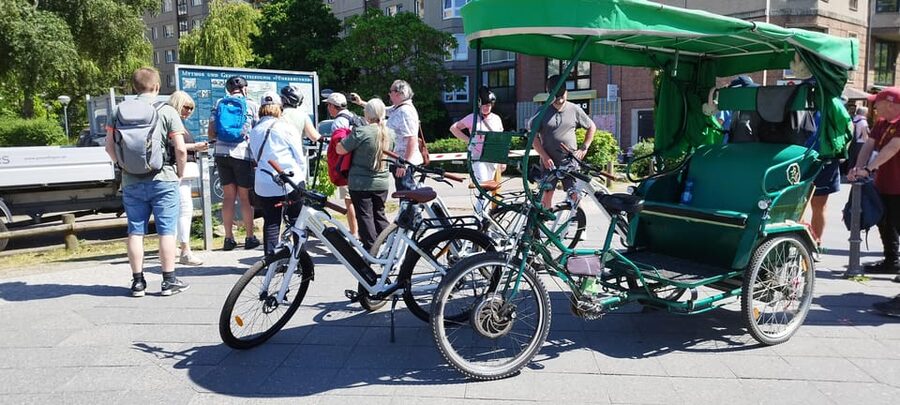
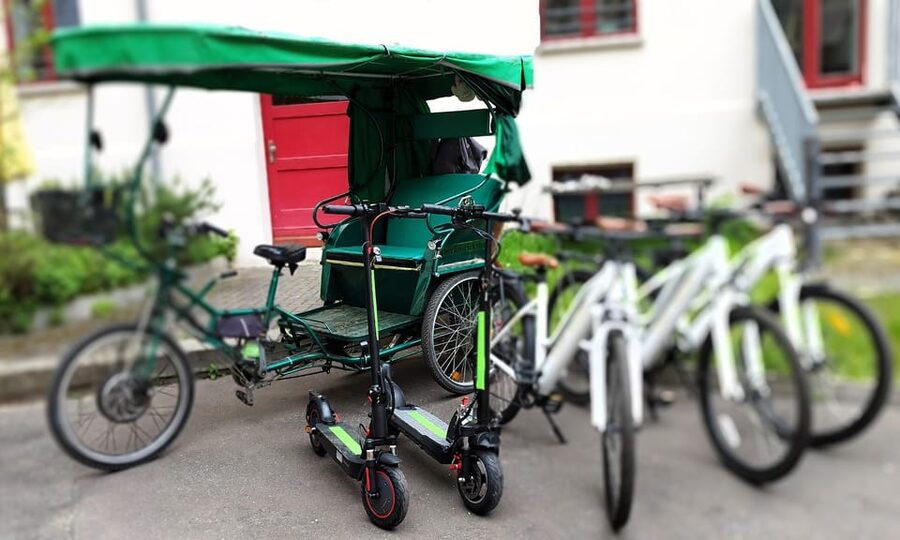
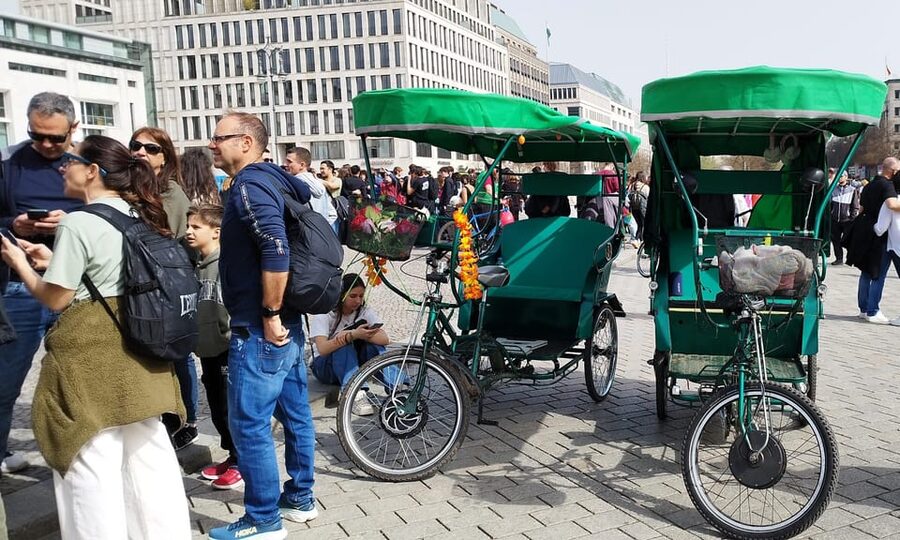
The rickshaw adds an important option for a family or mixed group. It seats up to two people, making it useful for a grandparent, a younger child, a partner who does not cycle, or anyone who wants a calmer ride. The information supplied describes boarding with only a few steps, but it does not promise wheelchair access, so ask the operator directly if that matters for your party.
The tour is in English and limited to six people. That small size matters in Berlin, where a large group can easily block a cycle path or scatter at a crossing. You should have a better chance to hear the guide and get help with photos.
More History Bike, Segway and Tuk-Tuk Tours in Berlin:
- Berlin: Cold War & Berlin Wall History Guided Bike Tour
★ 4.8 · 422 reviews - Berlin: Guided Bike tour of the Berlin Wall and Third Reich
★ 5.0 · 160 reviews - Berlin Wall History Small Group Cycling Tour
★ 4.9 · 152 reviews
Starting at Rosenthaler Platz and the TV Tower
Meet at Weinbergsweg 6, near the Rosenthaler Platz U-Bahn exit. This is a useful starting point in Mitte, surrounded by cafes, small shops, street art, and Weinbergspark. Arrive with comfortable shoes, even though much of the tour is seated or on wheels.
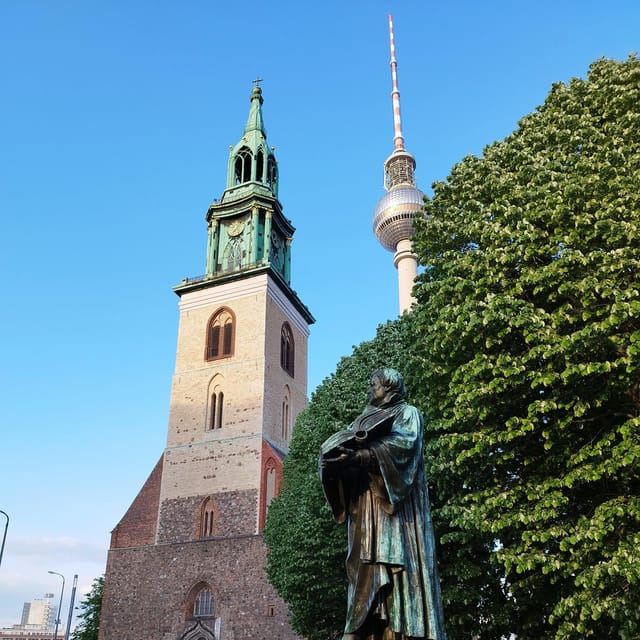
The first major sight is the Berlin TV Tower. Its needle rises above Alexanderplatz and helps you get your bearings in the city. From ground level, the tower is less about a long visit and more about seeing how modern Berlin sits beside its older core.
You should expect a photo stop and an explanation rather than a trip up the tower. No admission to the observation deck is included in the experience details.
Museum Island and Unter den Linden
From the TV Tower, the route heads toward Museum Island. Berlin’s famous museum complex occupies an island in the Spree, with grand buildings gathered close together. Even if you do not enter a museum during this tour, the setting gives you a quick sense of Berlin’s royal and cultural center.
The guide also takes you along Unter den Linden, the broad avenue that links the historic center with the Brandenburg Gate. Its name comes from the linden trees that line the boulevard. Here, the ride becomes a moving lesson in Berlin’s architecture and public spaces, with plenty of time for scenic views and photographs.
This is one of the tour’s better uses of an e-bike. You see the city changing block by block rather than arriving at one isolated monument by coach.
The book-burning memorial and Berlin’s painful memory
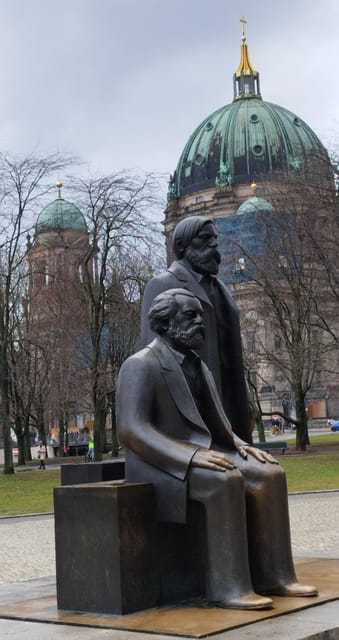
A stop at the Memorial to the Nazi Book Burning of May 10, 1933 brings the tour into one of Berlin’s most sobering chapters. The memorial marks the Nazi-organized burning of books by Jewish, left-wing, liberal, and other writers.
The site is easy to miss if you simply pass through the city. A guide gives it meaning and helps connect it to the wider story of Nazi rule. Expect a short stop, historical explanation, and photographs rather than a long ceremony or indoor visit.
This part of the route is valuable because Berlin’s past is not presented only through grand buildings. Some of its most important reminders are quiet and easy to overlook.
More History Tours in Berlin:
- Berlin: 3-Hour World Heritage Cruise to Potsdam
★ 4.5 · 1,569 reviews - Berlin: History of the Third Reich Guided Walking Tour
★ 4.7 · 791 reviews - Berlin: Berlin Charité Guided History Tour
★ 4.4 · 660 reviews - Berlin Historical Highlights Walking Tour
★ 4.9 · 657 reviews
Checkpoint Charlie and the Cold War city
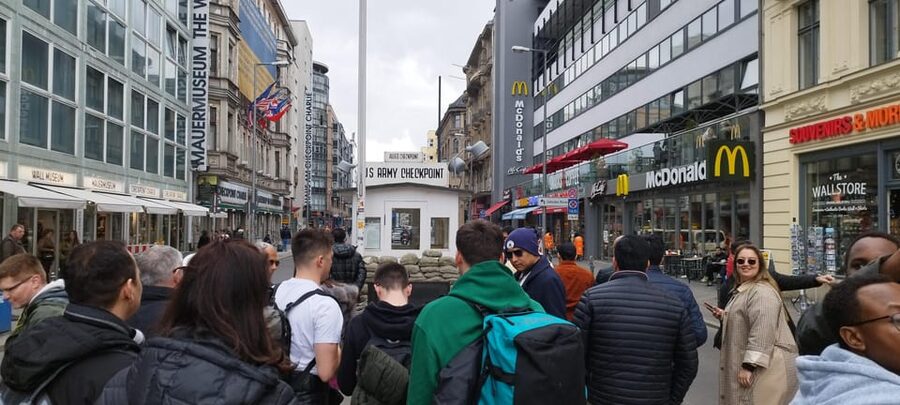
Checkpoint Charlie is one of Berlin’s best-known Cold War locations. It once marked a crossing between the American and Soviet sectors, and it became a symbol of the divided city.
Today, the setting is more commercial than many people expect. You will see the famous checkpoint sign and have time for photos, but the modern surroundings can feel busy and tourist-focused. The guide’s explanation is what gives the stop weight, especially if you want to understand how Berlin functioned as a front line during the Cold War.
The e-bike is useful here because the area sits between several other major sights. You are not spending half a day walking from Alexanderplatz just to reach one photo point.
Hitler’s bunker and the limits of what remains
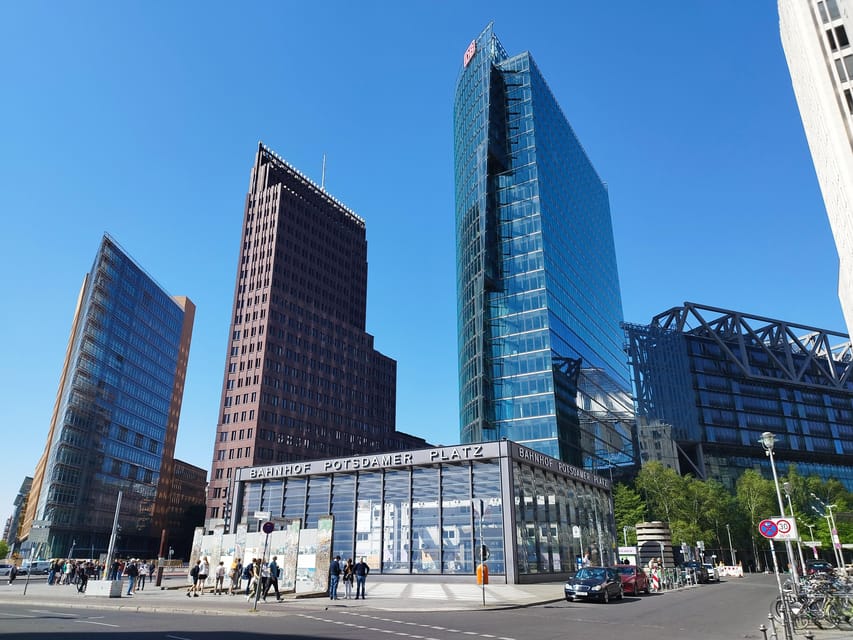
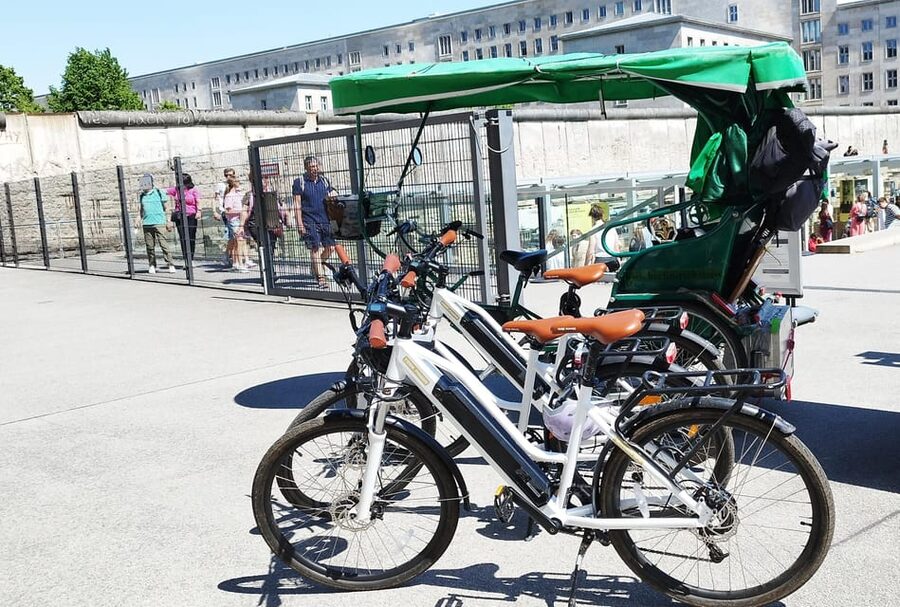
The former Führer Bunker is another place where the history is more powerful than the physical site. The bunker itself is not presented as an attraction to enter. The stop is at the location, now marked in a way that does not turn it into a shrine.
That restraint matters. The guide can explain Hitler’s final days and the collapse of the Nazi regime while keeping the focus on historical fact rather than spectacle. You should expect a photo stop and commentary, not an underground tour.
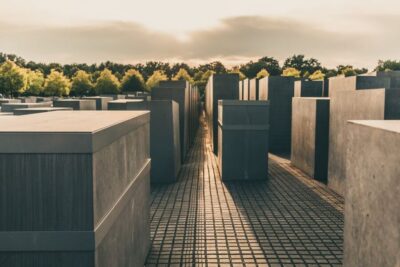
The nearby Holocaust Memorial shifts the tone again. Its field of concrete slabs invites quiet thought, and the changing heights and narrow paths can make the experience feel personal even when other people are nearby. This is a place where you should allow yourself a moment to walk or stand without treating it as just another background for a picture.
The Berlin Wall and the Topography of Terror
The Berlin Wall stop connects the city’s Nazi past with its postwar division. The wall was not simply a barrier between two neighborhoods. It separated families, workplaces, and daily routines for decades.
The tour gives you an overview rather than a full wall-history program. That is useful if this is your first look at Berlin, but you may want a dedicated Wall visit later if you want more detail about escape attempts, border buildings, or the wall’s fall in 1989.
The Topography of Terror continues the difficult history. The site occupies the former headquarters of the Gestapo and SS, two of the main instruments of Nazi terror. The tour includes a photo stop, with the guide using the location to explain how the dictatorship operated.
A useful thing to understand is the rhythm of this route. Berlin’s landmarks are not all cheerful postcard stops. You move quickly between places tied to persecution, war, division, and political power. The guide’s tone matters, and the strongest feedback about this experience centers on clear, energetic guiding. Levent has been noted for enthusiastic Dutch-language explanations, while Jakob has been singled out as an excellent guide.
Brandenburg Gate and the Reichstag
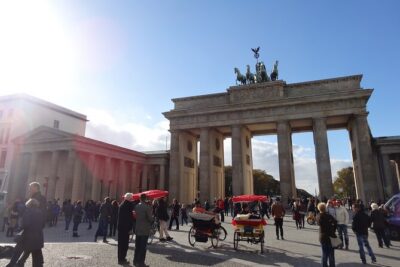
The Brandenburg Gate is Berlin’s great symbol, but it is more than a pretty neoclassical arch. It has witnessed royal processions, Napoleon’s arrival, Nazi parades, the Cold War division, and the celebrations after reunification.
The gate is often crowded, so the photo stop may feel busy. A small group helps because you can pause without trying to keep track of dozens of people. Your guide can also point out how the gate sits at the end of Unter den Linden and beside the former border between East and West Berlin.
The nearby Reichstag is home to the German parliament. Its glass dome, designed after reunification, has become a symbol of transparency in government. The tour stops outside for views and photos. Entry to the building is not included, and visiting the dome normally requires separate arrangements, so do not book this ride expecting an interior parliament visit.
These final stops make a strong finish. You see the political center of today’s Germany after visiting places connected to dictatorship, war, and division.
What the 3.5-hour schedule feels like
Three hours and 30 minutes is long enough to make the route worthwhile but short enough to fit into a full Berlin day. The stops are spread across the center, so some time is spent riding between them. That travel time is not wasted. It lets you see ordinary streets, changing architecture, and the distances between Berlin’s famous sites.
You will not receive a full museum visit at every stop. Instead, the tour works best as an orientation. It tells you what you are looking at, gives you a historical framework, and shows you which places deserve a longer return visit.
I would book it early in your stay. One useful piece of feedback from a Dutch-speaking outing was that the tour would have helped more at the beginning, before the group had already seen many of the same places independently. That is good advice. Use this ride to get your bearings, then return to the Holocaust Memorial, Berlin Wall sites, Museum Island, or the Topography of Terror with more time.
The guide, photos, water, and equipment
The experience includes bottled water and frequent photo stops. The guides are described as strong photographers, which is useful for couples and families who otherwise rely on quick phone shots or selfies. You can ask for photos at the major landmarks, although the exact number of pictures or whether they are delivered afterward is not stated.
The guide leads from a rickshaw, while e-bike riders follow. One person described that arrangement as awkward when the rickshaw was empty, especially after an e-bike lost its electric assistance. That is the clearest practical warning in the available feedback.
Before leaving Weinbergsweg, check the brakes, tires, seat position, and electric assistance. Tell the guide immediately if the motor is not working. The tour is advertised with safety measures, but no detailed equipment policy is provided, so do not wait until the middle of the route to report a problem.
The guiding itself appears to be the more dependable strength. Recent praise highlights clear, informative explanations, and several outings were described as excellent or perfect. Still, guide quality and equipment handling can vary by day, so a quick check at the start is sensible.
Is $82 a fair price?
At $82 per person, this is not the cheapest way to see Berlin’s center. You can use public transport and walk between several sights for far less. The price makes more sense if you value a compact route, live commentary, a small group, bicycle access, and help with photographs.
It is also a practical value for a mixed-ability party. If one person cannot cycle, booking separate activities can split up the group. Here, up to two people can ride in the rickshaw while the rest use e-bikes. That shared experience may justify the cost for families and couples.
The price is less attractive if you want long visits inside museums, the Reichstag, or the TV Tower. Those admissions are not included, and the tour focuses on outdoor stops. Think of the $82 as payment for transport, route planning, guiding, and time saved, not as an all-inclusive sightseeing pass.
Free cancellation up to 24 hours ahead and reserve-now, pay-later booking add useful flexibility. Starting times vary, so check availability for your date.
Who should book this Berlin ride?
I would choose this tour for first-time visitors who want a fast introduction to Mitte without joining a big coach group. It also fits families with children under 14, provided the younger riders use the rickshaw rather than an e-bike.
It is particularly well suited to grandparents, anyone with limited mobility, and couples who want to stay together even if only one person cycles. The rickshaw is not described as a wheelchair vehicle, so confirm the arrangement before paying if you need a specific mobility aid.
Strong cyclists may find the pace leisurely. History fans who want long discussions at each site may also prefer a walking tour or a dedicated museum visit. The route covers a great deal, but each stop gets an introduction rather than an extended seminar.
Should you book it?
Book this tour if you want a broad first look at Berlin Mitte, prefer a small group, and like the idea of covering long distances without a bus. The rickshaw choice is a real advantage for mixed-age families and less mobile companions.
Skip it if your priority is entering attractions, spending an hour at each memorial, or controlling every stop yourself. Also approach it with a little equipment awareness: confirm that the e-bike works before you leave.
For most first visits, I would schedule it near the start of your Berlin stay. You will see the city’s key reference points, hear the stories that connect them, and know where to return for a slower look.
FAQ
Where does the Berlin e-bike and rickshaw tour start?
It starts at Weinbergsweg 6, near the Rosenthaler Platz U-Bahn exit in Berlin Mitte.
How long does the tour last?
The tour lasts 210 minutes, or three and a half hours.
What language is the tour conducted in?
The advertised live tour language is English. Levent has also guided an outing in Dutch, but you should confirm the language available for your chosen date.
How many people are in the group?
The group is limited to six participants.
Can someone who does not cycle join the tour?
Yes. The experience offers a traditional rickshaw option for non-cyclists, people with limited mobility, and children under 14.
How many people fit in one rickshaw?
Each rickshaw accommodates up to two people.
Does the tour enter the museums, Reichstag, TV Tower, or other buildings?
The stated experience focuses on outdoor sightseeing, guided explanations, scenic views, and photo stops. Admission to those attractions is not included.
What should I bring?
Bring comfortable shoes. Bottled water is provided, and frequent photo stops are part of the experience.
Latest history tours reviewed in Berlin
- Berlin: History and Sightseeing with Kids (Free for Kids)★ 4.9 · 19 reviews
- Berlin: Nazi History Walking Tour★ 4.8 · 33 reviews
- Berlin: Urbex Abandoned Places & History Tour★ 4.8 · 18 reviews
- Berlin: Historic Boat Sightseeing City Center Tour★ 4.5 · 415 reviews
- Berlin: Historical Sights & Berlin Wall Tour with a Berliner★ 5.0 · 62 reviews
- Berlin: Guided Craft Beer & Cultural Tour With Snacks★ 5.0 · 68 reviews
- Berlin: Historic Center Walking Tour with a Real Berliner★ 5.0 · 134 reviews
- Berlin Beers & Battlefields Tour: War History & German Beer★ 4.9 · 29 reviews
Berlin History Tours, compared.
Berlin: 3-Hour World Heritage Cruise to Potsdam
Read our review →
Berlin: History of the Third Reich Guided Walking Tour
Read our review →
Berlin Private Complete History All Day Walking Tour
Read our review →
Berlin: Cold War & Berlin Wall History Guided Bike Tour
Read our review →
Berlin: Historic Boat Sightseeing City Center Tour
Read our review →
Small group Potsdam: A Journey Through History and Palaces
Read our review →Browse the lists this tour appears in