

Review · BERLIN
Berlin: Charité Hospital Walking Tour of Medical History
Berlin’s Charité began as a simple plague house in 1710. Two hours later, you’ll have traced its path from bloodletting and mercury treatments to Robert Koch’s laboratory breakthroughs, Nazi medical crimes, and the hospital’s role in East Germany. The Veterinary Anatomy Theatre is the tour’s most unusual stop, an old academic building where doctors studied the illnesses of livestock and cavalry horses.
I like the way this tour connects medical progress with social and political change. I also like its honest treatment of difficult subjects, including forced sterilization and the murder of psychiatric patients under the Nazi regime. The main drawback is practical: much of the tour takes place outdoors, so cold or wet weather can make two hours feel long.
- A plague house became one of Europe’s leading hospitals: Follow Charité from its 1710 beginnings through modern medical science.
- The Veterinary Anatomy Theatre adds a rare interior stop: See Berlin’s oldest surviving academic building, when it is open.
- Robert Koch and Rudolf Virchow shaped the campus story: Their work helps explain why Charité matters far beyond Berlin.
- Rachel Hirsch’s career marks a change in medicine: Learn how she became the first woman with a medical professorship in Prussia in 1913.
- The Nazi and socialist periods receive serious attention: This is not a feel-good medical tour with the hard parts skipped.
- The ending works well for sightseeing: You finish at Alexanderufer, close to Berlin Central Station.
Why Charité Tells Berlin’s Medical Story So Well
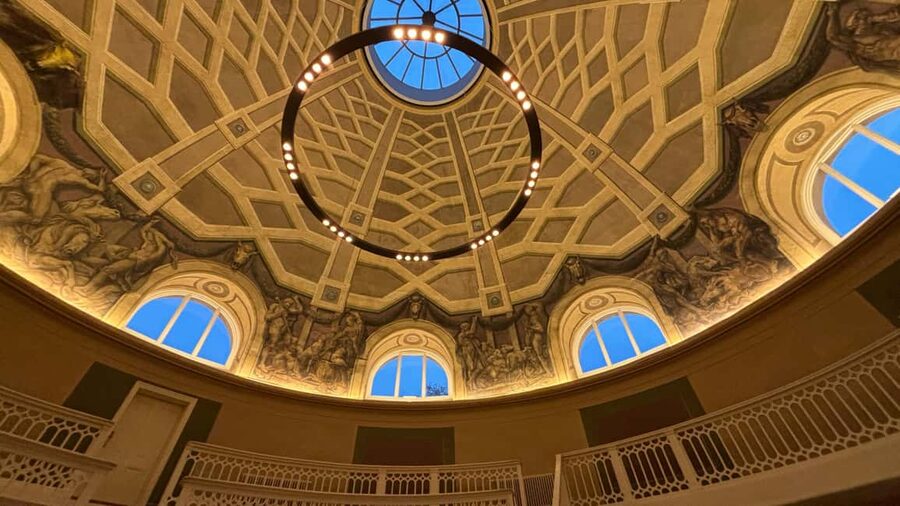
Charité is not just a hospital campus with handsome buildings. It is a record of how medicine changed, how institutions treated women, and how political power could shape medical practice.
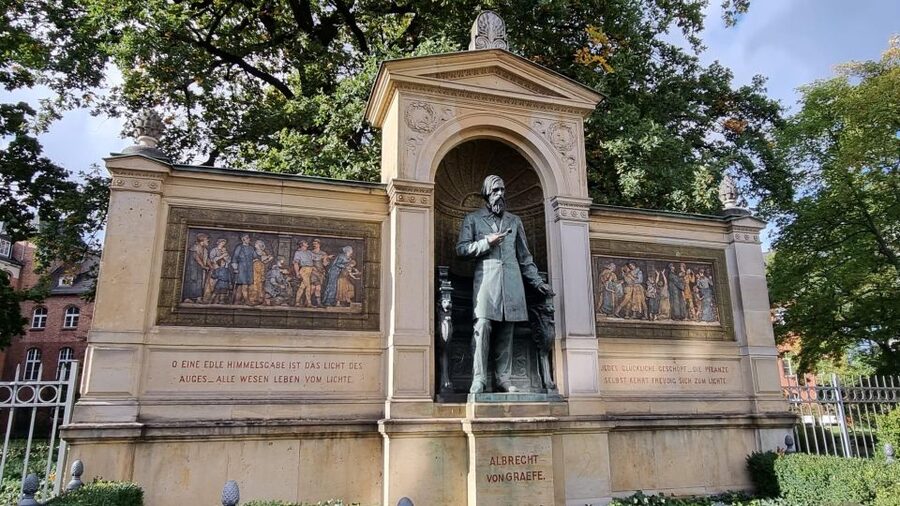
The tour begins at Robert-Koch-Platz, beside the statue of Robert Koch. That is a fitting place to start. Koch is one of the major names in modern medical science, and his work helps move the story away from older treatments based on guesswork and toward laboratory investigation.
The opening chapter reaches back to 1710, when Berlin built the hospital as a plague house. The goal was practical and urgent: protect the city from an approaching epidemic. At the time, medicine could be harsh and uncertain. Bloodletting, mercury, and amputation were common tools, and doctors had few reliable ways to understand infection.
I appreciate this beginning because it gives you a useful measure for the later achievements. Charité’s famous discoveries did not appear out of nowhere. They grew from a medical world that was often dangerous, limited, and still trying to understand the human body.
The Veterinary Anatomy Theatre and Its 18th-Century Lessons
The visit to the Veterinary Anatomy Theatre is the tour’s most distinctive feature. Built for the study of animal anatomy, it dates to the 18th century and is described as the oldest academic building still in existence in Berlin.
The building’s purpose was closely tied to city life. Doctors and researchers studied diseases affecting livestock, as well as injuries and illnesses among cavalry horses. That may sound separate from human medicine, but it was not. Healthy animals mattered to food supplies, transport, military power, and the basic running of the city.
The stop lasts about 15 minutes, so expect a focused visit rather than a long museum session. The guide uses the theatre to explain how medical investigation worked in an earlier age, before modern testing and imaging changed the field.
There is one important catch. The theatre can close for internal events or public holidays. If this stop is especially important to you, check its availability before booking. The walking tour still has plenty of material without it, but this is the part that gives the experience its rare architectural and historical flavor.
More History Walking Tours in Berlin
- Berlin: History of the Third Reich Guided Walking Tour
★ 4.7 · 791 reviews - Berlin Historical Highlights Walking Tour
★ 4.9 · 657 reviews - Berlin Private Complete History All Day Walking Tour
★ 5.0 · 474 reviews
Walking the Neo-Gothic Charité Campus
After the theatre, the route circles the historic Charité campus. The neo-Gothic architecture gives the tour a strong sense of place. You are not hearing about medical history in an abstract classroom. You are moving around the buildings where doctors taught, worked, argued, and pursued new ideas.
The route includes several guided stops of roughly 15 minutes each, with the guide filling the spaces between them. You should expect to walk and stand for close to two hours. Comfortable shoes matter, and water is a sensible addition.
Do not expect access to hospital rooms, university interiors, or every part of the campus. Some areas remain restricted because medical and academic work continues there. You can explore some parts independently after the tour, but the guided experience focuses on outdoor areas and the buildings that can be discussed without interrupting current hospital operations.
That limitation is worth knowing before you book. This is an architectural and historical walk around Charité, not a behind-the-scenes hospital visit. I think the format works well because it lets the guide tell the story without pretending that an active medical center is a museum.
Robert Koch, Rudolf Virchow, and the Move Toward Modern Medicine

Robert Koch and Rudolf Virchow are central figures in the Charité story. You’ll hear about their discoveries and about the careers that made them important in medical history.
The tour uses these figures to show how medicine changed in the 19th century. Research became more systematic. Doctors increasingly looked for evidence, causes, and patterns rather than relying only on established treatments. The campus became linked with major advances that shaped medicine well beyond Berlin.
The guide’s medical background can add real value here. Bernd’s account of the experience specifically praised the guide’s medical knowledge and the way it made the tour feel authentic. That suggests this is a good choice if you want more than names and dates. You can expect medical ideas to be explained in a way that connects them to the people and buildings around you.
At the same time, you do not need a medical background to follow the tour. The strongest part of this subject is the human scale: ambitious doctors, new methods, institutional resistance, and the changing expectations placed on medical professionals.
Rachel Hirsch and the Slow Opening of Medicine to Women

Charité’s story is also a story about who was allowed to practice medicine. Rachel Hirsch became the first woman to hold a medical professorship in Prussia in 1913.
Her appointment marked an important shift, but the tour does not present it as a smooth victory. Hirsch faced resistance within the institution. That detail matters because legal or professional progress did not instantly change everyday attitudes.
I like this section because it keeps the history grounded. You see a major step forward for women in medicine, but you also see the barriers surrounding it. The result is more useful than a simple list of firsts. It shows how change can happen inside an institution while old habits and prejudice remain in place.
If you are interested in women’s history, academic life, or the social side of medicine, Hirsch’s story may be one of the tour’s most memorable parts. It also gives the Charité campus a wider meaning. This is not only where medical discoveries happened. It is where the rules of professional life began to change.
More History Walking Tours in Germany
- Berlin Private Half-Day Walking Tour: Discover the German Capital’s History
★ 5.0 · 244 reviews - The History of Berlin: WWII PRIVATE Walking Tour With Locals
★ 5.0 · 209 reviews - Berlin: Historic Center Walking Tour with a Real Berliner
★ 5.0 · 134 reviews - Berlin: Nazi History Walking Tour
★ 4.8 · 33 reviews
Charité Under the Nazi Regime
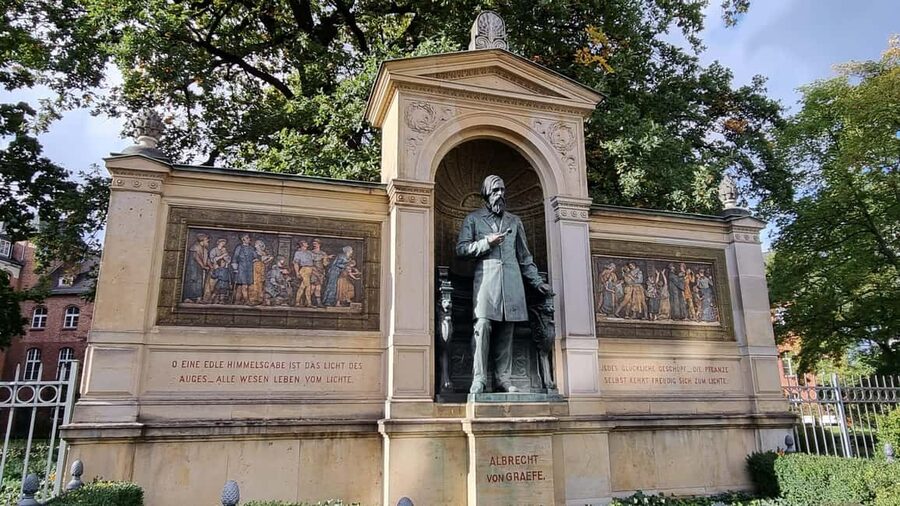
The tour’s darkest section concerns the Nazi period. At Charité, medical ethics were ignored and racial hygiene was imposed through the power of the state and the medical establishment.
Some doctors stayed silent. Others helped organize the murder of psychiatric patients. This is difficult material, and it should be. The tour does not treat Charité’s reputation as a reason to avoid responsibility. It shows how an institution associated with medical progress could also become part of a system that turned medicine against vulnerable people.
This section gives the visit moral weight. Medical history is not only a story of cures and discoveries. It is also a story of choices, professional duty, obedience, and the damage caused when doctors accept political ideology in place of ethical judgment.
The guide’s tone matters here. The experience is described as differentiated and reflective, with attention to the political setting of each period. That approach is especially important when discussing people who were celebrated in one era but must also be judged within the context of their actions and beliefs.
You should know this material may not suit young children. There is no strict age rule, but the recommended minimum is 14 because of the historical depth and the treatment of Nazi medical crimes.
East Germany, Divided Windows, and the Charité TV Connection

After 1945, Charité became part of East Germany’s medical identity. The socialist state took pride in the hospital’s achievements, even as political division shaped the campus.
One of the tour’s memorable details is that windows facing the capitalist West were bricked up. It is a small physical clue, but it says a great deal about life in divided Berlin. Politics was not somewhere far away from the hospital. It altered what people could see from their own buildings.
The tour also helps explain the real-life stories behind the Charité television series. If you have watched the show, the walk can add context to its doctors, professional pressures, and historical setting. If you have not watched it, you can still follow the tour easily. The television connection is an extra layer, not a requirement.
I find this part useful because it prevents the Charité story from ending with the Nazi period. The hospital continued to operate through another political system, and its achievements were used to support the identity of East Germany. The campus reflects both medical work and the competing ideologies that shaped Berlin.
What the Two-Hour Route Feels Like
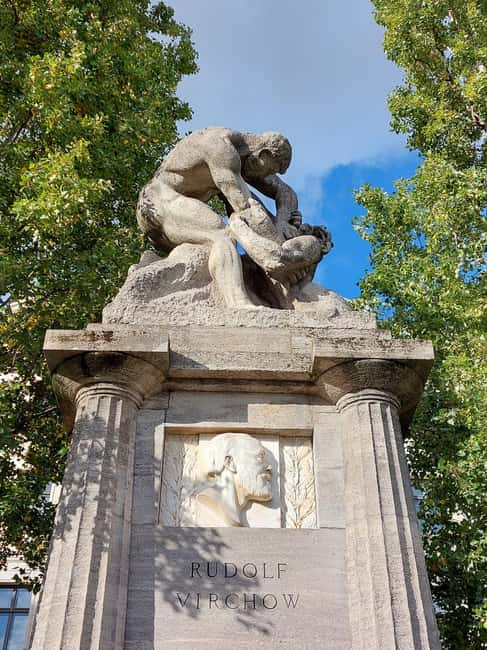
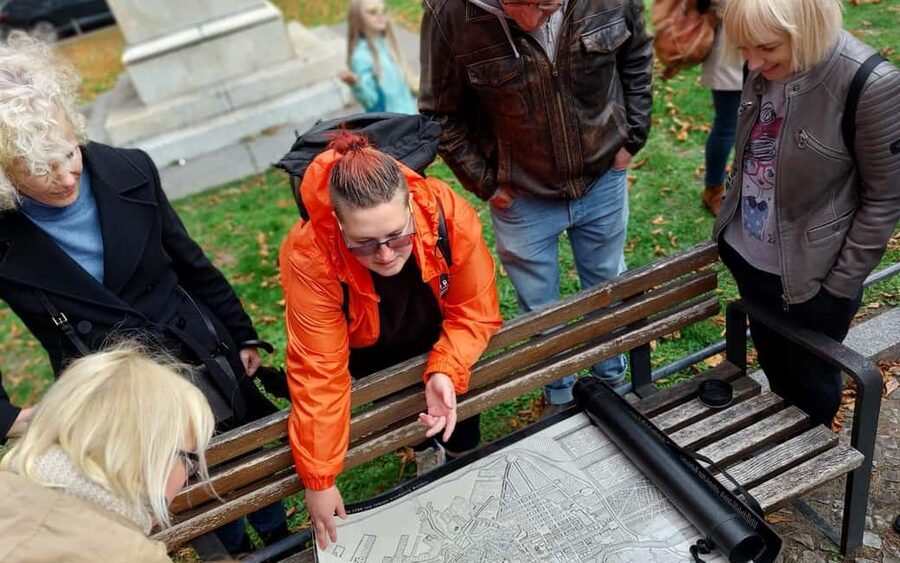
The meeting point is easy to identify: Robert Koch’s statue at Robert-Koch-Platz. Look for the guide with an orange umbrella. Tours are offered in German and English, and the listed guide service is live rather than audio-based.
A two-hour walking tour is long enough to build a connected story but short enough to fit into a day of sightseeing. The end point at Alexanderufer is close to Central Station, which makes it convenient to continue around Berlin or catch a train.
The outdoor format is the main factor to plan around. In winter, wear a warm coat and shoes that can handle standing on hard surfaces. Angelika’s February tour took place in cool, damp weather and was still described as engaging from start to finish, but you should not rely on enthusiasm alone to keep you comfortable. Bring water, and dress for the forecast.
The tour is listed as wheelchair accessible. Because much of it involves outdoor walking and standing, anyone with specific mobility needs should confirm current route conditions before booking.
Is $29 a Fair Price?
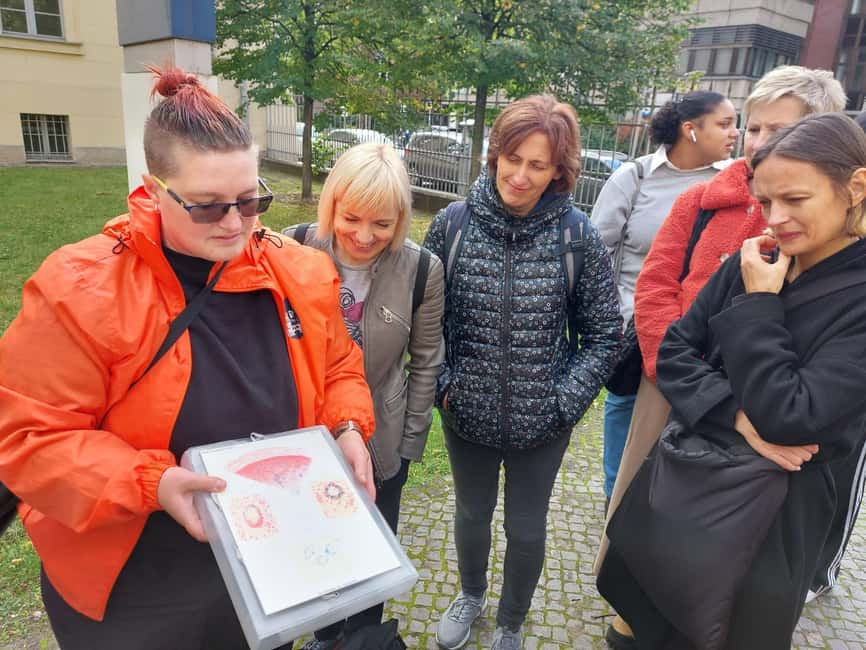
At $29 per person, this is a reasonable price for a two-hour guided walk that includes the Veterinary Anatomy Theatre at no extra charge.
The value depends on what you want from Berlin. If you only want to see Charité’s exterior buildings, you can walk through parts of the area on your own. But you would miss the connected explanation of the plague house, medical pioneers, Rachel Hirsch, Nazi medical crimes, and the socialist-era campus.
The guide is the main reason to pay for the tour. The subject spans more than 300 years, and the political sections require careful explanation. A good guide keeps the walk from becoming a jumble of famous names and difficult dates.
The theatre visit also helps justify the cost. It gives you access to a specific historic building rather than only a view from the street. Still, because the theatre may close, I would treat it as an important bonus rather than the sole reason to reserve.
Flexible booking adds practical value. You can cancel up to 24 hours before the start for a full refund, and you can reserve now while paying later. Those terms help if your Berlin schedule is still changing.
Who Should Book This Charité Tour?
I would choose this tour if you enjoy:
- Medical discoveries and the people behind them
- Berlin’s Nazi and socialist-era history
- Architecture with a clear historical purpose
- Women’s history and changing professional roles
- Serious tours that do not skip institutional wrongdoing
- Walking experiences that finish near a major transport hub
It is especially well suited to adults and older teenagers. The recommended age is 14 and up, and all minors must be accompanied by an adult.
I would think twice if you want to enter hospital wards, laboratories, or a large museum collection. Those areas are not included. I would also avoid booking it during very cold or wet weather unless you are prepared to spend most of the time outside.
The experience has a 4.9 rating from 276 ratings, with repeated praise for its clear presentation, medical detail, and personable guiding. Martina is specifically praised for presenting the campus story in an impressive but lively way. That combination is exactly what this subject needs: enough seriousness to respect the history, with enough pace to keep a damp outdoor walk from dragging.
Should You Book It?
Book this tour if you want to understand how one Berlin hospital reflects medical progress, professional discrimination, dictatorship, and the divided city. The Veterinary Anatomy Theatre, the story of Rachel Hirsch, and the bricking-up of windows toward the West give it details you are unlikely to gather from a casual walk past the campus.
Skip it if your main goal is an indoor museum visit or access to active hospital buildings. Otherwise, $29 is a fair price for a focused, thoughtful introduction to Charité, especially if you pair it with other Berlin sights near Central Station.
FAQ
Where does the Charité Hospital walking tour begin?
The tour begins at Robert-Koch-Platz, by the Robert Koch statue. Look for the guide holding an orange umbrella.
Where does the tour finish?
It finishes at Alexanderufer, 10117 Berlin, close to Berlin Central Station.
How long does the tour last?
The walking tour lasts approximately two hours.
Is the Veterinary Anatomy Theatre included?
Yes. Admission to the Veterinary Anatomy Theatre is included at no extra cost.
Can the Veterinary Anatomy Theatre be closed?
Yes. The theatre can occasionally close because of internal events or public holidays.
What languages are available?
The tour is offered in German and English with a live guide.
Is the tour suitable for children?
There is no strict age restriction, but the tour is recommended for ages 14 and up because of its historical content. Minors must be accompanied by an adult.
What should I bring and wear?
Bring comfortable shoes and water. Since most of the tour takes place outside, dress warmly in cold weather and prepare for about two hours of walking and standing.
Latest history tours reviewed in Berlin
- Berlin: History and Sightseeing with Kids (Free for Kids)★ 4.9 · 19 reviews
- Berlin: Nazi History Walking Tour★ 4.8 · 33 reviews
- Berlin: Urbex Abandoned Places & History Tour★ 4.8 · 18 reviews
- Berlin: Historic Boat Sightseeing City Center Tour★ 4.5 · 415 reviews
- Berlin: Historical Sights & Berlin Wall Tour with a Berliner★ 5.0 · 62 reviews
- Berlin: Guided Craft Beer & Cultural Tour With Snacks★ 5.0 · 68 reviews
- Berlin (E)Bike Tour Historical Highlights in Small groups★ 4.5 · 24 reviews
- Berlin: Historic Center Walking Tour with a Real Berliner★ 5.0 · 134 reviews
Berlin History Tours, compared.

Berlin: 3-Hour World Heritage Cruise to Potsdam
Read our review →
Berlin: History of the Third Reich Guided Walking Tour
Read our review →


Berlin Private Complete History All Day Walking Tour
Read our review →
Berlin: Cold War & Berlin Wall History Guided Bike Tour
Read our review →
Berlin: Historic Boat Sightseeing City Center Tour
Read our review →
Small group Potsdam: A Journey Through History and Palaces
Read our review →Browse the lists this tour appears in