Review · BARCELONA
Barcelona: Cemetery Tour – Gothic Graves & Local History
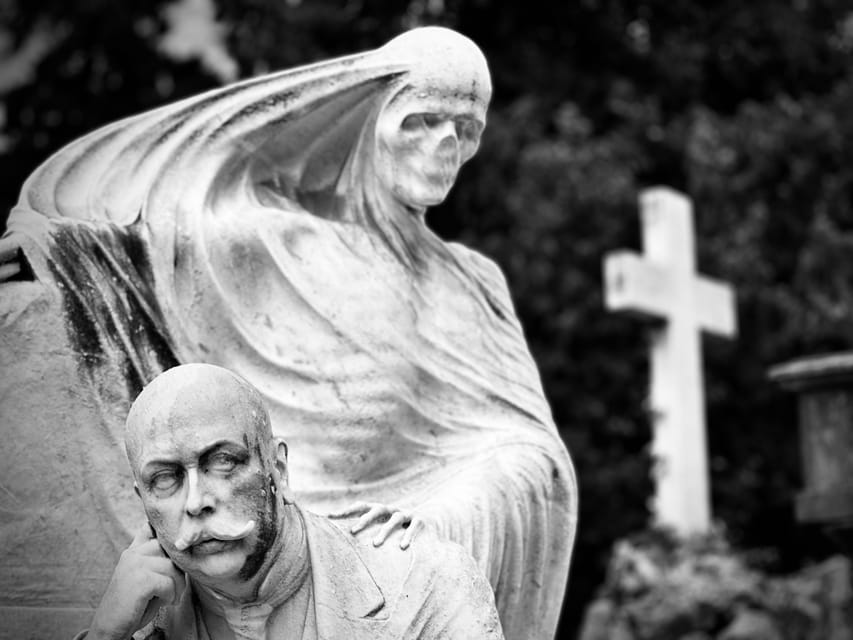
Barcelona’s Montjuïc Cemetery feels like a stone city above the sea. You’ll find churchlike mausoleums, angels, skeletons, pyramids, obelisks, and quiet lanes that most visitors never see. I like the way guide Onno uses individual lives to explain Barcelona, and I like that the small-group format keeps the cemetery peaceful rather than turning it into a noisy sightseeing parade.
The main drawback is physical: you’ll walk uphill and downhill, with stairs along the way. The route is not nonstop exertion, but it is a poor fit if you have knee trouble, limited mobility, are pregnant, recently had surgery, or use a wheelchair. Children under 12 and people over 70 are also advised not to join.
Key points to know before booking
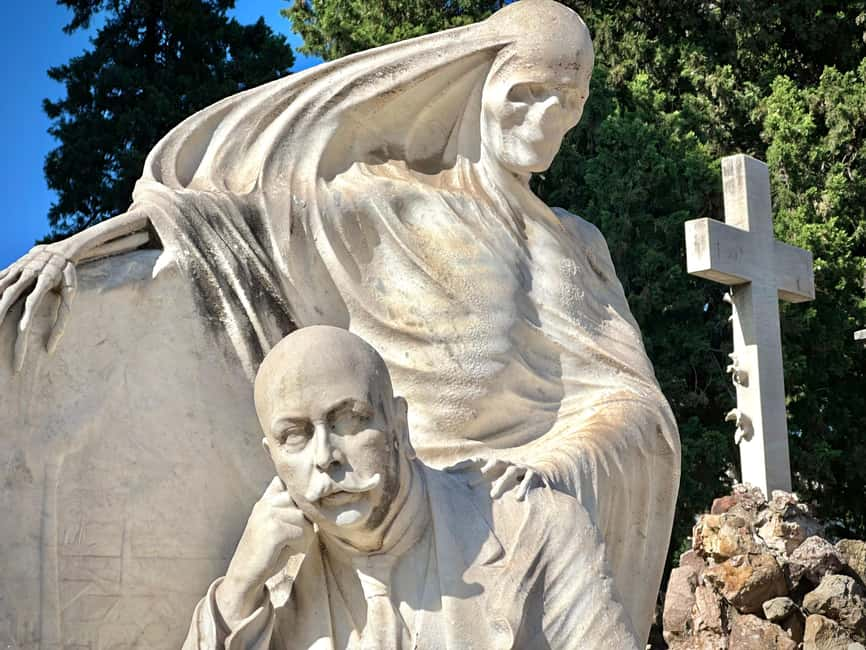
- A Gothic outdoor museum above the sea: Montjuïc Cemetery is packed with ornate tombs, sculptures, mausoleums, and grand family monuments.
- Onno gives the cemetery a human voice: You hear about writers, politicians, artists, city planners, and civil war figures rather than simply looking at names on stone.
- Small groups suit the setting: This is a quiet, low-tourism experience, and you may see very few other people during the walk.
- The cemetery is too large to tackle casually: A guide helps you find the important and unusual graves without wasting time on the hillside.
- The route includes notable modern history: Stops include the Fossar de la Pedrera, Buenaventura Durruti’s grave, and Joan Miró’s tomb.
- Budget about 2.5 hours and wear proper shoes: Roundtrip transport is included, but the walking surface, stairs, and slopes call for comfortable footwear.
Why Montjuïc Cemetery feels unlike a normal Barcelona sight
Barcelona has no shortage of famous churches, markets, and Gaudí buildings. Montjuïc Cemetery offers a different kind of city tour. Instead of following the city’s living crowds, you follow its dead, from powerful families and celebrated artists to political figures and people whose names may mean little until their stories are explained.
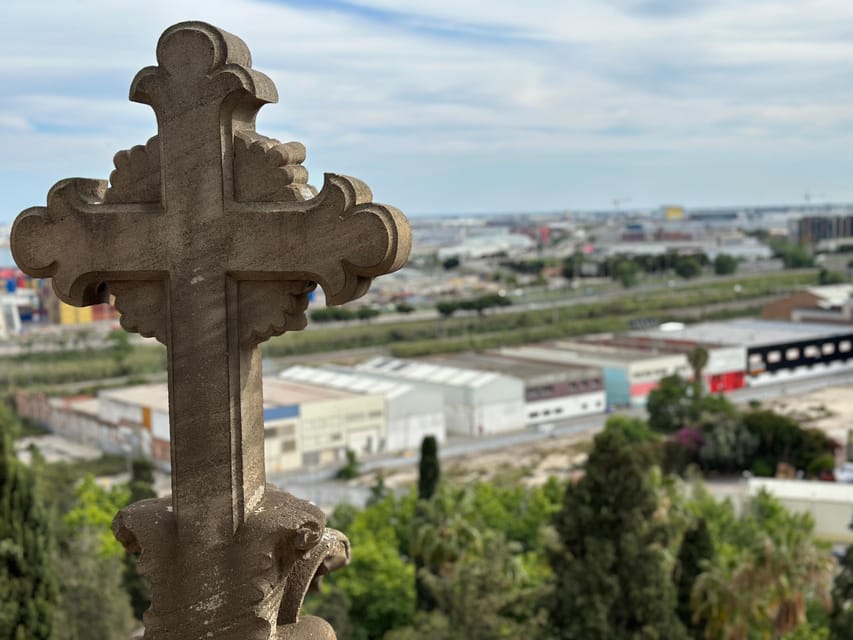
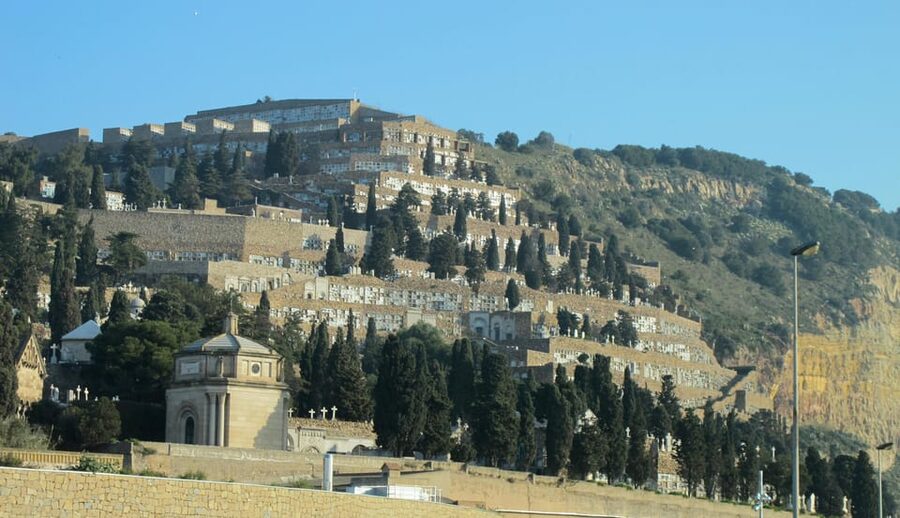
The cemetery sits on the hillside of Montjuïc, looking toward the sea. Its setting matters. The views, the silence, and the steep arrangement of the graves give the place the feeling of a city of the dead. The grand tombs are not isolated curiosities. Together, they show how Barcelona’s families wanted to remember status, faith, grief, and identity.
I especially like the contrast between the huge monuments and the personal stories behind them. Some graves resemble small churches. Others use a single sculpture or a much simpler design. The experience asks you to look closely at both.
This is also one of Barcelona’s least touristy outings. You might have the cemetery nearly to yourself, especially outside the busiest season or on a rainy day. That quiet is part of the value, though it also means you should be comfortable with a reflective, sometimes eerie atmosphere rather than expecting a lively sightseeing stop.
More Dark History and Haunted Tours in Barcelona
- Barcelona: Dark History Night Walking Tour
★ 4.8 · 344 reviews - Barcelona’s Dark History Night Tour
★ 5.0 · 181 reviews - Barcelona Dark History Night Walking Tour With Drinks
★ 5.0 · 153 reviews
Meeting at Portal de Santa Madrona
The tour begins at Portal de Santa Madrona, beside the old city wall. Look for the guide with a white umbrella in front of the wooden doors or gate. That detail makes the meeting point easier to recognize, since the old city area has plenty of streets and entrances where a group could otherwise be easy to miss.
From there, the group travels to Montjuïc Cemetery. The supplied route describes a roughly 10-minute transfer by black cab, while the transport information identifies the included connection as a city bus. Since both descriptions appear in the tour details, confirm the exact vehicle and pickup arrangement when you reserve.
The roundtrip transfer is useful. Montjuïc Cemetery is not the kind of place you want to reach by guessing your way through unfamiliar roads, especially when the cemetery itself is large and spread across a hill. Transport also lets you finish at the same central meeting point instead of figuring out a return journey after several hours on foot.
Walking the cemetery from the hillside down
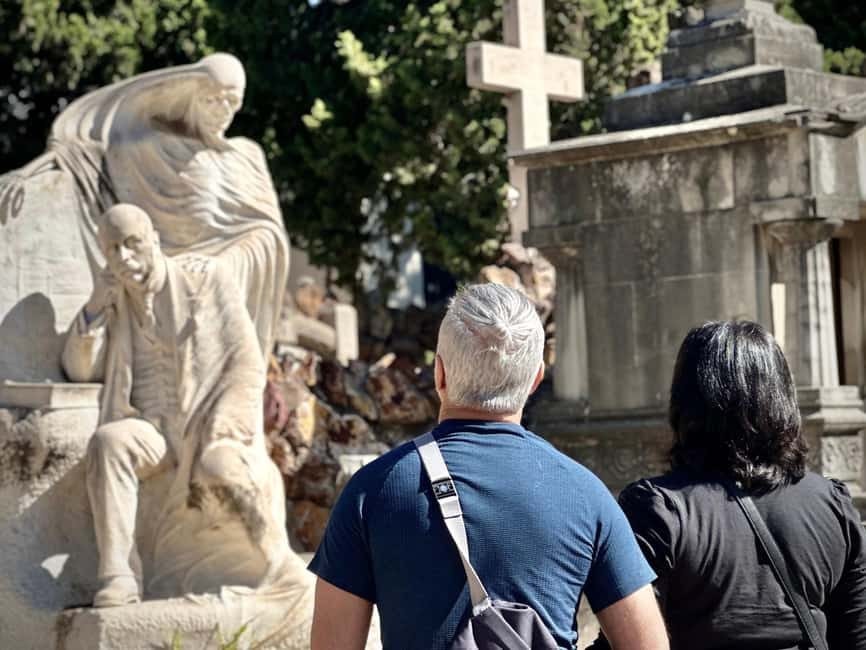
Once inside, the main cemetery visit lasts about 2.5 hours. The route takes you through different sections of the grounds, with pauses for photographs, explanations, and stories about the people buried there.
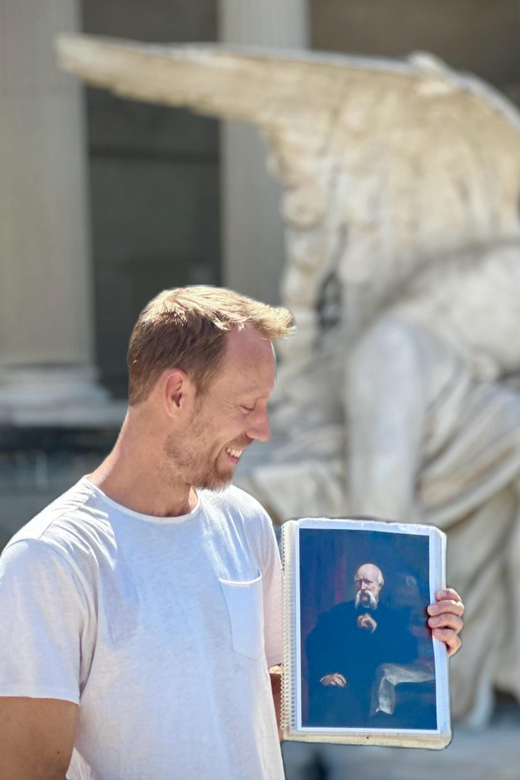
A guide is particularly helpful here because the cemetery is enormous. Without one, you could spend a great deal of time wandering among similar lanes and still miss the most striking monuments. Onno’s role is not simply to point out the largest tomb. He helps connect the art and architecture to the people, politics, and customs of Barcelona.
Expect a route that goes up and down rather than a flat stroll. The stairs and slopes are spaced through the walk, so the physical effort is broken up, but you still need steady footing and comfortable shoes. If you have knee or mobility problems, the practical answer is to skip this tour, not to hope you can manage once you arrive.
The route is also best taken slowly. You’ll want time to look at details in the sculptures, stonework, and inscriptions. A rushed visit would reduce the cemetery to a parade of monuments, while the guide’s stories give each stop a reason to matter.
Gothic tombs, angels, skeletons, and family power
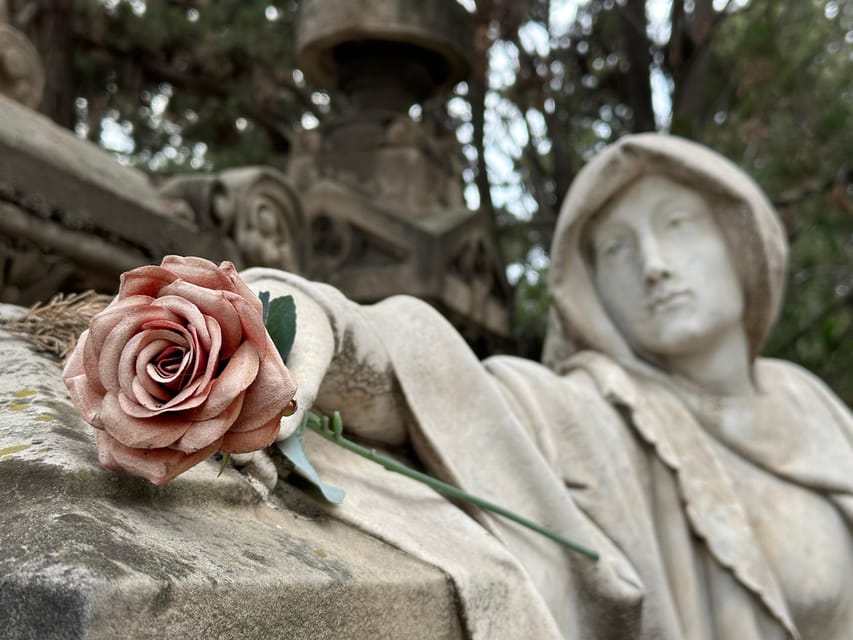
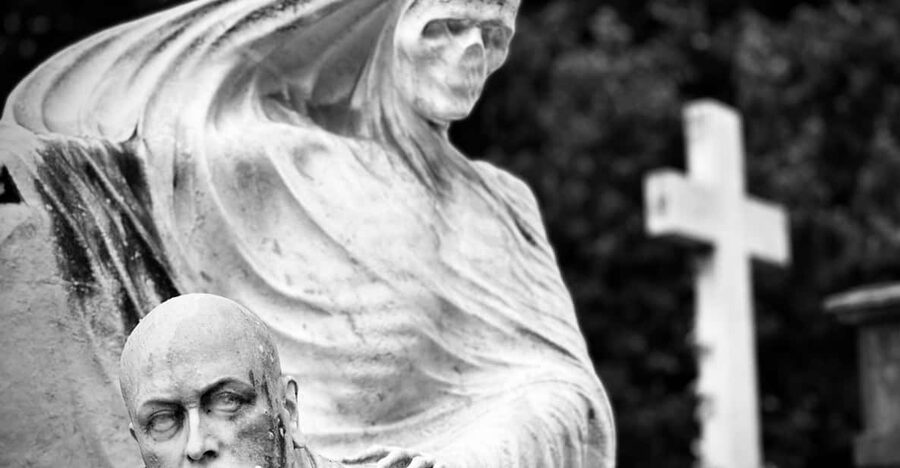
The architecture is the tour’s visual star. You’ll see mausoleums that look like miniature churches, along with angels, grim skeletons, pyramids, obelisks, and other elaborate works of funeral art.
The Gothic style can be beautiful, but it is not always sweet or comforting. Some sculptures confront death directly. That mixture of fine craftsmanship and unsettling imagery gives the walk its haunting quality. You may find yourself admiring a monument and feeling slightly uncomfortable at the same time, which is exactly the point of much cemetery art.
The large family tombs also reveal social ambition. The people buried there could afford impressive permanent memorials, and the monuments communicate wealth long after the mourners are gone. Set against simpler graves, they make Barcelona’s old social divisions visible in a very direct way.
I find this more interesting than a standard architecture walk because the buildings are tied to mourning. You are not only asking who designed a tomb or what style it uses. You are also asking what the family wanted to say about the person buried inside.
More Medieval History Tours in Barcelona
- Barcelona 1.5h Private Old Town, Gothic & Ramblas Walking Tour
★ 5.0 · 318 reviews - Barcelona: Tipsy Tapas & History Tour in the Gothic Quarter
★ 4.8 · 227 reviews - Barcelona Historical Walking Tour: Gothic Quarter and El Born
★ 5.0 · 217 reviews - Barcelona: Gothic Quarter Tour Dark History & Ghosts Tour
★ 4.8 · 64 reviews
Barcelona’s story told through its residents
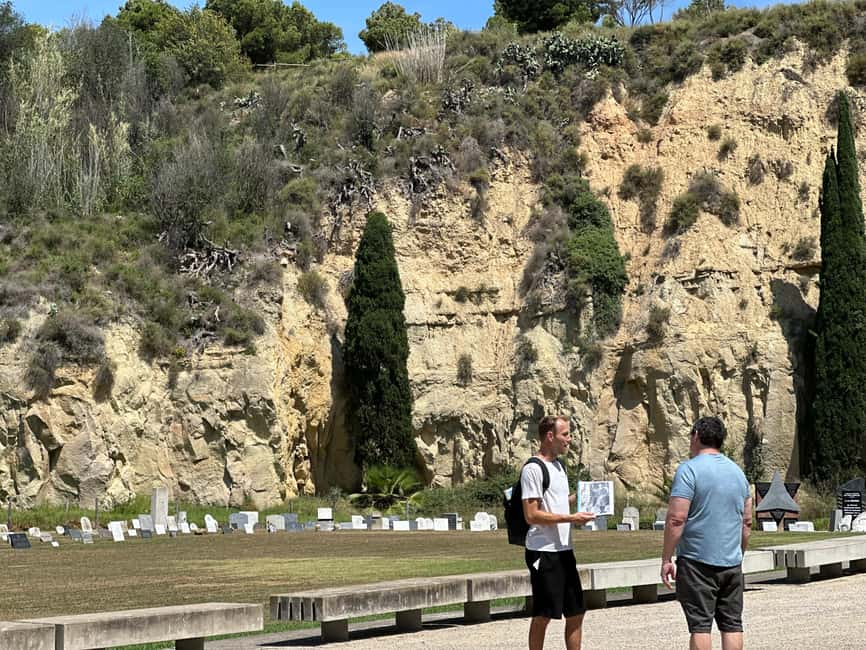
The guide brings in local writers, politicians, artists, and other important figures. This approach gives you a useful way to understand Barcelona without treating history as a list of dates.
One especially interesting figure mentioned along the route is Ildefons Cerdà, the city planner associated with Barcelona’s Eixample. His grave adds another layer to the city you see outside the cemetery. After walking through the broad, ordered streets of the Eixample, it is striking to encounter the person connected to that urban plan in a place of such different scale and mood.
The tour also covers civil war and anarchist history. That section is valuable because Barcelona’s past is not only about wealthy families, modernist architecture, and famous painters. Political conflict, working-class movements, and the Spanish Civil War shaped the city just as strongly.
Buenaventura Durruti’s grave provides a direct stop connected to that history. The visit lasts about five minutes, but the context matters more than the clock. If you have an interest in Barcelona’s anarchist past, this may be one of the most meaningful parts of the route.
You’ll also visit Joan Miró’s tomb. His name connects the cemetery to Barcelona’s modern art world, while the surrounding graves remind you that the city’s cultural story includes many people who are less famous internationally.
The Fossar de la Pedrera and a more difficult memory
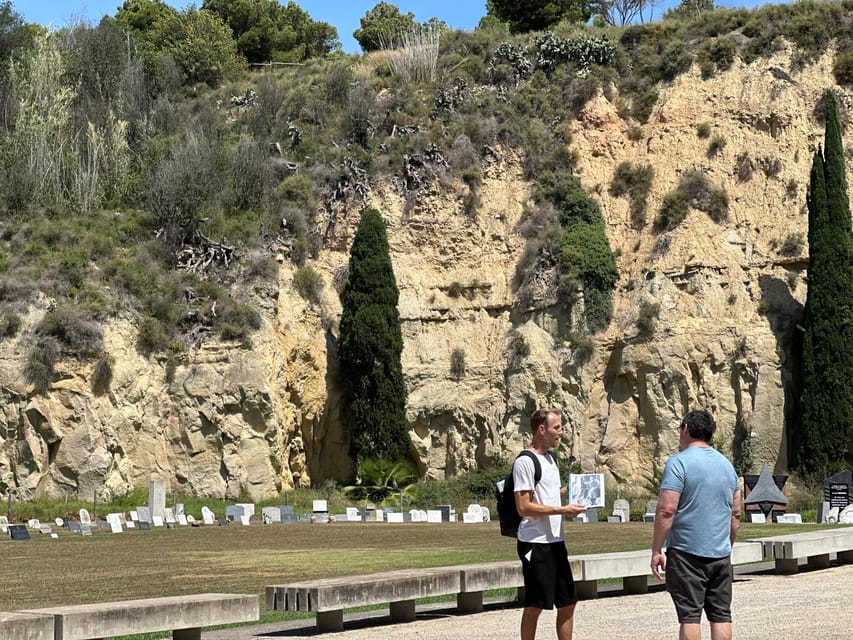
After the main cemetery walk, the route includes the Fossar de la Pedrera, with about 15 minutes for a guided visit and photographs. This stop adds a more serious political and memorial dimension to the experience.
The cemetery’s grand mausoleums can make death look like a display of wealth and artistic skill. The Fossar de la Pedrera shifts the focus toward collective memory and political violence. It helps prevent the tour from becoming only a parade of pretty tombs.
The stop is brief, but it gives the overall visit balance. You move from private family monuments to a place connected with wider events and public remembrance. If you are interested in the difficult parts of Barcelona’s 20th-century history, pay close attention here.
Durruti and Miró in the final stops
The tour then makes short visits to the tomb of Buenaventura Durruti and the tomb of Joan Miró. Each stop is listed at about five minutes, so you should not expect a long separate lecture at either grave.
Durruti’s tomb connects to the anarchist and civil war material discussed during the tour. Miró’s grave brings the route back to art and Barcelona’s international cultural identity. Together, the two stops show how varied the cemetery’s residents are.
These final locations also work well as a reminder of the guide’s main method. You are not simply viewing a cemetery as a collection of sculptures. You are using the people buried there to move through the city’s political, artistic, and social past.
What the $28 price buys you
At $28 per person, this is reasonably priced if you want more than a self-guided walk. The cemetery is large enough that finding the best tombs on your own would be difficult, and you would lose the personal stories that make the monuments meaningful.
The price includes the roundtrip transport from the central meeting point, which adds practical value. You are paying for the transfer, an English-speaking guide, route planning, and the time needed to explain a place that most visitors would not know how to read.
The value depends on your interests. If you prefer famous churches, food markets, or lively neighborhoods, this may feel like a specialized use of 2.5 hours. If you enjoy history, sculpture, funeral customs, photography, or unusual city experiences, the price is easier to justify.
The small-group setup is another plus. A crowded group would work poorly among narrow cemetery lanes and quiet graves. This outing is designed for a calm pace, and reports of very small groups, sometimes even a private-feeling walk, fit the nature of the place.
Practical advice for a better visit
Wear shoes with good grip. The cemetery includes slopes, stairs, and uneven walking conditions, so your usual city sandals may not be enough.
Bring water and allow yourself time to pause. The official duration is 2.5 hours for the cemetery portion and the route returns you to Portal de Santa Madrona afterward. You do not want to spend the whole visit worrying about keeping up.
A camera is useful, but use it respectfully. The grounds contain some of the most photogenic views and sculptures in this unusual part of Barcelona. Still, this is an active cemetery and memorial site, so keep the mood in mind and follow the guide’s lead around graves and ceremonies.
The tour is offered in English with a live guide. Onno’s style, based on the information available, is informal and conversational, with extra facts and questions rather than a rigid speech. That suits the subject, since the best moments come when a monument leads naturally into a story about the city.
The tour is not suitable for children under 12, pregnant women, wheelchair users, people with mobility impairments, people with recent surgeries, or people over 70. Those limits are tied to the walking conditions, stairs, and slopes, not simply to the cemetery’s subject matter.
You can cancel up to 24 hours in advance for a full refund, and the reserve-now, pay-later option gives you some flexibility while planning your Barcelona days.
Who should book this cemetery walk?
Book it if you have already seen some of Barcelona’s main sights and want a quieter change of pace. It is also a strong choice if you like cemeteries, sculpture, urban history, photography, political history, or unusual places that mass tourism has not reshaped.
I would recommend it to solo visitors and couples who enjoy thoughtful walks. The format can also suit anyone who wants an English-speaking guide to explain local figures rather than simply provide directions.
I would not choose it for a family with young children, anyone needing step-free access, or a person who wants a relaxed ride with minimal walking. It is also not the right outing if you find graveyards upsetting or prefer Barcelona at its most social and energetic.
Should you book the Montjuïc Cemetery tour?
Yes, if you want a quiet and distinctive side of Barcelona. The combination of Gothic tombs, sea views, civil war history, famous residents, and a guide who knows how to navigate the huge grounds gives you far more than a casual cemetery visit.
The strongest reason to book is that Montjuïc Cemetery is difficult to appreciate without context. On your own, you might notice the grandest mausoleums. With Onno, you can connect those monuments to Barcelona’s planners, artists, politicians, anarchists, and old families.
Book with realistic expectations: this is a walking tour over slopes and stairs, not an easy sightseeing loop. If your knees and interests are up to it, the $28 cost and included transport make this one of Barcelona’s more unusual and worthwhile half-day experiences.
FAQ
How long does the Barcelona Cemetery Tour last?
The activity lasts about 2.5 hours. The cemetery walk forms the main part of the experience, with additional short stops before returning to Portal de Santa Madrona.
Where does the tour begin?
The tour begins at Portal de Santa Madrona. The guide waits with a white umbrella in front of the wooden doors or gate of the old city wall.
Where does the tour finish?
The activity ends back at the starting meeting point, Portal de Santa Madrona.
Is transport included?
Yes. Roundtrip transport between the central meeting point and Montjuïc Cemetery is included. The route details describe a roughly 10-minute transfer each way.
What language is the tour offered in?
The tour is offered in English with a live guide.
Who guides the tour?
The guide identified for this experience is Onno.
What will I see at Montjuïc Cemetery?
You’ll see Gothic mausoleums, sculptures of angels and skeletons, pyramids, obelisks, family tombs, and other funeral artwork. The route also includes views toward the sea and graves connected to notable Barcelona figures.
Does the tour visit Joan Miró’s grave?
Yes. Joan Miró’s tomb is one of the short guided stops on the route.
Does the tour visit Buenaventura Durruti’s grave?
Yes. The tour includes a guided visit to the tomb of Buenaventura Durruti.
Is the tour suitable for people with mobility issues?
No. The route includes substantial walking up and down stairs and is not suitable for people with mobility impairments, wheelchair users, people with recent surgeries, or pregnant women.
Latest history tours reviewed in Barcelona
- Barcelona Historic Guided Tour★ 4.8 · 24 reviews
- Private Jewish Heritage Journey by Barcelona Dreaming★ 4.8 · 383 reviews
- Barcelona Tapas Tour, Taverns, History & Local Culture★ 5.0 · 25 reviews
- Barcelona: Market, Tasty Tapas/Food and Gothic History Tour★ 4.7 · 48 reviews
- Barcelona Historical 3-Hour Bike Tour★ 4.7 · 222 reviews
- Barcelona & Chocolate Amatller History and Culture + Activity and Tasting★ 4.9 · 173 reviews
- Barcelona: The Spanish Civil War Historical Walking Tour★ 4.9 · 239 reviews
- Barcelona: 3-Hour Sips, Sites & Bites Food & History Tour★ 4.8 · 33 reviews
Barcelona History Tours, compared.

Barcelona: Tapas Walking Tour with Food, Wine, and History
Read our review →
Barcelona: 2.5-Hour Bike or E-Bike Historical Tour
Read our review →
Barcelona Erotic Museum – Explore Art, History & Fun
Read our review →
Private Jewish Heritage Journey by Barcelona Dreaming
Read our review →
Tarragona and Sitges Small Group Tour – Roman History & Culture
Read our review →
Barcelona 1.5h Private Old Town, Gothic & Ramblas Walking Tour
Read our review →