
Review · COLOMBIA
Cartagena: Historic Center and Getsemaní Shared Walking Tour
Cartagena’s past comes into focus when you walk it street by street. This 150-minute route links the Walled City’s Spanish defenses and colonial plazas with Getsemaní’s African-Caribbean music, murals, and social life. I like the way it covers both the grand monuments and the uncomfortable chapters of slavery and conquest. I also like that guides often add useful advice on food, prices, and places to visit.
The main drawback is the heat. Much of the route is outdoors, and even an excellent guide cannot make tropical sun disappear. Bring water, wear light clothes and comfortable shoes, and be ready for a fairly long walk.
Key points to know before you book
- The route connects two sides of Cartagena: Start at Plaza Cervantes in the Walled City, then continue through Getsemaní.
- The history is not polished smooth: Expect discussion of Indigenous people, Spanish rule, slavery, piracy, independence, and the city’s mixed cultural identity.
- Music is part of the finish: The walk ends near Calle San Juan with salsa and African champeta in the air.
- Guides bring different strengths: Álvaro David, Dani, Daniela, Legacy, Robert, Ingrid, Liz, and Rebeca are among the guides assigned to this experience.
- The $12 price includes the guide and tip: You pay nothing today when using the reserve-now option, and the usual free-tour tip is already covered.
- Shade matters: The route is wheelchair accessible, but heat, uneven historic streets, and a 150-minute outdoor walk still deserve planning.
Why this walk is a smart first look at Cartagena
I like this tour because it gives you a working map of Cartagena, not just a string of pretty photo stops. You begin at the edge of the Walled City, pass through places tied to trade and slavery, see churches and defensive walls, and finish in a neighborhood where music and street life tell a different part of the city’s story.
The route also gives you context for what you see later on your own. A colorful doorway, a church dedicated to San Pedro Claver, or a fortified bastion means more when you know who built it, who controlled it, and who was left outside its power.
At $12 per person, the value is strong. A guide, two historic districts, and two and a half hours of explanation cost less than many short sightseeing activities. The price also includes the tip, which removes the awkward question of how much to pay at the end.
I would book it early in your stay. Guides regularly offer suggestions for restaurants, drinks, local food prices, and other sights, so the advice can help shape the rest of your visit. You can also choose English or Spanish, depending on availability.
More Old Town and Historic Centre Walks in the world:
- Madrid Essential: Historic Center, Plaza Mayor & Royal Palace
★ 5.0 · 6,416 reviews - Lisbon: Live Fado Show with Port Wine in Historic Center
★ 4.7 · 4,166 reviews - Valencia Old Town Tour with Wine & Tapas in 11th Century Historic Monument
★ 5.0 · 3,234 reviews
Meeting Pedro de Heredia at Plaza Cervantes
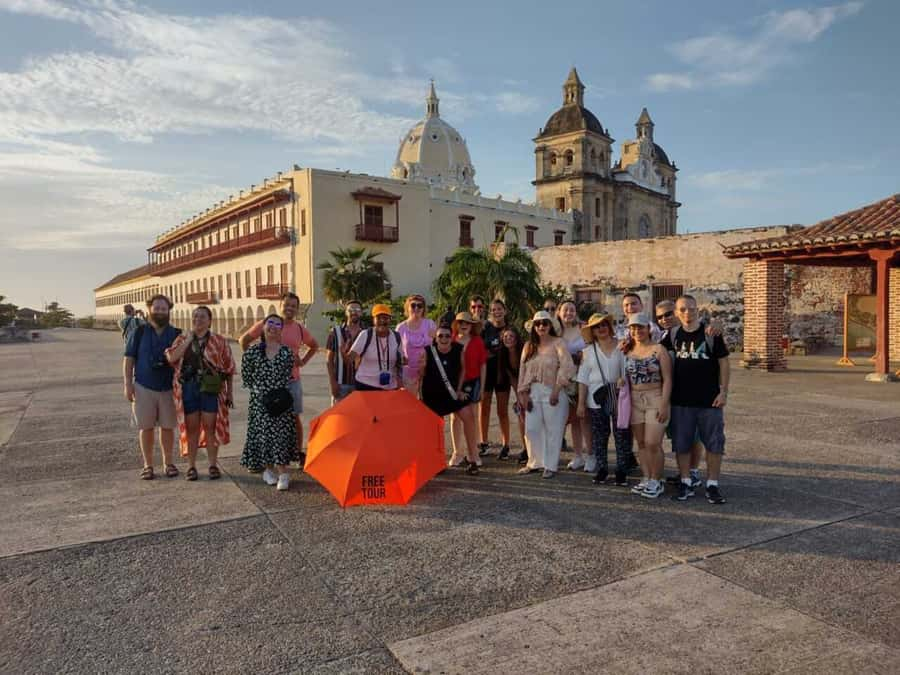
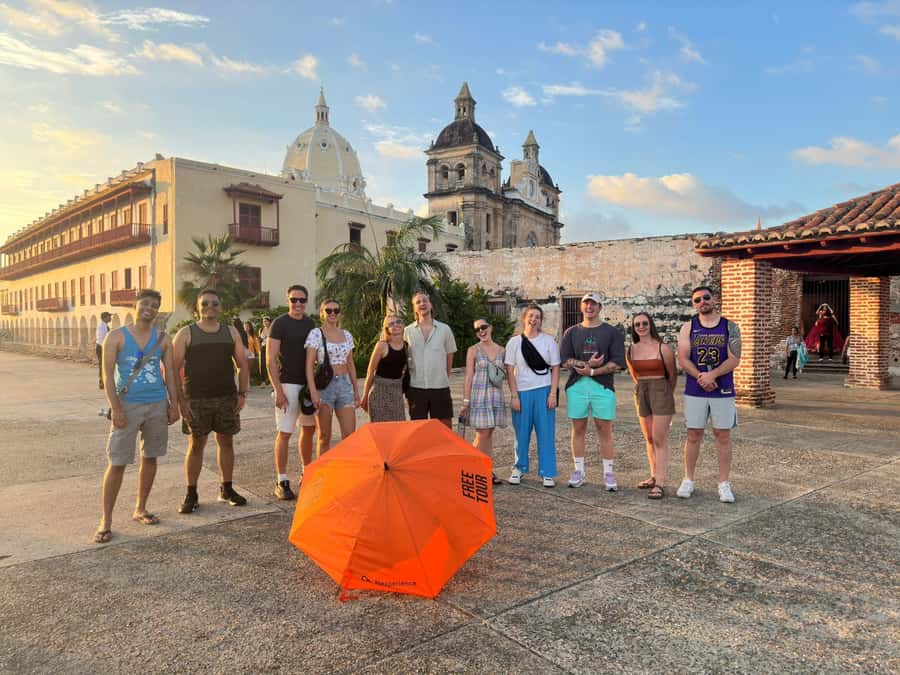
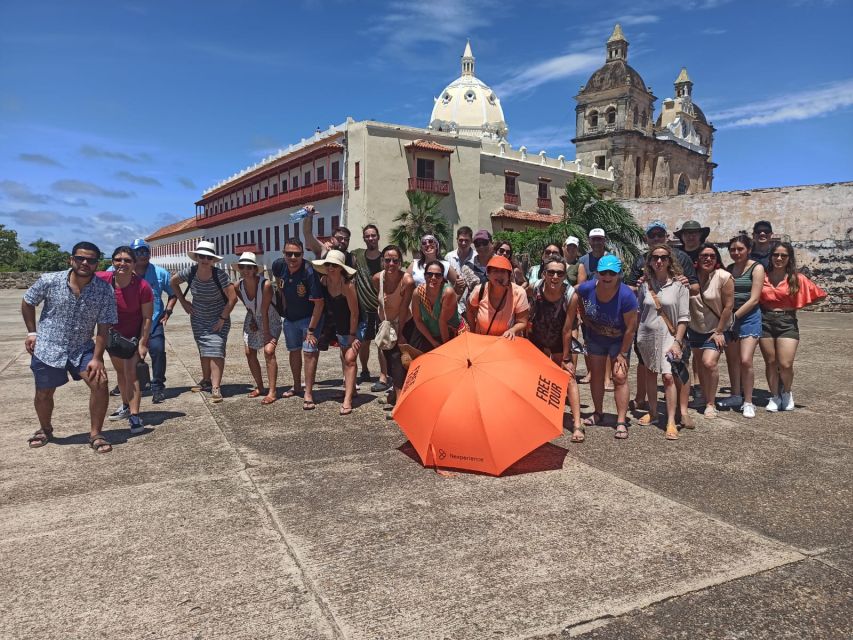
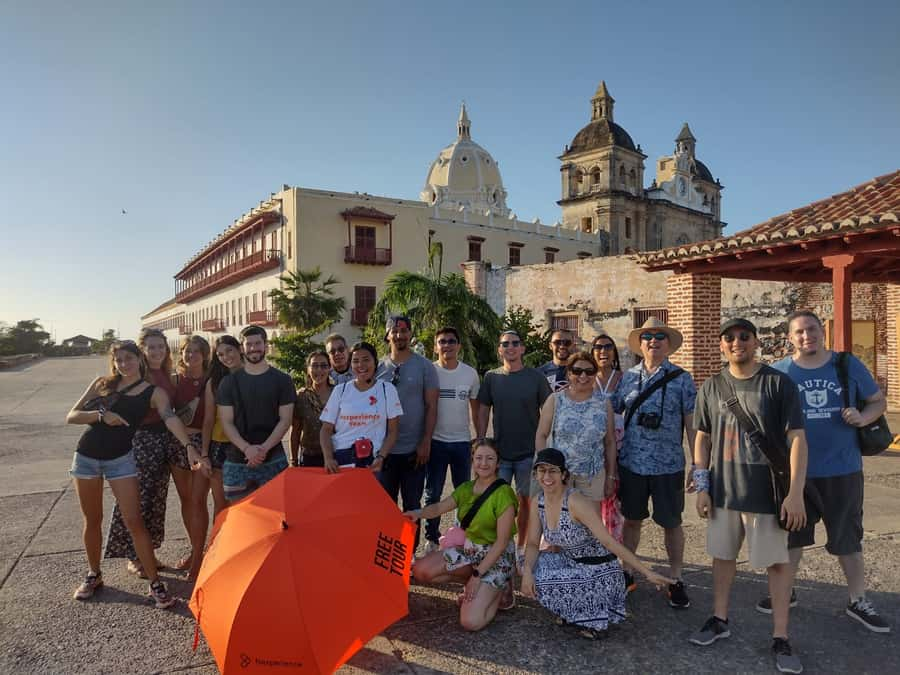
The meeting point is Plaza Cervantes, also called Camellón de los Mártires, in front of the Clock Tower. Look for the orange umbrella. That detail matters because this is a busy part of Cartagena, with pedestrians, vendors, traffic, and several nearby plazas that can look similar at first glance.
The opening section sets the historical frame. You hear about the Indigenous people who lived here before and during the arrival of the Spanish, followed by the founding of the colonial city under Pedro de Heredia. This is a useful correction to the common habit of treating Cartagena as if its story began with Spanish walls and churches.
The guide then moves the group toward the Clock Tower, known as the Golden Key of Cartagena. Entering through this landmark makes the old city feel less like a collection of buildings and more like a carefully controlled port. The Plaza del Ecuador, once called the Plaza del Esclavo, introduces the route’s discussion of enslavement.
This is one of the better parts of the experience. The subject is not treated as a footnote to architecture. The streets and plazas are explained as places where people, goods, and enslaved Africans were bought, sold, moved, and controlled.
From the Clock Tower to the Portal de los Dulces
The walk continues along Porto Carrero and Candilejo streets, part of the old route through the city. The guide connects these lanes to the movement of people and merchandise inside the colonial center.
At the Portal de los Dulces, the focus shifts toward women’s work and family traditions. The portal became associated with female commerce during the slavery era, and descendants continue selling sweets there today. This gives you a small but telling link between Cartagena’s painful past and its living traditions.
You are not simply looking at a snack stall. You are seeing how an old commercial role changed over time, while certain recipes and forms of street selling remained part of everyday life. If you plan to buy something, food and drinks are not included, so carry Colombian pesos or ask your guide about current prices.
The next major stop is the Plaza de la Aduana, the old customs square. This was a key place for the movement and sale of merchandise, including enslaved people. The Municipal Hall and surrounding buildings help show how trade, government, and colonial power occupied the same central space.
That combination is important. Cartagena’s beauty can make it easy to focus only on balconies, doors, and painted walls. The guide adds the human and economic story behind them.
Art, gold, emeralds, and the city’s public face
The route includes several cultural institutions, though the focus is on their place in the city rather than a long indoor museum visit. The Museum of Modern Art presents Caribbean and Latin American art from the 1950s onward, giving you a look at Cartagena beyond colonial architecture.
The Gold Museum displays Indigenous objects from the Colombian Caribbean. The Emerald Museum introduces the stones associated with Colombia and their international reputation. These stops broaden the walk from Spanish history to Indigenous culture and modern artistic expression.
Your time inside or outside each site may vary, so do not treat this tour as a substitute for a full museum visit. If one of these subjects interests you, note the location and return later with more time.
The tour then reaches the Church and Museum-Monastery of San Pedro Claver. San Pedro Claver is remembered as the Slave of the Slaves, and the complex now also serves as a headquarters for human rights. This stop carries unusual weight because it brings together faith, slavery, moral resistance, and present-day human rights work.
Guides such as Dani, Daniela, and Legacy often make the historical material lively with questions, humor, and short dance moments. That style suits a hot city where a nonstop lecture would be hard to absorb. Some groups may dance more than once, while others may spend more time on history and questions.
More History Walking Tours in the world:
- History and Hauntings of Salem Guided Walking Tour
★ 5.0 · 14,564 reviews - Lisbon: History, Stories and Lifestyle Walking Tour
★ 4.8 · 10,902 reviews - Boston: Freedom Trail History Small Group Walking Tour
★ 5.0 · 6,450 reviews - Historic Charleston Guided Sightseeing Walking Tour
★ 5.0 · 6,216 reviews
Bastions, pirates, and the logic of the walls
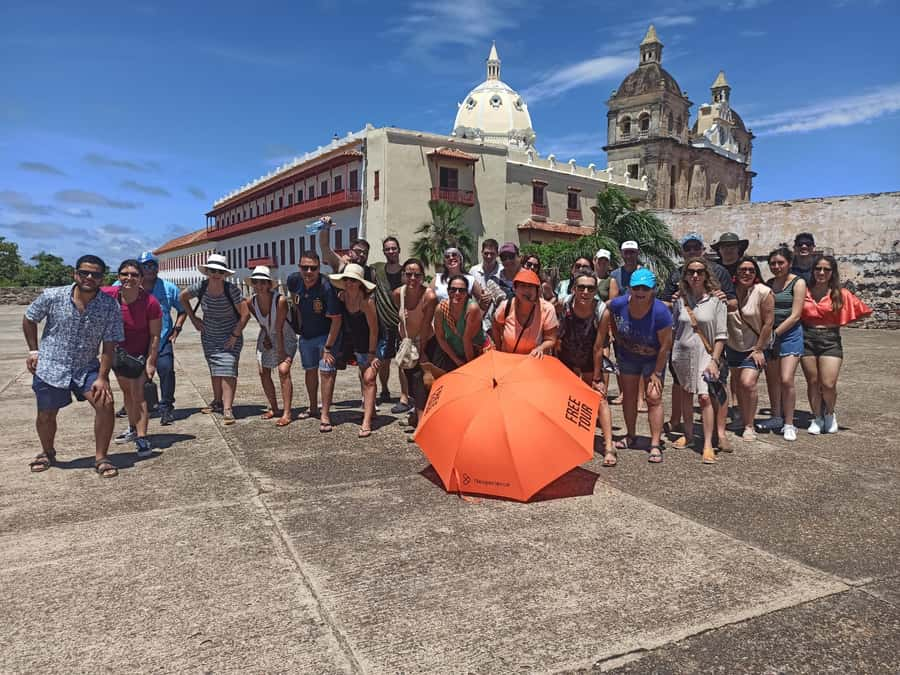
At the San Ignacio Bastion, the tour explains the military system that protected Cartagena from pirate attacks. The bastion was built to defend the Bay of Souls, and its position helps you understand how walls, water, and cannon fire worked together.
This is the point where the city’s fortifications stop being a decorative backdrop. You learn why the Spanish built defensive structures, how attacks by pirates and privateers shaped the city, and how military strategy influenced the layout.
The route does not appear to include a full visit to Castillo San Felipe de Barajas, so do not book this walk expecting a detailed fortress tour. It gives you the historic setting and defensive story, but the famous hilltop fort requires separate planning.
Plaza Bolívar provides a natural pause. The square honors Simón Bolívar, an important figure in South American independence, and gives the group a place to catch its breath. Cartagena is hot, and a short break in a shaded square can make the second half much more pleasant.
I appreciate that the guides often use these pauses well. Álvaro David, Robert, and Ingrid have been praised for answering questions and adding practical advice rather than rushing from one landmark to the next. Your exact guide will shape the tone, but the format allows for conversation.
Sloths and iguanas in Centennial Park
Centennial Park offers one of the route’s most surprising changes of pace. The park occupies the former railway station area and is described as one of Cartagena’s important green spaces, with tropical dry forest under the shade of mature trees.
You might spot sloths, squirrels, and iguanas here. The animals are not the central purpose of the tour, and sightings are never something to treat as guaranteed, but the park adds a welcome natural break after several dense historic streets.
This is also a useful reminder that Cartagena is not only forts and colonial facades. The park has a role in the city’s daily life, and its shade matters on a long walking route. If you are visiting with a young child, this section may be especially helpful. One guide, Legacy, was attentive to a two-year-old in the group and checked that the family had what they needed.
The park may also feel less formal than the monuments earlier in the walk. You get a sense of people using public space, not just preserving it for sightseeing.
Getsemaní brings the history into the present
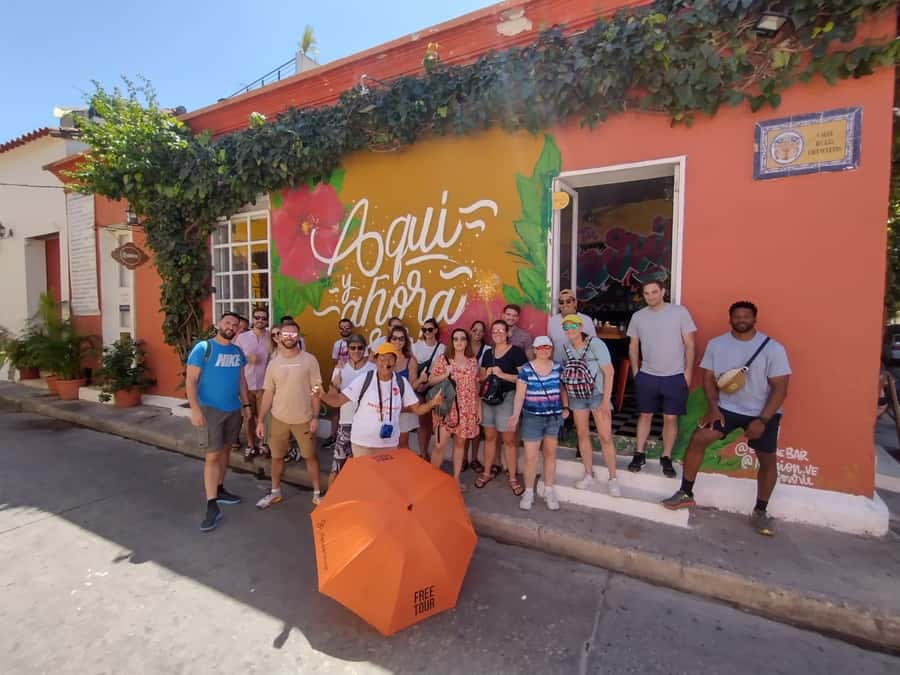
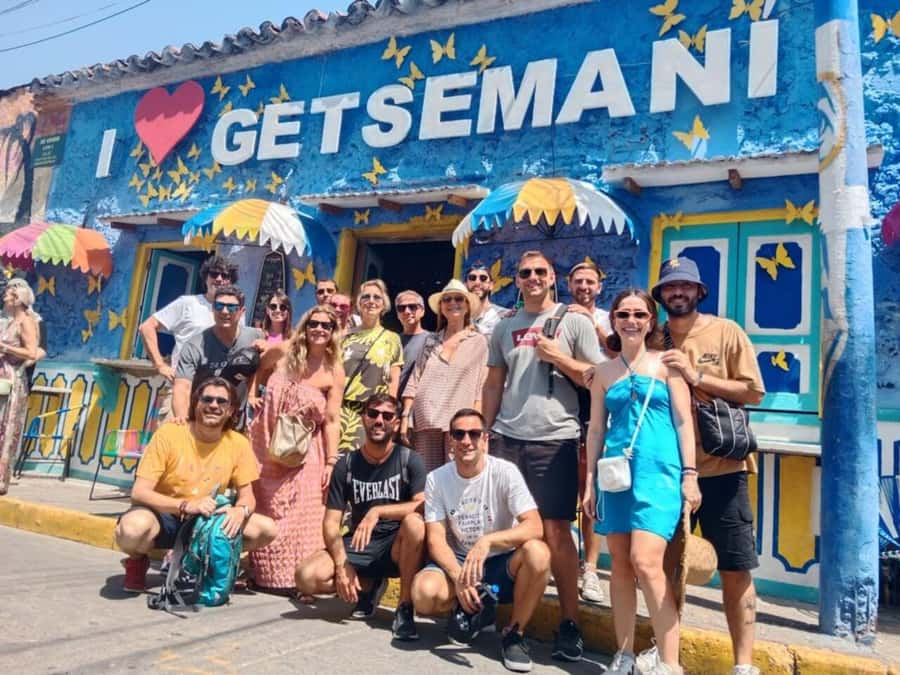
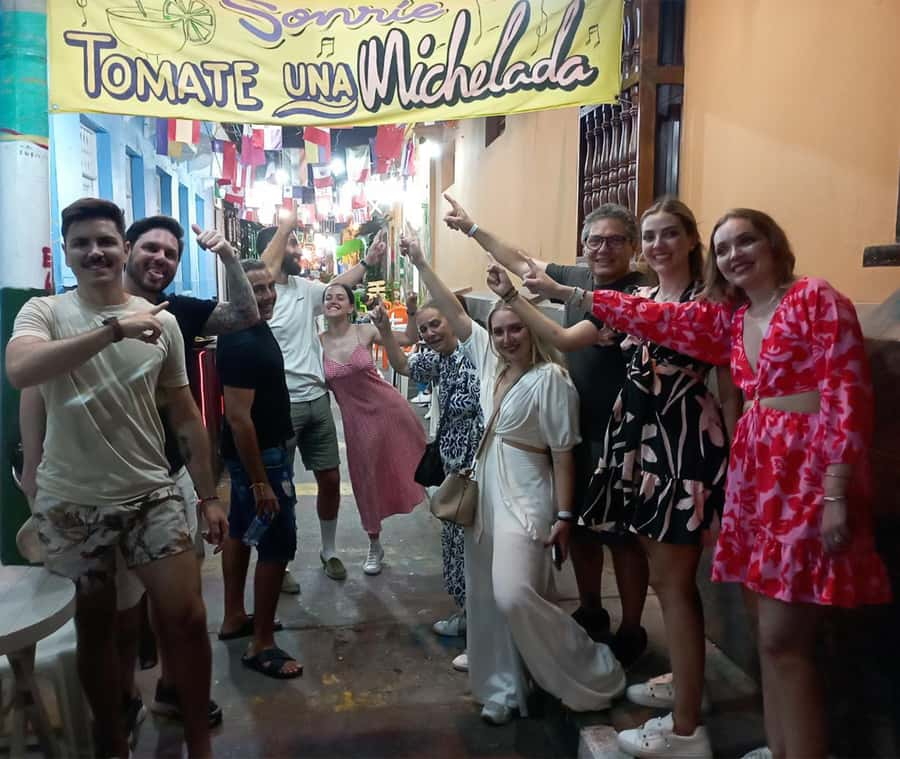
The final hour takes place in Getsemaní, one of Cartagena’s most expressive neighborhoods. You pass through a cultural corridor decorated with umbrellas, graffiti, and distinctive buildings before reaching Callejón Ancho and eventually Calle San Juan.
The contrast with the Walled City is the point. The old center presents colonial power through churches, government buildings, and defenses. Getsemaní adds working-class identity, African-Caribbean influence, popular art, nightlife, and a newer social order.
The tour discusses salsa and champeta, two musical forms that help explain how Cartagena’s culture developed beyond Spanish institutions. Champeta, with strong African and Caribbean roots, is especially useful for understanding the city’s connection to Black culture and the wider Caribbean.
Guides often make this part interactive. You may be invited to dance, and several guides teach simple traditional steps during the walk. This is not a dance class, so you do not need special ability. It is a short, friendly way to connect the history to music and movement.
The Getsemaní section also carries social context. You hear about local customs, changing neighborhoods, and the relationship between old traditions and modern tourism. The street art and umbrellas are attractive, but the guide helps you see them as expressions of identity and commerce rather than just photo backgrounds.
The guides make the biggest difference
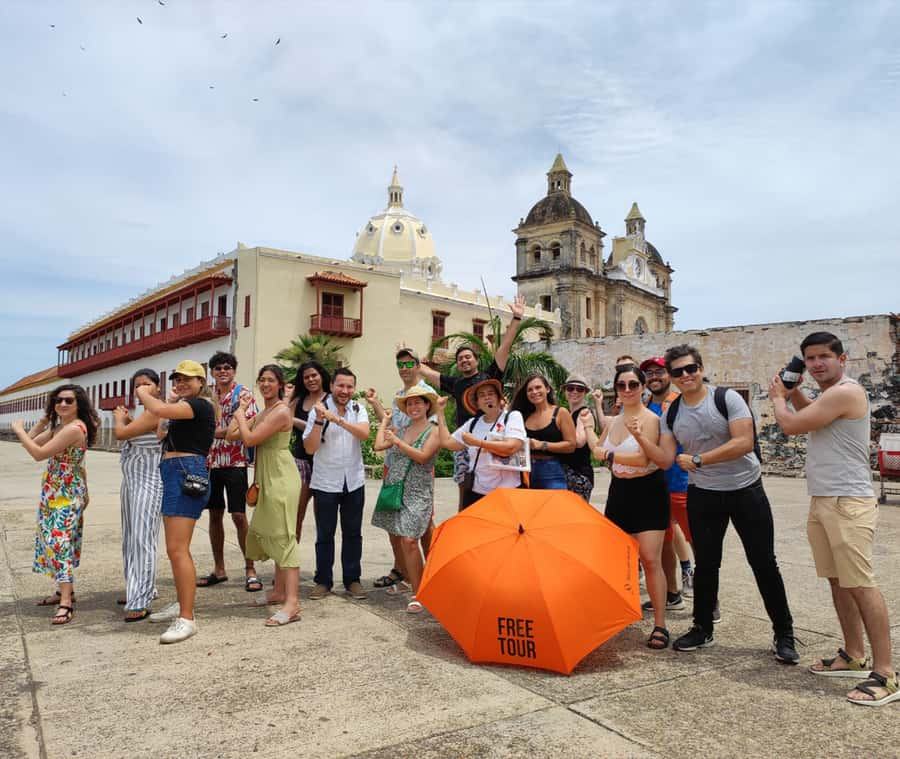
The strongest part of this experience is the guide. The company assigns different people, so the tone can change from one departure to another.
Álvaro David has been especially effective at explaining major events and local customs with pride. Dani and Daniela bring energy, dance, and personal feeling for Cartagena. Legacy mixes jokes, history, music, and practical safety advice. Robert is good at recommendations and at finding shaded places for the group. Ingrid, Liz, Rebeca, and Manuel have also led tours with a calm, informative approach.
A guide’s English level and speaking speed can affect your experience. English-language visitors should feel free to ask the guide to slow down or repeat a point. One guide was noted for speaking quickly at times, while other guides received praise for clear English and patient answers.
The range of guides is not a reason to avoid the tour, but it is worth understanding. You are booking a shared experience, not a private tour with one named historian. The common thread is local perspective, a broad historical route, and an outgoing style.
Heat, walking comfort, and practical preparation
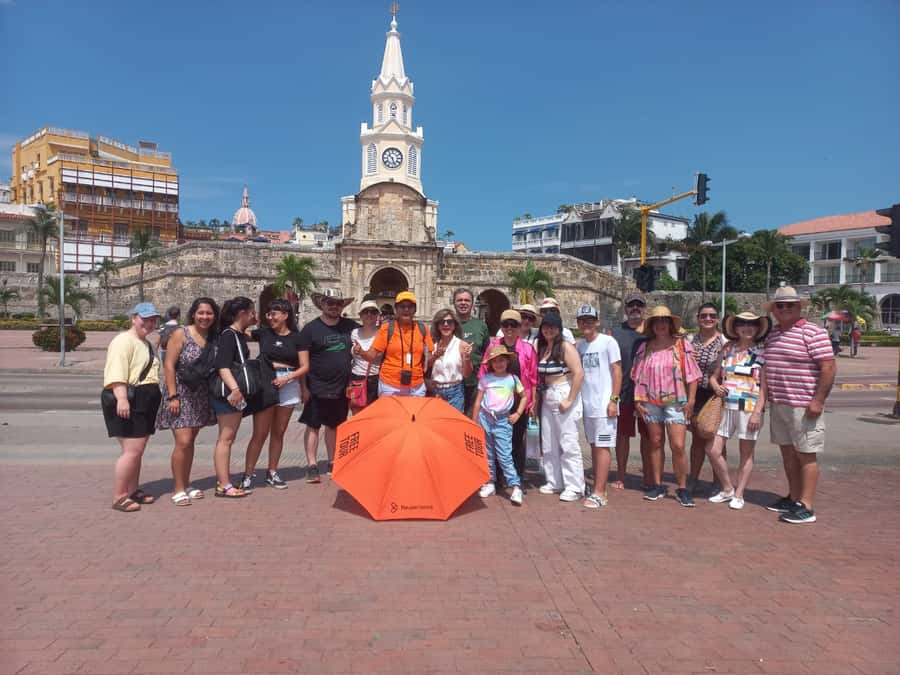
The route lasts 150 minutes and has no hotel pickup or drop-off. You meet at Plaza Cervantes and remain on foot, so plan your transport to and from the Clock Tower separately.
Wear comfortable shoes. Historic streets can be tiring, and the tour includes several neighborhoods rather than one compact square. Use sunscreen, bring water, and wear light, weather-appropriate clothes. A hat can help, though the supplied preparation advice specifically emphasizes sunscreen and comfort.
Shade is not guaranteed at every stop. Guides do try to keep groups under cover when possible, and Robert and other guides have been praised for managing this well. Still, Cartagena’s heat is a real consideration, especially during a late afternoon start or on a humid day.
Rain can also affect the mood and comfort of the walk. The route continues in wet weather unless conditions require a change, so a light rain layer is sensible during unsettled weather.
The tour is listed as wheelchair accessible. That is useful, but the practical experience can still depend on street conditions, crowds, curbs, and the exact route used that day. If you use a wheelchair, contact the provider before booking to discuss your needs.
Who should book this $12 walking tour?
I would choose this tour if you want a first look at Cartagena that combines famous buildings with local culture. It suits history fans, first-time visitors, people staying near the old center, and anyone who wants restaurant and sightseeing tips before spending the rest of a trip on their own.
It also suits visitors who do not want a dry lecture. The guides use stories, music, humor, questions, and occasional dancing to keep the group involved. That makes complicated subjects easier to follow, though people seeking a quiet, highly academic tour may prefer a private guide or a dedicated museum visit.
Families can join, and the route is suitable for older children who can manage a long walk in the heat. Very young children may need a stroller or extra breaks, and you should be ready to adjust your pace.
The tour is less suitable if you have limited time and want to enter several museums or monuments. You see and discuss many places, but this is mainly an outdoor orientation walk. You will need separate visits for a deeper look inside the Gold Museum, the Emerald Museum, San Pedro Claver, or Cartagena’s major fortresses.
Should you book it?
For $12, I think this is an easy recommendation for most first-time visitors. You get the Walled City, Getsemaní, colonial trade, slavery, Indigenous culture, pirate defenses, local music, public art, and practical advice in one 150-minute walk.
Book it near the start of your stay, bring water, and expect the guide assignment to shape the personality of the experience. If you want a broad, human account of Cartagena rather than a quick photo circuit, this tour earns its place on your schedule.
FAQ
Where does the Cartagena walking tour meet?
Meet at Plaza Cervantes, also called Camellón de los Mártires, in front of the Clock Tower. Look for the orange umbrella.
How long does the tour last?
The experience lasts 150 minutes. The Historic Center portion takes about two hours, followed by about one hour in Getsemaní.
What areas does the route cover?
The tour covers Cartagena’s Historic Center, also known as the Walled City, and the Getsemaní neighborhood.
What languages are available?
The live tour guide is available in English and Spanish.
Is the tour wheelchair accessible?
Yes, the activity is listed as wheelchair accessible. Contacting the provider before booking is sensible if you need specific assistance with the route.
Does the price include the tip?
Yes. The $12 price includes the professional guide and the tip normally associated with this free walking tour format.
Are food and drinks included?
No. Food and drinks are not included, so bring water and plan to buy refreshments separately if needed.
Can I cancel the booking?
Yes. You can cancel up to 24 hours in advance for a full refund. A reserve-now, pay-later option is also available.
Latest history tours reviewed in the world
- From Athens: Ancient Olympia Full-Day Private Tour★ 4.8 · 22 reviews
- From Athens: Explore Ancient Corinth & Charming Nafplion★ 4.6 · 102 reviews
- From Athens: Explore Ancient Greece 4-Day Tour★ 4.7 · 73 reviews
- From Albufeira: Wine Tasting & Historic Silves Tour★ 4.9 · 421 reviews
- From Albufeira: Historical Algarve Region Tour★ 4.7 · 585 reviews
- From Alexandria: Full-Day Guided Tour of Historical Sights★ 4.5 · 54 reviews
- Franklin: Ghost Tour in Historic Franklin★ 4.8 · 65 reviews
- Freiburg: Exciting City Tour with sightseeing and history★ 4.3 · 103 reviews
Colombia History Tours, compared.
Shared Medellín Downtown Tour with Wireless Audio
Read our review →
Historical Shared Tour Salsa, Graffiti & Resistance in Cali
Read our review →
Browse the lists this tour appears in