
Review · PERU
Walking tour in the Historic Center of Arequipa
Arequipa’s best surprise may be how much fits into a two-hour walk. You begin beside the Plaza de Armas, pass carved stone cloisters and old courtyards, look toward Misti and the other volcanoes, then meet llamas and alpacas before reaching San Lazaro, the city’s first settlement. It is a city tour with an unusually wide reach.
I like the excellent introduction to Arequipa’s center and the way the route mixes grand architecture with ordinary city life. I also like the guides’ personal touch. Edgar, Jorge Echeandia, Beatriz, Johan, and others have been praised for humor, local stories, food advice, and clear explanations of religious art.
The main thing to understand is the price. The $10 booking fee covers your reservation, but you are expected to leave a voluntary tip afterward. One guide explained a suggested tip of 30 to 50 soles per person, which can make the final cost higher than some people expect.
Key points at a glance
- Volcano views from Puente Grau: Look toward Misti, Chachani, and Pichu Pichu from a useful city viewpoint.
- A rare city tour stop: Mundo Alpaca includes llamas, alpacas, Suri, and vicuñas.
- Strong guide quality: Edgar, Jorge Echeandia, Beatriz, and Johan are singled out for humor, clear history, and practical advice.
- A walk through old Arequipa: See the Plaza de Armas, Company Cloisters, old mansions, gardens, and San Lazaro.
- Low upfront price, tip expected: The $10 fee is not the full picture of what you may pay.
- Optional paid museums: Santa Catalina Convent and museums such as the Juanita mummy museum require separate payment and may use their own guides.
Starting beside the Plaza de Armas
Meet at Santa Catalina Street 204, only one block from Arequipa’s main square. The guide carries an umbrella, making the meeting point easier to spot, and the listed coordinates can help if you are using a phone map.
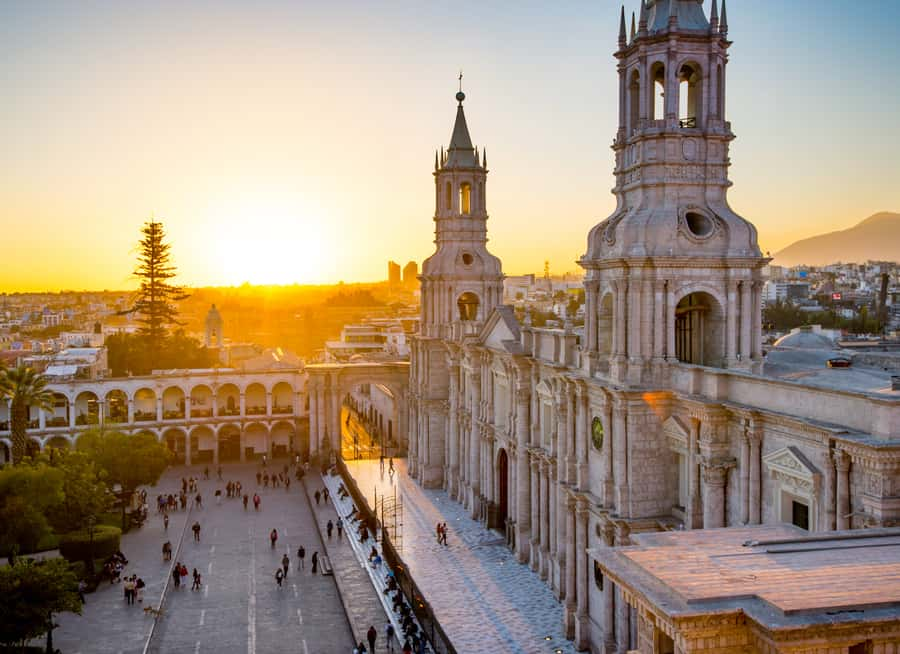
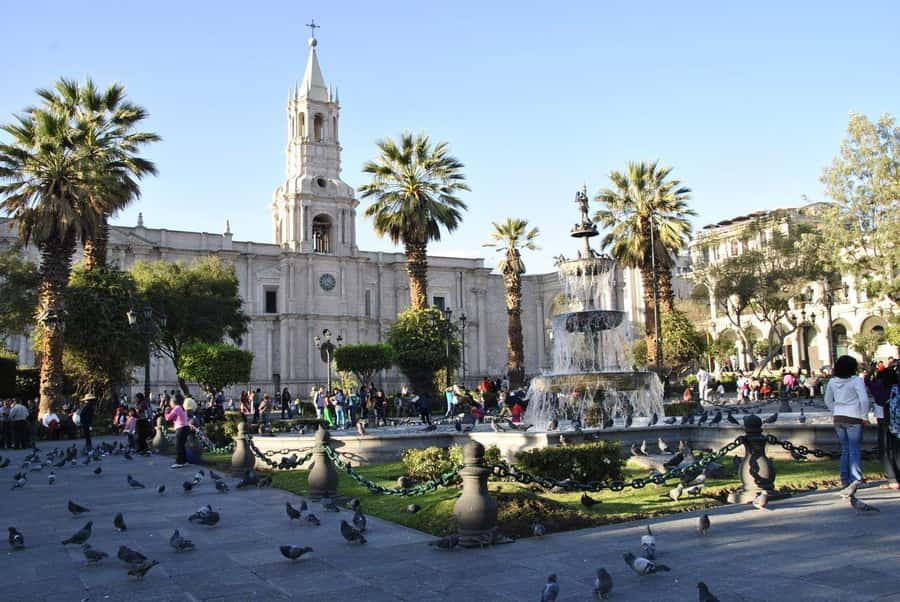
The tour begins at the Plaza de Armas, Arequipa’s natural orientation point. You will look at the traditional arches and portals around the square while the guide explains how the center developed and why the plaza matters to the city.
This opening works well if you have just arrived. One useful benefit is simple: after two hours, you should have a better sense of where the main center is and how to find your way around it. A few people used the walk as their first introduction to Arequipa, then spent the following days returning to places they had noticed along the route.
The square itself can be busy, and a group may gather around the guide. Pay attention to the umbrella and stay close when the explanation begins. One booking had a delayed start because the guide was not immediately at the meeting point, so I would arrive a few minutes early and keep the organizer’s contact details available.
More Old Town and Historic Centre Walks in the world:
- Madrid Essential: Historic Center, Plaza Mayor & Royal Palace
★ 5.0 · 6,416 reviews - Lisbon: Live Fado Show with Port Wine in Historic Center
★ 4.7 · 4,166 reviews - Valencia Old Town Tour with Wine & Tapas in 11th Century Historic Monument
★ 5.0 · 3,234 reviews
The Company Cloisters and Arequipa’s white-stone style
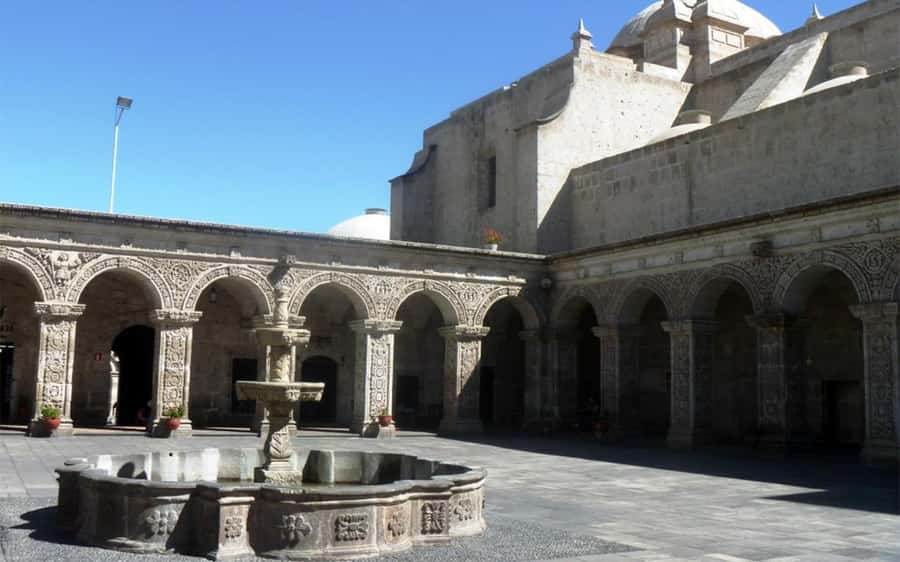
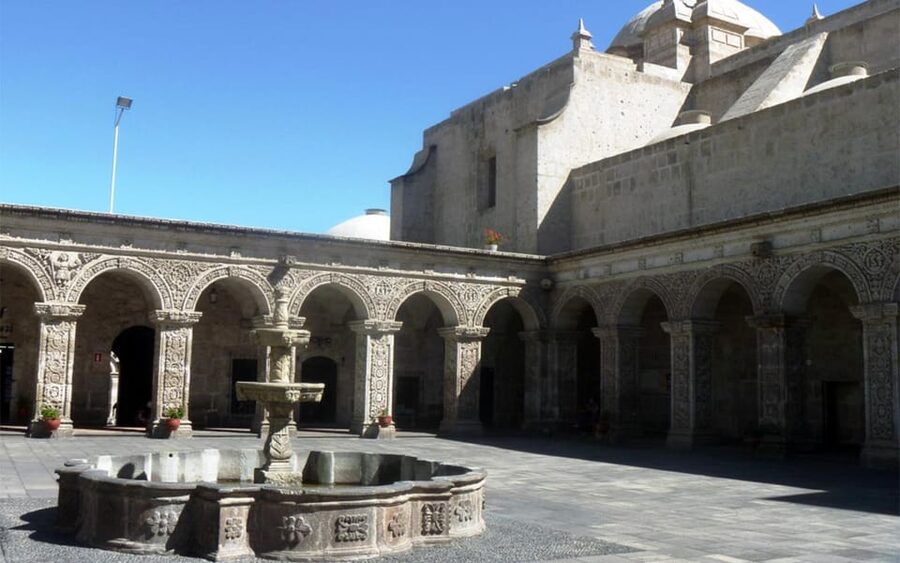
From the plaza, the route continues to the Cloisters of the Company. This is one of the walk’s most rewarding architectural stops, with carved stonework and graceful arcades that show the skill behind Arequipa’s old religious buildings.
The city is known for its pale volcanic stone, and the cloisters help you understand why the center feels so different from other Peruvian cities. A guide can point out religious details, decorative patterns, and the meaning behind the art instead of leaving you to see only a pretty courtyard.
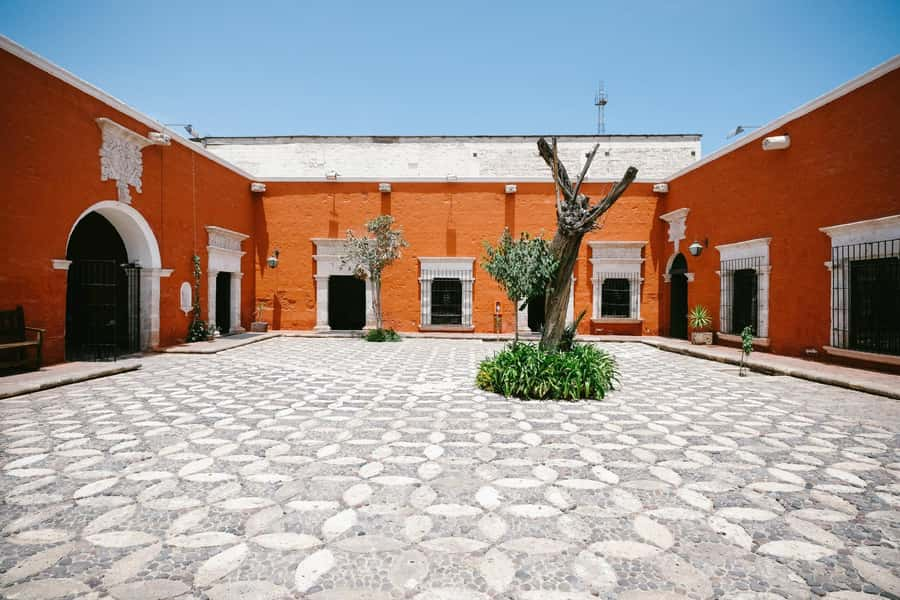
You may also pass old mansions and city gardens along the way. These stops are less about entering a single major attraction and more about noticing the small details of the historic center: doorways, courtyards, balconies, and the way older buildings sit beside everyday shops and offices.
That mix gives the walk some local texture. One guide even pointed out a long line of people renewing national identity cards, a small scene that says as much about present-day Arequipa as a formal monument does about the past.
The pace can be brisk. One person found there was little time to stop for photographs, so you should not expect a slow architectural photography walk. If a particular courtyard catches your eye, ask the guide whether there will be a pause before reaching for your camera.
Puente Grau and the three volcanoes
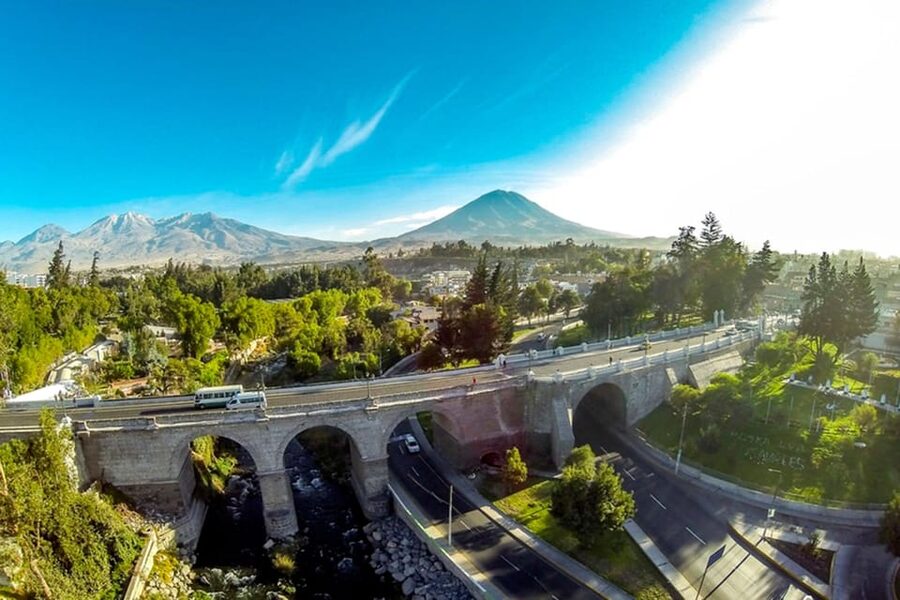
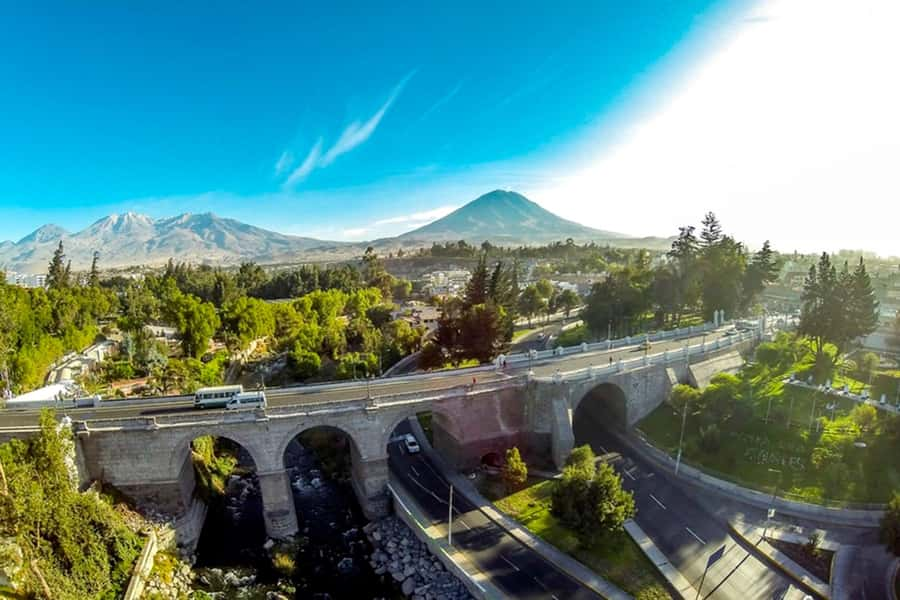
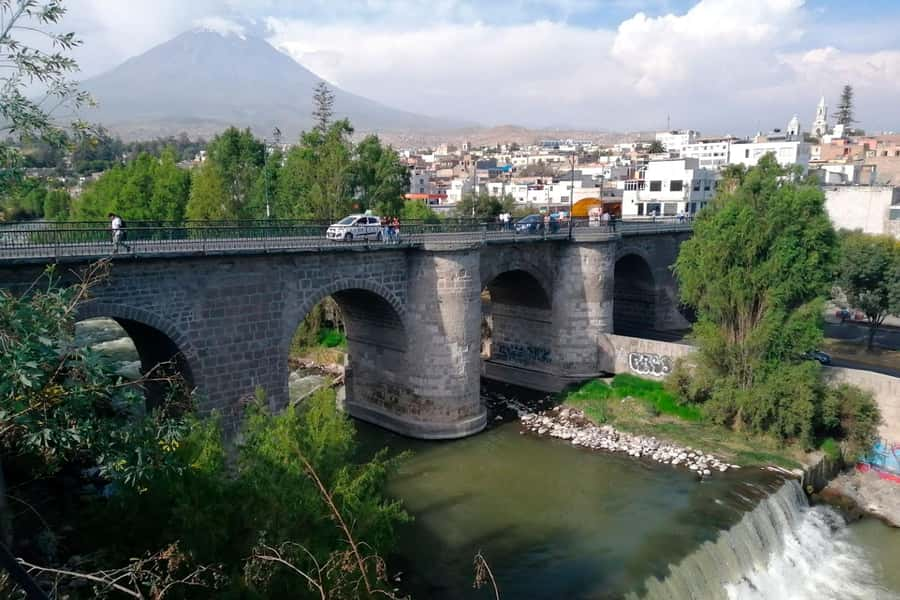
The route then reaches a strategic viewpoint near Puente Grau. From here, you may see Misti, Chachani, and Pichu Pichu, the volcanoes that shape Arequipa’s setting.
This is one of the best reasons to choose a walking tour rather than spend all your time inside the plaza. You connect the architecture to the larger setting. The city’s old buildings make more sense when you can also see the dramatic volcanic peaks beyond the streets.
Visibility will affect this stop, and the tour information does not promise perfect views every day. Still, the viewpoint adds a welcome change of pace. You leave the enclosed courtyards and get a broader look at the city and its surrounding scenery.
The stop can also be useful for photos, though the overall tour moves along. If volcano views matter greatly to you, ask about the conditions at the start. The guide can tell you how much time is likely to be available at the viewpoint.
Mundo Alpaca, where the city walk gets unexpected
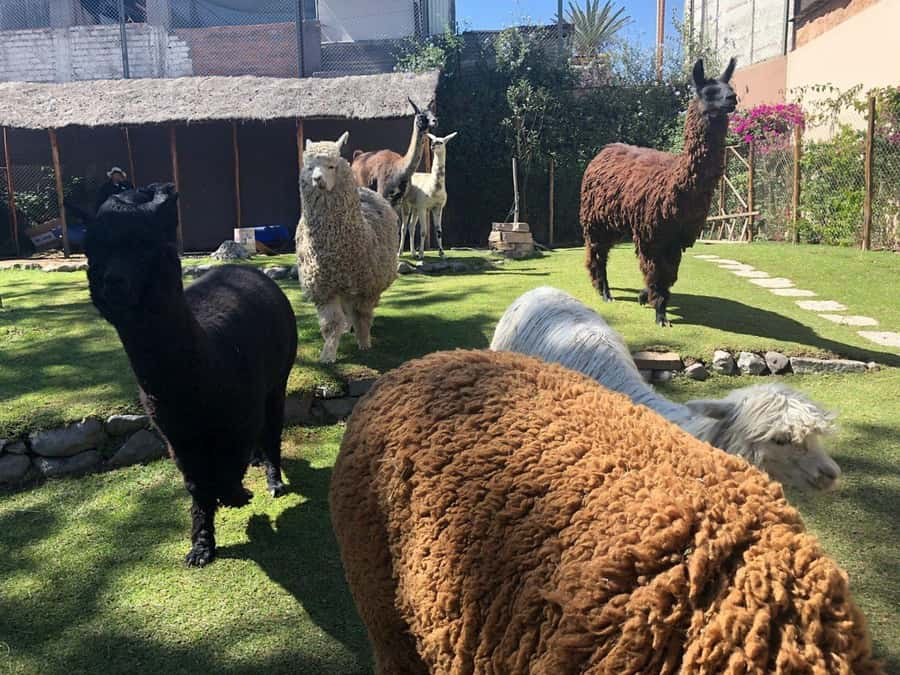
Mundo Alpaca brings a memorable change to the route. Here you can see an old breeding farm for camelids, including llamas, alpacas, Suri, and vicuñas. Some tours also allow you to feed the llamas and alpacas, an experience several people especially enjoyed.
I like this stop because it makes the walk more than a standard parade of churches and plazas. Alpaca fiber is closely tied to Peru’s textile tradition, and Mundo Alpaca gives you a direct look at the animals behind that craft.
You may also buy fabrics made from the same fiber. That shopping option is there, but it is not required to enjoy the visit. I would treat it as a chance to inspect the material and learn what is produced locally, not as the main purpose of the tour.
The young animals can be the highlight, especially if you are traveling with children. One person specifically loved seeing a baby llama and alpaca. The small zoo is not a full wildlife park, so keep your expectations in proportion. Its value comes from fitting an animal and textile stop into a compact city route.
More History Walking Tours in the world:
- History and Hauntings of Salem Guided Walking Tour
★ 5.0 · 14,564 reviews - Lisbon: History, Stories and Lifestyle Walking Tour
★ 4.8 · 10,902 reviews - Boston: Freedom Trail History Small Group Walking Tour
★ 5.0 · 6,450 reviews - Historic Charleston Guided Sightseeing Walking Tour
★ 5.0 · 6,216 reviews
San Lazaro, Arequipa’s first settlement
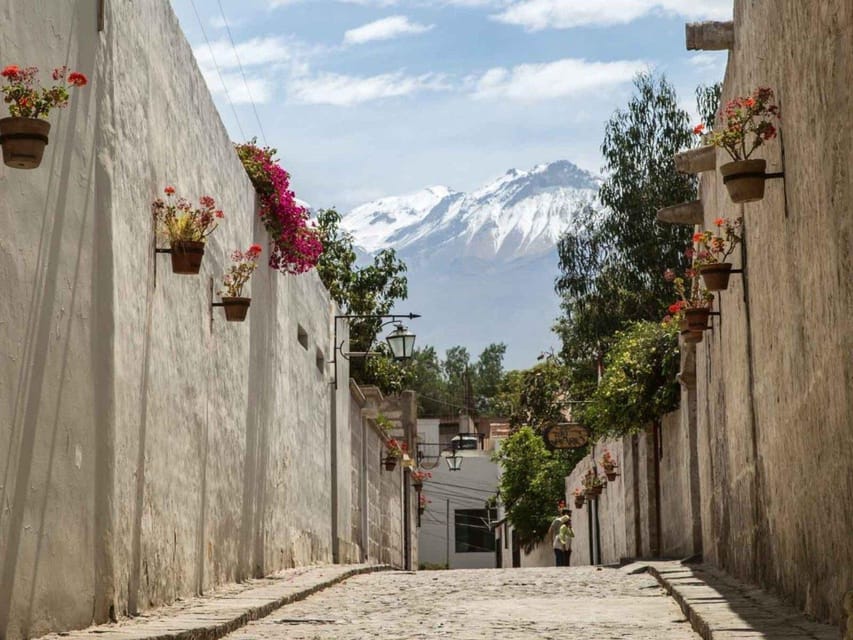
The final major area is San Lazaro, described as the first town founded in what became the White City. Its narrow streets and older character offer a different feel from the formal Plaza de Armas.
This part of the walk helps connect Arequipa’s grand center with its beginnings. Instead of seeing the city as a collection of monuments, you get a sense of how the settlement grew outward from an early neighborhood.
The route finishes back near Santa Catalina Street and the Plaza de Armas. That is practical because you can continue sightseeing, find lunch, or return to your hotel without arranging transport from an unfamiliar area.
Some walks last closer to two and a half hours, depending on questions, pauses, and the guide. The stated duration is about two hours, so allow a little extra time if you have a fixed restaurant booking or museum entry afterward.
The guide makes the difference
The strongest part of this experience is the guide. Names that come up in the feedback include Edgar, Jorge Echeandia, Beatriz, Johan, and Francisco. The praise is consistent in the areas that matter on a walking tour: clear explanations, humor, local stories, and a willingness to answer questions.
Edgar was praised for adding historical context to ordinary city scenes and for taking the group to a high point in a hotel with a fine city view. Beatriz has been described as helpful with Peruvian food, markets, religious art, and the story of Arequipa. Jorge was praised for being friendly and especially well informed.
Guide assignments can change, so you should not book solely to obtain one named person. Still, the range of comments suggests that the quality of the guiding is a major part of the value. A good guide turns a short walk into a useful orientation. A weaker guide would leave you with little more than a list of buildings.
The English and Spanish options make the tour accessible to a wide range of visitors. If you want detailed explanations of religious architecture or local food, ask questions early. The guides appear willing to adapt the conversation, but the group’s pace may limit long stops.
What the $10 price really means
The advertised price is $10 per person, but the payment structure deserves close attention. You pay the booking fee to reserve a place, then leave a voluntary tip at the end to help cover the guide and maintenance costs connected with the places visited.
A suggested tip of 30 to 50 soles per person was given during one tour. Because tipping is described as voluntary, you remain free to decide what the walk was worth to you. But you should budget for it rather than assume the $10 is the complete cost.
Even with the tip, the experience can offer good value for an introduction to Arequipa. In a single walk, you cover the main square, colonial architecture, old neighborhoods, a volcano viewpoint, and camelids. The value is strongest if you are new to the city and want a practical first look without arranging several separate visits.
The tour includes a professional guide and the walking route. The listed inclusions also mention entrance to the places visited. Santa Catalina Convent and other museums, including the Juanita mummy museum, are different: entry costs extra, and you may need to hire the museum’s internal guide.
Optional museums and how to fit them in
You may be able to enter Santa Catalina Convent or another museum during the tour if you arrange it in advance. These visits are not part of the basic two-hour walk in the same way as the outdoor stops, and you should expect separate admission costs.
Santa Catalina is a major attraction, so you may prefer to visit it on its own rather than squeeze it into a fast-moving city walk. The same applies to the Juanita mummy museum and other representative museums in Arequipa. If you want proper time inside, ask about the schedule before the walk begins.
I would use this tour for orientation, then return to the places that deserve more time. That approach also protects you from rushing through an important museum while the rest of the group waits.
Who will get the most from this walk
I recommend it most for first-time visitors, people arriving in Arequipa the previous evening, and anyone who wants the basics before exploring alone. It is also a good fit if you enjoy learning through conversation rather than reading every plaque yourself.
Families may like Mundo Alpaca, especially the chance to see and feed camelids. Food-focused visitors can ask the guide for restaurant advice, and several guides have been praised for practical local recommendations.
You should think twice if you want a slow, photo-heavy stroll with long periods at each building. The route covers a lot in two hours, and some people found it rushed. It also involves walking throughout, with no transport between stops.
The tour may not suit someone who dislikes tipping systems or wants a fully fixed final price. In that case, calculate the booking fee and likely tip before reserving. The low upfront cost is appealing, but it does not tell the whole financial story.
Booking details worth knowing
The tour is offered in English and Spanish, lasts about two hours, and begins and ends at Santa Catalina Street 204. The guide carries an umbrella at the meeting point. You can cancel up to 24 hours ahead for a full refund, and the reserve-now, pay-later option keeps your plans flexible.
Start times vary, so check availability for your date. Since the entire route is on foot, wear comfortable shoes and bring water. The tour information does not list transport, so do not expect a vehicle between the Plaza de Armas, Puente Grau, Mundo Alpaca, and San Lazaro.
Should you book the Arequipa walking tour?
Book it if you want a friendly, efficient introduction to Arequipa with more variety than a standard plaza tour. The combination of colonial architecture, volcano views, camelids, and San Lazaro is unusually good for a short walk, and guides such as Edgar, Beatriz, Jorge, Johan, and Francisco have made the experience especially useful for many people.
Skip it if you need a slow pace, guaranteed photo stops, or a fixed all-in price with no expected tip. If you do book, arrive early, budget for 30 to 50 soles in addition to the reservation fee, and ask in advance about adding Santa Catalina or a museum.
For most first visits, I think the route earns its place on the schedule. It gives you the city’s main landmarks, a few unexpected stops, and enough practical orientation to make the rest of your time in Arequipa easier.
FAQ
Where does the tour begin?
It begins at Santa Catalina Street 204, about one block from the Plaza de Armas. The guide is identified by an umbrella, and the listed coordinates are -16.3967191, -71.53667879999999.
Where does the tour finish?
The walk finishes back at Santa Catalina Street 204, near the Plaza de Armas.
How long does the tour last?
The stated duration is two hours, though one booking described a walk lasting about two and a half hours.
Which languages are available?
The tour is offered with a live guide in English or Spanish.
What places are included in the route?
The route includes the Plaza de Armas, the Company Cloisters, old mansions and gardens, a viewpoint near Puente Grau, Mundo Alpaca, and the San Lazaro neighborhood.
Are museum entries included?
The listed tour includes entrance to the places visited, but Santa Catalina Convent and museums such as the Juanita mummy museum require an extra payment. You may also need to hire an internal guide for those museums.
Is the $10 price the complete cost?
No. The $10 fee is for the reservation, and you are expected to leave a voluntary tip at the end. A suggested tip of 30 to 50 soles per person has been given on one tour.
Can I cancel the booking?
Yes. You can cancel up to 24 hours in advance for a full refund. The reserve-now, pay-later option lets you book without paying immediately.
Latest history tours reviewed in the world
- From Athens: Ancient Olympia Full-Day Private Tour★ 4.8 · 22 reviews
- From Athens: Explore Ancient Corinth & Charming Nafplion★ 4.6 · 102 reviews
- From Athens: Explore Ancient Greece 4-Day Tour★ 4.7 · 73 reviews
- From Alexandria: Full-Day Guided Tour of Historical Sights★ 4.5 · 54 reviews
- From Albufeira: Wine Tasting & Historic Silves Tour★ 4.9 · 421 reviews
- From Albufeira: Historical Algarve Region Tour★ 4.7 · 585 reviews
- Franklin: Ghost Tour in Historic Franklin★ 4.8 · 65 reviews
- Freiburg: Exciting City Tour with sightseeing and history★ 4.3 · 103 reviews
Peru History Tours, compared.
Lima’s Vibrant Heritage: Exploring the City’s Landmarks Half-day
Read our review →
Lima: Historic Center Street Food, Market, and Eateries Tour
Read our review →
Cusco: Historical Guided City Tour with 4 Inca Ruins
Read our review →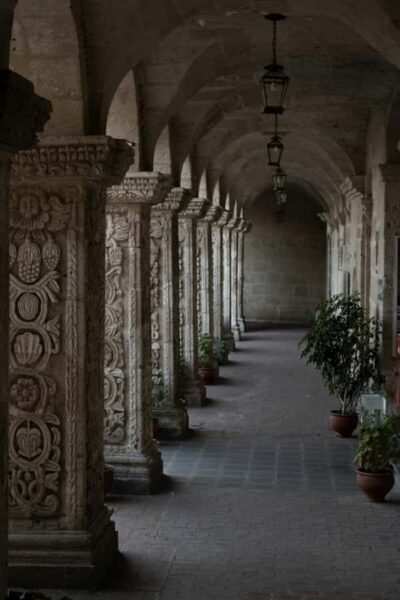
Arequipa: Walk through the Historic Center of the City
Read our review →
Cusco: Historic Walking Tour with Pisco Sour and Music Show
Read our review →Browse the lists this tour appears in