
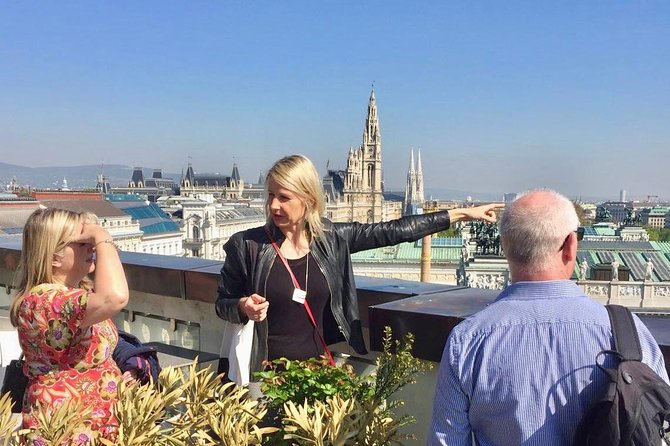
Review · VIENNA
Vienna Historic Center Small Group Walking Tour
Vienna’s grand center works best on foot, and this tour gives you the city’s imperial stage in one long, brisk sweep. You move from the twin museums at Maria-Theresien-Platz past the Ringstrasse, Hofburg, Heroes Square, Rathaus, Burgtheater, and Graben before ending at St. Stephen’s Cathedral. It is a strong first-day orientation, especially if you have only a short time in Vienna.
I like the 15-person limit, which keeps the group small enough for questions, and I like the audio devices, since you can hear the guide even beside busy streets. Guides including Dace, Giselle, Gabriela, Beatrice, and Annelie have been praised for humor, clear storytelling, and practical restaurant and café advice. The catch is simple: this is mainly an outdoor tour. You see the grand buildings from the street, but museum admission is not included.
Key points at a glance
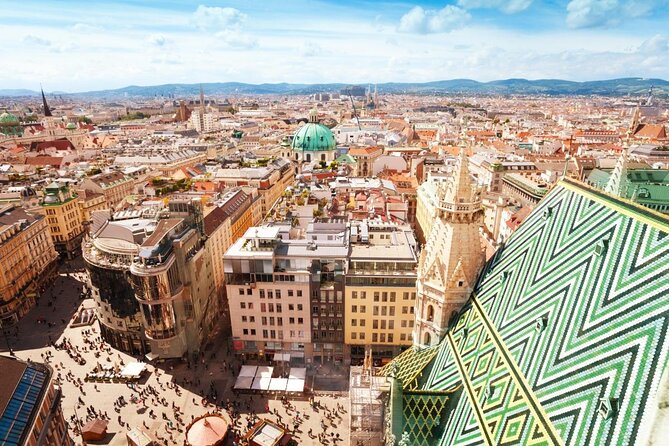
- A full imperial-city circuit: See Maria-Theresien-Platz, the Ringstrasse, Hofburg Palace, Heroes Square, Rathaus, Burgtheater, Graben, and St. Stephen’s Cathedral.
- Small groups capped at 15: You get more room to ask questions than on a large coach-style walk.
- A brisk 2.5-hour pace: The route covers a lot, with one account estimating roughly 14,000 steps.
- Strong guide-led storytelling: Dace, Giselle, Gabriela, Beatrice, and Annelie are among the guides praised for warmth, humor, and clear explanations.
- Outdoor sightseeing, not museum touring: The route points out interiors and collections, but you generally do not go inside museums.
- Useful for planning the rest of your stay: The guide offers suggestions for cafés, restaurants, attractions, and Vienna customs.
Why this walk makes sense on your first day
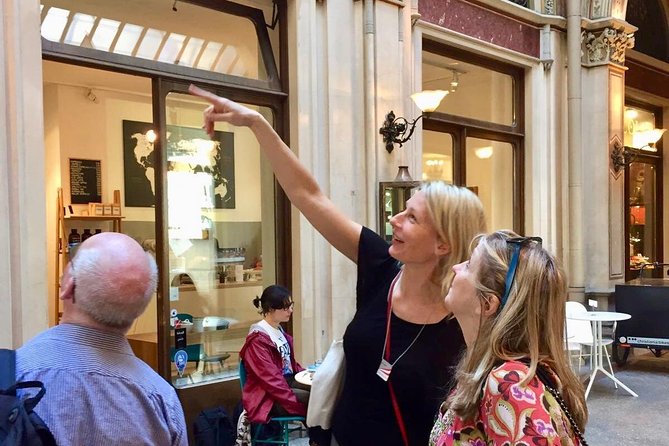
Vienna can look orderly and easy to understand on a map, yet its buildings carry layers of imperial power, music, politics, religion, and modern history. A good guide helps you connect those layers before you begin visiting places on your own.
This route is especially useful because it links the major sights rather than treating them as isolated photo stops. You learn how the Ringstrasse replaced the old city fortifications, why the Hofburg grew over centuries, and how Vienna’s grand public buildings reflect different architectural styles.
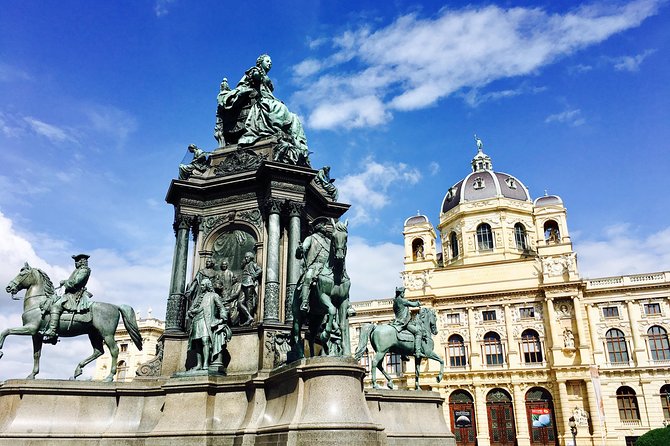
The tour begins at Maria-Theresien-Platz, between the Natural History Museum and the Kunsthistorisches Museum. The square’s enormous statue of Empress Maria Theresa gives you an immediate lesson in Habsburg ambition. The two museums face one another like architectural twins, and you can hear about the royal art collections without spending your tour inside either building.
From there, the walk moves toward the Ringstrasse. This broad boulevard encircles the old city and is lined with major public buildings in Classical, Gothic, Renaissance, and Baroque styles. The guide helps you read the city’s architecture instead of simply photographing it.
That context is the main value of the tour. You are not paying for entry tickets or a private vehicle. You are paying for a person who can explain why Vienna looks the way it does and point out details you could easily miss while walking alone.
More Old Town and Historic Centre Walks in the world:
- Madrid Essential: Historic Center, Plaza Mayor & Royal Palace
★ 5.0 · 6,416 reviews - Lisbon: Live Fado Show with Port Wine in Historic Center
★ 4.7 · 4,166 reviews - Valencia Old Town Tour with Wine & Tapas in 11th Century Historic Monument
★ 5.0 · 3,234 reviews
From Maria-Theresien-Platz to the Hofburg
The opening section is compact but full of visual material. You pause at the Maria Theresa monument, where the empress is surrounded by figures linked to government, culture, and military life. Mozart appears among the sculpted figures, a reminder of how Vienna likes to place music beside politics.
The route then reaches Burgtor, the neoclassical gate built after the Napoleonic Wars. It is a useful transition point. Outside is the Ringstrasse and its later civic architecture; inside lies the Hofburg, the former center of Habsburg power.
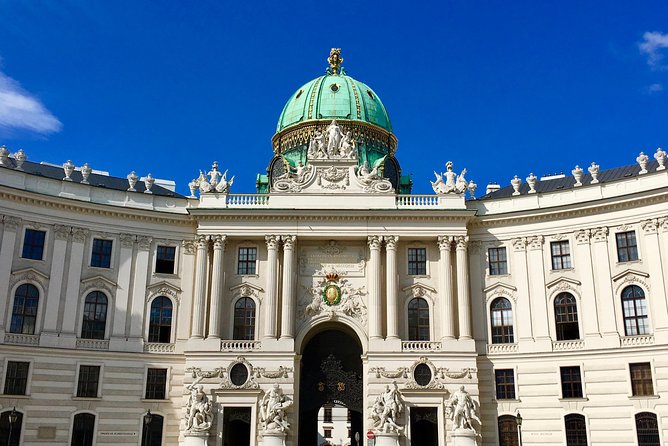
The Hofburg is not one single palace in the tidy sense. It is a large complex that expanded over many centuries. The guide explains the courtyards, façades, imperial residents, court customs, and the palace’s role in modern Austria. You will see the New Castle and hear about museums housed there, including the World Museum, Imperial Armoury, and Austrian National Library.
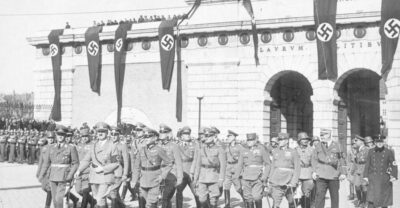
The route also touches on difficult 20th-century history. From the balcony of the New Castle, Adolf Hitler proclaimed Austria’s annexation into Nazi Germany in 1938. That detail is important because the Hofburg is not only a pretty imperial backdrop. It has been a center of power through Austria’s triumphs and darkest political moments.
You may also hear about Empress Elisabeth, known as Sisi, whose life and personality have become part of Vienna’s popular image. The walk does not replace a dedicated Sisi museum visit, but it gives you a setting for understanding her place in Habsburg memory.
Heroes Square, the library, and the Spanish Riding School
Heldenplatz, or Heroes Square, opens in front of the Hofburg. It was created after the old bastions were removed during the Napoleonic period, and its broad lawns make the imperial buildings feel even more imposing.
This is one of the route’s best places for a clear explanation of Vienna’s political symbolism. You can look back toward the Hofburg and forward across a space designed for ceremonies, military display, and public messages.
The walk may also point out the Austrian National Library and the Baroque Winter Riding School. The latter is associated with the Lipizzan horses, which perform and train there. You do not attend a riding performance as part of this tour, but the guide gives you useful context if you plan to book one later.
The route passes St. Michael’s Church, which dates to 1220. It is one of Vienna’s older churches and has a very different feel from the imperial façades around it. Depending on the day and the guide’s route, some indoor stops may be possible, including churches, a palace, a university, or a café. Still, you should treat these as possible additions, not guaranteed inclusions.
Rathaus, Burgtheater, and Vienna’s public face
The walk continues toward the Rathaus, Vienna’s neo-Gothic City Hall and seat of the city government. Its tall façade and elaborate details make it one of the Ringstrasse’s most memorable buildings.
Nearby, the Burgtheater represents Vienna’s long theater tradition. The guide places it within the city’s cultural life and explains why the Ringstrasse was built as more than a traffic route. It was a showcase for the empire’s institutions, arts, education, and civic power.
The University of Vienna adds another layer. Here, the guide connects Vienna’s academic world to figures such as Sigmund Freud and Lise Meitner. Meitner, a Jewish physicist whose work shaped modern science, offers an important reminder that Vienna’s intellectual story includes both major breakthroughs and the persecution that drove many minds away.
This portion is strongest if you enjoy history and ideas. It is less satisfying if you want lots of hands-on activity. Much of the experience involves listening beside buildings, then moving on to the next one.
More History Walking Tours in the world:
- History and Hauntings of Salem Guided Walking Tour
★ 5.0 · 14,564 reviews - Lisbon: History, Stories and Lifestyle Walking Tour
★ 4.8 · 10,902 reviews - Boston: Freedom Trail History Small Group Walking Tour
★ 5.0 · 6,450 reviews - Historic Charleston Guided Sightseeing Walking Tour
★ 5.0 · 6,216 reviews
Volksgarten and Beethoven’s Vienna
Volksgarten gives the group a short change of pace. The park includes the Theseus Temple, a small neoclassical structure originally designed to display a sculpture by Antonio Canova. The guide may also mention the former Cortisches coffee house, linked with performances by Johann Strauss.
Vienna’s coffeehouse culture comes up several times along the walk. The city’s cafés were meeting places for writers, composers, architects, painters, psychoanalysts, and political thinkers. This is one of the most useful themes to carry into the rest of your stay. After the tour, sitting down for coffee and cake will feel like part of the city’s social history, not just a break from sightseeing.
The route also includes the Beethoven Pasqualatihaus, a former residence of Ludwig van Beethoven on the ramp of the old fortifications. You should not expect a full Beethoven museum visit here. The value is in hearing how the composer fits into Vienna’s musical identity and seeing the place connected with his life.
At Palais Ferstel, the guide points out a building that once housed the Austro-Hungarian National Bank and Stock Exchange. The variety is typical of this walk: imperial residence, church, theater, university, park, music, finance, and shopping street all appear within a manageable central area.
Freyung, Graben, and the final approach
Freyung is one of the oldest squares in the center and has a quieter, more intimate character than the grand Ringstrasse spaces. It helps you see that central Vienna is not only enormous façades and ceremonial avenues. Smaller squares and passages give the old city a more human scale.
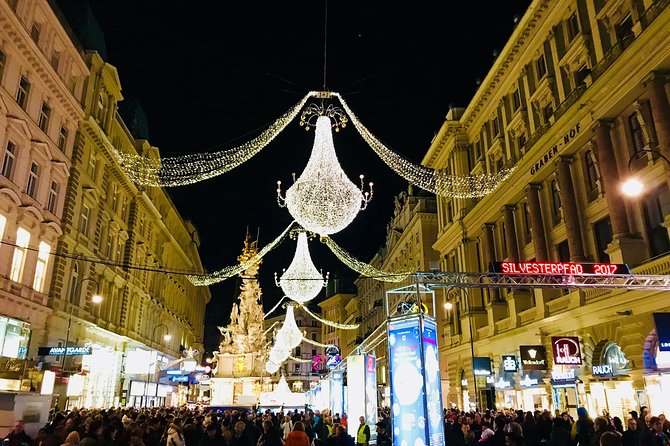
The walk then reaches Graben and Kohlmarkt, among Vienna’s most elegant pedestrian streets. This is a useful point for restaurant and café suggestions, and it is also where the pace may feel most crowded, especially near the shopping areas.
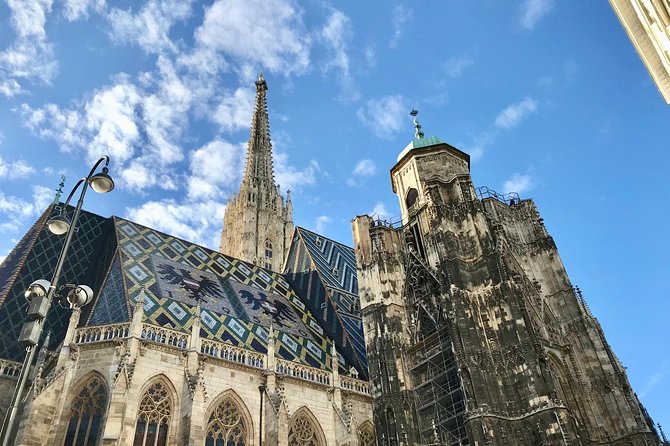
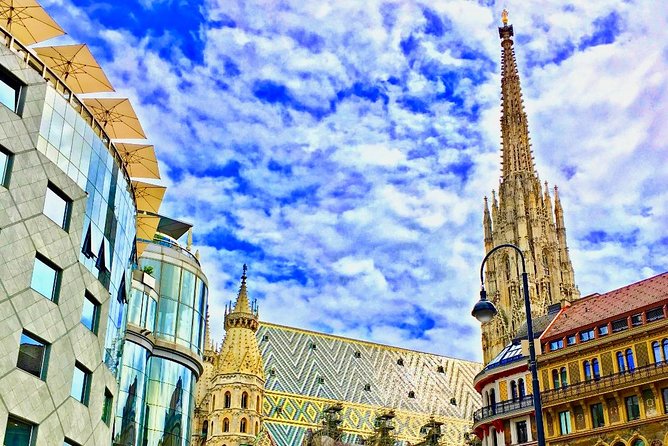
Finally, the route arrives at Stephansplatz, the central square dominated by St. Stephen’s Cathedral. The cathedral is Vienna’s best-known landmark and the official end of the tour. Ending here works well because you can continue on your own, enter the cathedral if you choose, or use the square as a base for more sightseeing.
The route covers a lot in 150 minutes. One published account described about 14,000 steps, so wear comfortable shoes and expect a brisk walk. You will have stops to listen, but this is not a gentle stroll with long café breaks built in.
What the guide adds
The guide is the heart of this experience. Dace is praised for dry humor, personal anecdotes, and clear explanations. Giselle is noted for her enthusiasm, historical storytelling, and ability to keep a group together in crowded places. Gabriela is praised for adding warm-up stops on cold days, while Beatrice and Annelie are described as engaging and passionate.
Of course, your guide may be someone else. The important point is the format: a certified local guide leads the route, uses audio equipment, answers questions, and offers advice for meals and later sightseeing.
The audio devices are a practical advantage. Vienna’s center can be noisy, and a guide speaking to 15 people without amplification can be hard to follow. Here, you can keep walking while still hearing the commentary.
Guides sometimes use an iPad or images to make people and events easier to picture. That can help when you are standing outside a building connected with a long-gone emperor, composer, or political event.
Price, pace, and what you actually get
At $72.56 per person, this is not a cheap orientation walk. The price makes the most sense if you value a small group, a certified guide, personal questions, audio equipment, and a carefully planned route through the center.
It makes less sense if your main goal is entry to museums or palace rooms. Admission is not included, and the tour does not generally take you inside museums. You may see some churches or other indoor places depending on the weekday and local conditions, but you should not book this expecting a collection of timed admissions.
The 2.5-hour duration is a good middle ground. A shorter walk would force the guide to rush through Vienna’s major sights. A longer walk might be tiring, especially in cold weather. Even so, the route is full, and the pace can feel demanding.
The tour is offered in English, with several start times. Confirmation is provided at booking, and free cancellation is available up to 24 hours before the start time. Poor weather or failure to meet the minimum group size can lead to a new date, another experience, or a full refund.
Who should book this Vienna walk?
I would choose this tour if you are visiting Vienna for the first time, want historical context before exploring alone, or have only a few days in the city. It also suits solo visitors and couples who prefer a small group rather than a private tour.
It is a particularly good match for people who enjoy political history, architecture, music, and stories about personalities. You will get more from it if you are willing to listen closely and keep moving.
I would look elsewhere if you need step-free sightseeing, dislike long walks, or want a tour built around interior visits. The experience is not recommended for people with walking disorders, and its outdoor format means weather matters. Dress warmly in winter and bring comfortable shoes in every season.
Should you book it?
Book it for orientation and context, not admission tickets. The route covers an impressive amount of central Vienna, and the small group, audio devices, and lively guides make the long walk easier to follow.
The best plan is to take it early in your visit. Use the guide’s café and restaurant suggestions, then return to the Hofburg museums, St. Stephen’s Cathedral, the Spanish Riding School, or the National Library on your own. If you want Vienna explained before you start choosing what to see, this is a solid and useful introduction.
FAQ
Where does the Vienna Historic Center Walking Tour begin?
It begins at Maria-Theresien-Platz in central Vienna, between the Ringstrasse and the Museumsquartier.
Where does the tour end?
The tour ends at Stephansplatz, the central square beside St. Stephen’s Cathedral.
How long does the tour last?
The tour lasts approximately 2 hours and 30 minutes.
How many people can join the group?
The group is limited to a maximum of 15 people.
Is the tour offered in English?
Yes. The tour is offered in English.
Are museum admission tickets included?
No. The tour does not visit the inside of any museum, and museum admission is not included.
Will I visit the inside of any buildings?
The tour is mainly outdoors. Some churches and, depending on the weekday, other indoor locations such as palaces, a university, or a café may be visited, but these indoor stops are not guaranteed.
How much walking is involved?
The route requires good physical fitness and a lot of walking. One account estimated roughly 14,000 steps, so comfortable shoes are important.
Can I cancel for a full refund?
Yes. You can cancel at least 24 hours before the start time for a full refund. Changes or cancellations made less than 24 hours before the start time are not accepted for a refund.
More Small-Group History Tours in the world
- London Small Group Tour of Historical Pubs
★ 5.0 · 10,422 reviews - Madrid Tapas & Taverns Small Group Food & History Tour
★ 5.0 · 2,664 reviews - Hidden Alleyways and Historic Sites Small-Group Walking Tour
★ 5.0 · 2,335 reviews - New Orleans Small-Group Haunted History Carriage Tour
★ 4.5 · 2,289 reviews
Latest history tours reviewed in the world
- From Athens: Ancient Olympia Full-Day Private Tour★ 4.8 · 22 reviews
- From Athens: Explore Ancient Corinth & Charming Nafplion★ 4.6 · 102 reviews
- From Athens: Explore Ancient Greece 4-Day Tour★ 4.7 · 73 reviews
- From Albufeira: Wine Tasting & Historic Silves Tour★ 4.9 · 421 reviews
- From Albufeira: Historical Algarve Region Tour★ 4.7 · 585 reviews
- From Alexandria: Full-Day Guided Tour of Historical Sights★ 4.5 · 54 reviews
- Franklin: Ghost Tour in Historic Franklin★ 4.8 · 65 reviews
- Freiburg: Exciting City Tour with sightseeing and history★ 4.3 · 103 reviews
Vienna History Tours, compared.
Skip-the-Line Schonbrunn Palace Guided Tour and Vienna Historical City Tour
Read our review →
Vienna Mozart Concert in Historical Costumes at the Musikverein
Read our review →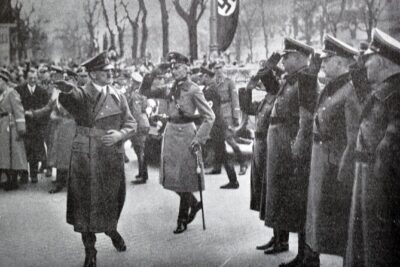
Browse the lists this tour appears in