
Review · SPLIT
History Split Walking Tour in French -Small group
Diocletian’s Palace is not a museum behind ropes. It is Split’s old town, threaded with cafés, homes, shops, and working streets. This French-language walking tour gives you a useful map of that living Roman complex, then connects it to Croatia’s medieval, Venetian, and modern past.
I like the way the route balances famous sights with less obvious details, especially the palace substructures and Fruit’s Square. I also like that guides such as Antonela and Irene are praised for fluent French, humor, patience, and the ability to answer odd questions. The main drawback is group size: small group sounds intimate, but the maximum is 30 people, and the walk may run beyond its advertised 90 minutes.
Key points to know before booking

- French from start to finish: The tour is designed for French-speaking visitors, with guides reported as fluent and clear.
- A full palace-and-old-town route: You visit the Peristyle, Vestibule, substructures, Golden Gate, Riva, Fruit’s Square, and the Split Synagogue.
- The substructures are included: You see the underground structure but not the museum section, which you can visit separately.
- A lively guide matters here: Antonela and Irene are among the guides praised for warmth, humor, and strong command of Split’s past.
- Allow more than 90 minutes: The stated duration is about one hour and 30 minutes, though the walk can last more than two hours.
- Expect uneven footing and high steps: Most people can take part, but the tour is not recommended if high steps are a problem.
Why Diocletian’s Palace makes a good French walking tour
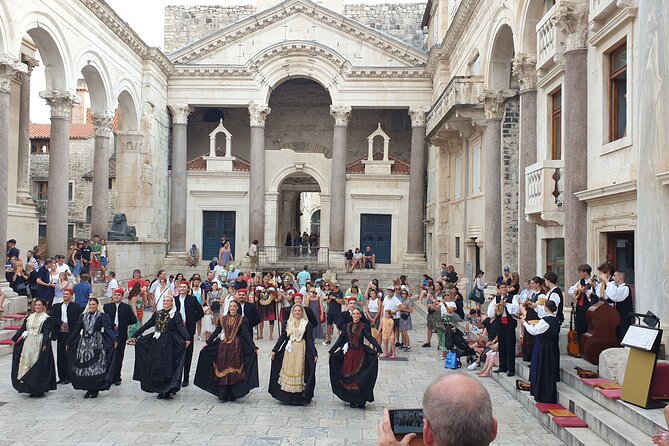
The palace is the sort of place that can confuse you in a pleasant way. You may think you are walking through a Roman ruin, then turn a corner and find a busy square, a shopfront, or a stone passage used by local residents.
That mixture is exactly why a guide helps. Without context, the Peristyle can look like a handsome courtyard. With a good explanation, you begin to see it as the ceremonial heart of an enormous imperial residence, later reshaped into the core of Split.
The tour also makes a useful historical connection. Diocletian did not begin life as an emperor. The guide explains how he rose from an obscure background to become one of the most powerful men in the Roman world, then chose this part of the Adriatic for his retirement palace.
The French language is an important part of the experience. Several comments describe guides speaking excellent French, explaining carefully, and handling questions with ease. That matters in a place filled with names, dates, rulers, religious changes, and architectural terms that are easy to miss when you are listening in a second language.
More History Walking Tours in Croatia
- Dubrovnik Old Town History Walking Tour
★ 5.0 · 1,684 reviews - Dubrovnik: Ancient City Walls & Wars Walking Tour
★ 5.0 · 1,270 reviews - Zagreb: City & History Walking Tour & WW2 Tunnels
★ 4.9 · 1,202 reviews
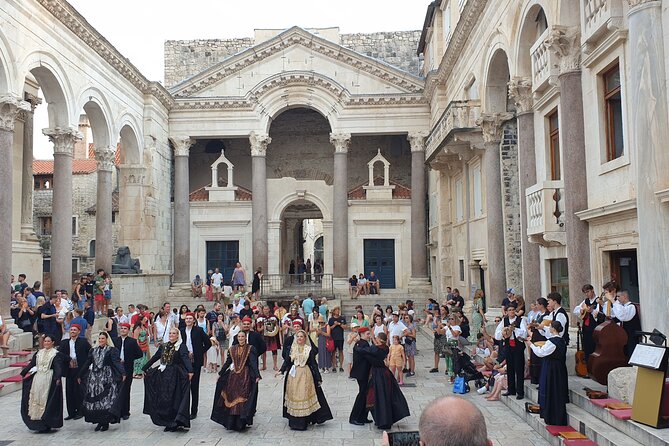
Starting at the Peristyle, Split’s Roman stage
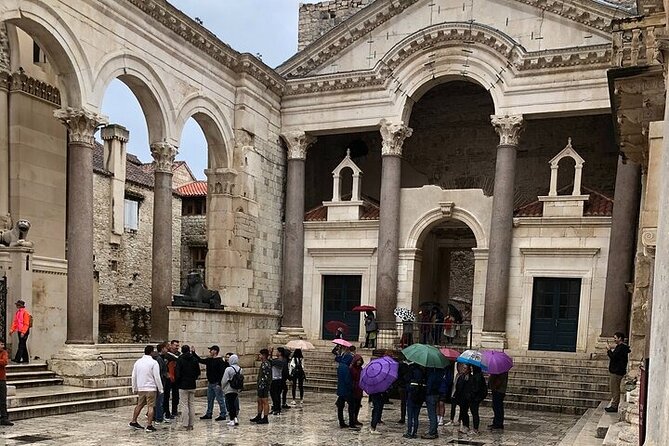
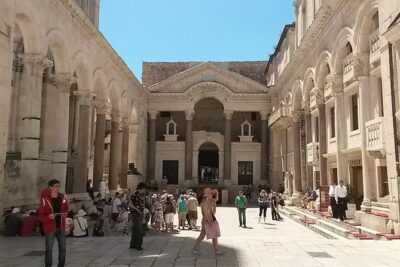
You meet on Peristil ulica, at the Peristyle, the palace’s central square. This is a smart starting point because the square connects to nearly every major part of the complex.
Allow yourself time to look around before the explanation begins. The space gives you an immediate sense of the palace’s scale and purpose. It was not simply a private villa for an aging emperor. It was a carefully planned residence with ceremonial areas, entrances, religious spaces, storage, and routes for movement through the compound.
The stop lasts about 15 minutes and is free to enter. That time is enough for the guide to explain the basic layout and establish the story you will follow through the rest of the walk.
I especially like starting here because it helps you get your bearings before entering narrower passages. If you are visiting Split independently, remember this square as your reference point. The palace can feel like a maze, and knowing where the Peristyle sits makes later wandering much easier.
The Vestibule and a possible taste of Dalmatian song
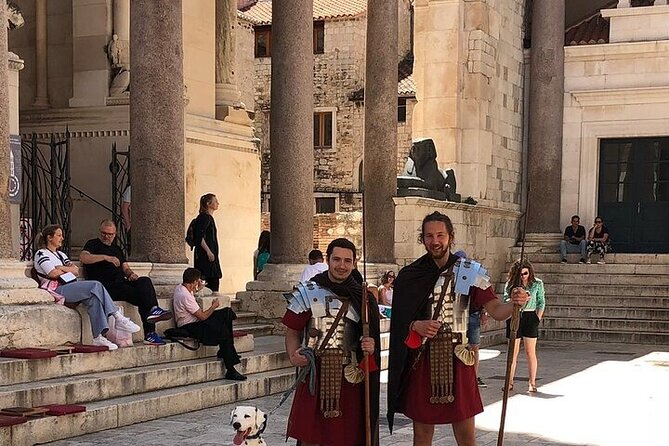
The next stop is the Vestibule, the formal entrance area associated with the emperor. You spend about five minutes here.
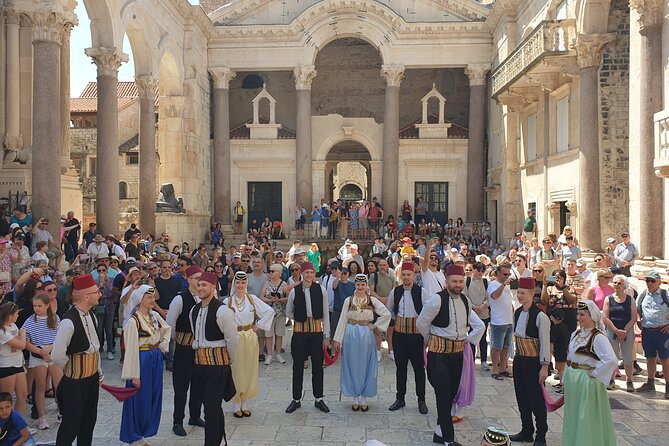
The short stop works best as a visual pause. The architecture shows how visitors once moved from the outside world into the imperial residence. The guide explains the space and its past, and you may hear traditional Dalmatian singing.
That musical possibility is not guaranteed, so book the tour for its historical content rather than expecting a performance. Still, if singing takes place during your visit, it can give the stone room a stronger local character than a standard architecture lecture.
The Vestibule is also a good reminder that Diocletian’s Palace is not only about surviving walls. Its importance comes from the way the buildings have been reused over centuries. A guide can help you separate the Roman structure from later changes without turning the visit into a dry list of construction dates.
Going below ground in the palace substructures
The underground substructures receive about 10 minutes. You walk through the lower level and learn how it was built and how its purpose changed over time.
This is one of the most useful stops for understanding the palace. The layout below ground reflects the arrangement above it, so the substructures help explain how the imperial rooms were supported and organized. The space also shows how an ancient building can remain useful long after its original purpose disappears.
One point needs to be clear: this tour does not include the museum section of the substructures. You see the passage and structural areas covered by the walk, then you can visit the museum afterward if you want a longer look.
That separation is not necessarily a disadvantage. A short guided walk can give you the basic plan and story, while a self-guided museum visit lets you set your own pace. If underground archaeology is your main interest, plan extra time after the tour rather than assuming the 10-minute stop covers everything.
More Small-Group History Tours in Croatia
- Split History and Gastro Small-Group Tour with Food and Drinks
★ 5.0 · 375 reviews - Dubrovnik Old Town: Small-Group Walking Tour With A Local
★ 5.0 · 123 reviews - Dubrovnik: Game of Thrones and History Small Group Tour
★ 5.0 · 76 reviews - Dubrovnik: Small-Group Guided Old Town History Walking Tour
★ 4.9 · 37 reviews
The Golden Gate and Gregory of Nin
At the Golden Gate, the guide explains the palace’s main entrance. The stop lasts about 10 minutes and includes the statue of Gregory of Nin.
This is where the palace story shifts from the Roman emperor to Croatian identity and language. Gregory of Nin is important in Croatian history, and the guide explains his place in the country’s cultural story.
The statue gives the stop a memorable visual anchor. It is easier to recall a figure standing beside the gate than a list of names and dates. The guide’s explanation also helps you understand that Split’s old center is not frozen in antiquity. Roman power, medieval religion, Venetian influence, and Croatian national culture all occupy the same few streets.
You will likely encounter steps and uneven stone surfaces during the route. The tour information specifically warns people who have difficulty with high steps, so wear practical shoes and be realistic about your comfort level.
Riva Harbor and the best city-orientation moment
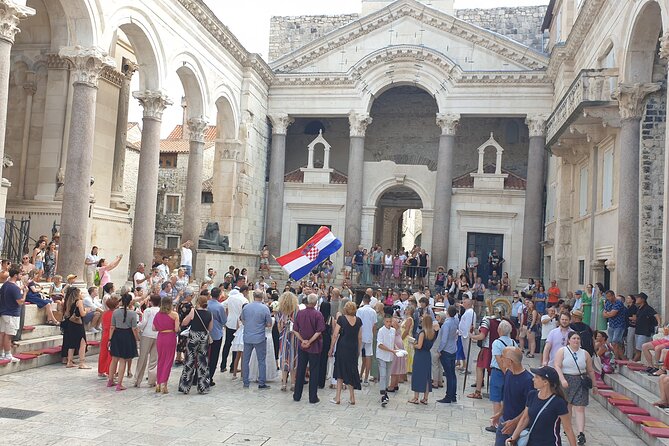
The walk continues out toward Riva Harbor for about 15 minutes. Here you see a bronze model of Diocletian’s Palace and learn about the history of Split’s waterfront promenade.
This is a welcome change of scale. Inside the palace, the lanes can feel tight and difficult to picture as one plan. The bronze model lets you see the whole structure at once, making the earlier stops easier to understand.
Riva also helps connect the old town to daily life in Split. The waterfront is not just a pretty ending point for photographs. It is part of the city’s public face, and the guide uses it to explain how the area around the palace developed.
I would pay close attention here if you are staying in Split for more than a day. The model and harbor orientation can help you plan later walks, restaurant stops, and independent exploring. The official route returns to the meeting point, so you do not need to arrange transport back from Riva.
Fruit’s Square, a Venetian corner of old Split
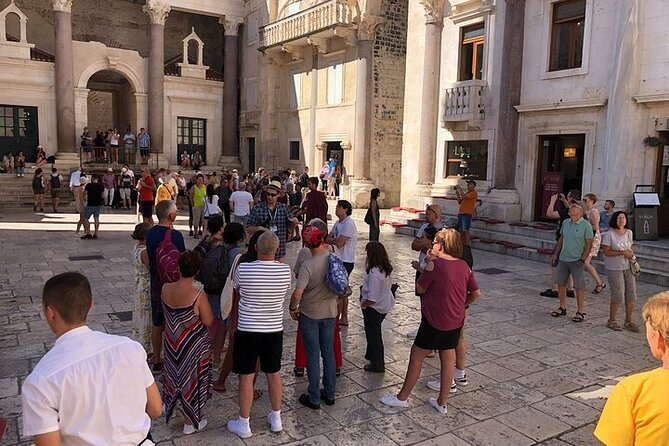
Fruit’s Square, also called Trg Brace Radic, receives around 10 minutes. The guide points out a 15th-century Venetian citadel and explains the importance of Marko Marulić, often called the father of Croatian literature.
This stop adds two useful layers to the tour. The citadel brings in Venice and the period when the Adriatic coast was shaped by competing regional powers. Marko Marulić brings in language and literature, showing that Split’s story is not limited to military buildings and emperors.
The square is a good example of why a walking tour can offer more than a palace-only visit. You are still close to the Roman core, but the subject has moved forward by many centuries. The result is a clearer picture of Split as a city that kept changing while preserving its older walls.
Passing Split’s historic synagogue
The final listed stop is the Split Synagogue, where you spend about 10 minutes learning about the city’s Jewish community and the 16th-century synagogue.
The route passes by the synagogue rather than presenting it as a separate museum visit. That distinction matters if you want an extended look inside. Here, the value is the broader city story: Split was shaped by different communities, faiths, and cultural ties, not only by Roman and Venetian rule.
This is a brief stop, but it gives the tour a more complete sense of place. You leave with more than the standard emperor-and-ruins version of Split. The guide places the palace within the human history of the city around it.
Guide quality and the size of the group
The guide is the heart of this experience. The strongest descriptions focus on clear French, enthusiasm, humor, and a willingness to answer questions. Antonela is singled out for her friendly, engaging style, while Irene is praised for making the visit enjoyable for families and children. Another guide is described as a former diplomat with a scholarly and passionate approach.
You cannot choose a specific guide from the information provided, so treat those names as examples of the guide standard you may encounter, not a guarantee. The common thread is a guide who can explain the palace in French without reducing it to a memorized script.
The maximum group size is 30. That is smaller than a large city bus tour, but it is not a private walk. You may want to stand near the guide if you have trouble hearing in a crowd, especially in the palace’s enclosed passages.
The duration is listed as about 90 minutes. Several accounts describe the walk lasting more than two hours, which suggests that questions, crowd conditions, and the guide’s style can extend the visit. I would avoid scheduling a tight lunch reservation immediately afterward.
Is $69.14 a fair price?
The stated price is $69.14 per person, with group discounts available. That is a significant cost for a walk lasting about 90 minutes, especially since the listed stops do not require an admission ticket through the tour.
The value depends on what you want from Split. If you only need directions and a few facts, you can walk around the palace on your own for much less. If you want the complicated Roman-to-Croatian story explained in fluent French, the price pays for the guide’s interpretation rather than entry tickets.
One piece of pricing information is worth checking before payment. A comment describes buying tickets locally for around €20, which is far below the stated online price. That may reflect a different booking channel, date, product, or rate, so compare the final price and inclusions carefully. Do not assume both offers are identical.
The strongest value comes for people who would otherwise miss the palace’s structure and historical connections. You are paying for a guided framework that can make the rest of your time in Split more rewarding.
Practical details for a smoother walk
The meeting point is on Peristil ulica at the Peristyle, and the tour ends back at that meeting point. A mobile ticket is accepted, and confirmation is sent within 48 hours of booking, subject to availability.
The activity is near public transportation, and service animals are allowed. Most people can take part, but the walk is not recommended if high steps cause difficulty.
Gratuities are not included. If the guide gives you a thoughtful, well-run visit, plan for a tip separately.
Free cancellation is available if you cancel at least 24 hours before the local start time. Changes or cancellations made less than 24 hours ahead are not refunded or accepted. The experience also requires a minimum number of participants, and if that minimum is not met, you are offered another date, another experience, or a full refund.
Who should book this French tour?
I would recommend it first to French-speaking adults and families who want a clear introduction before exploring Split alone. Children can enjoy it too, particularly when the guide uses stories, statues, and palace spaces rather than only dates.
It also suits anyone who wants more than the Roman headline. The route includes Croatian literature, Jewish history, Venetian defenses, language, and the waterfront, giving you a broader understanding of the city in one walk.
I would hesitate if you want a private, very quiet experience. A group of up to 30 can feel less personal, and the listed price may seem high when compared with local ticket prices. I would also avoid it if high steps or uneven surfaces are a serious concern.
Should you book the History Split Walking Tour in French?
Book it if fluent French will help you absorb the story, and if you want a guide to connect Diocletian’s Palace with the later life of Split. The route is well chosen, the substructures add real value, and the best guide reports point to a warm, well-prepared presentation.
Before booking, check the final price, confirm the start time, and leave a little space after the advertised 90 minutes. For a first look at Split, especially with children or family members who prefer French, this is a useful and engaging introduction. For independent explorers on a tight budget, the palace can be visited without a guide, but you will need to supply the historical connections yourself.
FAQ
What language is the tour conducted in?
The tour is conducted in French. The guides are expected to explain the history and sights in French.
How long does the walking tour last?
The advertised duration is approximately one hour and 30 minutes. It may last longer, with some visits taking more than two hours.
How much does the tour cost?
The stated price is $69.14 per person. Group discounts are available.
Where does the tour begin?
The tour begins at Peristil ulica, at the Peristyle of Diocletian’s Palace in Split.
Where does the tour end?
The activity ends back at the meeting point.
What sights are included?
The route includes the Peristyle, Vestibule, palace substructures, Golden Gate, Riva Harbor, Fruit’s Square, and the Split Synagogue.
Is entry to the substructures museum included?
No. The tour visits the palace substructures but does not include the museum section. You can visit that part separately after the walk.
How many people can join the tour?
The group can include a maximum of 30 people.
Is the tour suitable for people with mobility concerns?
Most people can participate, but the experience is not recommended for anyone who has difficulty with high steps.
Can I cancel for a full refund?
Yes, if you cancel at least 24 hours before the experience start time. Cancellations or changes made less than 24 hours in advance are not refunded or accepted.
Latest history tours reviewed in Croatia
- Experience Split History Walking Tour With Local Historian★ 5.0 · 28 reviews
- Dubrovnik: Small-Group Guided Old Town History Walking Tour★ 4.9 · 37 reviews
- Dubrovnik: Game of Thrones & History Tour★ 4.7 · 72 reviews
- Dubrovnik History and Game of Thrones Locations Tour★ 4.8 · 49 reviews
- Dubrovnik Old Town: Night tour with History, Wine & Bites★ 4.7 · 59 reviews
- Dubrovnik: Historical Tour with Game of thrones details★ 4.9 · 43 reviews
- Dubrovnik Old Town: Easy paced and accessible History tour★ 4.9 · 20 reviews
- Dubrovnik: History and Game of Thrones Walking Tour★ 4.7 · 85 reviews
Split History Tours, compared.
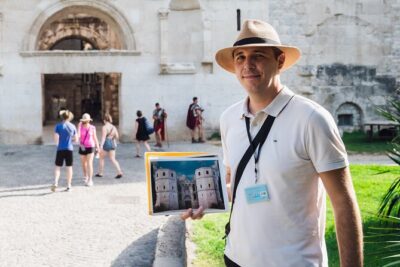
Walking Tour of Split with a ‘Magister’ of History
Read our review →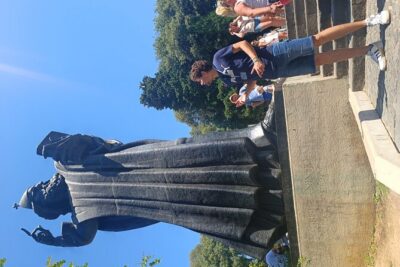
SPLIT-PRIVATE Walking Tour of Diocletian’s Palace & Old Town
Read our review →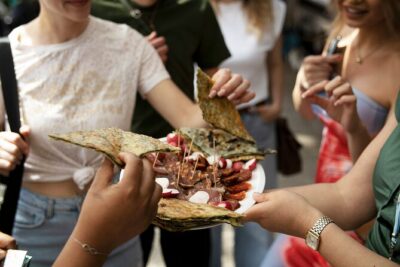
Split History and Gastro Small-Group Tour with Food and Drinks
Read our review →

Split: Historical Tour of Salona, Klis Fortress and Trogir
Read our review →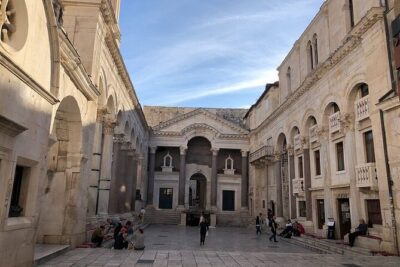
History & Cultural Walking Tour of Split and Diocletian’s Palace
Read our review →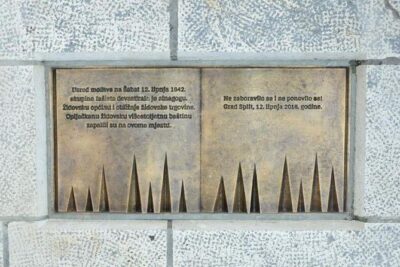
Jewish Heritage & Diocletian’s Palace Private Split Tour
Read our review →Browse the lists this tour appears in