
Review · FRANCE
A locals’s guide to Bordeaux’s historic market
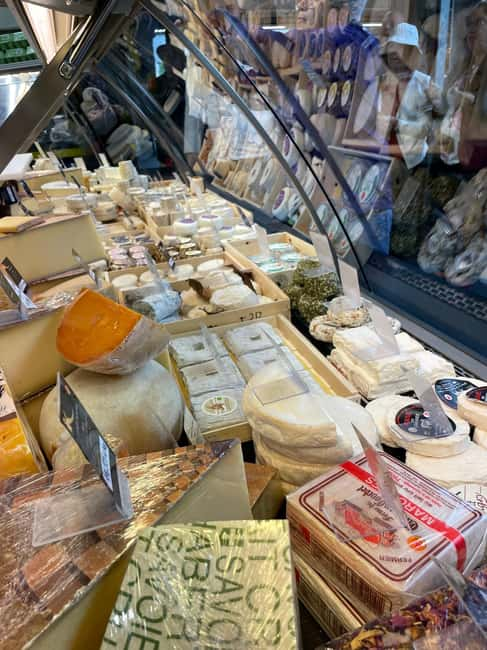
Bordeaux’s best introduction may come on a plate: a chocolatine, a bite of cheese, a slice of charcuterie, and an oyster from nearby Arcachon Bay. This 2.5-hour market walk gives you a practical way to connect Bordeaux’s food with its Atlantic setting and wine culture.
I like the mix of local food and city history, and I like that the tour uses family-run businesses rather than treating the market as a backdrop. The main drawback is that the route and market atmosphere can vary. One recent outing found only half the market stalls open, so some tastings took place away from the market itself.
Key points to know
- Start with a Bordeaux breakfast: Expect a fresh pastry and coffee before the main food stops.
- Visit the Marché des Capucins: This is Bordeaux’s largest market, with seasonal produce, seafood, cheese, charcuterie, and wine.
- Try Arcachon Bay oysters: Your guide explains how to approach this local specialty, with a glass of white wine alongside.
- Meet at Place de la Victoire: Look for the column at the center of the square and a white food-lover bag with a laughing tomato logo.
- Plan for a walking tour: The route lasts 150 minutes, takes place in all weather, and is not suited to people with limited mobility.
- Expect a small group: The format is designed for personal conversation and direct contact with local food businesses.
A pastry-first start at Place de la Victoire
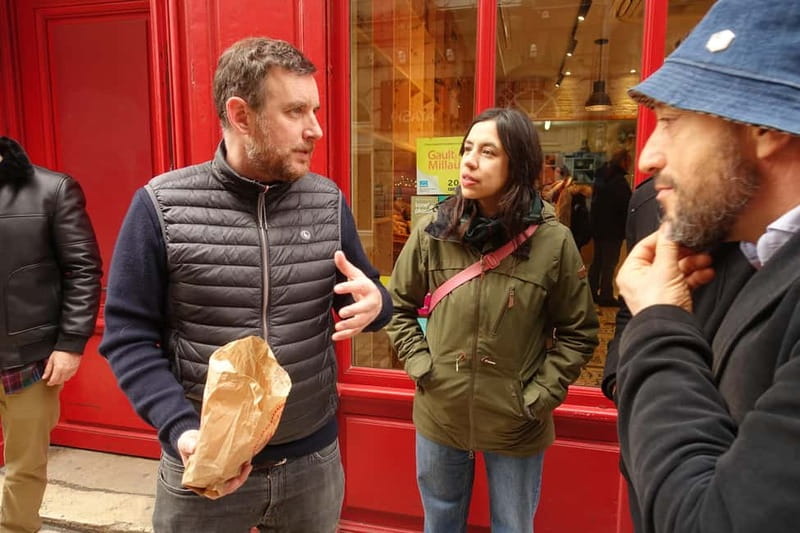
The meeting point is easy to identify if you know what to look for. Your guide waits at the base of the colonne de la vigne et du vin, the wine and grape column in the center of Place de la Victoire, carrying a white food-lover bag marked with a laughing tomato.
Arrive at least five minutes early. This matters because the tour moves into the neighborhood soon after the meeting time, and you do not want to begin by chasing the group through Bordeaux streets. Transportation to the square is not included, so you need to make your own way there.
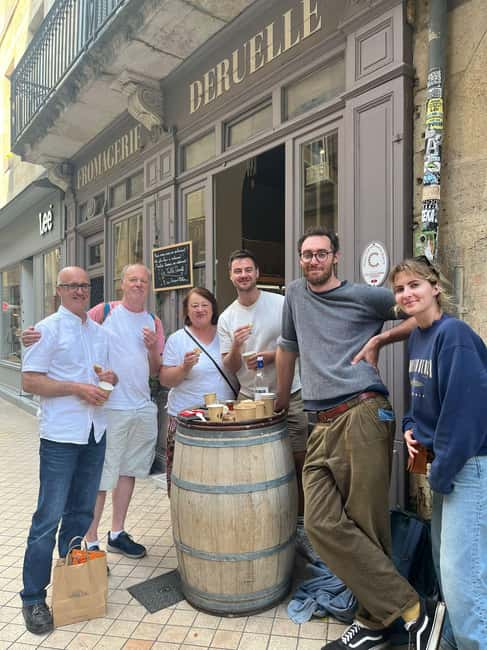
The first part works like a Bordeaux breakfast. You can expect an artisanal pastry and coffee, with the chocolatine likely to be one of the early highlights. One recent participant who lives in France singled out the pastry as especially good, which is useful context: this is not just a quick snack before the real tour. It sets up the French habit of treating baked goods as an important part of the day.
The coffee tasting also gives the guide a calm moment to explain local eating habits before the group reaches the market. That is a smart choice. Food tours are easier to enjoy when you understand what you are tasting, rather than receiving one bite after another with no context.
More Market Tours in France:
- Private Excursion to Floating Market and Ayutthaya World Heritage
★ 5.0 · 515 reviews - Private Heritage Walking Tour in Jaisalmer Fort and Old Bazaar
★ 5.0 · 306 reviews - Old Delhi Food-Spice Market-Temples Tour Soon Featured on NETFLIX
★ 5.0 · 304 reviews
Walking Bordeaux through local food habits
The historical walk links the food stops to Bordeaux itself. The route begins in the area around Place de la Victoire and continues toward the market and nearby food businesses.
Do not expect a long architectural tour with extended stops at monuments. The history is part of the walk, not the whole subject. You are there to understand how Bordeaux eats, where locals shop, and how the city’s location affects its cooking.
The guide’s personality matters here. Joshua has led recent tours with a style described as witty, friendly, and easy to follow. Charlotte has also guided the experience, with a clear focus on French culture, cuisine, and the city. Other guides may lead your departure, and the activity is offered in English or French.
The small-group format helps. You can ask why one cheese is paired with a particular wine, how to handle an oyster, or what separates a good pastry from an ordinary one. The tour is not designed as a rushed checklist, and a recent group found the pace comfortable rather than hurried.
Still, the route does not seem identical every day. The number of open stalls and the availability of certain products can shape the plan. That flexibility is normal for a market tour, but it means you should not treat every tasting as fixed.
At the Marché des Capucins
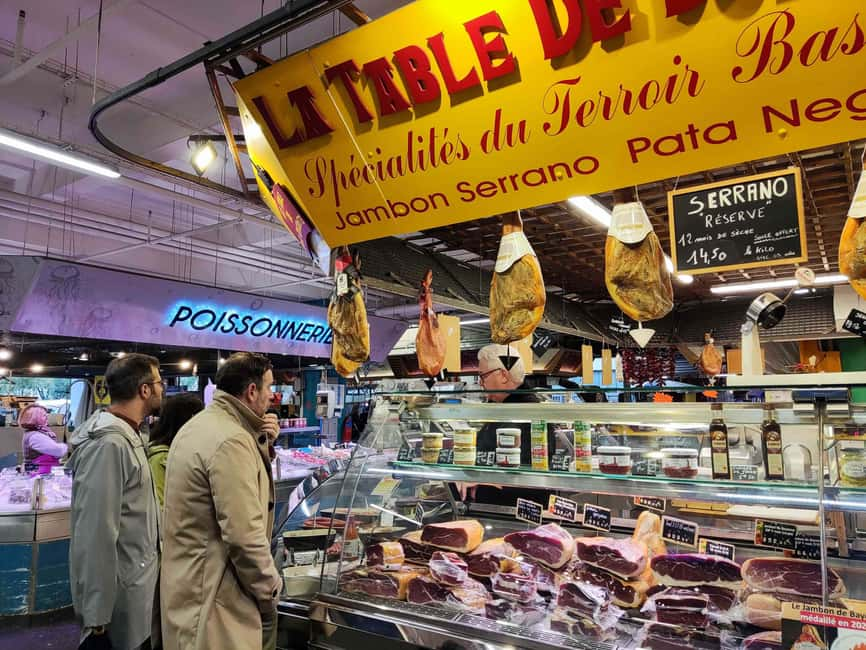
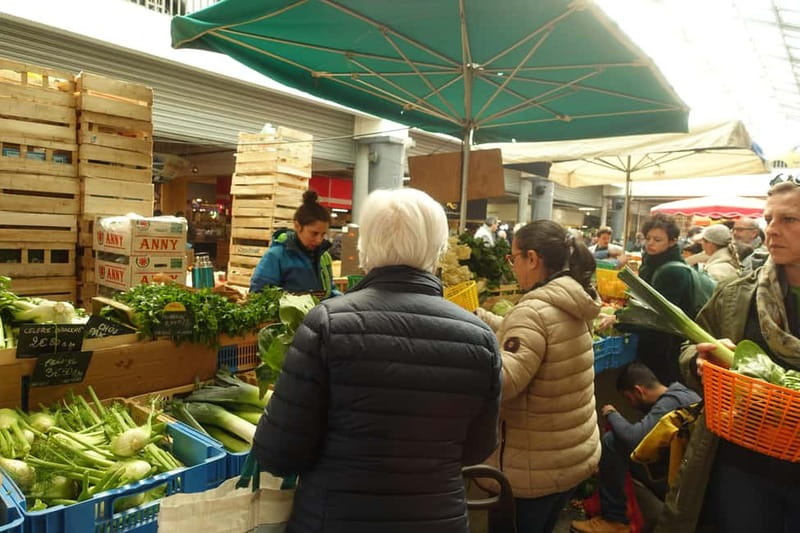
The Marché des Capucins is the main food stop. It is Bordeaux’s largest market and the place where the tour brings together the region’s everyday ingredients.
The market can introduce you to:
- Seasonal produce
- Seafood
- French cheese
- High-quality charcuterie
- Regional foods
- Bordeaux wine
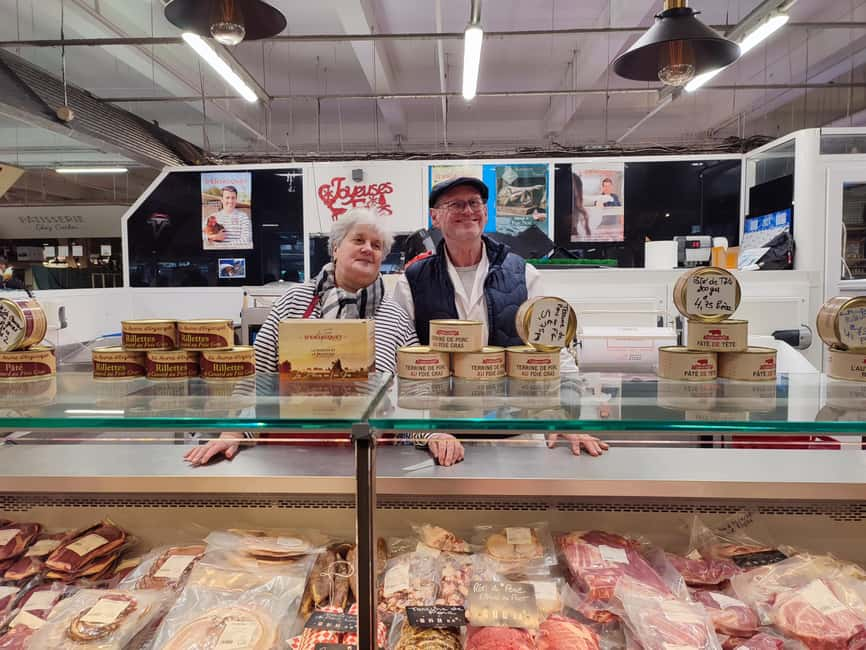
I like this part because it shows how French food culture works at ground level. You are not simply told that Bordeaux is a food city. You see the products, meet the people selling them, and taste several items in the setting where locals shop.
The market’s scale also gives the guide plenty to explain. You might learn how seafood connects Bordeaux to the Atlantic, why cheese is served in a certain order, or how charcuterie fits into an aperitif. The precise selection can change with the season and the stalls that are open.
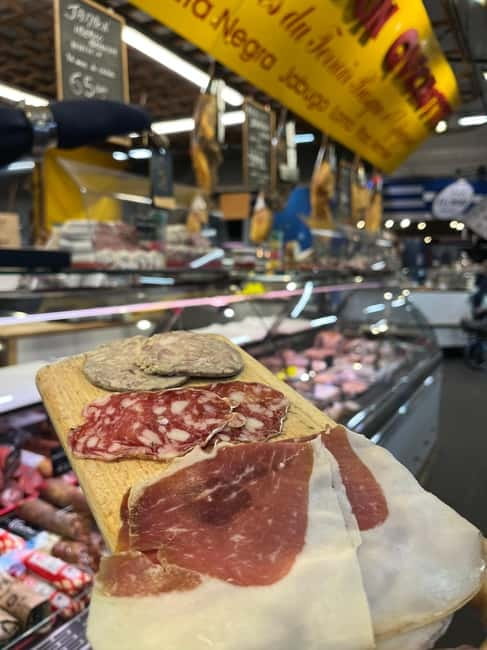
That last point deserves attention. One recent departure found only about half of the market stalls operating. When that happens, the food experience may shift away from a continuous market walk. The charcuterie tasting, for example, took place at a bar near the Basilique Saint-Michel and Place Canteloup rather than at a market stand.
I would not treat this as a deal-breaker, but I would set your expectations correctly. You are booking a market-based food tour, not a guarantee that every tasting will happen inside a fully open market. If seeing a packed market is your main reason for booking, ask about the usual market schedule before choosing your date.
Oysters from Arcachon Bay with white wine
The oyster tasting is the most place-specific part of the experience. Bordeaux sits close to the Atlantic, and Arcachon Bay is famous for its oysters. This gives the tour a strong local connection that a general French food walk might not offer.
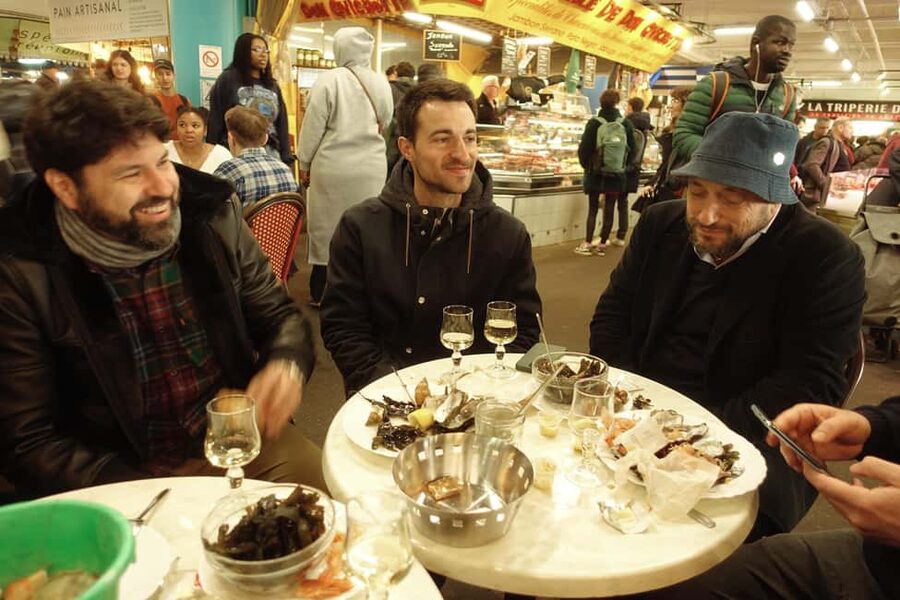
If you have never eaten an oyster, the guide helps you approach it. That guidance can make a difference. You learn how to taste it, what to notice, and how the fresh sea flavor works with white wine.
The pairing is simple and sensible: an oyster with a fresh glass of white wine. Bordeaux is best known internationally for wine, but this stop reminds you that the area’s food culture is not only about vineyards. The nearby coast shapes the table, too.
If oysters are not for you, the tour provides an alternative. You should still mention allergies, intolerances, or dietary needs when booking. The activity includes several types of food, and advance notice gives the provider a chance to plan sensibly.
The oyster stop may be less comfortable for someone who dislikes unfamiliar foods or prefers a large meal. This is a tasting tour, not a sit-down lunch. You should arrive ready to sample small portions across several stops.
More Guided Tours in France:
- Paris: Dark History and Ghostly Guided Walking Tour
★ 4.7 · 1,000 reviews - Vieux Lyon Cultural & Historical Walking Guided Tour (English)
★ 5.0 · 942 reviews - Strasbourg: Guided Historical Neighborhoods Walking Tour
★ 4.9 · 275 reviews - Strasbourg on Foot: Historic Center and Petite France with a Local Guide
★ 4.7 · 223 reviews
Cheese, charcuterie, and the Bordeaux aperitif
Cheese and charcuterie give the tour its most classic French rhythm. These are not added as filler. Together with wine, they explain the social side of eating in France, where a small plate can become a long conversation.
The cheese comes through a local fromagerie, which gives the guide a chance to talk about texture, strength, and pairing. You can expect several bites rather than a single named cheese, though the exact selection may depend on what is available.
The charcuterie tasting focuses on quality French cured meats. This part may happen at the market or at a nearby bar, depending on the day’s route and open stalls. Either setting can work, but the change matters if you imagined eating every item while walking through market aisles.
The aperitif portion is also where the tour feels most social. You are not only tasting ingredients. You are learning how wine, cheese, and cured meats fit together as a relaxed pre-meal tradition.
The tour’s strongest praise has centered on its food range and the way the guide explains it. Recent groups enjoyed the mix of sweets, seafood, cheese, charcuterie, and wine. That variety is a real advantage for first-time visitors who want a broad introduction rather than a single specialty.
How the $74 price works for you
At $74 per person, the tour is not the cheapest way to buy breakfast or visit a market. You could spend far less on a pastry, coffee, and a few snacks if you handled the morning alone.
The value comes from the guided access and the range of tastings. Your fee covers a small-group historical walk, pastry and coffee, market food, cheese, charcuterie, oysters, and Bordeaux wine. It also saves you from guessing what to buy or how to combine it.
I would judge the price this way:
- It is good value if you want several tastings in one morning and appreciate explanation.
- It is less attractive if you mainly want a full meal or prefer to shop independently.
- It is especially useful early in a Bordeaux stay because the guide can help you understand local food and wine choices for the rest of your trip.
- It is harder to justify if the market is partly closed and some stops move to another location.
The tour does not include transport to Place de la Victoire. That is a small extra planning point, but the central meeting location keeps the logistics simple.
Timing, group size, and walking demands
The activity lasts 150 minutes, or about two and a half hours. The first 30 minutes focus on breakfast, coffee, and the opening walk. The remaining 90 minutes cover the market, wine, cheese, seafood, charcuterie, and regional food.
That length feels right for a tasting walk. You have enough time to ask questions, but the morning does not consume your whole day. You can schedule another Bordeaux activity afterward.
The tour is not recommended for people with limited mobility. You will walk through city streets and a market, with several food stops along the way. Since the route takes place rain or shine, wear shoes suited to wet pavement and crowded indoor or outdoor spaces.
You also need to pace yourself. The food arrives in a series of tastings, and the wine is part of the program. It is wise not to plan a large lunch immediately afterward unless you prefer to eat again soon.
Who will enjoy this Bordeaux food walk
I would recommend this experience to you if you want a friendly introduction to Bordeaux without spending half a day in a formal cooking class. It suits first-time visitors, wine fans, couples, solo visitors, and small groups who enjoy asking questions as they eat.
It also works well for people who want local context. The tour is not just a list of famous French foods. It connects pastries to breakfast, oysters to the Atlantic coast, cheese and charcuterie to the aperitif, and wine to everyday social life.
Food-focused visitors will get the most from it, especially if you are curious about how Bordeaux’s location shapes its table. You should also enjoy walking and be open to trying foods you might not normally order.
I would be more cautious if you need a fully accessible route, want a guaranteed indoor plan, or dislike seafood. The oyster has an alternative, but the tour still centers on regional tasting. I would also choose another activity if your top priority is a long, detailed visit to every market stall.
Practical details before you book
The tour is conducted in English or French. Other languages may be available on request, but you should ask before booking rather than assume.
Tell the provider about allergies, intolerances, and dietary requirements during the booking process. This is particularly important because the tasting menu includes dairy, seafood, cured meats, pastries, and wine.
The experience accepts cancellations up to 24 hours before the start for a full refund. You can also reserve now and pay later, which helps if your Bordeaux schedule is still taking shape.
Guide gratuities are welcomed. They are not listed as part of the price, so you may wish to carry a little extra if your guide gives you a thoughtful, engaging morning.
Should you book the Bordeaux market tour?
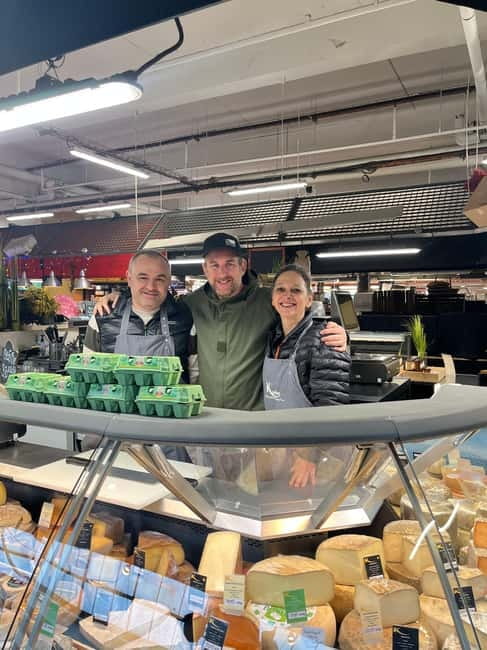
Book it if you want to taste your way through Bordeaux in a small group and prefer a guide to explain the food as you go. The best reasons are the mix of pastry, coffee, cheese, charcuterie, oysters, and wine, plus the chance to meet family-run food businesses.
Go in knowing that the market may not be fully open and that some stops can move outside the market. If that flexibility is acceptable, the $74 price buys a useful introduction to Bordeaux’s food culture rather than just a few samples.
For most food lovers, I would place this near the start of a Bordeaux visit. It can give you the vocabulary, flavors, and confidence to make better choices at restaurants and markets afterward.
FAQ
Where does the Bordeaux food tour begin?
The tour begins at the base of the colonne de la vigne et du vin in the center of Place de la Victoire.
How do I find the guide?
Look for a guide carrying a white food-lover bag with the laughing tomato logo.
How long does the tour last?
The experience lasts 150 minutes, or about two and a half hours.
Which languages are available?
The tour is offered in English and French. Other languages may be available upon request.
What food and drinks are included?
The tour includes an artisanal pastry, coffee, cheese, charcuterie, oysters from nearby Arcachon Bay, Bordeaux wines, and other regional foods.
Is an oyster alternative available?
Yes. If you do not want oysters, a different food option is provided.
Does the tour include transportation?
No. You must arrange your own transportation to and from the meeting point.
Is the tour suitable for people with limited mobility?
No. The tour is not recommended for people with mobility impairments.
What happens if it rains?
The tour takes place rain or shine, so you should dress for the weather.
Can I cancel the booking?
You can cancel up to 24 hours before the activity for a full refund. Reserve now and pay later is also available.
Latest history tours reviewed in France
- Explore the Marais: History, Art & Local Culture★ 4.6 · 105 reviews
- Discover Caen like never before: Guided tours between history & secrets!★ 4.9 · 67 reviews
- Culture History & Secrets: Lyon with a local artist -english★ 4.9 · 29 reviews
- Champagne Cellar Experience: Explore our historic cellars★ 4.7 · 46 reviews
- Bordeaux: Walking Tour of the City’s Best Bakeries★ 4.8 · 69 reviews
- Bordeaux: Top Landmarks & Historic Bike Tour★ 4.9 · 346 reviews
- Avignon: Historic District Guided Food & Wine Walking Tour★ 4.8 · 84 reviews
- Avignon: History and Legend Walking Tour★ 4.8 · 122 reviews
France History Tours, compared.
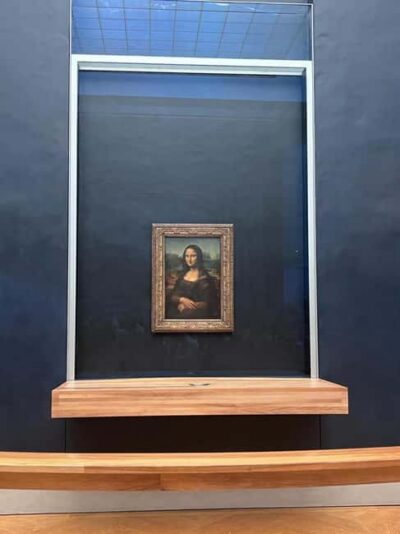
Paris: Louvre Museum Entry with History of Mona Lisa
Read our review →
Paris: Dark History and Ghostly Guided Walking Tour
Read our review →
Vieux Lyon Cultural & Historical Walking Guided Tour (English)
Read our review →
Bordeaux: Historic Center & Chartrons District Bike Tour
Read our review →
Strasbourg: Guided Historical Neighborhoods Walking Tour
Read our review →
Strasbourg on Foot: Historic Center and Petite France with a Local Guide
Read our review →
Paris City of Fashion History Private Guided Walking Tour
Read our review →Browse the lists this tour appears in