
Review · FRANCE
Avignon: History and Legend Walking Tour
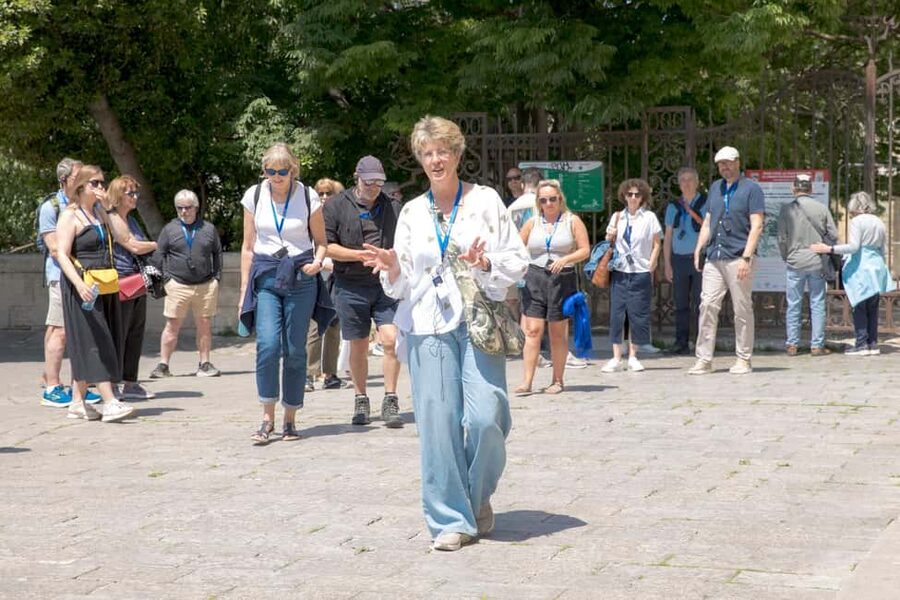
Avignon’s past comes alive on foot, from the broken arches of the Pont Saint-Bénézet to the grand stone front of the Popes’ Palace. Guide Ana Maria mixes local stories, European context, humor, and practical tips, so you get more than a list of dates. I especially like the small-group walking format and the way the route connects major sights with quiet lanes and squares. The headset system is another smart touch, particularly when the group grows.
The main thing to keep in mind is that this is an outdoor orientation tour, not a ticketed tour of Avignon’s monuments. You’ll see and discuss the palace, bridge, cathedral, and other landmarks, but paid entry is extra. Church visits depend on opening hours, and the route is not suitable for wheelchair users or people with mobility impairments.
Key points at a glance
- A useful first look at Avignon: The route links the bridge, palace, cathedral, squares, and old streets in one well-paced walk.
- Ana Maria’s personal style: Expect clear explanations, local stories, jokes, and practical suggestions rather than a formal academic lecture.
- Headsets keep the commentary clear: Every participant receives a sound amplification device, with a traditional 35mm headphone option.
- Two hours for $23: This is strong value if you want orientation before returning to the paid sights on your own.
- Church access can change: The guide tries to visit two churches, but schedules are not guaranteed.
- Plan for steps and uneven streets: Wear sturdy shoes, bring water and sun protection, and arrive ready to walk.
Why this Avignon walk works so well
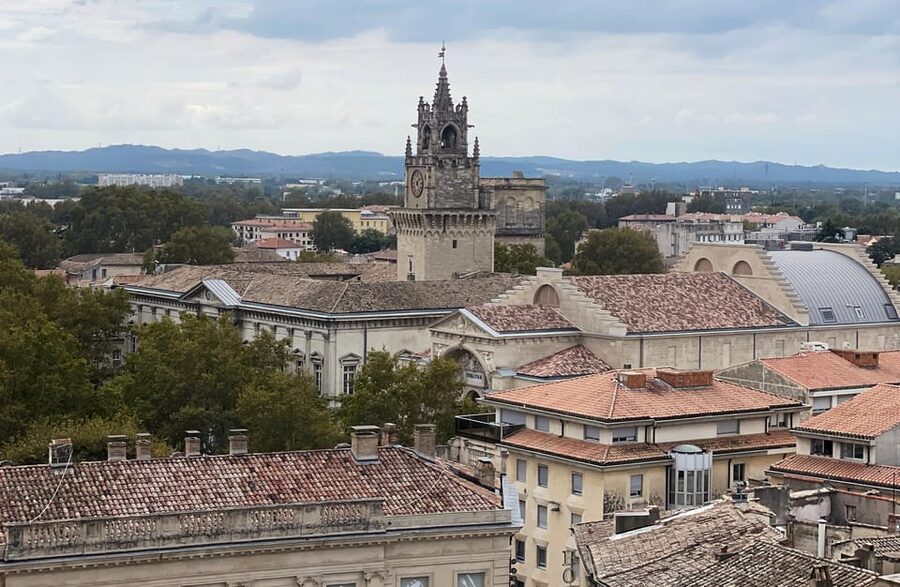
I see this tour as a way to get your bearings fast. Avignon’s old center packs major monuments into a compact area, but the connections between them are not always obvious when you are walking alone. A guide gives you the thread: papal power, medieval defenses, religious life, public squares, and the city’s everyday streets.
The route also has a useful balance. You spend time at famous sights, but you are not taken from one grand facade to another without context. The guide leads you through cobblestone lanes and smaller passageways, where Avignon feels less like a collection of postcard stops and more like a living town.
Ana Maria is the guide named most often in the feedback, and her approach is clearly a major part of the experience. She presents herself as a passionate local guide rather than a certified historian. That distinction matters. You can expect stories, context, and local perspective, but not a university lecture or a specialist archaeological tour.
Her style suits people who learn best through anecdotes. She puts Avignon into a wider European setting, explains the city in plain language, and keeps the pace lively with humor. If you prefer dates, documents, and long technical explanations, you may want to add a museum visit afterward. For most visitors, this is an easier and more enjoyable entry point.
More History Walking Tours in France
- Paris: Dark History and Ghostly Guided Walking Tour
★ 4.7 · 1,000 reviews - Vieux Lyon Cultural & Historical Walking Guided Tour (English)
★ 5.0 · 942 reviews - Strasbourg: Guided Historical Neighborhoods Walking Tour
★ 4.9 · 275 reviews
Starting at Place Crillon and Porte de l’Oulle
Meet ten minutes early at 16 Place Crillon, outside the Express Carrefour supermarket under the large tree. This is a practical meeting spot near the edge of the historic center, but do not arrive at the last moment. The group begins on time, and finding the guide after the start could be awkward in the surrounding streets.
The first stop is Porte de l’Oulle, one of the gateways into the old city. A short introduction here helps you understand Avignon as a walled medieval town. It is a brief stop, but a useful one: you begin with the city’s defensive character before moving toward its best-known monuments.
At this point, get your shoes and water sorted. The walk is described as easy by several participants, but the surface is still old stone, and the day may be hot. Sunglasses, a hat, sunscreen, and weather-appropriate clothing are sensible in southern France.
The Pont Saint-Bénézet and Avignon’s best-known view
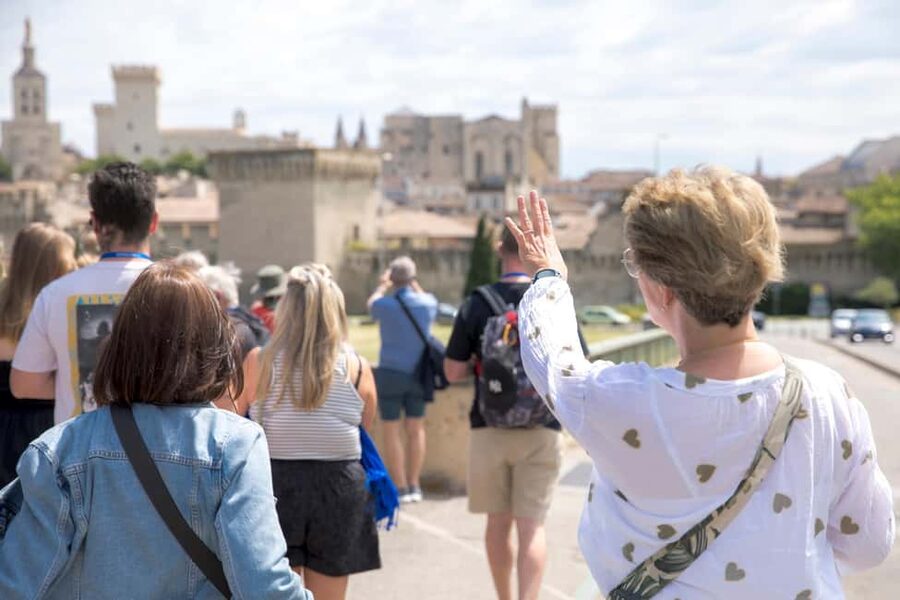
The Pont Saint-Bénézet receives about fifteen minutes, including a photo stop and guided explanation. The bridge is famous for its incomplete run of arches extending into the Rhône. You should not expect admission to the bridge to be included. This tour discusses and views the landmark from the route, while tickets for paid monuments are separate.
This is one of the strongest stops for photos. It also gives the guide a chance to explain why the bridge matters beyond its familiar song. You get a better sense of the relationship between the river, the city walls, and Avignon’s position as a major medieval center.
I like that the bridge appears early in the walk. It gives you a clear visual anchor and helps you recognize the city’s geography. If you later decide to buy entry to the bridge, you will already have the basic story and can focus more on the structure itself.
A monastery stop and the rhythm of the old center
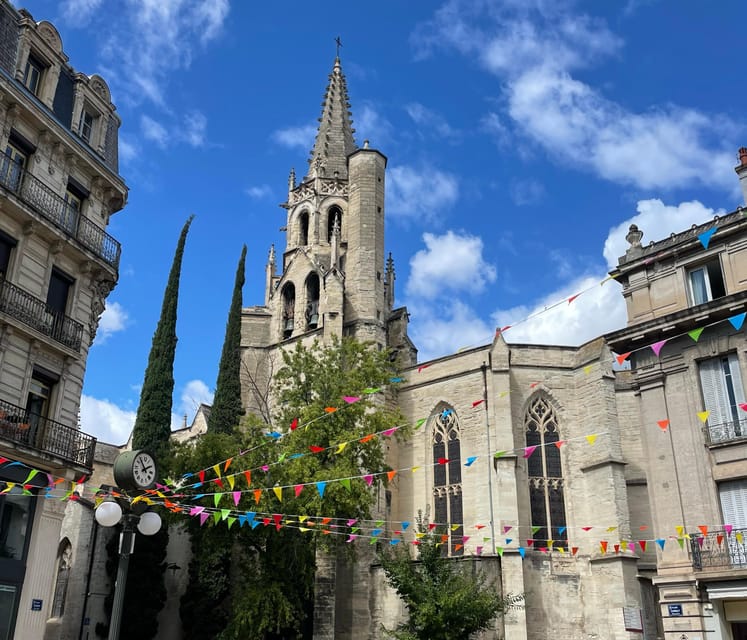
The itinerary includes a monastery stop for roughly ten minutes, with time for a visit and sightseeing. It later includes another monastery stop, listed for another ten minutes. The exact experience may vary with the route and opening conditions, so treat these as places where the guide adds religious and local context rather than guaranteed full interior visits.
That uncertainty is worth understanding before you book. Church and religious-site access depends on schedules that can change without notice. The guide aims to visit two churches, but you might instead receive an exterior explanation if a door is closed or a service is taking place.
This is not a flaw so much as a reminder to keep expectations flexible. The walk remains worthwhile without interior access because the main goal is to understand Avignon’s streets and landmarks. Still, if seeing church interiors is essential to your plans, set aside separate time and confirm opening hours locally.
Same old streets, another chapter:
- Paris: Louvre Museum Entry with History of Mona Lisa
★ 3.9 · 2,823 reviews - Bordeaux: Historic Center & Chartrons District Bike Tour
★ 4.8 · 709 reviews - Bordeaux: Top Landmarks & Historic Bike Tour
★ 4.9 · 346 reviews - Strasbourg on Foot: Historic Center and Petite France with a Local Guide
★ 4.7 · 223 reviews
Place de l’Horloge and everyday Avignon
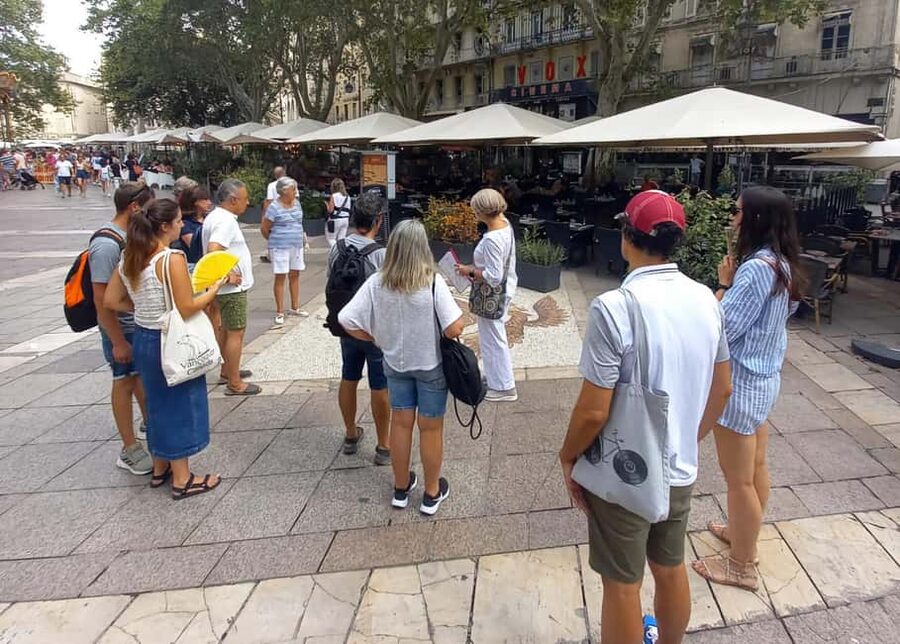
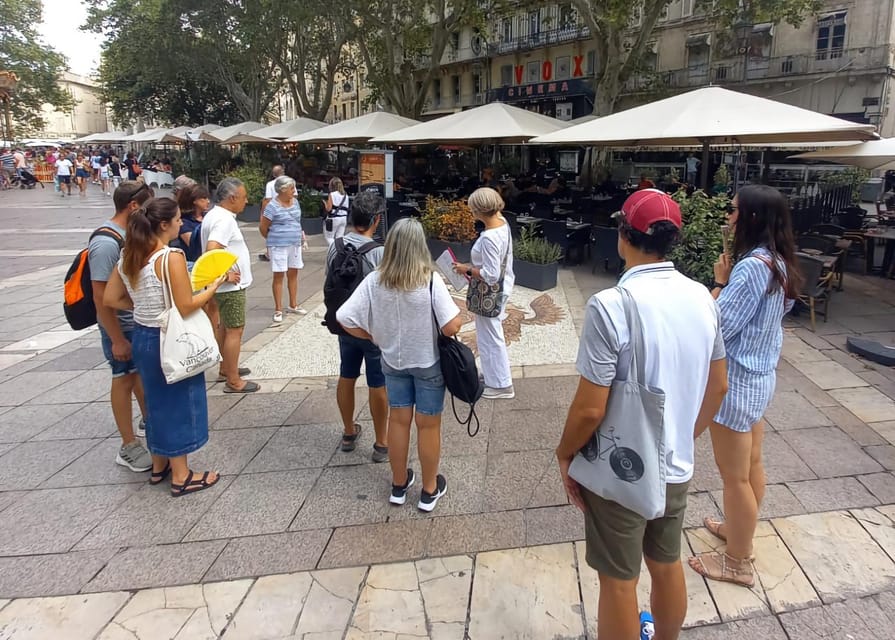
Place de l’Horloge gets about fifteen minutes, making it one of the longer stops. The square offers a change of mood from the medieval bridge and religious monuments. Here, you can listen to the guide’s explanation while taking in the public heart of the city.
A good guide makes a square like this more useful than a quick photograph. Ana Maria’s style, as described by the people who took the walk, includes local anecdotes and comments on how the city works today. That keeps the stop from becoming a dry architectural inventory.
You will also have a chance to notice the difference between Avignon’s grand historic buildings and its more relaxed street life. The tour does not rush every stop into a strict lecture. It gives you time to look around, listen, and get a feel for the center.
Place du Palais and the Popes’ Palace
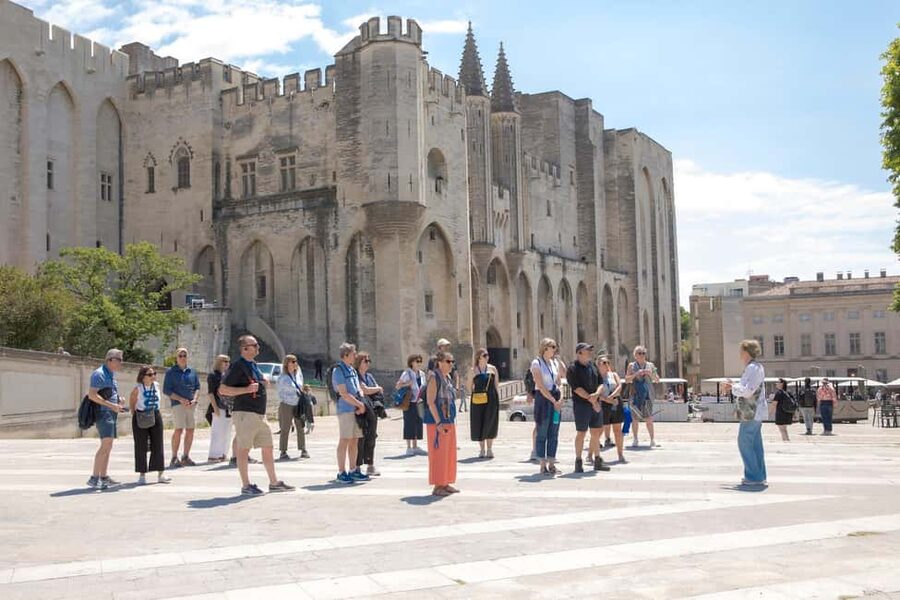
The walk continues to Place du Palais, followed by a longer stop at the Palais des Papes. The square helps frame the palace before you concentrate on the building itself. From outside, its scale and heavy stone walls make the political and religious power of medieval Avignon clear.
The palace stop lasts about fifteen minutes. That is enough for an introduction and photos, but not enough for a full interior visit. Admission is not included, so anyone wanting to explore the rooms, halls, and exhibitions must purchase a separate ticket.
This arrangement is actually useful for many visitors. A guide-led exterior explanation gives you a sense of why the palace matters, while your later independent visit can follow at your own pace. One participant used the tour for orientation, then returned to see the palace and bridge separately. That is a smart way to combine a low-cost overview with paid sightseeing.
Do not expect the tour to replace a full palace visit. It gives you context, scale, and a story to carry inside, but the palace itself deserves more time than this two-hour route can provide.
Avignon Cathedral and the Petit Palais
Avignon Cathedral receives about fifteen minutes for a photo stop, visit, and guided explanation. This is another place where access depends on the schedule. If the doors are open, you may be able to step inside. If not, the guide can still explain the building and its place beside the palace complex.
The nearby Musée du Petit Palais receives about five minutes. That is enough to point out the museum and explain its setting, but not enough for a proper museum visit. If you enjoy medieval or religious art, plan a separate stop here rather than treating the tour as your museum experience.
These short stops show the tour’s purpose clearly. It is designed to connect the main pieces of Avignon’s center, not to provide long visits inside each attraction. I like this format for a first day because it helps you decide where to spend your paid admission time later.
Hidden lanes, repeated monastery context, and the final stretch
After the cathedral and Petit Palais, the route returns to another monastery stop and then spends about twenty-five minutes exploring Avignon itself. That final stretch is important. The tour is not just a chain of monuments. It gives you time to walk through the old streets, hear more local stories, and notice details you could easily miss alone.
The exact path may shift with crowds, church schedules, or the guide’s judgment. That flexibility is helpful in a historic center where narrow streets and public events can alter the flow. A group of about twenty was handled successfully during a very busy holiday period, so the guide has experience keeping people together when conditions are less than calm.
You finish on Rue de la République. This is a convenient place to continue exploring, shop, find a meal, or return toward transport. Ana Maria also offers restaurant and sightseeing suggestions, which can be particularly helpful if you have just arrived and have not yet worked out your evening.
What the headset adds to the experience
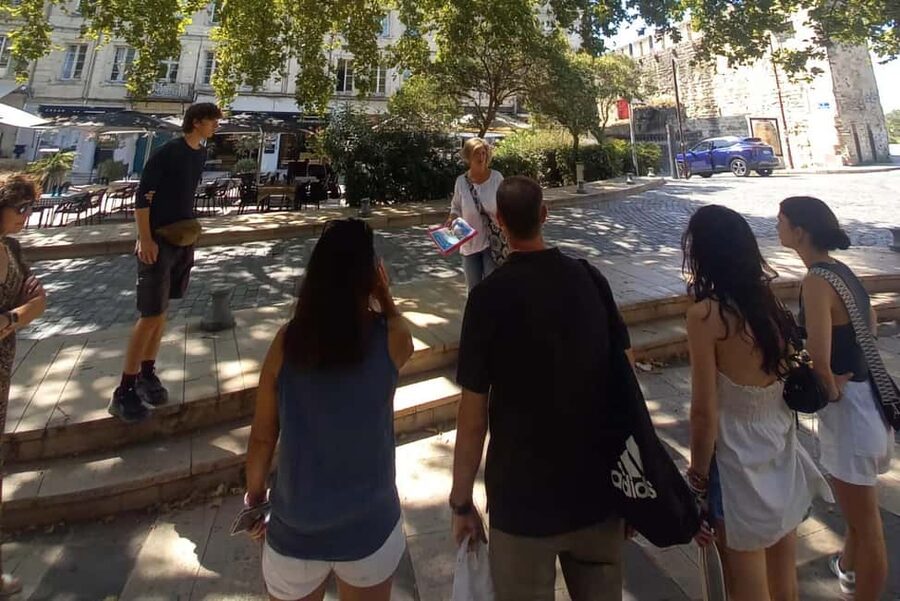
Each person receives an individual sound amplification device. You can also bring your own earphones with a traditional 35mm plug. The equipment is optional, but I would use it, especially if the group is larger or the streets are noisy.
This is one of those small details that can make a walking tour much better. You do not need to crowd around the guide or strain to catch the end of every sentence. You can stand a little farther back, take a photo, and still follow the explanation.
The devices do not turn the tour into a private experience. Group size can vary, and this is not a private tour. Still, clear audio helps preserve the personal feel of a live guide even when there are several people in the group.
Value at $23 per person
At $23, the tour offers good value if you want a structured introduction to Avignon. You receive two hours with a live guide, a connected route through the old center, audio equipment, and practical orientation for later visits. The price is especially fair for a first-time visit when you are deciding which paid monuments deserve your budget.
The value is lower if you expect entry to the Popes’ Palace, Pont Saint-Bénézet, or museums. Those tickets are not part of the price, and the tour does not include full visits to paid attractions. Think of the cost as paying for interpretation and route planning, not admission.
I would book it early in a short Avignon stay, ideally near the beginning of your visit. You can then use the remaining hours to return to the palace or bridge, visit the Petit Palais, and follow the guide’s suggestions for food and other places.
Free cancellation up to 24 hours before the start gives you some flexibility, and you can reserve now and pay later. Those terms are useful when your South of France itinerary is still moving around.
Who should take this walking tour
This experience suits you if:
- You want a clear first look at Avignon rather than a long specialist lecture.
- You enjoy stories, humor, and local context.
- You are visiting for the first time and want help choosing later sights.
- You prefer walking through a city instead of moving between attractions by transport.
- You want a reasonably priced tour that includes the major landmarks from the outside.
- You are comfortable with cobblestones, stairs, and a two-hour route.
It is less suitable if you use a wheelchair, have significant mobility limits, or need a fully step-free route. Children in strollers may need to be carried up stairs. Pets are allowed on the walk, but they must wait outside if the group enters a church.
English and Spanish are available. Arrive ten minutes early at Place Crillon, wear comfortable shoes, and bring water. A camera is useful, but do not let it distract you from the views across the old center.
Should you book the History and Legend Walking Tour?
I would book this tour if you want friendly orientation with real local personality. Ana Maria’s lively delivery, clear audio system, useful restaurant suggestions, and mix of major sights and side streets give the walk more value than a simple monument checklist.
Choose it with the right expectations. You will not receive a certified historian’s lecture or included entry to Avignon’s paid monuments. You may not enter every church, and the group may vary in size.
For $23, though, it is a sensible way to understand the city before exploring it in detail. Take the walk early, listen for the tips that match your interests, then return on your own to the palace, bridge, cathedral, or museum that catches your attention most.
FAQ
How long does the Avignon walking tour last?
The tour lasts two hours.
Where does the tour begin?
Meet at 16 Place Crillon, outside the Express Carrefour supermarket and under the big tree. Arrive ten minutes before the scheduled start.
Where does the tour finish?
The tour ends on Rue de la République.
Is entry to the Popes’ Palace included?
No. Tickets and visits to paid monuments are not included.
Can I enter the churches during the tour?
The guide will try to visit two churches, but access depends on opening hours and is not guaranteed.
What languages are available?
The live tour is available in English and Spanish.
Is the tour suitable for wheelchair users?
No. The tour is not suitable for wheelchair users or people with mobility impairments. Children in strollers may need to be carried up stairs.
Latest history tours reviewed in France
- Explore the Marais: History, Art & Local Culture★ 4.6 · 105 reviews
- Discover Caen like never before: Guided tours between history & secrets!★ 4.9 · 67 reviews
- Culture History & Secrets: Lyon with a local artist -english★ 4.9 · 29 reviews
- Champagne Cellar Experience: Explore our historic cellars★ 4.7 · 46 reviews
- Bordeaux: Walking Tour of the City’s Best Bakeries★ 4.8 · 69 reviews
- Bordeaux: Top Landmarks & Historic Bike Tour★ 4.9 · 346 reviews
- A locals’s guide to Bordeaux’s historic market★ 4.8 · 23 reviews
- Avignon: Historic District Guided Food & Wine Walking Tour★ 4.8 · 84 reviews
France History Tours, compared.
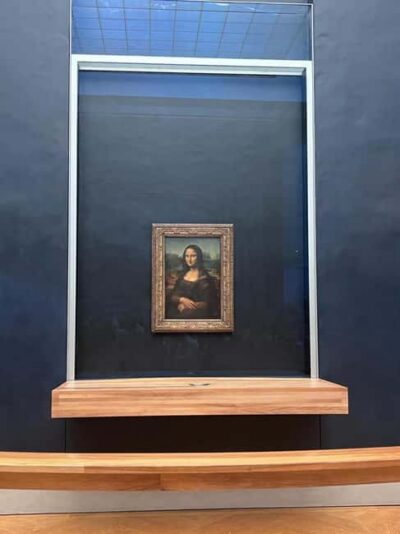
Paris: Louvre Museum Entry with History of Mona Lisa
Read our review →
Paris: Dark History and Ghostly Guided Walking Tour
Read our review →
Vieux Lyon Cultural & Historical Walking Guided Tour (English)
Read our review →
Bordeaux: Historic Center & Chartrons District Bike Tour
Read our review →
Strasbourg: Guided Historical Neighborhoods Walking Tour
Read our review →
Strasbourg on Foot: Historic Center and Petite France with a Local Guide
Read our review →
Paris City of Fashion History Private Guided Walking Tour
Read our review →Browse the lists this tour appears in